Author

Sam

Browsing

If you want a balcony garden to feel full, polished, and beautifully designed, the best approach is usually not lots of small pots. Small containers can look scattered, dry out quickly, and make even a good balcony feel cluttered. A better solution is to build the space around a coordinated planter system that covers the balcony in a clean and intentional way.

For Australian balconies, one of the strongest systems is to combine long ground planters, oversized railing planters, and large hanging baskets. Together, they create planting at floor level, railing level, and above eye level. That layered approach makes the balcony feel like a real garden rather than just a few containers pushed to the side.

In this guide, we are focusing on a three-part balcony planter system built around larger statement pieces rather than a mix of small pots:

  • Ground planters: long charcoal metal troughs for structure and edge planting
  • Railing planters: 36-inch / 91 cm coco-lined railing troughs for a bold planted band across the balcony
  • Hanging planters: 16-inch / 40cm extra-large coco-lined hanging baskets for vertical layering

This combination works especially well in Australia because you can keep the same planter system but adapt the plant palette for Melbourne, Sydney, Brisbane, Perth, Adelaide, Canberra, Hobart, Darwin, and other local climates.
Why a coordinated planter system works better than random pots

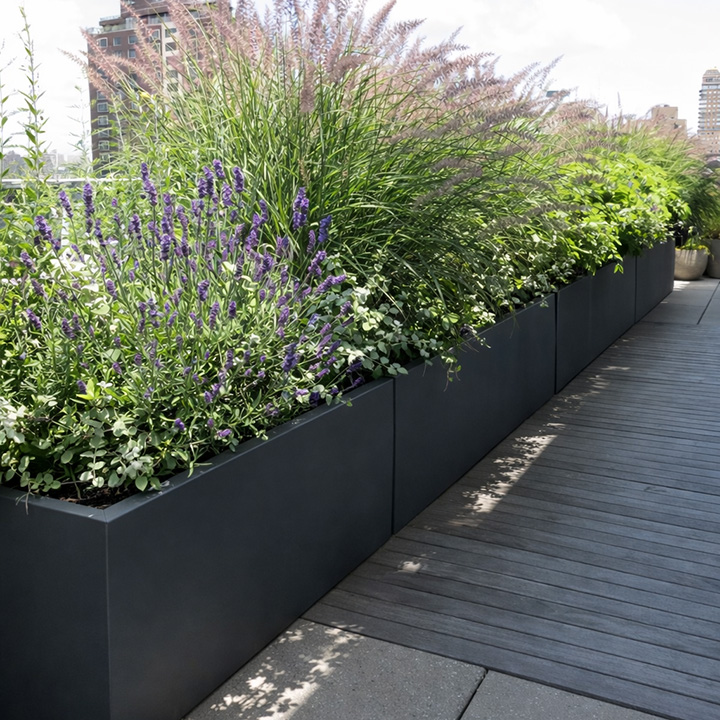
The best balcony gardens usually feel cohesive. That often comes down to scale and repetition. When you repeat the same planter styles across the floor, railing, and upper levels, the balcony feels calmer, neater, and more luxurious. It also becomes easier to build fullness without visual mess.

A full planter system also works better practically:

  • Ground planters provide the backbone of the design and enough soil volume for shrubs, herbs, feature plants, and screening.
  • Railing planters create the strongest visual line and make the balcony feel planted from edge to edge.
  • Hanging baskets add the upper layer, soften walls and corners, and help the garden feel immersive.

This is one of the best ways to make a balcony feel full without making it feel crowded.

The best planter system for covering a whole balcony
1. Ground planters: long 1200 mm charcoal metal planter boxes for structure and scale

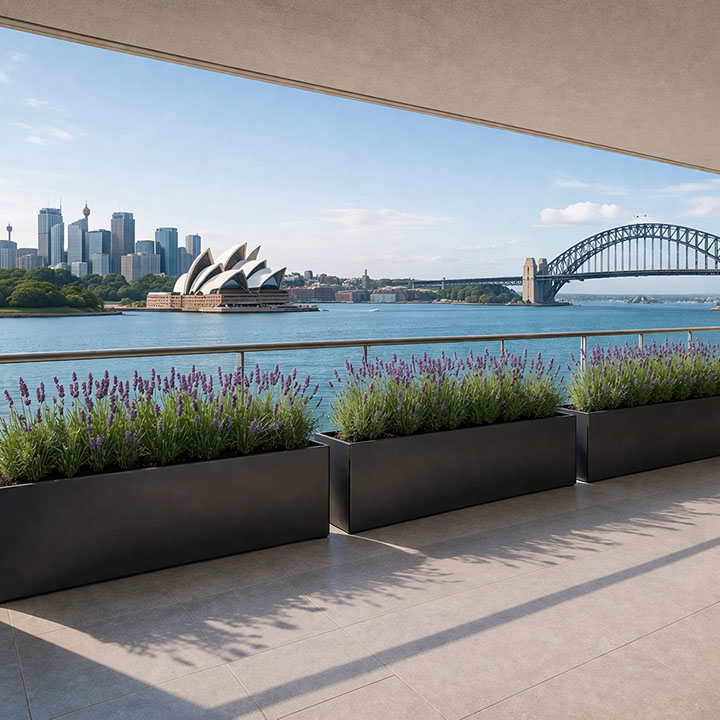
The floor planters are the foundation of the whole system. If you want the balcony to feel designed rather than pieced together, the ground layer needs to look clean and substantial. Long rectangular troughs do this far better than clusters of small pots because they define the perimeter, give the planting real presence, and make much better use of balcony floor space.

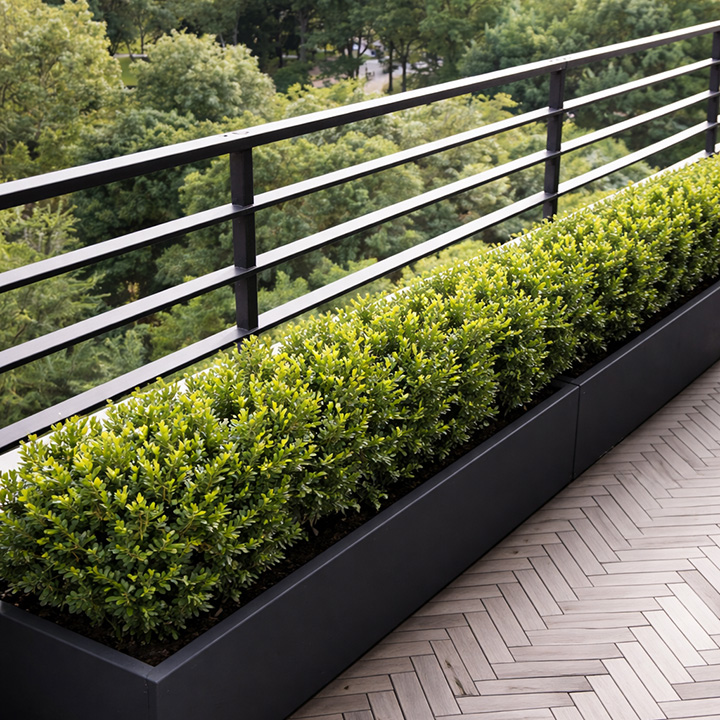
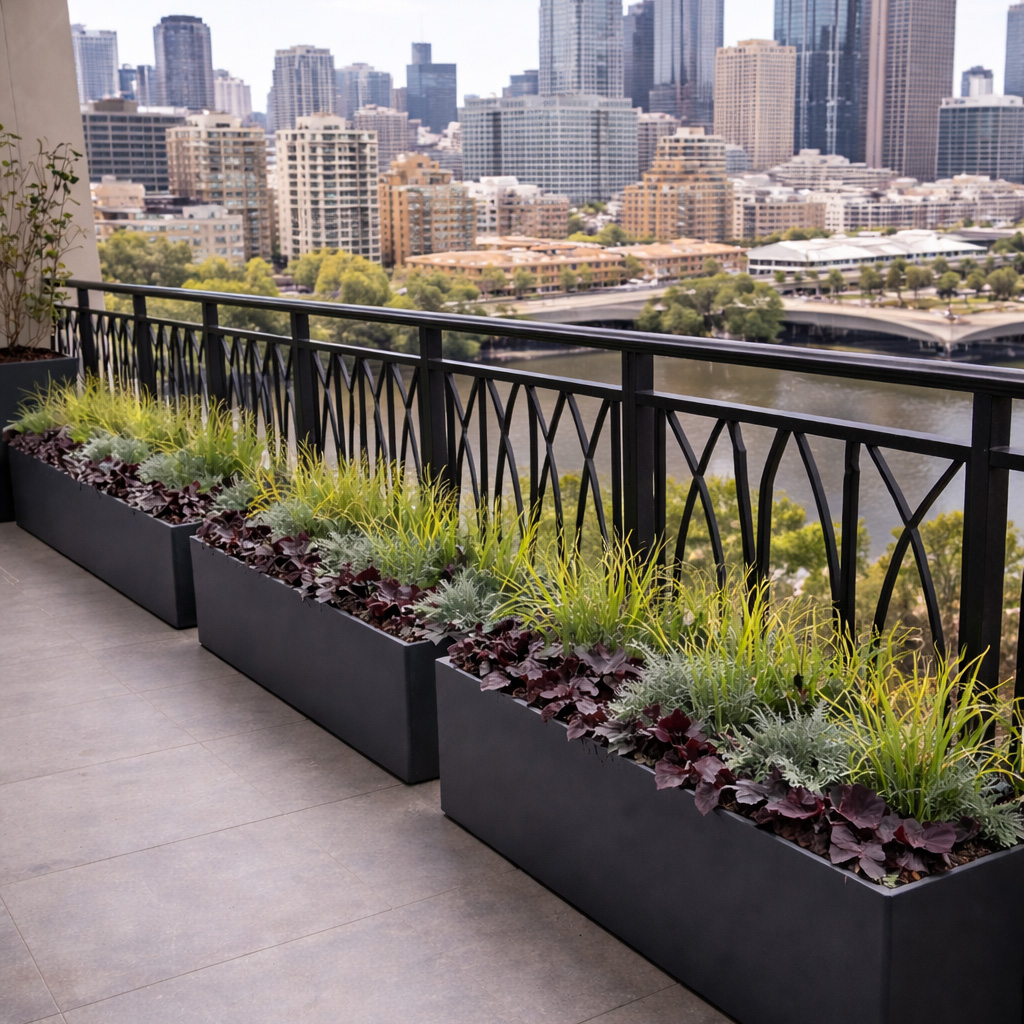
The Greenlife metal designer planter box is a particularly strong choice for this purpose. At 1200 × 300 × 300 mm, it is long and narrow enough to suit most balconies while still holding enough soil to grow meaningful plants. The charcoal finish also gives it a modern architectural look that works beautifully with apartments, glass balustrades, concrete walls, and contemporary outdoor furniture.

Why this ground planter works so well for balconies

This kind of planter is ideal for balconies because it gives you strong structure without taking over the space. It can sit along the outer edge, against a wall, behind a seating area, or in corners where the balcony needs more weight and greenery.

  • Long 1200 mm footprint: the length creates a clean line and lets you build a strong border along the edge of the balcony.
  • Narrow 300 mm width: it is deep enough for real planting but slim enough to preserve walking space.
  • 300 mm height: gives plants better root room and helps the planter feel visually substantial.
  • Approx. 108-litre capacity: enough room for shrubs, mixed plantings, herbs, grasses, or statement foliage plants.
  • Powder-coated anti-rust steel: useful for outdoor balconies where durability and weather resistance matter.
  • Charcoal modern finish: works especially well for minimalist, Mediterranean, native, and contemporary balcony styles.
  • Drainage holes in the base: important for container growing and helpful in heavy rain.
  • Straight clean panels: the simple shape looks far more refined than decorative or overly ornate containers.
  • Can be planted directly or used with drop-in pots: this gives flexibility depending on how permanent you want the planting to be.
The biggest benefit: it anchors the whole balcony

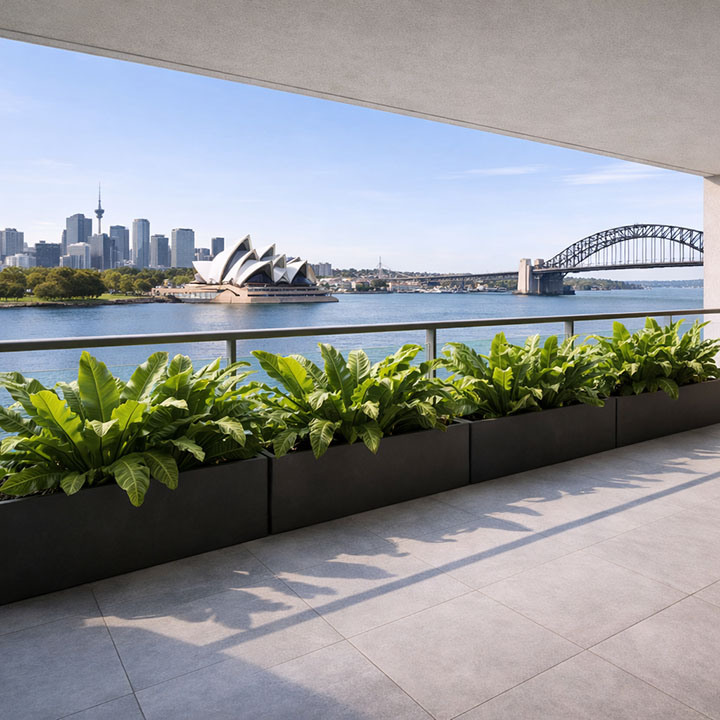
One of the biggest benefits of this planter is that it gives the balcony a proper backbone. Long troughs make the space feel grounded. They turn the perimeter into a planted edge and instantly make the balcony feel more like an outdoor room.

This is also the planter type that makes the biggest difference if you want privacy, leafy screening, or a strong border of planting without filling the centre of the balcony with pots.

Best ways to use this ground planter on a balcony

  • line several along the balcony edge to create a continuous green border
  • place one or two behind outdoor chairs or a bench to soften the seating zone
  • use them along blank walls to add structure and greenery
  • put them in corners for weight and balance
  • combine them with railing planters above for a layered planted edge

Because the planter is long and simple, it works particularly well when repeated. A balcony almost always looks better with two or three matching long troughs than with many small mismatched containers.
Best planting styles for this ground planter

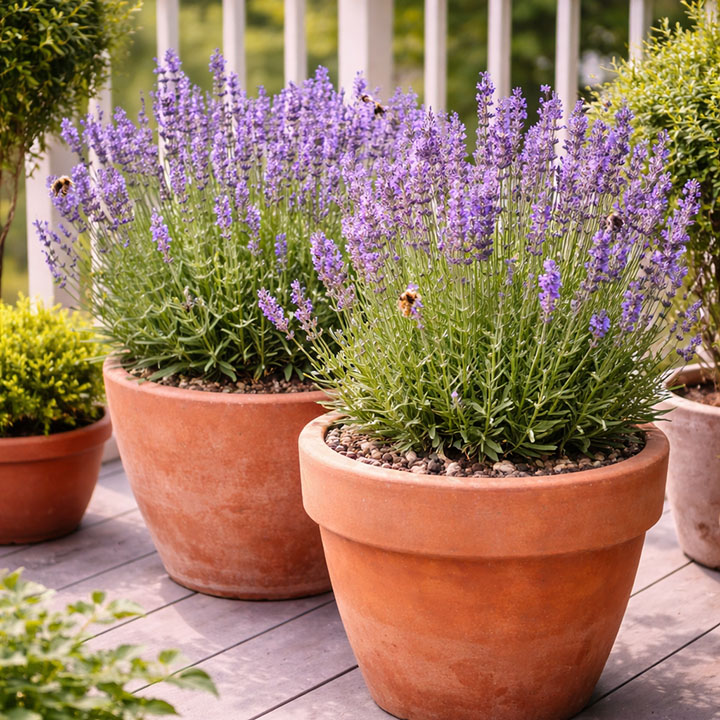
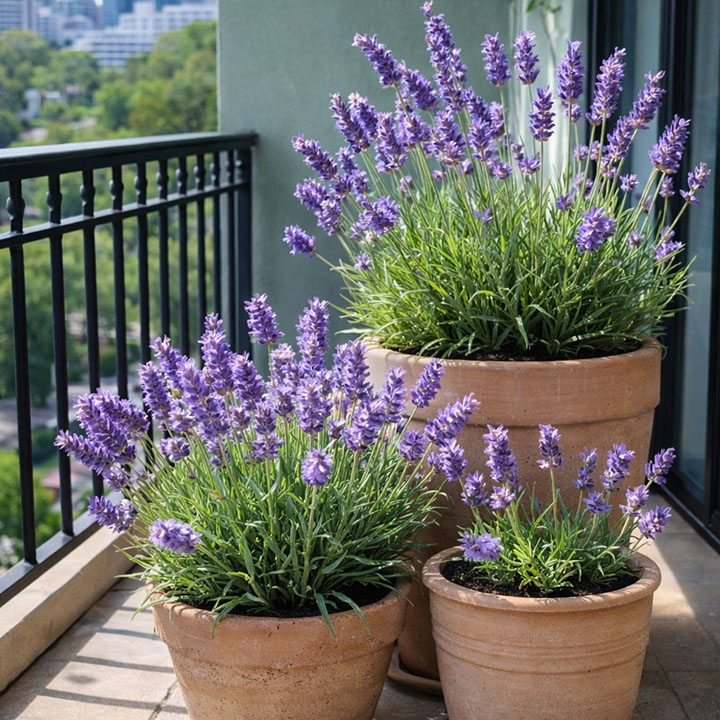
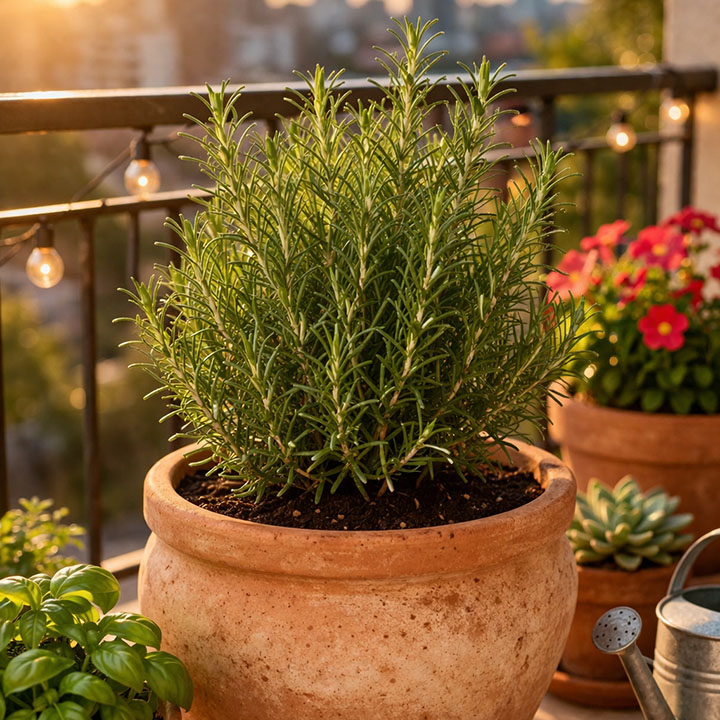
Mediterranean look: dwarf olive, rosemary, lavender, thyme, santolina, bay, and compact citrus. The charcoal finish suits this style beautifully and creates a refined, sun-drenched look.

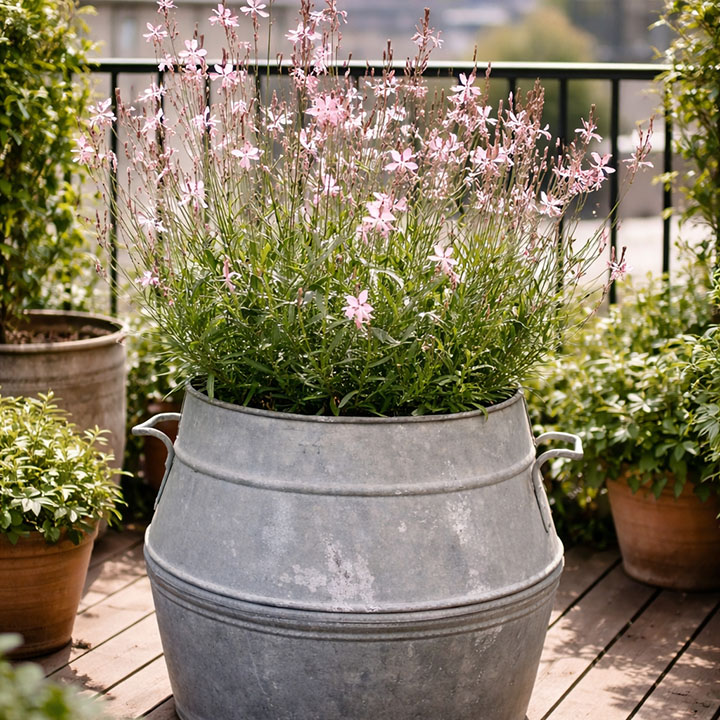
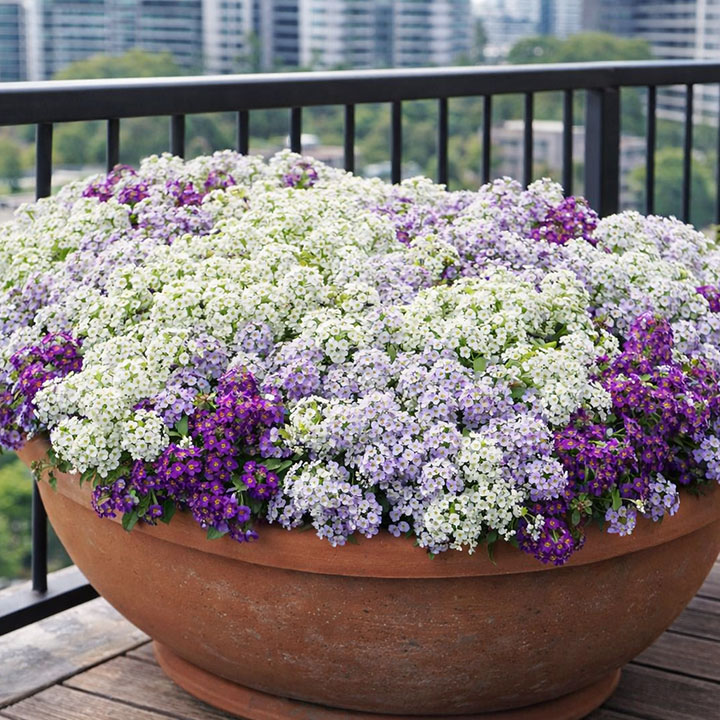
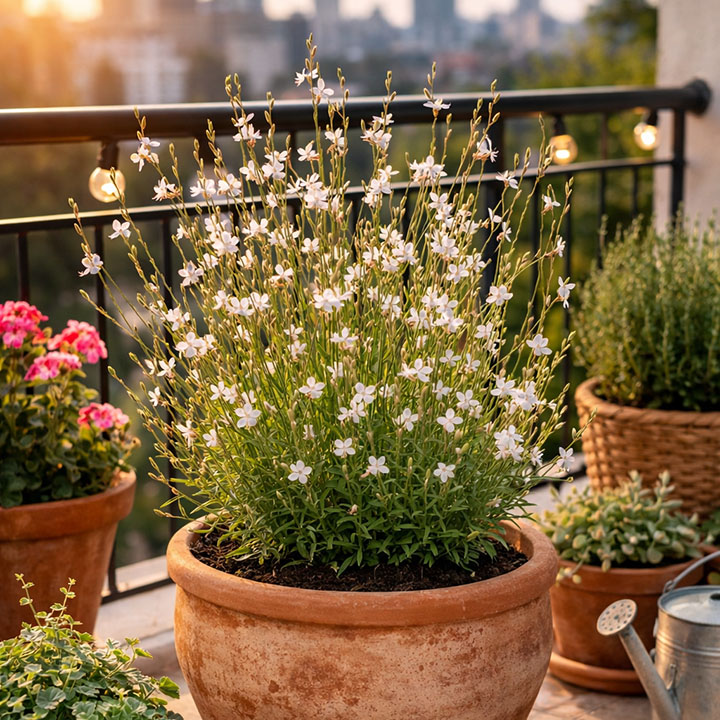
Cottage look: dwarf roses, salvia, gaura, dianthus, catmint, alyssum, and lavender. This gives a softer, more flower-filled effect.

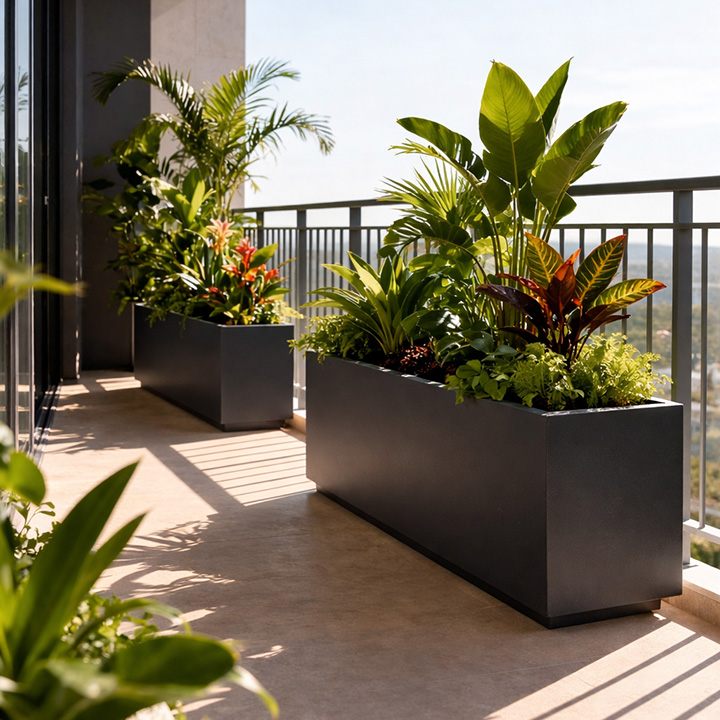
Tropical look: cordyline, bromeliads, philodendron Xanadu, clivia, bird’s nest fern, and lush foliage fillers. This works well on warm or sheltered balconies.

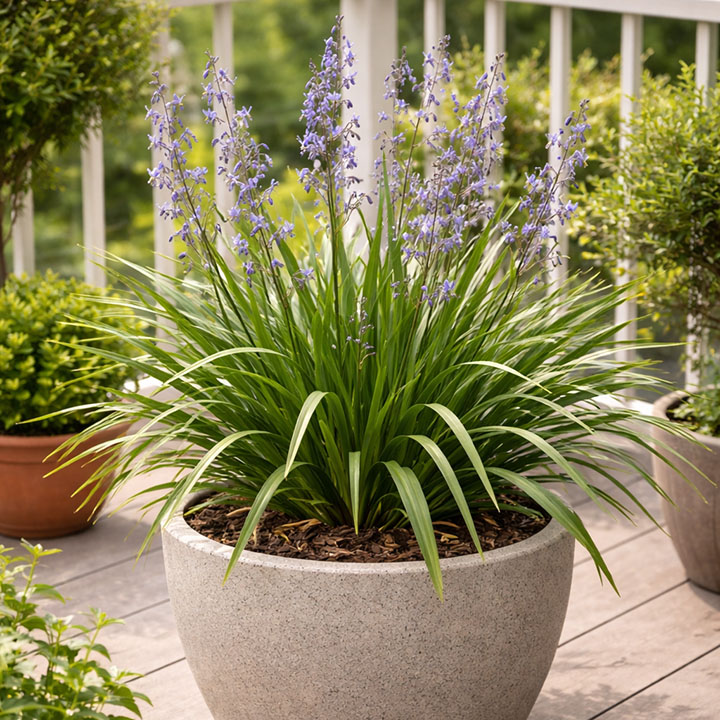
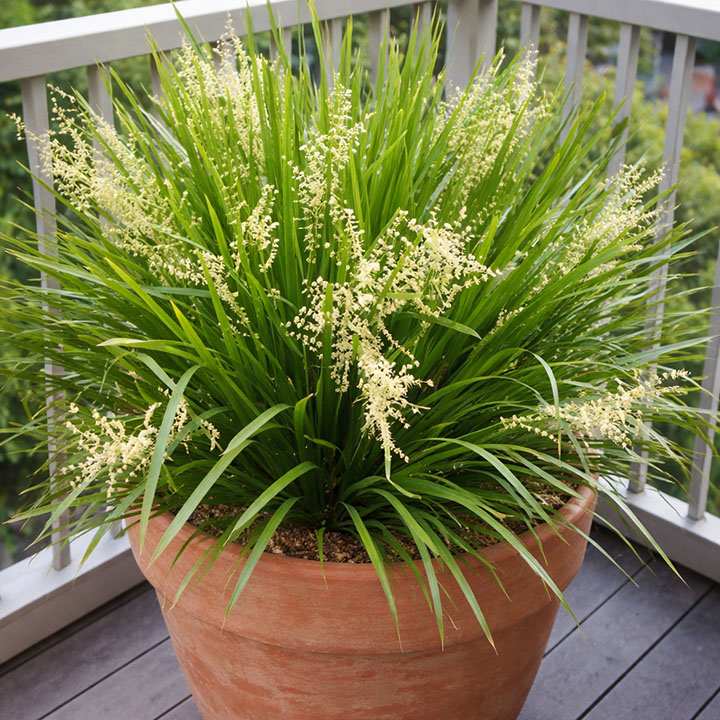
Native Australian look: westringia, lomandra, dianella, correa, pigface, scaevola, and compact grevillea. This is especially smart for exposed or coastal balconies.

Edible look: dwarf lemon, lime, bay, rosemary, parsley, sage, chillies, spring onions, and seasonal leafy greens. A long trough like this can be both attractive and highly productive.
Best plants for this ground planter by Australian region

Melbourne: westringia, rosemary, thyme, hebe, camellia sasanqua, dwarf nandina, parsley, violas, and compact grasses cope well with changeable weather and wind.

Sydney: dwarf citrus, star jasmine on support, westringia, lomandra, salvia, parsley, and clivia all suit the milder coastal climate well.

Brisbane: cordylines, philodendrons, citrus, lomandra, basil, chillies, bromeliads, and tropical foliage combinations do especially well in warm humid conditions.

Perth and Adelaide: dwarf olive, rosemary, lavender, thyme, westringia, society garlic, and compact citrus are some of the strongest picks for heat and drier summers.

Canberra and Hobart: rosemary, thyme, hebe, camellia sasanqua, hardy shrubs, parsley, and seasonal flowers are generally more reliable than tender tropicals.

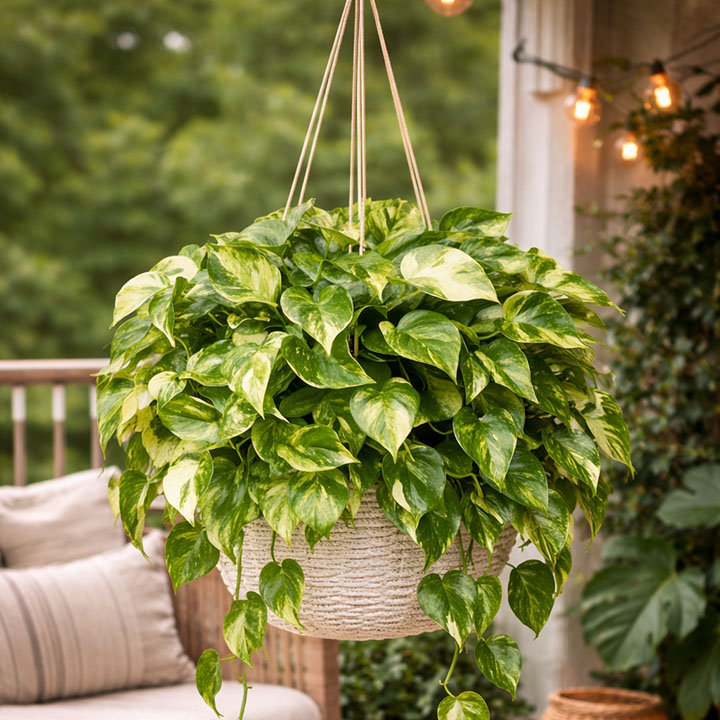
Darwin: bromeliads, crotons, philodendrons, cordylines, pothos, and lush tropical foliage make more sense than Mediterranean shrubs.
2. Railing planters: large 36-inch coco-lined railing troughs for real balcony impact

If you want the balcony to feel fully planted rather than dotted with small containers, the railing planters are one of the most important parts of the whole system. This is the layer that creates the strongest visual line across the balcony and gives that lush, finished, high-impact look from both inside and outside the home.

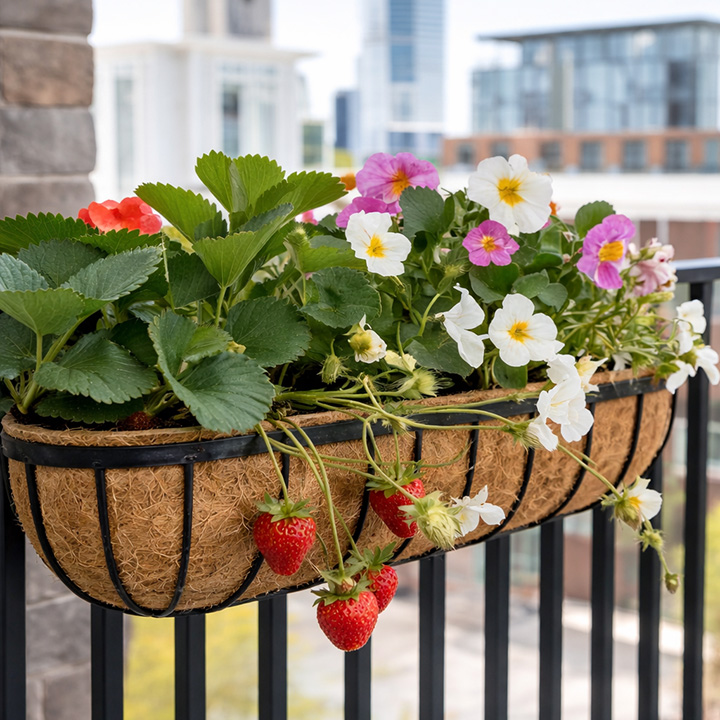
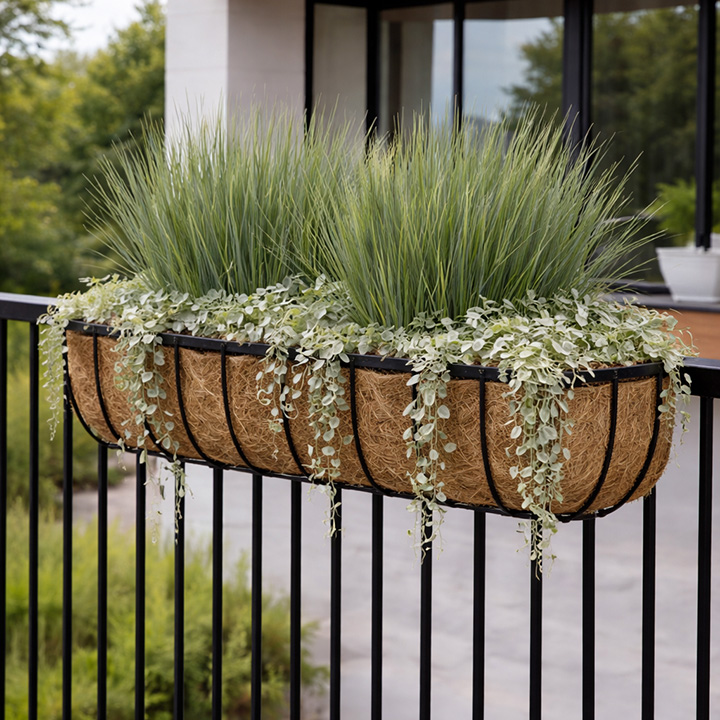
The 36-inch railing planter you have chosen is an especially good fit for this kind of design because it is large, long, and visually substantial. Smaller railing pots often look bitty and cluttered, especially when grouped together. A long planter like this reads as one clean design element and creates a much neater result when repeated across the railing.
Why this railing planter works so well for balconies

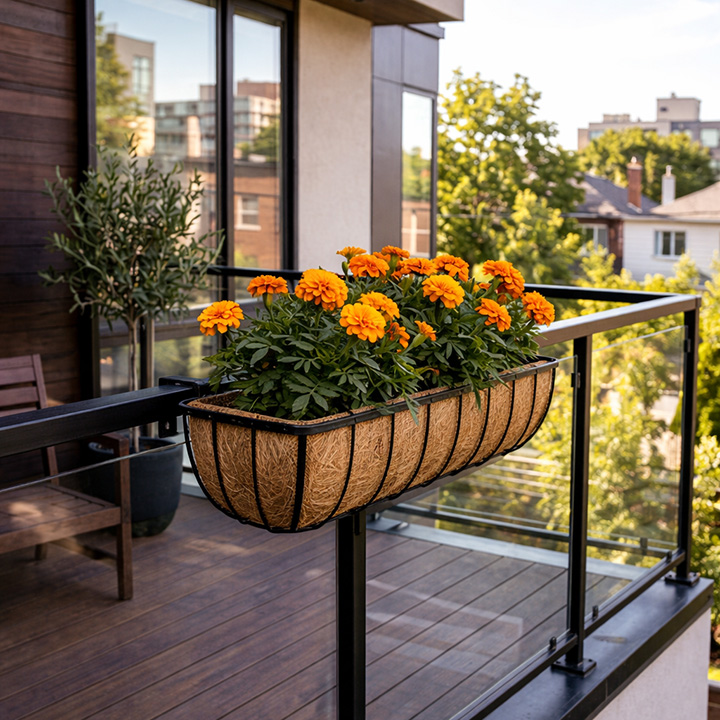
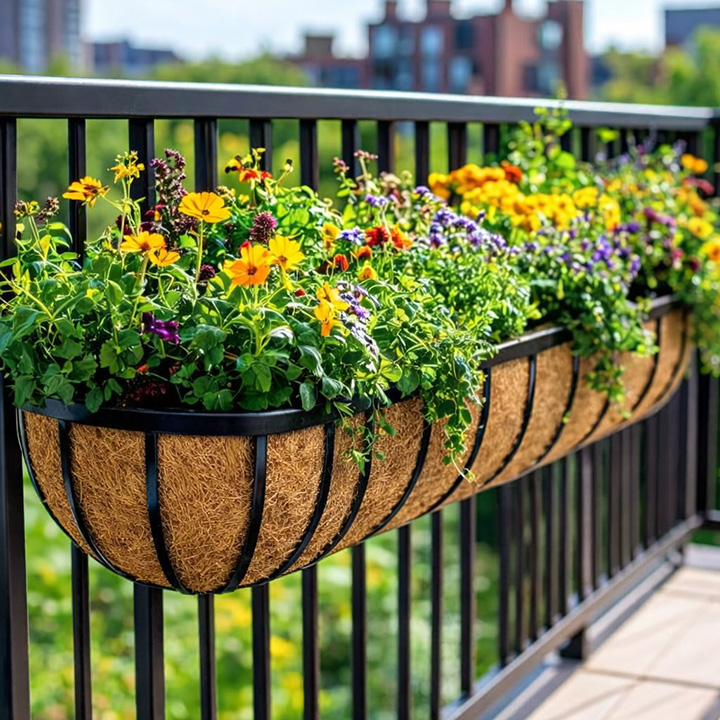
This style of railing planter is not just decorative. It is practical for balcony gardening and strong enough visually to help define the entire edge of the space. Because it is long and generously sized, it creates more of a planted band rather than a scattered collection of small pots.

  • Large 36-inch size: the planter is about 91 × 19 × 20 cm, which gives enough space for fuller planting and a much stronger visual effect than small railing baskets.
  • Good planting depth and width: it can hold several herbs, flowers, or trailing plants together, which makes it easier to create lush combinations.
  • Metal frame: the black metal structure gives the planter a neat, clean-lined look that suits modern balconies and helps it feel more architectural than plastic railing pots.
  • Coco liner: the natural coconut liner softens the look, improves drainage and airflow, and suits both cottage-style and more natural planting schemes.
  • Adjustable brackets: it is designed to hang over railings around 3 to 6 inches wide, which makes it more flexible for different balcony setups.
  • Multiple installation options: it can be used on balcony rails, fences, decks, walls, and under windows, which adds flexibility.
  • Better visual rhythm: repeating multiple long troughs across the railing creates a much cleaner and more intentional effect than using many small mixed containers.
The biggest benefit: it makes the balcony look designed, not messy

One of the biggest reasons this planter works so well is scale. On balconies, scale matters. Small railing planters can make the edge look fussy and over-decorated. A larger 36-inch trough gives you the wow effect because it reads as a real planting feature rather than an accessory.

It also makes planting much easier. Instead of trying to make lots of tiny pots look lush, you can create fuller, simpler combinations that have more presence. That is often what makes a balcony garden feel polished and higher-end.

Best ways to use this railing planter on a balcony

This planter works best when repeated across the main railing rather than used as a single standalone piece. Measure the usable railing length and aim to create a continuous planted line wherever possible. That repetition is what helps the balcony feel landscaped.

  • use several along the front railing for a full green edge
  • repeat the same planter style for a cleaner, more premium look
  • plant upright growers at the back and soft spillers at the front
  • use them to soften metal or glass balustrades
  • combine them with floor planters behind for layered planting

Because each planter is long, even two or three of them can make a big visual difference on a compact balcony. On wider balconies, using several across the full railing can transform the whole space.
Best planting styles for this railing planter

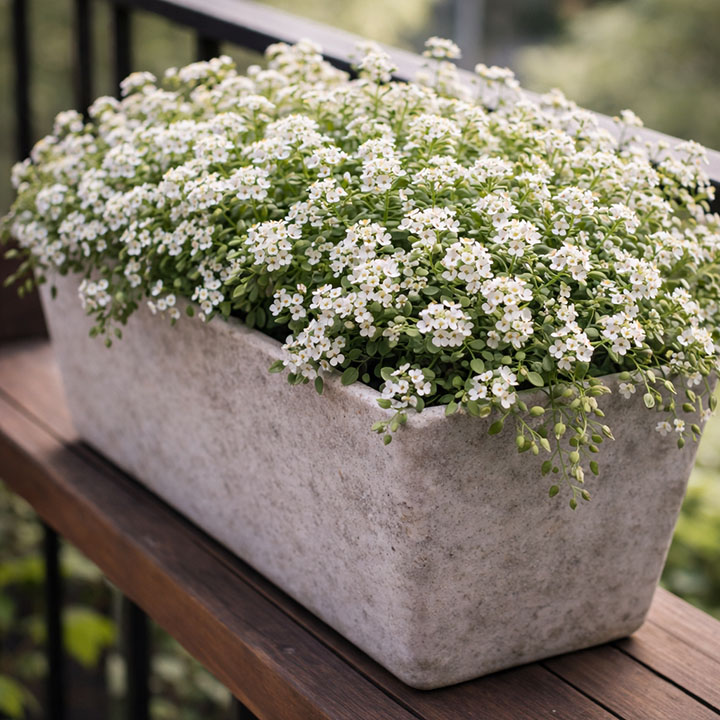
Mediterranean look: trailing rosemary, thyme, oregano, compact lavender, white alyssum, and strawberries. This works beautifully with the black metal frame and gives a clean, sunny, coastal feel.

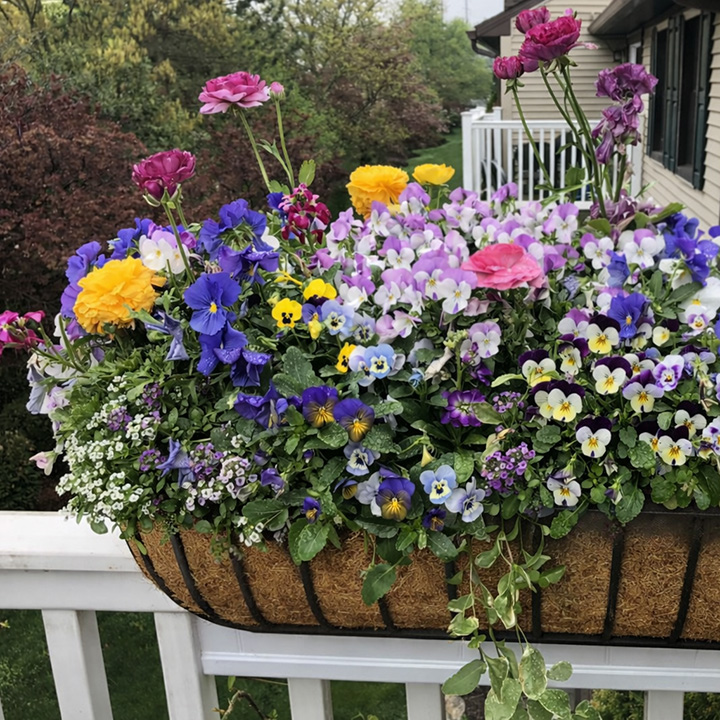
Cottage look: bacopa, lobelia, calibrachoa, petunias, alyssum, and trailing verbena. The coco liner suits this softer overflowing style especially well.

Tropical look: coleus, pothos, spider plant, tradescantia, sweet potato vine, and compact trailing foliage. This gives a lush layered effect on warm or protected balconies.

Native look: scaevola, brachyscome, native violet, pigface, and dichondra repens. These are especially useful for exposed balconies and for a lower-fuss Australian planting scheme.

Edible look: parsley, thyme, oregano, chives, lettuces, rocket, coriander in season, and strawberries. Because the planter is long and roomy, it is very suitable for edible balcony gardening.
Best plants for this railing planter by Australian region

Melbourne: thyme, parsley, lobelia, bacopa, alyssum, violas, and seasonal flowering spillers work well, especially where wind is managed.

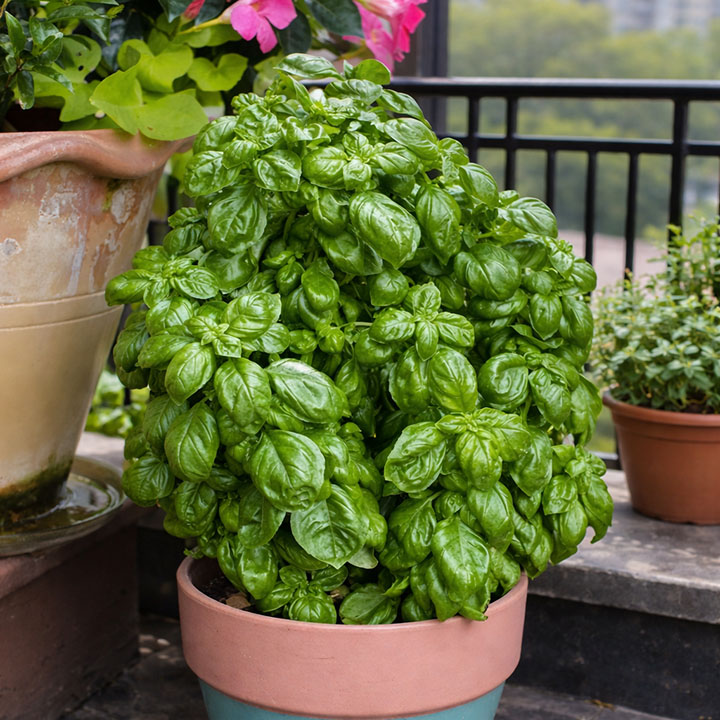
Sydney: strawberries, parsley, bacopa, brachyscome, alyssum, basil in warm weather, and selected trailing flowers all work well with good airflow.

Brisbane: sweet potato vine, basil, coleus, spider plant, parsley, strawberries, and subtropical spillers are often more reliable than delicate cool-climate flowers.

Perth and Adelaide: trailing rosemary, thyme, oregano, alyssum, strawberries, and tougher heat-tolerant trailing plants are the strongest choices for long hot periods.

Canberra and Hobart: cool-season flowers, herbs, and hardy compact spillers usually perform best, especially in sheltered spots.

Darwin: tropical foliage combinations such as pothos, spider plant, tradescantia, and coleus are usually a better fit than classic flowering mixes.
3. Hanging planters: extra-large 16-inch hanging baskets for vertical impact

Hanging planters are what take a balcony garden from looking good to looking complete. They add the upper layer of planting, soften hard walls and railings, and help turn a balcony into a true garden rather than just a space with pots. When used well, they create the sense that greenery is wrapping around the whole balcony.

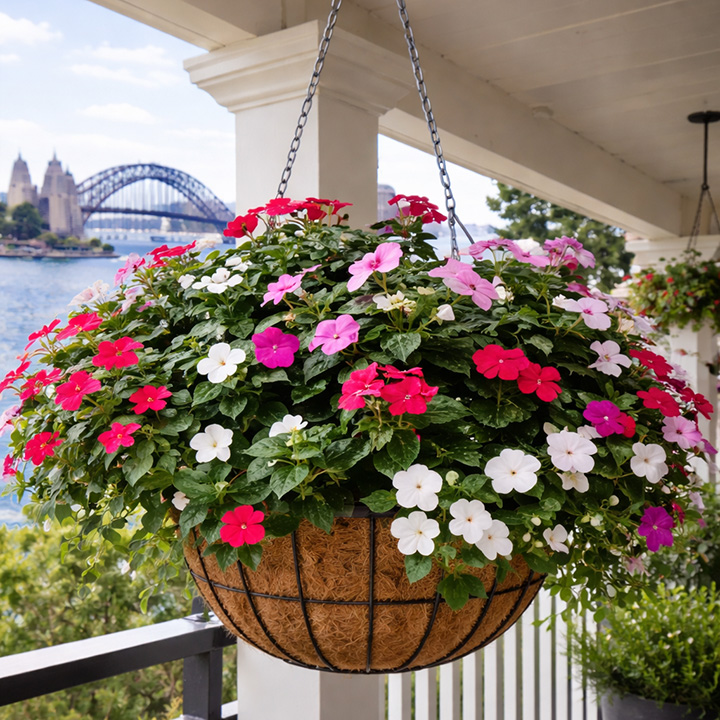
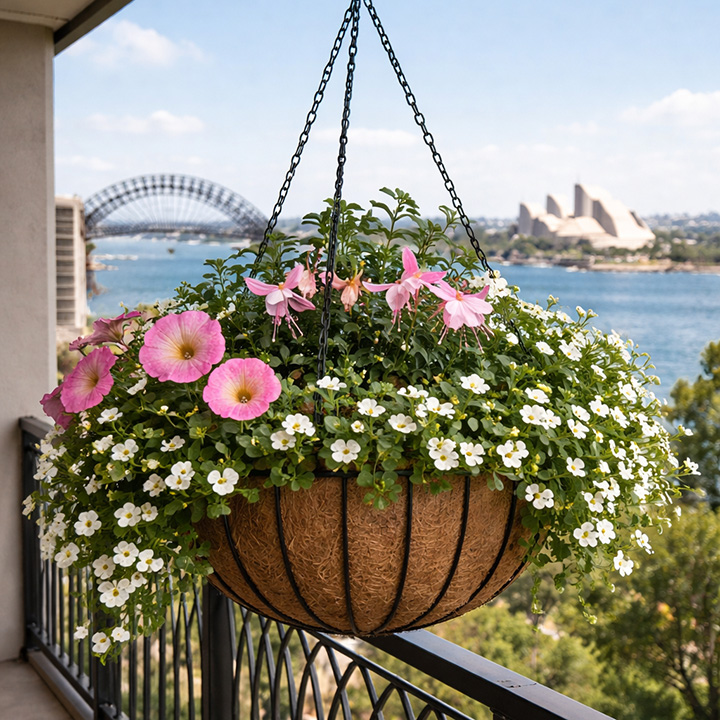
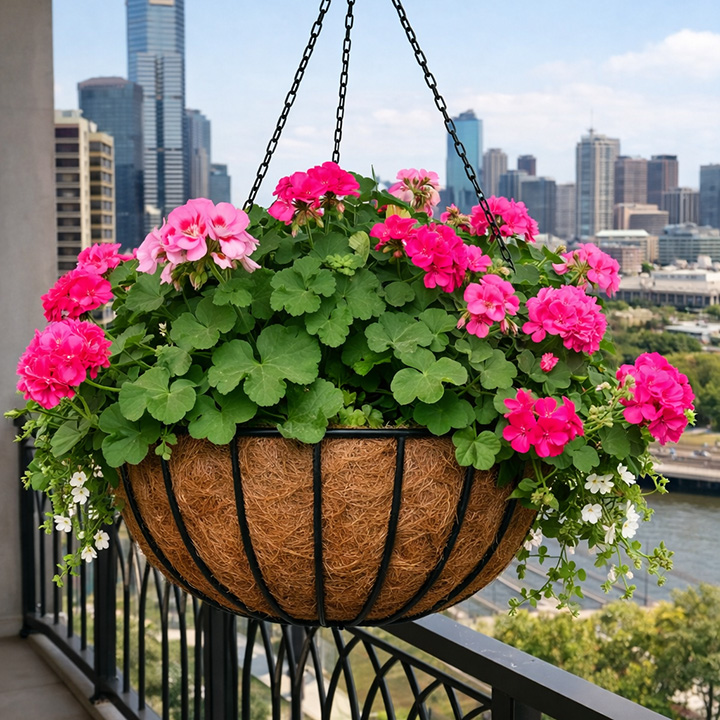
The 16-inch LaLaGreen hanging basket set is a very good choice for this kind of full-balcony system because it is large enough to make a visual statement. Small hanging pots often look fussy, dry out too quickly, and never quite create the lush look people are hoping for. These larger baskets have much more presence and are far better suited to building a layered hanging garden effect.

Another big advantage is that they come as a 4-pack. That matters for balcony design because one basket on its own can look isolated, while a repeated group of matching baskets creates rhythm, symmetry, and a much more finished result. This is exactly the kind of planter that works well when the goal is to cover the whole balcony in a coordinated way.
Why this hanging planter works so well for balconies

This style of hanging basket combines practical planting space with a clean decorative look. It suits both modern balconies and softer garden styles because the black metal frame gives it structure while the coco liner keeps it natural and garden-like.

  • Extra-large 16-inch size: the larger basket size gives plants more root room and creates a fuller, more dramatic hanging display than small baskets.
  • 4-pack set: matching baskets make it much easier to create a repeated, cohesive hanging garden across the balcony.
  • Black metal wire frame: the frame looks neat, modern, and visually lighter than bulky plastic hanging pots.
  • Coco liner included: the coco coir liner helps with drainage, airflow, and that soft natural finish that suits balcony gardens.
  • Ready to hang: the baskets come with hanging chain and hook, so they are easy to install without complicated setup.
  • No assembly required: this makes them especially convenient if you want to set up multiple baskets at once.
  • Lightweight and rust resistant: that is useful on balconies where planters may be exposed to weather and need to stay practical as well as attractive.
  • Indoor or outdoor use: they work on balconies, porches, decks, patios, and near windows or sheltered wall areas.
The biggest benefit: they create a real hanging garden effect

The biggest strength of this planter is that it helps build the vertical layer of the balcony. Floor planters and railing boxes give structure and edge planting, but hanging baskets are what lift the garden upward and make the space feel richer and more immersive.

Because these baskets come in a matching set, they are ideal for creating that repeated hanging garden look. Grouped across a beam, wall, balcony edge, or overhead support, they make the planting feel deliberate and abundant rather than random.

This is especially useful on small balconies where floor space is limited. Hanging planters let you add far more greenery without taking up valuable room for chairs, tables, or circulation space.

Best ways to use these hanging baskets on a balcony

  • hang them in a repeated row to create a fuller balcony garden canopy
  • use them in corners to soften empty vertical space
  • place them near walls or windows to frame the balcony
  • combine them with railing planters below for a layered garden effect
  • use several sets together if you want a denser and more immersive planted look

These baskets are especially effective when they are not treated as isolated accents. Their real strength comes from repetition. A matching group of large baskets makes the balcony feel styled and intentional.

Best planting styles for these hanging baskets

Mediterranean look: ivy geranium, trailing rosemary, thyme, oregano, white bacopa, and silver foliage such as dichondra ‘Silver Falls’. The black frame and natural liner suit this look beautifully.

Cottage look: petunias, calibrachoa, lobelia, alyssum, bacopa, and trailing verbena. This is the classic overflowing basket style and works very well with the round basket shape.

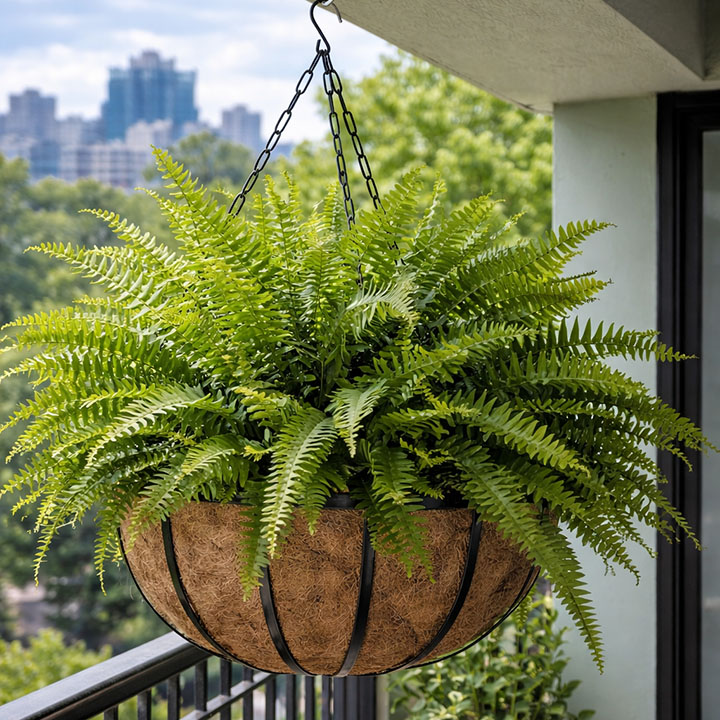
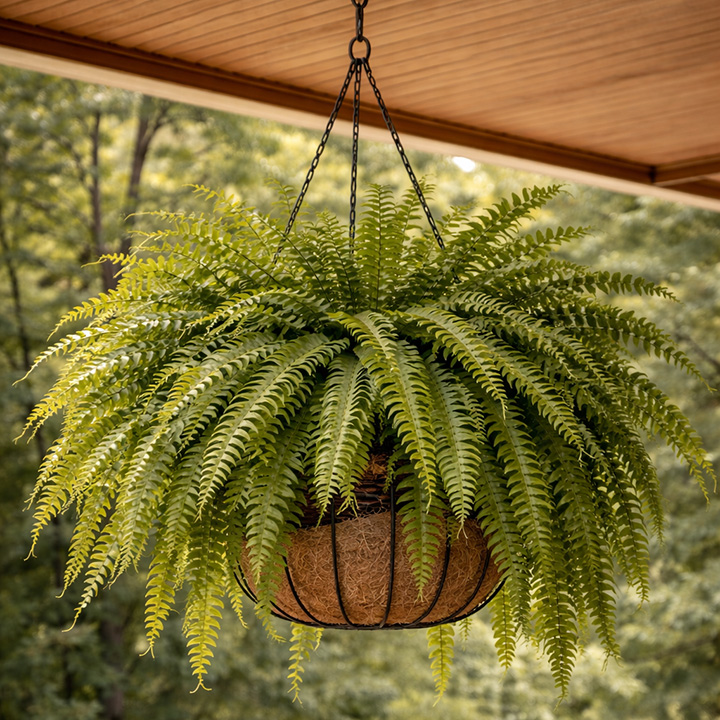
Tropical look: spider plant, pothos, tradescantia, Boston fern, fishbone fern, and trailing philodendron. This is one of the best choices for protected balconies in warmer climates.

Native look: native violet, brachyscome, scaevola, and softer native spillers that can trail over the basket edge. This is a good lower-fuss option for Australian balconies.

Edible look: strawberries, thyme, oregano, and compact trailing herbs. These baskets can also be used for practical planting, not just flowers and foliage.
Best plants for these hanging baskets by Australian region

Melbourne: bacopa, lobelia, ivy geranium, violas in season, thyme, and strawberries are good choices. In warmer sheltered months, spider plants and ferns can also do well.

Sydney: bacopa, petunias with good airflow, pothos, spider plant, coleus, ferns, and strawberries all work depending on light and exposure.

Brisbane: tropical foliage usually performs very well. Spider plant, pothos, tradescantia, coleus, and ferns are often more reliable than delicate cool-climate flowering baskets through summer.

Perth and Adelaide: choose tougher sun-tolerant baskets such as ivy geranium, thyme, trailing rosemary, strawberries, and silver spillers. Hanging baskets in these cities can dry quickly in summer, so tougher plants are a smart choice.

Canberra and Hobart: hardy flowering baskets, herbs, and cool-season annuals are often the safest route. Tender tropical plants usually need more shelter in these climates.

Darwin: tropical foliage such as pothos, spider plant, tradescantia, and ferns are a much better fit than traditional flowering basket mixes.

Read more about the right plants for your balcony

Best Plants for a Full Sun Garden in Australia

Best Plants for a Semi-Shade Balcony in Australia

Best Plants for a Full Shade Balcony in Australia

Best balcony looks you can create with this planter system

Mediterranean balcony

This is one of the best styles for Australian balconies because it suits sun, looks elegant, and usually ages well. Use the long charcoal troughs for dwarf olive, rosemary, lavender, and compact citrus. Fill the railing troughs with thyme, oregano, alyssum, and trailing rosemary. Finish with hanging baskets of ivy geranium and silver spillers. Keep the palette restrained with green, silver, white, and soft purple.

Cottage balcony

For a softer and more colourful garden, use the ground planters for dwarf roses, salvia, gaura, and lavender. Fill the railing planters with bacopa, lobelia, alyssum, petunias, and calibrachoa. Use hanging baskets with petunias and trailing verbena. The key is repetition. A few colours repeated well will look far better than too many mixed tones.

Tropical balcony

For a lush resort feel, use the long floor planters for cordylines, bromeliads, philodendrons, clivia, and leafy feature plants. Fill railing planters with coleus, spider plant, pothos, and trailing foliage. Use hanging baskets with Boston fern, fishbone fern, pothos, or tradescantia. This style is especially good in Brisbane, Sydney in protected positions, and Darwin.

Native Australian balcony

If you want a tougher lower-fuss balcony, use the ground planters for westringia, lomandra, dianella, correa, and compact grevillea. Fill the railing boxes with brachyscome, scaevola, native violet, and pigface. Add hanging baskets with native violet or softer native spillers. This is one of the smartest styles for exposed balconies.

Modern minimal balcony

If you want a clean modern look, this planter system is ideal. The charcoal troughs, black metal railing planters, and black hanging baskets already work together visually. Keep the plant palette simple and repeat it. A structured shrub plus a trailing plant is often enough to make the space feel expensive and architectural.

Edible balcony

This system can also become a very productive balcony garden. Use the ground planters for dwarf citrus, chillies, rosemary, bay, and leafy greens. Use the railing planters for parsley, thyme, oregano, lettuces, rocket, and strawberries. Use the hanging baskets for thyme, oregano, and strawberries. This gives you a balcony that looks beautiful and produces useful food.

How to lay out the whole balcony

The best way to design this system is to think in layers rather than individual pots.

  • Layer one: place the long ground planters along the floor edge, wall lines, or corners.
  • Layer two: repeat the railing planters across the main balustrade to create a planted band.
  • Layer three: use the hanging baskets to lift the planting upward and soften the vertical space.

Try to keep the centre of the balcony open for furniture and movement. The most successful balcony gardens usually define the perimeter rather than filling the middle with pots.

Small balcony formula

On a compact balcony, a strong formula is two long ground planters, two or three repeated railing planters, and two to four hanging baskets. That is often enough to make the space feel fully landscaped.

Medium balcony formula

For a medium or wider balcony, use three or four long ground planters, three or more railing troughs across the main edge, and four or more hanging baskets for a fuller layered look.

Large balcony formula

On a larger balcony, repeat the same system rather than changing styles. More of the same long troughs, the same railing planters, and the same hanging baskets will usually look far better than adding many extra planter types.

Best planter strategy for different Australian climates

Hot dry balconies: common in Perth and Adelaide. Mediterranean and native palettes are usually the strongest because they handle bright sun and drier conditions better than thirsty annual mixes.

Humid east-coast balconies: common in Brisbane and many Sydney positions. Tropical foliage, subtropical plants, herbs, and carefully chosen flowering plants with good airflow generally perform well.

Cooler southern balconies: common in Melbourne, Hobart, and Canberra. Wind-tolerant shrubs, herbs, and seasonal flowers are often the safest choices.

Tropical north balconies: common in Darwin. Use lush foliage, excellent drainage, and plants that handle heat, humidity, and seasonal rain.

Tips for making this balcony planter system work well

  • use quality potting mix in every planter
  • add slow-release fertiliser for stronger consistent growth
  • repeat plants instead of using too many different varieties
  • mix upright structure with trailing spillers
  • check sunlight, wind exposure, and access to water before final placement
  • keep the centre of the balcony clear so the space stays usable
  • water hanging baskets and railing planters more frequently than deep ground troughs
  • stick to a limited palette for a cleaner and more premium look

Final thoughts

If your goal is to cover the whole balcony and create a strong stylish result, this is an excellent planter system. The long Greenlife ground planters provide structure and planting volume, the 36-inch railing planters create the most dramatic planted edge, and the 16-inch hanging baskets complete the look by adding height and softness.

The real strength of this setup is that all three planter types support the same design principle: fewer, larger planters repeated well. That is what makes a balcony feel full without making it look messy.

Whether you want a Mediterranean balcony, a cottage look, a lush tropical retreat, a native Australian planting scheme, or an edible garden, this coordinated planter system gives you a strong framework that can be adapted beautifully for balconies across Australia.

FAQ

What are the best balcony planters for a full balcony look?

The best balcony planters for a full and polished look are usually long ground troughs, large railing planters, and oversized hanging baskets used together as one coordinated system. This creates planting at floor level, railing level, and above, which makes the balcony feel much more complete.

Are large planters better than small pots on a balcony?

In most cases, yes. Large planters look neater, hold more soil, dry out less quickly, and create stronger design impact. Small pots can work as accents, but too many of them often make a balcony look cluttered.

What should I plant in long balcony planters in Australia?

That depends on your climate and the style you want. Mediterranean planting may include rosemary, lavender, olives, and citrus. Native planting may include westringia, lomandra, scaevola, and pigface. Cottage balconies often use roses, salvia, and alyssum, while tropical balconies suit cordylines, philodendrons, and bromeliads.

What are the best plants for railing planters?

Good choices include herbs, strawberries, alyssum, bacopa, lobelia, brachyscome, native violet, trailing rosemary, and compact seasonal flowers. The best plants are those that stay tidy while still softening the railing edge.

What can I grow in hanging baskets on a balcony?

You can grow petunias, bacopa, ivy geranium, ferns, pothos, spider plant, tradescantia, strawberries, thyme, and native violet. The right choice depends on how much sun and wind your balcony gets.

What is the best balcony style for hot Australian cities?

Mediterranean and native styles are often the best fit for hot dry cities such as Perth and Adelaide because they use tougher plants that handle strong sun and lower summer moisture better than thirstier mixed flower displays.

What is the best balcony style for humid cities like Brisbane and Sydney?

Tropical, subtropical, and selective edible planting schemes often work especially well in humid cities. Plants such as bromeliads, philodendrons, cordylines, herbs, spider plants, and ferns usually cope better than delicate cool-climate flowers.

How do I make my balcony look full without making it messy?

Use fewer planter styles, repeat them consistently, and keep the plant palette tighter. A coordinated system of matching ground planters, railing boxes, and hanging baskets almost always looks more intentional than lots of mixed pots.

How many planters do I need to cover a balcony?

For many balconies, two long ground planters, two or three repeated railing planters, and two to four hanging baskets are enough to create a full effect. Larger balconies can scale this up with the same repeated formula.

Can I use the same planter system in Melbourne, Sydney, Brisbane, Perth, and other Australian cities?

Yes. The planter system can stay the same, but the plants should change depending on the local climate, sun exposure, wind, and humidity. That is what makes the system flexible across Australia.
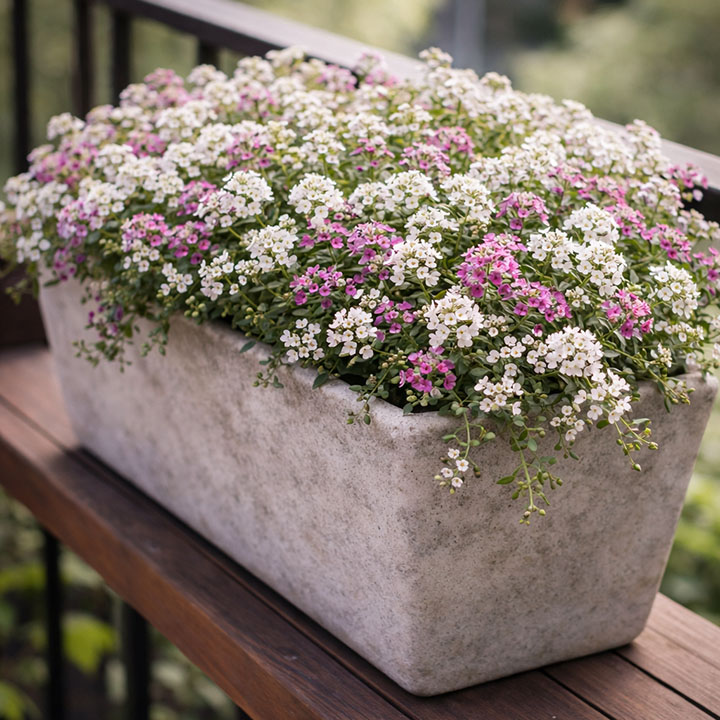
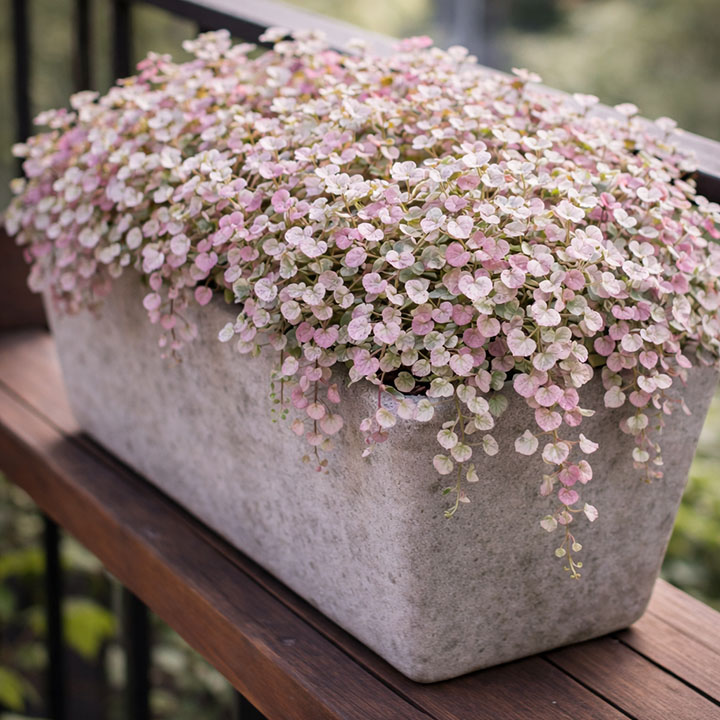
The right plants for planter edges can completely change the look of a balcony, courtyard, or small garden. They soften the rim of the pot, add colour and texture, and help a container look full and layered rather than flat. Some edge plants trail over the side, some mound neatly at the front, and some create a relaxed, spilling effect that makes a planter feel lush and established.

In Australia, the best plants for planter edges need to do more than just look good. They often have to handle hot sun, drying wind, reflected heat from walls and paving, and the challenges of container growing. In cooler or shadier parts of the country, edge plants also need to cope with reduced light and slower growth. The best choices are the ones that suit both your style and your local climate.

This guide covers some of the best plants for planter edges in Australia, including options for sunny balconies, part-shade spaces, dry climates, and cooler southern cities. Whether you want a neat native look, a soft cottage-garden feel, or a low-maintenance modern planter, there is a plant that will suit your conditions.

What makes a good planter-edge plant?

A good planter-edge plant should either spill gently over the side of the pot or form a soft mound that relaxes the hard line of the container. It should also perform well in potting mix, cope with regular trimming, and suit the sun, shade, and watering conditions of the space.

  • Trailing or spreading growth habit
  • Compact roots suited to containers
  • Good response to trimming
  • Reliable performance in Australian conditions
  • Foliage or flowers that hold up well near the planter rim

Best plants for planter edges

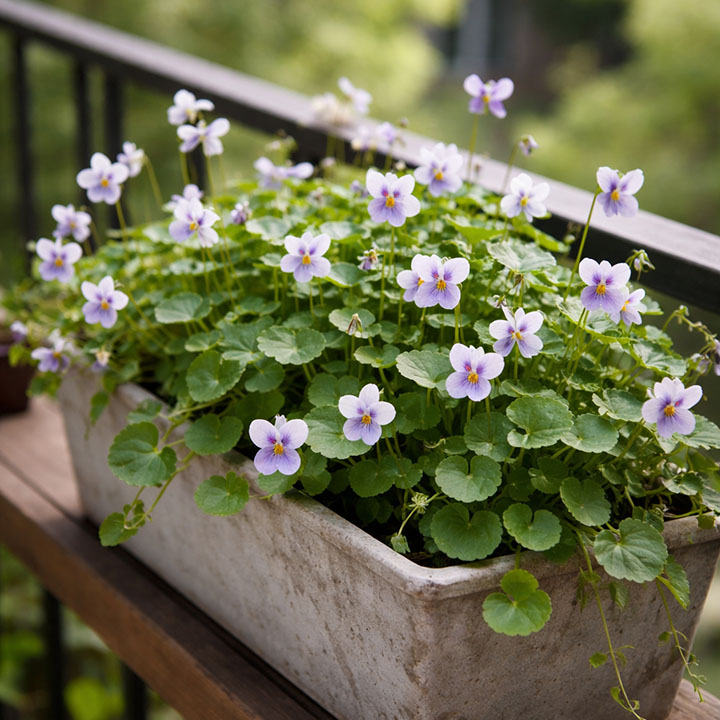
Native violet

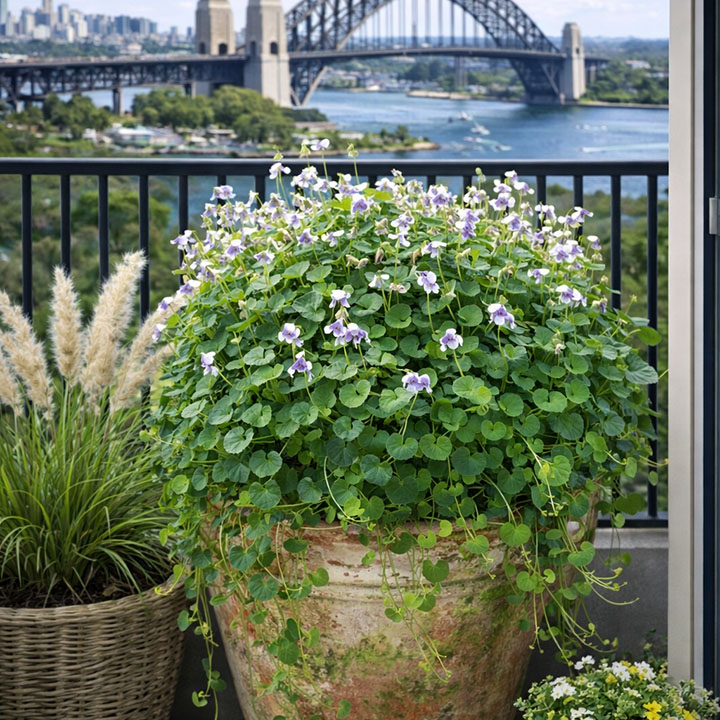
Native violet is one of the best choices for shaded and semi-shaded planter edges. It spreads gently, softens the front of pots beautifully, and gives a cool, leafy look that suits balconies and sheltered courtyards. Its small flowers add charm without making the planting look busy.

This plant is especially useful where direct sun is limited. It works well in trough planters, bowls, and mixed shade containers, and it helps create a softer, more natural finish around the rim.

Best for: shade, part shade, sheltered balconies

Good for: Melbourne, Sydney, Hobart, Canberra

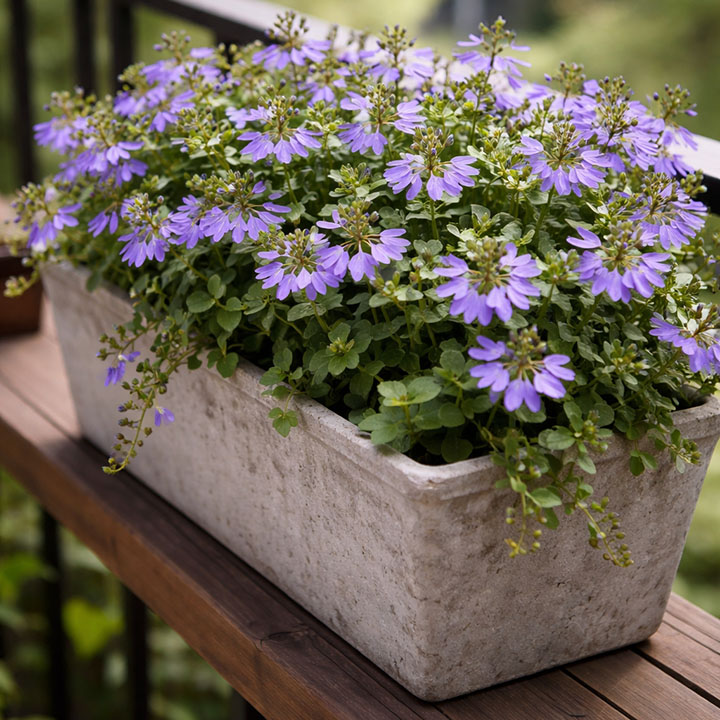
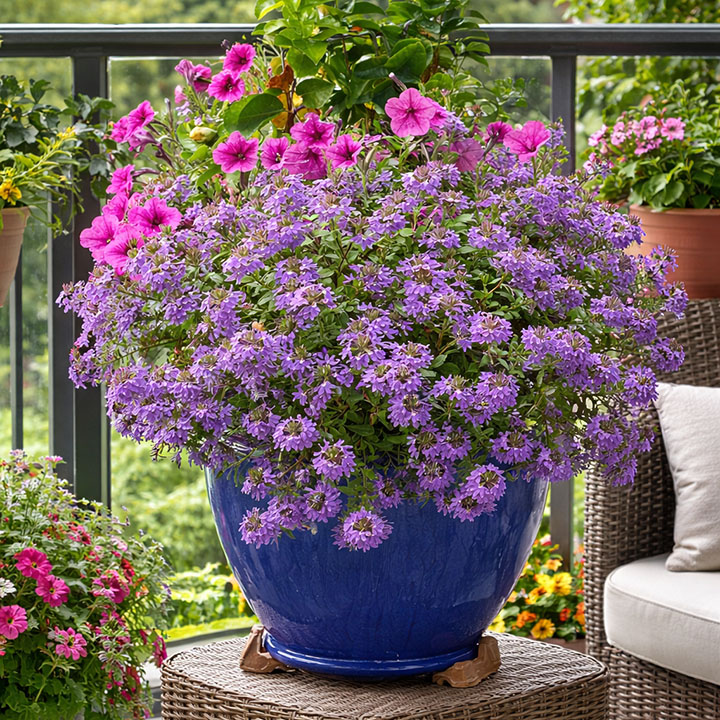
Scaevola

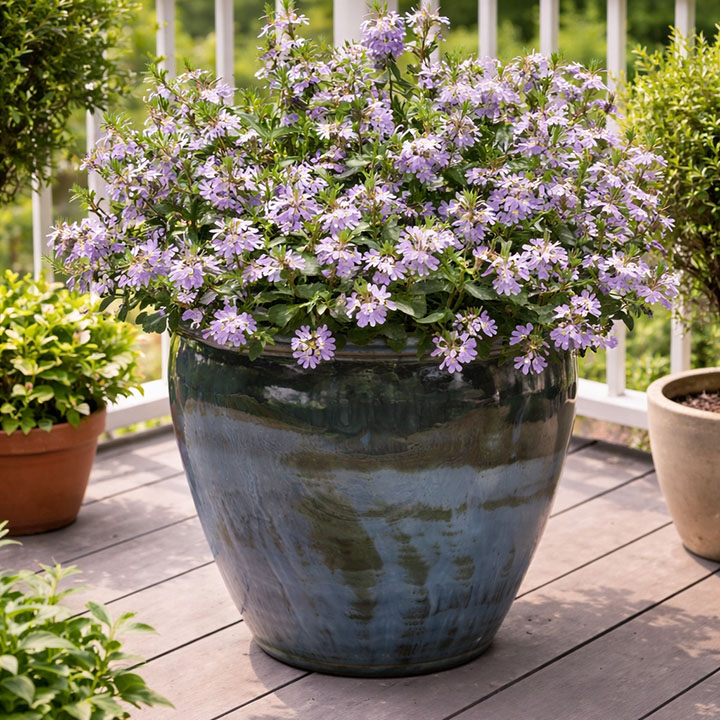
Scaevola is one of the best flowering plants for planter edges in Australia. It has a spreading to trailing habit, handles sunny conditions well, and flowers over a long period in the warmer months. It gives colour without looking heavy and works beautifully in balcony boxes and larger mixed planters.
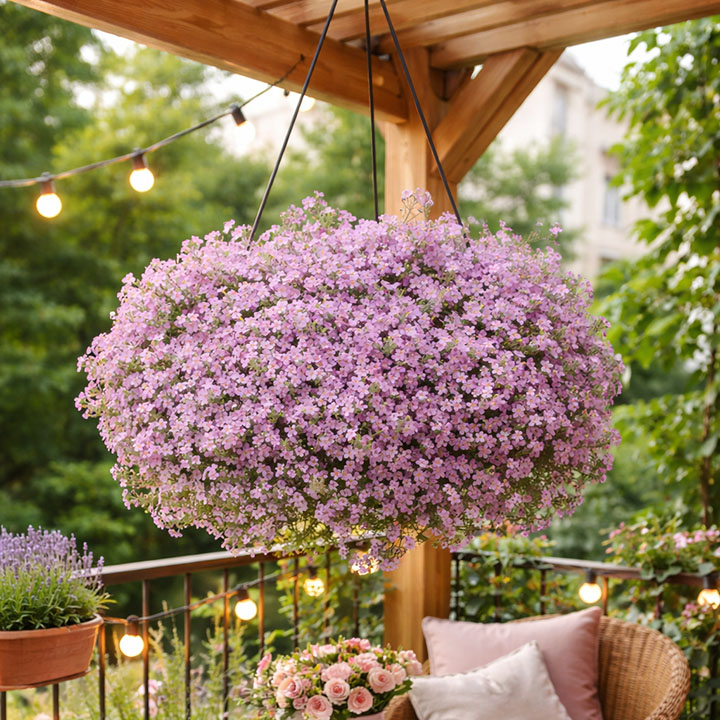
Because it suits heat and coastal conditions, it is a strong option for exposed balconies and sunny terraces. It also pairs well with upright grasses, dwarf shrubs, and other flowering annuals or perennials.

Best for: sunny balconies, flowering edges, coastal planters

Good for: Sydney, Brisbane, Perth, Adelaide, Melbourne

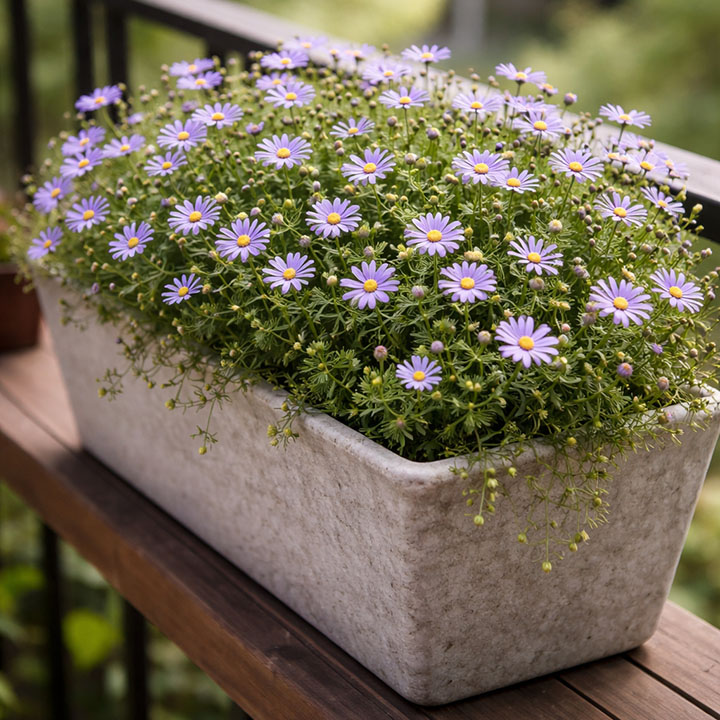
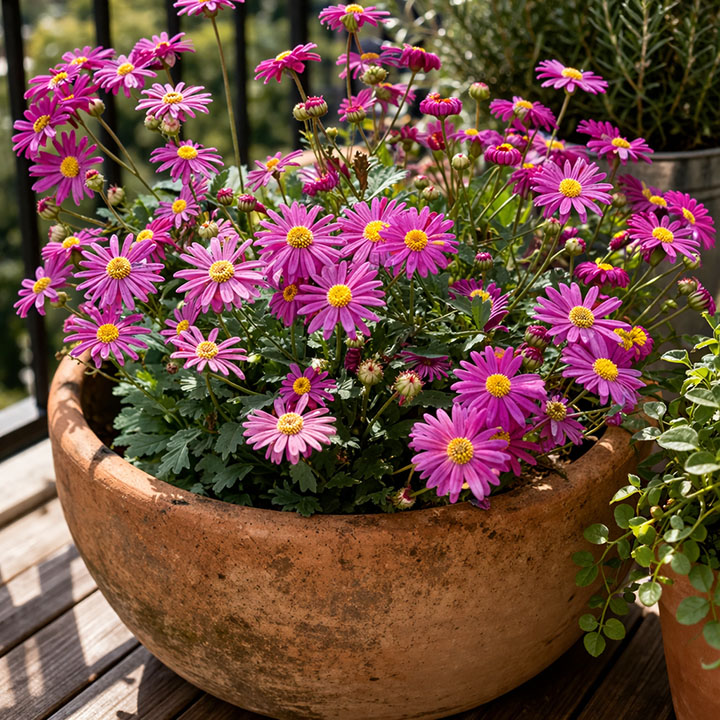
Brachyscome

Brachyscome is a lovely plant for soft mounding edges. It brings masses of daisy-like flowers and fine foliage, making it ideal for planters that need a lighter, more relaxed look. It does not always trail dramatically, but it softens the edge beautifully and adds long-lasting colour.

This is a good choice for balcony gardeners who want colour without using larger bedding plants. It suits native-inspired and cottage-style planters equally well.

Best for: soft mounds, long-lasting colour, mixed planters

Good for: most Australian cities in sun to part shade

Creeping boobialla

Creeping boobialla is a hardy native that works very well at the front of sunny planters. It forms a neat, low-growing edge and can spill gently over the side without becoming untidy. It is especially useful in low-water gardens and on hot balconies where softer plants can struggle.

Its dense growth and toughness make it a smart choice for modern container designs and native balcony gardens.

Best for: dry sunny edges, native-style planters, low maintenance

Good for: Perth, Adelaide, Melbourne, coastal and inland areas

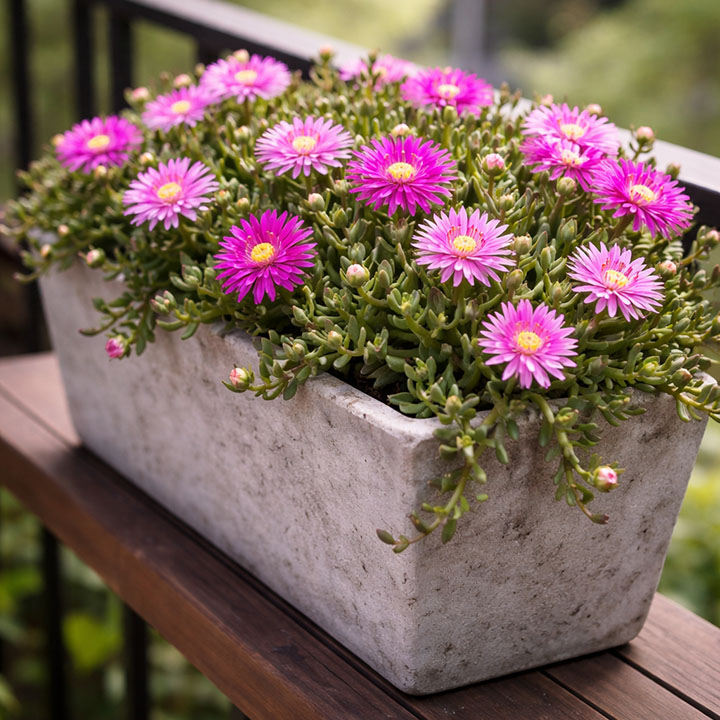
Pigface

Pigface is perfect for bright, exposed planter edges. Its fleshy leaves store water well, and its trailing habit makes it ideal for spilling over the rim of pots in full sun. When it flowers, it adds bright colour and a coastal feel that suits Australian outdoor spaces beautifully.

This is one of the best plants for hot, dry balconies or windy positions where many other edge plants dry out too quickly.

Best for: coastal balconies, hot sun, drought-tolerant planters

Good for: Perth, Adelaide, Sydney coast, exposed balconies

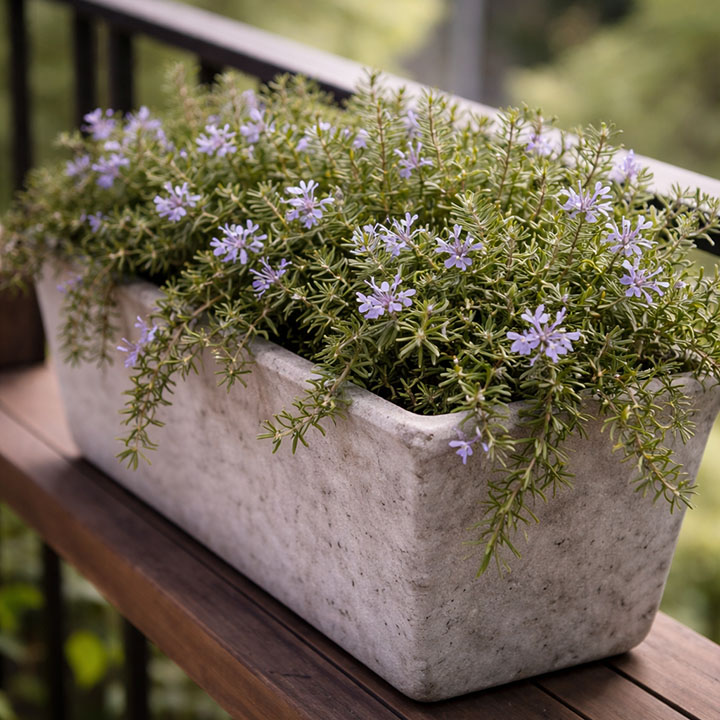
Prostrate rosemary

Prostrate rosemary is a practical and attractive option for planter edges. It trails softly, smells wonderful, and handles heat and dry conditions well. It is ideal for edible balcony gardens and Mediterranean-style plantings where you want both structure and usefulness.

Because it can be clipped neatly, it suits formal and informal containers alike. It looks especially good in terracotta pots and long trough planters.

Best for: edible planting, sunny balconies, dry conditions

Good for: Melbourne, Adelaide, Perth, sunny Sydney balconies

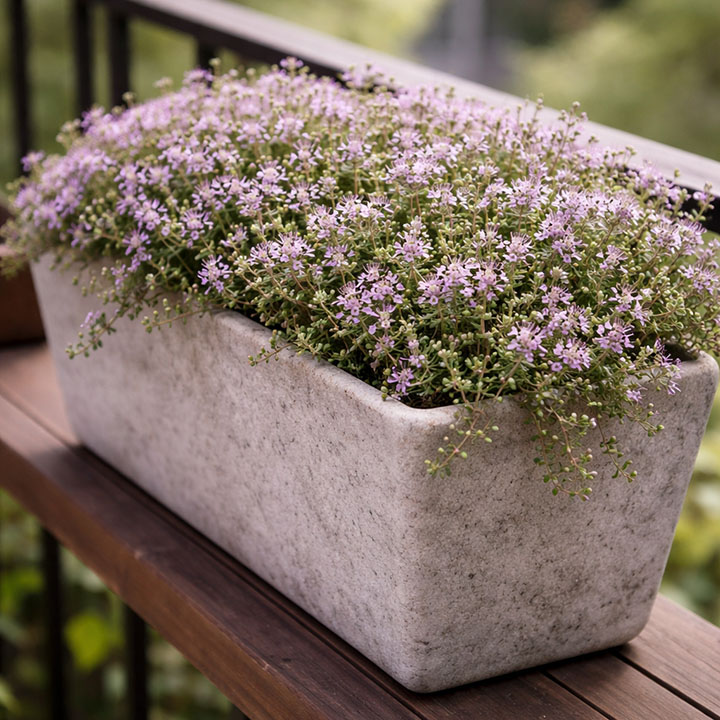
Creeping thyme

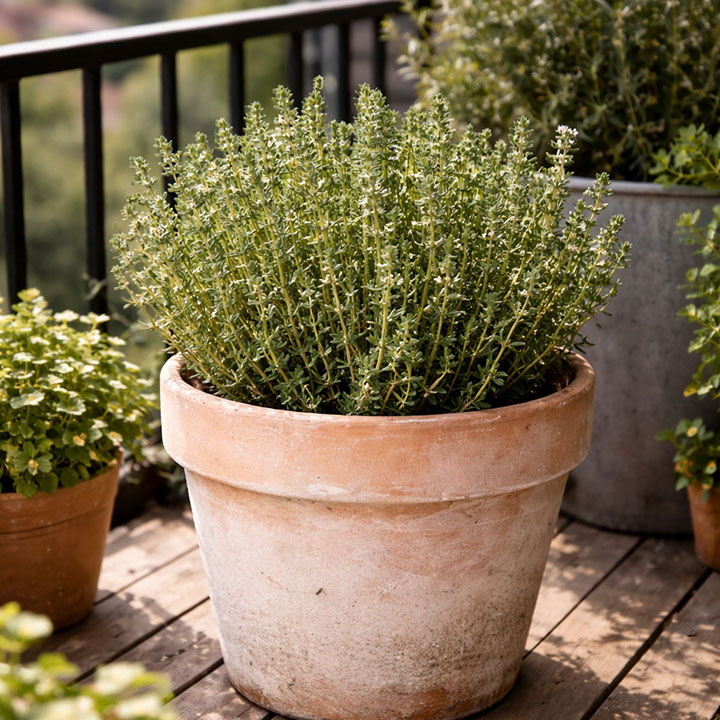
Creeping thyme makes a low, fragrant edge that softens a planter without taking over. It is more of a gentle spreader than a true spiller, but it works very well at the front of herb pots, bowls, and sunny mixed planters. The foliage stays tidy and the flowers attract pollinators.

It needs sun and good drainage, so it is best used in drier climates or in very free-draining potting mixes.

Best for: herb planters, sunny edges, low neat growth

Good for: Melbourne, Adelaide, Perth, Canberra, Hobart

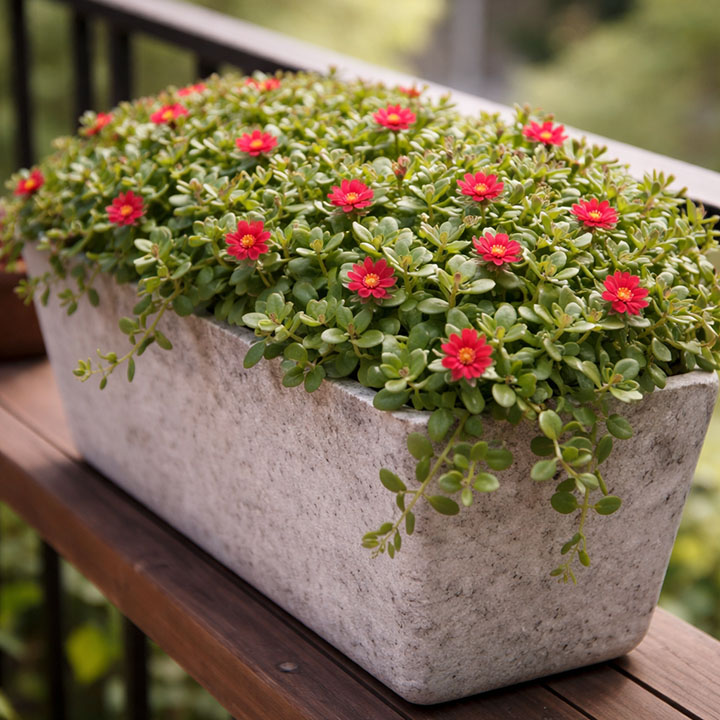
Aptenia

Aptenia is a tough, low-growing succulent-style plant that works well on very hot balconies. It spreads across the front of the planter and spills over the edge in a bright green layer. It is useful in spots where reflected heat and strong sun make softer trailing plants difficult to keep looking fresh.

It is best used where durability matters more than a refined look, especially in modern planters or dry urban spaces.

Best for: harsh sun, heat, low-water conditions

Good for: Perth, Adelaide, western Sydney, exposed city balconies

Best plants for planter edges by Australian city and climate

Sydney

Sydney balconies often deal with humidity, rain, and periods of strong sun. Scaevola, brachyscome, and native violet in shaded spaces are all good choices. Good drainage is essential so edge plants do not sit wet for too long.

Melbourne

Melbourne’s changeable weather suits versatile plants that can handle cool spells, wind, and warmer bursts of sun. Native violet, brachyscome, thyme, and prostrate rosemary are all strong options depending on light levels.

Brisbane

Brisbane’s warmth and humidity mean airflow matters. Scaevola performs well in sunny positions, while native violet can suit bright shade. Avoid overcrowding the front of planters in humid conditions.

Perth

Perth’s hot dry summers favour tough edge plants. Pigface, creeping boobialla, prostrate rosemary, aptenia, and creeping thyme are all excellent for bright exposed balconies and courtyards.

Adelaide

Adelaide suits many of the same dry-climate edge plants as Perth. Rosemary, thyme, pigface, and creeping boobialla are especially good in sunny planters with fast drainage.

Hobart and cooler southern areas

Cooler climates suit native violet in sheltered shade and brachyscome or thyme in sunny positions. In these areas, avoid tropical or heat-loving edge plants unless the space is very protected.

Tips for planting the edge of a planter

  • Place trailing plants close to the front rim, but not hanging fully over the edge when first planted.
  • Use a quality potting mix that drains well.
  • Combine an upright plant in the middle with lower edge plants at the front.
  • Trim lightly and regularly to keep edge plants dense.
  • Match plants with similar water and sun needs in the same pot.
  • Choose tougher species for exposed balconies and softer species for sheltered spaces.

Common mistakes to avoid

  • Using shade-loving edge plants in hot reflected sun
  • Choosing thirsty spillers for windy dry balconies
  • Overcrowding the planter so plants cannot spread naturally
  • Using poor potting mix that compacts and holds too much water
  • Ignoring the difference between mounding and trailing plants

Final thoughts

The best plants for planter edges in Australia depend on your climate, light, and how much maintenance you want to do. For dry sunny balconies, pigface, creeping boobialla, rosemary, and thyme are reliable choices. For flowering colour, scaevola and brachyscome are excellent. For shaded spaces, native violet is one of the best plants you can use.

Choose plants based on how your planter actually behaves through the seasons, not just how a plant looks at the nursery. When the plant matches the conditions, the whole container will look fuller, softer, and more polished.

FAQ

What is the best plant to spill over planter edges in Australia?

Scaevola is one of the best all-round choices because it flowers well, handles sun, and naturally spreads over the edge. For very dry sunny spots, pigface and creeping boobialla are also excellent.

What is the best planter-edge plant for shade?

Native violet is one of the best options for shady or semi-shaded planter edges in Australia. It spreads gently and softens the rim of the pot without needing strong direct sun.
What plants are best for hot sunny balconies?

Pigface, creeping boobialla, prostrate rosemary, creeping thyme, and aptenia are all strong choices for hot sunny balconies and exposed container gardens.

Can herbs work as planter-edge plants?

Yes. Prostrate rosemary and creeping thyme are especially good choices because they soften the edge, smell great, and can also be used in cooking.

How often should I water planter-edge plants?

It depends on the plant, pot size, weather, and position. Planters on sunny balconies dry out much faster than sheltered containers. Always check the potting mix and water according to the plant’s needs rather than following a fixed schedule.

Do planter-edge plants need pruning?

Most do benefit from light trimming. Regular pruning helps keep them dense, healthy, and neat around the rim of the planter.

Can I mix different edge plants in one planter?

Yes, as long as they have similar light and water needs. Mixing one trailing plant with one softer mounding plant can create a balanced, layered look.

Climbing plants are one of the best ways to add greenery, privacy, softness, and vertical interest to a balcony, courtyard, fence, or garden wall. In Australian homes, they can also help shade hot surfaces, reduce glare, and make a small outdoor area feel more established and inviting. Whether you want flowers, fragrance, dense foliage, or quick coverage, there is a climber to suit almost every climate and space.

The key is choosing a plant that suits your local conditions. Australia’s climates vary widely, from humid Brisbane to cool Hobart, dry Adelaide to tropical Darwin. A climber that thrives on a sunny Perth wall may struggle on a shaded Melbourne balcony, so it is worth matching the plant to your city, sun exposure, and available support.

Why Climbers Work So Well in Small Gardens

Climbers make use of vertical space, which is especially useful on balconies and in compact backyards. Instead of taking up precious floor area, they grow upward across trellis, mesh panels, wires, pergolas, fences, and walls. This makes them ideal for privacy screening, hiding unattractive surfaces, creating a softer outlook, or simply bringing more plants into a limited space.

Some climbers are grown mainly for their flowers, some for their fragrance, and others for dense year-round foliage. The best ones for covering walls are usually those that can be pruned easily, adapt to containers if needed, and stay healthy in your local conditions.

Best Plants for Climbing and Covering Walls

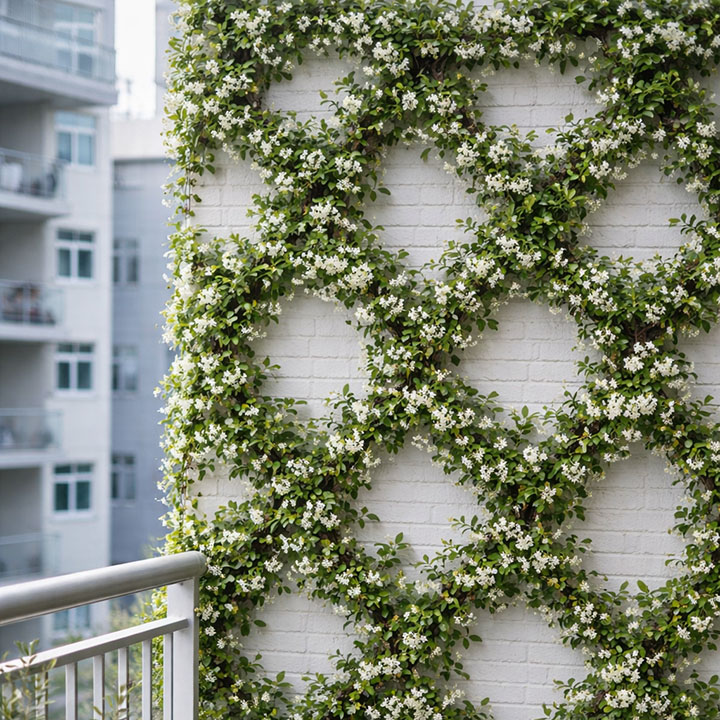
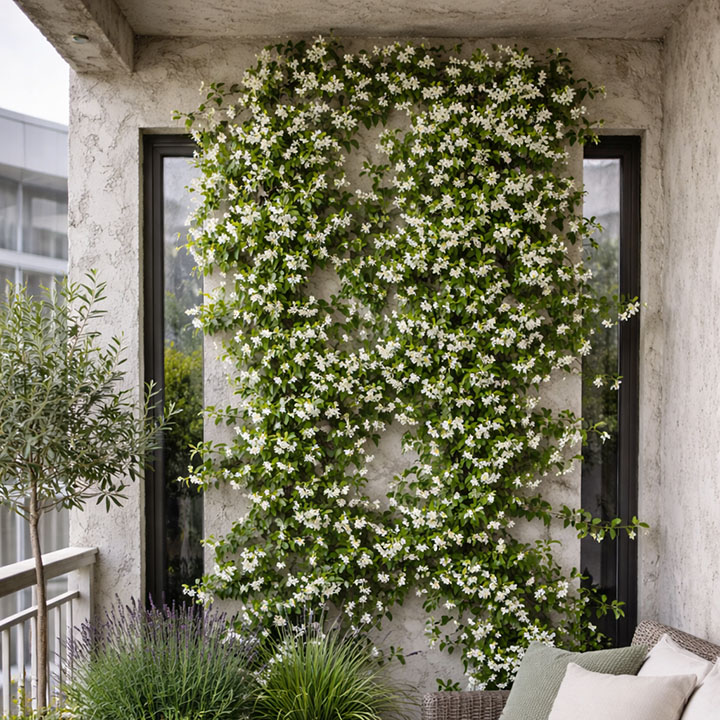
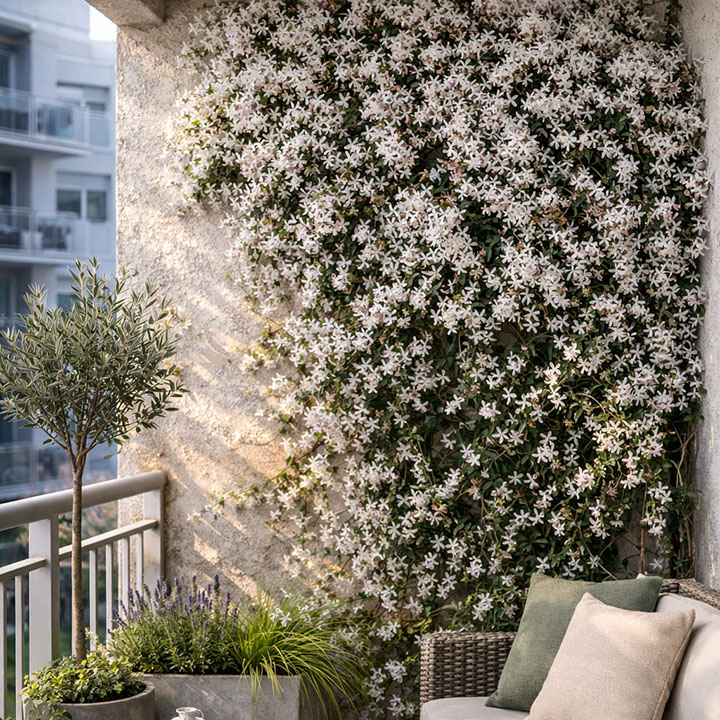
Star Jasmine

Star jasmine is one of the best all-round climbers for Australian homes. It has glossy evergreen leaves, fragrant white flowers, and a neat, tidy habit that suits modern and traditional spaces alike. It can be trained over trellis, mesh screens, balcony rail frames, and courtyard walls, making it especially useful where you want privacy without a wild or overly heavy look.

It handles pruning well and usually looks good all year, which makes it one of the safest choices for long-term wall coverage. It is ideal for balconies, entry areas, side fences, and small courtyards where fragrance is a bonus.

  • Best for: evergreen coverage, fragrance, balcony screens
  • Best feature: scented flowers and tidy growth
  • Good for: Sydney, Melbourne, Brisbane, Adelaide, Perth

Hardenbergia

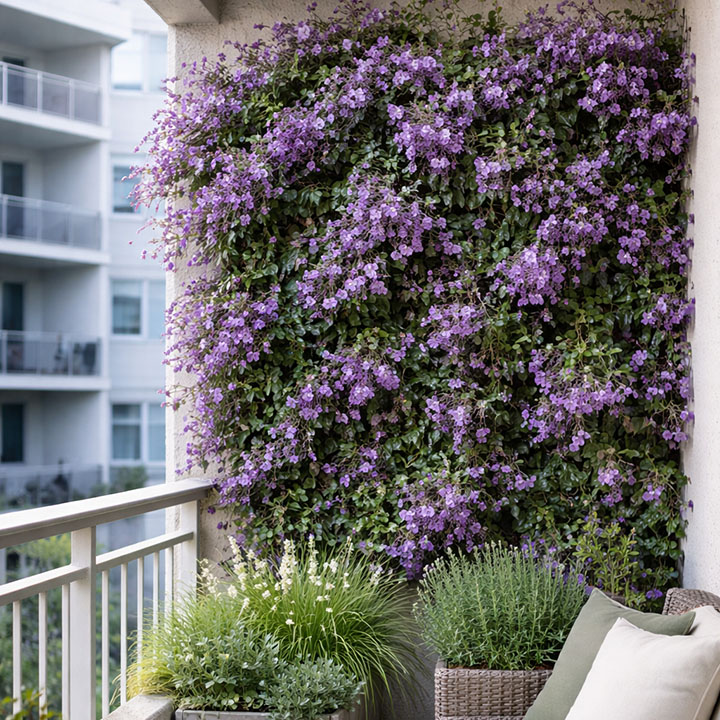
Hardenbergia is one of the best native climbers for Australian gardens. It produces masses of purple, mauve, or white pea-shaped flowers from winter into spring, adding colour at a time when many other plants are quiet. It has a lighter, softer look than some exotic climbers and works beautifully over trellis, fences, and sunny walls.

This is a great choice if you want a native plant with seasonal impact and lower water needs once established. It suits both informal gardens and cleaner modern spaces, particularly where you want something Australian that does not feel too bulky.

  • Best for: native gardens, winter-spring colour, lightweight screening
  • Best feature: colourful flowers in cooler months
  • Good for: Melbourne, Adelaide, Perth, Canberra, Sydney, Hobart in sheltered spots

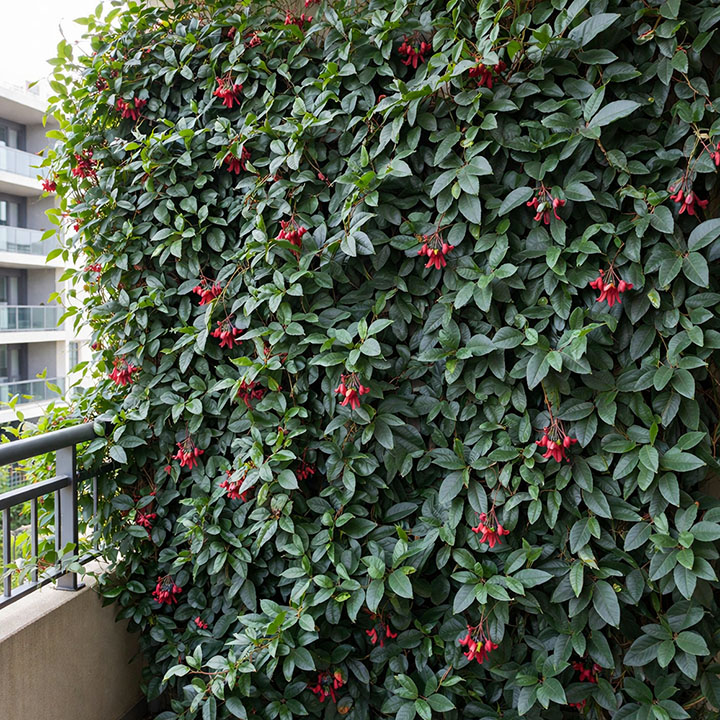
Pandorea

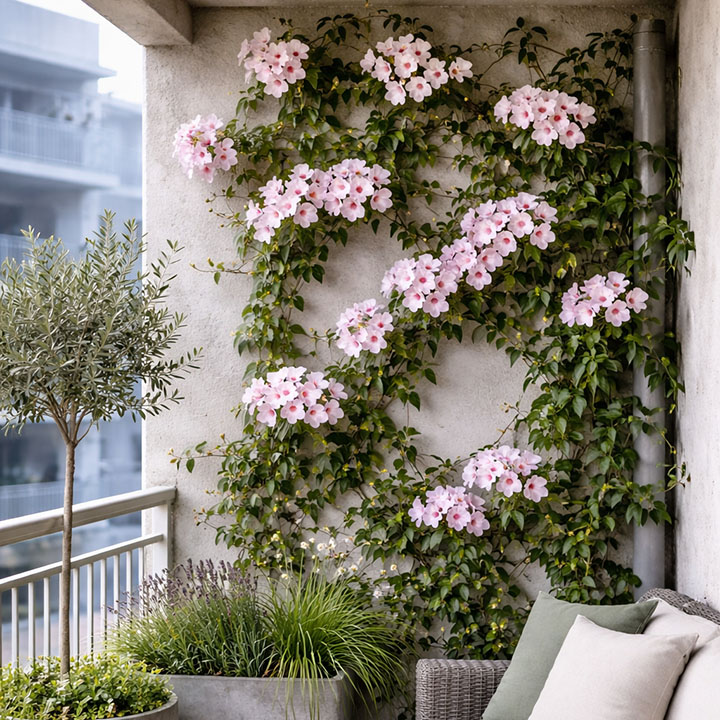
Pandorea is another excellent Australian climber, valued for its glossy leaves and trumpet-shaped flowers. It can give you a lush green screen along with a long flowering period through the warmer months. It grows well on vertical supports and can also be kept in a large pot if you prune it and provide strong structure.

It is ideal for courtyards, walls, and trellis screens where you want something that feels lush but still manageable. In compact spaces, regular trimming helps keep it full without becoming too heavy.

  • Best for: flowering screens, trellis coverage, pots
  • Best feature: long flowering season
  • Good for: Brisbane, Sydney, Melbourne, Perth, Adelaide, Darwin

Bougainvillea

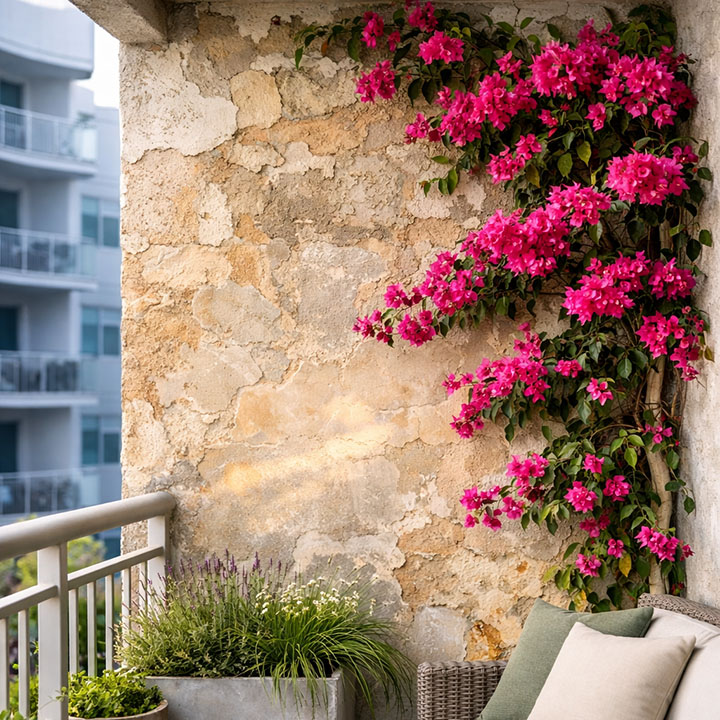
For hot sunny walls, bougainvillea is one of the best climbers available. It thrives in strong sun and brings intense colour through the warmer months. It is particularly effective on west-facing walls, bright courtyards, and Mediterranean-style balconies where other plants may struggle with reflected heat.

Bougainvillea is not the softest plant to manage, but if you want drama and can handle occasional pruning, it gives outstanding impact. It is one of the best choices for dry climates and sun-baked positions.

  • Best for: hot walls, dry climates, bold colour
  • Best feature: brilliant long-lasting colour in full sun
  • Good for: Perth, Adelaide, Brisbane, Sydney, warmer Melbourne spots

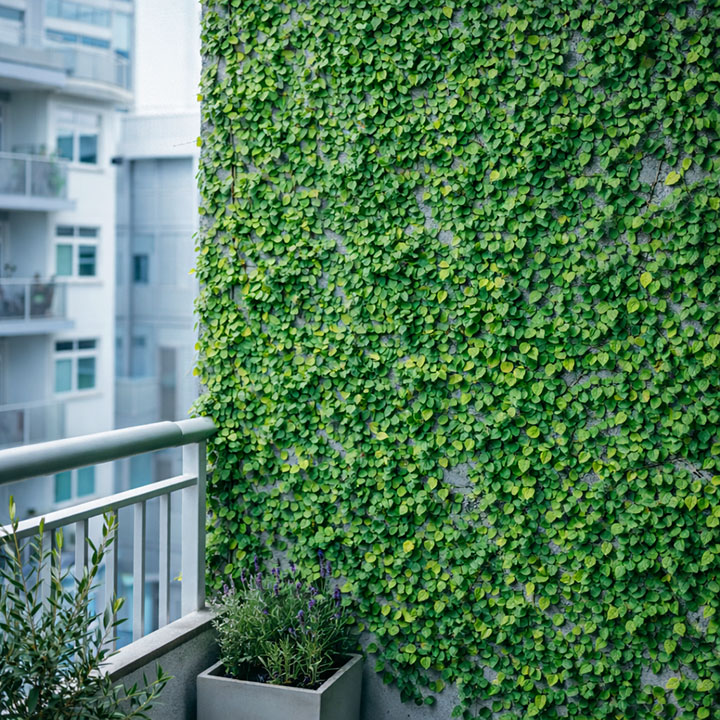
Creeping Fig

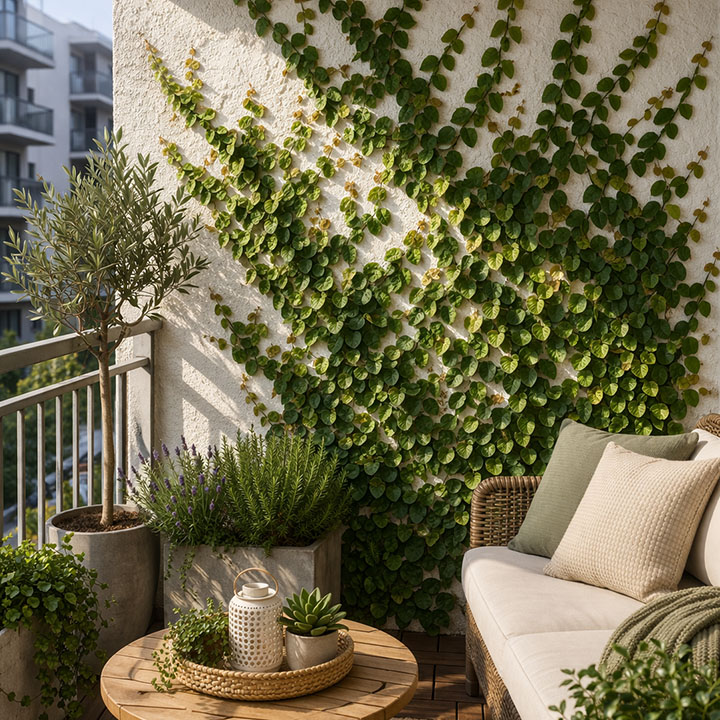
Creeping fig is one of the best plants for turning a plain wall into a green feature. It clings closely to surfaces and creates a dense living-wall effect, making it ideal for covering unattractive masonry, fences, or shaded courtyard walls. It is often chosen more for foliage and coverage than flowers.

This plant is especially useful where you want dense greenery in part shade. It does need management, because once established it can spread strongly, but when kept in check it provides one of the best foliage finishes of any wall climber.

  • Best for: lush wall coverage, shady walls, disguising plain surfaces
  • Best feature: dense clinging foliage
  • Good for: Sydney, Brisbane, Melbourne, Canberra, sheltered urban spaces

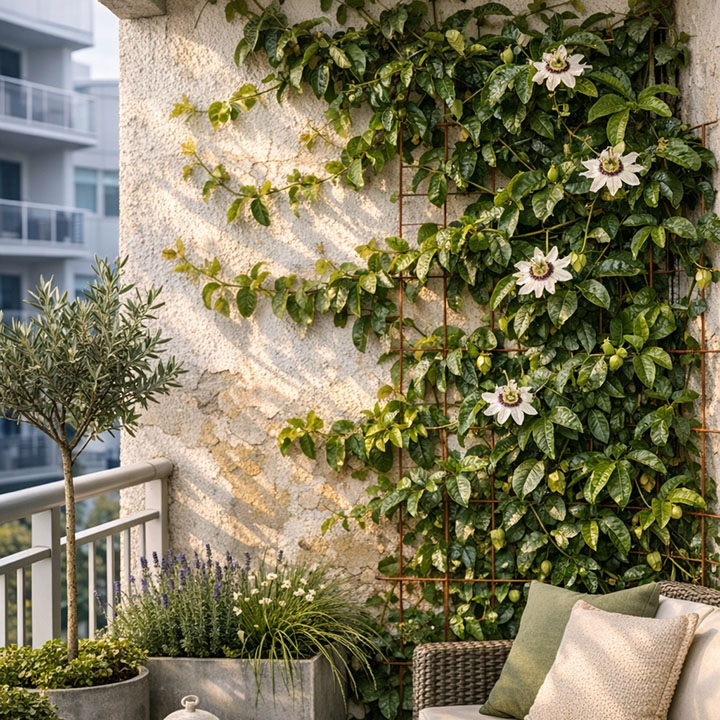
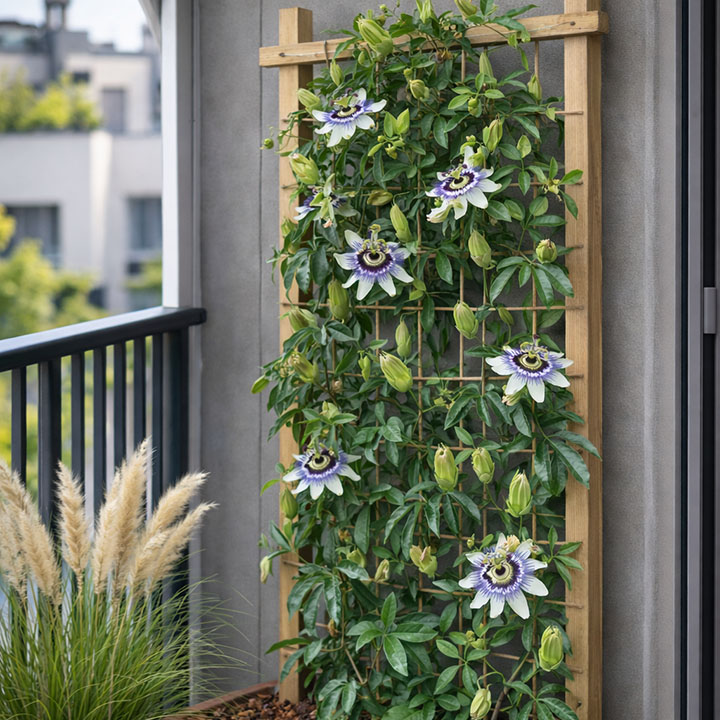
Passionfruit

Passionfruit is a productive climber that also works beautifully as a wall or trellis cover. It has lush foliage, interesting flowers, and edible fruit, so it gives more than just ornamental value. On balconies and in courtyards, it can create a leafy screen while also producing a useful crop in warmer conditions.

Because it grows vigorously, it needs strong support, feeding, and regular watering in pots. It is best used where you have enough sun and enough room to manage its growth.

  • Best for: edible screening, productive trellises, sunny walls
  • Best feature: fruit as well as foliage
  • Good for: Brisbane, Sydney, Perth, Adelaide, warmer parts of Melbourne, tropical and subtropical areas

Common Jasmine

If fragrance is your main goal, common jasmine is a beautiful choice for a warm wall or sheltered balcony. It has a looser, more romantic look than star jasmine and suits cottage-style planting, older terraces, and relaxed courtyard spaces. When in flower, it brings strong scent to windows, seating areas, and entryways.

It is better suited to warmer and more protected locations than colder inland gardens, but in the right position it is a rewarding plant with a timeless feel.

  • Best for: fragrance, warm sheltered spaces, cottage gardens
  • Best feature: strongly scented flowers
  • Good for: Brisbane, Sydney, Perth, Adelaide, protected frost-free spots

Kennedia and Other Native Twining Climbers

Kennedia species and similar native twining plants are excellent if you want a more natural, Australian feel. They can be trained over trellis, allowed to spill from elevated planters, or used to soften lower walls and screens. Their look is generally looser and more relaxed than star jasmine or creeping fig, which can be a real advantage in informal gardens.

These climbers are a good fit for wildlife-friendly planting schemes and for gardeners who want native character without a heavy or overly formal screen.

  • Best for: native gardens, relaxed screening, soft coverage
  • Best feature: natural Australian character
  • Good for: temperate and subtropical climates with good drainage

Best Choices by Australian City and Climate

Sydney: Sydney’s warm summers and relatively mild winters suit a wide range of climbers. Star jasmine, pandorea, passionfruit, creeping fig, and bougainvillea all do well here, especially with good airflow and regular pruning.

Melbourne: Melbourne’s cooler winters and changeable weather mean reliable all-rounders tend to perform best. Star jasmine and hardenbergia are two of the safest options, while pandorea can also do well in a warm protected spot. Bougainvillea usually needs the sunniest wall you can offer.

Brisbane: Brisbane’s warmth and humidity allow vigorous growth, which is great for wall coverage but means pruning matters. Star jasmine, pandorea, passionfruit, common jasmine, and creeping fig all suit Brisbane well. Dense climbers should be thinned occasionally to improve airflow.

Perth: Perth’s dry summers and strong sun suit tough sun-lovers such as bougainvillea, hardenbergia, pandorea, and star jasmine. Deep watering while plants establish is important, especially on hot exposed walls and balconies.

Adelaide: Adelaide’s hot dry summers are ideal for climbers that can handle strong light and heat. Bougainvillea is one of the top choices, followed by star jasmine, hardenbergia, and pandorea. Mulch and deeper pots help reduce water stress.

Hobart: Hobart gardeners should focus on tough climbers for cool conditions and sheltered positions. Hardenbergia and star jasmine are among the better choices, especially with good drainage and some protection from cold winds.

Canberra: Canberra’s frosty winters mean climbers need to be chosen carefully. Star jasmine and hardenbergia are reliable options, especially in sunny protected positions. More tender climbers usually need extra shelter.

Darwin: Darwin’s tropical climate favours vigorous climbers, but wet-season growth can be fast and heavy. Pandorea, jasmine, passionfruit, and star jasmine can all work well if they have strong support and regular trimming.

Tips for Growing Climbers on Walls and Balconies

  • Use strong support such as trellis, wire, or mesh rather than expecting the plant to manage on its own.
  • Choose a large pot if growing on a balcony so roots have room and moisture lasts longer.
  • Water deeply during hot weather, especially in exposed or west-facing positions.
  • Feed flowering and fruiting climbers during the growing season to keep them performing well.
  • Prune regularly to maintain shape, prevent tangles, and improve airflow.
  • Keep climbers slightly away from the wall where possible so pruning and maintenance are easier.

How to Choose the Right Climber

If you want evergreen privacy, star jasmine is usually the safest pick. If you want a native flowering option, try hardenbergia or pandorea. If you have a very hot wall, bougainvillea is hard to beat. If you want to cover an unattractive wall quickly, creeping fig is a strong option. And if you want a climber that also produces food, passionfruit is a practical and attractive choice.

In most small spaces, one well-chosen climber trained properly will look better and be easier to manage than several competing plants. Matching the climber to your wall conditions is more important than choosing the flashiest flower colour.

FAQ

What is the best climber for covering a wall quickly?

Creeping fig is one of the best for fast dense green coverage, especially if flowers are not your main priority. Passionfruit and pandorea can also cover supports quickly in warm climates.

What is the best evergreen climber for an Australian balcony?

Star jasmine is one of the best evergreen climbers for Australian balconies because it looks neat, flowers well, and responds to pruning. It also works well in large pots with proper support.

Which climber is best for a hot sunny wall?

Bougainvillea is one of the best choices for a hot, sunny, west-facing or north-facing wall. It thrives in strong sun and handles dry conditions better than many other climbers once established.

What is the best native climber for walls in Australia?

Hardenbergia is one of the most reliable native climbers for Australian homes, especially in temperate climates. Pandorea is another excellent native choice if you want a lush flowering climber.

Can climbing plants grow in pots?

Yes, many climbers do well in pots if the container is large enough and the plant has strong support. Star jasmine, pandorea, passionfruit, and some native climbers are all suitable for container growing.

How do I keep a climber from becoming messy?

Prune lightly and regularly rather than waiting until the plant becomes overgrown. Tie in new growth, remove tangled stems, and keep airflow through the foliage, especially in humid cities like Brisbane and Sydney.

The best wall-covering climbers are the ones that match your conditions. Choose by climate, sun, and maintenance level first, and you will end up with a healthier, better-looking plant that makes your wall or balcony feel greener and more inviting all year.

Hanging planters are one of the best ways to add greenery to a balcony without using valuable floor space. They soften railings, add height, bring flowers closer to eye level, and can make even a small apartment balcony feel lush and layered. In Australia, they are especially useful because many balconies are compact, exposed to wind, or deal with a mix of strong sun and drying conditions. A well-chosen hanging planter can turn an empty corner into a feature and help create a cooler, greener outdoor space.

The key is choosing plants that actually suit hanging conditions. Plants in hanging baskets dry out faster than those in regular pots, and they often deal with more wind, more heat, and less root space. The best plants for hanging planters are usually trailing, compact, reliable in containers, and able to handle the changing conditions that come with balcony life. Some are grown for flowers, some for foliage, and some for both.

In this guide, we cover the best plants for hanging planters in Australia, including options for sunny balconies, shaded spots, coastal areas, and different climates across major Australian cities.

What Makes a Plant Good for a Hanging Planter?

Not every plant is naturally suited to life in a hanging basket. The best choices are usually plants that trail, spill, or mound attractively, rather than plants that grow upright and become top-heavy. Strong performers also tend to cope well with container growing and recover quickly if the potting mix dries a little between waterings.

  • Trailing or cascading growth
  • Compact root systems
  • Good tolerance for containers
  • Ability to handle wind and heat
  • Long flowering or attractive foliage
  • Low to moderate maintenance

For Australian balconies, it also helps if the plant can handle your local climate. A basket that looks amazing in Hobart may struggle on a west-facing balcony in Perth, while a tropical foliage plant may thrive in Brisbane but struggle through a Melbourne winter. Matching the plant to the position is the real secret.

Best Plants for Hanging Planters in Australia

1. Dichondra ‘Silver Falls’

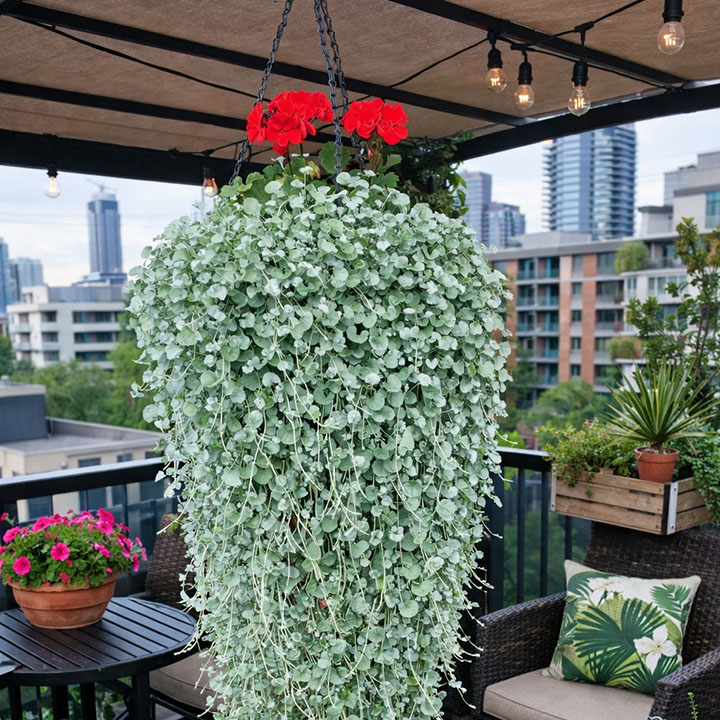
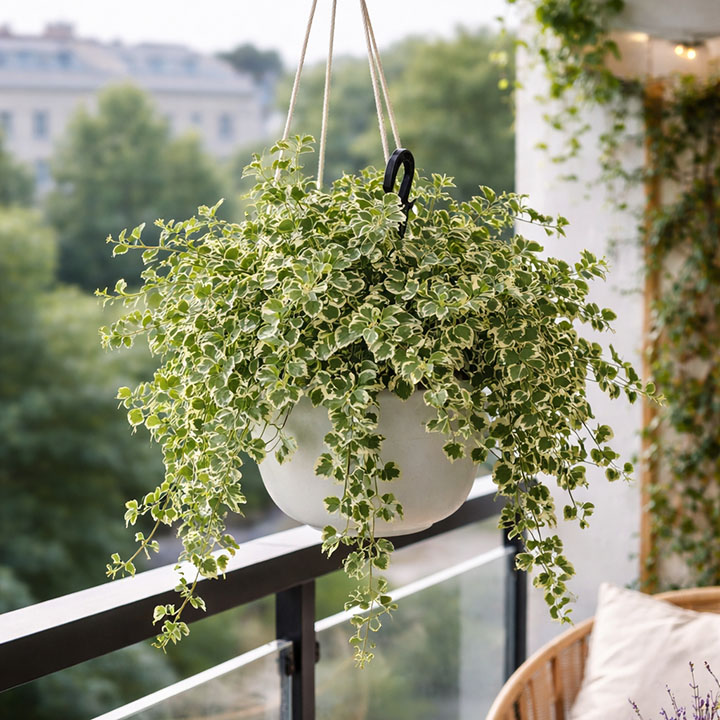
Dichondra ‘Silver Falls’ is one of the most popular hanging basket plants for good reason. It produces long trailing stems covered in soft silver foliage that spills beautifully over the sides of baskets and hanging pots. It works particularly well on sunny balconies and looks great in both modern and rustic planters.

It is usually grown for foliage rather than flowers, but that is exactly what makes it so useful. It adds movement, contrast and softness, especially when paired with flowering plants. It is also more tolerant of dry conditions than many soft leafy basket plants, making it a strong option for brighter Australian balconies.

Best for: sunny balconies, silver foliage, trailing effect

Good for: Sydney, Melbourne, Adelaide, Perth

2. Scaevola

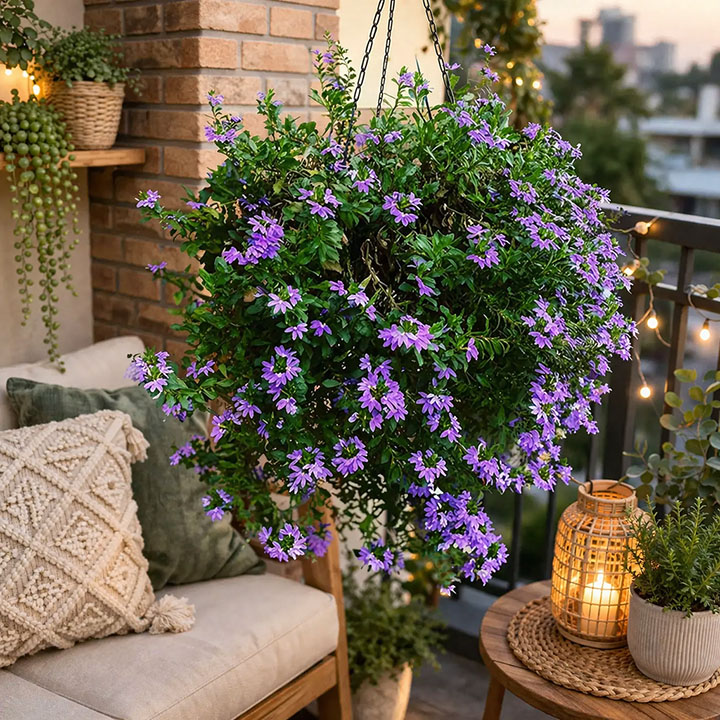
Scaevola, also known as fan flower, is one of the best flowering choices for hanging planters in Australia. It has a naturally spreading, slightly trailing habit and produces masses of flowers over a long season. It is also a great option if you want something that feels at home in Australian conditions rather than a softer cool-climate annual.
Scaevola suits bright balconies and adds colour without looking too formal. It works well on its own or mixed with trailing foliage plants. Purple and mauve forms are especially popular, but white varieties are also beautiful in small-space gardens.

Best for: sunny hanging baskets, long flowering colour, native-style planting

Good for: Brisbane, Sydney, Perth, Adelaide

3. Brachyscome

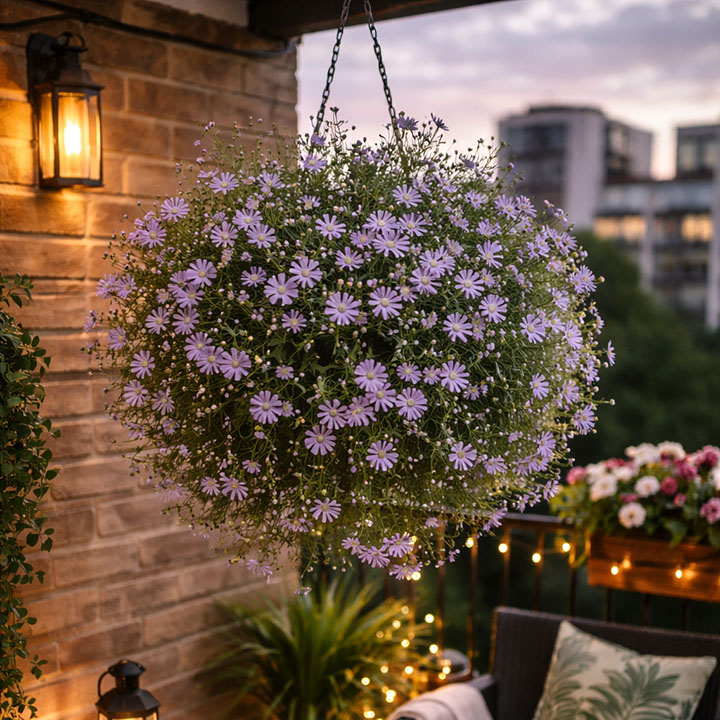
Brachyscome, often called native daisy, is a lovely choice for hanging baskets if you want a softer and more natural look. It produces fine foliage and masses of small daisy flowers, often in purple, mauve, white or pink shades. It is ideal for relaxed cottage-style balconies and works well mixed with other Australian natives.

Because it is light and airy, it suits smaller baskets and does not feel too heavy or crowded. It can also attract pollinators, which is a bonus for wildlife-friendly balcony gardens.

Best for: soft colour, native balcony gardens, smaller baskets

Good for: Melbourne, Sydney, Canberra, Hobart

4. Native Violet

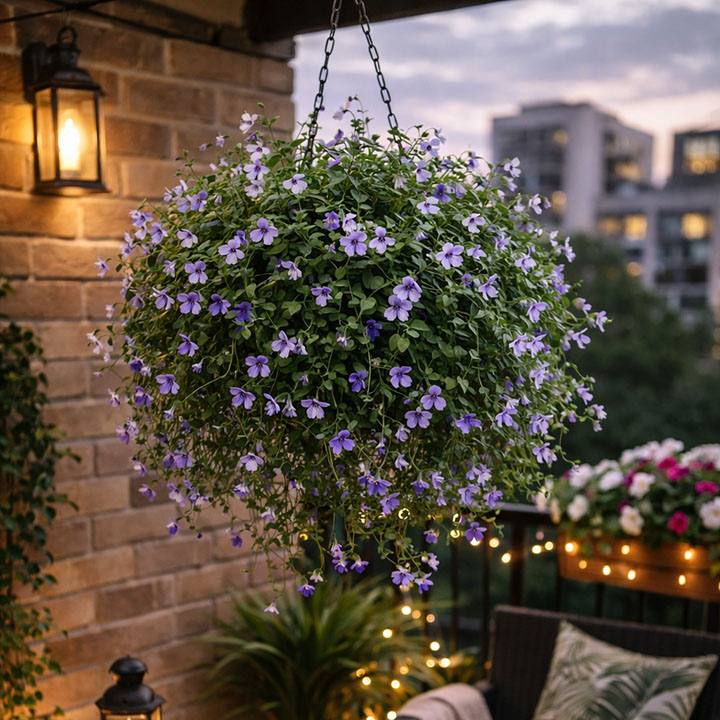
Native violet is a very good option for hanging planters in part shade or filtered light. It has a neat trailing habit, fresh green foliage, and delicate purple-and-white flowers. It is not flashy, but it is dependable and well suited to Australian gardens.

On a shaded or semi-shaded balcony, it gives a softer, cooler feel than brighter sun-loving flowers. It is also a good choice for gardeners who prefer a more natural and less formal planting style.

Best for: part shade, native planting, soft green baskets

Good for: Sydney, Melbourne, Brisbane, Hobart

5. Bacopa

Bacopa is a classic hanging basket plant because it flowers neatly and trails gently without becoming too wild. It is often used in mixed baskets where it fills gaps, softens edges and adds a long season of white, blue or lilac flowers.

It is best on balconies that are not extremely hot or dry, and it performs especially well in part sun or bright shade. If you like tidy, pretty baskets with long-lasting flowers, bacopa is a strong choice.

Best for: mixed baskets, gentle trailing growth, long flowering

Good for: Melbourne, Sydney, Canberra, Hobart

6. Pelargonium

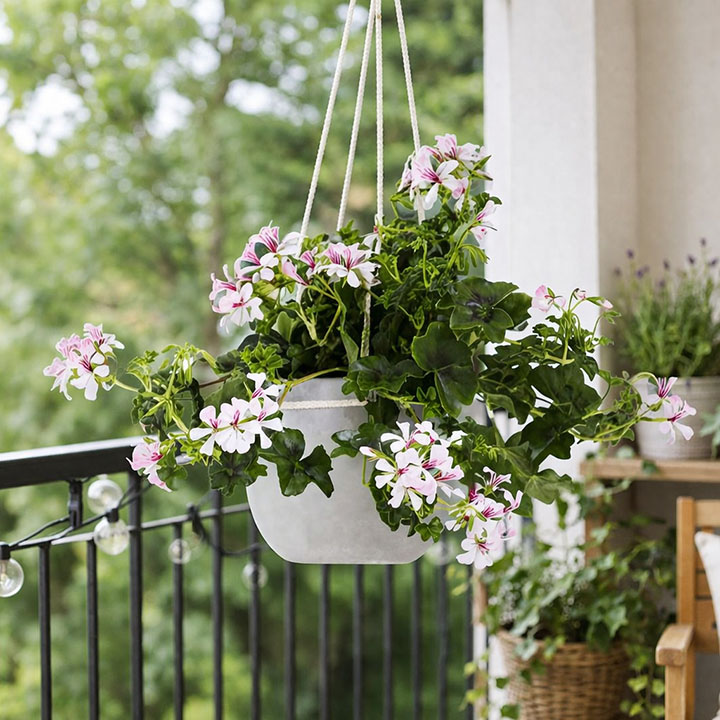
Pelargoniums are among the best plants for bright and breezy balconies. They bring reliable colour, cope reasonably well with dry periods, and are much tougher than many soft bedding plants. Some varieties stay more upright, while others trail or spill enough to suit hanging planters beautifully.

If your balcony gets lots of sun and you want something dependable rather than fussy, pelargoniums are worth considering. They suit both traditional and modern balcony styles and work well in terracotta or simple hanging pots.

Best for: hot balconies, colourful flowers, lower-maintenance baskets

Good for: Adelaide, Perth, Melbourne, Sydney

7. Plectranthus

Plectranthus is an excellent choice for bright shade or filtered light. It is grown as much for its lush foliage as for its flowers, which makes it a good option if you want a fuller, more leafy hanging display. Some forms also produce soft purple or lavender flowers, adding extra interest.

It suits sheltered balconies and can help soften hard walls, corners and railings. If your balcony is not suited to harsh full sun, plectranthus is often easier than many flowering basket plants.

Best for: bright shade, lush foliage, sheltered balconies

Good for: Sydney, Melbourne, Brisbane

8. Tassel Fern

Tassel fern is a beautiful option for humid or protected balconies. Its arching, weeping fronds make it ideal for hanging positions where foliage can fall naturally below the basket. It creates a cool, tropical look and works especially well in green, foliage-focused balcony designs.

This is not the best choice for harsh western sun or very dry exposed balconies, but it is excellent in filtered light or humid coastal conditions. It can instantly make a balcony feel more lush and established.

Best for: tropical style, foliage baskets, humid balconies

Good for: Brisbane, coastal NSW, Darwin, tropical areas

9. Fuchsia

Fuchsias are a classic hanging basket plant in cooler climates. Their flowers dangle beautifully beneath the foliage, which makes them perfect for elevated planters where the blooms can be seen from below. They add a softer, more romantic look than many Australian sun-loving plants.

They are best for cooler or milder areas and usually need protection from harsh afternoon sun. On the right balcony, though, they are one of the most rewarding flowering plants you can grow in a hanging planter.

Best for: elegant flowers, cooler climates, morning sun

Good for: Melbourne, Canberra, Hobart, cooler Sydney areas

10. Lobelia

Lobelia is ideal if you want a delicate flowering basket with lots of colour. It usually has a compact trailing habit and works well around the edges of baskets. Blue, purple and white varieties are especially popular.

It is not the toughest plant for very hot Australian summers, but in milder areas or in part sun it can look fantastic. It is often best used in cooler seasons or in southern Australian cities.

Best for: soft flowering displays, cool-season baskets, pastel colour

Good for: Melbourne, Hobart, Canberra, cooler coastal areas

11. String of Pearls

If you want a lower-water hanging planter, string of pearls is a stylish option. This succulent has long trailing stems lined with bead-like leaves and looks especially good in modern planters. It prefers bright light and very sharp drainage.

It is best for people who tend to over-love plants less rather than more. In other words, it performs better when not kept constantly wet. It is a great choice for dry balconies, especially where you want a clean and architectural look.

Best for: modern balconies, dry conditions, low-water planting

Good for: Adelaide, Perth, sunny Sydney balconies

12. Trailing Rosemary

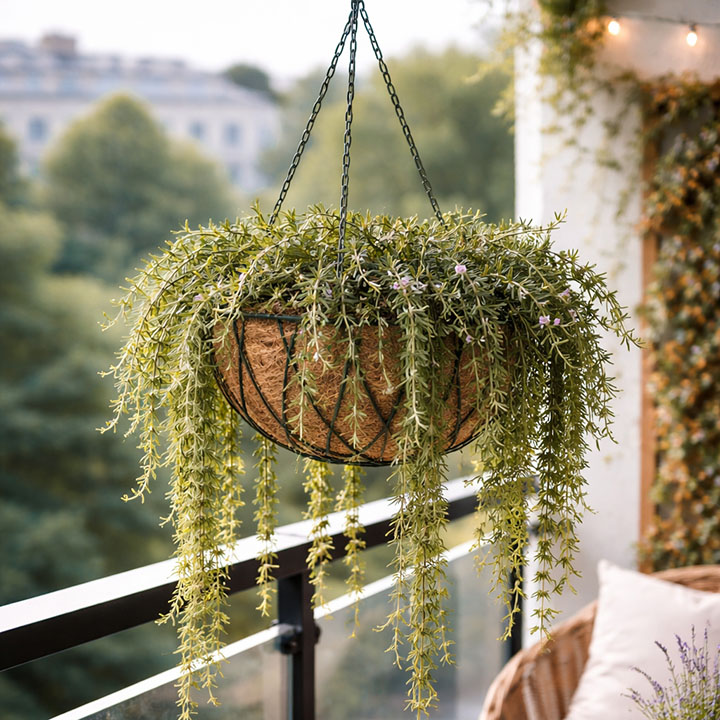
Trailing rosemary is one of the best edible plants for hanging planters. It has a naturally cascading habit, handles plenty of sun, and gives you fragrant foliage you can harvest for cooking. It is especially useful on balconies where you want ornamental and practical plants in the same space.

It is much tougher than many herbs and suits hot, bright, drier conditions. As a bonus, the flowers can attract pollinators when in bloom.

Best for: edible baskets, sunny balconies, low-fuss planting

Good for: Sydney, Melbourne, Adelaide, Perth

Best Hanging Planter Plants by Australian Climate

Sydney

Sydney balconies often deal with bright light, humidity, salt air in coastal areas, and warm summers. Good hanging planter choices include scaevola, native violet, pelargonium, dichondra and trailing rosemary. Shadier Sydney balconies can also suit plectranthus and bacopa.

Melbourne

Melbourne conditions can change quickly, and balconies often deal with wind, cool winters and warm but not overly tropical summers. Brachyscome, bacopa, lobelia, fuchsia, dichondra and native violet are all strong choices. On very exposed high-rise balconies, tougher plants usually do better than soft thirsty ones.

Brisbane

Brisbane is warmer and more humid, so hanging baskets can grow quickly but may also need good airflow. Tassel fern, scaevola, plectranthus, native violet and tropical foliage combinations can all work well. Choose pots with good drainage so baskets do not stay soggy during humid weather.

Perth

Perth balconies often face strong sun, dry air and hot summer conditions. Choose tougher plants such as pelargonium, trailing rosemary, dichondra and drought-tolerant succulents. Watering becomes especially important in summer, and west-facing balconies can be challenging.

Adelaide

Adelaide has similar challenges to Perth, especially on bright exposed balconies. Strong sun-tolerant plants such as rosemary, pelargonium, dichondra and string of pearls are often better choices than moisture-loving basket plants. Using larger hanging pots can help hold moisture for longer.

Canberra and Hobart

Cooler southern cities suit a different palette. Fuchsia, bacopa, lobelia, brachyscome and native violet often perform better in these climates than heat-loving tropical plants. Morning sun and protection from severe frost will usually give the best results.

Darwin and the Tropical North

In tropical areas, humidity and heavy wet-season growth change the way hanging baskets behave. Ferns, plectranthus and lush foliage baskets often perform better than cool-climate flowering plants. Strong drainage, airflow and regular trimming are especially important.

Best Hanging Planter Ideas for Different Balcony Positions

For Full Sun

  • Dichondra ‘Silver Falls’
  • Scaevola
  • Pelargonium
  • Trailing rosemary
  • String of pearls

For Part Shade

  • Native violet
  • Bacopa
  • Plectranthus
  • Brachyscome
  • Lobelia

For Bright Shade

  • Plectranthus
  • Tassel fern
  • Native violet
  • Bacopa
  • Fuchsia

For Windy Balconies

  • Dichondra
  • Pelargonium
  • Trailing rosemary
  • Scaevola
  • Hardier succulents

How to Make Hanging Planters Last Longer

Even the best plant will struggle if the basket setup is wrong. Hanging baskets dry out faster than normal pots, and they are often harder to water properly because the soil sits above eye level. Good setup makes a huge difference.

  • Use premium potting mix rather than cheap fill soil
  • Choose a basket size large enough for the plant to establish well
  • Make sure drainage holes are clear
  • Use lightweight pots if weight is a concern
  • Water deeply until excess runs out
  • Feed regularly during active growth
  • Trim leggy growth to keep plants full and balanced
  • Group plants with similar watering and light needs together

If your balcony gets harsh afternoon sun, larger hanging pots are often easier than very small baskets because they hold moisture longer. If your balcony is shaded and humid, focus on airflow so baskets do not stay wet for too long.

Simple Plant Combinations for Hanging Planters

Sunny Australian Mix

Combine scaevola, brachyscome and dichondra for a soft native-style hanging planter with flowers and trailing foliage.

Cool Soft Colour Basket

Mix bacopa, lobelia and fuchsia for a fuller basket in cooler or part-shaded conditions.

Low-Water Hanging Planter

Use string of pearls with a trailing succulent mix for a bright balcony that gets plenty of light and dries quickly.

Leafy Shade Basket

Combine plectranthus, tassel fern and native violet for a soft green basket in filtered light.

Common Hanging Planter Mistakes

  • Choosing plants that are too thirsty for a hot balcony
  • Using baskets that are too small
  • Letting plants dry out repeatedly
  • Mixing shade lovers with sun-loving plants
  • Ignoring wind exposure
  • Overwatering succulents and dry-climate plants
  • Hanging baskets where they are difficult to reach and maintain

Final Thoughts

The best plants for hanging planters in Australia are the ones that suit your balcony, not just the ones that look good at the nursery. Full-sun balconies usually do best with tougher plants such as dichondra, scaevola, pelargonium and trailing rosemary. Shadier spaces often suit bacopa, native violet, plectranthus and tassel fern. Cooler southern cities open the door to fuchsias and lobelia, while tropical areas suit lush foliage baskets.

If you start by matching the plant to the light, wind and climate, hanging planters can become one of the easiest and most effective ways to transform a balcony. They add colour, save space, and help create a layered garden feel even in very small outdoor areas.

FAQ

What are the easiest plants for hanging planters in Australia?

Some of the easiest options are dichondra, scaevola, pelargonium, native violet and trailing rosemary. They are reliable, attractive and generally handle container life well.

Which hanging planter plants are best for full sun?

For full sun, start with dichondra, scaevola, pelargonium, trailing rosemary and some succulents. These plants are usually better at handling bright light and faster drying conditions.

What are the best plants for hanging baskets in shade?

For shade or bright filtered light, native violet, bacopa, plectranthus, tassel fern and fuchsia are all strong choices depending on your climate.

Do hanging planters need more watering than normal pots?

Yes, usually they do. Hanging baskets are more exposed to wind and sun, and they tend to dry out faster than pots sitting on the ground.

Can I grow edible plants in hanging planters?

Yes. Trailing rosemary is one of the best options, and some gardeners also grow strawberries, cherry tomatoes or trailing herbs in larger hanging containers.

Which plants are best for windy balconies?

Hardier plants such as dichondra, pelargonium, trailing rosemary and tougher succulents usually cope better with wind than delicate soft-stemmed flowers.

What is the best native plant for a hanging basket?

Scaevola, brachyscome and native violet are all excellent Australian native-style choices for hanging planters, depending on whether your balcony is sunny or more shaded.

How do I stop hanging baskets from drying out so quickly?

Use a larger pot, premium potting mix, mulch lightly if suitable, and water deeply. Choosing plants that match your conditions also makes a big difference.

A butterfly-friendly balcony can bring colour, movement, and wildlife into even the smallest outdoor space. In Australia, a well-planted balcony can help support butterflies by providing nectar-rich flowers, shelter from wind, and in some cases host plants for caterpillars. You do not need a large garden to make a difference. A few well-chosen pots can create a balcony that feels lively, beautiful, and more connected to nature.

The best butterfly-friendly plants for Australian balconies are usually those that flower generously, suit container growing, and cope well with local conditions. A successful balcony planting also depends on your city, sunlight levels, and exposure to heat or wind. What thrives on a sunny balcony in Perth may need a little more care in Melbourne or Hobart. This guide covers the best options and how to choose them for different Australian climates.

What Makes a Plant Butterfly Friendly?

Butterfly-friendly plants usually offer nectar for adult butterflies, flat or easy-to-access flowers for feeding, and long flowering seasons. Some plants also act as host plants, meaning butterflies lay eggs on them and caterpillars feed on the leaves. For a balcony garden, the best results usually come from mixing flowering plants with a little leafy structure and placing them in a sunny, sheltered position.

Butterflies are more likely to visit balconies that feel calm and inviting. Grouping pots together, using several flowering plants at once, and avoiding pesticides can make a big difference. Even a compact balcony can become more butterfly friendly when it provides regular colour and a safe place to land.

Best Butterfly Friendly Plants for Australian Balconies

Native Daisy (Brachyscome)

Native daisies are one of the easiest butterfly-friendly plants to grow in pots. They stay compact, flower for long periods, and suit small balconies beautifully. Their open flowers are easy for butterflies to access, and they bring a soft cottage-garden look without becoming too large or messy.

Best for: small balconies, railing planters, compact pots

Best feature: masses of simple nectar-rich flowers

Good for: Melbourne, Sydney, Adelaide, Perth, Hobart

Fan Flower (Scaevola)

Scaevola is an excellent choice for sunny Australian balconies. It flowers over a long season, handles warmth well, and looks lovely spilling over the edge of containers. It works especially well in coastal areas and brings a relaxed native feel to balcony planting.

Best for: sunny balconies, hanging baskets, coastal spaces

Best feature: trailing growth and long-lasting flowers

Good for: Sydney, Brisbane, Perth, Adelaide

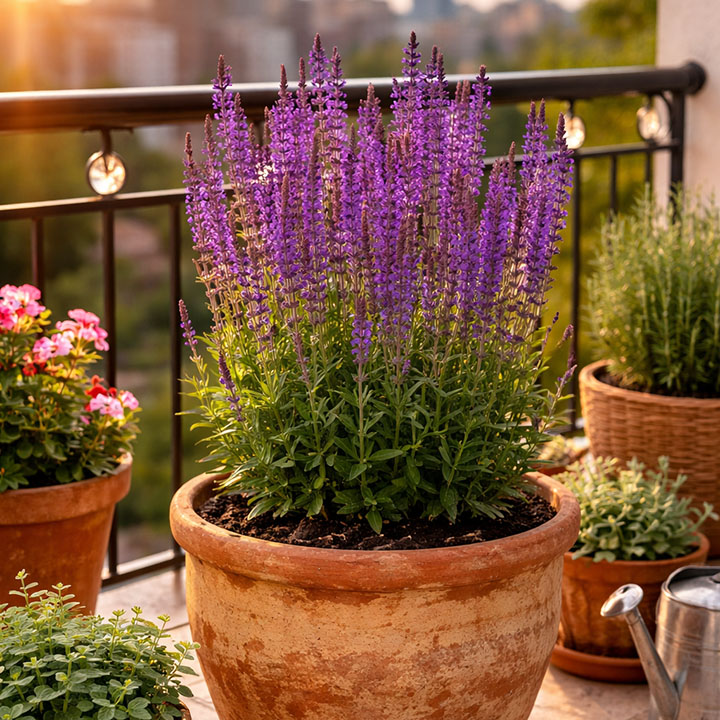
Salvia

Salvias are among the best long-flowering plants for attracting butterflies. They grow well in pots, come in many colours, and keep producing flowers through much of the warmer months. They are ideal if you want reliable colour and repeat visits from pollinators.

Best for: sunny balconies, mixed container planting

Best feature: long flowering season

Good for: Sydney, Melbourne, Brisbane, Adelaide

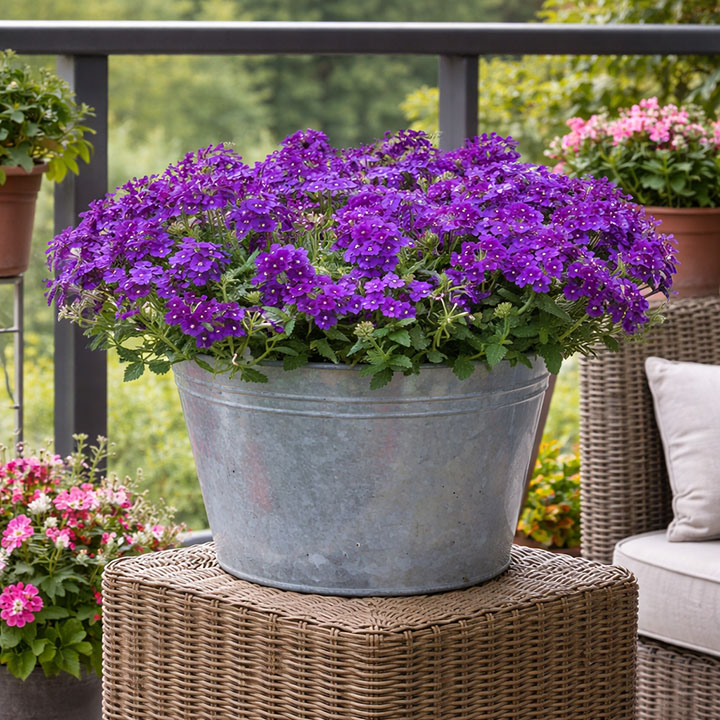
Verbena

Verbena is a classic butterfly plant because it produces clusters of small flowers that butterflies can feed from easily. It suits pots, window boxes, and balcony planters, especially where there is plenty of sun. It is a great option if you want something colourful and easy to combine with other flowering plants.

Best for: bright balconies, colourful mixed pots

Best feature: clustered flowers that butterflies love

Good for: Sydney, Melbourne, Brisbane, Perth

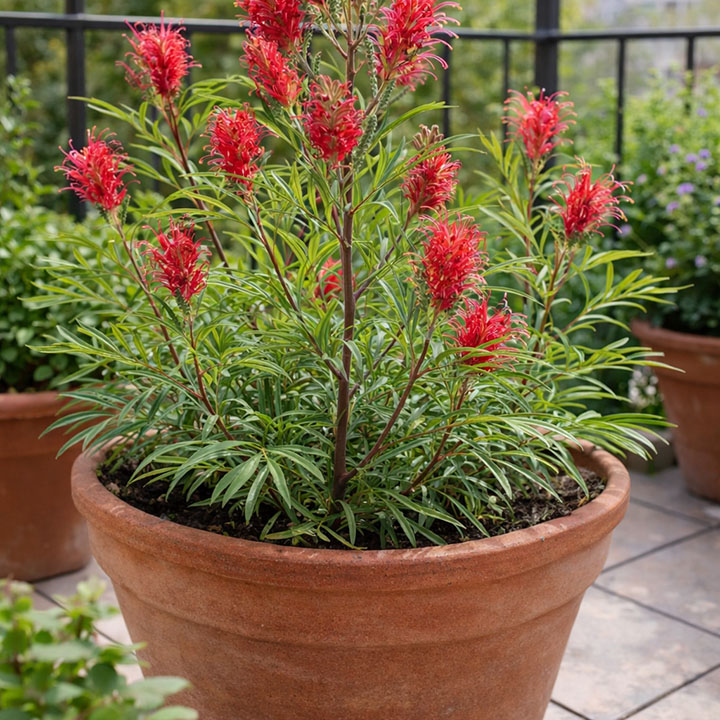
Compact Grevilleas

Compact grevilleas are excellent butterfly-friendly natives for larger containers. They bring structure, tolerate Australian sun, and produce nectar-rich flowers over long periods. Choose smaller cultivars suited to pots so they remain neat and manageable on a balcony.

Best for: statement pots, native balcony gardens

Best feature: strong structure and long flowering

Good for: Sydney, Brisbane, Perth, Adelaide, warmer Melbourne balconies

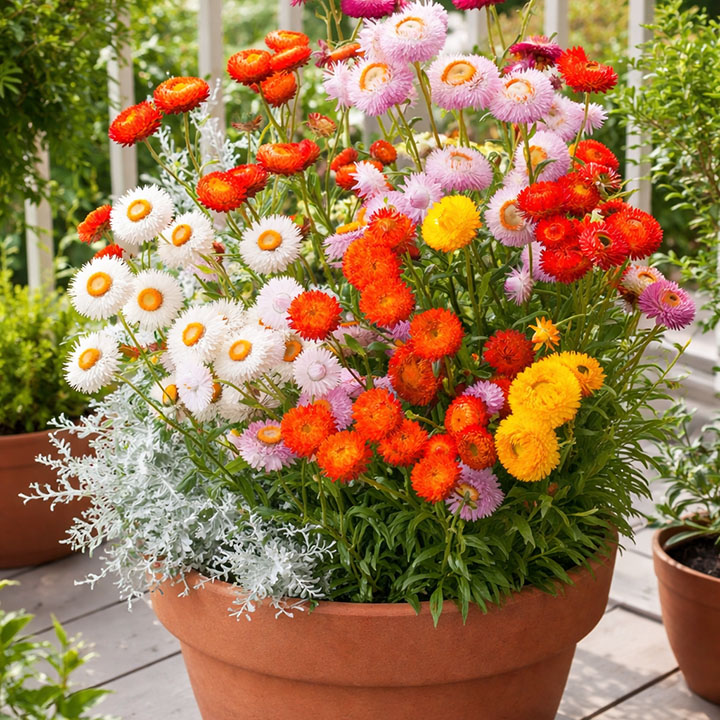
Paper Daisies

Paper daisies bring bright colour and a light, summery look to a balcony while also offering easy-access flowers for butterflies. They are especially useful in warm, sunny areas and suit smaller pots or mixed planter boxes.

Best for: full sun balconies, dry conditions

Best feature: cheerful daisy flowers over a long period

Good for: Perth, Adelaide, Melbourne, inland cities

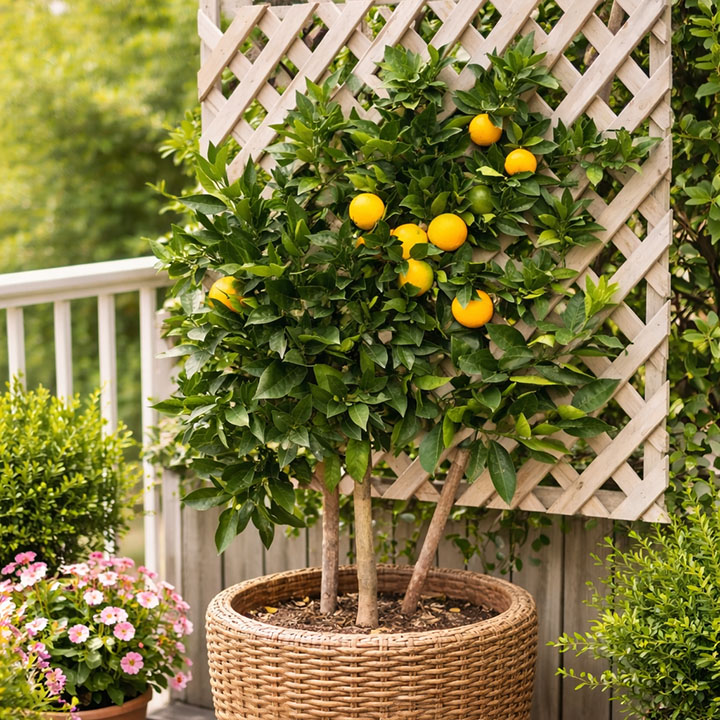
Dwarf Citrus

Dwarf citrus can be surprisingly useful in a butterfly-friendly balcony garden. They offer fragrant flowers, edible fruit, and foliage that can support certain butterfly species. If you have room for a larger container and a sunny position, they are one of the most rewarding balcony plants you can grow.

Best for: sunny balconies with larger pots

Best feature: edible, fragrant, and wildlife friendly

Good for: Sydney, Brisbane, Perth, Adelaide, warm sheltered Melbourne balconies

Dianella

Dianella adds year-round foliage and helps balance a butterfly balcony with more than just flowers. It is useful for creating structure in pots and can play a role in supporting butterfly life cycles. It also handles Australian conditions well and suits modern balcony designs.

Best for: low-maintenance balconies, mixed wildlife planting

Best feature: foliage structure and habitat value

Good for: all major Australian cities

Best Butterfly Friendly Plants by Australian City

Sydney: Sydney balconies usually suit a wide range of butterfly-friendly plants thanks to the mild climate. Native daisies, scaevola, salvia, verbena, compact grevilleas, and dwarf citrus all perform well with enough light and water.

Melbourne: Melbourne’s cooler and more changeable weather suits hardy performers such as native daisies, paper daisies, salvia, dianella, and Hardenbergia. A sunny, sheltered corner makes a big difference here.

Brisbane: Brisbane’s warmth supports long flowering seasons, so scaevola, salvia, verbena, grevillea, and citrus are excellent choices. Regular trimming helps keep growth neat and productive.

Perth: Perth balconies often deal with strong sun and drying heat, so drought-tolerant plants such as scaevola, paper daisies, native daisies, dianella, and grevillea are good options.

Adelaide: Adelaide’s hot summers mean butterfly-friendly plants need good watering and mulch in pots. Native daisies, scaevola, salvias, paper daisies, and compact grevilleas all work well.

Hobart: Hobart balconies benefit from the sunniest and most protected position available. Native daisies, salvias, dianella, and climbers like Hardenbergia are among the more reliable choices.

How to Create a Butterfly Friendly Balcony

A butterfly-friendly balcony works best when it combines flowers, foliage, and shelter. Start with a few nectar-rich flowering plants, then add at least one plant that provides leafy cover or host value. Try to place containers where they get good sun but are protected from harsh winds.

Grouping pots together helps create a more inviting space for butterflies. It also makes watering easier and gives the balcony a fuller, more garden-like look. Choose a mix of flower shapes and flowering times so there is something attractive on offer for as much of the year as possible.

Tips for Growing Butterfly Plants in Pots

Use quality potting mix, choose containers with drainage holes, and water consistently during warm weather. Butterfly-friendly plants often flower best when they are fed lightly during the growing season and deadheaded where appropriate. On exposed balconies, heavier pots can help keep plants stable and reduce moisture loss.

Avoid pesticides if you want a balcony that truly supports butterflies. Caterpillars may chew some leaves, but that is part of the process. A few nibbled leaves are a sign that your planting is doing what it is meant to do.

FAQ

What is the best butterfly-friendly plant for a small balcony?

Native daisy is one of the best choices for a small balcony because it stays compact, flowers freely, and suits container growing very well.

Do butterflies prefer native plants?

Native plants are often the best choice because they are more likely to support local butterfly species, but butterflies will also visit many nectar-rich flowering plants grown in pots.

Can I attract butterflies to a windy balcony?

Yes, but it helps to create shelter. Group pots together, use screens or walls for protection, and place plants in the warmest, calmest part of the balcony.

Do butterfly-friendly plants need full sun?

Most butterfly-friendly flowering plants perform best with good light, ideally several hours of sun each day. Some will cope with part shade, but flowering is usually stronger in brighter positions.

Should I let caterpillars eat my plants?

If you want a truly butterfly-friendly balcony, some leaf damage is normal and expected. Host plants are there to support the full butterfly life cycle, not just the adult stage.

Can butterfly-friendly plants grow in containers long term?

Yes, many of them grow very well in pots as long as they have good drainage, quality potting mix, regular watering, and occasional feeding. Choose compact varieties where possible for easier long-term care.

Final Thoughts

The best butterfly friendly plants for Australian balconies are the ones that suit your climate, your light levels, and the size of your space. Native daisies, scaevola, salvia, verbena, compact grevilleas, paper daisies, dwarf citrus, and dianella are all strong choices depending on your location. Start with a few reliable plants, group them well, and your balcony can become a far more vibrant and wildlife-friendly space.

If you want to attract more birdlife to your balcony, the right plants can make a huge difference. A bird friendly balcony is not just about adding a few flowers. It is about creating a small but useful habitat with nectar, berries, seeds, shelter and places for birds to perch safely. Even a compact apartment balcony in an Australian city can become a welcoming stop for native birds when planted thoughtfully.

In Australia, bird friendly balcony gardening works best when you combine climate-suitable plants with a mix of food and cover. Nectar-rich flowers attract honeyeaters and lorikeets, dense shrubs give smaller birds somewhere to hide, and grasses or seed-producing plants can support a wider range of species. The goal is not just colour, but a balcony that feels alive and useful.

Why grow bird friendly plants on a balcony?

Bird friendly balcony plants do more than attract wildlife. They can make your outdoor space feel calmer, greener and more connected to nature. Watching small birds visit flowers, rest in shrubs or explore pots can turn even a tiny balcony into a much more enjoyable place to spend time.

Bird friendly planting is also a practical way to support urban biodiversity. In built-up areas, birds often struggle to find food and shelter. Balconies filled with suitable plants can act like stepping stones across the city, helping birds move between parks, gardens and streetscapes.

  • Provide nectar for honeyeaters and lorikeets
  • Offer berries, seeds or insects for other bird species
  • Create shelter with dense foliage
  • Make your balcony feel more private and lush
  • Support biodiversity in Australian cities

What makes a plant bird friendly?

The best bird friendly balcony plants usually do one or more of the following: produce nectar-rich flowers, attract insects, offer berries or seeds, or provide dense cover. A single plant can be useful, but a combination of different plant types is usually much better.

On balconies, plant choice matters even more because space is limited. Compact shrubs, dwarf native plants, clumping grasses and container-friendly flowering plants are usually the best fit. Try to avoid choosing plants only for looks. A balcony full of decorative foliage can still feel empty to birds if it offers no food or shelter.

Best bird friendly balcony plants for Australia

1. Dwarf Grevillea

Dwarf grevilleas are among the best bird friendly balcony plants in Australia. Their flowers are rich in nectar and attract honeyeaters, spinebills and sometimes lorikeets. They also flower for long periods, which makes them especially valuable on balconies where every plant needs to earn its place.
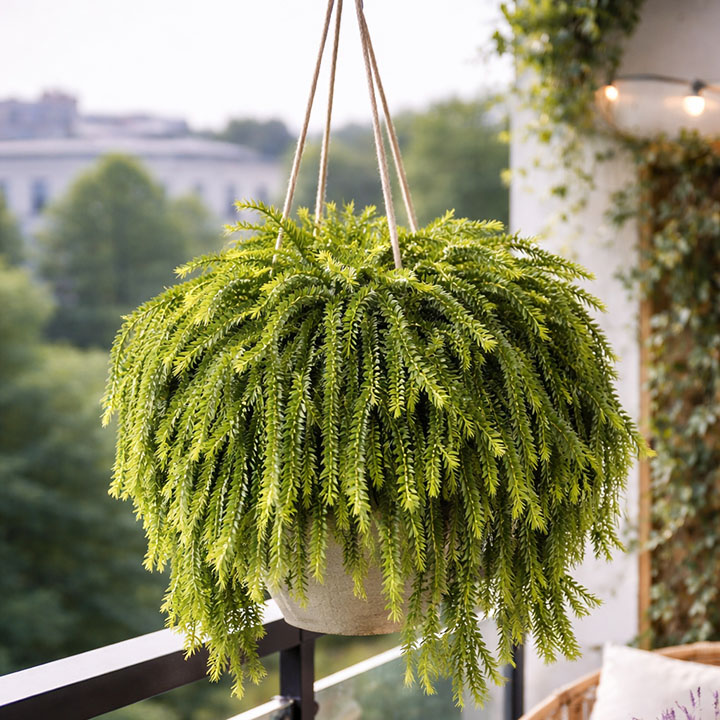
Choose compact varieties suited to pots rather than large sprawling grevilleas. Place them in a sunny spot with free-draining potting mix. They are ideal for balconies in Sydney, Melbourne, Adelaide, Perth and Brisbane.

2. Bottlebrush

Bottlebrush is a classic Australian bird-attracting plant. Its bright brush-like flowers are loved by nectar-feeding birds, and many compact varieties grow well in containers. Bottlebrush can also add height and softness to a balcony planting scheme, making the space feel greener and more private.

It performs best in full sun and is a great option for exposed balconies. If you want one plant that is ornamental, hardy and useful for birds, bottlebrush is one of the strongest choices.

3. Correa

Correa is a fantastic bird friendly plant for smaller balconies, especially in cooler parts of Australia. Its tubular flowers are attractive to small nectar-feeding birds, and many correas stay neat and compact in pots. They also tend to flower in cooler months, which helps provide bird food when many other plants are quiet.
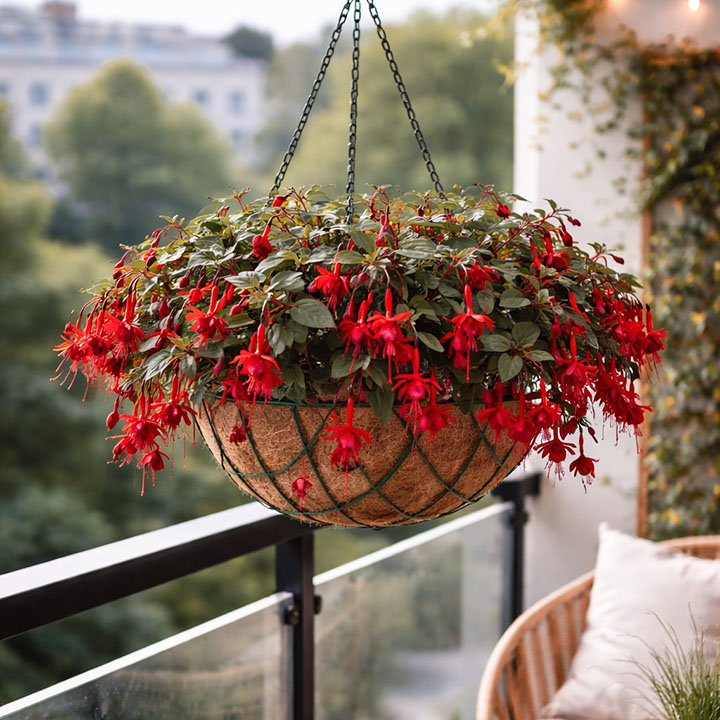
Correa is especially useful in Melbourne, Canberra, Hobart and other cooler or windier locations. It suits bright balconies with gentle sun or morning light.

4. Kangaroo Paw

Kangaroo paw is an excellent choice for a sunny balcony garden. The unusual flowers are rich in nectar and highly attractive to birds. Their upright shape is also very useful in small spaces because they add vertical interest without spreading too much.

They do best in a bright, sunny position with excellent drainage. Kangaroo paws work especially well on dry, warm balconies in Adelaide, Perth and sunny parts of Sydney or Melbourne.

5. Lomandra

Lomandra may not be the first plant people think of for birds, but it is one of the most useful. Its strappy foliage provides cover, shelter and nesting material, and it helps create a more natural habitat feel on a balcony. Small birds are often more likely to visit if they feel they have somewhere safe to duck into.

Lomandra is also very tough, coping with heat, wind and periods of dryness once established. That makes it perfect for exposed apartment balconies in Australian cities.

6. Tea Tree

Tea tree is another excellent bird friendly option, particularly for supporting insects and providing shelter. Small birds often benefit just as much from insect-rich planting and dense branching as they do from flowers. On a balcony, compact tea tree varieties can soften the space and make it feel more protected.

This plant is a good companion to more colourful nectar plants like grevillea or bottlebrush. Together, they create a richer habitat rather than relying on one kind of food source.

7. Lilly Pilly

Lilly pilly is a useful balcony shrub because it offers dense foliage, can be clipped for privacy, and produces berries that birds may enjoy. Compact forms are best for balconies, especially if you want a planted screen effect along one side or behind a seating area.

It is particularly helpful in humid cities like Sydney and Brisbane, but many varieties also perform well in Melbourne and other southern cities in sheltered positions.

8. Native Violet

Native violet is not a major bird food plant, but it can still play a valuable supporting role in a bird friendly balcony garden. It works well as a living mulch or trailing filler plant, helping create a layered and natural look. A healthier planting mix often attracts more insects, which can help support insect-eating birds.

It is a good choice for part-shade balconies and works well around the base of shrubs in larger pots.

9. Midyim Berry

Midyim berry is a compact native shrub that works beautifully in pots. It produces edible berries, has attractive foliage and can help make a balcony more bird friendly by adding fruit as well as shelter. It is a great plant for gardeners who want something productive as well as ornamental.

It suits sunny to partly sunny balconies and is particularly useful in coastal and temperate Australian cities.

10. Dwarf Banksia

Dwarf banksias can be superb bird plants for larger balconies with plenty of sun. Their flowers attract nectar-feeding birds, and they bring a strong Australian character to container gardens. They are best for gardeners willing to use large pots and very well-drained mix.

They suit drier climates particularly well, including Perth and Adelaide, and can also work in sunny spots in Sydney or Melbourne.

Best bird friendly balcony plant combinations

The strongest bird friendly balconies usually combine several plant types rather than relying on one hero plant. A good combination might include one nectar shrub, one sheltering shrub, one grass-like plant and one trailing or berry-producing plant. This gives birds more reasons to visit and makes the balcony feel fuller and more balanced.

  • Sunny balcony mix: Dwarf grevillea, kangaroo paw, lomandra and native violet
  • Cool climate mix: Correa, tea tree, lomandra and midyim berry
  • Screening mix: Lilly pilly, bottlebrush, lomandra and a trailing native groundcover
  • Dry climate mix: Dwarf banksia, kangaroo paw, bottlebrush and lomandra

Choosing bird friendly balcony plants for Australian cities

Sydney

Sydney balconies often deal with bright sun, humidity and salt air in some locations. Bottlebrush, grevillea, lilly pilly and midyim berry are all strong choices. In hot positions, use larger pots to reduce drying out.

Melbourne

Melbourne balconies can be windy, cool and changeable. Correa, lomandra, compact grevillea and tea tree are especially useful because they offer resilience as well as bird value. Shelter becomes very important here, not just flowers.

Brisbane

Brisbane’s warm and humid climate suits lush bird friendly planting. Grevillea, bottlebrush, lilly pilly and midyim berry can all perform well. Good airflow is important so plants do not become too dense or stressed in humid weather.

Adelaide

Adelaide balconies often face strong sun and dry conditions. Kangaroo paw, lomandra, bottlebrush and dwarf banksia are excellent options. Mulch and deep watering will help pots stay cooler in summer.

Perth

Perth’s hot dry summers make drought-tolerant native plants the best fit. Banksias, kangaroo paws, grevilleas and lomandras are all good performers. Free-draining potting mix is essential, especially in winter wet periods.

Canberra and Hobart

Cool winters mean cold-tolerant plants matter more in these cities. Correa, tea tree, lomandra and hardy compact grevilleas are good starting points. Use sheltered spots where possible and protect tender plants from severe cold.

How to make a balcony more attractive to birds

Plants are the foundation, but layout matters too. Group pots together to create a sense of cover. Put taller shrubs at the back or side of the balcony, with lower grasses and flowering plants in front. This layered look is better for birds and usually looks better for people too.

  • Use a mix of flowering, dense and grassy plants
  • Choose compact or dwarf varieties for containers
  • Include plants that flower at different times of year
  • Use larger pots so plants stay healthier and more stable
  • Avoid harsh chemicals that reduce insect life
  • Add a shallow water dish if you can keep it clean and safe

Fresh water can be helpful, especially during hot weather, but clean planting and shelter are usually the most important starting points. Healthy plants will also attract more insects, which expands the kinds of birds your balcony may support.

Mistakes to avoid

  • Using only one type of plant
  • Choosing large shrubs that quickly outgrow pots
  • Ignoring wind, heat or local climate
  • Creating colour without any shelter
  • Letting pots dry out too often in summer
  • Overcrowding the balcony so plants become unhealthy

A bird friendly balcony should feel planted but not crammed. Even a few well-chosen pots can be more useful than a cluttered balcony filled with unsuitable plants.

Final thoughts

The best bird friendly balcony plants in Australia combine beauty with usefulness. Nectar-rich natives like grevillea, bottlebrush and kangaroo paw help attract birds, while plants like lomandra, tea tree and lilly pilly add shelter and structure. By choosing plants suited to your city’s climate and arranging them in layers, you can turn even a small balcony into a welcoming habitat for urban birdlife.

Start with a few reliable plants, watch which birds visit, and build from there. Over time, your balcony can become one of the most rewarding parts of your home garden.

FAQ

What are the best bird friendly balcony plants in Australia?

Some of the best bird friendly balcony plants in Australia include dwarf grevillea, bottlebrush, correa, kangaroo paw, lomandra, tea tree, lilly pilly, midyim berry and dwarf banksia. The best mix depends on your local climate, sun exposure and balcony size.

Can birds really be attracted to a small balcony?

Yes, even a small balcony can attract birds if it offers nectar, shelter and a safe place to rest. A few well-chosen pots are often enough to make a noticeable difference.

Are native plants better for attracting birds?

In most cases, yes. Australian native plants are often better adapted to local birds, insects and climate conditions. They are usually the strongest foundation for a bird friendly balcony garden.

What birds might visit a bird friendly balcony?

Depending on your location, you may attract honeyeaters, lorikeets, wattlebirds, spinebills and smaller insect-eating birds. The types of birds will vary by city, nearby habitat and the plants you grow.

Do bird friendly plants need full sun?

Many bird friendly flowering plants prefer full sun, but not all of them do. Correa, native violet and some sheltering shrubs can still do well in part shade or bright filtered light.

How do I make my balcony safe for birds?

Use dense plants for cover, avoid toxic sprays, keep water clean if you provide it, and make sure pots are stable in wind. A calm, sheltered balcony with healthy plants is usually much more inviting to birds.

If you want more bees visiting your balcony, the best place to start is with flowers that are rich in nectar and pollen, bloom for a long period, and handle life in pots. A bee friendly balcony garden is not just good for pollinators. It also brings more movement, colour, and life into your outdoor space. Even a very small apartment balcony can become a useful feeding stop for bees when you choose the right plants and grow them well.

In Australia, bee friendly balcony gardening works especially well because many popular flowering plants thrive in containers, from herbs like lavender and rosemary to Australian natives like brachyscome, grevillea, and correa. The key is to match the plant to your sunlight, wind exposure, and city climate. A sunny balcony in Perth needs a different approach to a cool balcony in Melbourne or a humid one in Brisbane.

This guide covers the best bee friendly balcony plants for Australian conditions, how to choose them for your local weather, and how to turn even a compact balcony into a pollinator-friendly growing space.

Why grow bee friendly plants on a balcony?

Bees need reliable sources of nectar and pollen across as much of the year as possible. In dense urban areas, flowering balcony plants can help fill the gaps between parks, street trees, and backyard gardens. Your balcony may be small, but it can still act as a stepping stone for pollinators moving through the neighbourhood.

Bee friendly plants also tend to be rewarding for balcony gardeners because they are often colourful, fragrant, and long flowering. Many are well suited to pots, easy to maintain, and attractive to other beneficial insects as well.

  • They help support bees and other pollinators in urban areas.
  • They make balconies feel more alive and seasonal.
  • Many bee friendly plants are drought tolerant once established.
  • Herbs and flowering natives can be both useful and ornamental.
  • You can create a high-impact planting scheme even in a small space.

What makes a balcony plant bee friendly?

The best bee friendly plants usually share a few practical traits. They produce nectar and pollen, have flowers bees can access easily, and bloom generously. For balconies, it also helps if the plants are suited to pots, cope with drying winds, and do not need constant attention.

  • Long flowering period: Plants that bloom for weeks or months provide a more dependable food source.
  • Nectar and pollen rich flowers: Bees visit flowers for both energy and protein.
  • Open or accessible flower shapes: Single flowers are often easier for bees to use than very double, densely packed blooms.
  • Good container performance: Plants need to handle restricted root space.
  • Climate suitability: Heat, humidity, wind, and winter cold all matter on a balcony.

One of the simplest ways to support bees is to combine a few different plant types rather than relying on just one. A mix of herbs, annual flowers, and native shrubs can provide more continuous flowering across the year.

Best bee friendly balcony plants in Australia

These plants are among the best options for Australian balcony gardens because they are attractive to bees and generally adapt well to pots and planters.

1. Lavender

Lavender is one of the classic bee friendly balcony plants. Bees love the flower spikes, and gardeners love the silver foliage, fragrance, and tidy shape. It suits sunny balconies and performs best in free-draining potting mix.

  • Best for: Sunny, dry balconies
  • Good in: Melbourne, Adelaide, Perth, Canberra, Sydney
  • Needs: Full sun, sharp drainage, moderate watering

2. Rosemary

Rosemary is a brilliant balcony plant because it is both useful and ornamental. Bees visit its small blue flowers, and the plant handles heat, sun, and coastal conditions well. Upright forms work in pots, while trailing forms are excellent in balcony planters.

  • Best for: Hot, sunny, exposed balconies
  • Good in: Perth, Sydney, Brisbane, Adelaide, Melbourne
  • Needs: Full sun and a pot that drains well

3. Salvia

Salvias are among the most reliable flowering plants for balcony gardens. Many varieties bloom for long periods, cope well in pots, and are highly attractive to pollinators. Choose compact forms for smaller spaces.

  • Best for: Long colour display and repeated flowering
  • Good in: Most Australian cities
  • Needs: Sun to part sun, regular deadheading, consistent watering in hot weather

4. Brachyscome

Brachyscome, often called native daisy, is a very useful Australian choice for bee friendly balconies. It has small open flowers that are easy for pollinators to access and works beautifully in pots, window boxes, and mixed planters.

  • Best for: Small balconies and mixed containers
  • Good in: Sydney, Melbourne, Brisbane, Adelaide, Perth
  • Needs: Sun or light part shade, steady moisture, good drainage

5. Grevillea

Compact grevilleas are outstanding balcony plants if you want an Australian native option. Their flowers are rich in nectar and attract bees as well as small birds. Choose dwarf or compact varieties for containers rather than large landscape forms.

  • Best for: Native plant lovers and sunny balconies
  • Good in: Most Australian cities, especially warm and bright spots
  • Needs: Full sun, free-draining mix, not too much phosphorus

6. Correa

Correa is another excellent native choice for balcony pots. It has a neat habit, attractive foliage, and flowers well in cool seasons. It suits balconies that do not bake in full afternoon sun.

  • Best for: Cooler or part-shade balconies
  • Good in: Melbourne, Hobart, Canberra, Sydney
  • Needs: Good drainage, some sun, protection from harsh drying winds

7. Alyssum

Alyssum is a small annual that punches above its weight in balcony gardens. It flowers heavily, smells sweet, and is excellent for softening the edges of pots and railing planters. Bees are frequent visitors.

  • Best for: Small spaces and balcony boxes
  • Good in: Most Australian cities in the cooler months or mild seasons
  • Needs: Sun or part sun and regular moisture

8. Basil

Most people grow basil for the leaves, but if you let some plants flower, bees will visit them readily. It is an easy way to make your edible balcony garden more pollinator friendly.

  • Best for: Productive balcony herb gardens
  • Good in: Sydney, Brisbane, Perth, Melbourne in warm weather
  • Needs: Warmth, sun, and regular watering

9. Thyme and oregano

These compact herbs are ideal for sunny balconies. When they flower, they become busy little bee plants while still being useful in the kitchen. They are perfect for small terracotta pots and trough planters.

  • Best for: Compact sunny balconies
  • Good in: Melbourne, Adelaide, Perth, Sydney, Canberra
  • Needs: Full sun, light watering, excellent drainage

10. Gaura

Gaura has a light, airy habit that works beautifully on balconies. Its flowers seem to dance above the foliage, and it can bloom for a long period. It adds movement and softness to mixed container displays.

  • Best for: Light, natural planting styles
  • Good in: Sydney, Melbourne, Adelaide, Perth
  • Needs: Sun, decent drainage, occasional trimming to keep it tidy

Best bee friendly plants by balcony condition

For full sun balconies

  • Lavender
  • Rosemary
  • Salvia
  • Thyme
  • Oregano
  • Grevillea
  • Gaura

For part shade balconies

  • Brachyscome
  • Correa
  • Alyssum
  • Some compact salvias
  • Basil in bright conditions

For windy balconies

  • Rosemary
  • Thyme
  • Compact grevillea
  • Correa

Wind matters more than many balcony gardeners expect. A sunny but windy balcony can dry out pots much faster than a sheltered one, so even drought tolerant plants need closer watering attention in containers.

Choosing bee friendly plants for Australian cities

Australia’s major cities have very different growing conditions. Matching your plants to your local climate gives you a much better chance of success.

Sydney

Sydney balconies often deal with warm summers, mild winters, coastal exposure, and varying humidity. Lavender, rosemary, salvia, brachyscome, alyssum, and compact grevilleas do well. Watch for drying winds near the coast and reflected heat on west-facing balconies.

Melbourne

Melbourne’s changeable weather means flexibility matters. Choose tough, adaptable plants that handle cool spells, wind, and bursts of heat. Lavender, rosemary, brachyscome, correa, salvia, and thyme are all strong choices. Good drainage is especially important in cooler months.

Brisbane

Brisbane balconies are warmer and more humid, so heat-tolerant and longer-flowering plants are useful. Basil, salvia, rosemary, brachyscome, and grevillea can perform well. Make sure airflow is good and avoid letting potting mix stay soggy for long periods.

Perth

Perth’s hot, dry summers favour sun-loving, drought-tolerant plants in well-drained pots. Lavender, rosemary, thyme, oregano, salvia, and grevillea are excellent fits. Use larger pots to reduce summer stress and consider mulching the soil surface.

Adelaide

Adelaide suits many Mediterranean-style herbs and flowering perennials. Lavender, rosemary, thyme, oregano, gaura, and salvia are all good options. Balconies that face west may need extra watering and some summer protection for softer plants.

Canberra

Canberra’s colder winters mean you should choose hardy balcony plants and be prepared for seasonal slowdowns. Lavender, rosemary, thyme, correa, and brachyscome are useful options. Position pots where they receive the best winter sun.

How to build a bee friendly balcony garden

Creating a pollinator-friendly balcony is about more than buying one or two flowering plants. A thoughtful setup will attract more bees and keep your plants healthier too.

  • Use a range of plant heights: Combine trailing plants, mounding flowers, and a few upright shrubs or herbs.
  • Plant in groups: Clusters of the same flower are easier for bees to spot than single scattered plants.
  • Aim for overlapping bloom times: Choose a mix that flowers across more of the year.
  • Avoid heavy pesticide use: Bee friendly gardening and pesticide-heavy gardening do not mix.
  • Choose larger pots where possible: They dry out more slowly and support stronger flowering.
  • Add shallow water carefully: A very shallow dish with pebbles can help insects land safely, but keep it clean and modest in size.

Even three or four well-chosen containers can make a difference. A sunny balcony with rosemary, lavender, alyssum, and salvia will usually attract more pollinator activity than a larger balcony planted only with foliage.

Best pots and soil for bee friendly balcony plants

Healthy, well-flowering plants are more useful to bees, so your potting setup matters. Most bee friendly balcony plants need sharp drainage, especially herbs and Australian natives that dislike sitting in wet soil.

  • Use quality premium potting mix suitable for containers.
  • Add pots with drainage holes only.
  • Choose terracotta for breathability if you can keep up with watering, or use plastic/resin pots if your balcony dries out quickly.
  • Use saucers carefully so roots are not left sitting in water for long periods.
  • Refresh potting mix or top up nutrients regularly for long-term container health.

How to keep bee friendly balcony plants flowering longer

The more flowers your plants produce, the better your balcony will be for bees. A few simple habits can extend flowering and improve plant performance.

  • Deadhead spent flowers on plants that respond well to it, such as salvia and gaura.
  • Feed container plants lightly but regularly during active growth.
  • Water deeply rather than giving frequent tiny splashes.
  • Rotate pots if one side becomes leggy from uneven sun.
  • Trim herbs after flowering flushes to keep them bushy and productive.

A simple bee friendly balcony planting idea

If you want an easy starting point, try this combination for a sunny Australian balcony:

  • 1 compact lavender in a feature pot
  • 1 trailing rosemary in a railing planter
  • 2 brachyscome plants in a wide bowl
  • 1 compact salvia in a medium pot
  • 1 small pot of thyme or oregano near the seating area
  • 1 edge planting of alyssum to soften the arrangement

This mix gives you a balance of nectar-rich flowers, fragrance, useful herbs, and layered shapes without overcrowding a small balcony.

Common mistakes to avoid

  • Choosing plants that need full garden beds rather than container life.
  • Using tiny pots that dry out too quickly.
  • Ignoring balcony wind exposure.
  • Growing only one species with one short flowering period.
  • Overwatering Mediterranean herbs like lavender and rosemary.
  • Using harsh chemical sprays on flowering plants.

Final thoughts

The best bee friendly balcony plants for Australia are the ones that flower well in pots, suit your local climate, and match your balcony’s sun and wind conditions. Lavender, rosemary, salvia, brachyscome, grevillea, correa, alyssum, and flowering herbs are all excellent places to start. With the right mix, even a compact balcony can become a vibrant little pollinator stopover filled with colour, scent, and movement.

Start with a few reliable plants, observe which spots on your balcony get the best sun and shelter, and build from there. In time, you can create a balcony garden that looks beautiful to you and is genuinely useful to bees as well.

FAQ: Best Bee Friendly Balcony Plants

What are the best bee friendly plants for a small balcony?

Some of the best choices for a small balcony are alyssum, brachyscome, thyme, oregano, compact lavender, basil, and small salvias. These plants do not need a lot of room and can flower generously in pots or railing planters.

Do bees really visit balcony plants?

Yes, bees often visit balcony plants, especially if the flowers are rich in nectar and easy to access. Even balconies in built-up areas can attract bees when there are enough flowering plants and the space gets reasonable sunlight.

Which Australian native plants are good for bees on a balcony?

Brachyscome, compact grevilleas, and correa are among the best Australian native options for balcony pots. They are attractive, useful to pollinators, and generally suit container growing when given the right drainage and light.

Are herbs good for bees?

Yes, many herbs are excellent for bees when allowed to flower. Lavender, rosemary, thyme, oregano, and basil are especially useful because they combine edible value with pollinator-friendly blooms.

What is the easiest bee friendly plant to grow in pots?

Rosemary is one of the easiest bee friendly plants to grow in pots. It handles sun, wind, and dry spells well once established, and its flowers are very attractive to bees.

Do bee friendly plants need full sun?

Many of the best bee friendly balcony plants prefer full sun, but not all of them need it all day. Plants like brachyscome, alyssum, and correa can still perform well in bright part shade, depending on your climate and balcony conditions.

How do I make my balcony more attractive to bees?

Grow several nectar-rich flowering plants, group them together, avoid pesticides, and aim for flowers across different seasons. Using a mix of herbs, annuals, and native shrubs usually works better than relying on one type of plant alone.

Can I grow bee friendly plants on a windy balcony?

Yes, but choose tougher plants such as rosemary, thyme, compact grevillea, and correa. Use heavier pots, group containers together for shelter, and check moisture more often because wind dries pots quickly.

Olive trees are one of the best fruiting plants for sunny Australian balconies. They are tough, attractive, drought-tolerant once established, and naturally suited to the hot, bright, dry conditions that many balconies create. With the right variety, a large pot, and plenty of sun, you can grow olives successfully on a balcony in cities such as Melbourne, Sydney, Adelaide, Perth, Canberra, and Hobart. Even in more humid places like Brisbane, balcony olives can still do well with careful watering, airflow, and variety selection.

If you are hoping for a beautiful edible plant that also looks architectural year-round, olives are hard to beat. Their silvery foliage suits modern balconies, Mediterranean-style spaces, and small urban gardens. While fruit production can be lighter in pots than in the ground, a healthy potted olive can still reward you with flowers, foliage, and a useful harvest over time.

Why olives are a great choice for balconies

Olives are naturally adapted to conditions that are common on balconies: reflected heat, drying winds, strong sun, and limited soil space. They grow slowly enough to be manageable in containers, respond well to pruning, and can live for many years in a pot if looked after properly.

  • They tolerate heat better than many fruit trees.
  • They cope well with dry air and windy positions once established.
  • Their roots adapt well to container growing if the pot is large enough.
  • They are evergreen, so they look good all year.
  • They suit modern, coastal, and Mediterranean-style balcony designs.
  • Many varieties can be kept compact with light pruning.

The main limitation is sunlight. Olives are not shade plants. If your balcony does not get long hours of direct sun, they may survive but they are unlikely to fruit well.

How much sun do olives need?

Olive trees need as much direct sun as you can give them. For best growth and fruiting, aim for at least 6 to 8 hours of direct sunlight each day. A north-facing or west-facing balcony is usually the best option in Australia. East-facing balconies can work if they still get strong light for much of the day. Deeply shaded south-facing balconies are usually not suitable for olives.
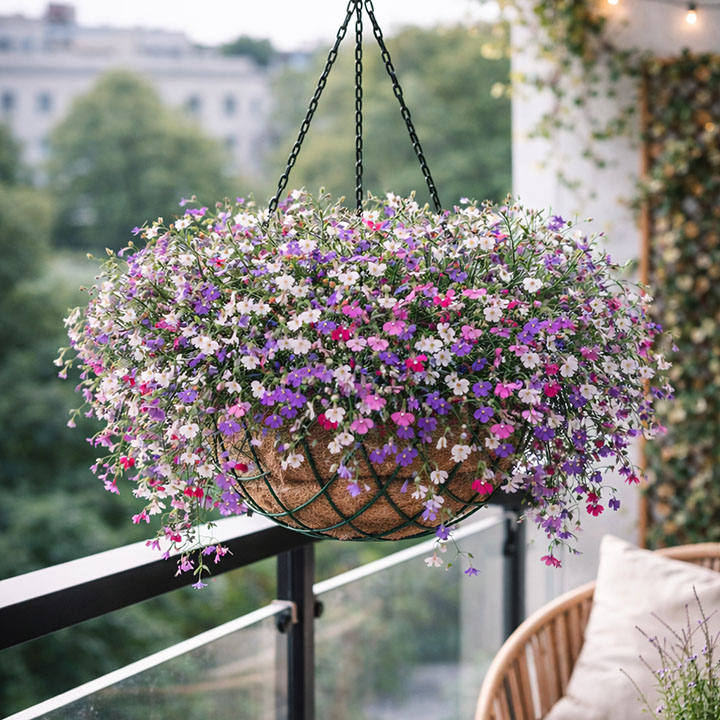
Light levels matter more than almost anything else. A healthy olive in the wrong light often becomes thin, stretched, and disappointing. A smaller olive in a very sunny position usually performs much better than a larger olive grown in partial shade.

Best olive varieties for pots and balconies

Not all olive trees are equally suited to container growing. For balconies, choose a compact or naturally smaller-growing variety that fruits reasonably well and handles pruning. If your main goal is ornamental foliage, you have more flexibility. If you want olives to eat or cure, variety choice matters more.

Good olive varieties for Australian balconies

  • Arbequina – One of the best choices for pots. Compact, productive, and relatively easy to manage. Good for smaller spaces.
  • Koroneiki – Small-leaved and well suited to warm, sunny conditions. Often grown for oil but also highly ornamental.
  • Frantoio – Attractive and reliable in many southern Australian climates. Good pollinator for other varieties.
  • Manzanillo – Popular and versatile, though it may get larger over time and needs more pruning in a pot.
  • Picual – Strong grower and heat tolerant, better for larger balconies with room for a heavier container.

If you want the best chance of fruit on a balcony, look for a self-fertile olive or grow two compatible varieties if space allows. Even self-fertile olives can crop better when another olive is nearby.

Which Australian cities are best for growing olives on a balcony?

Olives prefer a Mediterranean-style climate: hot to warm summers, good sun, lower humidity, and some cool winter weather. That does not mean they can only be grown in one part of Australia, but performance does vary by city.

Melbourne

Melbourne is a strong city for balcony olives, especially on a sunny balcony with protection from cold southerly winds. The warm to hot summer conditions suit olives well, and the cooler winter helps with flowering and fruit set. Watch for cold snaps and wet winter pots. Good drainage is essential.

Sydney

Sydney balconies can grow olives well, especially in bright, open positions. The challenge is humidity and summer rain rather than cold. Choose a sunny spot with excellent airflow, avoid crowding the tree, and do not keep the pot too wet. Fruiting can still be good in the right position.

Brisbane

Brisbane is possible, but more challenging. The humidity, summer rain, and warm winters are less ideal for olives than southern cities. Success depends on using a very free-draining mix, avoiding waterlogging, and choosing a position with maximum sun and airflow. Olives may grow well as ornamentals but can be less reliable for heavy fruiting.

Perth

Perth is excellent for growing olives. The hot, dry summers and bright light are close to what olives love. On exposed balconies, the main issues are heat stress, drying winds, and rapid pot dehydration in summer. You may need more frequent watering than you expect, especially with terracotta pots.

Adelaide

Adelaide is one of the best cities in Australia for olives. The dry climate and hot summers are highly suitable. Balcony olives in Adelaide often perform very well as long as they have a large enough pot and are watered deeply during heatwaves.

Canberra

Canberra can be very good for olives because of the hot summers and cold winters, but potted olives need more winter protection than in milder cities. A balcony that is sunny by day but sheltered from hard frost and icy wind is ideal. Raise pots slightly off the floor so water drains well in winter.

Hobart

Hobart can suit olives on a sunny balcony, especially with reflected warmth from walls or paving. Growth will be slower than in mainland cities, but olives can still do well. Prioritise a warm, north-facing position and protect plants from persistent cold wind.

Darwin

Darwin is the least suitable major Australian city for olives. The tropical humidity, heavy wet season conditions, and lack of cool winter weather are not ideal. You may be able to keep an olive alive in a very bright, protected position, but it is unlikely to be a top-performing balcony fruit tree there.

Choosing the right pot

Olives can live in pots for many years, but they do best when started in a container that gives roots room to spread. A very small nursery pot is fine temporarily, but it should not be the long-term home of your tree.

  • Start with a pot at least 40 to 50 cm wide for a young tree.
  • Move up over time to a large final container around 50 to 70 cm wide if your balcony can handle the size and weight.
  • Make sure the pot has large drainage holes.
  • Choose a sturdy pot that will not tip in wind.
  • Avoid saucers that hold water for long periods.

Terracotta looks beautiful and suits olives aesthetically, but it dries out faster. Lightweight composite or plastic pots hold moisture longer and are often easier on balconies where weight matters. Before choosing a very large container, think about load limits, especially on older balconies.

The best potting mix for balcony olives

The biggest mistake with potted olives is using a mix that stays wet for too long. Olive roots like oxygen. They want moisture, but not soggy soil. Use a premium potting mix designed for large containers and improve drainage further if needed.

A good balcony olive mix should be:

  • Free-draining but still able to hold some moisture
  • Open and airy, not dense or muddy
  • Rich enough to support steady growth
  • Slightly mineral in feel rather than overly soft and spongey

You can blend a quality potting mix with a small amount of coarse sand, fine gravel, perlite, or scoria to improve drainage. Do not overdo it. The goal is a balanced mix, not a pot full of rocks. A layer of mulch on top helps regulate temperature and reduces summer drying, but keep mulch slightly back from the trunk.

Planting your olive tree on a balcony

When planting, gently remove the olive from its nursery pot and tease out any circling roots. Place it at the same depth it was growing before. Do not bury the trunk. Firm the mix lightly around the root ball, water it in deeply, and let excess water drain away.

After planting:

  • Place the tree in the sunniest part of the balcony.
  • Keep it sheltered from extreme gusty wind while it establishes.
  • Stake it loosely if necessary for the first season.
  • Rotate the pot every few weeks if the tree leans toward the light.

How often to water olives in pots

Olives are drought tolerant in the ground, but balcony olives in pots dry out much faster. That means they still need regular watering, especially through their first year and during hot Australian summers. The key is deep watering followed by partial drying, not constant wetness.

As a general guide:

  • Summer: Water when the top few centimetres of mix are dry. This may be every few days in heat, or even daily during extreme hot spells on exposed balconies.
  • Spring and autumn: Water when needed, usually less often than in summer.
  • Winter: Water sparingly. The mix should not stay saturated in cold weather.

Never water by the calendar alone. Check the soil with your finger or a moisture meter. A tree in Perth on a windy west-facing balcony may need very different watering from one in Hobart on a sheltered balcony. The pot material, tree size, sun exposure, and weather all change the schedule.

Feeding olives in containers

Because container plants rely entirely on the pot for nutrition, regular feeding helps keep olives healthy and productive. Use a controlled-release fertiliser in spring and supplement with a liquid feed during active growth if needed.

  • Apply a slow-release fertiliser in early spring.
  • Feed again lightly in late spring or early summer if the tree is growing strongly.
  • Avoid pushing too much soft growth late in the season.
  • If leaves yellow between veins, the tree may need trace elements or iron, especially in alkaline conditions.

Too much fertiliser can be as unhelpful as too little. Overfed olives often produce lush leafy growth with less fruit and can become harder to manage in a small space.

Pruning and shaping balcony olives

One of the reasons olives work so well on balconies is that they tolerate pruning. Light shaping keeps them compact, tidy, and easier to live with. It also improves airflow through the canopy, which is especially important in humid cities.

Prune to:

  • Remove dead, damaged, or crossing branches
  • Open up the centre slightly for airflow and light
  • Keep the tree balanced and in scale with the balcony
  • Control height and spread

The best time for more active pruning is usually after the coldest part of winter and before strong spring growth, or after fruiting if needed. Avoid severe pruning every year. A potted olive generally looks best with a naturally airy shape rather than a tightly clipped one.

Will a balcony olive tree produce fruit?

Yes, it can, but fruiting depends on variety, sunlight, tree age, climate, pollination, and general plant health. A balcony olive grown mainly for foliage may still flower. A well-grown tree in a sunny position can produce a useful crop. However, it is best to think of fruit as a bonus at first, especially while the tree is young.

To improve your chances of fruiting:

  • Choose a good fruiting variety suited to pots.
  • Give the tree full sun.
  • Do not overwater in winter.
  • Do not overfeed with high-nitrogen fertiliser.
  • Grow a second compatible olive nearby if possible.
  • Be patient, especially with young nursery plants.

Some olives also crop more heavily one year and less the next. That natural cycle can still happen in containers.

Pollination on balconies

Olive flowers are small and wind-pollinated. On balconies, pollination can still happen naturally, especially in open, breezy positions. Self-fertile varieties are the easiest option for small spaces, but planting a second olive nearby can sometimes improve fruit set. If flowering is good but fruiting is poor, limited pollination may be part of the issue.

Common problems with potted balcony olives

Yellow leaves

This can be caused by overwatering, poor drainage, nutrient imbalance, or natural shedding of older leaves. If the mix stays soggy, fix that first.

No fruit

Usually caused by insufficient sun, a tree that is still too young, lack of pollination, unsuitable climate, or overfeeding with nitrogen.

Leaf drop after heat or wind

Hot balconies can dry pots very quickly. Deep watering, mulch, and wind buffering can help. Try not to let the tree swing between bone dry and waterlogged.

Root rot

This is one of the biggest risks in pots. It is usually linked to poor drainage and excessive moisture. Once severe, it can be difficult to reverse.

Scale or sooty mould

These can appear on stressed plants or in sheltered, stagnant conditions. Improve airflow, inspect stems and leaf undersides, and treat infestations early.

Seasonal care for olives on Australian balconies

Spring

This is the main growth season. Refresh mulch, apply fertiliser, check if repotting is needed, and lightly prune if required. Flower buds may begin to form as weather warms.

Summer

Watch watering closely. Pots heat up fast, especially on concrete or tiled balconies. During heatwaves, you may need to water early in the morning and check again in the evening. Avoid letting the mix stay dry for too long in severe heat.

Autumn

Growth begins to slow. Reduce feeding, keep watering balanced, and harvest ripe olives if your tree has fruited. This is also a good time to clean up the plant and inspect for pests.

Winter

Olives generally prefer not to sit wet and cold. Water less often, make sure drainage is clear, and protect potted trees from severe frost, icy wind, or prolonged waterlogging. In milder cities, winter is often when the tree simply rests.

When to repot a balcony olive

Olives do not need frequent repotting, but they do benefit from fresh mix and more root room when they become pot-bound. Signs it is time to repot include roots circling heavily, water running straight through the pot, stunted growth, or the tree drying out extremely quickly.

Repot every few years as needed, ideally in spring. If the tree is already in its largest practical container, root pruning and replacing some of the old mix can help maintain it without moving to a bigger pot.

Design ideas for using olives on a balcony

Olive trees are as decorative as they are practical. They pair beautifully with terracotta, gravel, natural timber, white walls, and Mediterranean herbs. A single olive in a large feature pot can anchor the whole balcony. Two matching olives can frame a seating area. Underplanting with thyme, oregano, trailing rosemary, or alyssum can soften the container and make the space feel lush without becoming messy.

Final thoughts

Growing olives on a balcony is a realistic and rewarding option for many Australian gardeners, especially if the space is sunny and well ventilated. In cities such as Adelaide, Perth, Melbourne, Canberra, and Hobart, olives are especially promising. Sydney can also be very successful with care. Brisbane is more challenging but still possible in the right microclimate. Darwin is generally the least suitable.

If you start with the right variety, a generously sized pot, and excellent drainage, your balcony olive can become a long-term feature plant that looks elegant year-round and may even provide a home harvest. Think of it as a combination of edible plant, small tree, and design statement all in one.

FAQ: Growing olives on a balcony

Can olive trees really grow well in pots?

Yes. Olive trees adapt very well to container growing as long as the pot is large enough, the mix drains freely, and the plant gets plenty of direct sun.

How much sun does a balcony olive need?

At least 6 to 8 hours of direct sunlight is ideal. More sun usually means better growth, better flowering, and a better chance of fruit.

Which olive variety is best for a small balcony?

Arbequina is one of the best choices for a small balcony because it stays relatively compact, looks attractive, and can fruit well in a pot.

Can I grow olives on a balcony in Melbourne?

Yes. Melbourne is a very good city for balcony olives if the position is sunny and the pot drains well through winter.

Can I grow olives on a balcony in Sydney?

Yes. Sydney can be a good place for olives, but humidity and summer rain mean airflow and drainage are especially important.

Can olives grow on a balcony in Brisbane?

They can, but Brisbane is less ideal because of humidity and wet summers. Treat them as high-sun, excellent-drainage plants and do not overwater.

How often should I water a potted olive tree?

Water deeply when the top few centimetres of potting mix have dried out. In summer this may be frequent, especially on hot, exposed balconies. In winter it should be much less often.

Do I need two olive trees to get fruit?

Not always. Some olives are self-fertile, but a second compatible variety nearby can improve pollination and fruit set.

Why is my olive tree dropping leaves?

Leaf drop can happen from overwatering, underwatering, sudden heat, strong wind, poor drainage, or normal replacement of older leaves. Check moisture and drainage first.

How long does it take for a potted olive to fruit?

That depends on the variety, age of the tree when bought, climate, and growing conditions. A young olive may take a few years before fruiting well.

Can I keep an olive tree small?

Yes. Olives respond well to pruning and can be kept compact enough for balcony growing, especially when grown in a pot.

Are olives good for windy balconies?

They handle wind better than many plants, but very strong, constant wind can dry them out quickly and damage new growth. Shelter from the harshest gusts is helpful.

Bamboo can work beautifully on a balcony. It creates privacy, softens harsh walls and railings, adds movement in the breeze, and gives even a small outdoor space a lush, calm feeling. In Australia, bamboo is especially useful for apartment gardeners who want a fast-growing green screen without needing a large garden bed.

That said, bamboo on a balcony needs the right setup. The wrong variety, a pot that is too small, or poor watering habits can quickly lead to stress, mess, or an overgrown plant. The key is choosing a suitable clumping bamboo, growing it in a large container, and adjusting care to your city’s climate.

This guide covers the best types of bamboo for balconies in Australia, how to plant and maintain them in pots, and what to do in different climates from Melbourne and Sydney to Brisbane, Perth, Adelaide, Hobart, Canberra, and Darwin.

Why bamboo works well on a balcony

  • Creates a natural privacy screen
  • Adds height without taking up much floor space
  • Can soften concrete, glass, and metal balconies
  • Works in modern, tropical, coastal, and minimalist designs
  • Many clumping types handle container growing well
  • Evergreen foliage keeps the balcony looking full year-round

Bamboo is one of the best plants for people who want a greener balcony quickly. Unlike many shrubs, it gives a strong vertical effect in a relatively narrow planter, which makes it useful for screening neighbouring buildings, creating a wind buffer, or framing an outdoor seating area.

Best bamboo types for balconies

For balconies, always look for clumping bamboo, not running bamboo. Running bamboo spreads aggressively and is not suitable for container balcony gardening in most situations. Clumping bamboo is far easier to control, tidier in pots, and much better suited to apartment living.

Good bamboo choices for pots and balconies

  • Bambusa textilis gracilis – one of the best screening bamboos for Australian balconies; upright, neat, and elegant
  • Bambusa multiplex – dense and useful for screening; available in a range of sizes
  • Bambusa malingensis – attractive lush foliage for a tropical feel if you have the space
  • Fargesia species – more cold-tolerant and useful in cooler areas, though often less common in Australia
  • Dwarf bamboo varieties – better for smaller balconies where full-height screening is not required

For most Australian apartment balconies, Bambusa textilis gracilis is often the standout option. It grows upright rather than flopping wide, tolerates pruning, and gives a clean architectural look that suits modern homes.

What to avoid

  • Running bamboo varieties
  • Very large species that quickly outgrow pots
  • Cheap, tiny nursery pots left unchanged for too long
  • Placing heavy containers on balconies without checking load limits
  • Balconies with intense reflected heat and no watering plan

Before buying, think beyond the current plant size. Bamboo can grow quickly in warm weather. A plant that looks manageable at purchase may become too tall, too thirsty, or too heavy for the space if you choose the wrong variety.

How much sun does balcony bamboo need?

Most balcony bamboo grows best in part sun to full sun, depending on the variety and your local climate. In cooler southern cities, more sun is often helpful. In hotter parts of Australia, some afternoon protection can reduce stress, leaf scorch, and rapid drying.

As a general rule:

  • Cool climates – aim for as much light as possible
  • Temperate climates – morning sun and bright light work well
  • Hot climates – sun is fine, but harsh western exposure may need extra watering or light shade

Best pot size for bamboo on a balcony

Bamboo needs a large, stable container. Small pots dry out too quickly and can cause the plant to become root bound. On balconies, larger pots also help stop tall bamboo from becoming unstable in wind.

A good starting point is:

  • Small dwarf bamboo – at least 35–45cm wide
  • Screening bamboo – at least 50–70cm wide and deep
  • Long trough planters – excellent for screening if deep enough and structurally suitable

Choose containers made from lightweight but durable materials such as fibreglass, resin, or quality plastic if weight is a concern. Terracotta and concrete look beautiful but can become extremely heavy once filled with potting mix and watered.

Important balcony safety note

Bamboo in large pots can become heavy. Before setting up several screening planters, make sure your balcony can safely handle the combined weight of pots, wet soil, saucers, and mature plants. This matters even more in apartments with older balconies or where you plan to create a full privacy screen.

Best potting mix for bamboo

Bamboo likes rich, free-draining soil that holds some moisture without staying soggy. Use a premium potting mix designed for containers, then improve it slightly for structure and moisture balance.

A good mix for balcony bamboo is:

  • High-quality premium potting mix
  • A little compost or well-aged organic matter
  • Some coconut coir or water-holding material for hot balconies
  • Optional bark or perlite for improved drainage and aeration

Do not use heavy garden soil from the ground. It compacts too much in containers and can lead to drainage problems.

How to plant bamboo in a pot

  1. Choose a large pot with good drainage holes.
  2. Partly fill it with premium potting mix.
  3. Remove the bamboo from its nursery pot and gently loosen the outer roots if tightly packed.
  4. Position the plant so the top of the root ball sits just below the rim.
  5. Backfill around the root ball and firm gently.
  6. Water deeply until excess runs from the bottom.
  7. Add mulch to reduce moisture loss, keeping it slightly away from the stems.

If you are planting multiple bamboos in a trough planter, give each one enough space to develop. Crowding them too closely may look good at first but often leads to competition, poor airflow, and quicker drying.

Watering bamboo on a balcony

This is the most important part of growing bamboo in pots. Bamboo likes consistent moisture, especially while establishing and during warm weather. Balcony conditions can make pots dry out much faster than in-ground garden beds because of wind, heat, and reflected sunlight from walls and glass.

As a guide:

  • Water more often in summer and during hot winds
  • Water less in winter, but do not let the pot become bone dry
  • Check the moisture level by feeling the top few centimetres of mix
  • Deep watering is better than frequent tiny splashes
  • Self-watering planters or drip irrigation can be very helpful for busy gardeners

If bamboo leaves curl inward, the plant is often telling you it is thirsty or stressed by heat and dry wind. If leaves yellow broadly and the mix stays wet for long periods, you may be overwatering or dealing with drainage issues.

Feeding bamboo in pots

Bamboo is a hungry plant compared with many balcony favourites. In containers, nutrients wash out over time, so feeding helps maintain healthy colour and steady growth.

A simple feeding routine:

  • Apply a controlled-release fertiliser in spring
  • Top up with liquid feed during active growing periods if needed
  • Add a light layer of compost in warm seasons if your potting setup allows it

Do not overfeed in the coldest part of winter, especially in southern cities where growth slows down.

Pruning and maintenance

One reason bamboo is so balcony-friendly is that it responds well to tidying. You can remove old canes, trim lower foliage, and lightly shape the plant to suit the space.

  • Remove dead, weak, or damaged canes at the base
  • Trim back height if the variety allows it and the look suits your space
  • Thin crowded growth to improve airflow
  • Clean up fallen leaves regularly in small balconies

If privacy is the goal, avoid over-pruning. A denser plant usually gives a better screen than one clipped too hard.

Managing wind on apartment balconies

Wind is one of the biggest hidden challenges for balcony bamboo. High-rise and exposed balconies can create strong air movement that dries the pot quickly, tears foliage, and causes tall containers to shift.

  • Use heavier or broader-based pots for stability
  • Group planters to create a more sheltered microclimate
  • Avoid very tall, narrow pots in windy locations
  • Water more often during windy periods
  • Choose upright, tidy species rather than sprawling ones

In some balconies, bamboo itself becomes part of the wind solution by filtering gusts and making the space feel calmer.

Growing bamboo in different Australian cities

Australia’s climate varies widely, so bamboo care on a balcony should always be adjusted to your local conditions.

Melbourne

Melbourne’s changeable weather means balcony bamboo must handle cool spells, wind, and bursts of summer heat. Bamboo usually performs well here in a bright position with regular watering in warm weather. Protect potted plants from strong drying winds, especially on upper-level balconies. Winter watering can be reduced, but the mix should not fully dry out.

Sydney

Sydney’s mild, humid conditions are generally excellent for bamboo. Many clumping varieties thrive here, particularly when grown in large containers. Coastal balconies may experience salt-laden wind, so wash dust and residue from foliage occasionally and stay on top of watering during hot, bright periods.

Brisbane

Brisbane’s warmth and humidity suit bamboo very well. Growth can be strong, so choose a variety carefully and expect quicker pot filling. Summer rain helps, but balconies can still dry out fast under roof cover or afternoon sun. Feed regularly and monitor for rapid root crowding.

Perth

Perth’s hot, dry summers mean watering is the main challenge. Bamboo can grow well, but only if the pot is large enough and moisture is kept steady. Mulch heavily, consider a self-watering system, and protect plants from intense reflected heat from walls, paving, or glass balustrades.

Adelaide

Adelaide gardeners should take a similar approach to Perth, with extra focus on summer heat and dry conditions. Morning sun with some afternoon relief often works well on exposed balconies. In winter, growth slows and watering needs drop.

Canberra

Canberra’s colder winters mean cold-tolerant choices and good positioning matter more. Place bamboo where it gets solid light and some shelter from icy winds. Water less in winter, but do not ignore the pots completely. Cold, dry air can still dehydrate plants in containers.

Hobart

In Hobart, the cooler climate means growth is usually slower, but bamboo can still do very well in a bright, protected balcony position. Too much shade may lead to thinner growth. Shelter from strong wind is especially helpful.

Darwin

Darwin’s tropical climate can support lush bamboo growth, but wet season conditions and rapid growth mean drainage and pruning are important. During the dry season, potted bamboo may still need frequent watering, especially on sunny balconies. Strong tropical growth also means you may need to repot more often.

Best balcony positions for bamboo

Bamboo is especially useful in these balcony situations:

  • Along the edge of a balcony for privacy screening
  • Beside an outdoor dining setting to create a green backdrop
  • Against a wall to soften a blank vertical surface
  • In trough planters to divide zones on a large balcony
  • At the western edge of a balcony to soften sun and glare

Just avoid blocking all airflow in already hot spaces. A balance between privacy and ventilation usually gives the best result.

When to repot bamboo

Bamboo in containers will eventually need more space. Signs it is time to repot include roots circling heavily, water running straight through too quickly, slowed growth, or the plant drying out much faster than before.

Repotting is usually best done in mild weather when the plant can recover without extreme heat or cold. If the plant is already in the largest practical container, you can root prune and refresh the potting mix instead.

Common problems with bamboo on balconies

Brown leaf tips

Usually caused by dry air, inconsistent watering, wind, salt exposure, or heat stress. Increase watering consistency and protect from harsh conditions.

Curling leaves

Often a sign of thirst or heat stress. Check soil moisture immediately.

Yellowing leaves

Can be natural aging of older foliage, but widespread yellowing may point to drainage problems, overwatering, or nutrient issues.

Weak or sparse growth

May be caused by too little light, lack of feeding, a pot that is too small, or root congestion.

Plant becoming too tall

Usually a variety choice issue. Select a more compact type from the start, or prune to maintain scale.

Can bamboo be used as a privacy screen on a balcony?

Yes, and this is one of the main reasons people grow it. A row of clumping bamboo in trough planters can create a lush, living screen that feels softer and more attractive than artificial panels. It can also reduce the feeling of being overlooked without making the space feel closed in.

For privacy screening, focus on:

  • Upright clumping varieties
  • Long, deep trough planters
  • Regular feeding and watering
  • Pruning to keep the screen neat and dense

Is bamboo a good choice for small balconies?

It can be, but only if you match the plant to the space. On very small balconies, a giant screening bamboo may overwhelm the area. In that case, look for a narrower or dwarf variety, or use one statement pot rather than a full row. Bamboo should enhance the balcony, not dominate every square centimetre of it.

Final thoughts

Growing bamboo on a balcony is one of the best ways to create privacy, greenery, and structure in an Australian apartment garden. The biggest keys to success are choosing a clumping type, using a large pot, keeping watering consistent, and adjusting care to your city’s weather. In warm cities, watch moisture closely. In cooler and windier cities, prioritise sun and shelter.

Done well, bamboo can turn a plain balcony into a calm, leafy outdoor room that feels more private and far more inviting.

Frequently Asked Questions

What is the best bamboo for a balcony in Australia?

Clumping bamboo is the best choice, especially neat upright forms such as Bambusa textilis gracilis. It is widely used for screening and suits pot growing better than running bamboo.

Can bamboo grow well in pots?

Yes. Bamboo can grow very well in pots if the container is large enough, the potting mix is high quality, and the plant receives consistent water and regular feeding.

Does balcony bamboo need full sun?

Many bamboos grow well in part sun to full sun. In cooler cities, more sun is usually beneficial. In hotter areas, harsh afternoon exposure may require extra watering or some protection.

How often should I water bamboo in a balcony pot?

Watering depends on the season, pot size, wind exposure, and city climate. In summer, especially in hot or windy conditions, bamboo may need frequent deep watering. In winter, it needs less, but the pot should not dry out completely.

Can bamboo be used for privacy on an apartment balcony?

Yes. Bamboo is one of the best balcony plants for privacy because it grows upright, dense, and evergreen. Trough planters with clumping bamboo can form an attractive living screen.

Is bamboo too heavy for a balcony?

Large bamboo pots can be heavy, especially after watering. Always consider the total load of containers, soil, and plants before creating a full screen on a balcony.

Should I grow running bamboo on a balcony?

No. Running bamboo is generally not a good choice for balconies. It is harder to control and less suitable for tidy container growing. Clumping bamboo is the safer and more practical option.

Why are the leaves on my balcony bamboo turning brown?

Brown tips or edges are often caused by inconsistent watering, dry wind, strong heat, or salt exposure on coastal balconies. Improving watering and shelter usually helps.

Can I keep bamboo short on a balcony?

Yes, to a degree. Choose a naturally smaller or more upright variety first, then prune lightly to maintain shape and size. Starting with the right plant is much easier than trying to control an oversized one later.

Is bamboo a good plant for windy balconies?

It can be, but windy balconies need large stable pots, more frequent watering, and the right variety. Upright clumping bamboo usually performs better than broader, looser forms in exposed sites.

Sunflowers are one of the happiest plants you can grow in a small space. They bring height, colour, and a strong summer feel to a balcony, and they are surprisingly adaptable when you choose the right variety and container. In Australia, balcony gardeners can grow sunflowers successfully in cities from Melbourne to Brisbane, Sydney to Perth, as long as they match the plant to the local climate, sunlight, and wind conditions.

Whether you want compact dwarf sunflowers in pots, edible seed varieties, or a bright seasonal display for pollinators, this guide will walk you through how to grow sunflowers on a balcony in Australian conditions.

Why Sunflowers Work Well on Balconies

Sunflowers are easy to grow from seed, fast to establish, and visually dramatic even in a small footprint. Many modern varieties are ideal for pots, especially dwarf and branching types that stay compact and flower generously. They are also great for beginners because they germinate quickly and give visible progress within days.

On a balcony, sunflowers can be used as a feature plant, a privacy screen for part of the season, or a bright companion among herbs, edible flowers, and other summer containers. Bees and other pollinators love them, and children usually enjoy watching them grow.

Best Sunflower Types for Balcony Gardens

Not every sunflower is suited to a balcony. Giant varieties can become too tall, top-heavy, and thirsty for container growing, especially in exposed high-rise spaces. For best results, choose compact or medium-height varieties.

  • Dwarf sunflowers – Best for small balconies and pots. These often grow between 30cm and 60cm tall.
  • Branching sunflowers – Produce multiple blooms over time rather than one giant flower. Great for longer display.
  • Medium-height sunflowers – Suitable for larger containers on roomy balconies where wind is not extreme.
  • Pollen-free types – Excellent for cut flowers and tidier balconies, though they are less useful for pollinators.

If your balcony is windy or narrow, dwarf and branching types are the safest and easiest choice.

How Much Sun Do Sunflowers Need?

Sunflowers need full sun. Aim for at least 6 to 8 hours of direct sunlight each day. The more sun they receive, the stronger the stems and better the flowering.

A north-facing balcony is ideal in most parts of Australia. East-facing balconies can also work well, especially in warmer cities where afternoon sun can be intense. South-facing balconies are usually too shaded for reliable flowering, while west-facing balconies may need extra watering and heat protection during summer.
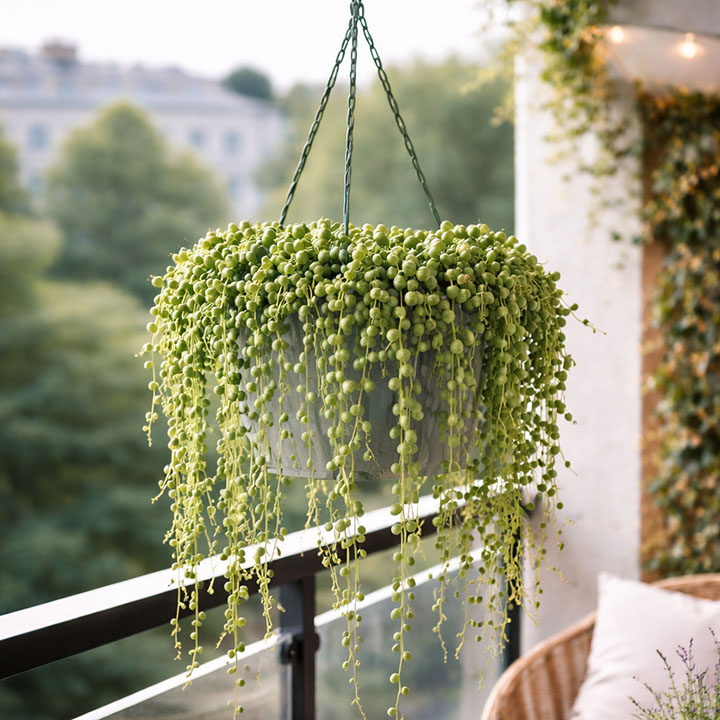
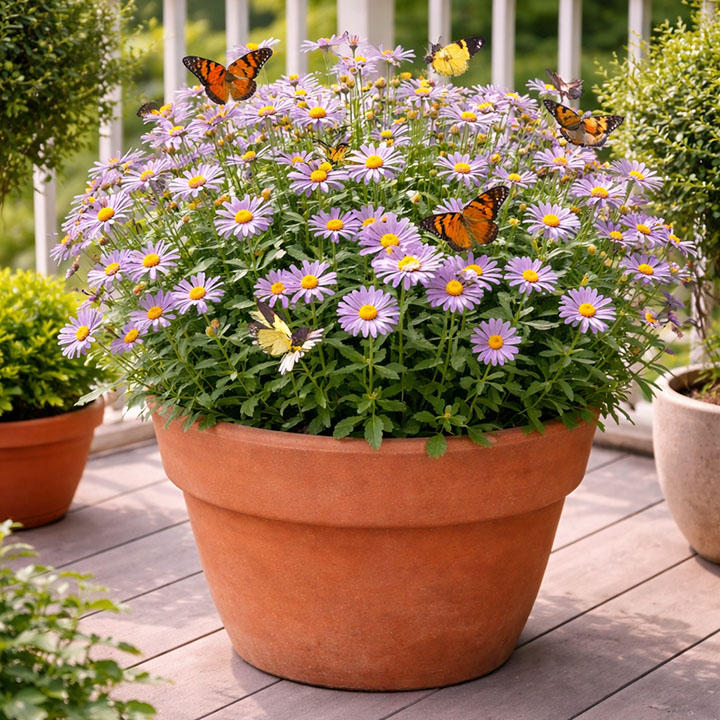
Best Pots and Containers for Balcony Sunflowers

Sunflowers grow quickly and need enough root space to stay healthy and upright. Choose a pot with good drainage and enough depth to anchor the plant.

  • Small dwarf types – Use a pot at least 25cm to 30cm wide and deep.
  • Medium sunflowers – Use a pot at least 35cm to 45cm wide and deep.
  • Larger branching types – Use a large, heavy container to reduce tipping in wind.

Terracotta looks beautiful but dries out faster. Plastic and glazed pots hold moisture better, which can be helpful on hot balconies. In windy locations, heavier pots are often the better option because they are harder to blow over.

Best Potting Mix for Sunflowers

Use a premium potting mix suitable for containers. Avoid using garden soil, which becomes compacted in pots and drains poorly. A good potting mix should be loose, free-draining, and rich enough to support fast growth.

You can improve results by mixing in a little compost and a controlled-release fertiliser at planting time. Sunflowers are hungry plants, so fresh potting mix makes a real difference.

When to Plant Sunflowers in Australia

Sunflowers are warm-season plants. In most of Australia, the main planting window is from spring through early summer. They dislike frost and cold soil, so wait until nights are mild before sowing seed.

Planting by Australian City and Climate

  • Melbourne and Hobart – Start in mid to late spring once frost risk has passed. Choose a warm, sunny position and avoid sowing too early.
  • Sydney and Adelaide – Sow from spring through early summer. In hot periods, keep pots well watered.
  • Brisbane and coastal Queensland – Grow through much of the warmer year, but give some afternoon protection in intense summer heat.
  • Perth – Excellent sunflower climate, but strong summer sun and drying winds mean pots may need frequent watering.
  • Canberra – Wait until frost danger has passed and use a warm, sheltered balcony position.
  • Darwin and the tropics – Grow in the dry season or during milder periods. Humidity and heavy wet-season rain can make growing harder.

If you want a longer flowering season, sow a few seeds every 2 to 4 weeks during the suitable planting period rather than planting everything at once.

How to Grow Sunflowers on a Balcony Step by Step

1. Choose the Right Variety

Start with dwarf or compact branching varieties for the easiest balcony success. Check the seed packet for final height before planting.

2. Fill Your Pot with Fresh Potting Mix

Leave a small gap at the top of the pot so water does not spill over the edge. Water the mix lightly before sowing.

3. Sow Seeds Directly

Sunflowers usually do best when sown directly into their final pot rather than transplanted. Plant seeds about 2cm deep and space them according to the variety. You can sow a few extras and thin them later.

4. Water Gently but Consistently

Keep the soil lightly moist while seeds germinate. Once seedlings are established, water more deeply and less often, allowing the top layer of potting mix to dry slightly between waterings.

5. Thin Seedlings if Needed

If several seeds germinate in one pot, keep the strongest seedling and remove the weaker ones unless the pot is large enough for more than one plant.

6. Stake Taller Plants

Balconies can be windy, and even medium-height sunflowers may need support. Use a bamboo cane or slim stake and tie the stem loosely as it grows.

7. Feed During Active Growth

Apply a liquid fertiliser every couple of weeks once the plant is growing strongly, or use a controlled-release fertiliser according to the label. Too much nitrogen can lead to lots of leaves and fewer flowers, so use a balanced product rather than overfeeding.

Balcony Positioning Tips

Placement matters more on a balcony than in a garden bed. Light bounces off walls, heat builds up near glass, and wind tunnels can form around buildings.

  • Place pots where they receive the longest stretch of direct light.
  • Keep taller sunflowers away from the outermost exposed edge if your balcony is windy.
  • Rotate pots every few days if plants start leaning strongly toward the sun.
  • Group containers together to reduce moisture loss and create a more stable microclimate.
  • Make sure heavy pots are placed safely and do not overload railing shelves or narrow ledges.

Watering Sunflowers in Pots

Sunflowers in containers dry out much faster than those in the ground. On a balcony, they may need water every day in hot, windy weather, especially in cities such as Perth, Adelaide, and western Sydney during summer.

Water deeply until it drains from the bottom of the pot. Shallow watering encourages weak roots. During heatwaves, check pots morning and evening. A layer of mulch on top of the potting mix can help reduce evaporation.

Fertilising for Better Flowers

Because pots hold limited nutrients, balcony sunflowers benefit from regular feeding. A controlled-release fertiliser at planting time plus occasional liquid feeding usually works well. Once buds form, steady nutrition helps support better flowering and stronger stems.

If leaves look pale or growth stalls early, the potting mix may be running low on nutrients or the roots may be too crowded.

Common Problems When Growing Sunflowers on a Balcony

Leggy or weak growth

This usually means the plant is not getting enough direct sun. Move it to a brighter position if possible.

Plants falling over

This can happen from wind exposure, small pots, or choosing a variety that is too tall for the space. Stake the plant and use a heavier container next time.

Leaves wilting in hot weather

Sunflowers may wilt temporarily in extreme heat, but persistent wilting usually means the pot is too dry. Water deeply and consider afternoon shade during severe heatwaves.

No flowers

Insufficient sun, too much nitrogen, or planting too late in a cool season can delay or reduce flowering.

Pests

Aphids, caterpillars, and occasional mites may appear. Check the undersides of leaves regularly. A strong spray of water or an appropriate garden treatment for edible and ornamental plants can help if numbers build up.

Can You Grow Edible Sunflowers on a Balcony?

Yes, but edible seed varieties usually need more space than dwarf ornamental types. If your balcony is large and sunny, you can try a seed-producing variety in a deep, generous container. Just expect a bigger plant and more need for staking, feeding, and water.

For most apartment gardeners, ornamental or branching sunflowers are the more practical option.

Companion Plants for Balcony Sunflowers

Sunflowers pair beautifully with other summer-loving balcony plants. Choose companions that enjoy similar light and watering conditions.

  • Nasturtiums
  • Sweet alyssum
  • Basil
  • Parsley
  • Marigolds
  • Petunias
  • Cosmos

Keep companion plants in separate pots unless your sunflower container is very large. Sunflowers can dominate root space quickly.

How Long Do Balcony Sunflowers Last?

Most sunflowers grow quickly from seed and flower within a few months, depending on the variety and the weather. Single-stem types usually give one major bloom, while branching types continue producing flowers over a longer period. Regular sowing through the warm season can keep the display going for months.

Are Sunflowers Good for Apartment Pollinators?

Yes. Even on a balcony, sunflowers can attract bees and other beneficial insects, especially open-pollinated varieties with accessible centres. If helping pollinators is part of your goal, mix sunflowers with other nectar-rich balcony flowers for a more continuous food source across the season.

Final Tips for Success

Growing sunflowers on a balcony is one of the easiest ways to create instant summer impact. The main keys are simple: choose a suitable variety, give it full sun, use a roomy pot, keep the water consistent, and protect it from harsh wind. In Australian cities, the exact timing and care will vary with local weather, but once you understand your balcony’s light and exposure, sunflowers are a rewarding and cheerful plant to grow.

If you are new to balcony gardening, start with a dwarf sunflower in one good-sized pot. It is a simple project, but the result is bold, colourful, and very satisfying.

Frequently Asked Questions

Can sunflowers grow well in pots on a balcony?

Yes. Sunflowers can grow very well in pots if they get enough direct sun, a large enough container, and regular water. Dwarf and compact varieties are the best choice for most balconies.

How much sun do balcony sunflowers need?

They need at least 6 to 8 hours of direct sunlight a day. More sun usually means stronger stems and better flowering.

What size pot is best for sunflowers?

For dwarf types, start with a pot around 25cm to 30cm wide and deep. For medium or branching varieties, choose something larger, ideally 35cm to 45cm or more.

When should I plant sunflowers in Australia?

Plant them from spring into early summer in most southern cities. In warmer parts of Australia, planting can continue longer, though extreme summer heat may require extra watering and care.

Do sunflowers need support on a balcony?

Some do. Dwarf varieties often cope without staking, but taller or medium-height plants usually benefit from a stake, especially on exposed balconies.

Why are my sunflower seedlings tall and floppy?

This is usually caused by not enough direct sunlight. Move them to a brighter position and avoid overcrowding seedlings in one pot.

Can I grow giant sunflowers on a balcony?

You can try on a large, sunny, sheltered balcony with very big pots, but giant varieties are usually less practical in containers. Compact types are a better fit for most apartment spaces.

How often should I water balcony sunflowers?

Water when the top layer of potting mix starts to dry. In warm or windy weather, this may be daily. Always water deeply rather than lightly.

Do sunflowers attract bees on a balcony?

Yes. Many sunflowers attract bees and other pollinators, especially open-centred varieties.

Can I grow sunflowers in Melbourne or Sydney on a balcony?

Absolutely. In Melbourne, wait until frost risk has passed and choose a warm sunny spot. In Sydney, sunflowers generally grow well through the warmer months with regular watering.