Author

Sam

Browsing

A full shade balcony can still become a lush, beautiful garden. In fact, some of the best balcony plants in Australia prefer protection from harsh afternoon sun, drying winds, and heat reflected off walls and paving. If your balcony gets little to no direct sun, the key is choosing plants grown for foliage, texture, and shade tolerance rather than heavy flowering performance.

In Australian conditions, full shade balconies are often found on south-facing balconies in the southern states, or on lower-level balconies shaded by neighbouring buildings. These spaces stay cooler, hold moisture longer, and are ideal for ferns, leafy tropical-style plants, and a select group of flowering shade lovers.

This guide covers the best plants for full shade balconies in Australia, how to match them to your city and climate, and how to keep a shaded balcony looking healthy year-round.
What Counts as Full Shade on a Balcony?

For balcony gardening, full shade usually means:

  • Less than 2 hours of direct sun a day
  • Bright indirect light for much of the day
  • No strong afternoon sun
  • Sun blocked by walls, nearby towers, trees, or roof overhangs

Very deep shade is harder. If your balcony is dark all day and feels almost like an indoor room, plant choices become more limited. In that case, focus on reliable foliage plants and use light-coloured pots and reflective surfaces to brighten the space.

Why Full Shade Can Actually Be an Advantage

Many Australian gardeners assume shade is a problem, but on balconies it can be a strength. Full shade means:

  • Less heat stress in summer
  • Slower drying pots
  • Reduced leaf scorch
  • Better conditions for ferns and tropical foliage
  • A cooler outdoor space for sitting and relaxing

The main trade-off is slower growth and fewer flowers. Shade balconies are usually at their best when designed around leaves, layered greenery, trailing plants, and different textures rather than bright sun-loving annuals.

Best Plants for a Full Shade Balcony in Australia

These are some of the most reliable options for Australian balconies with little or no direct sun.
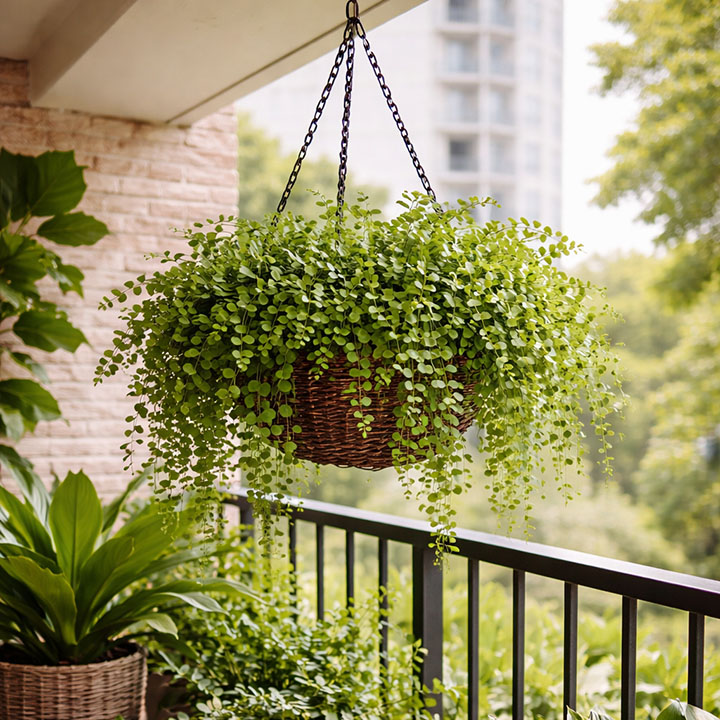
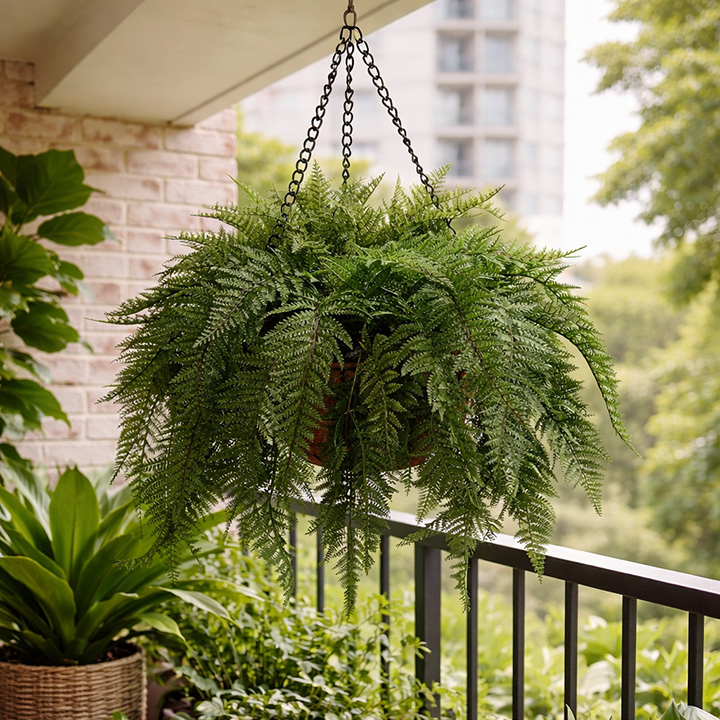
1. Maidenhair Fern

Delicate, soft and elegant, maidenhair fern is one of the classic shade plants for balconies. It suits sheltered spaces with consistent moisture and high humidity.

  • Best for: Cool to mild cities, sheltered balconies, humid corners
  • Look: Fine, light green foliage
  • Needs: Moist potting mix, protection from drying wind

This is a beautiful choice for Melbourne, Sydney, Hobart, and shaded inner-city courtyards. In hot dry climates, it needs extra care and regular watering.
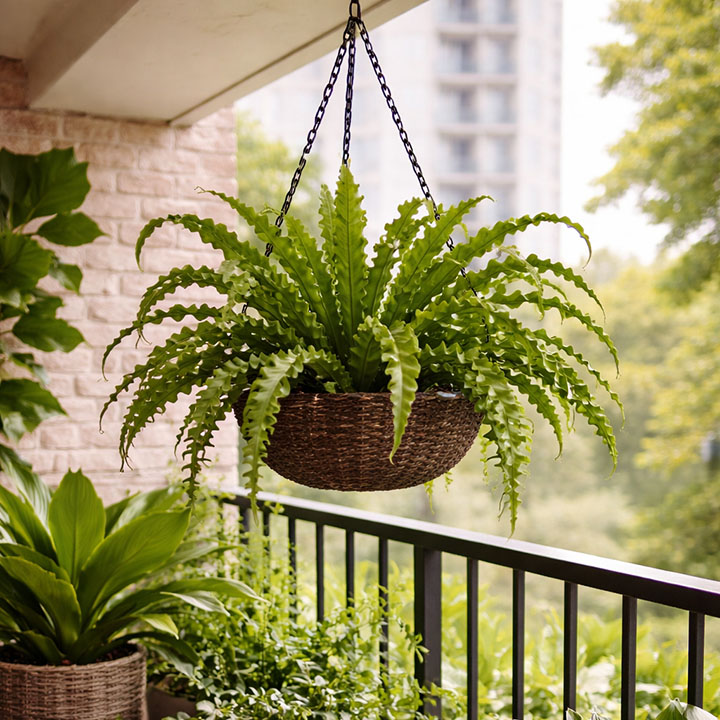
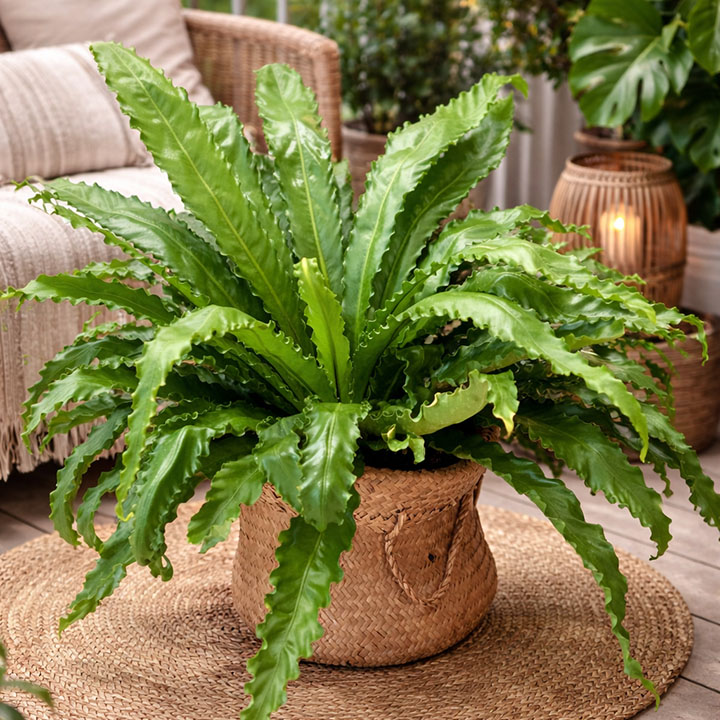
2. Bird’s Nest Fern

If you want a bolder tropical look, bird’s nest fern is excellent. Its broad glossy leaves create impact even in dim conditions, making it perfect for statement pots.

  • Best for: Brisbane, Sydney, coastal NSW, humid balconies
  • Look: Large architectural fronds
  • Needs: Warmth, moisture, protection from cold winds

Use one large specimen in a feature pot, or group several together for a lush rainforest style.
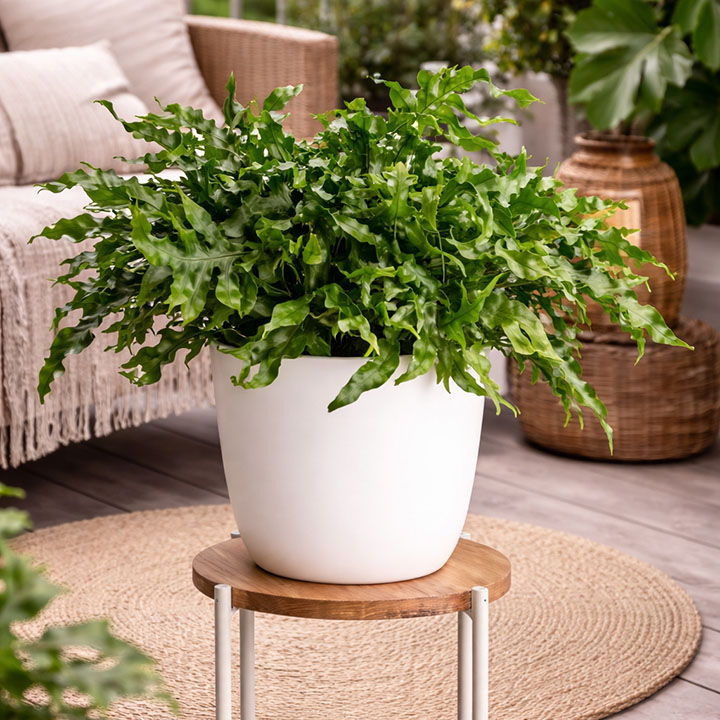
3. Kangaroo Fern

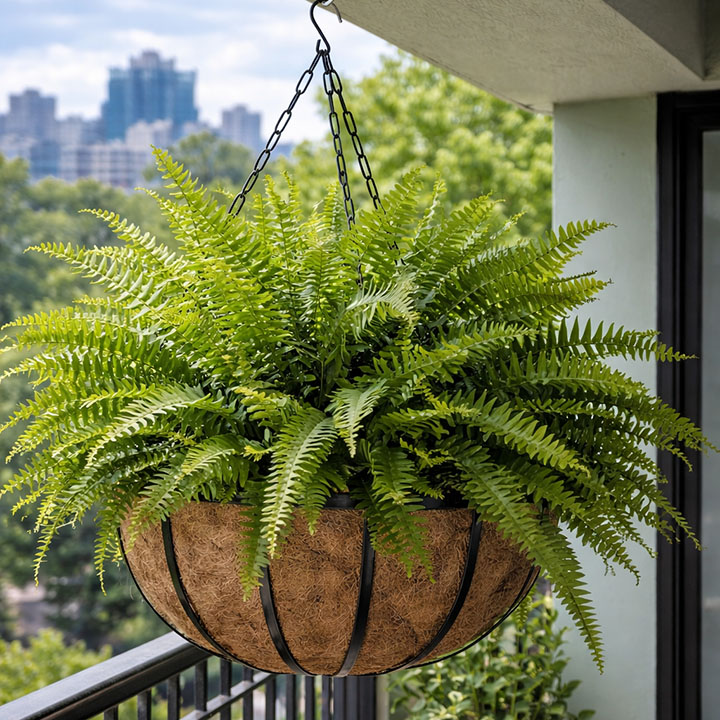
Kangaroo fern is a strong performer for Australian shade gardens and works beautifully in pots and hanging baskets. Its spreading habit softens hard balcony edges.

  • Best for: Native-leaning balconies, trailing over pot edges
  • Look: Glossy lobed foliage
  • Needs: Even moisture, bright shade

It is especially useful when you want something fuller and easier than maidenhair.
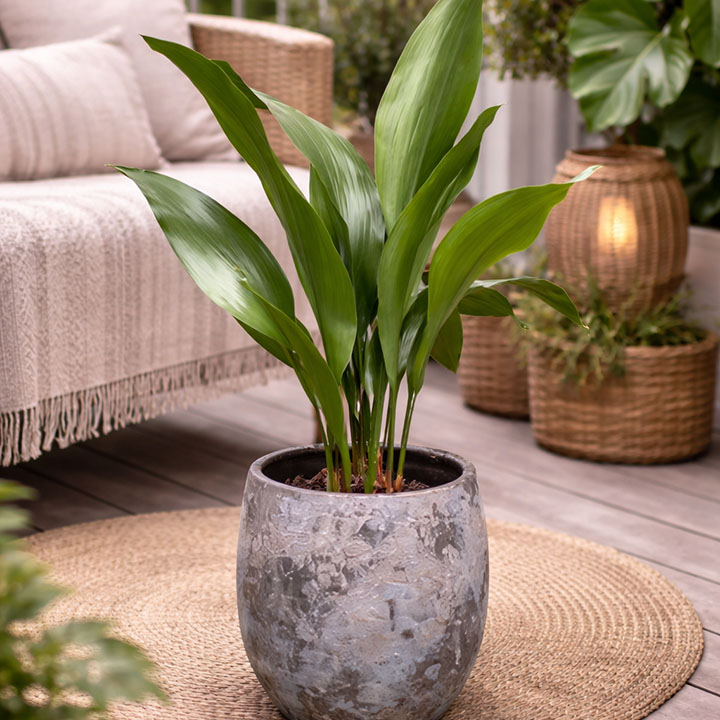
4. Cast Iron Plant (Aspidistra)

This is one of the toughest shade plants you can grow. Aspidistra handles low light, irregular care, and sheltered balcony conditions better than many fussier shade species.

  • Best for: Beginners, apartment balconies, low-maintenance setups
  • Look: Dark green upright foliage
  • Needs: Free-draining mix, moderate watering

If you want a plant that still looks respectable when life gets busy, this is one of the best choices.
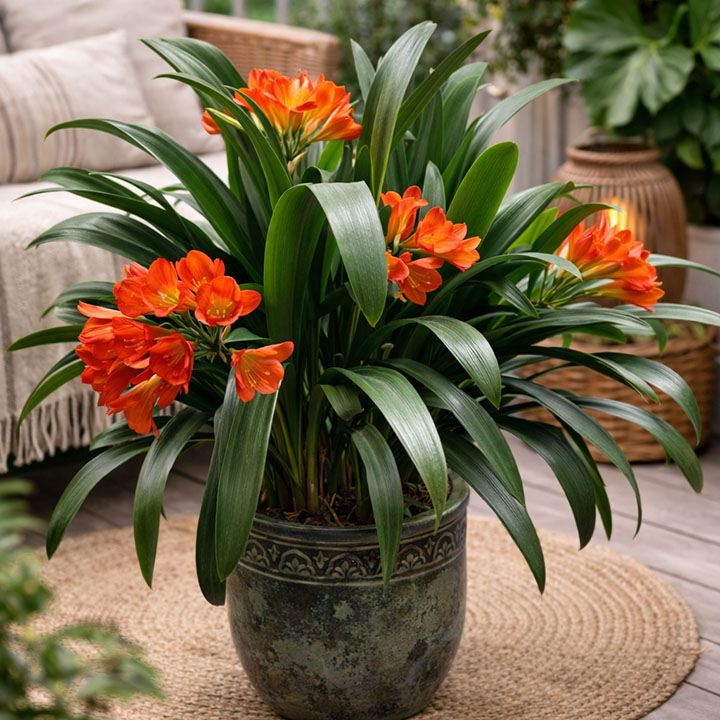
5. Clivia

Clivia is a reliable performer for bright shade and protected balconies. It is grown mainly for its strap-like foliage, but mature plants also produce striking orange, cream, or yellow flowers in season.

  • Best for: Southern and eastern Australian cities
  • Look: Neat green foliage with seasonal flowers
  • Needs: Shelter, good drainage, not too much direct sun

Clivia is especially useful when you want a plant that feels tidier and more structured than ferns.
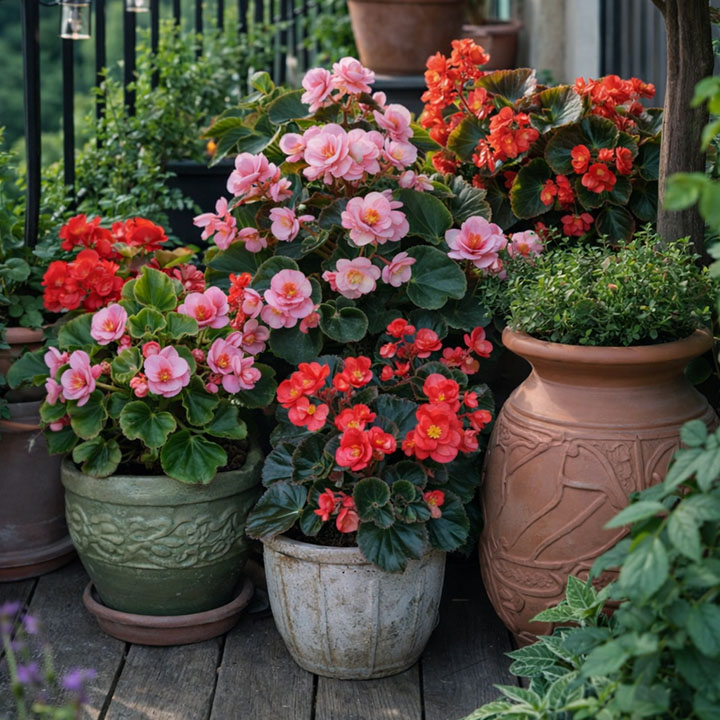
6. Begonias

Begonias are among the best plants for full shade balconies because many varieties offer dramatic foliage, compact size, and long flowering periods in protected conditions.

  • Best for: Decorative pots, colour in filtered light, sheltered balconies
  • Look: Patterned leaves, red undersides, pink or white flowers
  • Needs: Moist but well-drained mix, humidity, protection from harsh weather

Choose cane begonias for height and rhizomatous begonias for bold foliage. They are especially good in Melbourne, Sydney, Brisbane, and coastal areas.
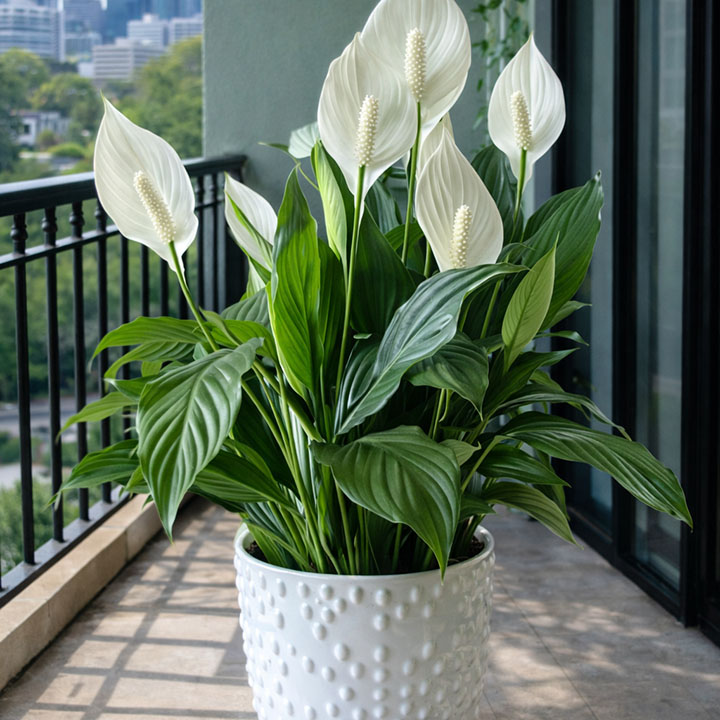
7. Peace Lily

Peace lily is often thought of as an indoor plant, but on a sheltered full shade balcony it can perform beautifully outdoors in many Australian cities.

  • Best for: Very shaded balconies with bright indirect light
  • Look: Glossy leaves and white flowers
  • Needs: Regular water, humidity, frost protection

This is a strong option for urban balconies that feel almost like outdoor rooms.
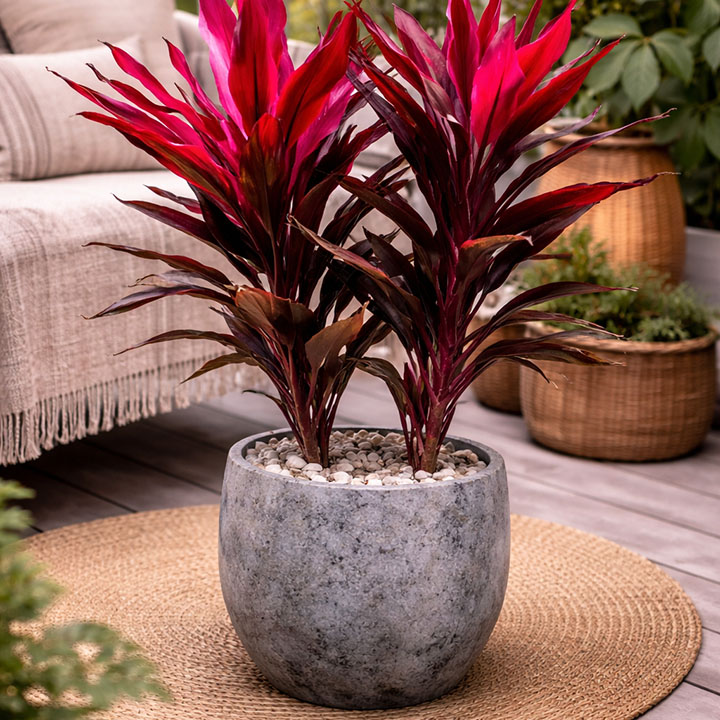
8. Cordyline stricta

For an Australian native option with upright form, Cordyline stricta is worth considering. It can grow in sun or shade and suits pots well when kept in a protected position.

  • Best for: Native planting palettes, vertical accent planting
  • Look: Tall strappy leaves with purple berries on mature plants
  • Needs: Moist but free-draining soil, shelter from severe exposure

It combines well with ferns and trailing natives for a softer Australian shade garden look.
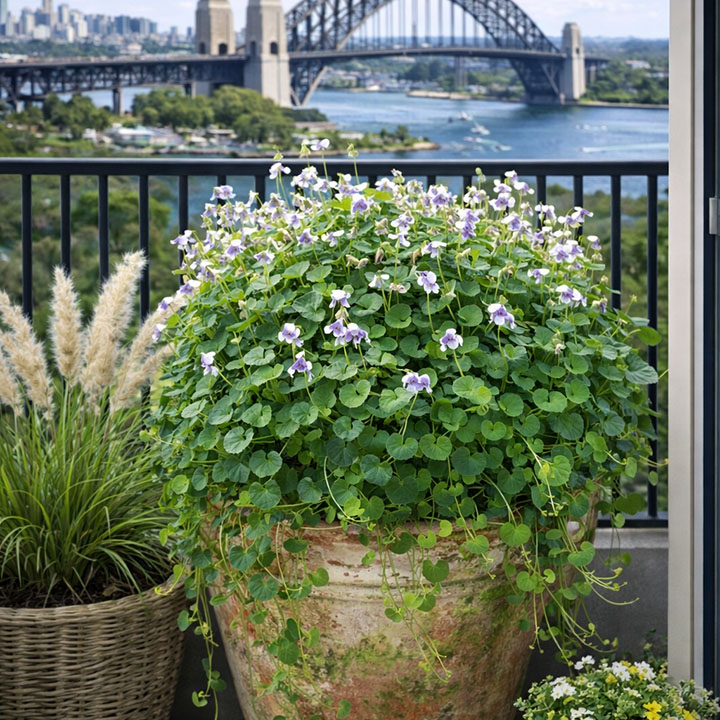
9. Native Violet

Native violet is a useful low-growing Australian groundcover for wide pots, troughs, and balcony boxes in shade. It creates a soft carpet effect and can produce small purple and white flowers.

  • Best for: Filling under taller plants, wide containers, soft edges
  • Look: Small rounded leaves and dainty flowers
  • Needs: Moisture, bright shade, light feeding

It is especially handy for making a shaded balcony feel planted and full rather than sparse.
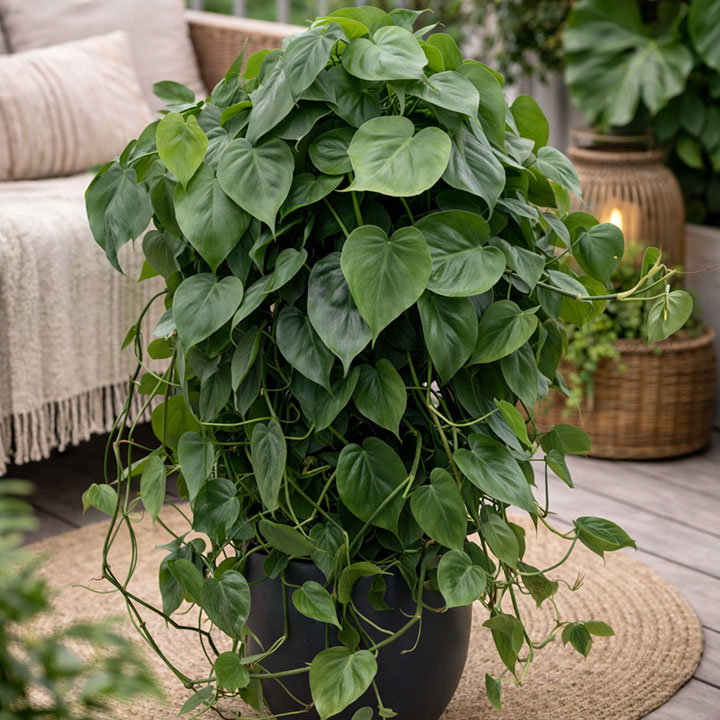
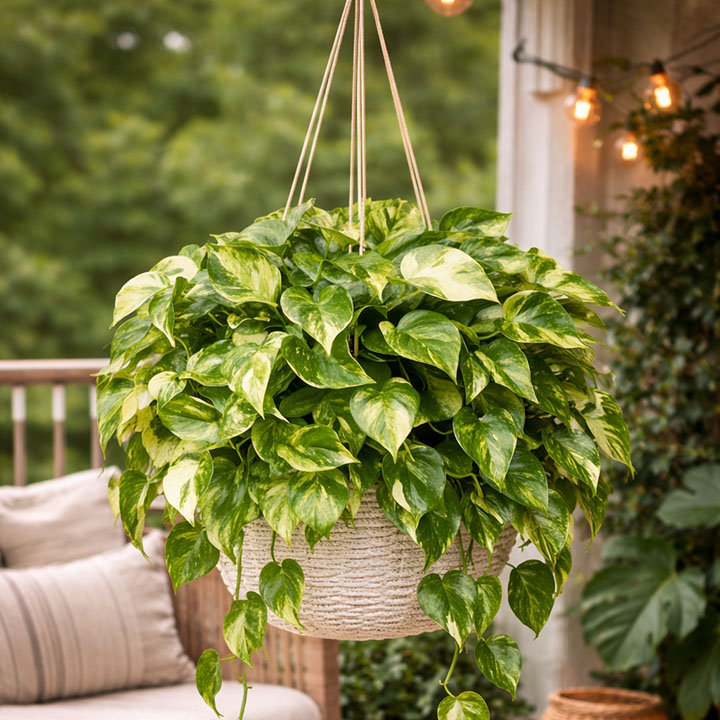
10. Philodendrons and Pothos

For a modern apartment balcony, it is hard to beat trailing tropical foliage. Philodendrons and pothos thrive in bright shade and bring a lush, cascading look to shelves, railing planters, and hanging pots.

  • Best for: Contemporary balconies, vertical greenery, trailing display
  • Look: Heart-shaped or trailing leaves
  • Needs: Frost protection, moderate watering, bright indirect light

These are ideal if your shade balcony gets light but almost no direct sun at all.
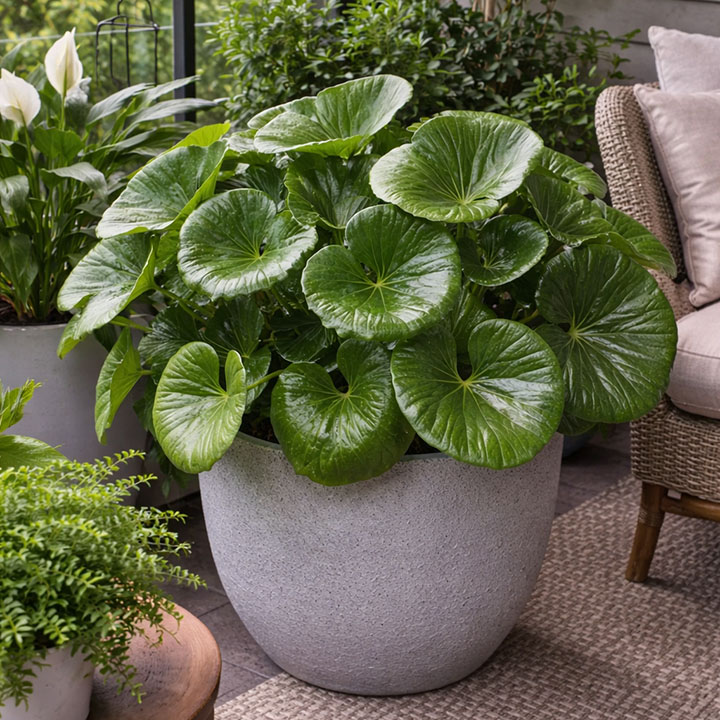
11. Tractor seat plant

Tractor seat plant is a great choice for a full shade balcony in Australia because it is grown for its large, rounded glossy leaves that create a lush tropical look. It prefers bright shade to full shade and does best in sheltered balcony positions with regular moisture and protection from hot drying winds. Its bold foliage makes a strong statement in pots, especially when paired with ferns, peace lilies, and other shade-loving plants.

Best for: lush balcony styling, large pots, tropical shade gardens

Best feature: oversized glossy leaves

Good for: shaded balconies in mild to warm Australian climates

Best Full Shade Balcony Plants by Australian City

Melbourne

Melbourne balconies often face cool southerly conditions, changeable weather, and drying wind. Full shade can actually protect plants from summer scorch, but winter cold slows growth.

Best choices: Maidenhair fern, kangaroo fern, clivia, begonias, aspidistra, native violet

Tips: Use sheltered positions, avoid waterlogged pots in winter, and protect tender plants from cold snaps and strong wind.

Sydney

Sydney’s humidity and relatively mild winters suit many shade plants. A full shade balcony here can support lush foliage if airflow is good and pots do not stay soggy.

Best choices: Bird’s nest fern, maidenhair fern, begonias, peace lily, clivia, philodendrons

Tips: Watch for fungal problems in dense plantings, and give plants space so air can move between pots.

Brisbane

Brisbane’s warmth and humidity are excellent for tropical shade plants. A full shade balcony can stay productive and green year-round, though summer rain and humidity can increase pest and fungal pressure.

Best choices: Bird’s nest fern, peace lily, philodendrons, pothos, begonias, cordyline stricta

Tips: Prioritise drainage, clean up fallen leaves, and avoid overcrowding.

Perth

Perth’s dry heat and strong summer conditions can be harsh, so full shade is valuable. Even shade balconies can dry quickly because of reflected heat and wind.

Best choices: Aspidistra, clivia, kangaroo fern, cordyline stricta, hardy begonias in protected spots

Tips: Use larger pots, mulch the surface, and water deeply rather than lightly.

Adelaide

Adelaide’s hot summers make shade an advantage, but balconies can still run dry fast. Choose tougher foliage plants and protect delicate ferns from hot winds.

Best choices: Aspidistra, clivia, kangaroo fern, native violet, cordyline stricta

Tips: Keep plants out of wind tunnels and avoid small black pots that overheat.

Canberra and Hobart

These cooler cities are good for many shade plants, but frost and cold winds matter more in winter. Pick sheltered positions and move tender tropicals closer to walls or indoors during cold spells.

Best choices: Maidenhair fern, kangaroo fern, aspidistra, clivia, native violet

Tips: Reduce watering in winter, avoid frost pockets, and use insulated or heavier pots for protection.

Darwin

Darwin’s tropical climate suits lush foliage plants, but wet season humidity demands excellent airflow and drainage.

Best choices: Bird’s nest fern, peace lily, philodendrons, pothos, cordyline stricta

Tips: Use airy potting mix, raise pots off the floor, and monitor for rot during the wet season.
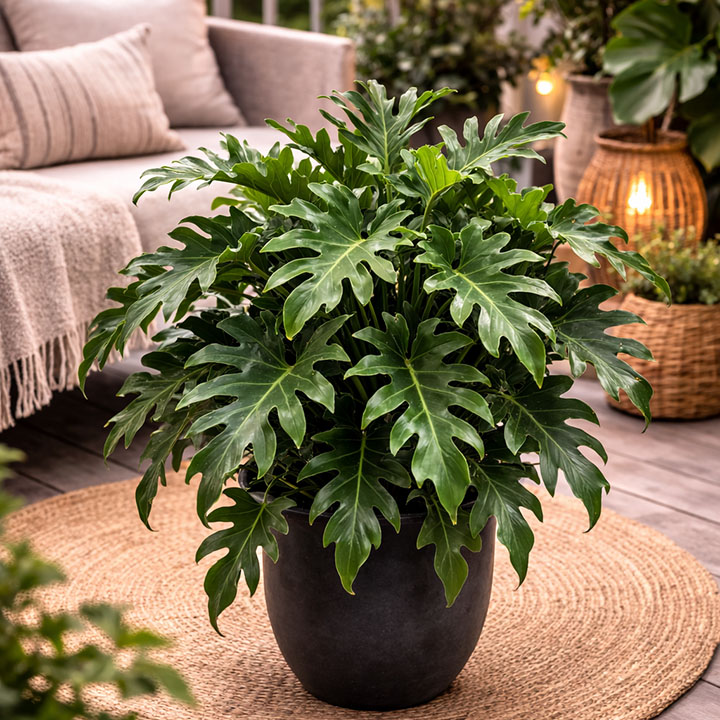
How to Design a Full Shade Balcony So It Still Looks Bright

Shade balconies can become gloomy if everything is dark green and flat. To make the space feel fresh and inviting:

  • Use pots in white, terracotta, sandstone, or pale grey
  • Mix leaf sizes and shapes for contrast
  • Add trailing plants to soften railings and walls
  • Use one or two upright plants for height
  • Repeat plants in groups for a fuller look
  • Add mirrors or light outdoor furniture to bounce light around

Think layers: upright plant at the back, medium foliage in the centre, and trailing or groundcover plants at the front.

Potting Mix and Containers for Shade Balconies

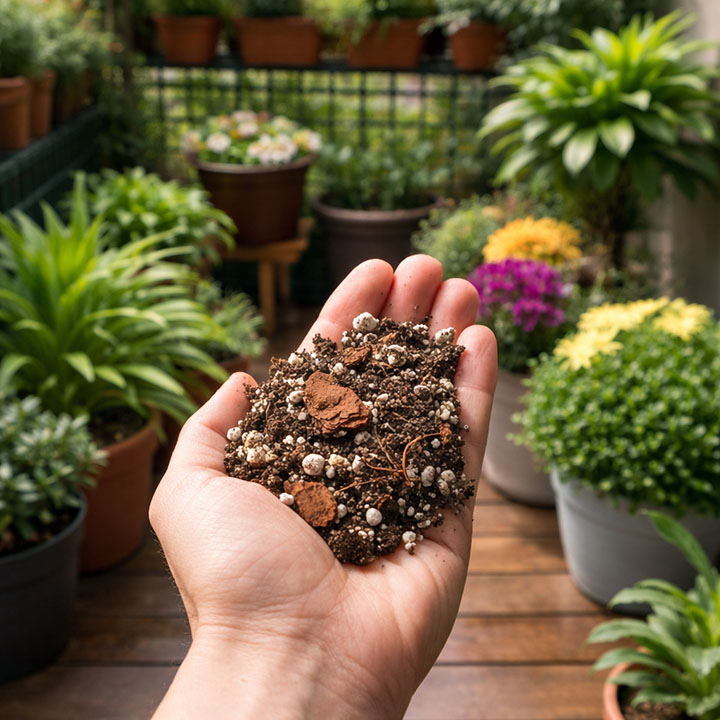
Shade plants still need excellent drainage. Balconies with little sun dry more slowly, so heavy or compacted potting mix can quickly lead to root rot.

Use a quality premium potting mix and improve it with ingredients suited to your plant selection, such as:

  • Orchid bark for airflow
  • Coco coir for moisture retention
  • Perlite for drainage
  • Compost in small amounts for fertility

Choose pots with drainage holes and avoid letting saucers stay full after watering or rain.

How Often Should You Water Full Shade Balcony Plants?

One of the biggest mistakes on a shade balcony is overwatering. Because the sun is limited, pots stay wet longer.

Instead of watering on a fixed schedule, check each pot first:

  • Push a finger a few centimetres into the mix
  • Water when the top layer starts drying out
  • Keep ferns more evenly moist than tougher plants like aspidistra
  • Water less often in winter

Small pots dry faster, while large grouped pots hold moisture longer and create a more stable root zone.

Feeding Shade Plants

Plants in full shade usually grow more slowly, so they often need less feeding than sun-loving annuals and vegetables. A gentle approach works best.

  • Apply a slow-release fertiliser in spring
  • Use liquid fertiliser monthly through the warmer months if needed
  • Reduce feeding in winter in cooler parts of Australia
  • Do not overfeed low-light plants, as this can create weak growth
Common Problems on Full Shade Balconies

Yellow Leaves

Usually caused by overwatering, poor drainage, or old foliage naturally aging.

Leggy Growth

Your balcony may be too dark even for shade plants. Move pots to the brightest available position.

Brown Crispy Edges

Often caused by wind, dry air, irregular watering, or reflected heat rather than too much sun alone.

Mould or Fungus

This can happen where plants are crowded and airflow is poor. Thin growth, remove dead leaves, and avoid leaving water sitting on foliage overnight.

Best Low-Maintenance Picks for Full Shade

If you want a simple, forgiving full shade balcony, start with these:

  • Aspidistra
  • Kangaroo fern
  • Clivia
  • Cordyline stricta
  • Pothos

These are easier to manage than delicate humidity-loving ferns and are better suited to busy apartment gardeners.

A Simple Planting Plan for a Full Shade Balcony

If you are starting from scratch, this is an easy mix that works well on many Australian balconies:

  • 1 large bird’s nest fern or aspidistra as a focal point
  • 2 medium clivias or begonias for body and colour
  • 2 kangaroo ferns to soften the arrangement
  • 1 trailing pothos or native violet to spill over the edges

This combination gives you height, texture, fullness, and movement without needing direct sun.

Final Thoughts

A full shade balcony does not have to be bare or boring. In many parts of Australia, it can actually be easier to manage than a scorching west-facing balcony. By choosing plants that naturally suit lower light, keeping drainage sharp, and matching your plant palette to your local climate, you can create a balcony that feels cool, calm, and beautifully green all year.

If you want the safest all-round plant choices, start with aspidistra, kangaroo fern, clivia, begonias, and one or two statement ferns. Once those are thriving, you can add trailing foliage and native groundcovers to build out a fuller shaded balcony garden.
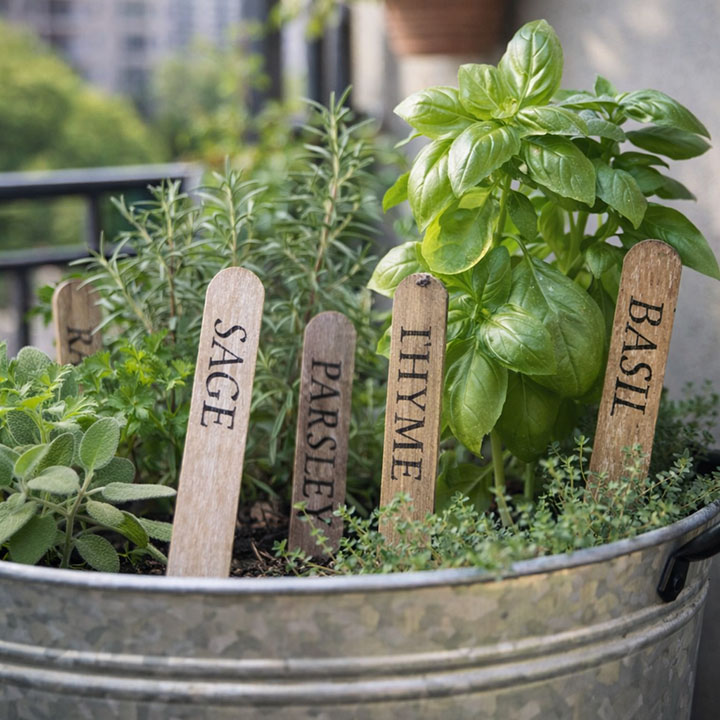
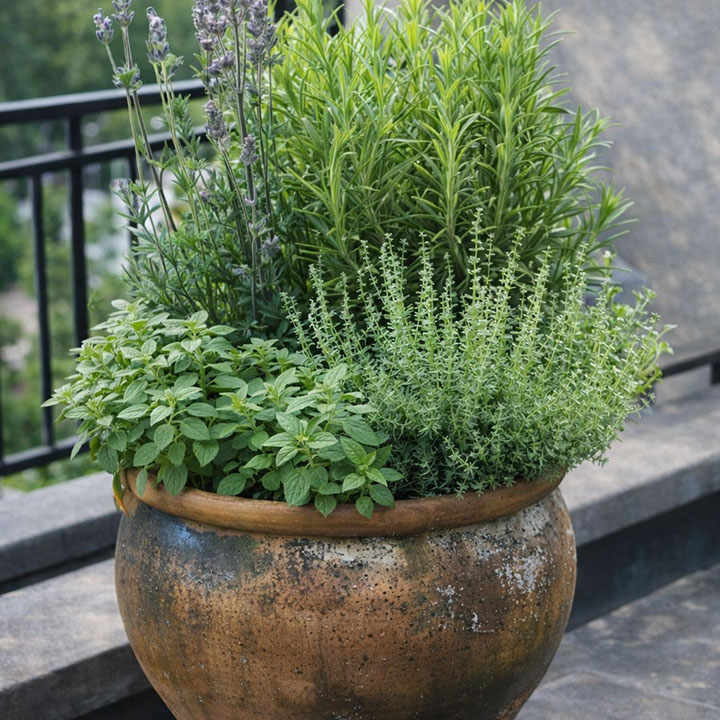
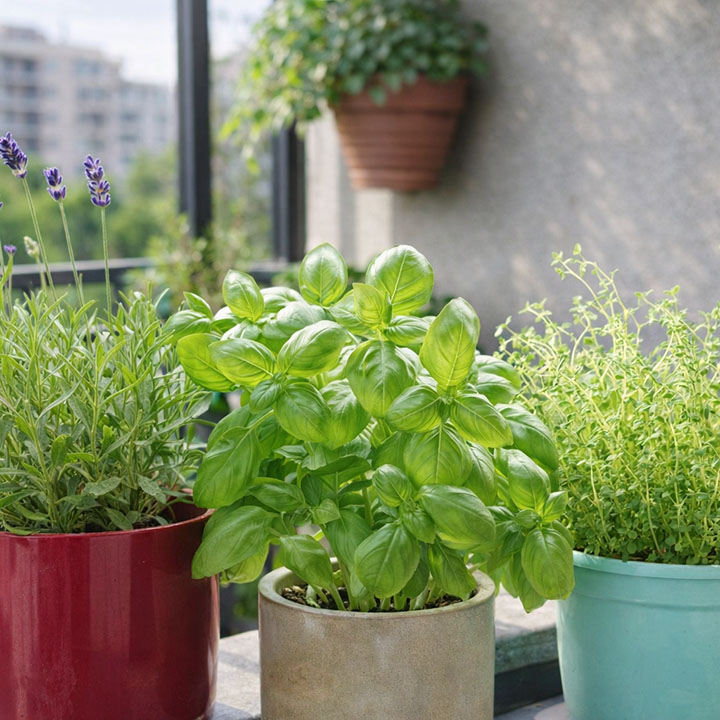
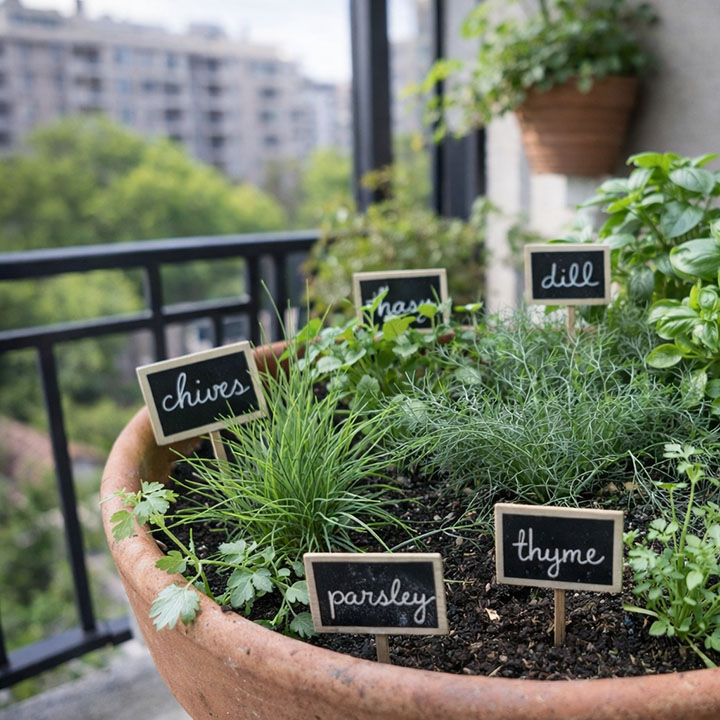
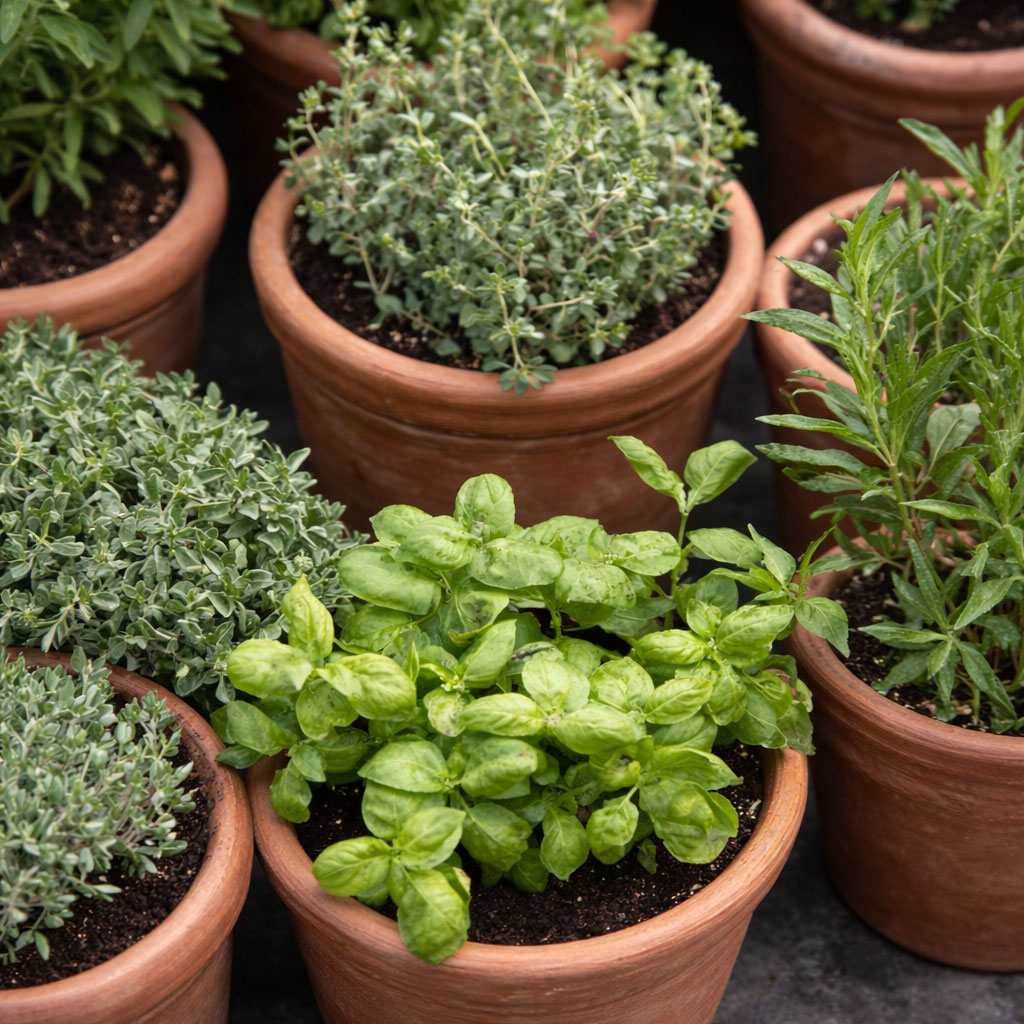
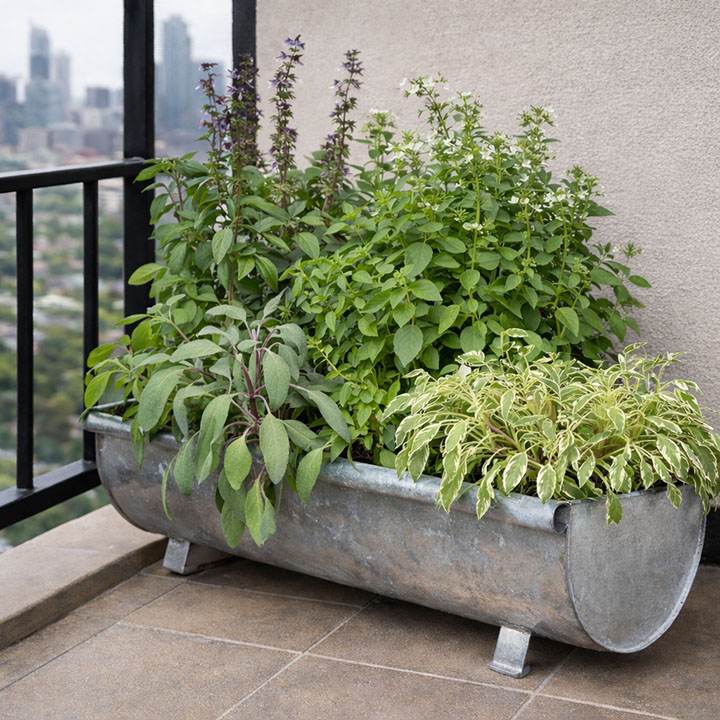
Growing herbs on a balcony is one of the easiest and most rewarding ways to start a small garden in Australia. Herbs are productive, practical, and well suited to pots, railing planters, and compact spaces. Even a small apartment balcony can produce fresh basil, mint, parsley, thyme, chives, coriander, rosemary, and oregano with the right setup.

The key is to match your herbs to your balcony conditions. Sunlight, wind, temperature, pot size, and seasonal timing matter more than the amount of space you have. In Australia, balcony gardeners also need to think about city climate differences. What thrives on a sunny balcony in Brisbane may struggle on a cold, windy balcony in Melbourne or Hobart, while herbs that love dry heat can perform beautifully in Perth or Adelaide.

This guide covers everything you need to know about growing herbs on a balcony in Australia, including the best herbs for pots, how to choose containers, watering, feeding, seasonal care, and city-specific advice for major Australian climates.

Why herbs are ideal for balcony gardens

Herbs are often the best starting point for beginner balcony gardeners because they are compact, useful, and quick to harvest. Many herbs grow well in containers, and regular picking encourages them to produce more leaves. That means you can enjoy fresh flavour for cooking while also making your balcony greener and more inviting.

  • They suit small pots and planters
  • Many varieties grow quickly from seedlings
  • Most are happy in full sun or part sun
  • Regular harvesting keeps plants productive
  • They save money if you cook often
  • They add fragrance and texture to balcony spaces

Herbs also let you learn the basics of gardening without the commitment of large shrubs or vegetables. Once you understand watering, sun exposure, and seasonal timing with herbs, it becomes much easier to expand into edible flowers, salad greens, strawberries, or compact vegetables.

Best herbs to grow on a balcony in Australia

Not every herb performs the same way in a pot, and not every balcony has the same conditions. Some herbs thrive in strong sun and dry air, while others prefer mild temperatures and more moisture. The easiest approach is to group herbs by their growing preferences.

Best herbs for sunny balconies

If your balcony gets at least 6 hours of direct sun, these herbs usually perform well:

  • Basil – fast growing, productive, and perfect for warm weather
  • Rosemary – hardy, drought tolerant, and excellent in larger pots
  • Thyme – compact and ideal for sunny edges of containers
  • Oregano – easy to grow, trailing slightly as it matures
  • Sage – likes good drainage and plenty of light
  • Chives – reliable and easy for beginners

Best herbs for part-sun balconies

If your balcony gets morning sun or filtered light for 3 to 5 hours a day, these herbs are better choices:

  • Parsley – very productive and forgiving
  • Mint – vigorous and suitable for part shade
  • Coriander – prefers cooler conditions and can struggle in heat
  • Lemon balm – fresh scented and suited to gentler sun
  • Vietnamese mint – useful in warm climates with regular watering

Best hardy herbs for Australian conditions

If you want low-maintenance herbs that cope well with variable weather, start with rosemary, thyme, oregano, parsley, and chives. These are among the most reliable choices for Australian balcony gardeners.

How much sun do herbs need?

Most herbs grow best with plenty of light, but “full sun” on a balcony can mean different things depending on the city, the season, and whether your balcony is exposed to heat-reflecting walls or glass. A north-facing balcony in Melbourne may be ideal for basil, while a west-facing balcony in Perth could be too harsh in midsummer without some afternoon protection.

  • 6+ hours of sun: best for basil, rosemary, thyme, oregano, and sage
  • 3 to 5 hours of sun: good for parsley, mint, coriander, and chives
  • Less than 3 hours: most herbs will become weak and slow growing

Spend a day observing your balcony before buying plants. Check where the sun falls in the morning, midday, and afternoon. This helps you place sun-loving herbs in the brightest positions and keep softer herbs in slightly sheltered areas.

Choosing the right pots and containers

Herbs can grow in surprisingly small spaces, but container choice still matters. Small pots dry out quickly, especially on hot, windy balconies. Bigger pots are usually easier to manage because they hold more soil and moisture.

As a general guide, aim for pots at least 20 to 25 cm wide for most single herbs. Larger herbs such as rosemary and mint are happier in roomier containers. Window boxes and rectangular troughs also work well for mixed plantings, but only combine herbs with similar watering needs.

  • Use pots with drainage holes
  • Choose quality potting mix, not garden soil
  • Use saucers carefully if your balcony needs runoff control
  • Consider self-watering pots for hot balconies
  • Go larger rather than smaller when possible

Terracotta pots look beautiful and suit Mediterranean herbs like thyme and rosemary, but they dry out faster than plastic or glazed pots. On exposed Australian balconies, plastic or lightweight composite pots can make watering easier in summer.

Best potting mix for balcony herbs

Herbs need a premium potting mix that drains well but still holds enough moisture to support steady growth. Avoid using soil from the garden, which can become compacted in containers and may introduce pests or disease.

For most herbs, use a high-quality potting mix suitable for vegetables, herbs, and containers. If you are growing drought-tolerant herbs such as rosemary, thyme, oregano, and sage, you can improve drainage further by mixing in a little coarse sand or perlite. Moisture-loving herbs such as parsley and basil prefer a mix that stays evenly damp but not waterlogged.

Should you grow herbs from seeds or seedlings?

For most balcony gardeners, seedlings are the easiest way to start. They establish faster, give earlier harvests, and reduce the risk of losing time during a short seasonal window. This is especially helpful if you are gardening in a cooler city where warm-season herbs need a strong start.

Seeds are still worthwhile for fast growers such as coriander, basil, dill, and parsley. They are cost-effective and let you sow fresh batches through the year. Many gardeners use a mix of both: seedlings for structure and quick results, and seeds for ongoing succession planting.

How to plant herbs on a balcony

Planting herbs in containers is simple, but a few small details make a big difference to success.

  1. Fill your pot with premium potting mix, leaving a few centimetres at the top.
  2. Water the seedling before planting to reduce transplant stress.
  3. Gently loosen the roots if they are tightly packed.
  4. Plant at the same depth as the nursery pot.
  5. Firm the mix lightly around the plant.
  6. Water thoroughly until excess drains out.
  7. Place the pot in the right sun position for that herb.

Do not overcrowd herbs in one pot. Young plants may look small at first, but many will fill out quickly. Good airflow is especially important on balconies to reduce mildew and fungal problems.

Can you grow different herbs together?

Yes, but group them by water needs rather than by appearance alone. Herbs that like similar conditions are much easier to manage in shared planters.

Good herb combinations for one planter

  • Mediterranean mix: rosemary, thyme, oregano, sage
  • Moisture-loving mix: parsley, chives, basil
  • Cool-season mix: coriander, parsley, chives

Mint is usually best grown in its own pot because it spreads aggressively and can crowd out neighbouring herbs.

Watering herbs on a balcony

Watering is the most important day-to-day task for balcony herb gardens. Pots dry out much faster than garden beds, especially in Australian summer, on windy upper-level balconies, or in reflective urban environments surrounded by concrete and glass.

Rather than watering by a strict schedule, check the soil regularly. Push your finger into the top few centimetres of potting mix. If it feels dry, water thoroughly. If it still feels damp, wait a little longer.

  • Basil, parsley, coriander, and mint prefer more regular moisture
  • Rosemary, thyme, oregano, and sage prefer to dry slightly between waterings
  • Morning watering is usually best in hot weather
  • Windy balconies may need more frequent watering than sunny but sheltered ones

In peak summer, some small containers may need daily watering. In winter, especially in cool southern cities, watering may be needed only every few days or even less often depending on rain exposure and pot size.

Feeding and fertilising herbs

Because herbs grow in containers, they gradually use up the nutrients in potting mix. Regular feeding keeps them leafy and productive. A liquid fertiliser for herbs and vegetables applied every couple of weeks during active growth is usually enough for most balcony gardeners.

Avoid overfeeding, especially with strong nitrogen fertilisers. Too much feeding can make some herbs grow soft and leggy, reducing flavour. Herbs are usually best when grown steadily rather than pushed too hard.

How to harvest herbs properly

One of the best things about growing herbs is that harvesting actually improves many plants. Regular trimming encourages branching and fuller growth.

  • Pick little and often rather than stripping the whole plant
  • Cut above a leaf node so the plant branches out
  • Remove flower heads from basil, coriander, and mint if you want more leaves
  • Do not take more than about one-third of the plant at once

If herbs are left unharvested for too long, they can become woody, sparse, or go to seed. Frequent use in the kitchen is one of the easiest ways to keep them looking good.

Dealing with wind, heat, and balcony microclimates

Australian balconies often have unique microclimates. A balcony can be hotter, windier, or drier than a nearby backyard. High-rise balconies are especially exposed, and west-facing balconies can become extremely hot in late afternoon.

If your herbs are struggling, the issue is often not lack of care but the microclimate. Leaves that scorch, curl, or dry at the edges may indicate too much heat or wind. Slow, pale growth can point to insufficient sun.

  • Move delicate herbs out of harsh afternoon sun in summer
  • Use taller plants or screens to reduce wind exposure
  • Cluster pots together to reduce moisture loss
  • Choose heavier pots for windy balconies
  • Use mulch on larger containers to slow evaporation

Seasonal herb growing in Australia

Australia’s seasons are opposite to Europe and North America, so seasonal timing matters when starting herbs. Warm-season herbs generally perform best from spring through early autumn, while cool-season herbs are often strongest in autumn, winter, and spring in milder climates.

Spring

Spring is one of the best times to start a balcony herb garden in most Australian cities. Basil, parsley, mint, oregano, thyme, chives, and rosemary all establish well as temperatures rise. It is the ideal season to refresh potting mix, repot crowded plants, and sow new herbs from seed.

Summer

Summer is productive, but balconies can dry out quickly. Basil, mint, oregano, and thyme usually thrive if watered well. Coriander often bolts in hot weather, especially in inland or exposed spots. Shade cloth or afternoon protection may be useful on very hot balconies.

Autumn

Autumn is a great season for parsley, coriander, chives, dill, and mint in much of Australia. The milder temperatures reduce stress, and many herbs regain vigour after summer heat.

Winter

Winter growth slows in cooler cities, but many herbs still perform well, especially parsley, chives, thyme, rosemary, and oregano. In warm northern cities, winter can be one of the best times for leafy herbs because the extreme heat has eased.

Growing herbs on a balcony in different Australian cities

Australia’s climate varies widely, so balcony herb gardening works a little differently from city to city. Use your local conditions as a guide rather than following a single national rule.

Sydney

Sydney’s mild climate suits a wide range of herbs year-round. Basil thrives from spring through autumn, while parsley, mint, thyme, rosemary, and chives are usually reliable for much longer. Balconies near the coast may experience salt-laden wind, so some shelter can help. Summer heat can be intense on west-facing balconies, so afternoon protection is useful for softer herbs.

Melbourne

Melbourne’s variable weather means flexibility matters. Warm-season herbs such as basil do best once nights are reliably mild, usually from spring onward. Parsley, chives, mint, thyme, and oregano are often easier across more of the year. Wind can be a major issue on Melbourne balconies, so sheltered placement and larger pots help prevent fast drying and plant stress.

Brisbane

Brisbane’s warm, humid conditions are excellent for basil, mint, chives, Vietnamese mint, and parsley. The challenge is usually summer intensity rather than cold. Coriander often performs better in cooler months. Good airflow is important in humid weather to reduce fungal problems, and regular trimming keeps herbs fresh and productive.

Perth

Perth’s dry heat and strong sun are ideal for Mediterranean herbs like rosemary, thyme, oregano, and sage. Basil can also do well with consistent watering. Containers can dry very quickly in summer, especially on exposed balconies, so larger pots, self-watering containers, and mulch are especially helpful. Afternoon shade can protect tender leafy herbs.

Adelaide

Adelaide shares some of Perth’s hot, dry challenges in summer. Rosemary, thyme, sage, oregano, and chives are reliable options. Basil grows well in the warm season if watered consistently. In cooler months, parsley and coriander are usually much easier to maintain. Heat reflection from walls and paving can intensify balcony conditions, so monitor pot moisture closely.

Canberra

Canberra’s colder winters and frosty periods mean warm-season herbs need a later start and some protection. Basil is best treated as a spring-to-autumn crop. Parsley, thyme, oregano, rosemary, and chives are better long-term choices. Move sensitive pots closer to walls in winter or into sheltered positions if cold winds become severe.

Hobart

Hobart’s cool climate favours herbs that enjoy milder temperatures. Parsley, coriander, chives, mint, thyme, and oregano can do very well, while basil needs the warmest, sunniest spot possible. Use dark pots or heat-retaining surfaces carefully to help warm the root zone in cooler months, but make sure drainage remains excellent.

Darwin

Darwin’s tropical climate changes the approach. The dry season is often the easiest time to grow many herbs, while the wet season can bring heavy rain, humidity, and disease pressure. Basil, mint, Vietnamese mint, lemongrass, and some perennial herbs can thrive, but airflow, drainage, and shelter from torrential rain are essential. Mediterranean herbs may struggle more in constant humidity.

Best herbs for beginners in Australia

If you are just starting out, focus on herbs that are forgiving and useful in everyday cooking. A simple beginner setup could include one pot each of parsley, basil, mint, and rosemary, or a sunny combination of rosemary, thyme, and oregano.

  • Parsley for versatility and steady harvests
  • Mint for fast growth in its own pot
  • Chives for easy maintenance
  • Rosemary for drought tolerance
  • Thyme for compact growth
  • Basil for warm-season productivity

Common problems when growing herbs on a balcony

Herbs going yellow

Yellow leaves can be caused by overwatering, poor drainage, exhausted potting mix, or lack of sunlight. Check the roots, drainage holes, and light levels before assuming the plant needs more fertiliser.

Basil or coriander flowering too quickly

This is often caused by heat stress or irregular watering. Pinch out flower heads early, keep plants well watered, and sow fresh coriander regularly in cooler months.

Mint taking over

Mint is vigorous and should usually be kept in its own container. Repot and divide it when it becomes crowded.

Woody rosemary or thyme

Older growth becomes woody naturally. Regular light trimming helps keep plants bushy, but avoid cutting deep into old bare wood unless the plant is still actively growing.

Pests on balcony herbs

Aphids, spider mites, whitefly, and caterpillars can appear even on high balconies. Check leaf undersides regularly, wash pests off with water, and keep plants healthy with proper light, airflow, and watering.

Simple balcony herb garden ideas

You do not need a large outdoor area to create an attractive and productive herb garden. A few thoughtful design choices can make a small balcony feel lush and practical.

  • Use railing planters for low-growing herbs like thyme and chives
  • Place a large rosemary or bay in a feature pot
  • Keep mint in a separate container near the kitchen door
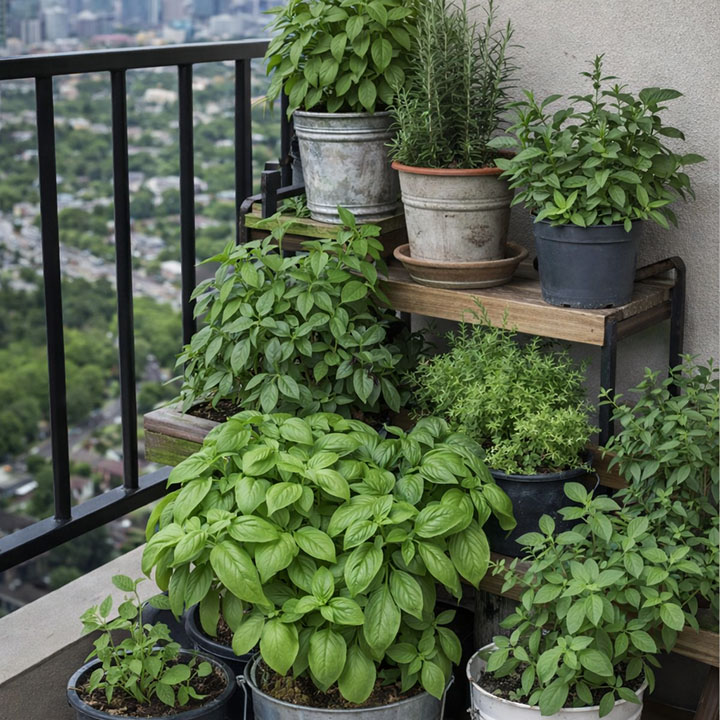
  • Use a tiered plant stand to increase growing space
  • Group culinary herbs together for easy harvesting
  • Mix edible herbs with flowers for colour and pollinator interest

A simple herb planting plan for a small balcony

If you want a practical starter layout, try this:

  • 1 large pot: rosemary
  • 1 medium pot: mint
  • 1 rectangular planter: parsley, chives, basil
  • 1 shallow sunny pot: thyme and oregano

This gives you a useful mix of hardy and leafy herbs, covers a range of cooking styles, and works well on many Australian balconies with at least moderate sun.

Final thoughts on growing herbs on a balcony

Growing herbs on a balcony is one of the easiest ways to turn a small outdoor space into something beautiful, useful, and alive. You do not need a big backyard or perfect conditions. With the right pots, decent potting mix, suitable herbs, and a little attention to sunlight and watering, even a compact balcony can produce fresh ingredients for much of the year.

Start small, learn how your balcony behaves in different seasons, and choose herbs that suit your local Australian climate. Once you get the basics right, a balcony herb garden can become the foundation for a much bigger edible garden over time.

Frequently asked questions

What are the easiest herbs to grow on a balcony?

Parsley, mint, chives, rosemary, thyme, and basil are among the easiest herbs for most Australian balcony gardeners.

Can herbs grow well in pots on a balcony?

Yes. In fact, many herbs are very well suited to pots and planters, as long as they have good drainage, quality potting mix, and enough light.

How often should I water balcony herbs?

It depends on the herb, weather, pot size, and wind exposure. Check the soil regularly rather than following a rigid schedule. Small pots may need daily watering in hot weather.

Which herbs grow best in Australian summer?

Basil, mint, rosemary, thyme, oregano, and chives usually perform well in summer, though tender herbs may need protection from extreme heat on exposed balconies.

Can I grow herbs on a shaded balcony?

You can grow some herbs on a part-shade balcony, especially parsley, mint, chives, and lemon balm. Deep shade is much harder for herbs, and growth will usually be limited.

Should I grow mint with other herbs?

It is usually better to grow mint in its own pot because it spreads strongly and can overwhelm nearby plants.

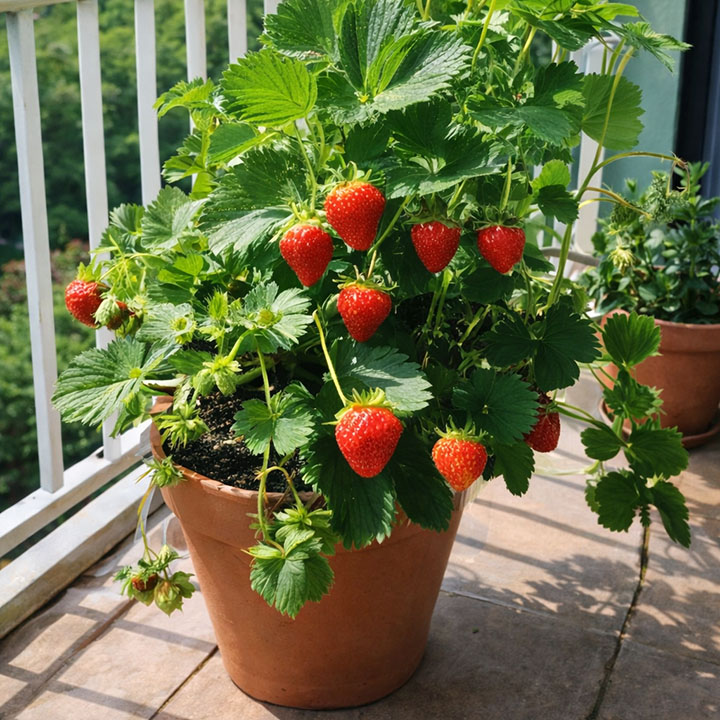
Strawberries are one of the best fruits to grow on a balcony. They are compact, attractive, productive, and well suited to pots, railing planters, hanging baskets, and vertical gardens. For Australian balcony gardeners, strawberries are especially appealing because they do not need a huge amount of space, they look good for much of the year, and freshly picked fruit tastes far better than supermarket berries.

If you have a sunny balcony in Sydney, Melbourne, Brisbane, Perth, Adelaide, Canberra, Hobart, or another Australian city, strawberries are a very realistic crop to grow at home. The key is understanding how strawberries behave in containers, how heat and sun affect fruiting, and how to adjust your care routine to your local climate.

This guide covers everything you need to know about growing strawberries on a balcony in Australia, including the best pot types, sunlight needs, watering, feeding, seasonal care, city-specific weather tips, and common mistakes to avoid.

Why Strawberries Grow Well on Balconies

Strawberries are naturally well suited to small-space gardening. They stay low and compact, spread gently with runners, and do not need deep garden beds to perform well. Because the fruit hangs just above the soil or spills over the edge of containers, balcony setups can actually work very well. Pots and raised planters also help keep fruit cleaner and make it easier to protect plants from slugs, wet soil, and rot.

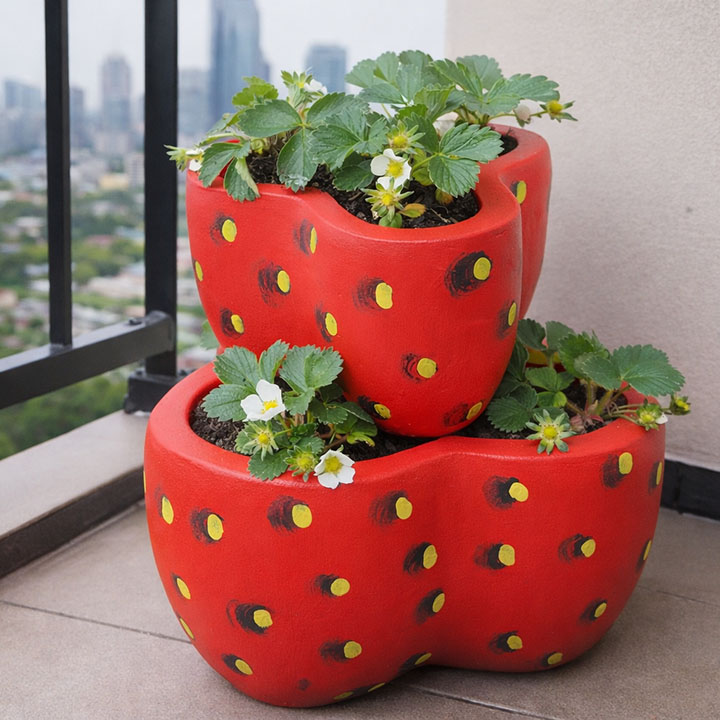
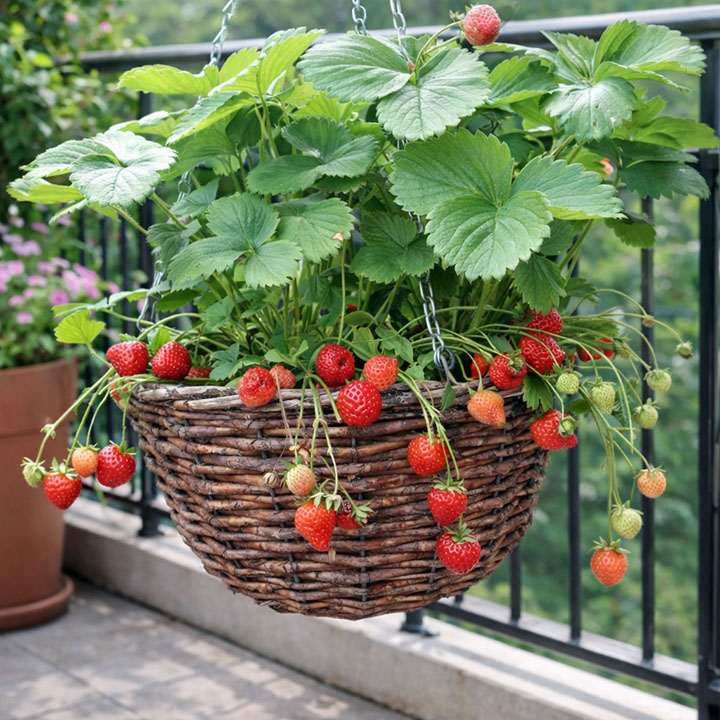
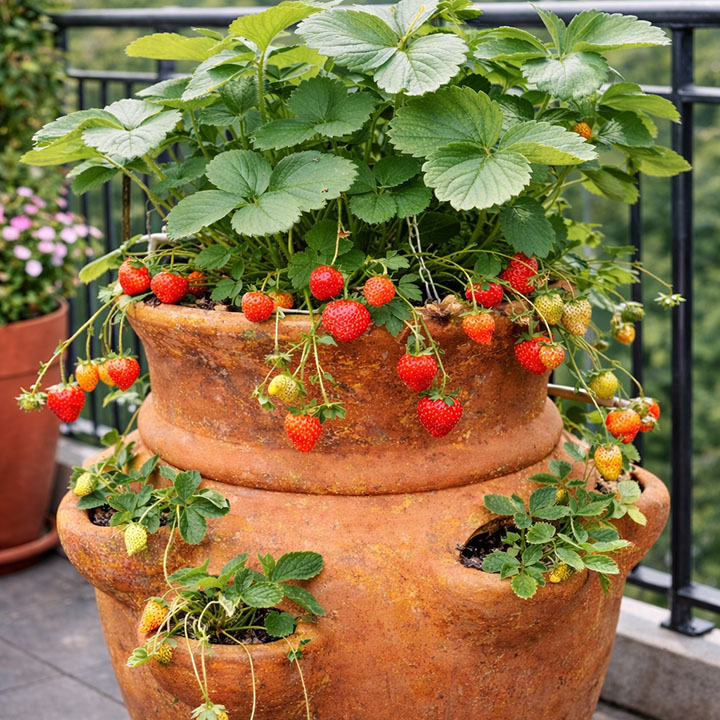
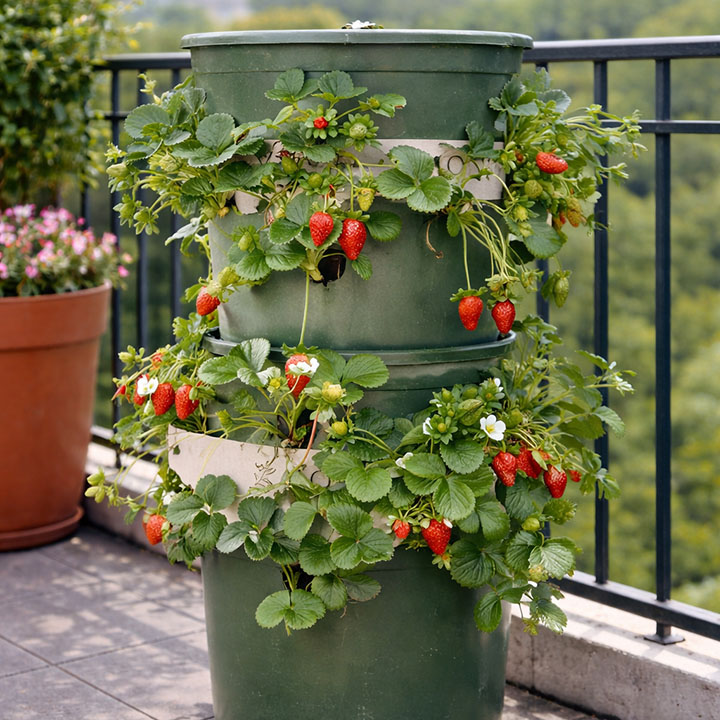
Another reason strawberries are ideal for balconies is flexibility. You can grow them in wide shallow pots, troughs, hanging baskets, strawberry towers, railing planters, and tiered shelves. This makes them one of the easiest fruiting plants to fit into a compact apartment garden.

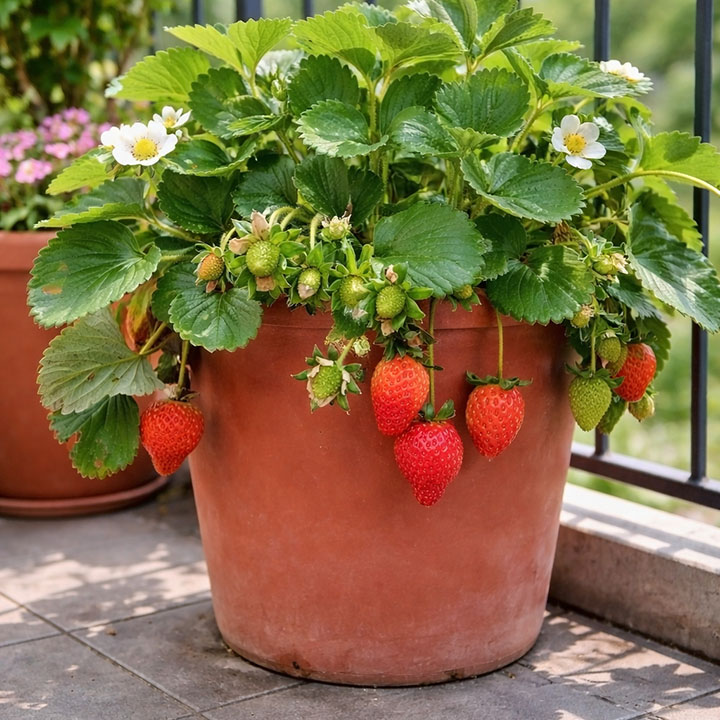
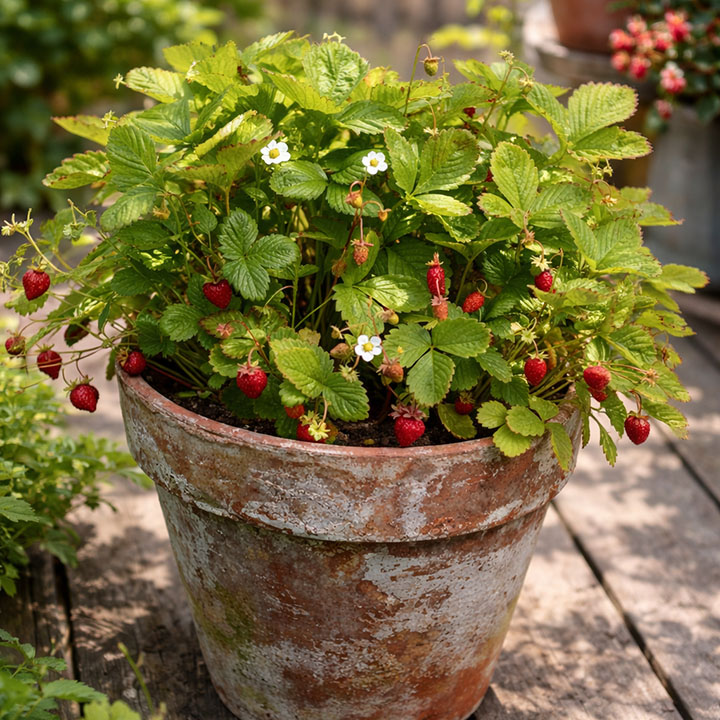
And unlike some balcony crops that are mainly practical, strawberries are ornamental too. The white or pale pink flowers, fresh green foliage, and bright red fruit make them a beautiful addition to a balcony garden.
How Much Sun Do Strawberries Need?

Strawberries grow and fruit best with at least 6 hours of direct sun a day. More sun generally means better flowering, stronger plants, and sweeter berries. On an Australian balcony, a north-facing aspect is usually ideal because it delivers the most reliable light across the day.

East-facing balconies can also work very well, especially in hotter cities where morning sun is gentler than harsh afternoon sun. West-facing balconies can produce good crops too, but summer heat can stress plants, dry pots quickly, and scorch fruit. South-facing balconies are the most difficult for strawberries unless they receive unusually strong reflected light.

If your balcony only gets around 4 to 5 hours of direct sun, strawberries may still grow, but yields are likely to be lower and fruit may be less sweet. In lower-light spaces, focus on plant health and accept a lighter harvest rather than expecting heavy production.

Best Types of Strawberries for Balcony Gardens

There are a few different kinds of strawberries, and choosing the right type matters if you want steady performance in containers. Some varieties crop heavily in one main flush, while others produce over a longer period.

For most balcony gardeners, the best option is a variety that fruits reliably in your local climate and stays productive in pots. If you are buying from an Australian nursery, choose varieties recommended for your region rather than selecting purely by name or appearance.

Good traits to look for in balcony strawberry varieties

  • Compact growth
  • Good productivity in containers
  • Strong flavour
  • Heat tolerance for warmer cities
  • Reliable fruiting over a longer season

If you are new to growing strawberries, start with healthy nursery plants rather than seed. Seed is slower, less predictable, and much less practical for a simple balcony setup.

Best Pots and Planters for Strawberries

Strawberries do not need very deep containers, but they do need enough room for roots to spread and enough soil to hold moisture between waterings. Wide planters usually work better than very small pots because they dry out more slowly and let you grow a few plants together.

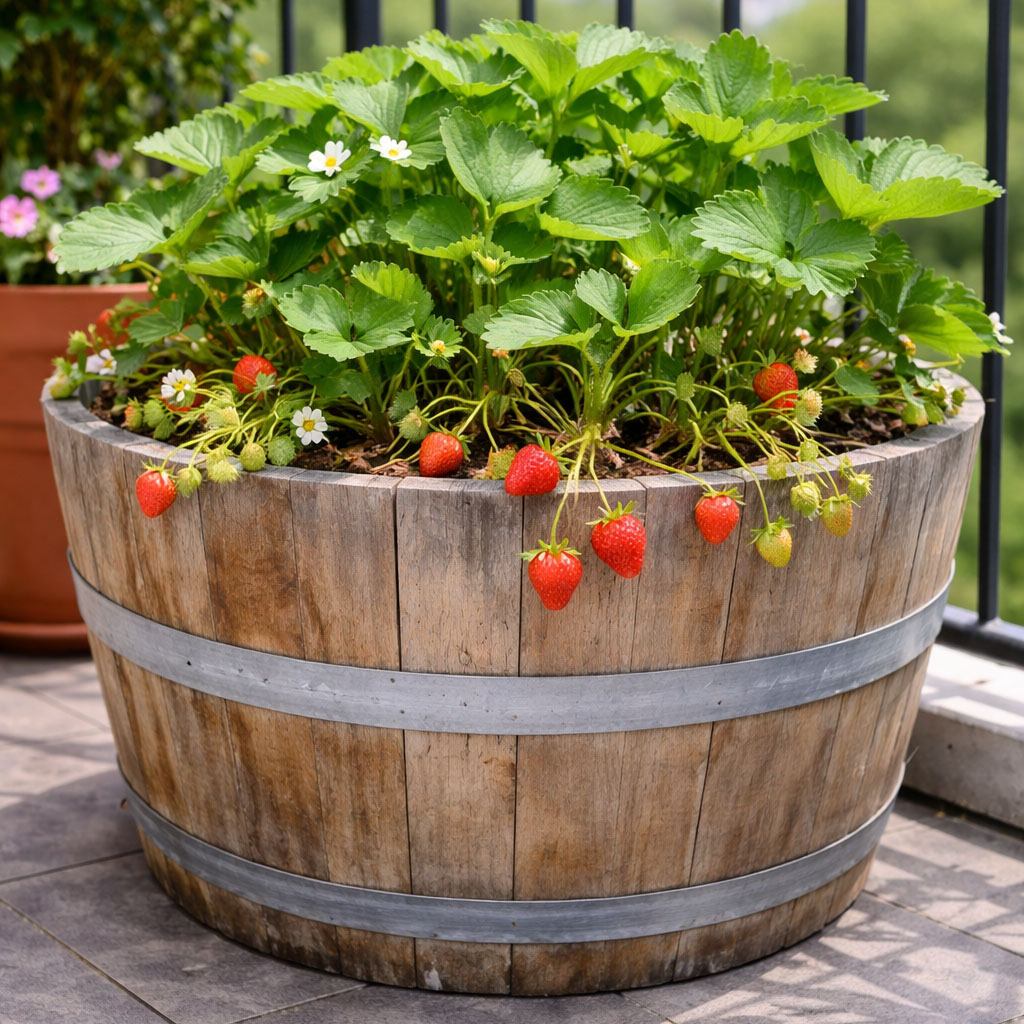
Good container options include window boxes, wide shallow pots, railing planters, hanging baskets, vertical planters, and strawberry pots with side openings. If your balcony gets hot or windy, choose larger containers over tiny decorative pots because they are more forgiving.

As a rough guide, allow enough room so plants are not crammed together. Overcrowding reduces airflow and increases the risk of disease, mould, and weak fruiting.

Best container features for balcony strawberries

  • Drainage holes
  • Enough width for several plants or one plant to spread
  • Good soil volume so the mix does not dry out too fast
  • Materials suited to your climate

Terracotta looks beautiful but dries out quickly in Australian conditions. Plastic, composite, glazed, and self-watering containers are often easier if your balcony is exposed to heat and wind.

The Best Soil for Balcony Strawberries

Strawberries like rich, free-draining soil that stays lightly moist without becoming soggy. Use a quality potting mix rather than garden soil. Potting mix is designed for containers, drains better, and is much easier to manage on a balcony.

A premium potting mix for vegetables, herbs, or fruiting plants is a good starting point. You can improve it with a little compost, but do not make it too heavy. Strawberries dislike sitting in dense wet soil, especially in cooler weather or humid climates.

Because strawberries fruit close to the soil surface, adding a light mulch around the plants can help keep fruit cleaner and reduce splashing. On balconies, mulch also helps slow evaporation.

How to Plant Strawberries in Pots

Planting strawberries correctly is important because the crown, which is the central growing point where leaves emerge, should not be buried too deeply. If planted too deep, the crown can rot. If planted too high, roots may dry out.

  1. Fill the container with premium potting mix.
  2. Space plants so they have airflow and room to spread.
  3. Set each plant so the roots are covered but the crown sits just above the soil line.
  4. Firm the mix gently around the roots.
  5. Water thoroughly after planting.
  6. Add a light mulch if desired.

After planting, place the container in a bright position and keep the soil evenly moist while the plants establish.

How Often to Water Strawberries on a Balcony

Balcony strawberries need more frequent watering than strawberries in the ground because container soil dries much faster. At the same time, they do not like sitting waterlogged. The aim is evenly moist soil, not muddy soil and not dry soil.

In mild weather, you may only need to water every couple of days. In hot weather, especially on west-facing or windy balconies, you may need to water daily. Hanging baskets and small planters dry out even faster and usually need the most attention.

The best approach is to check the potting mix regularly with your finger. If the top layer feels dry, it is usually time to water. Water deeply enough that moisture reaches the full root zone, but do not leave the pot sitting in a saucer full of water for long periods.

Inconsistent watering can lead to smaller berries, poor flowering, stressed plants, and fruit that does not develop properly.

Feeding Strawberries in Containers

Strawberries are not as hungry as tomatoes, but they still need regular feeding in pots. Container soil loses nutrients over time, especially with frequent watering. If you want good flowering and fruit production, feeding matters.

A practical routine is to mix a slow-release fertiliser into the potting mix at planting time, then use a liquid fertiliser suitable for fruiting plants during the active growing and fruiting period. Avoid very high-nitrogen feeding because it can encourage lots of leaf growth with fewer berries.

Once plants are flowering, consistent feeding is more useful than occasional heavy feeding. Small, regular support tends to produce healthier plants and better fruit.

Do Strawberries Need Pollination on a Balcony?

Yes, strawberries benefit from pollination because flowers need to be pollinated well to produce full, well-shaped berries. Outdoors on a balcony, bees and other pollinators often handle this naturally. If your balcony is enclosed, very high up, or has little insect activity, pollination may be weaker.

You can help by growing pollinator-friendly flowers nearby or by gently brushing open strawberry flowers with a soft brush from one flower to another. This is especially helpful on sheltered apartment balconies with limited insect traffic.

Should You Remove Strawberry Runners?

Strawberries often send out runners, which are long stems that create baby plants. Whether you keep them depends on your goal. If you want the main plant to focus on fruiting, it is usually best to remove most runners. If you want more plants, you can root a few runners into nearby pots or planters.

On a small balcony, too many runners quickly create crowding. Removing them keeps the setup tidier and helps maintain stronger fruit production.

Australian City and Weather Guide for Balcony Strawberries

Australia’s climate varies a lot, so strawberry care should be adjusted to your city and your balcony’s microclimate. A plant growing in coastal Sydney experiences very different conditions from one on a dry Adelaide balcony or a cool Hobart apartment terrace.

Sydney

Sydney is generally good for strawberries, especially on balconies with strong morning sun or bright all-day light. Summer heat can stress plants in exposed positions, and humidity can sometimes encourage mould or fungal issues. Good airflow is important, and a little afternoon relief can help in the hottest part of summer.

Melbourne

Melbourne strawberries can do very well on balconies, but weather swings and wind exposure can affect growth. A warm, bright, sheltered position is ideal. Plants may need more water during hot northerly periods and some protection during cold or windy snaps.

Brisbane

Brisbane’s warmth suits strawberries well during the milder months, but peak summer heat and humidity can be hard on them. Morning sun and some afternoon shade often work better than harsh late-day exposure. Keep airflow strong and watch for fungal issues in sticky weather.

Perth

Perth balconies can grow excellent strawberries, but the dry heat means pots can dry out quickly. Use larger containers, mulch the surface, and stay on top of watering. Some afternoon shade can help keep berries from scorching during intense summer periods.

Adelaide

Adelaide’s dry summer conditions can work well if moisture is managed carefully. Balcony surfaces and walls can reflect a lot of heat, so avoid very small pots that overheat easily. A position with sun but not extreme late-afternoon punishment is often best.

Canberra

Canberra has cooler winters and a shorter warm season, so balcony strawberries benefit from a protected sunny spot. Plants may slow down in colder periods, but they can still perform very well in spring and summer. Choose the warmest balcony position you have.

Hobart

Hobart strawberries can succeed on balconies, especially with good sun and protection from cold winds. A north-facing balcony is especially useful. Fruit production may be slower than in warmer cities, but quality can still be excellent when plants get enough light.

When to Plant Strawberries on a Balcony in Australia

Planting time depends on your local climate and the type of strawberry plant you are buying. In much of Australia, strawberries are commonly planted in the cooler part of the year or as conditions begin to warm, depending on the region. The key is avoiding the most stressful extremes, especially intense summer heat for newly planted runners or seedlings.

In warmer cities, establish plants before the hottest weather if possible. In cooler cities, plant once conditions are warming and growth can begin strongly. Healthy nursery plants usually establish much faster than tiny or stressed plants.

How to Protect Balcony Strawberries From Heat

Australian balconies can become much hotter than people expect. Concrete, tiles, glass, and metal railings reflect and store heat, which can push plants beyond what they would tolerate in a garden bed. In high heat, strawberry flowers can abort, leaves can scorch, and fruit can become small or soft.

To reduce heat stress, use larger containers, apply mulch, water consistently, and consider light afternoon shade during extreme heat. White or light-coloured pots may stay cooler than dark ones. Positioning plants where they still get plenty of light but avoid the harshest late-day blast can make a big difference.

How to Protect Strawberries From Wind

Wind dries out pots quickly and can damage flowers, which reduces fruiting. It can also make balconies feel much harsher than nearby gardens at ground level. If your balcony is exposed, place strawberries near a wall, corner, or screen where they still receive good light without taking the full force of the wind.

Wide troughs and heavier containers are often more stable than lightweight hanging baskets in windy positions. If you want hanging strawberries on an upper-level balcony, be prepared for faster drying and more maintenance.

Common Problems With Balcony Strawberries

Lots of leaves but few berries

This often points to not enough sun or too much nitrogen. Check light levels first, then review your feeding routine.

Small or misshapen fruit

This can be caused by weak pollination, water stress, poor nutrition, or plants under general environmental stress.

Fruit rotting or moulding

This is usually linked to poor airflow, excess moisture, overcrowding, or humid weather. Remove damaged fruit quickly and improve spacing if needed.

Leaves looking burnt or crispy

This often means heat stress, dry soil, or reflected sun from nearby surfaces. Adjust watering and provide protection during extreme conditions.

Plants declining after fruiting

Strawberries are not forever plants. Productivity drops over time, so replacing older plants or rooting fresh runners helps keep your balcony strawberry patch productive.

Pests to Watch For

Balcony strawberries can attract aphids, spider mites, caterpillars, and sometimes birds if your balcony is accessible. Check plants regularly, especially under leaves and around flowers. Early intervention is always easier than dealing with a major infestation later.

Birds are often a bigger issue once fruit begins to colour. If needed, use light netting or place plants where birds cannot easily land and peck at ripe berries.

Can You Grow Strawberries With Other Plants?

Yes, but keep it simple. Strawberries can look great near herbs and flowers, especially on mixed edible balconies. Just avoid crowding them with aggressive plants that compete heavily for water and nutrients. It is often better to grow strawberries in their own container or designated trough rather than mixing too many species into one pot.

Best Balcony Setups for Strawberries

Strawberries are versatile enough to suit many balcony styles. A few of the most practical setups include a wide trough along a railing, a hanging basket near a bright wall, a tiered arrangement on plant stands, or several shallow pots grouped in the sunniest part of the balcony.

If your goal is maximum productivity, choose larger planters with room for several plants. If your goal is a decorative edible balcony, combine strawberries with separate pots of herbs and pollinator-friendly flowers nearby.

When to Harvest Balcony Strawberries

Harvest strawberries when they are fully coloured and ripe. Unlike some fruits, strawberries do not continue improving much after picking, so it is best to wait until they are properly red and aromatic. Pick gently with a short piece of stem attached if possible.

Check plants frequently once fruit starts ripening, because strawberries can move from nearly ready to perfect very quickly in warm weather.

Are Strawberries Worth Growing on a Balcony?

Absolutely. Strawberries are one of the most rewarding balcony crops because they combine looks, flavour, and practicality in a very small footprint. Even a compact apartment balcony can hold enough plants for regular picking during the season.

They are especially good for gardeners who want to grow fruit without the scale or maintenance required by larger plants. With enough sun, reliable watering, and a suitable container, strawberries are very achievable in Australian cities.

Final Tips for Success

  • Give strawberries at least 6 hours of direct sun.
  • Use quality potting mix and containers with good drainage.
  • Keep the crown at the right planting height.
  • Water consistently, especially in hot and windy weather.
  • Feed regularly during active growth and fruiting.
  • Remove excess runners if you want more berries from the main plant.
  • Improve airflow to reduce mould and rot.
  • Adjust your setup to your city’s climate and your balcony’s microclimate.

With the right position and a little consistency, strawberries can be one of the easiest and most enjoyable fruits to grow on an Australian balcony. They fit small spaces beautifully, they look great in containers, and the flavour of freshly picked berries makes the effort worthwhile.

Tomatoes are one of the best edible plants you can grow on a balcony. They are productive, rewarding, and surprisingly well suited to container gardening when given enough sun, water, and support. For Australian balcony gardeners, tomatoes are often the first crop worth trying because they grow quickly, look great in pots, and produce fruit over a long period in the warmer months.

Whether you live in a small Melbourne apartment, a sunny Brisbane unit, a windy Sydney high-rise, or a dry Perth balcony, you can grow tomatoes successfully with the right setup. The key is matching your variety, pot size, and watering routine to your local weather and balcony conditions.

This guide explains everything you need to know about growing tomatoes on a balcony in Australia, including the best varieties for pots, how much sun they need, the right container size, feeding, watering, city-specific weather tips, and common mistakes to avoid.

Why Tomatoes Grow Well on Balconies

Tomatoes are naturally a strong choice for balcony gardening because they perform very well in containers. Unlike sprawling crops that need lots of garden space, tomatoes can be trained vertically with stakes, cages, or trellises. That makes them ideal for compact outdoor areas.

Balconies also give you more control over soil quality, drainage, and positioning. If one area gets better light, you can move a pot. If a heatwave hits, you can add temporary shade. If a windy front arrives, you can shift the plant closer to a wall for protection. This flexibility can actually make balcony-grown tomatoes easier to manage than tomatoes in the ground.

And then there is the payoff. Fresh homegrown tomatoes taste better than most supermarket tomatoes, especially cherry and smaller varieties picked ripe from the vine. Even one healthy plant can provide a steady harvest through the growing season.

How Much Sun Do Balcony Tomatoes Need?

Tomatoes need plenty of direct sun to grow well. In general, aim for at least 6 to 8 hours of direct sunlight each day. More sun usually means stronger growth, more flowers, and sweeter fruit.

In Australia, a north-facing balcony is usually the best option because it gets the most reliable sun. East-facing balconies can still work well, especially for cherry tomatoes, though production may be lighter. West-facing balconies can also grow tomatoes successfully, but they may become very hot in summer, especially in cities with strong afternoon heat. South-facing balconies are usually the most difficult unless they receive unusual reflected light.

If your balcony only gets 4 or 5 hours of direct sun, try compact cherry tomatoes rather than large slicing types. They tend to cope better with slightly less light and are usually the most productive option for small-space gardeners.

Best Tomato Varieties for a Balcony

Not every tomato is ideal for container growing. Some varieties become very large, require heavy support, and take over small spaces quickly. For most balconies, compact, dwarf, cherry, or determinate tomatoes are the easiest and most reliable choice.

Best Types of Tomatoes for Pots

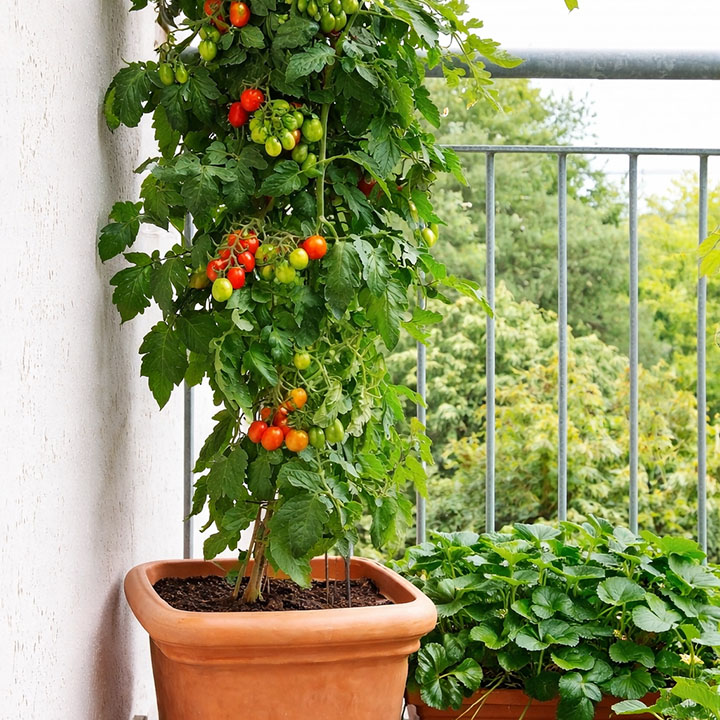
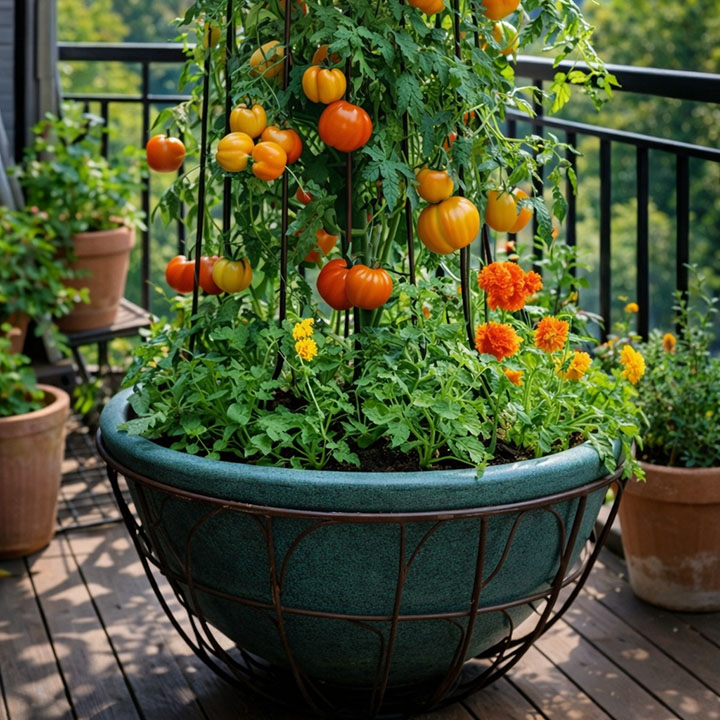
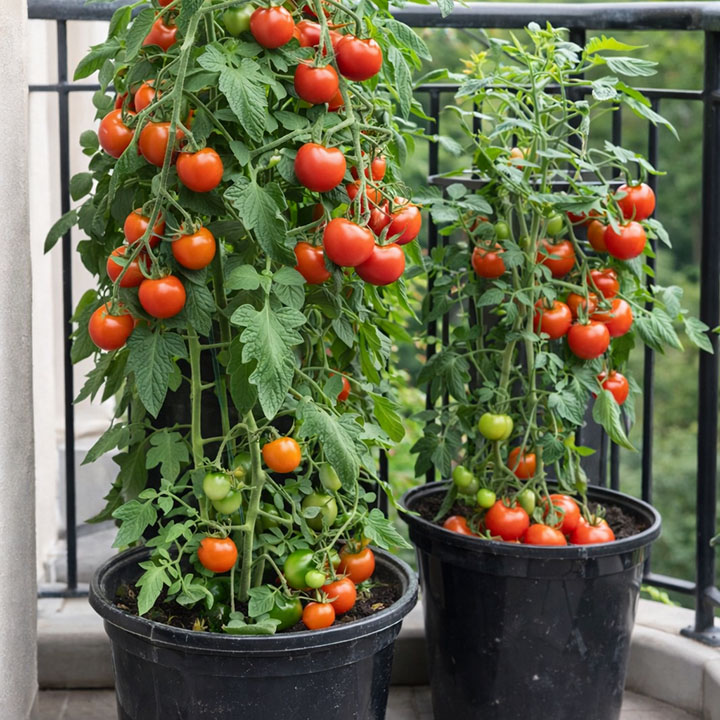
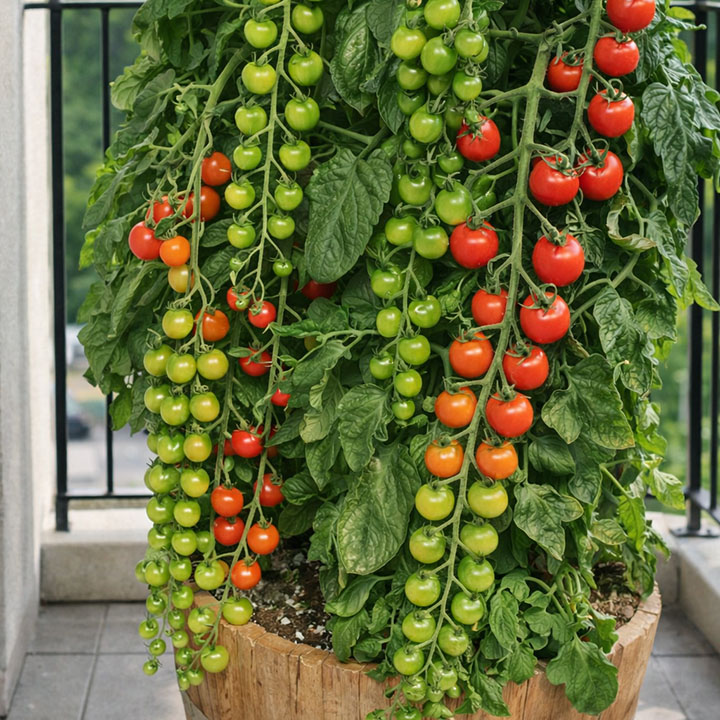
  • Cherry tomatoes are the easiest choice for beginners. They are productive, fast to ripen, and well suited to pots.
  • Grape tomatoes are compact and great for snacking.
  • Roma or plum tomatoes are useful for cooking and sauces, though they often need a bit more feeding.
  • Dwarf or patio tomatoes are bred specifically for containers and small spaces.
  • Determinate tomatoes stay more compact and fruit over a shorter, more manageable period.

If you are new to balcony gardening, start with a cherry tomato or a patio variety. These tend to give the best results with the least stress.

Determinate vs Indeterminate Tomatoes

When buying seedlings or seeds, it helps to understand the difference between determinate and indeterminate tomatoes.

Determinate tomatoes grow to a set size, stay more compact, and produce most of their crop over a shorter period. They are usually easier to manage on a balcony.

Indeterminate tomatoes keep growing, climbing, and fruiting over a longer season. They can be extremely productive, but they need bigger pots, stronger supports, and more regular pruning.

For a small or medium-sized balcony, determinate, patio, or compact cherry tomatoes are usually the best fit. Indeterminate varieties can still work, but only if you have the room and want a larger, more demanding plant.

Best Pot Size for Tomatoes on a Balcony

Pot size matters a lot with tomatoes. One of the most common mistakes is planting them in containers that are too small. Small pots dry out too quickly, heat up faster, and limit the root system, which leads to weaker plants and lower yields.

As a starting guide:

  • Use a pot at least 30cm wide and deep for compact dwarf tomatoes.
  • Use a pot around 40cm to 50cm wide for cherry, roma, and most standard varieties.
  • Use an even larger container for vigorous indeterminate tomatoes.

One tomato plant per pot is usually best. It can be tempting to squeeze more in, but overcrowding reduces airflow, increases disease risk, and makes watering harder to manage.

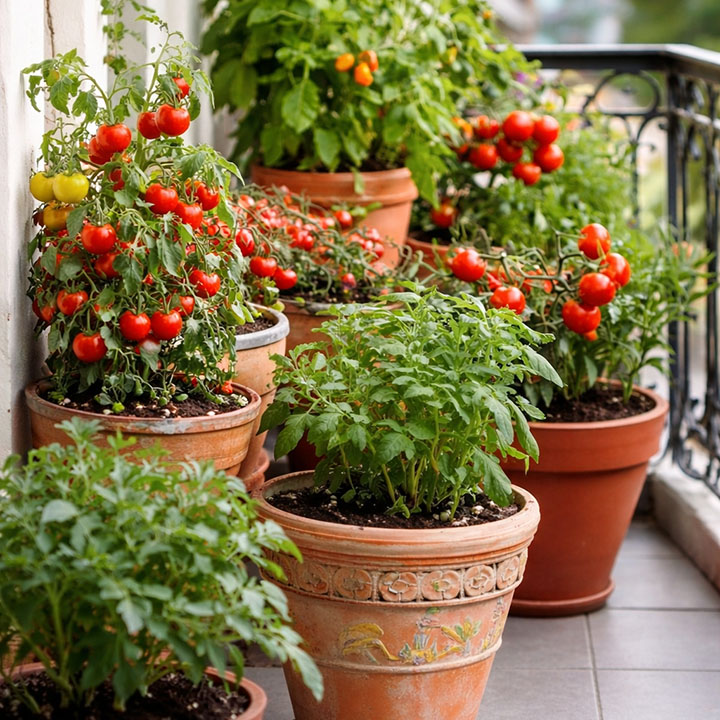
Terracotta pots look beautiful, but they dry out faster in summer. Plastic, glazed, fibreglass, and self-watering pots are often easier for Australian balconies, especially in hot cities.

The Best Soil for Balcony Tomatoes

Tomatoes need rich, well-draining soil. Always use a premium potting mix for containers rather than garden soil. Garden soil becomes compacted in pots, drains poorly, and can cause root problems.

A good vegetable-friendly potting mix is the easiest option. You can improve it by mixing in a little compost for added fertility. If your balcony gets very hot, adding materials that improve water retention can also help, but the mix still needs to drain well.

Before planting, blend in a slow-release fertiliser suitable for vegetables or fruiting plants. Tomatoes are heavy feeders, and giving them nutrients from the beginning will help them establish faster.

How to Plant Tomatoes in Containers

Planting tomatoes properly gives them a much stronger start. Choose healthy seedlings with thick stems and deep green leaves. Avoid weak or overly leggy plants.

  1. Fill the pot with premium potting mix, leaving a few centimetres at the top.
  2. Install a stake, cage, or support before planting so you do not disturb the roots later.
  3. Remove the seedling gently from its nursery pot.
  4. Plant it deeply, burying part of the stem if possible. Tomatoes can form extra roots along buried stems.
  5. Water thoroughly after planting.
  6. Add mulch to the top of the pot to help retain moisture and reduce temperature swings.

Once planted, place the pot in the sunniest suitable position on your balcony and keep it protected from severe wind while it settles in.

How Often to Water Balcony Tomatoes

Watering is the most important part of growing tomatoes in pots. Container-grown tomatoes dry out much faster than garden-grown ones, especially on balconies where heat and wind can be intense. The ideal is evenly moist soil, not constantly wet soil and not soil that swings from bone dry to drenched.

In mild weather, you might water every second day. In warm summer weather, you may need to water daily. During extreme heat or on hot, windy balconies, tomatoes may need water morning and evening.

The best way to check is to feel the soil. If the top few centimetres are dry, it is probably time to water. Water deeply until it runs from the drainage holes. Quick shallow watering is not enough because it does not reach the full root zone.

Inconsistent watering often leads to problems such as split fruit, blossom end rot, and flower drop, so stability matters more than guesswork.

Feeding Tomatoes in Pots

Tomatoes are hungry plants. Because pots hold a limited amount of soil, nutrients are used up faster than they would be in the ground. To keep plants healthy and productive, regular feeding is essential.

A simple feeding routine is to start with slow-release fertiliser when planting, then switch to a liquid tomato or vegetable fertiliser every 1 to 2 weeks once flowering begins. This keeps the plant growing strongly and helps support fruit production.

Be careful with very high-nitrogen fertilisers. These can encourage lots of leafy growth but fewer tomatoes. Once flowers appear, a fertiliser designed for fruiting plants is usually the best option.

Do Balcony Tomatoes Need Support?

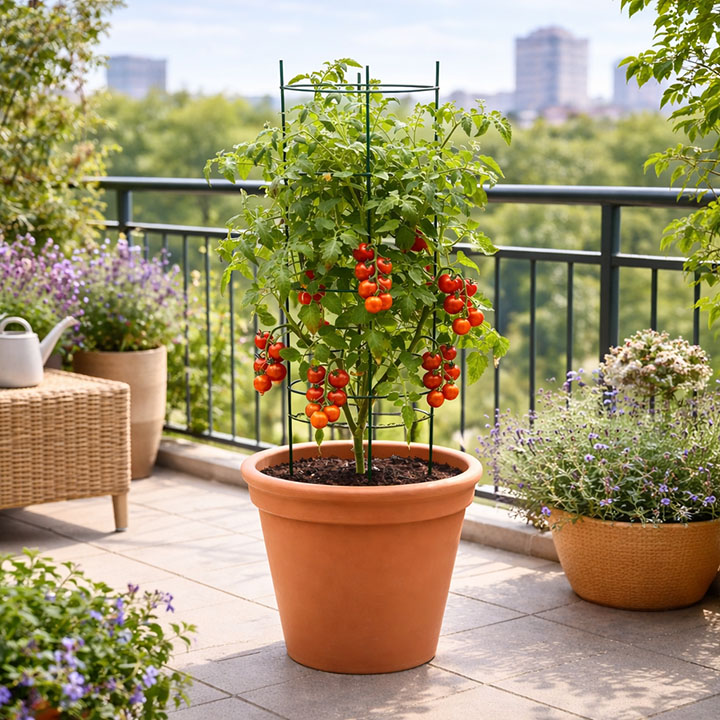
Yes. Most tomatoes need some form of support, even the smaller ones. Balcony conditions can be surprisingly windy, and stems carrying fruit can bend or snap without help.

You can support tomatoes with:

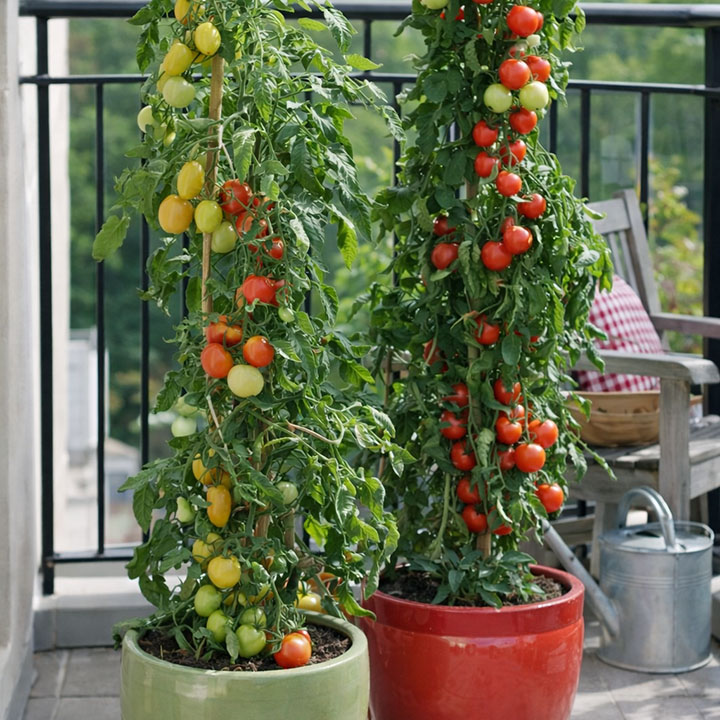
  • Single tomato stakes
  • Tomato cages
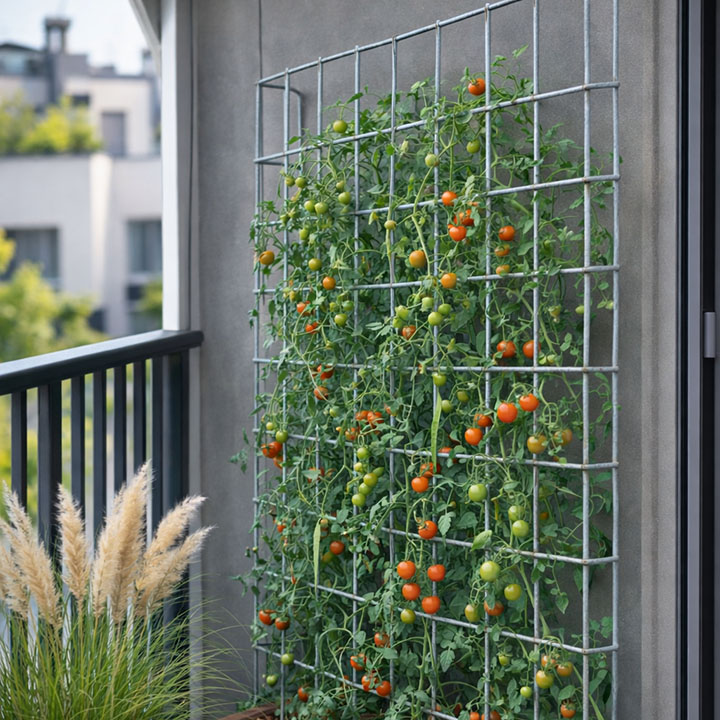
  • Slim balcony trellises
  • Soft plant ties

Install support early. It is much easier to guide a young plant than to fix a large, tangled one later. Compact or determinate tomatoes may only need a cage or short stake, while indeterminate tomatoes need more regular tying and training.

Do You Need to Prune Balcony Tomatoes?

Pruning depends on the variety. Indeterminate tomatoes usually benefit from removing some side shoots or suckers so the plant stays manageable and focuses more energy on fruit. Determinate and dwarf tomatoes usually need much less pruning.

In general, it helps to remove damaged leaves, yellow lower leaves, and crowded growth near the base of the plant. This improves airflow and makes it easier to spot pests and disease early.

Australian City and Weather Guide for Balcony Tomatoes

Australia’s climate varies widely, so tomato care should always be adjusted to your local city and balcony microclimate. A balcony in Brisbane behaves differently from one in Hobart or Canberra.

Sydney

Sydney is generally very good for tomatoes. Warm weather supports strong growth, but balconies can become hot and reflective in summer. If your balcony faces west, your plants may need more frequent watering and some relief during heatwaves. Humidity can also encourage fungal issues, so good airflow matters.

Melbourne

Melbourne can produce excellent tomatoes, but weather changes quickly and wind is often the bigger issue. A sheltered, sunny balcony works best. Plants may need stronger staking than expected, and exposed positions can dry out fast even when temperatures are not extreme.

Brisbane

Brisbane’s warmth helps tomatoes grow fast, but summer humidity can be challenging. Balcony gardeners often get the best results by focusing on the milder part of the warm season rather than the most humid peak. Watch for fungal disease, avoid crowding plants, and water the soil rather than the leaves.

Perth

Perth’s strong sun is great for tomatoes, but the dry heat means watering becomes critical. Use larger pots, add mulch, and consider self-watering containers if your balcony gets harsh afternoon sun. During very hot weather, a little afternoon protection can help prevent blossom drop and stress.

Adelaide

Adelaide tomatoes often thrive, but balcony heat can build up quickly around concrete, paving, glass, and masonry. Choose a large container, water deeply, and mulch the surface well. Light-coloured pots can also help reduce root-zone heat.

Canberra

Canberra has a shorter warm season, so timing is important. Wait until conditions are properly warm before planting. A north-facing balcony is especially useful here, and early-fruiting varieties are often the safest option. Cool nights can slow growth, especially early in the season.

Hobart

Hobart gardeners can still grow tomatoes successfully on a balcony, but warmth and sunlight are essential. Choose the sunniest, most sheltered spot you have and stick to cherry or fast-ripening varieties. Reflected warmth from walls can help create a better microclimate.

When to Plant Tomatoes on a Balcony in Australia

Tomatoes are warm-season plants, so they should be planted when temperatures are consistently mild to warm. Plant too early and they often stall, struggle, or become vulnerable to cold nights.

In warmer parts of Australia, the planting window starts earlier. In cooler cities, it starts later. Instead of relying on a single national calendar, pay attention to local conditions. If nights are still cool and the potting mix feels cold in the morning, it is usually better to wait a little longer.

How to Manage Wind on a Balcony

Wind is one of the most overlooked challenges in balcony gardening. It dries pots faster, stresses plants, damages flowers, and can reduce fruit set. Upper-level balconies are especially exposed.

If your balcony is windy, place your tomato near a wall, screen, or corner where it still receives good sun. Choose heavier pots that are less likely to tip and secure the stems with soft ties as they grow. Compact varieties are usually a smarter choice than large sprawling ones in exposed spaces.

Common Problems With Balcony Tomatoes

Flowers But No Fruit

This is often caused by heat stress, poor pollination, or general plant stress. On sheltered balconies, gently tapping or shaking flowering stems can help pollination.

Blossom End Rot

This appears as a dark, sunken patch on the bottom of the fruit. It is usually linked to inconsistent watering. Keeping soil moisture stable is the main fix.

Yellow Leaves

Yellowing can be caused by watering issues, poor drainage, nutrient deficiency, overcrowding, or natural aging of older leaves. Check the roots, watering pattern, and feeding routine first.

Split Tomatoes

Fruit splitting usually happens when a dry plant is suddenly given a lot of water. Consistent watering reduces the risk.

Weak or Leggy Growth

This almost always points to insufficient sun. Move the pot to the brightest possible position if you can.

Pests and Diseases to Watch For

Balcony tomatoes are not immune to pests. Keep an eye out for aphids, whitefly, caterpillars, and spider mites, especially during warm weather. Check the undersides of leaves regularly and respond early before problems spread.

Fungal issues are more common in humid or overcrowded conditions. Good airflow, watering at the soil level, removing damaged leaves, and avoiding dense planting all help reduce the risk.

Can You Grow Tomatoes With Other Plants?

It is usually best to give each tomato its own pot, but that does not mean your balcony setup needs to be boring. Herbs like basil grow well nearby and enjoy similar warm conditions. Instead of crowding the tomato pot, place companion herbs in separate containers around it. This keeps the balcony productive while making watering and root management much easier.

Best Balcony Setup for Growing Tomatoes

A strong balcony tomato setup is simple. Start with one healthy plant in one large pot filled with quality potting mix. Add mulch, install support early, place it in strong sun, and water consistently. Feed regularly once flowering starts, and protect the plant from severe wind or heat stress when needed.

This basic system works better than trying to grow too many plants in too little space. A single well-grown tomato will usually outperform several crowded, neglected ones.

When to Harvest Balcony Tomatoes

Tomatoes are best harvested when fully coloured and slightly soft but still firm. Pick regularly to encourage more fruiting. Cherry tomatoes are usually sweetest when ripened properly on the vine, while larger varieties can be picked a little earlier if splitting, birds, or extreme heat are becoming a problem.

Frequent harvesting also keeps the plant productive and reduces the chance of overripe fruit attracting pests.

Is It Worth Growing Tomatoes on a Balcony?

Absolutely. Tomatoes are one of the most satisfying balcony crops because they combine beauty, productivity, and flavour. Even a single pot can produce a useful harvest, and homegrown tomatoes almost always taste better than store-bought ones.

If you have a sunny balcony and want to grow something practical, tomatoes are one of the best places to start. They do ask for regular attention, especially with watering, but the reward is worth it.

Final Tips for Success

  • Start with cherry or compact tomatoes if you are a beginner.
  • Use the largest pot your space allows.
  • Give tomatoes at least 6 to 8 hours of direct sun.
  • Water consistently and deeply.
  • Feed regularly once flowering begins.
  • Stake or cage the plant early.
  • Watch for wind stress as well as heat stress.
  • Adjust your routine to your city and balcony microclimate.

With the right variety, enough sunlight, and a steady watering routine, growing tomatoes on a balcony in Australia is very achievable. A small balcony can easily become a productive edible garden, and tomatoes are one of the best crops to prove it.

Australian native plants are an excellent choice for balcony gardens because many are naturally adapted to harsh sun, wind, dry spells and lean soils. That makes them especially useful for apartment and small-space gardeners who want plants that look good, support birds and pollinators, and cope better with Australian conditions than many thirsty exotics.

Across Australia, balcony conditions vary a lot. Sydney is humid with rainfall spread across the year, Melbourne is cooler and more changeable, Brisbane is warm and wetter in summer, Perth and Adelaide have dry summers and wetter winters, Hobart is cooler overall, and Darwin has a tropical wet-and-dry pattern. Choosing the right native plant starts with matching it to your city’s climate, your balcony’s sunlight, and how exposed the space is to wind.

Why Australian natives work so well on balconies

  • Many cope well with heat, reflected light and drying winds.
  • Plenty of compact cultivars suit pots, troughs and planter boxes.
  • They bring texture, flowers and foliage colour without needing a high-maintenance routine.
  • Many attract bees, butterflies and nectar-feeding birds.
  • You can create a balcony that feels distinctly Australian rather than generic.

What to look for in a native balcony plant

The best balcony natives are usually compact, wind-tolerant, happy in containers and not too fussy about pruning. On hot balconies, look for plants described as drought tolerant, coastal tolerant or suitable for container growing. On shaded balconies, focus on natives that can handle light shade or part shade rather than full-sun-only plants.

Best Australian native plants for balcony gardens

1. Correa

Correas are among the best all-round native shrubs for balconies. They are naturally neat, bird-attracting, and many varieties do well in pots. Correa alba is especially useful for coastal or exposed balconies because it tolerates salty winds, grows in sun to part shade, responds well to pruning and is noted as being good in containers. If you want a softer flowering look, varieties like ‘Dusky Bells’ and ‘Snowbelle’ are excellent compact choices.

Best for: Sydney, Melbourne, Adelaide, Hobart, coastal balconies, part-shade balconies.

2. Westringia (Coastal Rosemary)

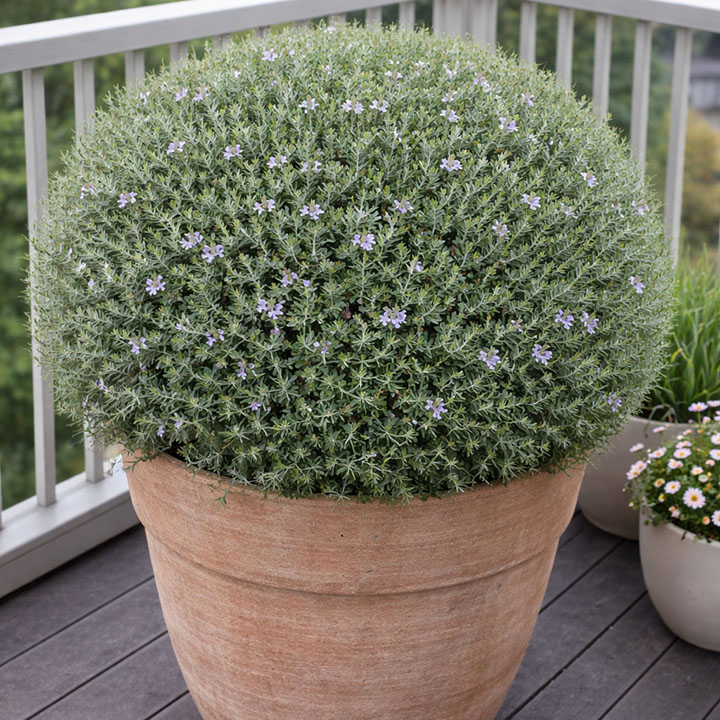
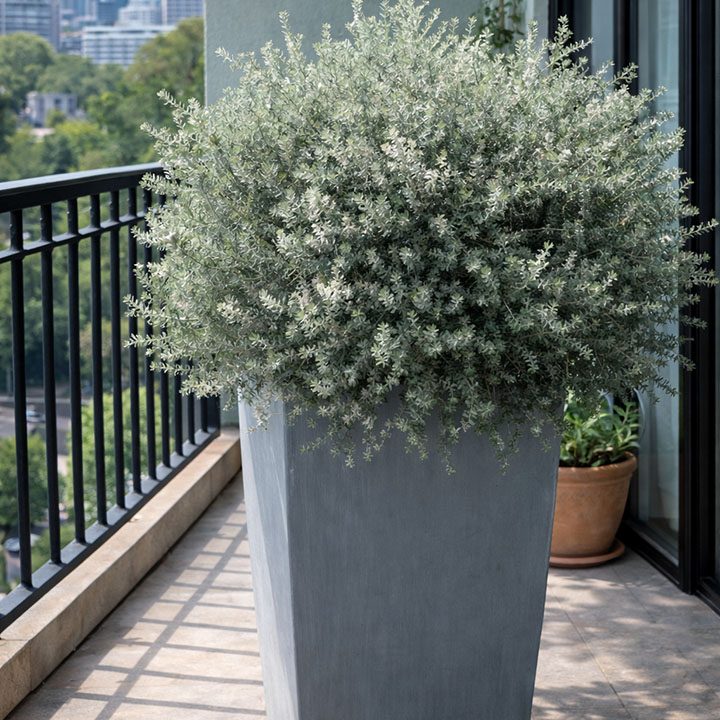
Westringia is one of the toughest native shrubs you can grow in a pot. It handles wind, coastal exposure, clipping and shaping, and many compact forms work beautifully as low hedges or rounded specimens in containers. Varieties such as ‘Jervis Gem’, ‘Mundi’ and ‘Zena’ are especially useful when you want structure and year-round foliage without constant fuss.

Best for: Sydney, Perth, Adelaide, Brisbane, exposed balconies, windy or coastal sites.

3. Brachyscome (Native Daisy)

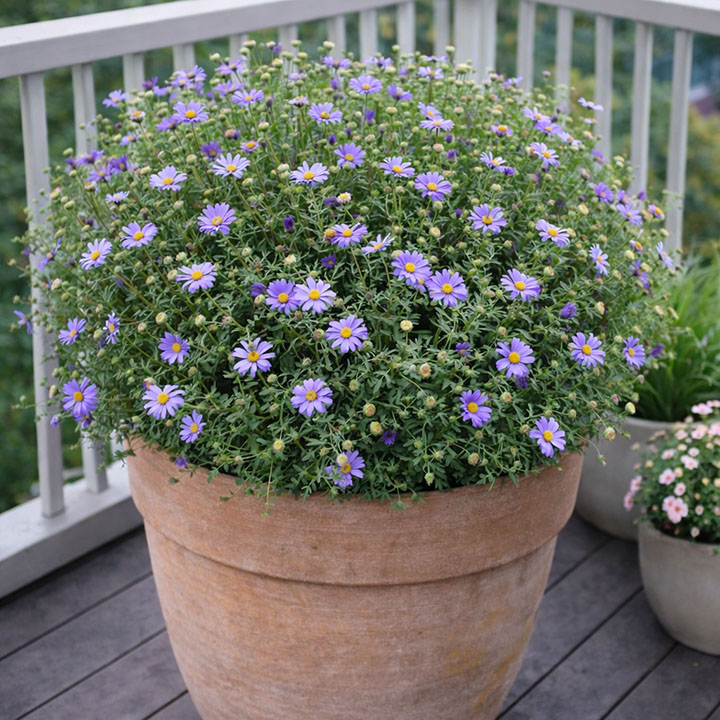
Brachyscome brings an easy cottage-garden feel to balcony pots. It stays compact, flowers for long periods, and suits containers, borders and troughs. It is ideal for softening the edges of a balcony display and pairing with tougher shrubs or strappy plants. Use it where you want cheerful colour without a heavy, woody look.

Best for: Melbourne, Canberra, Hobart, Sydney, mixed planters, balcony boxes and lower pots.

4. Scaevola (Fan Flower)

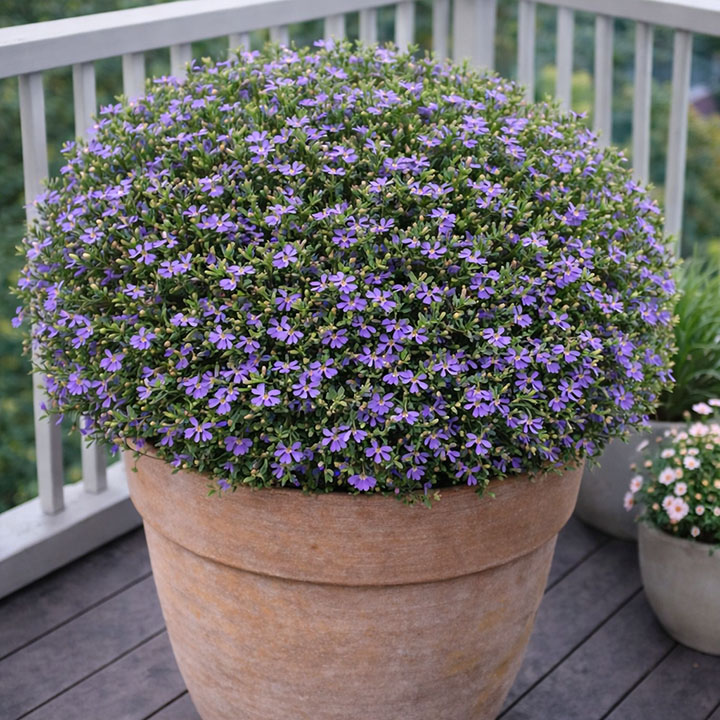
Scaevola is one of the best natives for spilling over the sides of pots and hanging baskets. It flowers for months, works well in containers, and many forms suit sunny balconies. This is a strong choice for gardeners who want a softer cascading effect rather than upright structure.

Best for: Brisbane, Sydney, Perth, Adelaide, sunny rail planters, hanging baskets and trailing displays.

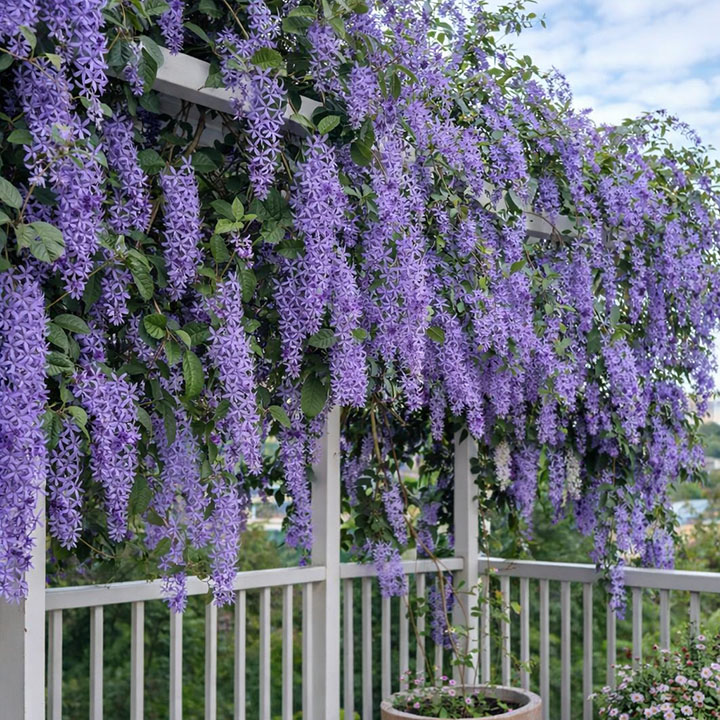
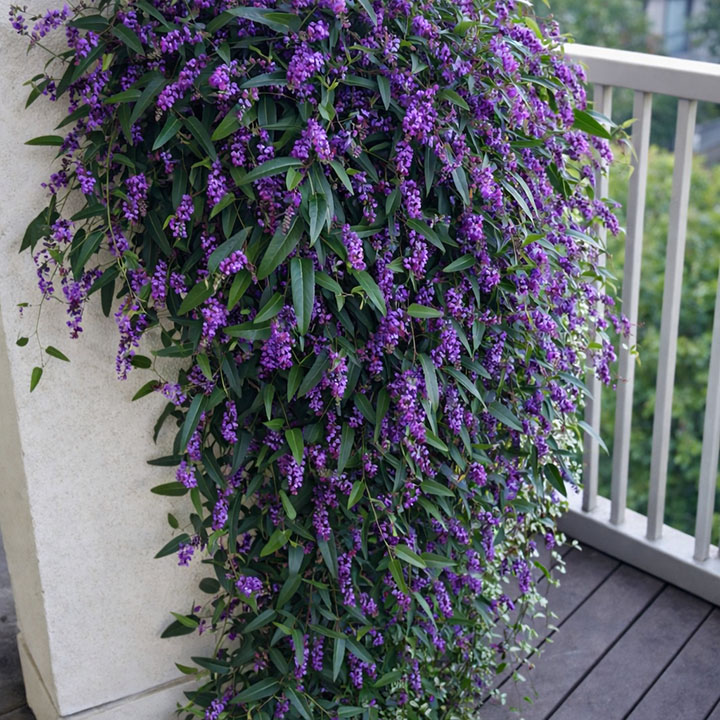
5. Hardenbergia

Hardenbergia is one of the standout native climbers for balconies. It produces masses of purple, pink or white pea flowers and can be trained up trellis, along railings or over a privacy screen. Standard forms can climb vigorously, while compact cultivars such as ‘Mini Ha Ha’, ‘Bushy Blue’ and ‘Regent’ are easier to manage in pots.

Best for: Melbourne, Sydney, Adelaide, Perth, privacy screens, trellis balconies and winter-spring colour.

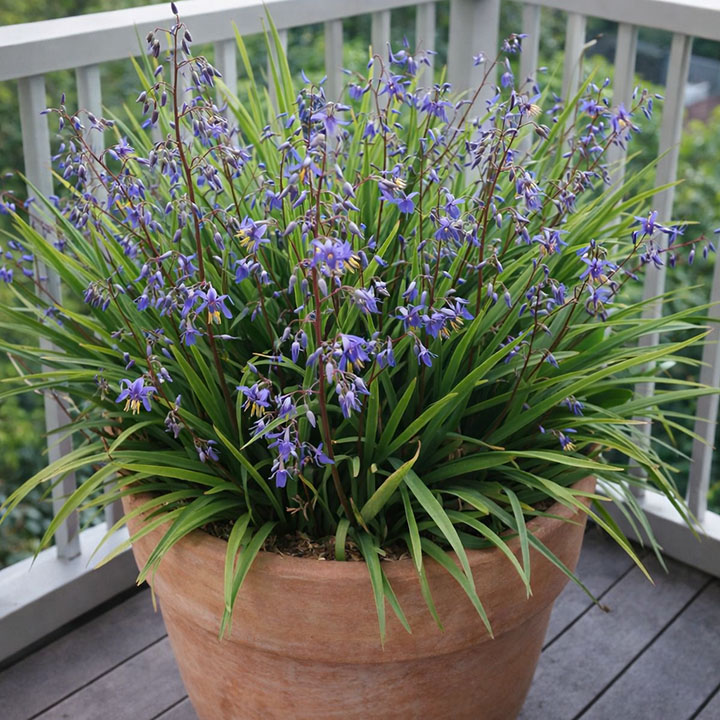
6. Dianella

Dianella is a brilliant native strappy plant for balcony gardeners who want strong foliage shape. It forms clumps of upright leaves, produces blue flowers in season, and many dwarf forms work well in planter boxes. It also combines nicely with flowering natives because it gives the arrangement structure year-round.

Best for: Sydney, Melbourne, Brisbane, Adelaide, contemporary balconies, narrow planter boxes.

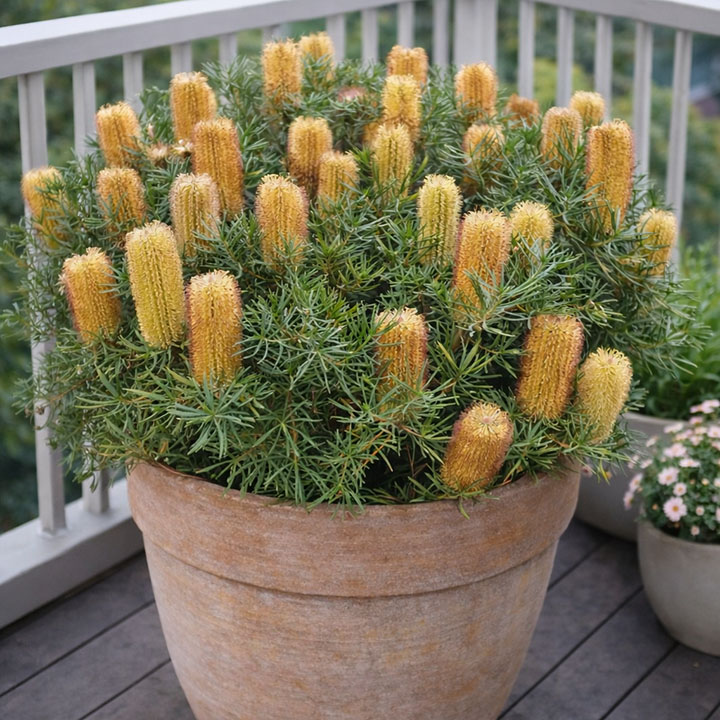
7. Banksia spinulosa cultivars

Compact banksias are a great choice for sunny balconies where you want a tougher shrub with standout flowers. Cultivars such as ‘Honey Pots’, ‘Stumpy Gold’, ‘Black Magic’ and ‘Cherry Candles’ are recommended for smaller gardens and containers on patios, verandas and decks. They bring an unmistakably Australian look and are excellent for nectar-feeding birds.

Best for: Perth, Adelaide, Melbourne, Canberra, full sun balconies and larger statement pots.

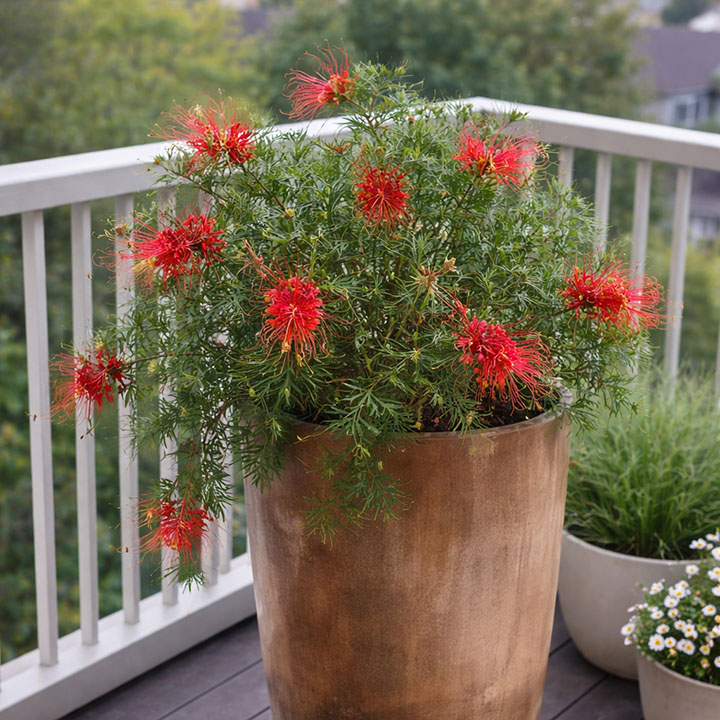
8. Grevillea

If you want flowers, texture and bird life, compact grevilleas are hard to beat. ‘Quick Silver’ performs well as a cascading container specimen for patios or balconies, while ‘Tucker Time Entree’ is specifically noted as a container plant for deck, patio or balcony. Choose smaller cultivars rather than large garden forms so the plant stays in scale with the space.

Best for: Melbourne, Sydney, Adelaide, Perth, full sun and wildlife-friendly balconies.

9. Conostylis

For a compact clumping native with silver foliage and a clean architectural look, Conostylis is a smart pick. ‘Silver Sunrise’ is specifically described as stunning in a container and suitable for a sunny position on a balcony or courtyard. It is a good option when you want something modern, textural and drought-aware.

Best for: Perth, Adelaide, sunny Melbourne balconies, minimalist balcony designs.

Best native plants by Australian city

Sydney

Sydney balconies often deal with humidity, salt-laden air near the coast, and rainfall across much of the year. Strong choices include Correa, Westringia, Scaevola, Brachyscome and compact Grevilleas. Coastal balconies should prioritise salt-tolerant plants such as Correa alba and Westringia. Melbourne

Melbourne’s biggest balcony challenge is variability: cool changes, wind and a broader range of temperatures across the year. Correas, Brachyscome, Dianella, Hardenbergia and compact Banksias are all strong performers because they can handle cool-temperate conditions and light frost in many cases.

Brisbane

Brisbane gardeners should focus on plants that can cope with warmth, humidity and heavy summer rain. Westringia, Dianella, Scaevola and selected Grevilleas are practical options. Good drainage is especially important in Brisbane pots so roots do not stay waterlogged in the wet season.

Perth

Perth balconies often experience intense sun and dry summers, so choose plants that love drainage and can handle dry periods. Westringia, Conostylis, Banksia spinulosa cultivars and Hardenbergia are especially useful here. Use deeper pots to reduce heat stress and drying.

Adelaide

Adelaide has a Mediterranean pattern with hot dry summers and wetter winters, so balcony plants need to cope with heat, reflected glare and seasonal dryness. Westringia, Hardenbergia, Banksias and Grevilleas are all well suited, especially in full sun.

Hobart and Canberra

Cooler-city balconies benefit from compact shrubs and perennials with some frost tolerance. Correas, Brachyscome, Banksias and selected Westringias are among the better options. In these climates, morning sun and sharp drainage are especially helpful.

Darwin

Darwin’s tropical climate is a different challenge again, with a strong wet season and long humid periods. Balcony gardeners should prioritise excellent airflow, fast drainage, and natives that do not mind warmth and moisture. Compact fan flowers and some tough foliage plants are usually easier than dry-climate shrubs that dislike prolonged humidity.

How to grow Australian natives successfully in pots

  • Use a quality native potting mix: Many native plants prefer excellent drainage and lower phosphorus levels than standard mixes.
  • Choose the right pot size: Small plants dry out fast on balconies, especially in wind. Go a little larger than you think.
  • Water deeply, not constantly: Let the top layer start to dry before watering again for most shrubs and strappy plants.
  • Feed lightly: Use a native fertiliser rather than a high-phosphorus general fertiliser, especially for banksias and grevilleas.
  • Prune often and lightly: Tip-pruning keeps many natives compact and dense in containers.
  • Match plant to light: Full-sun balconies can handle banksias, westringias and hardenbergias. Part-shade balconies are better for correas, some brachyscomes and selected grevilleas.

Simple balcony planting combinations

Sunny native balcony combo

Use a compact Banksia or Westringia as the main plant, add Brachyscome for soft colour around the base, and finish with trailing Scaevola over the pot edge.

Coastal or windy balcony combo

Plant Correa alba with a mound of Dianella and a low Scaevola or Brachyscome around the front. This gives a mix of toughness, foliage contrast and flowers.

Trellis or privacy-screen combo

Grow Hardenbergia up a trellis, then underplant with compact Grevillea or Correa for a layered native look that feels lush without taking up too much floor space.

Common mistakes to avoid

  • Using shallow pots on windy balconies.
  • Choosing large garden natives that quickly outgrow containers.
  • Using rich general fertilisers on phosphorus-sensitive natives.
  • Ignoring drainage holes or saucers that hold too much water.
  • Planting full-sun natives on a shaded south-facing balcony and expecting heavy flowering.

Final thoughts

The best Australian native plants for balcony gardens are the ones that suit your exact conditions, not just the prettiest ones at the nursery. For most Australian balcony gardeners, Correa, Westringia, Brachyscome, Scaevola, Hardenbergia, Dianella, compact Banksias and dwarf Grevilleas are the strongest starting point. They are practical, attractive and far better aligned with Australian weather than many thirsty imported plants. :contentReference[oaicite:22]{index=22}

Build your balcony slowly, choose good pots and sharp-draining mix, and you can create a small native garden that looks beautiful in every season and feels genuinely connected to the Australian landscape.

Not everyone wants a high-maintenance balcony garden. The good news is that you do not need to spend hours watering, pruning, feeding, and replacing plants to create a beautiful outdoor space. With the right plant choices, an Australian balcony can look lush, colourful, and inviting with far less work.
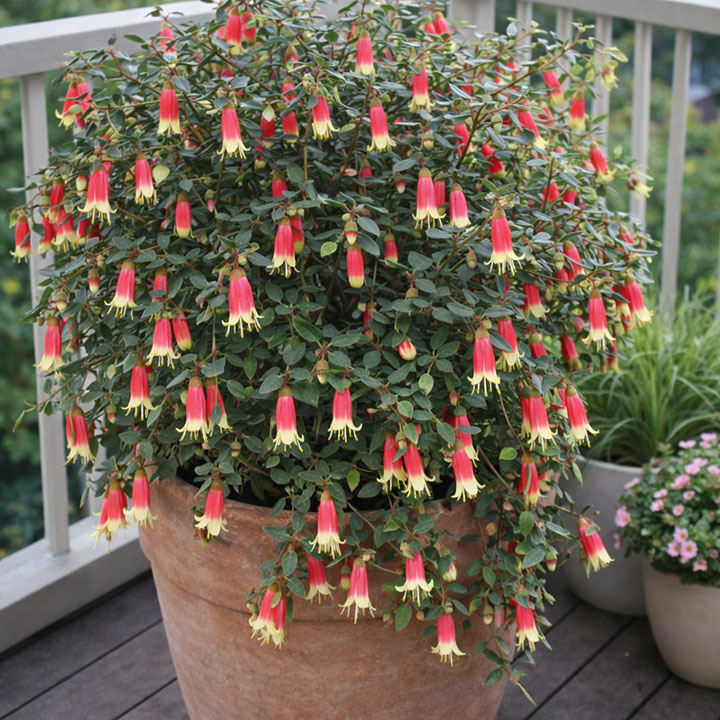
The best low effort plants for balcony gardens are those that cope well in pots, bounce back from occasional neglect, and suit your local climate. In Australia, that matters even more because balconies can face intense sun, drying winds, coastal exposure, or chilly winter conditions depending on the city.

This guide covers the best low maintenance balcony plants for Australia, including flowering plants, greenery, trailing plants, and hardy edible options. It also explains what grows well in cities such as Melbourne, Sydney, Brisbane, Perth, Adelaide, Canberra, Hobart, and Darwin.

What Makes a Plant Low Effort for a Balcony?

A plant can be called low effort when it does not demand constant attention to look good and stay healthy. On a balcony, that usually means a plant that handles container life well, tolerates some heat and wind, and does not collapse if you miss a watering now and then.

Low effort balcony plants usually have some of these qualities:

  • tolerant of sun, wind, or changing weather
  • happy growing in pots or planters
  • do not need frequent pruning
  • less prone to pests and disease
  • cope with occasional missed watering
  • look tidy even without constant grooming
  • perform reliably through the seasons

The easiest balcony gardens usually combine a few tough plants rather than lots of fussy ones. That way, you spend less time fixing problems and more time enjoying the space.

Things to Check Before Choosing Low Effort Balcony Plants

Before buying plants, look closely at your balcony conditions. A “low maintenance” plant in one place can become difficult in another if the light, wind, or heat is wrong.

  • Sunlight: is your balcony full sun, part sun, or mostly shade?
  • Wind: high-rise balconies often dry out quickly
  • Heat: west-facing balconies can get very hot in summer
  • Cold: southern cities may have frosty winters
  • Coastal exposure: salt air can affect delicate plants
  • Pot size: bigger pots usually mean less watering and healthier roots

If you match your plant to your balcony conditions from the start, it instantly becomes easier to care for.

Best Low Effort Flowering Plants for Balcony Gardens

1. Geraniums

Geraniums are among the most reliable low maintenance balcony plants in Australia. They flower for long periods, handle sun well, and do not need much fuss once established. Their neat mounded or trailing growth also suits pots and window boxes beautifully.

Best for: sunny balconies, long-lasting colour, pots and railing planters
Light: full sun to part sun
Good in: Melbourne, Adelaide, Perth, Sydney, Hobart

They are a strong choice if you want cheerful flowers without constant deadheading or replanting.

2. Lavender

Lavender is perfect for balcony gardeners who want a hardy, tidy, fragrant plant that thrives in sun. It suits containers well as long as drainage is good, and once settled in, it usually needs less watering than thirsty annual flowers.

Best for: fragrance, pollinator-friendly balconies, dry sunny spots
Light: full sun
Good in: Melbourne, Adelaide, Perth, Canberra, Hobart

It is especially useful for gardeners who prefer a calm, Mediterranean-style balcony look.

3. Alyssum

Alyssum is easy, forgiving, and ideal for softening the edges of pots and balcony planters. It creates a low cloud of tiny flowers and can handle cool weather well. It is excellent for filling gaps and making a balcony look fuller with very little work.

Best for: edging pots, seasonal colour, soft cottage style
Light: full sun to part sun
Good in: Melbourne, Sydney, Adelaide, Hobart, Canberra

4. Native Violet

Native violet is a fantastic low effort groundcover and trailing plant for partly shaded balconies. It spreads gently, softens containers, and handles cooler or sheltered conditions very well. It is especially useful when you want something pretty without ongoing care.

Best for: shade or part-shade balconies, soft green coverage, hanging edges
Light: part shade to bright indirect light
Good in: Melbourne, Sydney, Brisbane, Hobart

5. Diascia and Similar Compact Bloomers

Compact flowering plants such as diascia can perform beautifully in balcony pots without becoming demanding. They offer a long flowering season and work well in mixed containers with low maintenance foliage plants.

Best for: compact colour, easy mixed pots
Light: sun to part sun
Good in: Melbourne, Sydney, Adelaide, Canberra

Best Low Effort Greenery Plants for Balcony Gardens

6. Lomandra

Lomandra is one of the easiest Australian plants you can grow in pots. It is hardy, architectural, drought-tolerant once established, and works extremely well on balconies where you want shape without fuss. It also tolerates heat, wind, and a wide range of conditions.

Best for: modern balconies, structure, dry or exposed conditions
Light: full sun to part shade
Good in: almost all Australian cities

This is an ideal plant for people who want a designer look with minimal maintenance.

7. Dianella

Dianella is another reliable Australian native that grows well in containers. It has strappy foliage, handles a range of weather conditions, and looks good without constant trimming. Some varieties also produce attractive blue berries.

Best for: foliage, native planting schemes, tough balcony spots
Light: full sun to part shade
Good in: Sydney, Melbourne, Brisbane, Adelaide, Perth

8. Spider Plant

Spider plants are very easy for balconies with part shade or bright filtered light. They cope with missed watering better than many indoor-outdoor plants and quickly create a lush effect in pots or hanging containers.

Best for: sheltered balconies, easy greenery, hanging or upright pots
Light: bright indirect light to part shade
Good in: Melbourne, Sydney, Brisbane, Hobart

They are particularly useful if your balcony does not get strong direct sun for most of the day.

9. Zanzibar Gem or Similar Tough Foliage Plants

On very sheltered, covered balconies, tough foliage plants such as Zanzibar gem can work well with almost no effort. They prefer less direct sun and are ideal for apartment balconies that feel more like outdoor rooms.

Best for: shaded, covered balconies
Light: bright indirect light
Good in: sheltered balconies in most cities

10. Climbing Fig

Climbing fig is a useful option where you want a dense green effect with limited attention. On sheltered balconies, it can be trained up a wall or trellis and provide a lush backdrop. Regular trimming keeps it neat, but it is not demanding day to day.

Best for: green wall effects, shaded balconies, privacy
Light: part shade to bright indirect light
Good in: Sydney, Brisbane, Melbourne in protected spots

Best Low Effort Trailing Plants for Balcony Gardens

11. Ivy Geranium

Ivy geranium combines strong flowering with an easy trailing habit, making it one of the best low effort plants for railings, hanging baskets, and elevated pots. It gives a lush look without being particularly needy.

Best for: hanging planters, railing pots, sunny balconies
Light: full sun to part sun
Good in: Melbourne, Sydney, Adelaide, Perth

12. Dichondra Silver Falls

This trailing plant is grown more for foliage than flowers, but it is excellent for giving a balcony a styled, cascading look with little effort. It works well in baskets and mixed pots, especially in bright conditions.

Best for: trailing silver foliage, contemporary balcony designs
Light: full sun to part shade
Good in: Melbourne, Adelaide, Perth, Sydney

13. Native Groundcovers in Pots

Some Australian native trailing or spreading plants can be very forgiving once established. They are useful when you want a softer, more natural balcony without relying on thirsty annuals.

Best Low Effort Climbers for Balcony Gardens

14. Star Jasmine

Star jasmine is one of the best low maintenance climbers for balconies. It is evergreen, fragrant, and can handle sun, part shade, and regular balcony conditions once established. It also gives privacy and structure without needing constant intervention.

Best for: privacy, fragrance, evergreen screening
Light: full sun to part shade
Good in: Sydney, Melbourne, Adelaide, Perth, Brisbane

This is a top choice if you want one plant to do a lot of work on a balcony.

15. Hardenbergia

Hardenbergia is a hardy Australian native climber with beautiful purple or white flowers. It is generally easier than many ornamental climbers and suits balconies where you want a native look with low ongoing effort.

Best for: native trellis planting, low water use, seasonal flowers
Light: full sun to part shade
Good in: Melbourne, Sydney, Adelaide, Perth, Canberra

16. Passionfruit on a Larger Balcony

Passionfruit is not as low effort as lavender or lomandra, but on a sunny larger balcony with a sturdy planter it can still be a relatively rewarding choice. It gives screening, lush growth, and fruit from one plant. It simply needs more space than smaller balcony options.

Best for: larger balconies, privacy plus fruit
Light: full sun
Good in: Brisbane, Sydney, Perth, Adelaide, mild Melbourne spots

Best Low Effort Edible Plants for Balcony Gardens

17. Rosemary

Rosemary is one of the easiest edible plants for a balcony. It likes sun, copes with drier conditions once established, and can be used in cooking year round. It also looks attractive and shrubby in pots.

Best for: sunny edible balconies, fragrance, drought tolerance
Light: full sun
Good in: Melbourne, Sydney, Adelaide, Perth, Canberra

18. Thyme and Oregano

These herbs are compact, resilient, and excellent for hot balconies. They do not need constant feeding or care and are ideal if you want practical plants that also smell great.

Best for: small edible pots, hot sunny spaces
Light: full sun
Good in: most Australian cities

19. Chilli Plants

Chillies can be surprisingly easy in warm, sunny positions. Once they are growing well, they can produce over a long season and fit neatly into balcony pots.

Best for: warm balconies, compact edible gardening
Light: full sun
Good in: Sydney, Brisbane, Perth, Adelaide, summer in Melbourne

20. Spring Onion and Loose Leaf Greens

If you want low effort edible plants without waiting months for big crops, spring onions and cut-and-come-again leafy greens can be great choices. They are simple, space efficient, and easy to harvest.

Best Low Effort Plants by Australian City

Melbourne

Melbourne balconies often face cool changes, wind, and mixed seasonal conditions. Strong low effort choices include geraniums, lavender, lomandra, dianella, star jasmine, rosemary, alyssum, and ivy geranium. Choose sturdy plants that can cope with weather swings rather than delicate tropicals.

Sydney

Sydney’s mild climate gives you many easy options. Geraniums, star jasmine, hardenbergia, dianella, spider plant, rosemary, climbing fig in sheltered spots, and chillies all perform well. Coastal balconies should favour tougher plants that can handle wind and salt exposure.

Brisbane

Brisbane gardeners can grow many easy plants if they watch for summer heat and humidity. Good options include spider plant in part shade, hardenbergia, star jasmine, chillies, herbs, native violet, and tough native foliage plants. Good airflow is helpful in humid weather.

Perth

Perth balconies often deal with strong sun and dry heat, so drought-tolerant choices are especially useful. Lavender, rosemary, thyme, oregano, lomandra, geraniums, star jasmine, and dianella are all practical options. Larger pots help reduce watering frequency.

Adelaide

Adelaide suits a wide mix of hardy Mediterranean-style and native plants. Lavender, rosemary, geraniums, dianella, lomandra, thyme, oregano, and hardenbergia are all good low effort choices. Use afternoon shade for more delicate plants during peak summer heat.

Canberra

Canberra balconies can be cold in winter, so choose plants that tolerate cooler conditions. Lavender, rosemary, alyssum, geraniums, lomandra, hardenbergia, and dianella are all useful options. Tender tropicals may struggle unless the balcony is protected.

Hobart

Hobart gardeners often do best with cool-climate, wind-tolerant choices. Geraniums, lavender, alyssum, rosemary, ivy geranium, and sheltered spider plants can all work well. Focus on hardy performers rather than heat-loving plants that need long hot summers.

Darwin

Darwin’s tropical climate means heat-tolerant and humidity-tolerant plants are essential. Hardy leafy plants, some native species, and warm-climate herbs may be easier than cool-climate Mediterranean plants. Use shade and airflow wisely to keep the garden manageable.

How to Make a Balcony Garden Even Lower Effort

The right setup can make easy plants even easier. A few practical changes can dramatically reduce the amount of time you spend maintaining your balcony.

  • Use larger pots, because they hold moisture longer
  • Choose premium potting mix for healthier roots
  • Add mulch to reduce evaporation
  • Group plants with similar watering needs together
  • Use self-watering pots for thirstier plants
  • Avoid overcrowding, which increases disease and maintenance
  • Pick a smaller number of tough plants instead of many needy ones
  • Install drip watering if you want the easiest possible routine

Common Low Maintenance Balcony Mistakes to Avoid

  • choosing plants because they look good in the nursery rather than because they suit your balcony
  • using tiny pots that dry out too fast
  • mixing shade lovers and sun lovers in the same planter
  • placing delicate plants on windy exposed railings
  • assuming all “drought tolerant” plants never need watering in pots
  • filling the balcony with too many different species
  • ignoring drainage

Best Low Effort Balcony Plant Combinations

Sunny Balcony Combination

Try lavender, rosemary, geraniums, and dichondra silver falls for a simple, attractive balcony that handles sun well.

Native Balcony Combination

Try lomandra, dianella, hardenbergia, and native violet for a low effort Australian planting scheme.

Part Shade Balcony Combination

Try spider plant, native violet, climbing fig, and ivy geranium in brighter spots.

Easy Edible Balcony Combination

Try rosemary, thyme, oregano, spring onion, and a chilli plant for a practical and manageable edible garden.
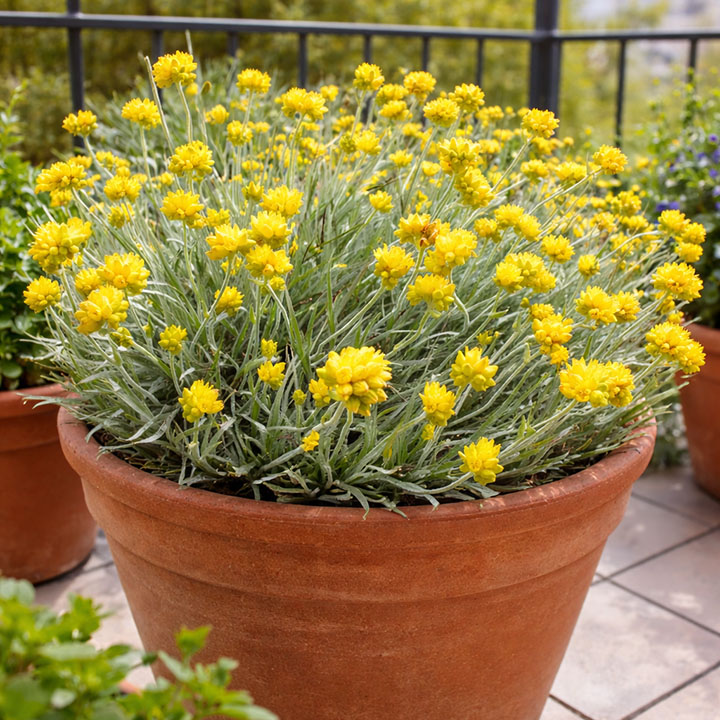
Final Thoughts

The best low effort plants for balcony gardens in Australia are the ones that match your climate, cope with containers, and do not need constant attention to stay looking good. For all-round reliability, plants such as geraniums, lavender, lomandra, dianella, spider plant, star jasmine, rosemary, and hardenbergia are hard to beat.

If you are just starting out, begin with a small group of proven, hardy plants and learn how your balcony behaves through the seasons. That approach almost always leads to a better-looking and lower maintenance space than trying to grow everything at once.

A beautiful balcony garden does not have to be high effort. In many cases, the easiest plants are also the most effective.

A trellis can turn even a small apartment balcony into a lush, productive, and private outdoor space. In Australian cities, where balconies often deal with strong sun, drying winds, coastal exposure, or cool winter conditions, the right climbing plants can make all the difference. The best plants for a trellis balcony garden are those that suit your climate, cope with pots, and match how much light your balcony receives.

Whether you want flowers, edible plants, greenery for privacy, or a mix of all three, this guide covers the best trellis plants for balconies across Australia. It also explains how to choose the right plant for cities like Melbourne, Sydney, Brisbane, Perth, Adelaide, Hobart, Canberra, and Darwin.

Why Use a Trellis on a Balcony?

A trellis helps you garden upwards instead of outwards. That is ideal for balconies where floor space is limited. Climbing and scrambling plants can soften hard walls, add privacy from neighbours, reduce visual clutter, and make a balcony feel far more established.

A trellis balcony garden can also help you:

  • create a green screen for privacy
  • grow more plants in a small footprint
  • cool a hot balcony with leafy coverage
  • grow edible crops like beans, peas, cucumbers, and passionfruit
  • add height, structure, and visual interest
  • support flowering climbers for colour and fragrance

What Makes a Plant Good for a Trellis Balcony Garden?

Not every climber is suitable for a balcony. Some grow too aggressively, become too heavy for containers, or need deep root space. The best trellis plants for balconies usually have a few important qualities: they grow well in pots, respond well to pruning, suit your local weather, and can be trained easily onto a lightweight support.

Before choosing plants, think about these balcony conditions:

  • Sun exposure: full sun, part sun, or shade
  • Wind: exposed high-rise balconies dry out faster
  • Heat: west-facing balconies can get extremely hot
  • Cold: southern cities may have cool winters and frost
  • Pot size: larger pots support healthier climbers
  • Weight limits: heavy pots and dense climbers add load to a balcony

Best Flowering Plants for a Trellis Balcony Garden

1. Star Jasmine

Star jasmine is one of the most reliable balcony trellis plants in Australia. It has glossy leaves, fragrant white flowers, and a neat twining habit that suits pots well. Once established, it handles heat and wind better than many delicate climbers and can also provide year-round privacy.

Best for: privacy, fragrance, evergreen coverage
Light: full sun to part shade
Good in: Sydney, Melbourne, Adelaide, Perth, Brisbane

It is a great choice for people who want a polished, low-maintenance balcony that still feels lush.

2. Clematis

Clematis is ideal if you want a balcony trellis covered in flowers rather than dense foliage. Many varieties grow well in containers as long as the roots are kept cool and the vine gets sun. Choose compact forms for smaller balconies.

Best for: seasonal flowers, cottage style balconies
Light: sun to part sun
Good in: Melbourne, Hobart, Canberra, Adelaide

In hotter cities, clematis often performs best with morning sun and afternoon protection.

3. Mandevilla

Mandevilla is an excellent option for warm Australian balconies. It produces bold trumpet-shaped flowers in shades of pink, red, or white and thrives in pots with a sunny position. It brings a tropical look without taking over the entire space.

Best for: bright flowers, warm climates, decorative screens
Light: full sun
Good in: Brisbane, Sydney, Perth, Darwin

It is better suited to frost-free or mild areas, so gardeners in cooler cities may need to protect it in winter.

4. Sweet Pea

Sweet peas are perfect for balcony gardeners who want fast seasonal colour and fragrance. They climb readily on trellis netting and suit cooler months in much of Australia. Because they are annuals, they are easy to refresh each year.

Best for: spring flowers, fragrance, quick seasonal displays
Light: full sun to part sun
Good in: Melbourne, Hobart, Canberra, Adelaide, cool-season Sydney

They are especially useful when you want a softer, cottage garden feel on a small balcony.

5. Black-eyed Susan Vine

This cheerful climber has bright orange, yellow, or cream flowers and grows quickly in warm weather. It is lighter and easier to manage than many large vines, making it suitable for compact balconies.

Best for: light trellises, quick summer colour
Light: full sun to part shade
Good in: Sydney, Brisbane, Perth, Adelaide

Best Edible Plants for a Trellis Balcony Garden

6. Climbing Beans

Climbing beans are one of the best edible trellis plants for balconies because they are productive, fast-growing, and easy to train. They give you vertical greenery as well as harvests. Snake beans suit warmer climates, while runner and climbing French beans are great in cooler areas.

Best for: edible gardens, quick coverage, summer growth
Light: full sun
Good in: most Australian cities, with variety choice adjusted by climate

They are ideal for gardeners who want beauty and function from the same trellis.

7. Snow Peas and Climbing Peas

Peas are excellent for cool-season balcony gardening. They climb neatly, do not become too heavy, and are easy to grow from seed in pots. Snow peas are particularly useful because they crop over a long period and look attractive on a slim trellis.

Best for: cooler months, compact edible trellises
Light: full sun to part sun
Good in: Melbourne, Canberra, Hobart, Adelaide, winter in Sydney

8. Cucumbers

Compact cucumber varieties can do very well on a balcony trellis. Training them vertically improves airflow, keeps fruit cleaner, and saves space. Choose a compact or container-friendly variety rather than a sprawling garden type.

Best for: summer harvests, productive trellises
Light: full sun
Good in: Sydney, Brisbane, Perth, Adelaide, Melbourne in summer

Cucumbers need regular watering, especially on hot and windy balconies.

9. Passionfruit

Passionfruit can work beautifully on larger balconies if you have a sturdy trellis, a large pot, and plenty of sun. It provides lush leaves, screening, and edible fruit, but it does need more root space and support than small annual climbers.

Best for: privacy plus fruit, larger balconies
Light: full sun
Good in: Brisbane, Sydney, Perth, Adelaide, mild parts of Melbourne

This is a better choice for generous balconies than very small apartment spaces.

10. Cherry Tomatoes on a Trellis

Indeterminate cherry tomatoes can be tied and trained vertically against a trellis or narrow support system. While not true climbers, they make excellent trellis-friendly balcony crops and are highly productive in sunny positions.

Best for: edible balcony gardens, summer crops
Light: full sun
Good in: all major Australian cities in the right season

Best Greenery and Privacy Plants for a Trellis Balcony Garden

11. Hardenbergia

Hardenbergia, also known as native sarsaparilla or happy wanderer, is one of the best Australian native climbers for a balcony trellis. It has purple or white pea flowers and handles Australian conditions well once established. It is especially useful if you want a native planting style.

Best for: native balconies, low water use, light privacy
Light: full sun to part shade
Good in: Melbourne, Sydney, Adelaide, Perth, Canberra

It is a strong option for gardeners who want beauty with a more local plant palette.

12. Climbing Fig

Climbing fig is useful where you want a dense green wall effect. On balconies, it is best kept in a pot and pruned regularly so it stays controlled. It works particularly well on shaded or part-shaded balconies where flowering climbers may struggle.

Best for: leafy coverage, green wall look, shade tolerance
Light: part shade to bright indirect light
Good in: Sydney, Brisbane, Melbourne in sheltered spots

Use it carefully and keep it trimmed, as it can become vigorous over time.

13. Ivy Geranium on a Support

Ivy geranium is more of a trailing plant than a true climber, but it can be loosely trained through balcony trellis panels for colour and soft coverage. It is particularly useful on sunny balconies where you want a more relaxed look rather than a tightly climbing vine.

Best for: colour, trailing-trellis combinations, sunny balconies
Light: full sun
Good in: Melbourne, Adelaide, Perth, Sydney

Best Trellis Plants by Australian City

Melbourne

Melbourne balconies often deal with changeable weather, cool winters, and wind exposure. Good choices include star jasmine, clematis, sweet peas, climbing peas, hardenbergia, and cherry tomatoes in summer. Choose tough plants and secure trellises well against wind.

Sydney

Sydney’s mild climate gives balcony gardeners many options. Star jasmine, mandevilla, climbing beans, cucumbers, passionfruit, black-eyed Susan vine, and hardenbergia can all perform well. On coastal balconies, look for plants that can handle salt-laden air and drying winds.

Brisbane

Brisbane’s warmth and humidity suit tropical and fast-growing climbers. Mandevilla, passionfruit, snake beans, cucumbers, and black-eyed Susan vine are strong choices. Good airflow is important to reduce fungal issues in humid weather.

Perth

Perth balconies often face intense sun, heat, and dry conditions. Star jasmine, hardenbergia, mandevilla, climbing beans, and passionfruit can work well with consistent watering. Use larger pots and mulch the soil surface to reduce drying out.

Adelaide

Adelaide gardeners need plants that can cope with hot summers and cooler winters. Star jasmine, hardenbergia, sweet peas in the cool season, climbing beans, cucumbers, and clematis in the right position are all suitable. Afternoon shade can help protect delicate climbers in summer.

Canberra

Canberra’s cold winters and frosty conditions make cool-climate options more reliable. Sweet peas, climbing peas, clematis, hardenbergia, and seasonal edibles are strong performers. Tender tropical climbers may struggle unless the balcony is very protected.

Hobart

Hobart balconies generally favour cool-climate and cold-tolerant plants. Sweet peas, clematis, peas, and some jasmines can do well with enough sun. Choose sheltered positions and avoid plants that demand long, hot summers.

Darwin

Darwin’s tropical climate suits heat-loving climbers such as mandevilla, passionfruit, snake beans, and other vigorous edibles. Balconies here benefit from strong supports, frequent watering, and attention to wet-season growth surges.

How to Set Up a Trellis Balcony Garden

Even the best plant will struggle if the setup is poor. A balcony trellis garden should be practical, stable, and easy to maintain. Lightweight materials are helpful, but the support still needs to be secure enough for wind and plant growth.

  • Use pots large enough for root development, especially for jasmine, passionfruit, and other long-term climbers.
  • Choose a trellis material that suits your balcony style, such as metal mesh, timber lattice, tension wires, or expandable panels.
  • Anchor supports safely and avoid unstable freestanding systems on windy balconies.
  • Use good-quality potting mix rather than garden soil.
  • Add mulch to reduce moisture loss in summer.
  • Water more often in hot, windy, or west-facing positions.
  • Feed flowering and fruiting plants regularly during active growth.
  • Prune and train growth often so plants stay neat and balanced.

Best Balcony Trellis Ideas by Goal

For Privacy

Choose star jasmine, hardenbergia, climbing fig, or passionfruit for denser coverage. These are useful when you want to block neighbouring views or soften a bare railing or wall.

For Flowers

Choose clematis, mandevilla, sweet peas, or black-eyed Susan vine. These plants are ideal when your main goal is colour and seasonal impact.

For Edibles

Choose climbing beans, peas, cucumbers, cherry tomatoes, or passionfruit. These plants make the most of vertical growing space while producing harvests.

For Australian Native Style

Choose hardenbergia as a starting point and combine it with native shrubs or grasses in nearby pots for a cohesive look.

Common Mistakes to Avoid

  • choosing climbers that become too large or heavy for the balcony
  • using pots that are too small
  • placing shade-loving plants on a hot west-facing balcony
  • underestimating wind exposure on high-rise balconies
  • letting climbers dry out repeatedly in summer
  • failing to prune and train growth early
  • using weak or unstable trellis structures

Final Thoughts

The best plants for a trellis balcony garden in Australia depend on your climate, sunlight, balcony size, and what you want the space to do for you. If you want evergreen privacy, star jasmine and hardenbergia are standout choices. If you want flowers, clematis, mandevilla, and sweet peas are excellent. If you want edible results, climbing beans, peas, cucumbers, passionfruit, and cherry tomatoes make great use of vertical space.

A well-planned trellis can make a small balcony feel greener, more private, and far more productive. Start with one or two reliable plants, match them to your local Australian conditions, and build upwards from there.

Tip: On exposed Australian balconies, it is usually better to choose a few tough, proven climbers and grow them well than to overcrowd the space with too many delicate plants.

Growing plants in pots is one of the easiest ways to create a beautiful balcony, courtyard, patio, or small outdoor garden. Whether you live in a Melbourne apartment, a sunny Brisbane unit, a windy Sydney balcony, or a dry Perth courtyard, container gardening gives you flexibility that in-ground gardening often can’t match. You can move plants to follow the sun, protect them from harsh weather, improve drainage, and grow a wide range of flowers, herbs, shrubs, vegetables, and even small fruit trees in a limited space.
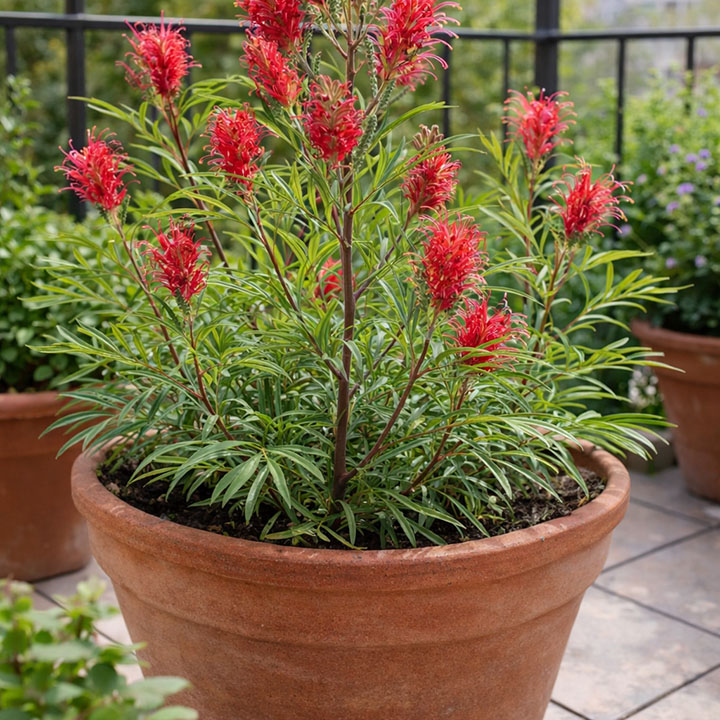
In Australia, pot gardening is especially useful because our climate varies so much from city to city. The best potted plants for Hobart are not always the same as the best choices for Darwin or Adelaide. Heat, humidity, frost, wind, and sun exposure all affect how well a plant performs in a container. The good news is that many plants actually thrive in pots when they have the right soil, container size, watering routine, and position.

This guide covers the best plants that grow well in pots in Australia, including flowering plants, edible plants, hardy foliage plants, and compact shrubs. It also explains which plants suit different Australian cities and weather conditions, along with practical tips for choosing the right pots and keeping container plants healthy all year round.

Why Some Plants Do Better in Pots Than Others

Not every plant is suited to container life. The best potted plants usually have one or more of these qualities: compact roots, manageable growth, tolerance for regular watering and feeding, and the ability to thrive in controlled soil conditions. Plants that naturally stay smaller, respond well to pruning, or enjoy sharp drainage are often excellent container choices.

  • Compact growth: Smaller plants are easier to manage and repot.
  • Good container tolerance: Some species naturally adapt well to limited root space.
  • Strong performance in premium potting mix: Pots give you control over soil quality.
  • Suitability for sun or shade: Good potted plants match your space and exposure.
  • Low to moderate maintenance: Reliable pot plants cope better with drying, feeding, and seasonal changes.

Benefits of Growing Plants in Pots

Pots are ideal for renters, apartment dwellers, and anyone gardening in small spaces. They also work well for people who want more control over design and plant placement. You can use pots to soften hard surfaces, create privacy, add height, grow herbs close to the kitchen, and bring colour to balconies and entrances.

  • Great for balconies, patios, courtyards, and small gardens
  • Easier to manage soil, drainage, and plant position
  • Perfect for creating layered garden designs in tight spaces
  • Helpful for protecting sensitive plants from extreme weather
  • Allows you to grow edible plants even without a backyard

Best Plants That Grow Well in Pots

1. Herbs

Herbs are some of the best plants for pots because they stay compact, are useful in the kitchen, and perform very well in containers. Basil, parsley, thyme, mint, oregano, chives, rosemary, and coriander are all popular options. Most herbs like good drainage and plenty of sun, although some appreciate afternoon protection in hotter Australian cities.

  • Best for: Balconies, sunny windows, kitchen-adjacent outdoor spaces
  • Sun: Full sun to part sun depending on the herb
  • Top tip: Grow mint in its own pot because it spreads aggressively

2. Lavender

Lavender is excellent in pots, especially in sunny Australian climates. It likes sharp drainage, dryish conditions once established, and good airflow. The silvery foliage and purple flowers make it both ornamental and practical, attracting pollinators while tolerating pot life well.

  • Best for: Sunny balconies, courtyards, Mediterranean-style pots
  • Sun: Full sun
  • Top tip: Avoid overwatering and use free-draining potting mix

3. Geraniums and Pelargoniums

Geraniums and pelargoniums are classic pot plants in Australia because they flower for long periods, tolerate heat well, and add strong colour to balconies and patios. They handle bright sun better than many flowering plants and are ideal for people who want reliable blooms without constant fuss.

  • Best for: Colourful balcony pots and railing planters
  • Sun: Full sun to part sun
  • Top tip: Remove spent flowers regularly to encourage more blooms

4. Succulents

Succulents are perfect for pots because they naturally suit confined spaces and don’t need frequent watering. Echeveria, jade plant, sedum, aloe, and many trailing succulents thrive in containers, especially on sunny balconies. They are ideal for beginners and for gardeners in drier parts of Australia.

  • Best for: Hot, sunny, low-maintenance spaces
  • Sun: Bright light to full sun depending on variety
  • Top tip: Use cactus or succulent mix and never let pots stay waterlogged

5. Peace Lily

For shaded balconies or protected outdoor corners, peace lilies are excellent potted plants. They have glossy foliage, elegant white flowers, and a lush tropical look that suits modern container gardens. They prefer filtered light or shade rather than direct sun.

  • Best for: Shady balconies and protected patios
  • Sun: Shade to bright indirect light
  • Top tip: Keep the soil lightly moist and protect from harsh afternoon sun

6. Citrus Trees

Dwarf citrus trees such as lemon, lime, kumquat, and mandarin are some of the best larger plants for pots in Australia. They look attractive year-round, have fragrant flowers, and can be surprisingly productive in containers. They do need sun, regular feeding, and a reasonably large pot, but they reward the effort.

  • Best for: Sunny balconies, patios, edible container gardens
  • Sun: Full sun
  • Top tip: Use a large pot with excellent drainage and feed with citrus fertiliser

7. Snake Plant

Snake plant is one of the toughest plants for pots, especially in sheltered areas. It tolerates neglect, low water, and lower light levels better than most other choices. It works well on covered balconies, apartment entrances, and modern outdoor spaces with a minimalist style.

  • Best for: Low-maintenance container styling
  • Sun: Bright indirect light to part shade
  • Top tip: Let the potting mix dry between waterings

8. Camellias

Camellias grow very well in pots and are especially valuable in cooler or milder parts of Australia. Their glossy foliage and winter-to-spring flowers make them ideal feature plants for patios and balconies. They prefer slightly acidic potting mix and protection from intense afternoon heat.

  • Best for: Cool to mild climates, elegant feature pots
  • Sun: Morning sun to part shade
  • Top tip: Keep roots cool and don’t allow the pot to dry out completely

9. Blueberries

Blueberries are excellent edible plants for pots if you can provide acidic soil. They stay compact, look attractive, and produce fruit in suitable climates. They are particularly good for Australian gardeners in cooler or mild cities, and many varieties are well suited to container growing.

  • Best for: Edible container gardens in mild and cooler climates
  • Sun: Full sun to part sun
  • Top tip: Use an acidic mix designed for blueberries or azaleas

10. Ferns

Ferns are ideal for shaded pots and hanging baskets. Boston fern and maidenhair fern are popular choices for creating a lush, layered look in balconies and courtyards. They are especially useful in Australian cities where a balcony gets filtered light rather than all-day direct sun.

  • Best for: Shady, humid, or sheltered spots
  • Sun: Shade to bright indirect light
  • Top tip: Keep moisture consistent and protect from drying winds

11. Rosemary

Rosemary deserves its own mention because it is one of the toughest and most useful potted plants in Australia. It handles sun, wind, and dry conditions better than many herbs and can be clipped into a tidy shape. It is ideal for balconies where other softer herbs may struggle.

  • Best for: Sunny, exposed pots and edible gardens
  • Sun: Full sun
  • Top tip: Don’t overwater and make sure drainage is excellent

12. Petunias and Other Annual Flowers

Petunias, calibrachoa, pansies, violas, marigolds, and alyssum all grow well in pots and window boxes. They are ideal for adding seasonal colour and are a great option if you like changing your display through the year. In cooler months, pansies and violas are popular, while petunias and marigolds are strong warm-season choices.

  • Best for: Seasonal colour, hanging baskets, railing planters
  • Sun: Usually full sun to part sun
  • Top tip: Feed regularly for stronger flowering

13. Olive Trees

Dwarf or compact olive trees are very good in large pots, especially in warm, dry climates. They bring a Mediterranean look to balconies and courtyards and can handle bright sun well. They prefer excellent drainage and don’t like to sit in soggy potting mix.

  • Best for: Sunny patios, dry climates, architectural pots
  • Sun: Full sun
  • Top tip: Use a large, heavy pot for stability in windy areas

14. Native Grasses and Australian Natives

Many Australian native plants do well in pots, especially compact grevilleas, lomandra, dwarf bottlebrush, westringia, and native grasses. They are often hardy, attract birds and pollinators, and cope well with Australian weather once established. Natives are a smart choice for gardeners who want resilient plants with lower water needs.

  • Best for: Tough, climate-appropriate pot gardens
  • Sun: Usually full sun to part sun
  • Top tip: Choose compact varieties that are specifically suited to containers

15. Chillies and Compact Vegetables

Chillies, cherry tomatoes, lettuce, spinach, dwarf beans, and spring onions can all grow well in pots. Some of the best potted edible plants are actually vegetables that thrive in warm Australian weather and don’t need much room. They are especially useful for sunny balconies where you want both beauty and harvest.

  • Best for: Productive edible balconies and small-space gardeners
  • Sun: Full sun for most fruiting vegetables, part sun for some leafy greens
  • Top tip: Use fresh premium potting mix each season for the best results

Best Potted Plants by Australian City and Climate

Sydney

Sydney’s mild climate makes it one of the easiest places in Australia for growing plants in pots. Citrus, herbs, geraniums, lavender, blueberries, succulents, camellias, and native shrubs can all do well depending on your balcony’s exposure. Coastal balconies may need wind-tolerant plants, while west-facing balconies may need afternoon heat protection.

Melbourne

Melbourne’s changeable weather means potted plants need to handle cool changes, wind, and seasonal variation. Camellias, herbs, blueberries, geraniums, violas, compact citrus, ferns, and tough natives are all strong options. A sheltered balcony is especially helpful for softer flowering plants.

Brisbane

Brisbane’s warm, humid conditions suit tropical-looking foliage plants, citrus, chillies, herbs, succulents, peace lilies, and hanging plants. The biggest challenge is strong summer sun and moisture loss, so container plants often benefit from mulch, larger pots, and consistent watering.

Perth

Perth’s hot, dry summers suit lavender, rosemary, succulents, olives, geraniums, citrus, and many Australian natives. The main issues are drying winds and heat stress, so plants in smaller pots may dry quickly. Glazed pots or self-watering containers can help.

Adelaide

Adelaide gardeners can grow a wide range of potted plants, including herbs, olives, lavender, geraniums, citrus, rosemary, and seasonal flowers. Like Perth, summer heat can be harsh, so choose plants that cope well with sun and dry conditions or position softer plants where they get some afternoon shade.

Canberra

Canberra’s colder winters make frost tolerance more important. Camellias, blueberries, herbs, violas, pansies, ferns, and some natives are good options. Citrus can still be grown in pots, but they usually need a warm, protected spot and sometimes winter protection.

Hobart

Hobart’s cooler climate suits camellias, blueberries, herbs, ferns, pansies, violas, and many cool-climate shrubs. Sunny sheltered balconies can still grow some edibles and even citrus, but warmth and light become more important than in northern cities.

Darwin and Tropical North

In tropical parts of Australia, container gardens often do best with humidity-loving foliage plants, tropical edibles, peace lilies, hanging plants, gingers, and some herbs. Heat, intense rain, and humidity make good airflow and drainage especially important.

How to Choose the Right Pot Plant for Your Space

Before you buy plants, look closely at your space. The same balcony can have one hot full-sun corner, one shady protected wall, and one windy exposed section. Match your plant choice to the actual conditions rather than just what looks good in a nursery display.

  • For full sun: Lavender, rosemary, citrus, olives, succulents, geraniums
  • For part sun: Herbs, blueberries, annual flowers, camellias
  • For shade: Peace lilies, ferns, snake plants, leafy tropicals
  • For windy balconies: Rosemary, succulents, natives, sturdy shrubs
  • For edible gardening: Herbs, citrus, blueberries, chillies, leafy greens

Best Pot Types for Healthy Plants

The pot matters almost as much as the plant. Small pots dry out quickly, while oversized pots can stay wet for too long if drainage is poor. Terracotta is attractive and breathable but dries faster. Plastic and glazed pots hold moisture longer, which can be useful in hot climates.

  • Terracotta: Great for herbs, lavender, rosemary, and succulents
  • Plastic or resin: Lighter and better at holding moisture
  • Glazed pots: Good for decorative displays and warmer climates
  • Large tubs: Best for citrus, olives, shrubs, and feature plants
  • Hanging baskets: Ideal for trailing flowers, herbs, and ferns

Whatever style you choose, make sure the pot has proper drainage holes. Most pot plant failures come from either drying out too quickly or staying too wet for too long.

Potting Mix, Watering, and Feeding Tips

Good potting mix is essential. Use a premium-quality mix suited to the type of plant you’re growing. Container plants depend entirely on the soil and nutrients you provide, so they need more attention than plants growing in the ground.

  • Use premium potting mix rather than garden soil
  • Choose specialised mixes for orchids, succulents, or acid-loving plants when needed
  • Water deeply rather than lightly splashing the surface
  • Feed regularly during active growth
  • Check pots more often during heatwaves, especially on balconies
  • Add mulch to larger pots to reduce evaporation

Common Mistakes When Growing Plants in Pots

  • Using pots that are too small
  • Choosing plants that don’t suit the light conditions
  • Overwatering plants that prefer dry feet
  • Underwatering thirsty plants in hot weather
  • Using poor-quality potting mix
  • Ignoring wind exposure on balconies
  • Forgetting to feed long-term container plants
  • Letting roots become badly pot-bound without repotting

Easy Pot Plant Combinations for Australian Homes

Sunny Mediterranean Look

Combine lavender, rosemary, geraniums, and a dwarf olive in terracotta pots for a classic sun-loving display.

Edible Balcony Garden

Mix herbs, strawberries, chillies, cherry tomatoes, and a dwarf lemon tree for a practical and productive setup.

Shady Green Retreat

Use ferns, peace lilies, snake plants, and trailing greenery for a calm, lush balcony or patio corner.

Native Australian Pot Garden

Choose compact grevillea, lomandra, westringia, and native grasses for a hardy, low-water container display.

Final Thoughts

The best plants that grow well in pots in Australia are the ones that match your local climate, the size of your space, and the light conditions you actually have. For many gardeners, herbs, lavender, geraniums, succulents, ferns, camellias, citrus, natives, and compact edibles are some of the strongest choices because they combine beauty, reliability, and good container performance.

Whether you’re gardening on a tiny apartment balcony in Melbourne, a sunny patio in Perth, a humid Brisbane courtyard, or a sheltered Sydney terrace, container gardening makes it possible to create a thriving outdoor space without needing a big backyard. Start with a few plants that suit your conditions, use quality potting mix, water consistently, and build your potted garden over time. The results can be just as beautiful and rewarding as a traditional garden, and often even more flexible.

Growing fruit on a balcony is one of the most rewarding ways to make a small outdoor space productive. Even a compact apartment balcony can produce fresh strawberries, lemons, limes, figs, blueberries, passionfruit, and more when you choose the right plants for your climate, sun levels, and pot size. In Australia, balcony fruit growing works especially well because many popular fruiting plants thrive in warm conditions, bright light, and container life.

The key is choosing fruit plants that suit your city and your balcony conditions. A full-sun balcony in Perth or Brisbane can handle very different plants from a cooler, windier balcony in Melbourne, Hobart, or Canberra. Some fruit plants love heat and long summers, while others prefer mild conditions and protection from intense afternoon sun.

In this guide, we’ll cover the best fruit plants for balconies in Australia, including top picks for major cities, advice on pot sizes, sunlight needs, watering, and practical tips for getting a better harvest from a small space.

Why Fruit Plants Grow Well on Balconies

Many fruit plants do surprisingly well in containers. In fact, pots can make fruit growing easier because you have more control over soil quality, drainage, feeding, and plant position. If one part of your balcony gets too much wind or harsh summer sun, you can often move smaller pots to a better spot.

Balcony fruit growing also suits modern Australian homes where backyard space is limited. Instead of needing a large garden, you can grow edible plants in pots, railing planters, troughs, hanging baskets, and compact vertical supports. With the right setup, even a small balcony can become a mini edible garden.
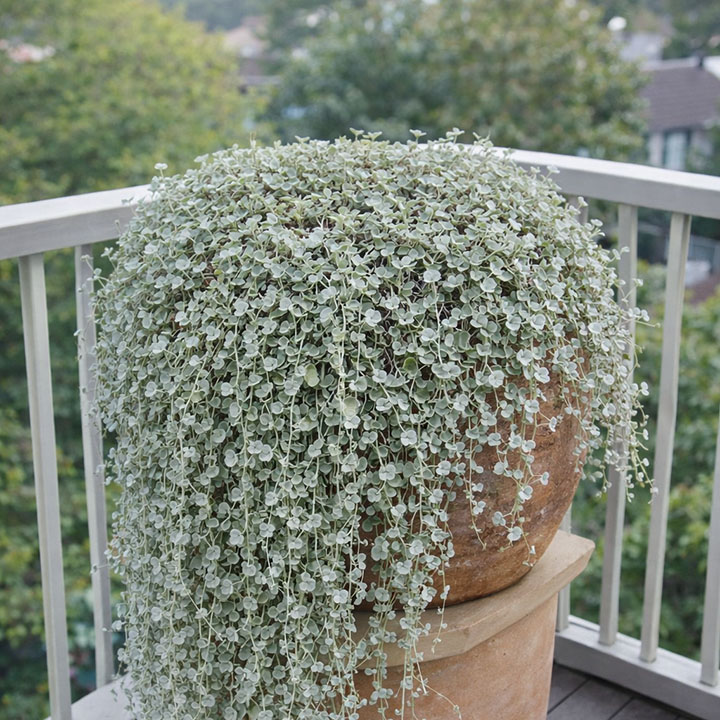
  • Fresh fruit from a small space
  • Beautiful plants that also look ornamental
  • Better use of sunny balcony corners
  • Easy harvesting close to the kitchen
  • A productive alternative to purely decorative pots

What Makes a Fruit Plant Good for a Balcony?

The best balcony fruit plants share a few important traits. They either stay naturally compact, respond well to pruning, or grow happily in containers. They should also suit your local climate and the amount of sun your balcony receives.

  • Compact growth: Dwarf or naturally small varieties are easiest to manage.
  • Container suitability: Some fruit plants adapt well to pots, while others struggle long term.
  • Reliable cropping: The best choices produce well without needing lots of space.
  • Climate match: Heat-loving fruit and cool-climate fruit need different conditions.
  • Sun tolerance: Most fruiting plants need at least 5 to 6 hours of sun, with many doing best in full sun.

Best Fruit Plants for Balcony Gardens in Australia

1. Strawberries

Strawberries are one of the best fruits for balcony gardens because they are compact, fast-growing, and productive in pots, hanging baskets, and vertical planters. They suit beginners and don’t need deep containers, making them ideal for small spaces.

In Australia, strawberries perform well in Melbourne, Sydney, Adelaide, Canberra, Hobart, and parts of Brisbane and Perth, especially when they get morning sun and consistent watering. In hotter cities, they benefit from protection during extreme summer heat.

  • Best for: Small balconies, hanging baskets, railing planters
  • Sun: Full sun to part sun
  • Pot size: Wide shallow pots or hanging baskets
  • Top tip: Replace tired plants regularly for better yields

2. Dwarf Lemon Trees

A dwarf lemon tree is one of the most popular edible plants for Australian balconies. It looks attractive year-round, has glossy foliage, fragrant flowers, and can produce excellent fruit in a large pot. Varieties like dwarf Meyer lemon are especially well suited to containers.

Lemons thrive on sunny balconies in Sydney, Brisbane, Perth, Adelaide, and many parts of Melbourne. In cooler cities like Hobart and Canberra, they often need the warmest, most sheltered balcony position available. Protection from strong frost is important.

  • Best for: Sunny balconies with room for a feature pot
  • Sun: Full sun
  • Pot size: Large pot, at least 40 to 50cm wide to start
  • Top tip: Feed regularly during the growing season with a citrus fertiliser

3. Dwarf Lime Trees

Dwarf limes are another excellent balcony choice, especially for warm Australian cities. They stay compact with pruning, handle containers well, and produce fruit that is useful for cooking and drinks. Tahitian lime is a popular option for home growers.

Limes tend to prefer warmer conditions than lemons, making them particularly good for Brisbane, Sydney, Perth, and other mild to warm coastal areas. They may struggle more in colder inland winters unless protected.

  • Best for: Warm, sunny balconies
  • Sun: Full sun
  • Pot size: Large container
  • Top tip: Shelter from cold winds and keep soil evenly moist

4. Blueberries

Blueberries are ideal for balconies if you can provide acidic potting mix. They stay manageable in pots, produce attractive spring flowers and autumn colour, and can crop well in the right conditions. They are especially popular with gardeners who want something a little different from citrus.

Blueberries generally perform better in cooler or milder climates, so they are a strong choice for Melbourne, Hobart, Canberra, and cooler parts of Sydney and Adelaide. In hotter climates, they need careful watering and some protection from extreme heat.

  • Best for: Cool to mild climates
  • Sun: Full sun to part sun
  • Pot size: Medium to large pot
  • Top tip: Use an acidic potting mix made for blueberries or azaleas

5. Passionfruit

Passionfruit is one of the best fruits for a larger balcony if you have a trellis, railing, or vertical support. It grows vigorously, creates leafy privacy, and can reward you with abundant fruit in warm conditions. On the right balcony, it doubles as both a screen and an edible crop.

Passionfruit does best in Brisbane, Sydney, Perth, and other warm to mild climates. In Melbourne and Adelaide it can still grow well in a protected sunny position. In colder regions, it may be less reliable unless your balcony is warm and sheltered.

  • Best for: Vertical balcony gardens and privacy screens
  • Sun: Full sun
  • Pot size: Large pot or trough
  • Top tip: Give it strong support and regular feeding

6. Figs

Figs are surprisingly good in pots and are often easier on balconies than people expect. They like warmth, sunshine, and good drainage. A compact or dwarf fig can become a beautiful feature plant and produce delicious fruit in a container with the right care.

Figs are especially well suited to Adelaide, Perth, Melbourne, and Sydney, where warm summers help fruit ripen well. On windy balconies, the broad leaves can get damaged, so a sheltered spot is best.

  • Best for: Sunny balconies with enough room for a statement plant
  • Sun: Full sun
  • Pot size: Large container
  • Top tip: Keep pruning light and refresh potting mix as the plant matures

7. Mulberries (Dwarf Varieties)

Dwarf mulberries are excellent for balconies because they can be productive in pots and respond well to pruning. They grow quickly, fruit generously, and are a good option for people who want a fruiting plant that feels a little more unusual than citrus or strawberries.

They handle a range of Australian climates, including Melbourne, Sydney, Adelaide, and Perth, as long as they receive good sun. They can also tolerate summer heat better than many softer fruits.

  • Best for: Gardeners wanting a productive potted fruit tree
  • Sun: Full sun
  • Pot size: Large pot
  • Top tip: Prune after fruiting to maintain size and shape

8. Cumquats and Other Compact Citrus

Cumquats, mandarins, and other compact citrus varieties are excellent balcony plants in Australia. They combine ornamental appeal with edible fruit and often handle pot life very well. Cumquats are especially useful because they stay smaller than many other citrus trees.

These are ideal for Sydney, Brisbane, Perth, Adelaide, and mild parts of Melbourne. In colder areas, place them where they receive maximum winter sun and shelter from frost.

  • Best for: Decorative edible balconies
  • Sun: Full sun
  • Pot size: Medium to large container
  • Top tip: Watch drainage closely and avoid letting roots sit in water

9. Raspberries (Compact Varieties)

Compact raspberries can work on balconies, especially in cooler Australian climates. They are less common than strawberries but can be very rewarding if you have a sunny position and enough room for a deeper container.

They are usually better suited to Melbourne, Hobart, Canberra, and cooler upland areas than to hot, humid balconies. Afternoon protection can help in warmer regions.

  • Best for: Cooler cities and gardeners wanting berries beyond strawberries
  • Sun: Full sun to part sun
  • Pot size: Deep container
  • Top tip: Keep moisture steady during fruiting

10. Pineapple

Pineapple is a fun and surprisingly good choice for warm Australian balconies. It grows well in pots, has strong architectural foliage, and suits small-space gardeners looking for a tropical feel. While it takes patience, it can be a great conversation plant.

It is best suited to Brisbane and warmer parts of coastal Australia. In cooler cities, it is more of a novelty plant unless your balcony is very warm and protected.

  • Best for: Warm, tropical-style balconies
  • Sun: Full sun to bright light
  • Pot size: Medium pot with sharp drainage
  • Top tip: Avoid cold conditions and don’t overwater

Best Balcony Fruit Plants by Australian City

Sydney

Sydney’s mild winters and warm summers make it one of the easiest cities in Australia for balcony fruit growing. Citrus, strawberries, passionfruit, cumquats, figs, and blueberries can all work well depending on your balcony sun and exposure. Coastal balconies may need wind protection, while western-facing balconies may need afternoon shade in peak summer.

Melbourne

Melbourne balconies often deal with variable weather, cool snaps, and wind, so choose fruit plants that can handle changing conditions. Strawberries, blueberries, dwarf lemons, figs, and mulberries are strong choices. A sheltered north-facing balcony gives the best chance of success, especially for citrus and warmth-loving fruit.

Brisbane

Brisbane’s warmth and humidity suit tropical and subtropical fruit plants beautifully. Limes, lemons, passionfruit, pineapples, strawberries, and cumquats can all thrive. The main challenge is intense heat and moisture loss on exposed balconies, so regular watering and mulch are important.

Perth

Perth’s hot, dry summers are excellent for many fruiting plants, especially citrus, figs, mulberries, and passionfruit. The biggest issue is heat stress and drying winds, so pots may need more frequent watering and some protection from severe afternoon sun on exposed balconies.

Adelaide

Adelaide’s climate is well suited to figs, citrus, strawberries, mulberries, and passionfruit. Like Perth, summer heat can be intense, so balcony gardeners should use quality potting mix, mulch, and deep watering to keep fruit plants healthy through hot spells.

Canberra

Canberra’s colder winters make it more challenging for tropical fruit and some citrus, but berries, blueberries, strawberries, and certain dwarf fruit trees can still work well on a sunny, protected balcony. Frost protection may be needed in winter, especially for citrus in exposed positions.

Hobart

Hobart balcony gardeners are best focusing on cool-climate fruit plants like strawberries, raspberries, and blueberries, with citrus only in warm sheltered spots. Maximising light is important, as fruiting plants generally need strong sun to crop well.

How Much Sun Do Balcony Fruit Plants Need?

Most fruit plants need more sun than foliage plants. As a general rule, aim for at least 5 to 6 hours of direct sun, with 6 to 8 hours being ideal for many crops such as citrus, figs, strawberries, and passionfruit. If your balcony only gets part sun, berries are usually a better choice than fruit trees.

If your balcony is shaded for most of the day, fruiting will be limited. In that case, it may be better to focus on herbs and leafy greens, or choose one or two plants like strawberries that can still produce reasonably in brighter partial sun.

  • Full sun balcony: Citrus, figs, passionfruit, mulberries, strawberries
  • Part sun balcony: Strawberries, blueberries, raspberries
  • Bright sheltered balcony: Compact citrus, cumquats, some berries

Best Pots and Containers for Balcony Fruit

Fruit plants need more root space than many ornamental balcony plants. Small pots dry out too quickly and restrict growth. Choosing the right container from the start makes fruit growing much easier.

  • Strawberries: Hanging baskets, troughs, shallow wide pots
  • Blueberries: Medium to large pots with acidic mix
  • Citrus and figs: Large, heavy pots for stability
  • Passionfruit: Large tubs or troughs with trellis support
  • Mulberries: Large pots with room for ongoing root growth

Terracotta looks beautiful but dries out faster. Plastic and glazed pots hold moisture better, which can be useful in hot Australian cities. Always make sure every pot has good drainage holes.

Watering and Feeding Fruit Plants on Balconies

Fruit plants in pots need consistent moisture, especially in Australian summer. Because balconies can be exposed to reflected heat, wind, and hot surfaces, containers often dry out faster than expected. Water deeply so moisture reaches the root zone, rather than giving frequent tiny splashes.

Feeding also matters because potted fruit plants use nutrients quickly. Regular applications of liquid feed or slow-release fertiliser during the growing season can improve flowering, fruit set, and plant health.

  • Check pots more often during heatwaves
  • Mulch the soil surface to reduce evaporation
  • Use premium potting mix for edible plants
  • Feed citrus with citrus fertiliser
  • Feed berries and general fruit plants with a balanced fertiliser

Common Balcony Fruit Growing Mistakes

  • Choosing plants that are too large for the space
  • Using pots that are too small
  • Underestimating how much sun fruit plants need
  • Letting pots dry out completely in summer
  • Ignoring wind exposure on high-rise balconies
  • Using poor-quality potting mix
  • Growing heat-sensitive fruit on a scorching west-facing balcony without protection

Top Tips for a Productive Balcony Fruit Garden

  • Start with two or three reliable plants rather than too many at once
  • Match your plant choices to your city’s climate and your balcony’s sun pattern
  • Use the largest practical pots you can fit
  • Choose dwarf varieties whenever possible
  • Group pots together to help reduce moisture loss
  • Use vertical space for climbers like passionfruit
  • Protect plants from harsh wind and extreme heat
  • Rotate containers occasionally so plants grow evenly

Final Thoughts

The best fruit plants for balconies in Australia are the ones that suit your climate, sun exposure, and available space. For many balcony gardeners, strawberries, dwarf lemons, limes, blueberries, passionfruit, and figs are the strongest starting point. They offer a good balance of productivity, beauty, and container performance.

If you live in a warm city like Brisbane, Sydney, or Perth, citrus and passionfruit can be stars of the balcony. In cooler cities like Melbourne, Canberra, and Hobart, berries and carefully placed dwarf fruit trees are often the safer bet. Start with a few well-chosen plants, learn how your balcony behaves across the seasons, and build from there. Even a small Australian balcony can produce an impressive amount of fresh fruit with the right setup.

Balcony gardening can be one of the most rewarding ways to grow plants in Australia, but it can also be surprisingly unforgiving. A balcony is not the same as a backyard. Pots dry out faster, surfaces reflect heat, wind can be stronger, and sunlight patterns are often more extreme than people expect. A plant that might survive in the ground can struggle on a balcony if the setup is wrong.

The good news is that most balcony gardening problems come down to a small number of common mistakes. Once you understand how your balcony behaves and match your plants, containers, and watering habits to your local conditions, growing on a balcony becomes much easier.

This guide covers the most common balcony gardening mistakes to avoid in Australia, including errors with sunlight, watering, pot size, plant choice, wind exposure, and seasonal planting. It also explains how mistakes can vary between Australian cities such as Melbourne, Sydney, Brisbane, Perth, Adelaide, Canberra, Hobart, and Darwin.

Why balcony gardens fail more easily than people expect

Many new gardeners assume a balcony is simply a smaller version of a garden bed, but balcony conditions are often harsher. Containers have limited soil, roots heat up faster, and plants are completely dependent on you for water, nutrients, and protection. Even a healthy-looking plant can deteriorate quickly when placed in the wrong part of a balcony.

  • Pots dry out faster than ground soil.
  • Balconies can be much windier than nearby streets or courtyards.
  • Concrete, tiles, and walls reflect heat back onto plants.
  • Shade and sun patterns can change through the day.
  • Container plants run out of nutrients more quickly.

That is why the biggest balcony gardening mistakes usually involve treating balcony plants like ordinary garden plants instead of container plants in a more exposed environment.

Mistake 1: Not checking how much sun your balcony actually gets

One of the most common balcony gardening mistakes is buying plants first and checking sunlight second. Many people describe a balcony as sunny when it only receives bright light, or as shady when it actually gets several hours of strong direct sun in the afternoon.

This matters because plant labels usually refer to direct sunlight, not general brightness. A full sun plant typically needs around 6 hours or more of direct sun. Part shade plants prefer gentler conditions, and shade-tolerant plants still usually need good ambient light.

  • North-facing balconies: Often get the strongest overall light in Australia.
  • East-facing balconies: Usually receive gentler morning sun.
  • West-facing balconies: Can become extremely hot in summer.
  • South-facing balconies: Often get the least direct sun.

Before planting, spend a few days observing where the sun falls and for how long. This one step can prevent a lot of disappointment.

Mistake 2: Choosing plants that do not suit Australian balcony conditions

Another major mistake is choosing plants based only on appearance. A plant may look beautiful in a nursery, on social media, or in a magazine, but that does not mean it will thrive on your balcony in your city. Australian weather varies widely, and balcony exposure can make those differences even more intense.

Heat-loving herbs like basil may thrive on a warm Sydney or Brisbane balcony but struggle on a cold, windy Hobart balcony outside summer. Mediterranean plants such as rosemary, lavender, and thyme often cope well in Perth or Adelaide, but moisture-loving plants may struggle there in exposed sun. Shade-loving plants can scorch on west-facing balconies in Melbourne or Canberra during summer heatwaves.

The best balcony plants are not just attractive. They are well suited to your specific light, wind, temperature, and season.

Mistake 3: Using pots that are too small

Small pots are one of the biggest hidden causes of balcony gardening problems. They may look neat and decorative, but in Australian conditions they often dry out very quickly, overheat in summer, and restrict root growth. Tiny pots can turn routine watering into a constant struggle.

Bigger pots usually make balcony gardening easier, not harder. They hold moisture longer, buffer roots from temperature swings, and give plants more room to grow. This is especially important for sunny balconies in cities like Perth, Adelaide, Brisbane, and western parts of Sydney or Melbourne.

  • Small pots dry out quickly.
  • They need more frequent watering.
  • Plants become stressed faster during heat.
  • Roots become cramped sooner.

For most balcony gardens, medium to large containers are a better long-term choice than very small pots.

Mistake 4: Forgetting about wind

Wind is one of the most overlooked balcony gardening problems. A balcony may feel pleasant to sit on, but plants experience wind differently. Strong or constant wind can shred leaves, topple light pots, dry out soil rapidly, and make tender plants struggle even if sunlight and watering are otherwise fine.

This is especially important in apartment buildings, upper levels, and exposed corners. Wind also tends to be underestimated because it may not feel dramatic at human height while still stressing leaves and containers all day.

Hardier plants such as rosemary, thyme, oregano, geraniums, and some grasses usually cope better than delicate leafy herbs or thin-stemmed flowers. Grouping pots together, using heavier containers, and placing sensitive plants behind railings or screens can make a big difference.

Mistake 5: Watering too little

Underwatering is one of the most common reasons balcony plants fail, especially in Australian summer. Pots can dry out far more quickly than people expect, particularly in hot weather, on windy balconies, or in terracotta containers. A plant can go from healthy to wilted in a very short time.

Leafy herbs, flowers, salad greens, and fruiting plants often need regular moisture. If they repeatedly dry out, they may become stunted, flower poorly, or bolt early. Plants like basil, parsley, mint, petunias, tomatoes, and strawberries are especially likely to suffer when watering is inconsistent.

The mistake is not just forgetting to water. It is assuming balcony plants can follow the same routine all year. In reality, watering needs change with the season, weather, wind, pot material, and plant type.

Mistake 6: Watering too much

Overwatering is the opposite problem, and it is just as common. Many beginners respond to plant stress by watering more, even when the issue is actually poor drainage or roots sitting in constantly wet mix. This is especially damaging for herbs and flowers that prefer drier conditions.

Rosemary, thyme, oregano, sage, lavender, and many drought-tolerant plants do not like permanently wet soil. If they stay soggy, roots can rot and growth can quickly decline. Overwatering is often made worse by pots without good drainage holes or saucers that stay full of water.

The best approach is to check the potting mix before watering, rather than watering by habit alone.

Mistake 7: Using poor potting mix or garden soil

A balcony garden is only as good as the growing mix inside the pots. One of the easiest mistakes is using old, compacted mix or filling containers with ordinary garden soil. Garden soil is not designed for pots. It compacts too easily, drains poorly, and often leads to weak root development.

Balcony containers need quality potting mix that balances drainage, aeration, and moisture retention. This matters even more in Australia, where heat and drying winds put extra stress on the root zone. Different plants also have different needs. Mediterranean herbs like sharper drainage, while many flowers and leafy herbs prefer richer, more moisture-retentive conditions.

If the potting mix is poor, even the right plant in the right spot may still struggle.

Mistake 8: Ignoring the weight and safety of containers

Balcony gardens need to be practical as well as beautiful. A common mistake is filling a balcony with too many large pots, heavy planters, or unstable structures without thinking about weight, access, and safety. This is especially relevant in apartments and narrow balconies.

Heavy ceramic pots, raised planters, wet soil, and dense plantings all add up. Light pots can also become a problem if strong wind tips them over. A good balcony garden should feel secure, easy to move through, and manageable to maintain. It should not block doors, crowd seating, or make watering awkward.

It is usually better to start with fewer, better-placed containers than overfill the balcony too early.

Mistake 9: Overcrowding the space

Balcony gardens often look best when they feel lush, but overcrowding is a common beginner mistake. Too many pots can reduce airflow, create awkward access, increase disease risk, and make routine care harder. Plants also compete for light when packed too tightly together.

A crowded balcony can quickly become harder to water, prune, harvest, or clean. It may also stop feeling like an enjoyable outdoor space and start feeling like storage for plants. A better approach is to build layers gradually and leave enough room to move around comfortably.

Mistake 10: Planting the wrong things at the wrong time of year

Seasonal timing is critical in Australian balcony gardening. One common mistake is planting without considering whether it is the right season for that crop or flower in your city. This leads to heat stress, bolting, poor flowering, or weak establishment.

Basil, tomatoes, chillies, and marigolds are warm-season plants. Coriander, parsley, pansies, violas, spinach, and rocket often perform better in cooler weather. Trying to keep cool-season flowers through a hot Adelaide or Brisbane summer, or planting basil too early in a cold Canberra or Hobart spring, often leads to disappointment.

Balcony gardeners usually get much better results when they work with the season instead of trying to force plants through unsuitable weather.

Mistake 11: Not feeding container plants

Because pots contain limited soil, nutrients are used up more quickly than in garden beds. Many balcony plants look fine at first but slow down after a while because the potting mix no longer has enough nutrition to support strong growth, flowering, or fruiting.

This is particularly noticeable with flowers, tomatoes, chillies, strawberries, and fast-growing herbs. A lack of feeding can lead to pale leaves, fewer blooms, weaker stems, and reduced harvests. The goal is not heavy feeding, but regular support during the active growing season.

Mistake 12: Treating every plant the same

Not all balcony plants want the same conditions. A very common mistake is putting plants with different needs into the same pot or giving every container the same watering and feeding routine. This usually means some plants thrive while others struggle.

Mint likes more moisture than rosemary. Begonias prefer gentler light than marigolds. Tomatoes need more feeding than many herbs. Lavender likes excellent drainage, while parsley prefers more even moisture. When plants are grouped by similar needs, care becomes simpler and success rates improve.

Mistake 13: Ignoring reflected heat from walls and floors

Australian balconies can become much hotter than expected because hard surfaces reflect and store heat. Tiles, concrete, brick walls, glass, and metal railings can all intensify summer conditions. Plants close to walls or placed on hot surfaces may experience far more stress than the air temperature alone suggests.

This is especially important on west-facing balconies and in hotter cities like Perth, Adelaide, and Brisbane. Even in Melbourne or Sydney, summer heatwaves can make a balcony feel far harsher than nearby ground-level gardens. Heat-sensitive plants may need afternoon shade, and some pots may need lifting off hot surfaces or moved deeper into shelter.

Mistake 14: Neglecting pruning, deadheading, and regular maintenance

Balcony gardens need regular small maintenance rather than occasional big effort. Another common mistake is letting plants become leggy, crowded, woody, or full of spent flowers. This is especially noticeable in a compact space where every plant is on display.

Pinching basil keeps it leafy. Deadheading petunias, geraniums, and marigolds can encourage more blooms. Trimming herbs helps keep them compact. Removing damaged leaves improves airflow and appearance. Balcony gardens usually look best when they are lightly maintained often.
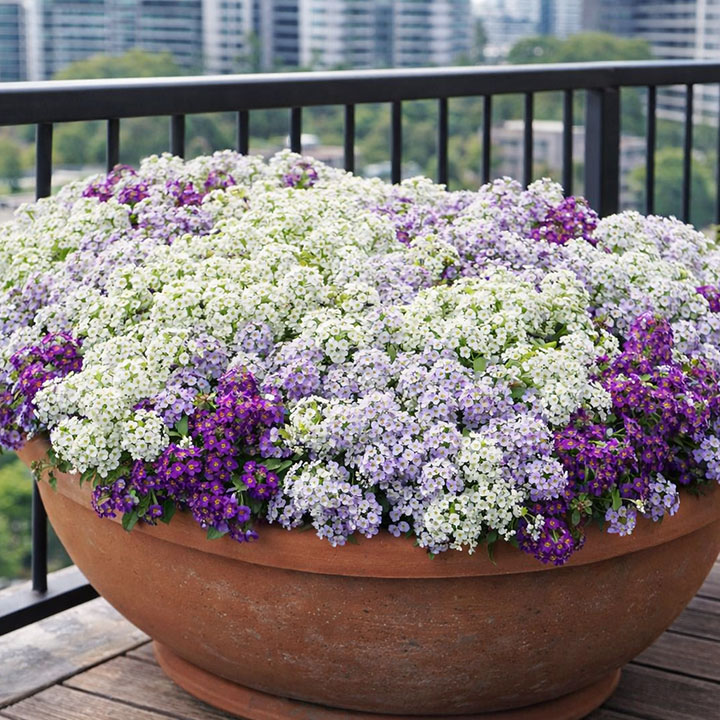
Mistake 15: Starting too big

One of the easiest mistakes to make is trying to build a dream balcony garden all at once. It is tempting to buy many plants, multiple pots, hanging planters, trellises, and decorative accessories in the beginning, but this can quickly become overwhelming.

When a balcony garden starts too big, it is harder to learn what works. Watering becomes more complex, plant losses feel more discouraging, and the space may become crowded before you understand its sun and wind patterns. Starting with a manageable number of plants gives you time to learn and expand gradually.

How balcony gardening mistakes vary by Australian city

While many mistakes are universal, some are more likely in certain cities because of weather and climate.

Melbourne

In Melbourne, common mistakes include underestimating wind, planting tender warm-season crops too early, and not preparing for quick weather changes. Heatwaves and cold snaps can both affect balcony plants, so flexibility matters.

Sydney

In Sydney, gardeners often underestimate summer heat on west-facing balconies and the watering needs of containers in warm weather. Humidity can help some plants but also makes airflow important.

Brisbane

In Brisbane, a major mistake is treating summer like a mild growing season for everything. Heat and humidity can be intense, so choosing the right plants and giving some shade protection is important.

Perth

In Perth, using small pots and choosing plants that need constant moisture are especially common mistakes. Strong sun and drying conditions make drought-aware planting and bigger containers much more important.

Adelaide

In Adelaide, the combination of hot summers and dry air means reflected heat and inconsistent watering can quickly damage balcony plants. Cool-season planting is often underused.

Canberra

In Canberra, planting warm-season crops too early and failing to protect plants from cold are frequent mistakes. Balcony gardeners there often benefit from treating some plants as seasonal rather than year-round.

Hobart

In Hobart, the mistake is often expecting heat-loving plants to thrive without enough warmth or sun. Choosing cool-climate-friendly flowers, herbs, and greens usually gives better results.
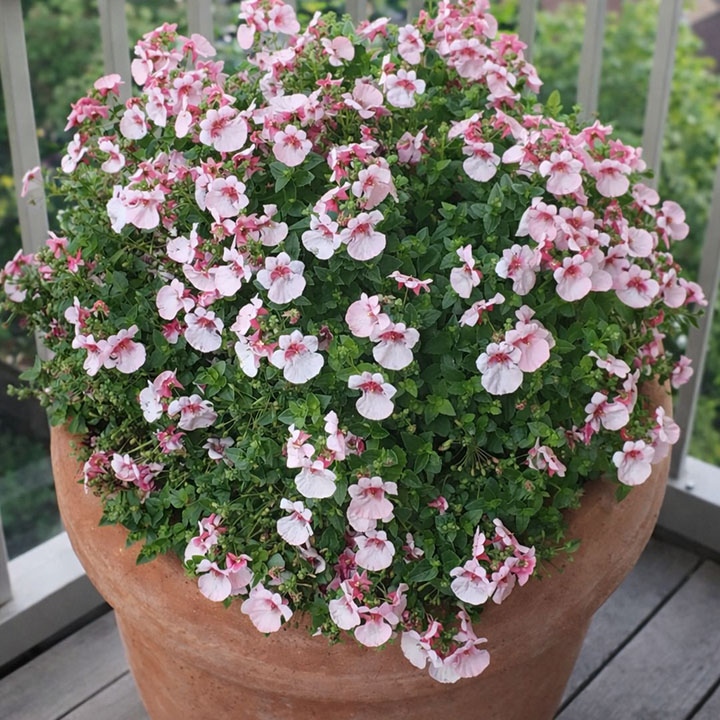
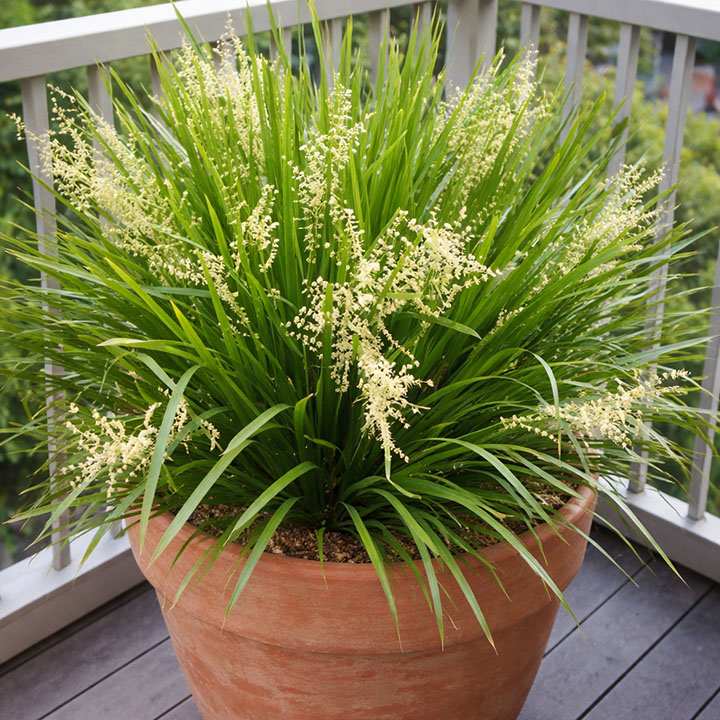
Darwin

In Darwin, poor airflow, unsuitable cool-climate plant choices, and failure to account for tropical humidity can all cause problems. Heat-tolerant and humidity-tolerant plants are essential.

How to avoid most balcony gardening mistakes

The easiest way to avoid balcony gardening mistakes is to keep things simple and observe your space before expanding.

  • Watch how much direct sun your balcony gets.
  • Notice where wind is strongest.
  • Choose plants that suit your city and season.
  • Use medium to large containers with drainage.
  • Use quality potting mix.
  • Group plants with similar care needs.
  • Start small and expand once you know what works.

A balcony garden does not need to be large to be beautiful or productive. It just needs to be suited to the conditions.

Final thoughts

Most balcony gardening mistakes are not caused by a lack of enthusiasm. They happen because balconies behave differently from ordinary gardens. Sun is more intense, wind matters more, pots dry out faster, and seasonal timing becomes more important. Once you understand those differences, it becomes much easier to choose the right plants and care for them well.

The best balcony gardens in Australia are usually built slowly. They begin with a few well-chosen containers, plants that suit the conditions, and a willingness to observe and adjust. Avoiding the common mistakes in this guide will give you a much better chance of creating a balcony that stays healthy, attractive, and enjoyable through the seasons.

Frequently asked questions

What is the most common balcony gardening mistake?

One of the most common mistakes is choosing plants without first checking how much direct sun and wind the balcony gets.

Why do balcony plants die so quickly?

Balcony plants often die quickly because pots dry out fast, roots overheat, or plants are in the wrong light or wind conditions for their needs.

Are small pots bad for balcony gardening?

Very small pots can be difficult because they dry out quickly and restrict root growth, especially in Australian summer conditions.

How do I protect balcony plants from wind?

Use heavier pots, group containers together, place delicate plants behind railings or screens, and choose sturdier plants for exposed positions.

Should I change balcony plants with the season?

Yes. Many balcony plants perform much better when grown in the right season rather than forced through unsuitable heat or cold.

Is overwatering or underwatering worse on a balcony?

Both can be a problem. Underwatering is common in hot weather, but overwatering is also damaging, especially for herbs and flowers that need excellent drainage.