
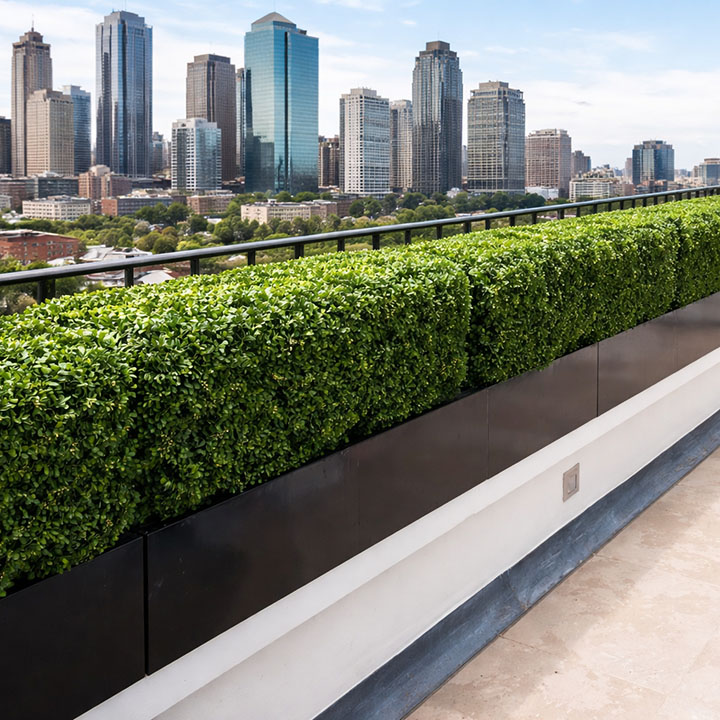
A balcony hedge can turn an exposed apartment or townhouse balcony into a greener, more private, and more comfortable outdoor space. In Australia, balcony hedges are especially useful for screening neighbouring buildings, softening harsh sun, filtering wind, and creating a calmer setting for pots, seating, and vertical gardens.
The key is choosing hedge plants that suit container growing, cope with your city’s climate, and respond well to regular trimming. Unlike a garden hedge planted in the ground, a balcony hedge has to live in a pot, deal with hotter roots, dry faster in wind, and often survive reflected heat from walls, glass, and paving.
This guide covers how to choose the right hedge for an Australian balcony, which plants work best in different cities, how to grow them in containers, and how to keep them thick, healthy, and neat all year.
Why grow a hedge on a balcony?
- Privacy: A dense hedge helps block views from nearby balconies, streets, and neighbouring windows.
- Wind protection: Hedges can reduce strong gusts that damage other balcony plants.
- Shade and cooling: Foliage softens reflected heat and can make your balcony feel less harsh in summer.
- Noise softening: Plants will not block noise completely, but a green screen can help make a balcony feel calmer.
- Better structure: A hedge creates a backdrop for flowers, herbs, pots, and outdoor furniture.
- Year-round greenery: Evergreen hedge plants keep a balcony looking full even in winter.
What makes a good balcony hedge plant?
The best balcony hedge plants are not always the same as the best in-ground hedge plants. On a balcony, look for species that are naturally compact, evergreen or semi-evergreen, happy in pots, and tolerant of pruning.
- Good container performance: Roots should handle life in a large pot for years.
- Dense growth: A hedge needs tight branching and foliage coverage.
- Pruning tolerance: Plants should respond well to clipping to keep their shape.
- Climate suitability: Choose for heat, humidity, frost, wind, or coastal exposure.
- Manageable size: Oversized shrubs can quickly outgrow a balcony.
- Sun compatibility: Match the plant to your balcony’s light levels.
Best hedge plants for Australian balconies
Here are some of the most practical options for balcony hedge growing in Australia.
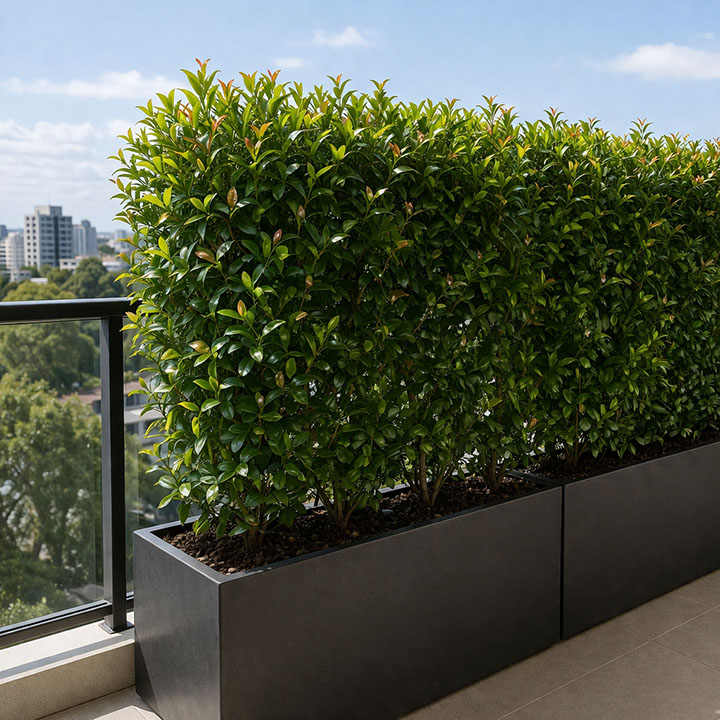
1. Lilly Pilly
Lilly pilly is one of the best balcony hedge choices in Australia. It is evergreen, dense, fast-growing, and responds very well to clipping. Modern varieties are often selected for compact growth and better resistance to psyllids. It suits privacy screens and formal clipped hedges.
- Best for: Privacy, formal hedges, Australian native styling
- Light: Full sun to part shade
- Good in: Sydney, Melbourne, Brisbane, Adelaide, Perth
- Watch for: Water stress in pots, occasional pest issues, regular trimming needed
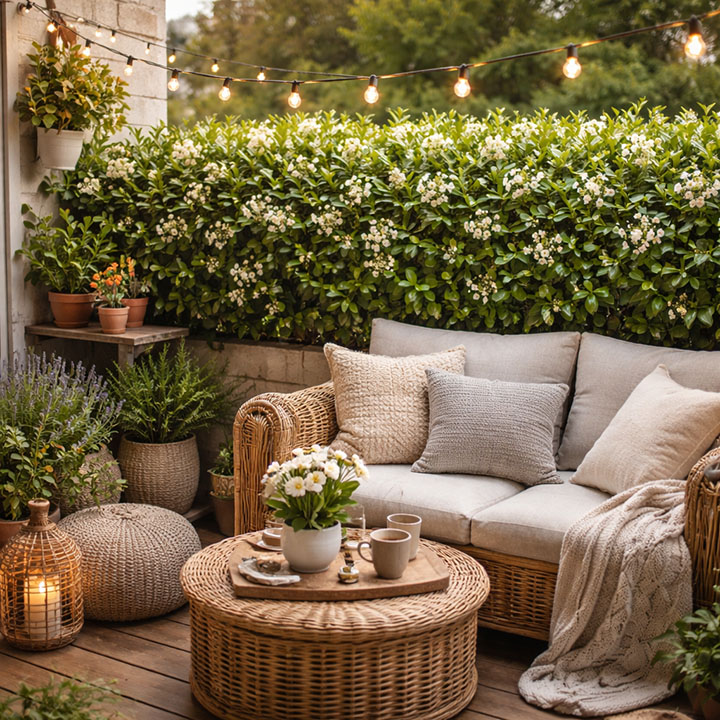
2. Murraya (Orange Jasmine)
Murraya is a classic hedge plant with glossy leaves and fragrant white flowers. It creates a softer, lush-looking screen and works especially well in warm and mild climates. It can be slower in cooler areas but still performs well in protected balconies.
- Best for: Scent, soft evergreen screening, warm climates
- Light: Full sun to part shade
- Good in: Sydney, Brisbane, Perth, coastal Adelaide
- Watch for: Slower growth in cold spots, can look thin if not regularly tip-pruned
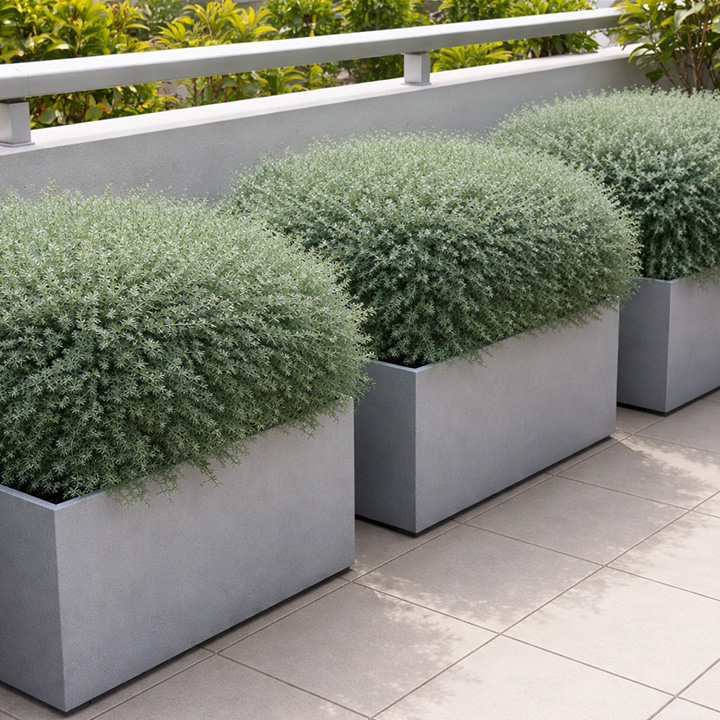
3. Westringia
Westringia is one of the toughest native hedge plants for exposed balconies. It tolerates wind, heat, coastal conditions, and dry spells better than many softer-leaved hedges. Its fine foliage gives a neat but slightly relaxed look.
- Best for: Windy balconies, coastal balconies, low-maintenance screens
- Light: Full sun
- Good in: Perth, Adelaide, Sydney, Melbourne
- Watch for: Not as lush in shade, avoid constantly wet potting mix
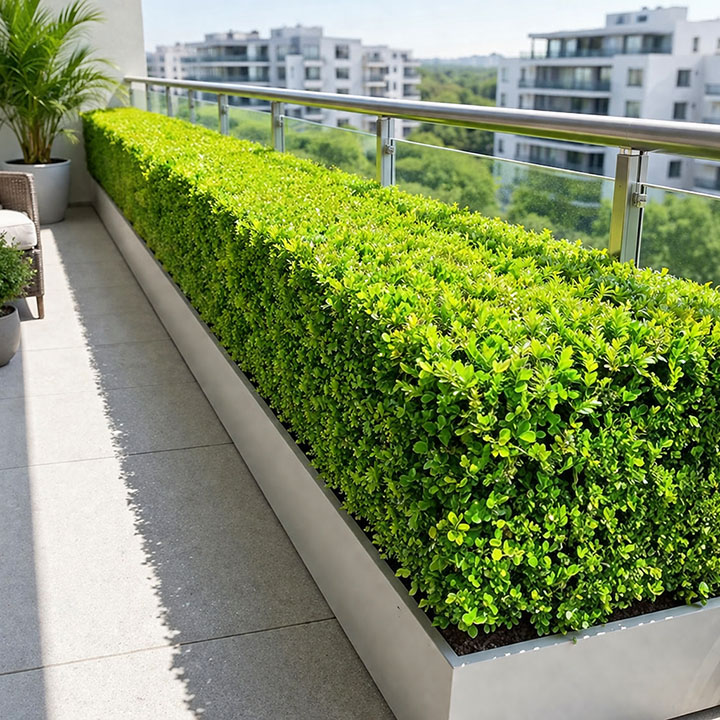
4. Buxus alternatives
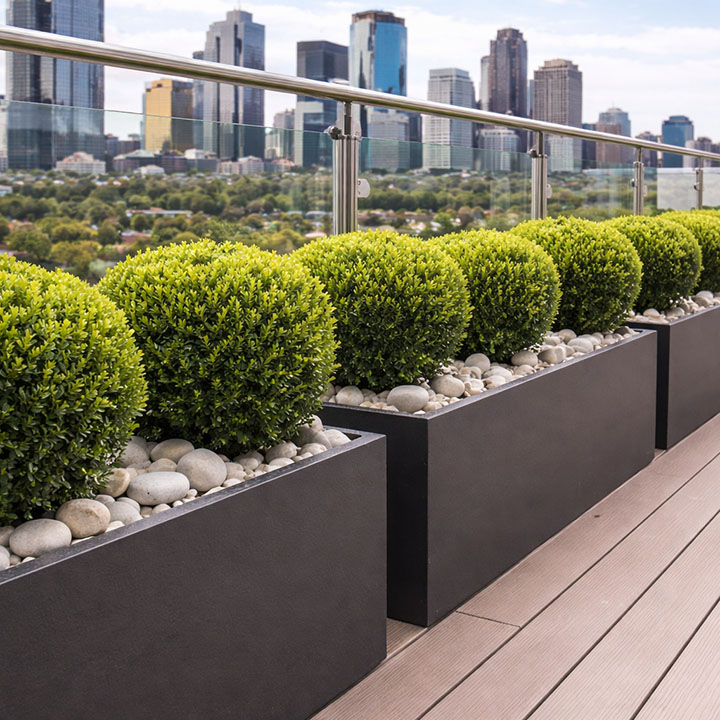
Traditional box hedging can be difficult on hot balconies because pots dry fast and full sun can stress the foliage. But compact shrubs used as box alternatives can still give a formal clipped look. Japanese box and other small-leaved shrubs suit sheltered balconies better than harsh exposed sites.
- Best for: Formal design, low hedges, structured balcony styling
- Light: Part shade to sun, depending on variety
- Good in: Melbourne, Canberra, Hobart, sheltered Sydney balconies
- Watch for: Heat stress, dry potting mix, scorching on hot western balconies
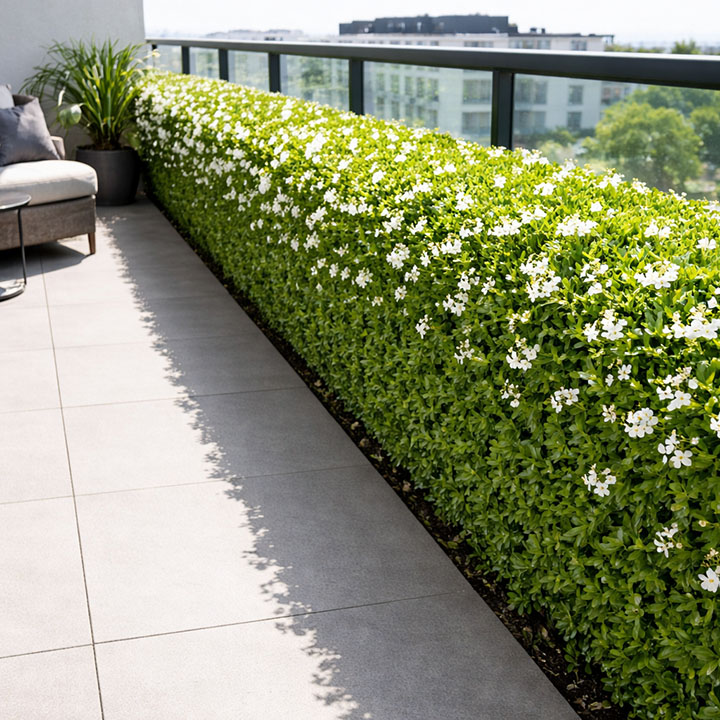
5. Viburnum
Compact viburnum varieties can make a lush screening hedge in large containers. They are useful when you want fuller foliage and faster privacy. However, they usually need bigger pots and more water than tougher natives.
- Best for: Fast coverage, lush green screening
- Light: Full sun to part shade
- Good in: Sydney, Melbourne, Brisbane
- Watch for: Heavy water demand, size control, bigger root systems
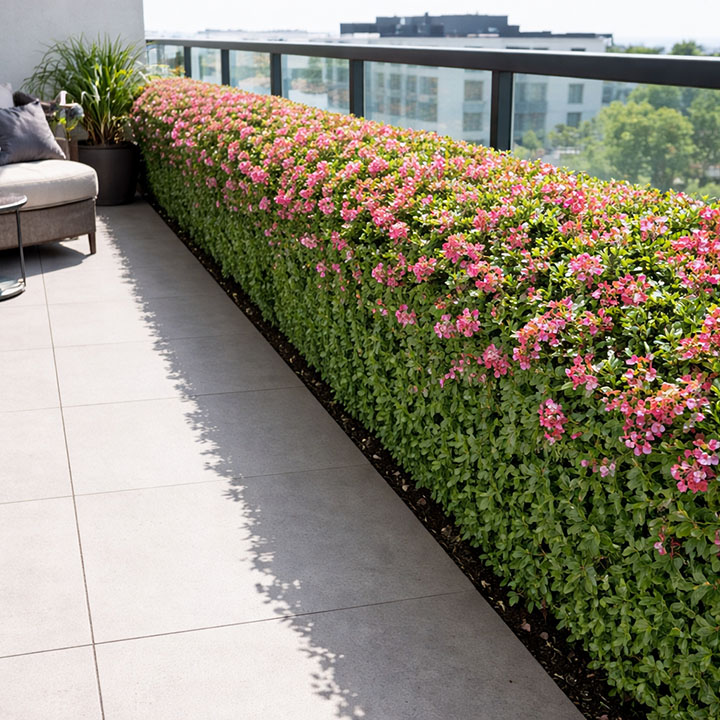
6. Escallonia or other coastal-friendly shrubs
For coastal balconies with sun, wind, and salt exposure, some hardy evergreen shrubs are better than softer tropical hedging plants. Escallonia and similar tough shrubs can be useful where sea breeze and exposure are the main challenge.
- Best for: Coastal exposure, flowering hedge effect
- Light: Full sun
- Good in: Sydney coast, Perth coast, Adelaide coast, Hobart coast
- Watch for: Needs regular shaping to stay neat in pots
Best hedge styles for balconies
There is no single right way to create a balcony hedge. The best style depends on how much space you have and what problem you want to solve.
Privacy hedge
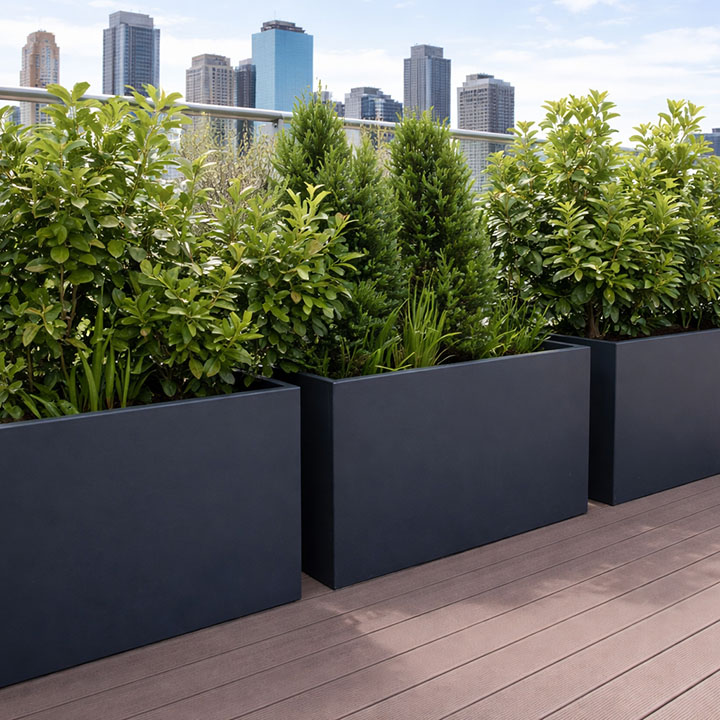
Use tall planters lined along the balcony edge or against one side wall. Choose dense evergreen shrubs such as lilly pilly, murraya, or viburnum. This works best for screening neighbours and nearby buildings.
Low formal hedge
A low clipped hedge adds structure without blocking views. This is ideal if you want to keep sightlines open to the city, water, or sky. Compact box-style shrubs work best here.
Windbreak hedge
For exposed balconies, tougher shrubs such as westringia are often better than lush soft-leaved plants. Place them where wind hits first to protect more delicate plants behind them.
Mixed screening hedge
Instead of a single species, you can combine compatible shrubs for a more relaxed look. This feels softer and more garden-like, though it is usually less formal than a clipped single-plant hedge.
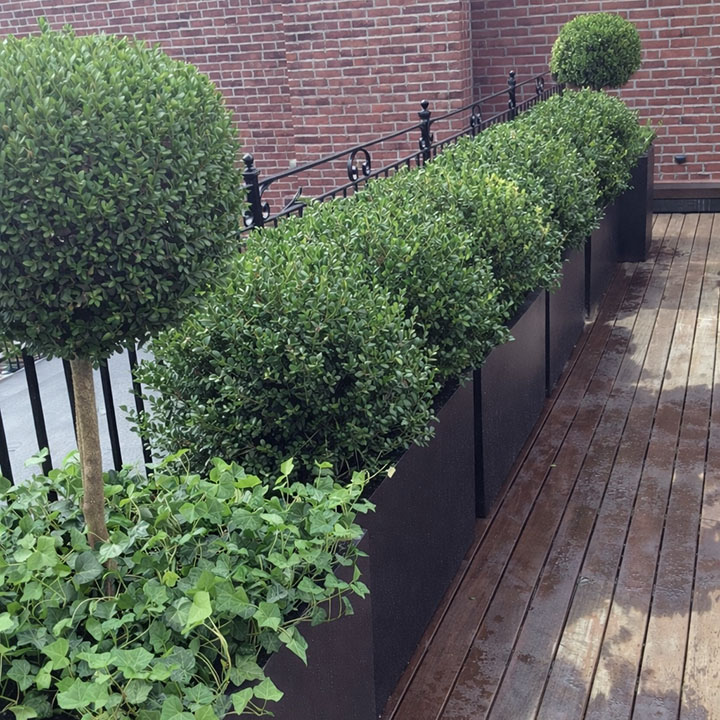
Choosing pots and planters for a balcony hedge
The planter matters almost as much as the plant. A hedge will only stay dense and healthy if roots have enough room and moisture stays more stable.
- Use long trough planters or large individual pots: Bigger soil volume means less stress and more even growth.
- Aim for depth: Many hedge shrubs perform better with planters at least 35 to 50 cm deep, depending on the species.
- Check drainage: Water must escape easily, especially during heavy rain.
- Choose lighter containers if needed: Fibre cement, fibreglass, resin, or lightweight composite planters are often easier for balconies than solid concrete.
- Think about weight: Wet soil and large pots are heavy. Always stay within balcony load limits.
If you live in an apartment, it is also worth checking strata or body corporate rules before installing a very large screen of planters.
Best potting mix for balcony hedges
Do not use garden soil on a balcony. It compacts too easily in pots, drains poorly, and can become heavy. Instead, use a premium potting mix suitable for shrubs or general container plants.
- Choose a high-quality potting mix with good water retention and drainage.
- Add a slow-release fertiliser at planting time if your mix does not already include one.
- Top with mulch to reduce evaporation, but keep mulch away from stems.
- Refresh the top few centimetres of mix each year to keep plants vigorous.
How to plant a hedge on a balcony
- Assess the site: Check sun, wind, balcony direction, and whether the area is protected or exposed.
- Measure carefully: Make sure doors still open and there is enough room to move around your balcony.
- Select the right hedge species: Match plant choice to your city, weather, and light levels.
- Choose the planter: Bigger is better for long-term hedge health.
- Fill with quality potting mix: Leave space at the top so water does not spill straight out.
- Plant at proper spacing: Slightly close spacing can help fill out a hedge faster, but do not cram plants too tightly.
- Water in well: Newly planted hedges need deep watering until roots establish.
- Tip-prune early: Light pruning after establishment encourages branching and thicker growth.
Balcony hedge care through the year
Watering
Container hedges dry out much faster than in-ground hedges. Windy high-rise balconies and west-facing balconies are especially thirsty in summer. Water deeply rather than lightly, and check the potting mix regularly rather than relying on a fixed schedule.
In hot Australian cities, a balcony hedge may need watering several times a week in summer, and sometimes daily during heatwaves if pots are small. In cooler cities, winter watering should be reduced, but never ignore pots completely.
Feeding
Hedge plants need consistent feeding to stay dense and green in containers. Apply slow-release fertiliser in spring and again as needed for the plant type. Some gardeners also use liquid feed during the active growing season for extra growth and recovery after clipping.
Pruning
Regular light trimming is better than rare harsh pruning. Tip-pruning encourages side branching, which is what makes a hedge dense. Clip more often in spring and summer when plants are actively growing, and reduce pruning in cold weather.
Always avoid cutting into old bare wood unless the species is known to recover well from hard pruning.
Repotting and root care
Over time, hedge plants can become root-bound. Signs include very fast drying, weak growth, and declining leaf quality. Depending on the species and pot size, you may need to upgrade the planter, root-prune, or refresh potting mix every few years.
Balcony hedge advice by Australian city
Australia’s cities have different combinations of heat, humidity, frost, wind, and rainfall. Matching your hedge plant to local conditions will give you a much better result.
Sydney
Sydney balconies often deal with strong sun, humidity, and coastal exposure in some suburbs. Lilly pilly, murraya, westringia, and compact viburnum can all work well. Coastal balconies may need tougher, wind-tolerant shrubs, while shaded inner-city balconies may suit softer glossy-leaved plants.
Melbourne
Melbourne conditions can change quickly, with cool winters, hot spells in summer, and gusty winds. Choose resilient hedge plants that can handle temperature swings. Lilly pilly, westringia, and sheltered box-style hedges can all work, but watering and wind protection are very important on exposed balconies.
Brisbane
Brisbane’s warm and humid climate suits lush evergreen hedges. Murraya, lilly pilly, and viburnum often grow strongly here, but humidity can increase pest and disease pressure if airflow is poor. Keep hedges neatly pruned and avoid overcrowding.
Perth
Perth balconies can be hot, dry, sunny, and windy. Tougher hedge plants usually perform best, especially on exposed sites. Westringia is an excellent option, while lilly pilly can work with enough water and protection from severe drying conditions. Mulch and deep pots are especially valuable here.
Adelaide
Adelaide shares some of Perth’s heat and dryness, especially in summer, but winter can be cooler. Choose hedge plants that handle sun and dry air, and avoid small containers that heat up too fast. Westringia and carefully managed lilly pilly are good options.
Canberra
Canberra balconies must cope with frost, cold winters, and dry periods. Choose hardy plants and protect sensitive species from freezing winds. Compact hedging plants in a sheltered balcony can work well, but tropical and semi-tropical choices are less reliable.
Hobart
Hobart’s cooler climate and wind exposure mean hedge plants should be selected for hardiness. Full sun is often an advantage here, but protection from strong coastal or cold winds may still be needed. Tough evergreen shrubs usually outperform soft, heat-loving hedge plants.
Common balcony hedge problems
Yellow leaves
This can be caused by inconsistent watering, poor drainage, lack of nutrients, or roots becoming crowded. Check the potting mix moisture first, then review feeding and drainage.
Sparse or leggy growth
Usually caused by not enough light, not enough pruning, or plants being stressed in undersized containers. Tip-prune regularly and move to a brighter spot if possible.
Brown leaf edges
Often a sign of wind burn, salt exposure, dry roots, or intense heat. Increase watering consistency, mulch the surface, and consider more wind protection.
Plants drying too fast
This is usually a container size problem. Small pots heat up quickly and cannot hold enough moisture for hedge shrubs. Moving to bigger planters often solves the issue.
Uneven growth
One side of a balcony hedge may get more sun, wind, or reflected heat than the other. Rotate pots where practical, prune to balance shape, and expect some variation in very exposed sites.
Tips for a fuller, healthier balcony hedge
- Start with plants that already have multiple stems and good branching.
- Use the largest practical planters you can fit and safely support.
- Mulch the surface to reduce evaporation.
- Tip-prune during active growth to encourage density.
- Do not let pots swing between bone dry and soaking wet.
- Feed regularly during the growing season.
- Match species to your balcony’s sun, wind, and city climate.
- Use drip irrigation if your balcony gets very hot or you travel often.
Is a balcony hedge right for every balcony?
Not always. A hedge is a good idea if you want privacy, screening, or structure and you are prepared to water, prune, and maintain it. But very small balconies may feel cramped with a tall hedge, and very exposed high-rise balconies may be better suited to tougher screening plants rather than a traditional clipped hedge look.
If you want greenery without the bulk of a hedge, you could also try climbers on a trellis, mixed screening shrubs, or railing planters combined with taller pots in the corners.
Final thoughts
A balcony hedge is one of the most effective ways to make an Australian balcony feel private, lush, and finished. The secret is choosing hedge plants that can truly live in containers, not just survive there for a season. Start with the right species for your climate, give roots plenty of room, keep watering consistent, and trim lightly but regularly. Done well, a balcony hedge can become the green backbone of your entire balcony garden.
Frequently Asked Questions
What is the best hedge for a balcony in Australia?
Lilly pilly is one of the best all-round choices for many Australian balconies because it is evergreen, dense, and responds well to pruning. For hot, windy, or coastal balconies, westringia is often more resilient.
Can you grow a privacy hedge in pots on a balcony?
Yes, many hedge shrubs grow well in large pots or trough planters. Success depends on choosing a suitable species, using quality potting mix, and providing regular water and feeding.
How deep should a planter be for a balcony hedge?
Many balcony hedge plants do better in planters at least 35 to 50 cm deep, though exact needs vary by species. Bigger containers help roots stay cooler and reduce watering stress.
Which hedge plant is best for a windy balcony?
Westringia is one of the strongest options for windy, exposed balconies. It handles sun, coastal air, and dry conditions better than many softer-leaved hedging plants.
How often should I water a balcony hedge?
It depends on pot size, weather, sun exposure, and wind. In summer, hedge plants in containers may need water several times a week or more during heatwaves. Always check the potting mix before watering.
Can I grow a hedge on a shady balcony?
Some hedge plants cope with part shade, but very deep shade usually reduces density and makes growth leggy. For the best privacy hedge, choose the brightest suitable balcony position you have.
Do balcony hedges need pruning?
Yes. Light regular pruning is what keeps a balcony hedge dense and tidy. Without trimming, many hedge plants become open, uneven, or too large for the space.
Are balcony hedges too heavy for apartments?
Large planters filled with wet soil can be very heavy. Always consider balcony load limits and apartment rules before installing a hedge, especially if using long trough planters or multiple large pots.

Comments are closed.