
Australian native plants are an excellent choice for balcony gardens because many are naturally adapted to harsh sun, wind, dry spells and lean soils. That makes them especially useful for apartment and small-space gardeners who want plants that look good, support birds and pollinators, and cope better with Australian conditions than many thirsty exotics.
Across Australia, balcony conditions vary a lot. Sydney is humid with rainfall spread across the year, Melbourne is cooler and more changeable, Brisbane is warm and wetter in summer, Perth and Adelaide have dry summers and wetter winters, Hobart is cooler overall, and Darwin has a tropical wet-and-dry pattern. Choosing the right native plant starts with matching it to your city’s climate, your balcony’s sunlight, and how exposed the space is to wind.
Why Australian natives work so well on balconies
- Many cope well with heat, reflected light and drying winds.
- Plenty of compact cultivars suit pots, troughs and planter boxes.
- They bring texture, flowers and foliage colour without needing a high-maintenance routine.
- Many attract bees, butterflies and nectar-feeding birds.
- You can create a balcony that feels distinctly Australian rather than generic.
What to look for in a native balcony plant
The best balcony natives are usually compact, wind-tolerant, happy in containers and not too fussy about pruning. On hot balconies, look for plants described as drought tolerant, coastal tolerant or suitable for container growing. On shaded balconies, focus on natives that can handle light shade or part shade rather than full-sun-only plants.
Best Australian native plants for balcony gardens
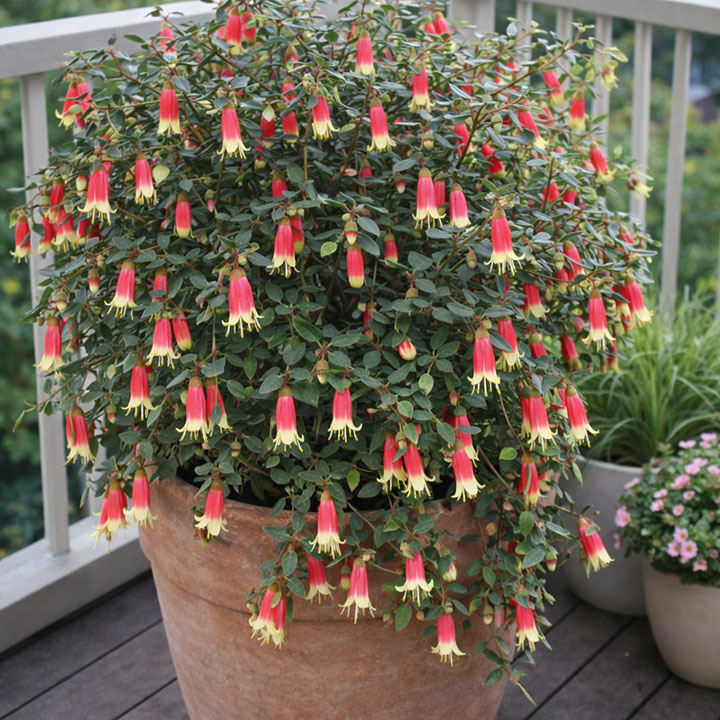
1. Correa
Correas are among the best all-round native shrubs for balconies. They are naturally neat, bird-attracting, and many varieties do well in pots. Correa alba is especially useful for coastal or exposed balconies because it tolerates salty winds, grows in sun to part shade, responds well to pruning and is noted as being good in containers. If you want a softer flowering look, varieties like ‘Dusky Bells’ and ‘Snowbelle’ are excellent compact choices.
Best for: Sydney, Melbourne, Adelaide, Hobart, coastal balconies, part-shade balconies.
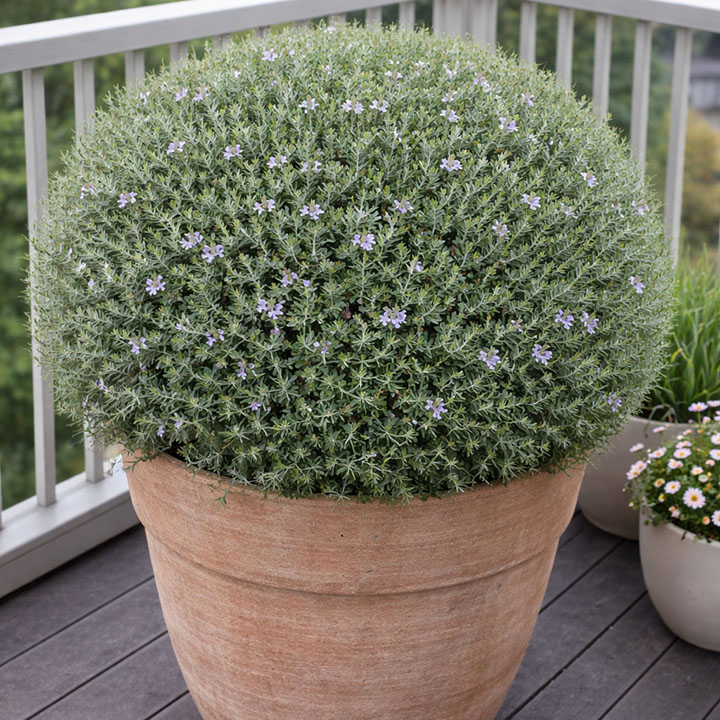
2. Westringia (Coastal Rosemary)
Westringia is one of the toughest native shrubs you can grow in a pot. It handles wind, coastal exposure, clipping and shaping, and many compact forms work beautifully as low hedges or rounded specimens in containers. Varieties such as ‘Jervis Gem’, ‘Mundi’ and ‘Zena’ are especially useful when you want structure and year-round foliage without constant fuss.
Best for: Sydney, Perth, Adelaide, Brisbane, exposed balconies, windy or coastal sites.
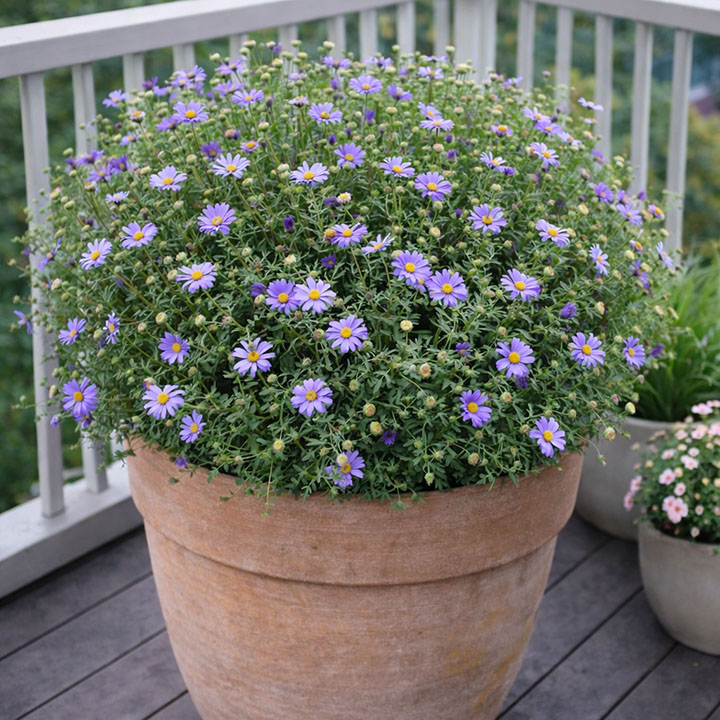
3. Brachyscome (Native Daisy)
Brachyscome brings an easy cottage-garden feel to balcony pots. It stays compact, flowers for long periods, and suits containers, borders and troughs. It is ideal for softening the edges of a balcony display and pairing with tougher shrubs or strappy plants. Use it where you want cheerful colour without a heavy, woody look.
Best for: Melbourne, Canberra, Hobart, Sydney, mixed planters, balcony boxes and lower pots.
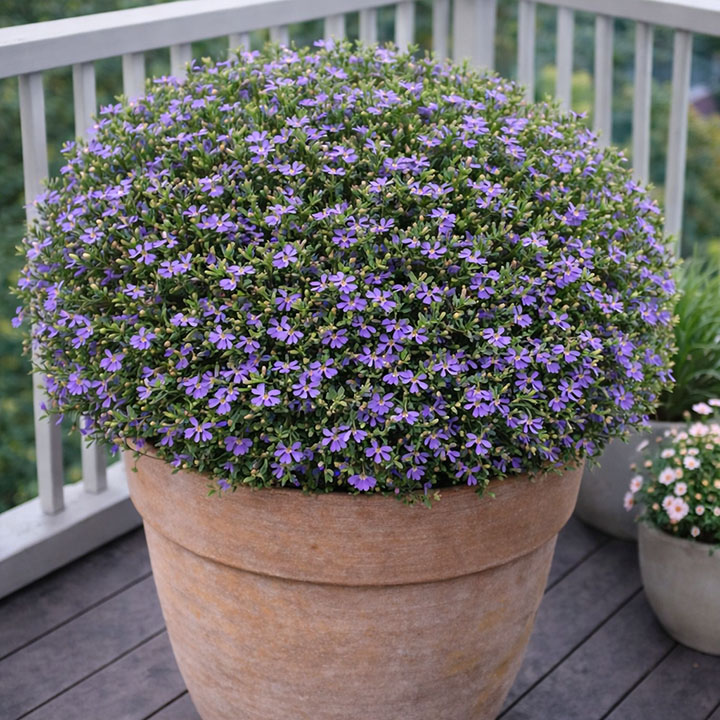
4. Scaevola (Fan Flower)
Scaevola is one of the best natives for spilling over the sides of pots and hanging baskets. It flowers for months, works well in containers, and many forms suit sunny balconies. This is a strong choice for gardeners who want a softer cascading effect rather than upright structure.
Best for: Brisbane, Sydney, Perth, Adelaide, sunny rail planters, hanging baskets and trailing displays.
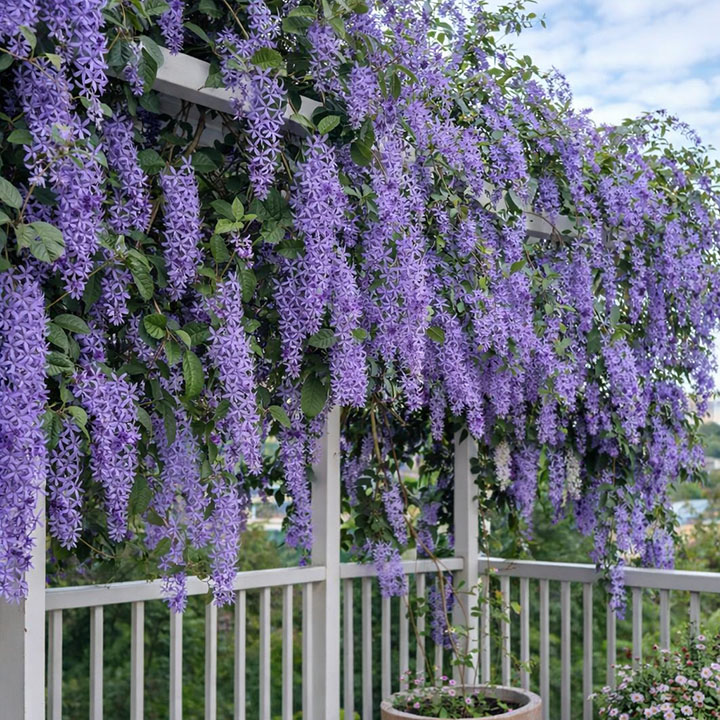
5. Hardenbergia
Hardenbergia is one of the standout native climbers for balconies. It produces masses of purple, pink or white pea flowers and can be trained up trellis, along railings or over a privacy screen. Standard forms can climb vigorously, while compact cultivars such as ‘Mini Ha Ha’, ‘Bushy Blue’ and ‘Regent’ are easier to manage in pots.
Best for: Melbourne, Sydney, Adelaide, Perth, privacy screens, trellis balconies and winter-spring colour.
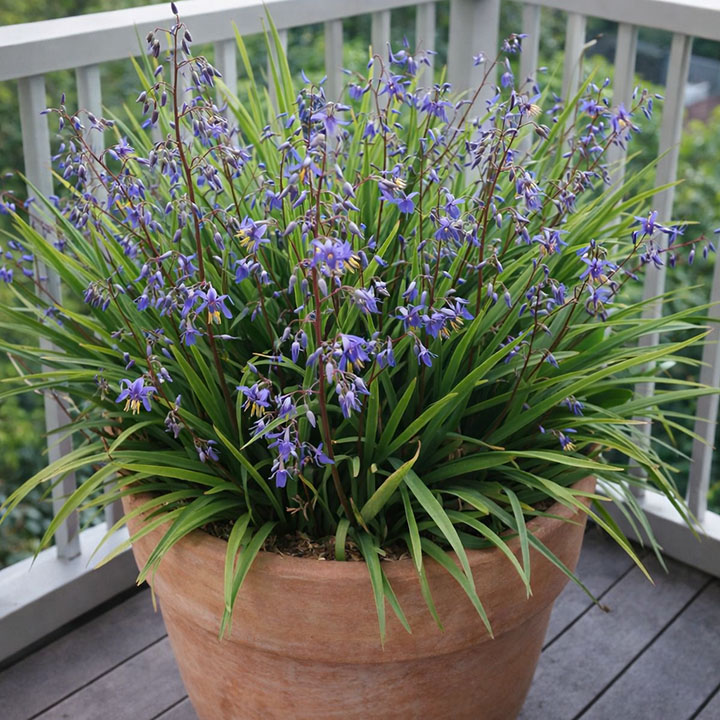
6. Dianella
Dianella is a brilliant native strappy plant for balcony gardeners who want strong foliage shape. It forms clumps of upright leaves, produces blue flowers in season, and many dwarf forms work well in planter boxes. It also combines nicely with flowering natives because it gives the arrangement structure year-round.
Best for: Sydney, Melbourne, Brisbane, Adelaide, contemporary balconies, narrow planter boxes.
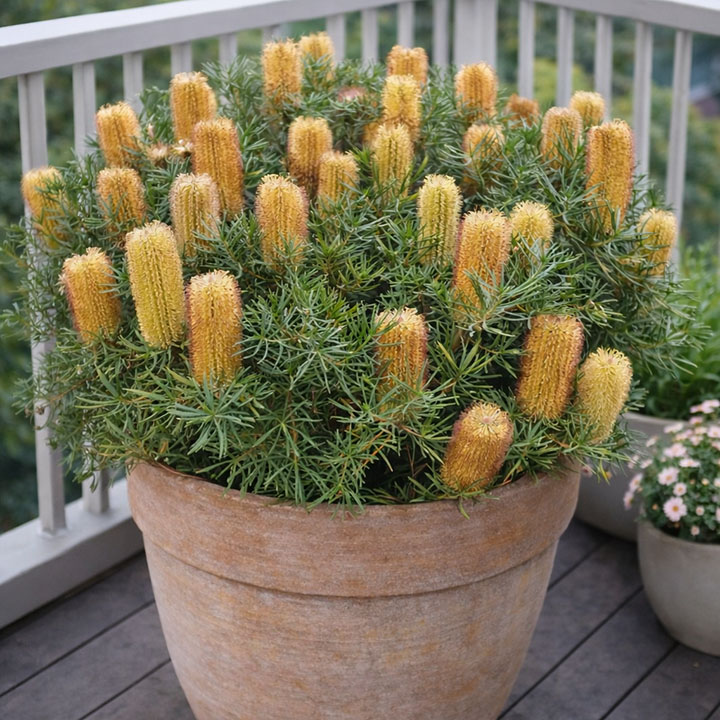
7. Banksia spinulosa cultivars
Compact banksias are a great choice for sunny balconies where you want a tougher shrub with standout flowers. Cultivars such as ‘Honey Pots’, ‘Stumpy Gold’, ‘Black Magic’ and ‘Cherry Candles’ are recommended for smaller gardens and containers on patios, verandas and decks. They bring an unmistakably Australian look and are excellent for nectar-feeding birds.
Best for: Perth, Adelaide, Melbourne, Canberra, full sun balconies and larger statement pots.
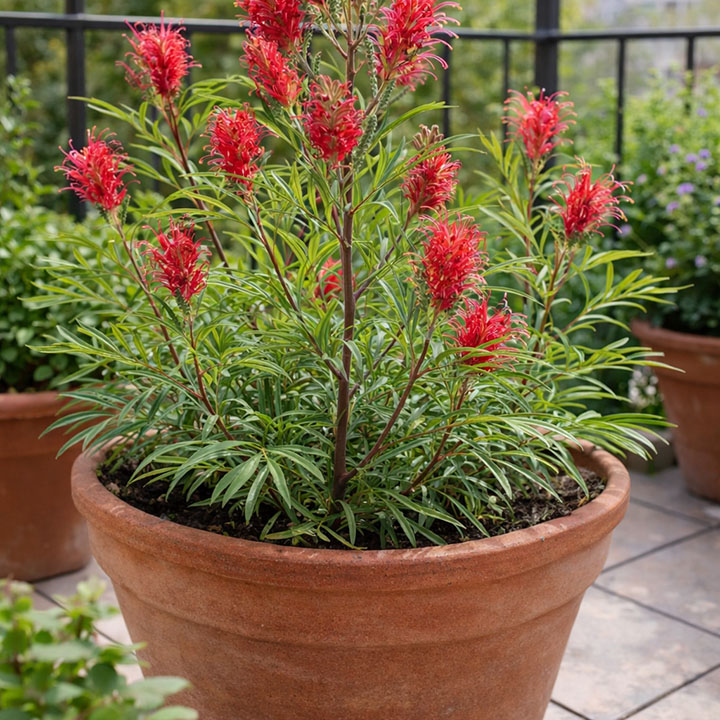
8. Grevillea
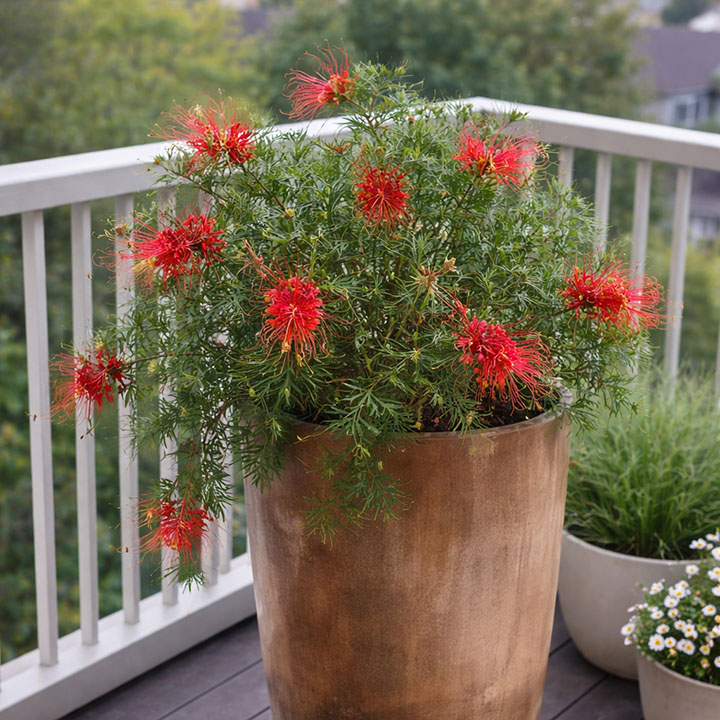
If you want flowers, texture and bird life, compact grevilleas are hard to beat. ‘Quick Silver’ performs well as a cascading container specimen for patios or balconies, while ‘Tucker Time Entree’ is specifically noted as a container plant for deck, patio or balcony. Choose smaller cultivars rather than large garden forms so the plant stays in scale with the space.
Best for: Melbourne, Sydney, Adelaide, Perth, full sun and wildlife-friendly balconies.
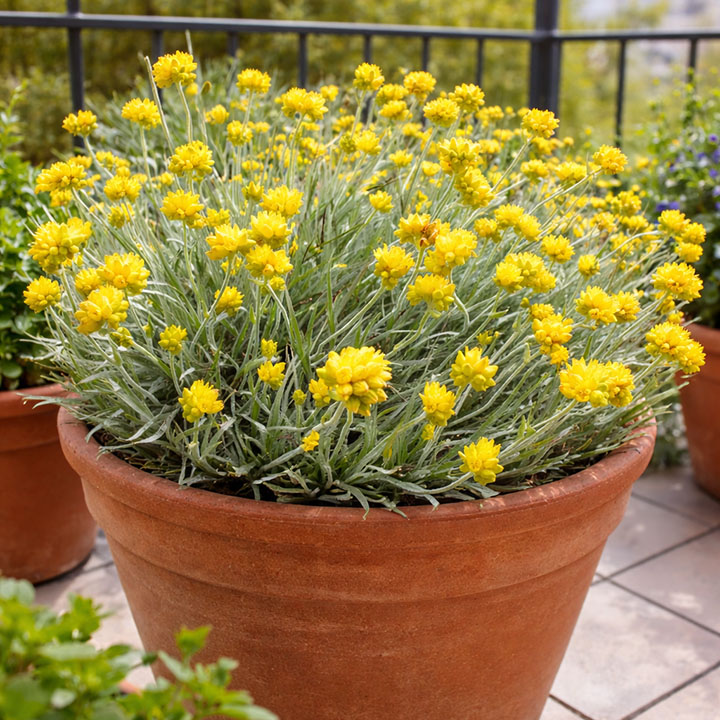
9. Conostylis
For a compact clumping native with silver foliage and a clean architectural look, Conostylis is a smart pick. ‘Silver Sunrise’ is specifically described as stunning in a container and suitable for a sunny position on a balcony or courtyard. It is a good option when you want something modern, textural and drought-aware.
Best for: Perth, Adelaide, sunny Melbourne balconies, minimalist balcony designs.
Best native plants by Australian city
Sydney
Sydney balconies often deal with humidity, salt-laden air near the coast, and rainfall across much of the year. Strong choices include Correa, Westringia, Scaevola, Brachyscome and compact Grevilleas. Coastal balconies should prioritise salt-tolerant plants such as Correa alba and Westringia. Melbourne
Melbourne’s biggest balcony challenge is variability: cool changes, wind and a broader range of temperatures across the year. Correas, Brachyscome, Dianella, Hardenbergia and compact Banksias are all strong performers because they can handle cool-temperate conditions and light frost in many cases.
Brisbane
Brisbane gardeners should focus on plants that can cope with warmth, humidity and heavy summer rain. Westringia, Dianella, Scaevola and selected Grevilleas are practical options. Good drainage is especially important in Brisbane pots so roots do not stay waterlogged in the wet season.
Perth
Perth balconies often experience intense sun and dry summers, so choose plants that love drainage and can handle dry periods. Westringia, Conostylis, Banksia spinulosa cultivars and Hardenbergia are especially useful here. Use deeper pots to reduce heat stress and drying.
Adelaide
Adelaide has a Mediterranean pattern with hot dry summers and wetter winters, so balcony plants need to cope with heat, reflected glare and seasonal dryness. Westringia, Hardenbergia, Banksias and Grevilleas are all well suited, especially in full sun.
Hobart and Canberra
Cooler-city balconies benefit from compact shrubs and perennials with some frost tolerance. Correas, Brachyscome, Banksias and selected Westringias are among the better options. In these climates, morning sun and sharp drainage are especially helpful.
Darwin
Darwin’s tropical climate is a different challenge again, with a strong wet season and long humid periods. Balcony gardeners should prioritise excellent airflow, fast drainage, and natives that do not mind warmth and moisture. Compact fan flowers and some tough foliage plants are usually easier than dry-climate shrubs that dislike prolonged humidity.
How to grow Australian natives successfully in pots
- Use a quality native potting mix: Many native plants prefer excellent drainage and lower phosphorus levels than standard mixes.
- Choose the right pot size: Small plants dry out fast on balconies, especially in wind. Go a little larger than you think.
- Water deeply, not constantly: Let the top layer start to dry before watering again for most shrubs and strappy plants.
- Feed lightly: Use a native fertiliser rather than a high-phosphorus general fertiliser, especially for banksias and grevilleas.
- Prune often and lightly: Tip-pruning keeps many natives compact and dense in containers.
- Match plant to light: Full-sun balconies can handle banksias, westringias and hardenbergias. Part-shade balconies are better for correas, some brachyscomes and selected grevilleas.
Simple balcony planting combinations
Sunny native balcony combo
Use a compact Banksia or Westringia as the main plant, add Brachyscome for soft colour around the base, and finish with trailing Scaevola over the pot edge.
Coastal or windy balcony combo
Plant Correa alba with a mound of Dianella and a low Scaevola or Brachyscome around the front. This gives a mix of toughness, foliage contrast and flowers.
Trellis or privacy-screen combo
Grow Hardenbergia up a trellis, then underplant with compact Grevillea or Correa for a layered native look that feels lush without taking up too much floor space.
Common mistakes to avoid
- Using shallow pots on windy balconies.
- Choosing large garden natives that quickly outgrow containers.
- Using rich general fertilisers on phosphorus-sensitive natives.
- Ignoring drainage holes or saucers that hold too much water.
- Planting full-sun natives on a shaded south-facing balcony and expecting heavy flowering.
Final thoughts
The best Australian native plants for balcony gardens are the ones that suit your exact conditions, not just the prettiest ones at the nursery. For most Australian balcony gardeners, Correa, Westringia, Brachyscome, Scaevola, Hardenbergia, Dianella, compact Banksias and dwarf Grevilleas are the strongest starting point. They are practical, attractive and far better aligned with Australian weather than many thirsty imported plants. :contentReference[oaicite:22]{index=22}
Build your balcony slowly, choose good pots and sharp-draining mix, and you can create a small native garden that looks beautiful in every season and feels genuinely connected to the Australian landscape.

Comments are closed.