
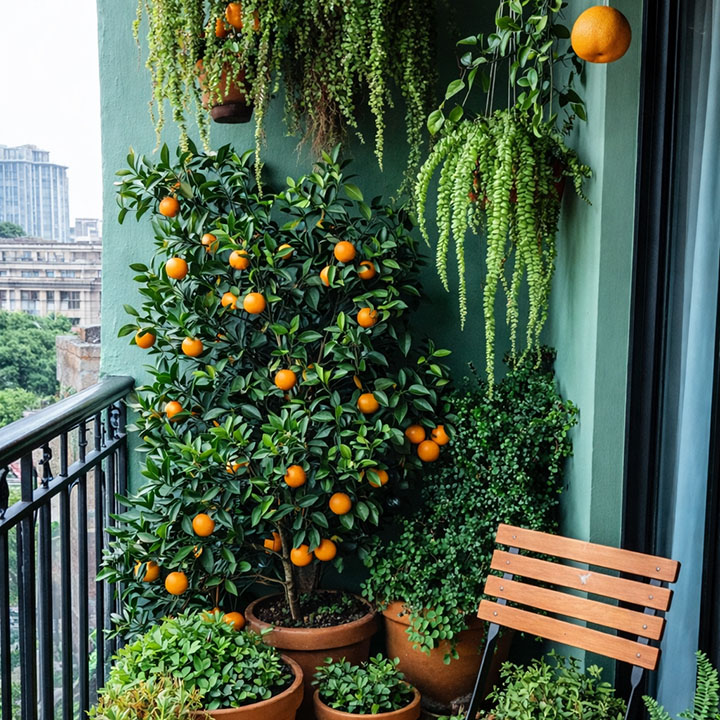
Growing fruit on a balcony is one of the most rewarding ways to make a small outdoor space productive. Even a compact apartment balcony can produce fresh strawberries, lemons, limes, figs, blueberries, passionfruit, and more when you choose the right plants for your climate, sun levels, and pot size. In Australia, balcony fruit growing works especially well because many popular fruiting plants thrive in warm conditions, bright light, and container life.
The key is choosing fruit plants that suit your city and your balcony conditions. A full-sun balcony in Perth or Brisbane can handle very different plants from a cooler, windier balcony in Melbourne, Hobart, or Canberra. Some fruit plants love heat and long summers, while others prefer mild conditions and protection from intense afternoon sun.
In this guide, we’ll cover the best fruit plants for balconies in Australia, including top picks for major cities, advice on pot sizes, sunlight needs, watering, and practical tips for getting a better harvest from a small space.
Why Fruit Plants Grow Well on Balconies
Many fruit plants do surprisingly well in containers. In fact, pots can make fruit growing easier because you have more control over soil quality, drainage, feeding, and plant position. If one part of your balcony gets too much wind or harsh summer sun, you can often move smaller pots to a better spot.
Balcony fruit growing also suits modern Australian homes where backyard space is limited. Instead of needing a large garden, you can grow edible plants in pots, railing planters, troughs, hanging baskets, and compact vertical supports. With the right setup, even a small balcony can become a mini edible garden.
- Fresh fruit from a small space
- Beautiful plants that also look ornamental
- Better use of sunny balcony corners
- Easy harvesting close to the kitchen
- A productive alternative to purely decorative pots
What Makes a Fruit Plant Good for a Balcony?
The best balcony fruit plants share a few important traits. They either stay naturally compact, respond well to pruning, or grow happily in containers. They should also suit your local climate and the amount of sun your balcony receives.
- Compact growth: Dwarf or naturally small varieties are easiest to manage.
- Container suitability: Some fruit plants adapt well to pots, while others struggle long term.
- Reliable cropping: The best choices produce well without needing lots of space.
- Climate match: Heat-loving fruit and cool-climate fruit need different conditions.
- Sun tolerance: Most fruiting plants need at least 5 to 6 hours of sun, with many doing best in full sun.
Best Fruit Plants for Balcony Gardens in Australia
1. Strawberries
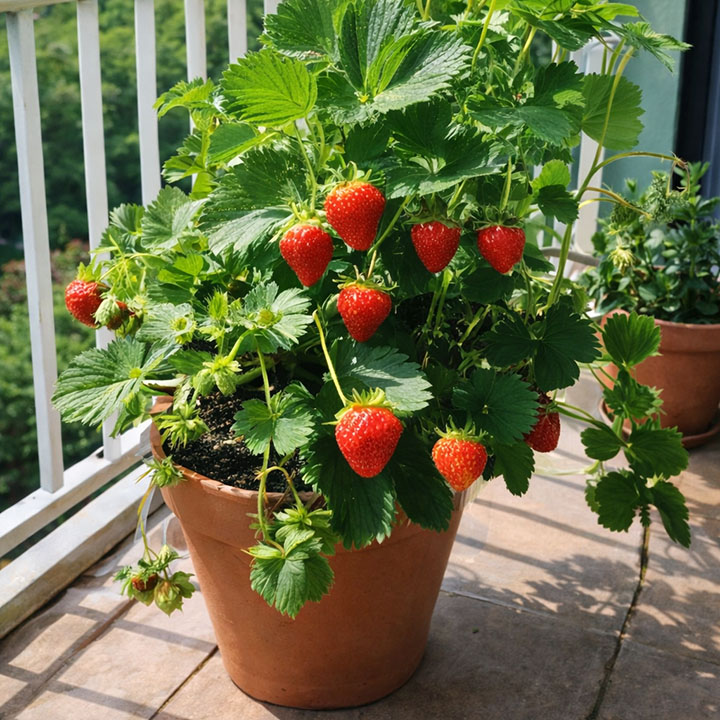
Strawberries are one of the best fruits for balcony gardens because they are compact, fast-growing, and productive in pots, hanging baskets, and vertical planters. They suit beginners and don’t need deep containers, making them ideal for small spaces.
In Australia, strawberries perform well in Melbourne, Sydney, Adelaide, Canberra, Hobart, and parts of Brisbane and Perth, especially when they get morning sun and consistent watering. In hotter cities, they benefit from protection during extreme summer heat.
- Best for: Small balconies, hanging baskets, railing planters
- Sun: Full sun to part sun
- Pot size: Wide shallow pots or hanging baskets
- Top tip: Replace tired plants regularly for better yields
2. Dwarf Lemon Trees
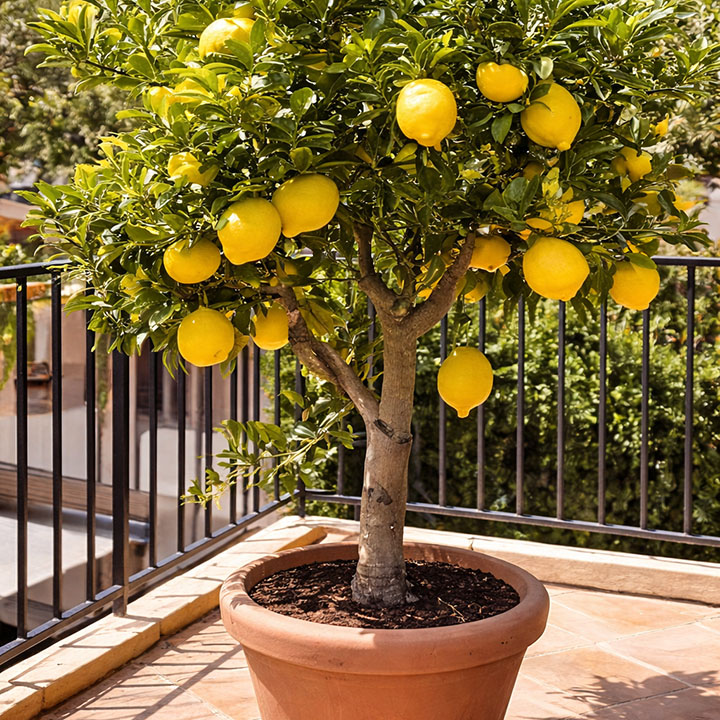
A dwarf lemon tree is one of the most popular edible plants for Australian balconies. It looks attractive year-round, has glossy foliage, fragrant flowers, and can produce excellent fruit in a large pot. Varieties like dwarf Meyer lemon are especially well suited to containers.
Lemons thrive on sunny balconies in Sydney, Brisbane, Perth, Adelaide, and many parts of Melbourne. In cooler cities like Hobart and Canberra, they often need the warmest, most sheltered balcony position available. Protection from strong frost is important.
- Best for: Sunny balconies with room for a feature pot
- Sun: Full sun
- Pot size: Large pot, at least 40 to 50cm wide to start
- Top tip: Feed regularly during the growing season with a citrus fertiliser
3. Dwarf Lime Trees
Dwarf limes are another excellent balcony choice, especially for warm Australian cities. They stay compact with pruning, handle containers well, and produce fruit that is useful for cooking and drinks. Tahitian lime is a popular option for home growers.
Limes tend to prefer warmer conditions than lemons, making them particularly good for Brisbane, Sydney, Perth, and other mild to warm coastal areas. They may struggle more in colder inland winters unless protected.
- Best for: Warm, sunny balconies
- Sun: Full sun
- Pot size: Large container
- Top tip: Shelter from cold winds and keep soil evenly moist
4. Blueberries
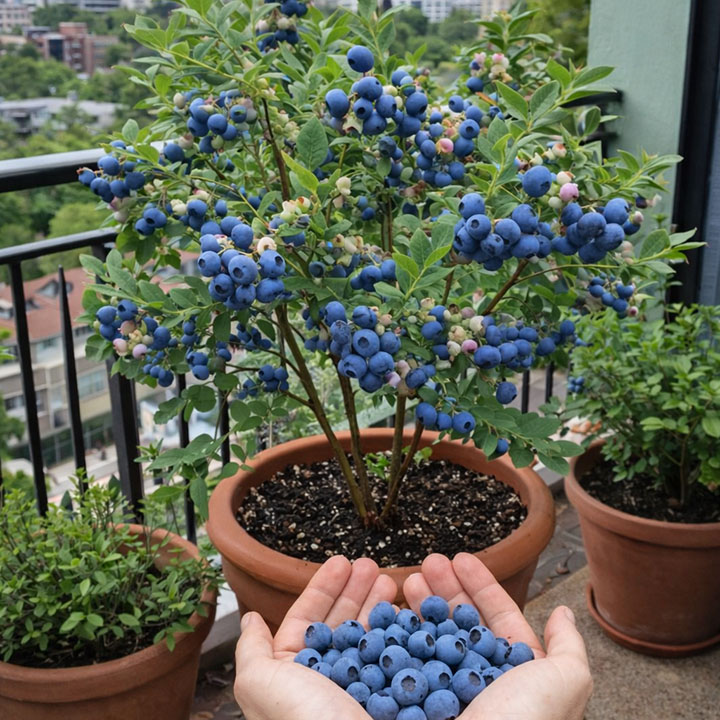
Blueberries are ideal for balconies if you can provide acidic potting mix. They stay manageable in pots, produce attractive spring flowers and autumn colour, and can crop well in the right conditions. They are especially popular with gardeners who want something a little different from citrus.
Blueberries generally perform better in cooler or milder climates, so they are a strong choice for Melbourne, Hobart, Canberra, and cooler parts of Sydney and Adelaide. In hotter climates, they need careful watering and some protection from extreme heat.
- Best for: Cool to mild climates
- Sun: Full sun to part sun
- Pot size: Medium to large pot
- Top tip: Use an acidic potting mix made for blueberries or azaleas
5. Passionfruit
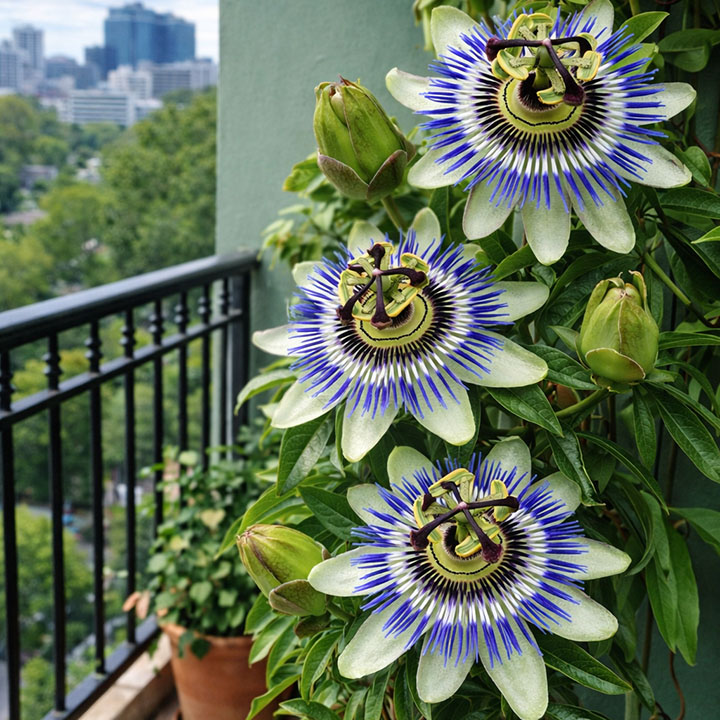
Passionfruit is one of the best fruits for a larger balcony if you have a trellis, railing, or vertical support. It grows vigorously, creates leafy privacy, and can reward you with abundant fruit in warm conditions. On the right balcony, it doubles as both a screen and an edible crop.
Passionfruit does best in Brisbane, Sydney, Perth, and other warm to mild climates. In Melbourne and Adelaide it can still grow well in a protected sunny position. In colder regions, it may be less reliable unless your balcony is warm and sheltered.
- Best for: Vertical balcony gardens and privacy screens
- Sun: Full sun
- Pot size: Large pot or trough
- Top tip: Give it strong support and regular feeding
6. Figs
Figs are surprisingly good in pots and are often easier on balconies than people expect. They like warmth, sunshine, and good drainage. A compact or dwarf fig can become a beautiful feature plant and produce delicious fruit in a container with the right care.
Figs are especially well suited to Adelaide, Perth, Melbourne, and Sydney, where warm summers help fruit ripen well. On windy balconies, the broad leaves can get damaged, so a sheltered spot is best.
- Best for: Sunny balconies with enough room for a statement plant
- Sun: Full sun
- Pot size: Large container
- Top tip: Keep pruning light and refresh potting mix as the plant matures
7. Mulberries (Dwarf Varieties)
Dwarf mulberries are excellent for balconies because they can be productive in pots and respond well to pruning. They grow quickly, fruit generously, and are a good option for people who want a fruiting plant that feels a little more unusual than citrus or strawberries.
They handle a range of Australian climates, including Melbourne, Sydney, Adelaide, and Perth, as long as they receive good sun. They can also tolerate summer heat better than many softer fruits.
- Best for: Gardeners wanting a productive potted fruit tree
- Sun: Full sun
- Pot size: Large pot
- Top tip: Prune after fruiting to maintain size and shape
8. Cumquats and Other Compact Citrus
Cumquats, mandarins, and other compact citrus varieties are excellent balcony plants in Australia. They combine ornamental appeal with edible fruit and often handle pot life very well. Cumquats are especially useful because they stay smaller than many other citrus trees.
These are ideal for Sydney, Brisbane, Perth, Adelaide, and mild parts of Melbourne. In colder areas, place them where they receive maximum winter sun and shelter from frost.
- Best for: Decorative edible balconies
- Sun: Full sun
- Pot size: Medium to large container
- Top tip: Watch drainage closely and avoid letting roots sit in water
9. Raspberries (Compact Varieties)
Compact raspberries can work on balconies, especially in cooler Australian climates. They are less common than strawberries but can be very rewarding if you have a sunny position and enough room for a deeper container.
They are usually better suited to Melbourne, Hobart, Canberra, and cooler upland areas than to hot, humid balconies. Afternoon protection can help in warmer regions.
- Best for: Cooler cities and gardeners wanting berries beyond strawberries
- Sun: Full sun to part sun
- Pot size: Deep container
- Top tip: Keep moisture steady during fruiting
10. Pineapple
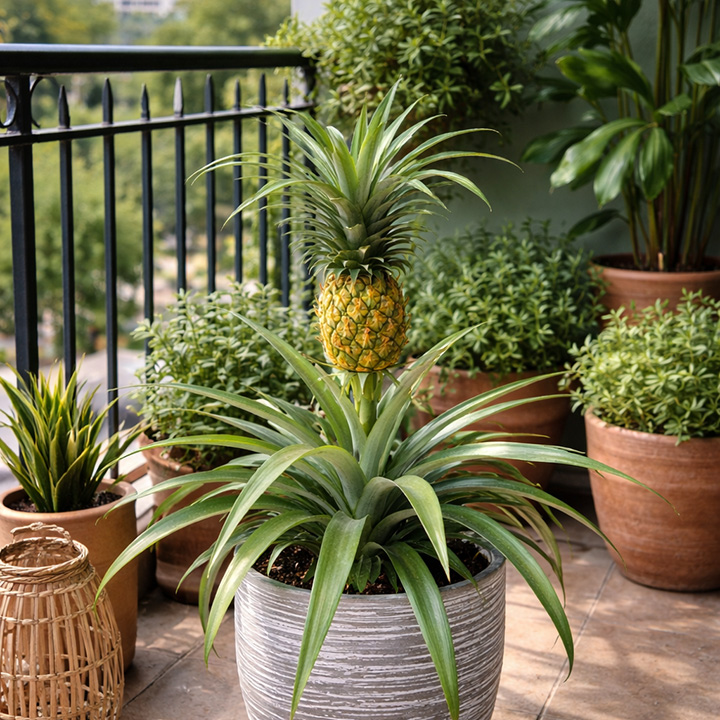
Pineapple is a fun and surprisingly good choice for warm Australian balconies. It grows well in pots, has strong architectural foliage, and suits small-space gardeners looking for a tropical feel. While it takes patience, it can be a great conversation plant.
It is best suited to Brisbane and warmer parts of coastal Australia. In cooler cities, it is more of a novelty plant unless your balcony is very warm and protected.
- Best for: Warm, tropical-style balconies
- Sun: Full sun to bright light
- Pot size: Medium pot with sharp drainage
- Top tip: Avoid cold conditions and don’t overwater
Best Balcony Fruit Plants by Australian City
Sydney
Sydney’s mild winters and warm summers make it one of the easiest cities in Australia for balcony fruit growing. Citrus, strawberries, passionfruit, cumquats, figs, and blueberries can all work well depending on your balcony sun and exposure. Coastal balconies may need wind protection, while western-facing balconies may need afternoon shade in peak summer.
Melbourne
Melbourne balconies often deal with variable weather, cool snaps, and wind, so choose fruit plants that can handle changing conditions. Strawberries, blueberries, dwarf lemons, figs, and mulberries are strong choices. A sheltered north-facing balcony gives the best chance of success, especially for citrus and warmth-loving fruit.
Brisbane
Brisbane’s warmth and humidity suit tropical and subtropical fruit plants beautifully. Limes, lemons, passionfruit, pineapples, strawberries, and cumquats can all thrive. The main challenge is intense heat and moisture loss on exposed balconies, so regular watering and mulch are important.
Perth
Perth’s hot, dry summers are excellent for many fruiting plants, especially citrus, figs, mulberries, and passionfruit. The biggest issue is heat stress and drying winds, so pots may need more frequent watering and some protection from severe afternoon sun on exposed balconies.
Adelaide
Adelaide’s climate is well suited to figs, citrus, strawberries, mulberries, and passionfruit. Like Perth, summer heat can be intense, so balcony gardeners should use quality potting mix, mulch, and deep watering to keep fruit plants healthy through hot spells.
Canberra
Canberra’s colder winters make it more challenging for tropical fruit and some citrus, but berries, blueberries, strawberries, and certain dwarf fruit trees can still work well on a sunny, protected balcony. Frost protection may be needed in winter, especially for citrus in exposed positions.
Hobart
Hobart balcony gardeners are best focusing on cool-climate fruit plants like strawberries, raspberries, and blueberries, with citrus only in warm sheltered spots. Maximising light is important, as fruiting plants generally need strong sun to crop well.
How Much Sun Do Balcony Fruit Plants Need?
Most fruit plants need more sun than foliage plants. As a general rule, aim for at least 5 to 6 hours of direct sun, with 6 to 8 hours being ideal for many crops such as citrus, figs, strawberries, and passionfruit. If your balcony only gets part sun, berries are usually a better choice than fruit trees.
If your balcony is shaded for most of the day, fruiting will be limited. In that case, it may be better to focus on herbs and leafy greens, or choose one or two plants like strawberries that can still produce reasonably in brighter partial sun.
- Full sun balcony: Citrus, figs, passionfruit, mulberries, strawberries
- Part sun balcony: Strawberries, blueberries, raspberries
- Bright sheltered balcony: Compact citrus, cumquats, some berries
Best Pots and Containers for Balcony Fruit
Fruit plants need more root space than many ornamental balcony plants. Small pots dry out too quickly and restrict growth. Choosing the right container from the start makes fruit growing much easier.
- Strawberries: Hanging baskets, troughs, shallow wide pots
- Blueberries: Medium to large pots with acidic mix
- Citrus and figs: Large, heavy pots for stability
- Passionfruit: Large tubs or troughs with trellis support
- Mulberries: Large pots with room for ongoing root growth
Terracotta looks beautiful but dries out faster. Plastic and glazed pots hold moisture better, which can be useful in hot Australian cities. Always make sure every pot has good drainage holes.
Watering and Feeding Fruit Plants on Balconies
Fruit plants in pots need consistent moisture, especially in Australian summer. Because balconies can be exposed to reflected heat, wind, and hot surfaces, containers often dry out faster than expected. Water deeply so moisture reaches the root zone, rather than giving frequent tiny splashes.
Feeding also matters because potted fruit plants use nutrients quickly. Regular applications of liquid feed or slow-release fertiliser during the growing season can improve flowering, fruit set, and plant health.
- Check pots more often during heatwaves
- Mulch the soil surface to reduce evaporation
- Use premium potting mix for edible plants
- Feed citrus with citrus fertiliser
- Feed berries and general fruit plants with a balanced fertiliser
Common Balcony Fruit Growing Mistakes
- Choosing plants that are too large for the space
- Using pots that are too small
- Underestimating how much sun fruit plants need
- Letting pots dry out completely in summer
- Ignoring wind exposure on high-rise balconies
- Using poor-quality potting mix
- Growing heat-sensitive fruit on a scorching west-facing balcony without protection
Top Tips for a Productive Balcony Fruit Garden
- Start with two or three reliable plants rather than too many at once
- Match your plant choices to your city’s climate and your balcony’s sun pattern
- Use the largest practical pots you can fit
- Choose dwarf varieties whenever possible
- Group pots together to help reduce moisture loss
- Use vertical space for climbers like passionfruit
- Protect plants from harsh wind and extreme heat
- Rotate containers occasionally so plants grow evenly
Final Thoughts
The best fruit plants for balconies in Australia are the ones that suit your climate, sun exposure, and available space. For many balcony gardeners, strawberries, dwarf lemons, limes, blueberries, passionfruit, and figs are the strongest starting point. They offer a good balance of productivity, beauty, and container performance.
If you live in a warm city like Brisbane, Sydney, or Perth, citrus and passionfruit can be stars of the balcony. In cooler cities like Melbourne, Canberra, and Hobart, berries and carefully placed dwarf fruit trees are often the safer bet. Start with a few well-chosen plants, learn how your balcony behaves across the seasons, and build from there. Even a small Australian balcony can produce an impressive amount of fresh fruit with the right setup.

Comments are closed.