
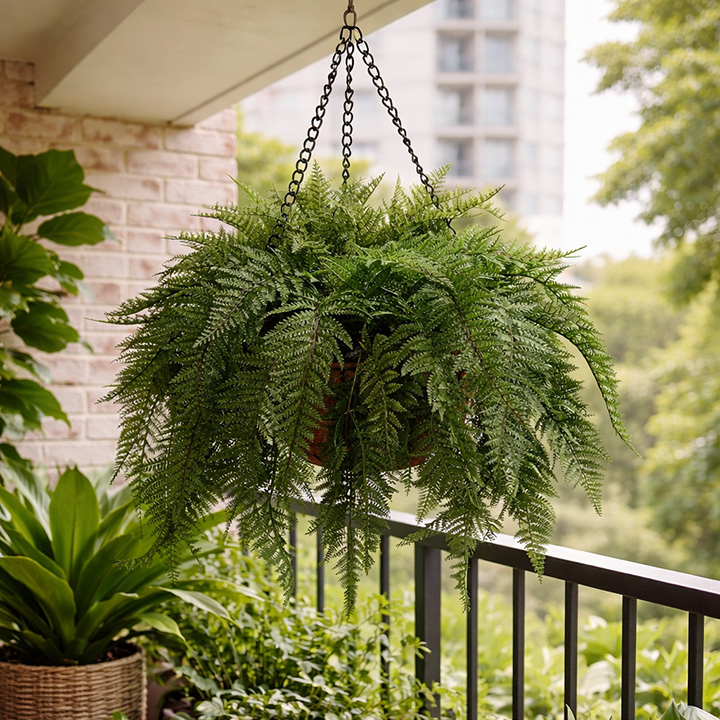
A full shade balcony can still become a lush, beautiful garden. In fact, some of the best balcony plants in Australia prefer protection from harsh afternoon sun, drying winds, and heat reflected off walls and paving. If your balcony gets little to no direct sun, the key is choosing plants grown for foliage, texture, and shade tolerance rather than heavy flowering performance.
In Australian conditions, full shade balconies are often found on south-facing balconies in the southern states, or on lower-level balconies shaded by neighbouring buildings. These spaces stay cooler, hold moisture longer, and are ideal for ferns, leafy tropical-style plants, and a select group of flowering shade lovers.
This guide covers the best plants for full shade balconies in Australia, how to match them to your city and climate, and how to keep a shaded balcony looking healthy year-round.
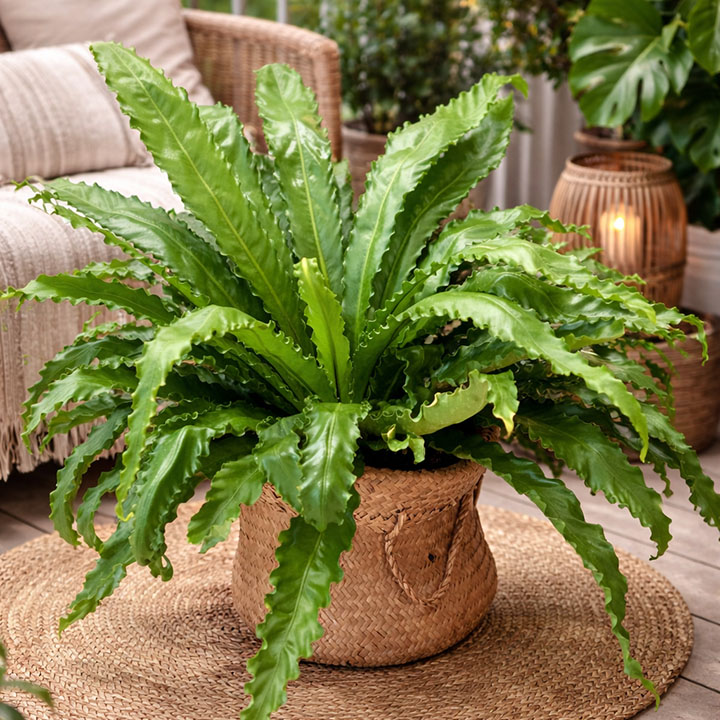
What Counts as Full Shade on a Balcony?
For balcony gardening, full shade usually means:
- Less than 2 hours of direct sun a day
- Bright indirect light for much of the day
- No strong afternoon sun
- Sun blocked by walls, nearby towers, trees, or roof overhangs
Very deep shade is harder. If your balcony is dark all day and feels almost like an indoor room, plant choices become more limited. In that case, focus on reliable foliage plants and use light-coloured pots and reflective surfaces to brighten the space.
Why Full Shade Can Actually Be an Advantage
Many Australian gardeners assume shade is a problem, but on balconies it can be a strength. Full shade means:
- Less heat stress in summer
- Slower drying pots
- Reduced leaf scorch
- Better conditions for ferns and tropical foliage
- A cooler outdoor space for sitting and relaxing
The main trade-off is slower growth and fewer flowers. Shade balconies are usually at their best when designed around leaves, layered greenery, trailing plants, and different textures rather than bright sun-loving annuals.
Best Plants for a Full Shade Balcony in Australia
These are some of the most reliable options for Australian balconies with little or no direct sun.
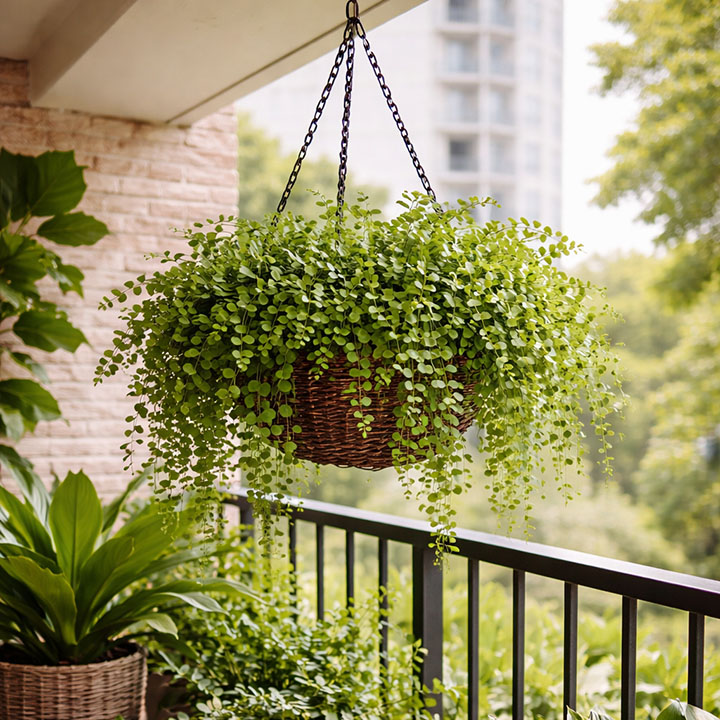
1. Maidenhair Fern
Delicate, soft and elegant, maidenhair fern is one of the classic shade plants for balconies. It suits sheltered spaces with consistent moisture and high humidity.
- Best for: Cool to mild cities, sheltered balconies, humid corners
- Look: Fine, light green foliage
- Needs: Moist potting mix, protection from drying wind
This is a beautiful choice for Melbourne, Sydney, Hobart, and shaded inner-city courtyards. In hot dry climates, it needs extra care and regular watering.
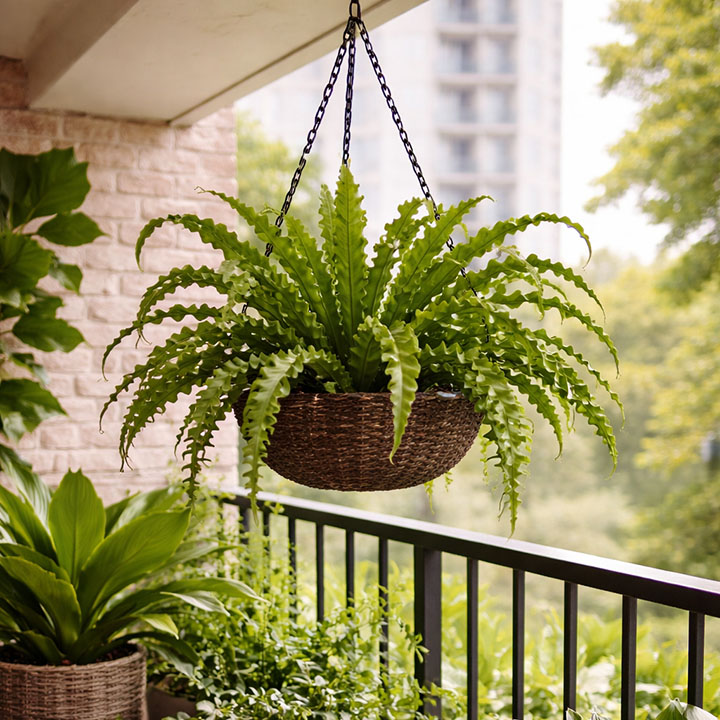
2. Bird’s Nest Fern
If you want a bolder tropical look, bird’s nest fern is excellent. Its broad glossy leaves create impact even in dim conditions, making it perfect for statement pots.
- Best for: Brisbane, Sydney, coastal NSW, humid balconies
- Look: Large architectural fronds
- Needs: Warmth, moisture, protection from cold winds
Use one large specimen in a feature pot, or group several together for a lush rainforest style.
3. Kangaroo Fern
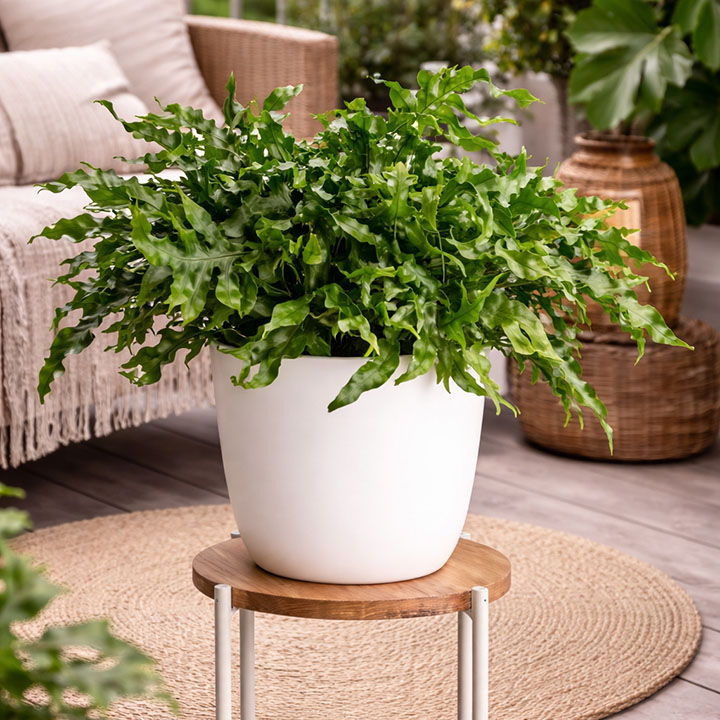
Kangaroo fern is a strong performer for Australian shade gardens and works beautifully in pots and hanging baskets. Its spreading habit softens hard balcony edges.
- Best for: Native-leaning balconies, trailing over pot edges
- Look: Glossy lobed foliage
- Needs: Even moisture, bright shade
It is especially useful when you want something fuller and easier than maidenhair.
4. Cast Iron Plant (Aspidistra)
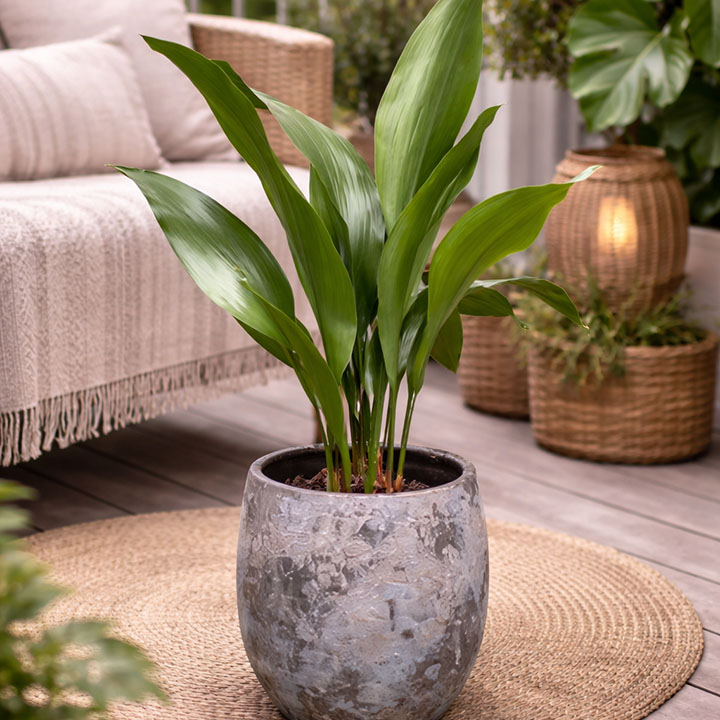
This is one of the toughest shade plants you can grow. Aspidistra handles low light, irregular care, and sheltered balcony conditions better than many fussier shade species.
- Best for: Beginners, apartment balconies, low-maintenance setups
- Look: Dark green upright foliage
- Needs: Free-draining mix, moderate watering
If you want a plant that still looks respectable when life gets busy, this is one of the best choices.
5. Clivia
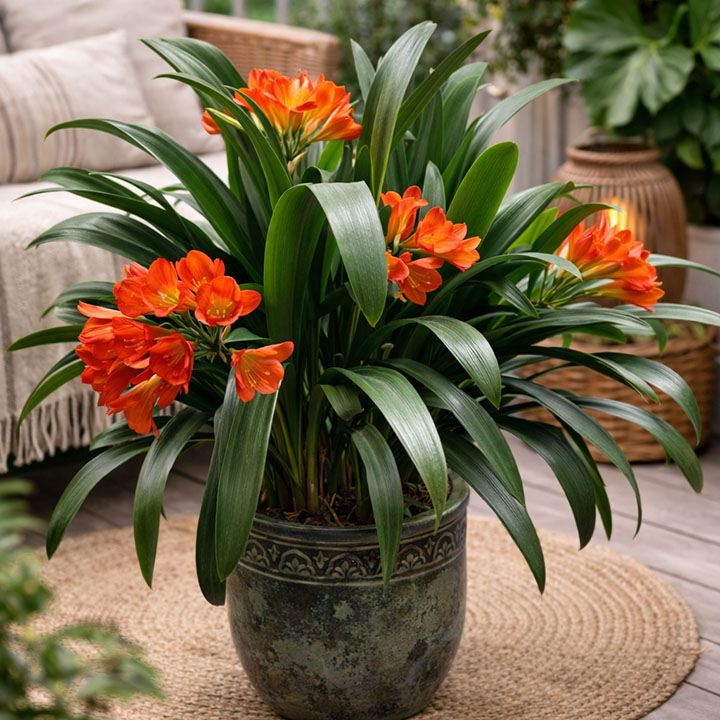
Clivia is a reliable performer for bright shade and protected balconies. It is grown mainly for its strap-like foliage, but mature plants also produce striking orange, cream, or yellow flowers in season.
- Best for: Southern and eastern Australian cities
- Look: Neat green foliage with seasonal flowers
- Needs: Shelter, good drainage, not too much direct sun
Clivia is especially useful when you want a plant that feels tidier and more structured than ferns.
6. Begonias
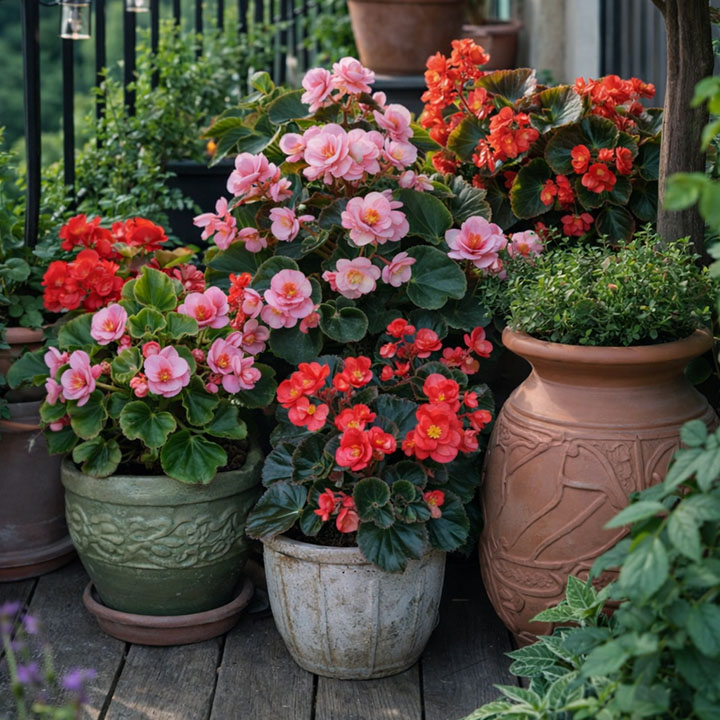
Begonias are among the best plants for full shade balconies because many varieties offer dramatic foliage, compact size, and long flowering periods in protected conditions.
- Best for: Decorative pots, colour in filtered light, sheltered balconies
- Look: Patterned leaves, red undersides, pink or white flowers
- Needs: Moist but well-drained mix, humidity, protection from harsh weather
Choose cane begonias for height and rhizomatous begonias for bold foliage. They are especially good in Melbourne, Sydney, Brisbane, and coastal areas.
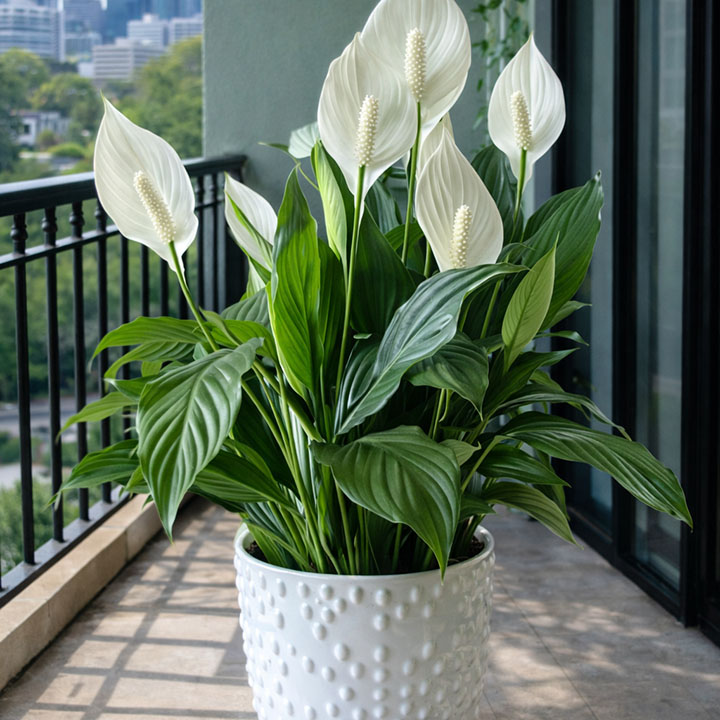
7. Peace Lily
Peace lily is often thought of as an indoor plant, but on a sheltered full shade balcony it can perform beautifully outdoors in many Australian cities.
- Best for: Very shaded balconies with bright indirect light
- Look: Glossy leaves and white flowers
- Needs: Regular water, humidity, frost protection
This is a strong option for urban balconies that feel almost like outdoor rooms.
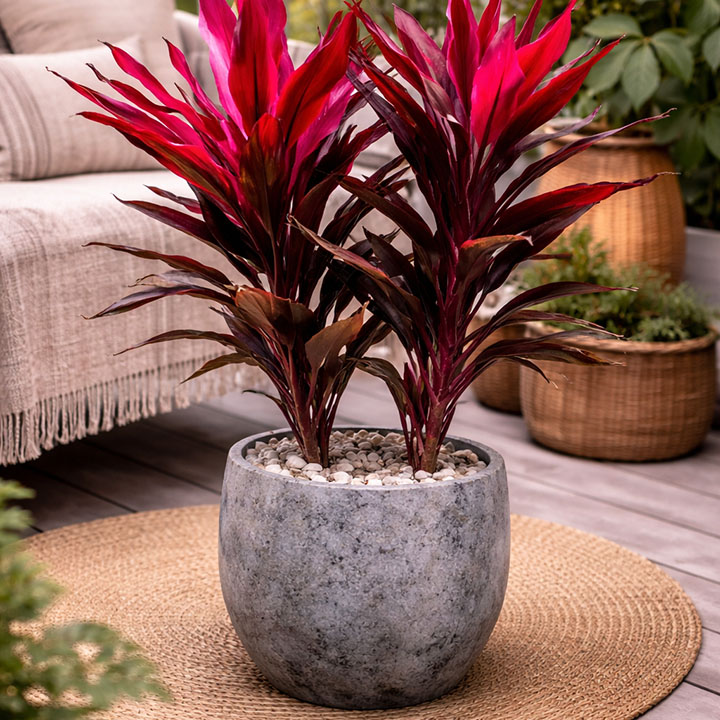
8. Cordyline stricta
For an Australian native option with upright form, Cordyline stricta is worth considering. It can grow in sun or shade and suits pots well when kept in a protected position.
- Best for: Native planting palettes, vertical accent planting
- Look: Tall strappy leaves with purple berries on mature plants
- Needs: Moist but free-draining soil, shelter from severe exposure
It combines well with ferns and trailing natives for a softer Australian shade garden look.
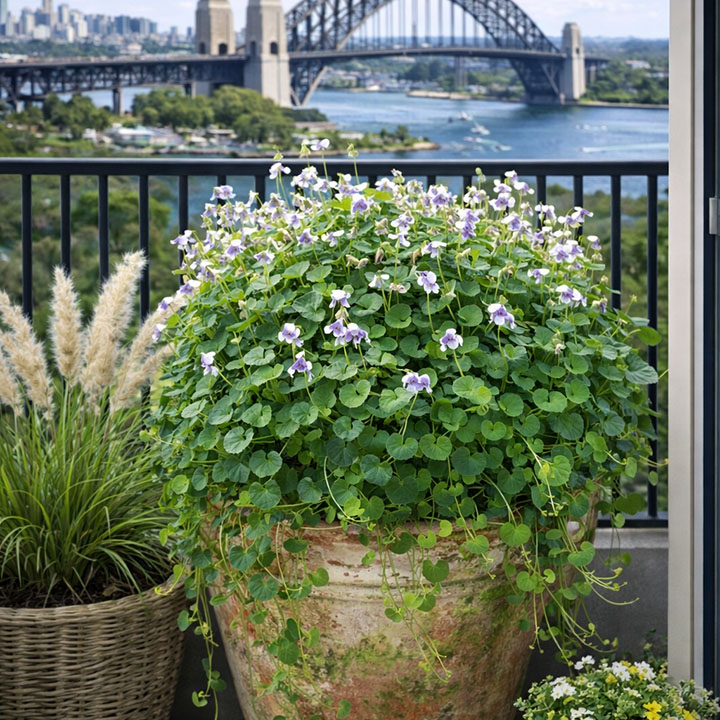
9. Native Violet
Native violet is a useful low-growing Australian groundcover for wide pots, troughs, and balcony boxes in shade. It creates a soft carpet effect and can produce small purple and white flowers.
- Best for: Filling under taller plants, wide containers, soft edges
- Look: Small rounded leaves and dainty flowers
- Needs: Moisture, bright shade, light feeding
It is especially handy for making a shaded balcony feel planted and full rather than sparse.
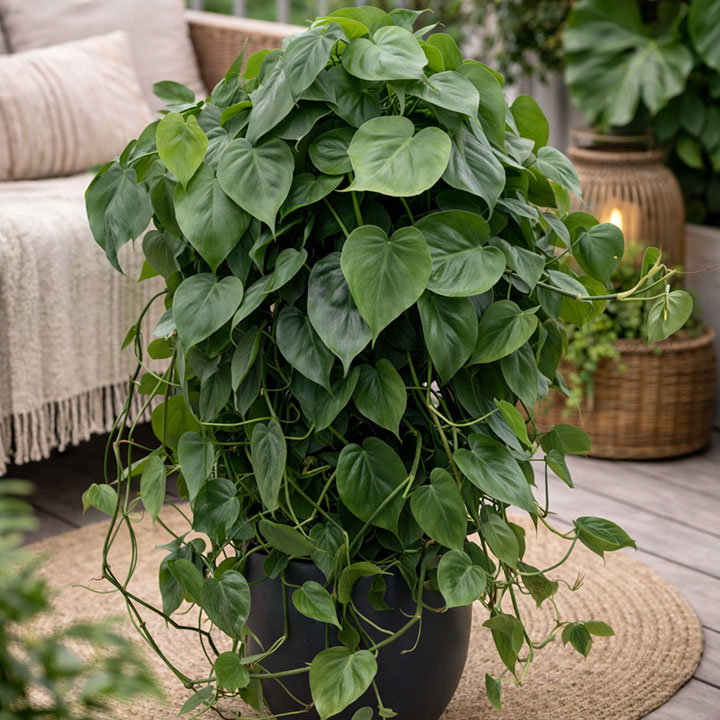
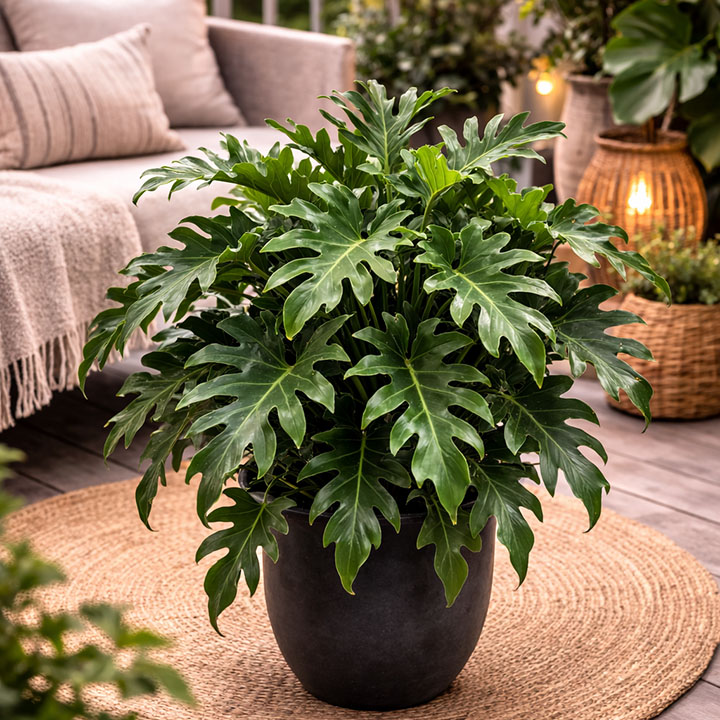
10. Philodendrons and Pothos
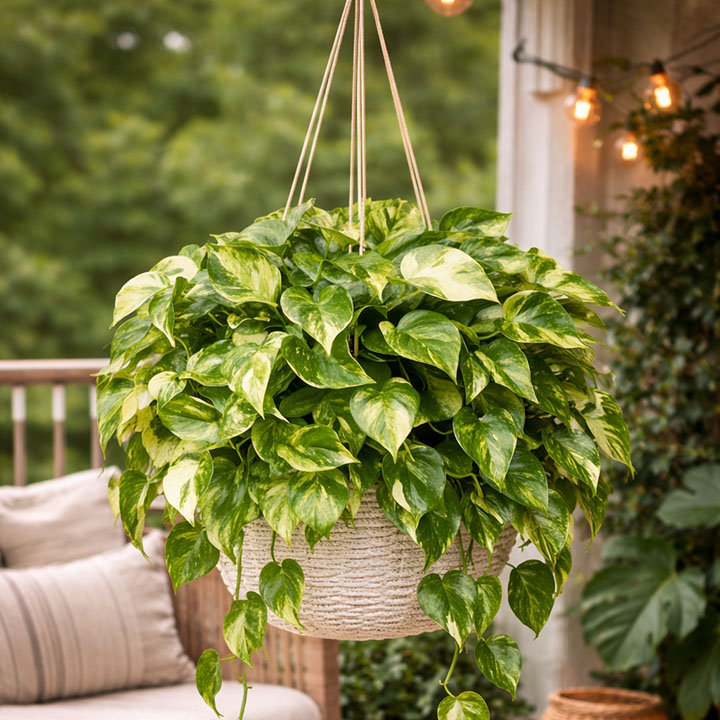
For a modern apartment balcony, it is hard to beat trailing tropical foliage. Philodendrons and pothos thrive in bright shade and bring a lush, cascading look to shelves, railing planters, and hanging pots.
- Best for: Contemporary balconies, vertical greenery, trailing display
- Look: Heart-shaped or trailing leaves
- Needs: Frost protection, moderate watering, bright indirect light
These are ideal if your shade balcony gets light but almost no direct sun at all.
11. Tractor seat plant
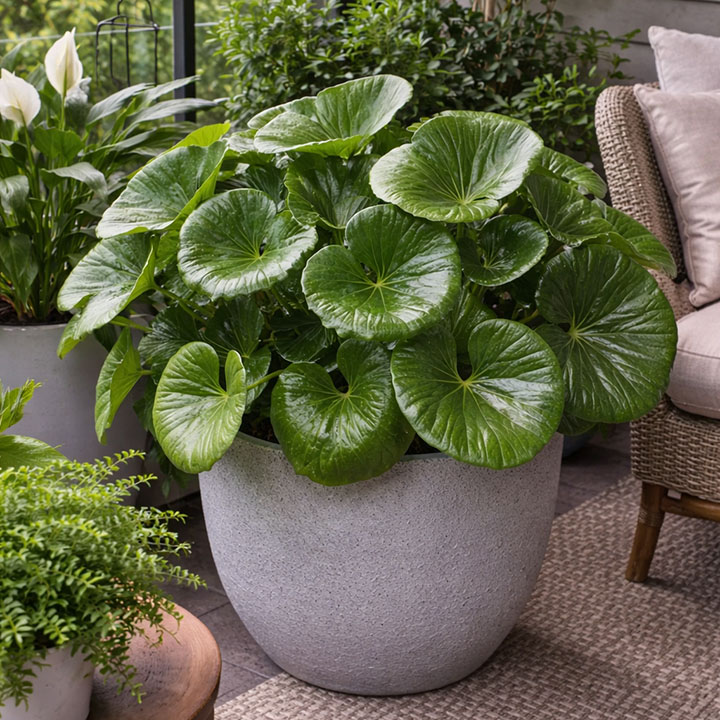
Tractor seat plant is a great choice for a full shade balcony in Australia because it is grown for its large, rounded glossy leaves that create a lush tropical look. It prefers bright shade to full shade and does best in sheltered balcony positions with regular moisture and protection from hot drying winds. Its bold foliage makes a strong statement in pots, especially when paired with ferns, peace lilies, and other shade-loving plants.
Best for: lush balcony styling, large pots, tropical shade gardens
Best feature: oversized glossy leaves
Good for: shaded balconies in mild to warm Australian climates
Best Full Shade Balcony Plants by Australian City
Melbourne
Melbourne balconies often face cool southerly conditions, changeable weather, and drying wind. Full shade can actually protect plants from summer scorch, but winter cold slows growth.
Best choices: Maidenhair fern, kangaroo fern, clivia, begonias, aspidistra, native violet
Tips: Use sheltered positions, avoid waterlogged pots in winter, and protect tender plants from cold snaps and strong wind.
Sydney
Sydney’s humidity and relatively mild winters suit many shade plants. A full shade balcony here can support lush foliage if airflow is good and pots do not stay soggy.
Best choices: Bird’s nest fern, maidenhair fern, begonias, peace lily, clivia, philodendrons
Tips: Watch for fungal problems in dense plantings, and give plants space so air can move between pots.
Brisbane
Brisbane’s warmth and humidity are excellent for tropical shade plants. A full shade balcony can stay productive and green year-round, though summer rain and humidity can increase pest and fungal pressure.
Best choices: Bird’s nest fern, peace lily, philodendrons, pothos, begonias, cordyline stricta
Tips: Prioritise drainage, clean up fallen leaves, and avoid overcrowding.
Perth
Perth’s dry heat and strong summer conditions can be harsh, so full shade is valuable. Even shade balconies can dry quickly because of reflected heat and wind.
Best choices: Aspidistra, clivia, kangaroo fern, cordyline stricta, hardy begonias in protected spots
Tips: Use larger pots, mulch the surface, and water deeply rather than lightly.
Adelaide
Adelaide’s hot summers make shade an advantage, but balconies can still run dry fast. Choose tougher foliage plants and protect delicate ferns from hot winds.
Best choices: Aspidistra, clivia, kangaroo fern, native violet, cordyline stricta
Tips: Keep plants out of wind tunnels and avoid small black pots that overheat.
Canberra and Hobart
These cooler cities are good for many shade plants, but frost and cold winds matter more in winter. Pick sheltered positions and move tender tropicals closer to walls or indoors during cold spells.
Best choices: Maidenhair fern, kangaroo fern, aspidistra, clivia, native violet
Tips: Reduce watering in winter, avoid frost pockets, and use insulated or heavier pots for protection.
Darwin
Darwin’s tropical climate suits lush foliage plants, but wet season humidity demands excellent airflow and drainage.
Best choices: Bird’s nest fern, peace lily, philodendrons, pothos, cordyline stricta
Tips: Use airy potting mix, raise pots off the floor, and monitor for rot during the wet season.
How to Design a Full Shade Balcony So It Still Looks Bright
Shade balconies can become gloomy if everything is dark green and flat. To make the space feel fresh and inviting:
- Use pots in white, terracotta, sandstone, or pale grey
- Mix leaf sizes and shapes for contrast
- Add trailing plants to soften railings and walls
- Use one or two upright plants for height
- Repeat plants in groups for a fuller look
- Add mirrors or light outdoor furniture to bounce light around
Think layers: upright plant at the back, medium foliage in the centre, and trailing or groundcover plants at the front.
Potting Mix and Containers for Shade Balconies
Shade plants still need excellent drainage. Balconies with little sun dry more slowly, so heavy or compacted potting mix can quickly lead to root rot.
Use a quality premium potting mix and improve it with ingredients suited to your plant selection, such as:
- Orchid bark for airflow
- Coco coir for moisture retention
- Perlite for drainage
- Compost in small amounts for fertility
Choose pots with drainage holes and avoid letting saucers stay full after watering or rain.
How Often Should You Water Full Shade Balcony Plants?
One of the biggest mistakes on a shade balcony is overwatering. Because the sun is limited, pots stay wet longer.
Instead of watering on a fixed schedule, check each pot first:
- Push a finger a few centimetres into the mix
- Water when the top layer starts drying out
- Keep ferns more evenly moist than tougher plants like aspidistra
- Water less often in winter
Small pots dry faster, while large grouped pots hold moisture longer and create a more stable root zone.
Feeding Shade Plants
Plants in full shade usually grow more slowly, so they often need less feeding than sun-loving annuals and vegetables. A gentle approach works best.
- Apply a slow-release fertiliser in spring
- Use liquid fertiliser monthly through the warmer months if needed
- Reduce feeding in winter in cooler parts of Australia
- Do not overfeed low-light plants, as this can create weak growth
Common Problems on Full Shade Balconies
Yellow Leaves
Usually caused by overwatering, poor drainage, or old foliage naturally aging.
Leggy Growth
Your balcony may be too dark even for shade plants. Move pots to the brightest available position.
Brown Crispy Edges
Often caused by wind, dry air, irregular watering, or reflected heat rather than too much sun alone.
Mould or Fungus
This can happen where plants are crowded and airflow is poor. Thin growth, remove dead leaves, and avoid leaving water sitting on foliage overnight.
Best Low-Maintenance Picks for Full Shade
If you want a simple, forgiving full shade balcony, start with these:
- Aspidistra
- Kangaroo fern
- Clivia
- Cordyline stricta
- Pothos
These are easier to manage than delicate humidity-loving ferns and are better suited to busy apartment gardeners.
A Simple Planting Plan for a Full Shade Balcony
If you are starting from scratch, this is an easy mix that works well on many Australian balconies:
- 1 large bird’s nest fern or aspidistra as a focal point
- 2 medium clivias or begonias for body and colour
- 2 kangaroo ferns to soften the arrangement
- 1 trailing pothos or native violet to spill over the edges
This combination gives you height, texture, fullness, and movement without needing direct sun.
Final Thoughts
A full shade balcony does not have to be bare or boring. In many parts of Australia, it can actually be easier to manage than a scorching west-facing balcony. By choosing plants that naturally suit lower light, keeping drainage sharp, and matching your plant palette to your local climate, you can create a balcony that feels cool, calm, and beautifully green all year.
If you want the safest all-round plant choices, start with aspidistra, kangaroo fern, clivia, begonias, and one or two statement ferns. Once those are thriving, you can add trailing foliage and native groundcovers to build out a fuller shaded balcony garden.

Comments are closed.