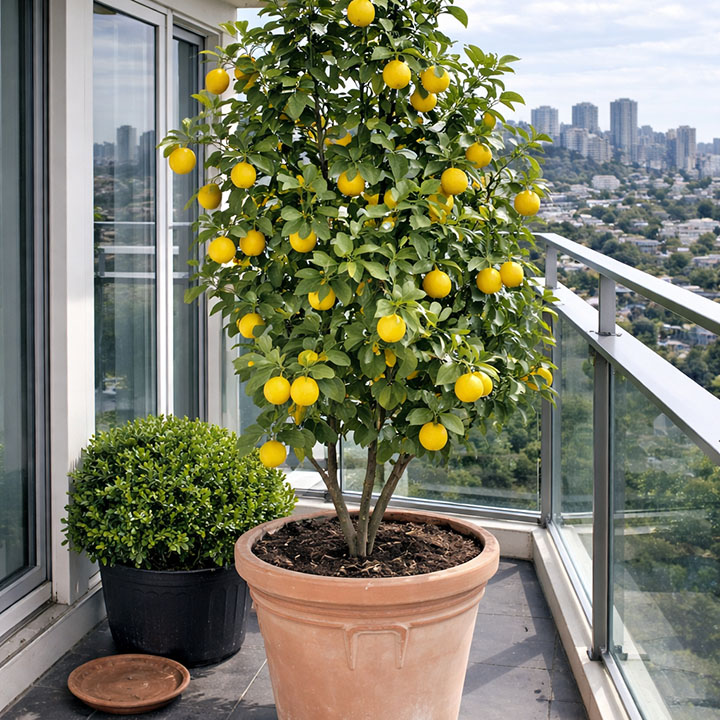
Olive trees are one of the best fruiting plants for sunny Australian balconies. They are tough, attractive, drought-tolerant once established, and naturally suited to the hot, bright, dry conditions that many balconies create. With the right variety, a large pot, and plenty of sun, you can grow olives successfully on a balcony in cities such as Melbourne, Sydney, Adelaide, Perth, Canberra, and Hobart. Even in more humid places like Brisbane, balcony olives can still do well with careful watering, airflow, and variety selection.
If you are hoping for a beautiful edible plant that also looks architectural year-round, olives are hard to beat. Their silvery foliage suits modern balconies, Mediterranean-style spaces, and small urban gardens. While fruit production can be lighter in pots than in the ground, a healthy potted olive can still reward you with flowers, foliage, and a useful harvest over time.
Why olives are a great choice for balconies
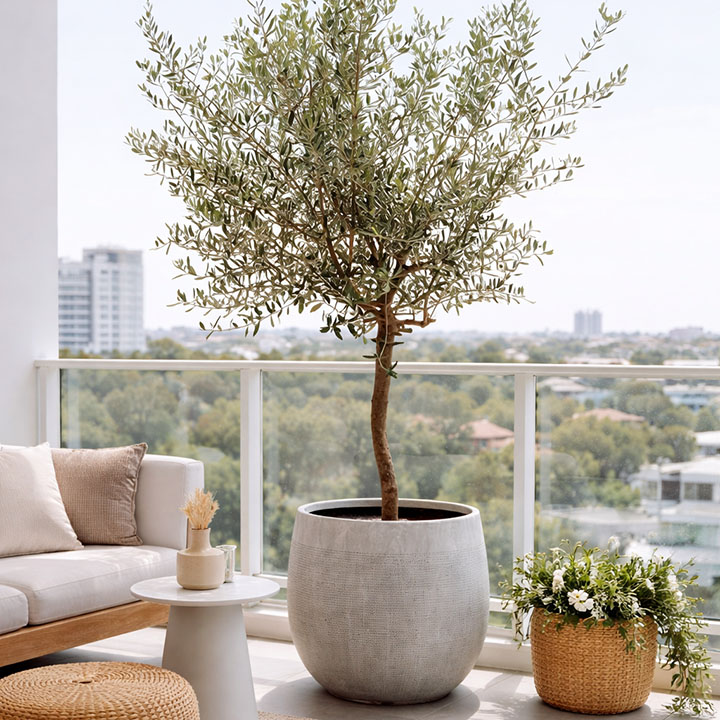
Olives are naturally adapted to conditions that are common on balconies: reflected heat, drying winds, strong sun, and limited soil space. They grow slowly enough to be manageable in containers, respond well to pruning, and can live for many years in a pot if looked after properly.
- They tolerate heat better than many fruit trees.
- They cope well with dry air and windy positions once established.
- Their roots adapt well to container growing if the pot is large enough.
- They are evergreen, so they look good all year.
- They suit modern, coastal, and Mediterranean-style balcony designs.
- Many varieties can be kept compact with light pruning.
The main limitation is sunlight. Olives are not shade plants. If your balcony does not get long hours of direct sun, they may survive but they are unlikely to fruit well.
How much sun do olives need?
Olive trees need as much direct sun as you can give them. For best growth and fruiting, aim for at least 6 to 8 hours of direct sunlight each day. A north-facing or west-facing balcony is usually the best option in Australia. East-facing balconies can work if they still get strong light for much of the day. Deeply shaded south-facing balconies are usually not suitable for olives.
Light levels matter more than almost anything else. A healthy olive in the wrong light often becomes thin, stretched, and disappointing. A smaller olive in a very sunny position usually performs much better than a larger olive grown in partial shade.
Best olive varieties for pots and balconies
Not all olive trees are equally suited to container growing. For balconies, choose a compact or naturally smaller-growing variety that fruits reasonably well and handles pruning. If your main goal is ornamental foliage, you have more flexibility. If you want olives to eat or cure, variety choice matters more.
Good olive varieties for Australian balconies
- Arbequina – One of the best choices for pots. Compact, productive, and relatively easy to manage. Good for smaller spaces.
- Koroneiki – Small-leaved and well suited to warm, sunny conditions. Often grown for oil but also highly ornamental.
- Frantoio – Attractive and reliable in many southern Australian climates. Good pollinator for other varieties.
- Manzanillo – Popular and versatile, though it may get larger over time and needs more pruning in a pot.
- Picual – Strong grower and heat tolerant, better for larger balconies with room for a heavier container.
If you want the best chance of fruit on a balcony, look for a self-fertile olive or grow two compatible varieties if space allows. Even self-fertile olives can crop better when another olive is nearby.
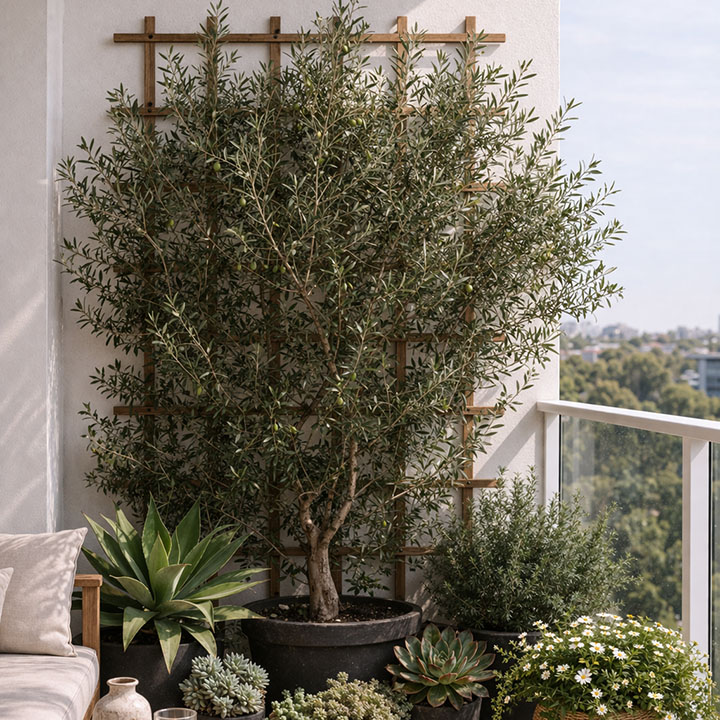
Which Australian cities are best for growing olives on a balcony?
Olives prefer a Mediterranean-style climate: hot to warm summers, good sun, lower humidity, and some cool winter weather. That does not mean they can only be grown in one part of Australia, but performance does vary by city.
Melbourne
Melbourne is a strong city for balcony olives, especially on a sunny balcony with protection from cold southerly winds. The warm to hot summer conditions suit olives well, and the cooler winter helps with flowering and fruit set. Watch for cold snaps and wet winter pots. Good drainage is essential.
Sydney
Sydney balconies can grow olives well, especially in bright, open positions. The challenge is humidity and summer rain rather than cold. Choose a sunny spot with excellent airflow, avoid crowding the tree, and do not keep the pot too wet. Fruiting can still be good in the right position.
Brisbane
Brisbane is possible, but more challenging. The humidity, summer rain, and warm winters are less ideal for olives than southern cities. Success depends on using a very free-draining mix, avoiding waterlogging, and choosing a position with maximum sun and airflow. Olives may grow well as ornamentals but can be less reliable for heavy fruiting.
Perth
Perth is excellent for growing olives. The hot, dry summers and bright light are close to what olives love. On exposed balconies, the main issues are heat stress, drying winds, and rapid pot dehydration in summer. You may need more frequent watering than you expect, especially with terracotta pots.
Adelaide
Adelaide is one of the best cities in Australia for olives. The dry climate and hot summers are highly suitable. Balcony olives in Adelaide often perform very well as long as they have a large enough pot and are watered deeply during heatwaves.
Canberra
Canberra can be very good for olives because of the hot summers and cold winters, but potted olives need more winter protection than in milder cities. A balcony that is sunny by day but sheltered from hard frost and icy wind is ideal. Raise pots slightly off the floor so water drains well in winter.
Hobart
Hobart can suit olives on a sunny balcony, especially with reflected warmth from walls or paving. Growth will be slower than in mainland cities, but olives can still do well. Prioritise a warm, north-facing position and protect plants from persistent cold wind.
Darwin
Darwin is the least suitable major Australian city for olives. The tropical humidity, heavy wet season conditions, and lack of cool winter weather are not ideal. You may be able to keep an olive alive in a very bright, protected position, but it is unlikely to be a top-performing balcony fruit tree there.
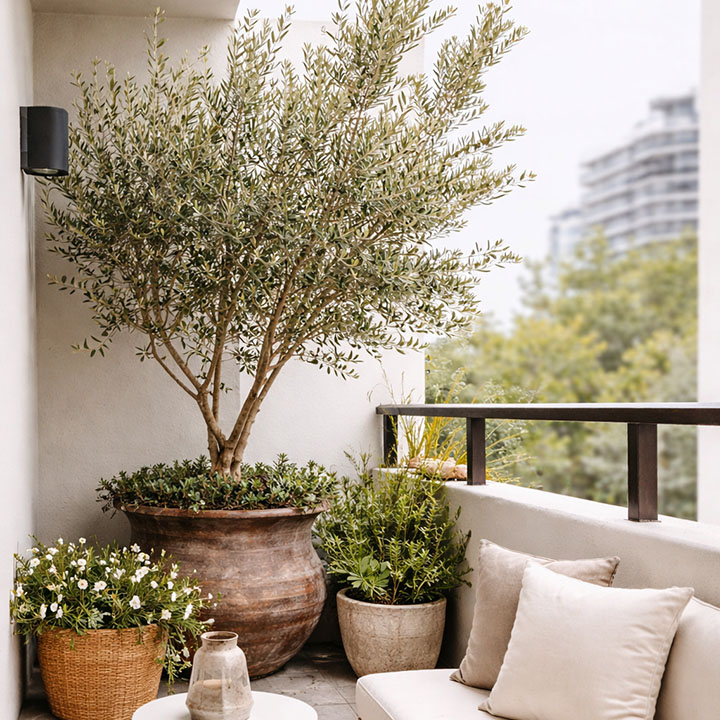
Choosing the right pot
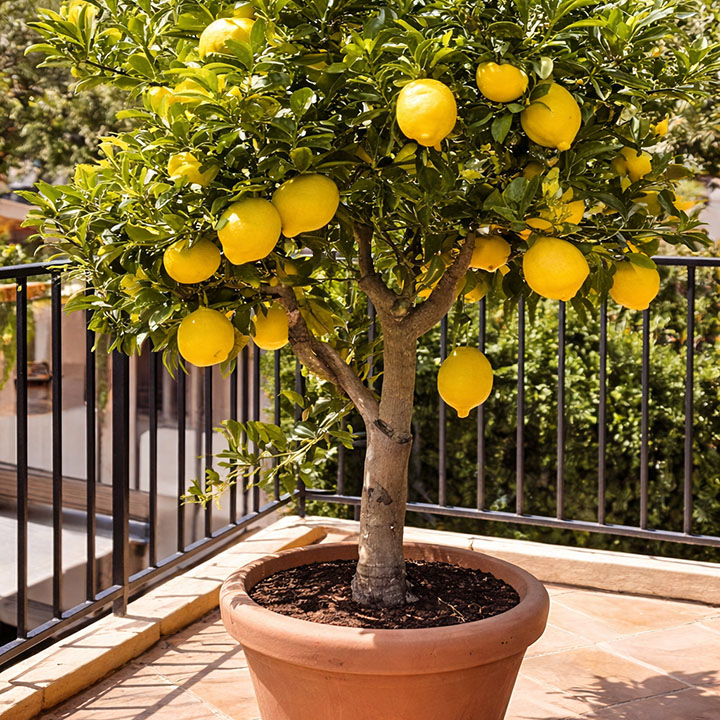
Olives can live in pots for many years, but they do best when started in a container that gives roots room to spread. A very small nursery pot is fine temporarily, but it should not be the long-term home of your tree.
- Start with a pot at least 40 to 50 cm wide for a young tree.
- Move up over time to a large final container around 50 to 70 cm wide if your balcony can handle the size and weight.
- Make sure the pot has large drainage holes.
- Choose a sturdy pot that will not tip in wind.
- Avoid saucers that hold water for long periods.
Terracotta looks beautiful and suits olives aesthetically, but it dries out faster. Lightweight composite or plastic pots hold moisture longer and are often easier on balconies where weight matters. Before choosing a very large container, think about load limits, especially on older balconies.
The best potting mix for balcony olives
The biggest mistake with potted olives is using a mix that stays wet for too long. Olive roots like oxygen. They want moisture, but not soggy soil. Use a premium potting mix designed for large containers and improve drainage further if needed.
A good balcony olive mix should be:
- Free-draining but still able to hold some moisture
- Open and airy, not dense or muddy
- Rich enough to support steady growth
- Slightly mineral in feel rather than overly soft and spongey
You can blend a quality potting mix with a small amount of coarse sand, fine gravel, perlite, or scoria to improve drainage. Do not overdo it. The goal is a balanced mix, not a pot full of rocks. A layer of mulch on top helps regulate temperature and reduces summer drying, but keep mulch slightly back from the trunk.
Planting your olive tree on a balcony
When planting, gently remove the olive from its nursery pot and tease out any circling roots. Place it at the same depth it was growing before. Do not bury the trunk. Firm the mix lightly around the root ball, water it in deeply, and let excess water drain away.
After planting:
- Place the tree in the sunniest part of the balcony.
- Keep it sheltered from extreme gusty wind while it establishes.
- Stake it loosely if necessary for the first season.
- Rotate the pot every few weeks if the tree leans toward the light.
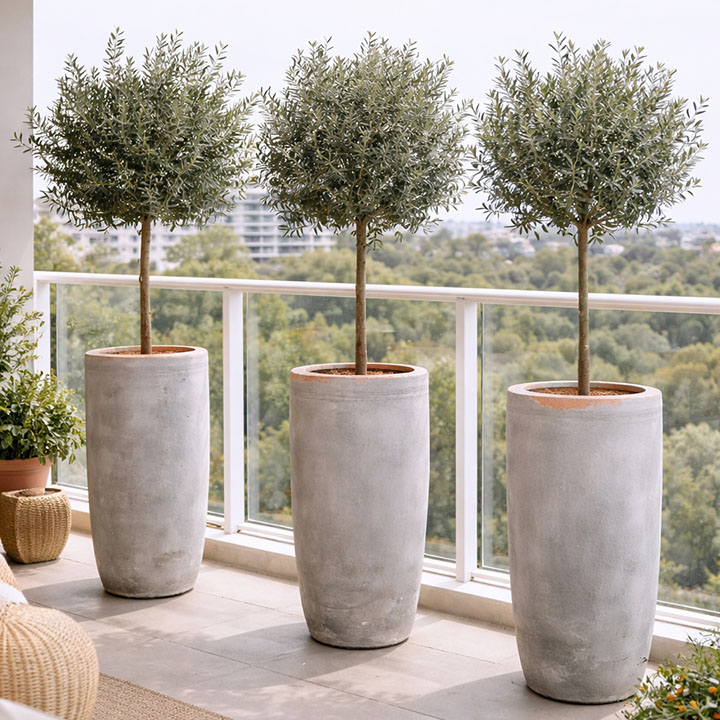
How often to water olives in pots
Olives are drought tolerant in the ground, but balcony olives in pots dry out much faster. That means they still need regular watering, especially through their first year and during hot Australian summers. The key is deep watering followed by partial drying, not constant wetness.
As a general guide:
- Summer: Water when the top few centimetres of mix are dry. This may be every few days in heat, or even daily during extreme hot spells on exposed balconies.
- Spring and autumn: Water when needed, usually less often than in summer.
- Winter: Water sparingly. The mix should not stay saturated in cold weather.
Never water by the calendar alone. Check the soil with your finger or a moisture meter. A tree in Perth on a windy west-facing balcony may need very different watering from one in Hobart on a sheltered balcony. The pot material, tree size, sun exposure, and weather all change the schedule.
Feeding olives in containers
Because container plants rely entirely on the pot for nutrition, regular feeding helps keep olives healthy and productive. Use a controlled-release fertiliser in spring and supplement with a liquid feed during active growth if needed.
- Apply a slow-release fertiliser in early spring.
- Feed again lightly in late spring or early summer if the tree is growing strongly.
- Avoid pushing too much soft growth late in the season.
- If leaves yellow between veins, the tree may need trace elements or iron, especially in alkaline conditions.
Too much fertiliser can be as unhelpful as too little. Overfed olives often produce lush leafy growth with less fruit and can become harder to manage in a small space.
Pruning and shaping balcony olives
One of the reasons olives work so well on balconies is that they tolerate pruning. Light shaping keeps them compact, tidy, and easier to live with. It also improves airflow through the canopy, which is especially important in humid cities.
Prune to:
- Remove dead, damaged, or crossing branches
- Open up the centre slightly for airflow and light
- Keep the tree balanced and in scale with the balcony
- Control height and spread
The best time for more active pruning is usually after the coldest part of winter and before strong spring growth, or after fruiting if needed. Avoid severe pruning every year. A potted olive generally looks best with a naturally airy shape rather than a tightly clipped one.
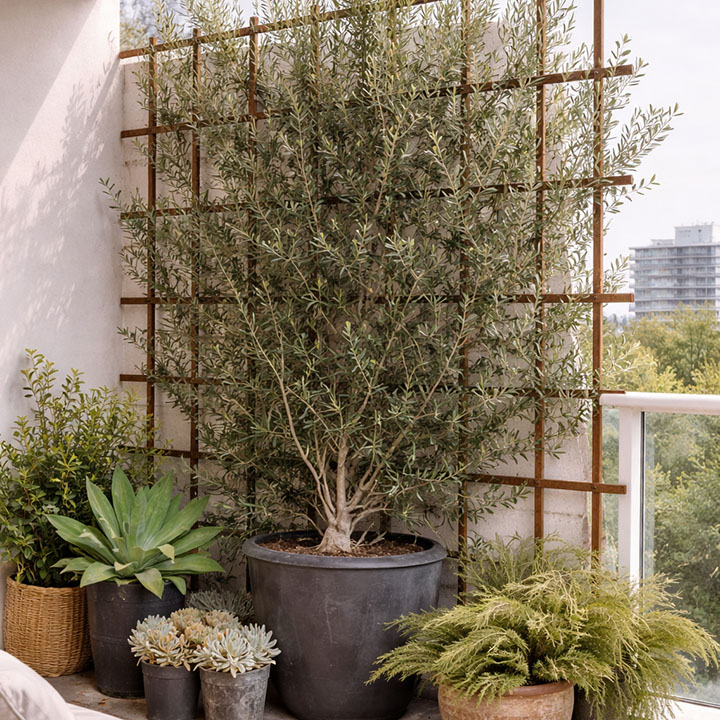
Will a balcony olive tree produce fruit?
Yes, it can, but fruiting depends on variety, sunlight, tree age, climate, pollination, and general plant health. A balcony olive grown mainly for foliage may still flower. A well-grown tree in a sunny position can produce a useful crop. However, it is best to think of fruit as a bonus at first, especially while the tree is young.
To improve your chances of fruiting:
- Choose a good fruiting variety suited to pots.
- Give the tree full sun.
- Do not overwater in winter.
- Do not overfeed with high-nitrogen fertiliser.
- Grow a second compatible olive nearby if possible.
- Be patient, especially with young nursery plants.
Some olives also crop more heavily one year and less the next. That natural cycle can still happen in containers.
Pollination on balconies
Olive flowers are small and wind-pollinated. On balconies, pollination can still happen naturally, especially in open, breezy positions. Self-fertile varieties are the easiest option for small spaces, but planting a second olive nearby can sometimes improve fruit set. If flowering is good but fruiting is poor, limited pollination may be part of the issue.
Common problems with potted balcony olives
Yellow leaves
This can be caused by overwatering, poor drainage, nutrient imbalance, or natural shedding of older leaves. If the mix stays soggy, fix that first.
No fruit
Usually caused by insufficient sun, a tree that is still too young, lack of pollination, unsuitable climate, or overfeeding with nitrogen.
Leaf drop after heat or wind
Hot balconies can dry pots very quickly. Deep watering, mulch, and wind buffering can help. Try not to let the tree swing between bone dry and waterlogged.
Root rot
This is one of the biggest risks in pots. It is usually linked to poor drainage and excessive moisture. Once severe, it can be difficult to reverse.
Scale or sooty mould
These can appear on stressed plants or in sheltered, stagnant conditions. Improve airflow, inspect stems and leaf undersides, and treat infestations early.
Seasonal care for olives on Australian balconies
Spring
This is the main growth season. Refresh mulch, apply fertiliser, check if repotting is needed, and lightly prune if required. Flower buds may begin to form as weather warms.
Summer
Watch watering closely. Pots heat up fast, especially on concrete or tiled balconies. During heatwaves, you may need to water early in the morning and check again in the evening. Avoid letting the mix stay dry for too long in severe heat.
Autumn
Growth begins to slow. Reduce feeding, keep watering balanced, and harvest ripe olives if your tree has fruited. This is also a good time to clean up the plant and inspect for pests.
Winter
Olives generally prefer not to sit wet and cold. Water less often, make sure drainage is clear, and protect potted trees from severe frost, icy wind, or prolonged waterlogging. In milder cities, winter is often when the tree simply rests.
When to repot a balcony olive
Olives do not need frequent repotting, but they do benefit from fresh mix and more root room when they become pot-bound. Signs it is time to repot include roots circling heavily, water running straight through the pot, stunted growth, or the tree drying out extremely quickly.
Repot every few years as needed, ideally in spring. If the tree is already in its largest practical container, root pruning and replacing some of the old mix can help maintain it without moving to a bigger pot.
Design ideas for using olives on a balcony
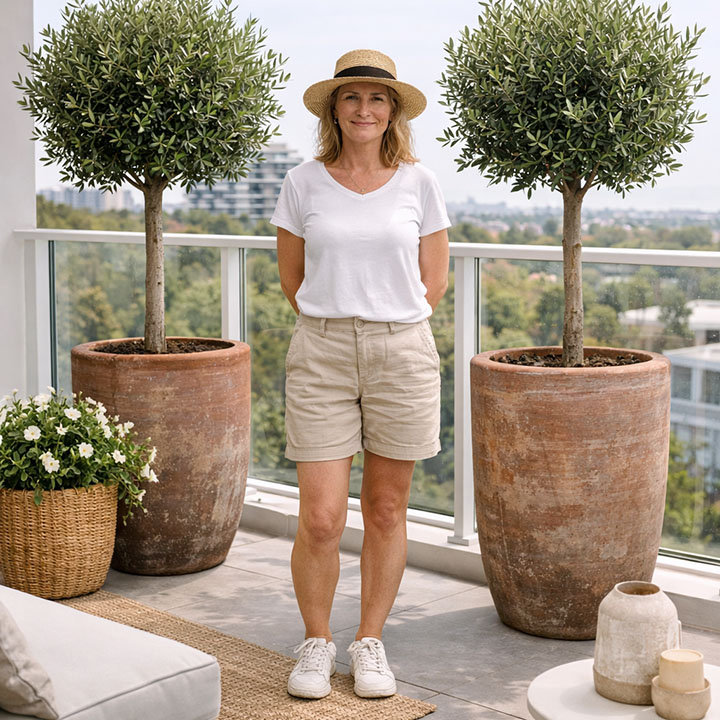
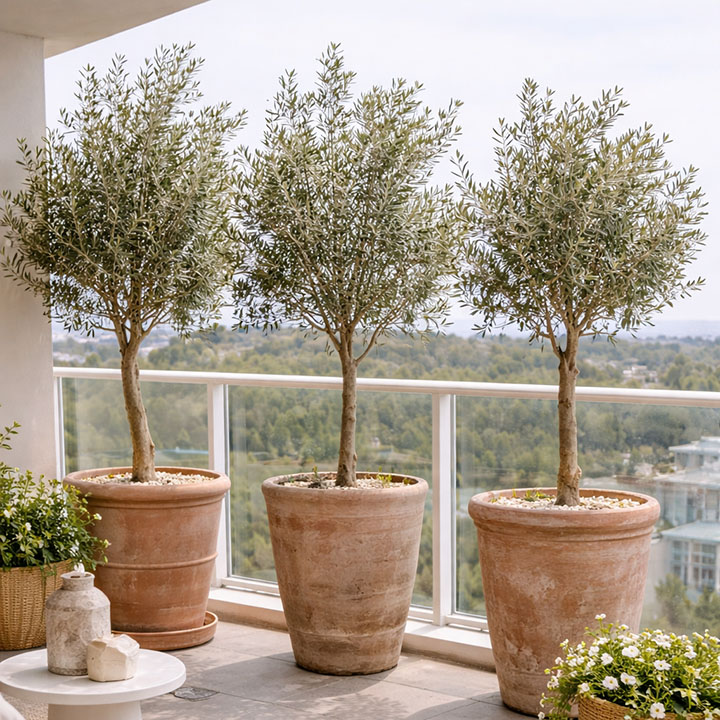
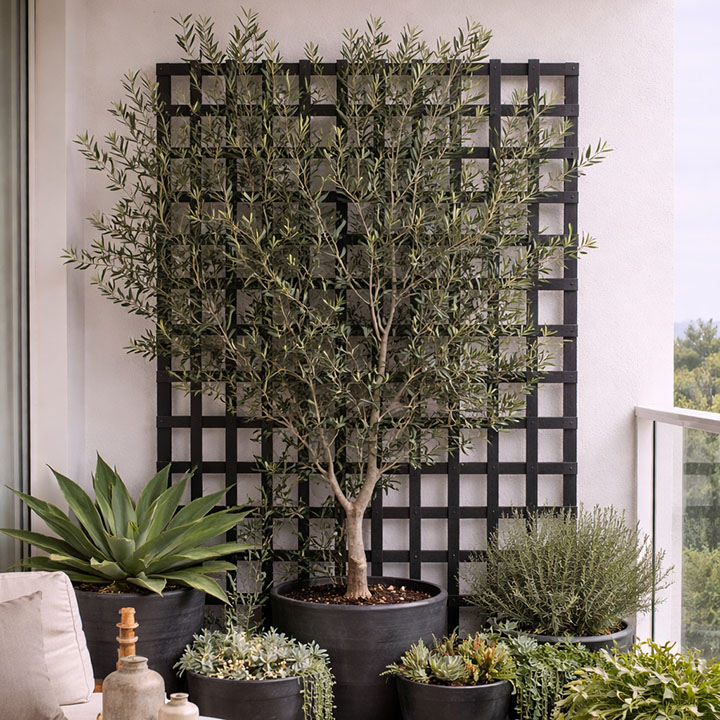
Olive trees are as decorative as they are practical. They pair beautifully with terracotta, gravel, natural timber, white walls, and Mediterranean herbs. A single olive in a large feature pot can anchor the whole balcony. Two matching olives can frame a seating area. Underplanting with thyme, oregano, trailing rosemary, or alyssum can soften the container and make the space feel lush without becoming messy.
Final thoughts
Growing olives on a balcony is a realistic and rewarding option for many Australian gardeners, especially if the space is sunny and well ventilated. In cities such as Adelaide, Perth, Melbourne, Canberra, and Hobart, olives are especially promising. Sydney can also be very successful with care. Brisbane is more challenging but still possible in the right microclimate. Darwin is generally the least suitable.
If you start with the right variety, a generously sized pot, and excellent drainage, your balcony olive can become a long-term feature plant that looks elegant year-round and may even provide a home harvest. Think of it as a combination of edible plant, small tree, and design statement all in one.
FAQ: Growing olives on a balcony
Can olive trees really grow well in pots?
Yes. Olive trees adapt very well to container growing as long as the pot is large enough, the mix drains freely, and the plant gets plenty of direct sun.
How much sun does a balcony olive need?
At least 6 to 8 hours of direct sunlight is ideal. More sun usually means better growth, better flowering, and a better chance of fruit.
Which olive variety is best for a small balcony?
Arbequina is one of the best choices for a small balcony because it stays relatively compact, looks attractive, and can fruit well in a pot.
Can I grow olives on a balcony in Melbourne?
Yes. Melbourne is a very good city for balcony olives if the position is sunny and the pot drains well through winter.
Can I grow olives on a balcony in Sydney?
Yes. Sydney can be a good place for olives, but humidity and summer rain mean airflow and drainage are especially important.
Can olives grow on a balcony in Brisbane?
They can, but Brisbane is less ideal because of humidity and wet summers. Treat them as high-sun, excellent-drainage plants and do not overwater.
How often should I water a potted olive tree?
Water deeply when the top few centimetres of potting mix have dried out. In summer this may be frequent, especially on hot, exposed balconies. In winter it should be much less often.
Do I need two olive trees to get fruit?
Not always. Some olives are self-fertile, but a second compatible variety nearby can improve pollination and fruit set.
Why is my olive tree dropping leaves?
Leaf drop can happen from overwatering, underwatering, sudden heat, strong wind, poor drainage, or normal replacement of older leaves. Check moisture and drainage first.
How long does it take for a potted olive to fruit?
That depends on the variety, age of the tree when bought, climate, and growing conditions. A young olive may take a few years before fruiting well.
Can I keep an olive tree small?
Yes. Olives respond well to pruning and can be kept compact enough for balcony growing, especially when grown in a pot.
Are olives good for windy balconies?
They handle wind better than many plants, but very strong, constant wind can dry them out quickly and damage new growth. Shelter from the harshest gusts is helpful.