Category

Getting Started

Category

If you want a balcony garden to feel full, polished, and beautifully designed, the best approach is usually not lots of small pots. Small containers can look scattered, dry out quickly, and make even a good balcony feel cluttered. A better solution is to build the space around a coordinated planter system that covers the balcony in a clean and intentional way.

For Australian balconies, one of the strongest systems is to combine long ground planters, oversized railing planters, and large hanging baskets. Together, they create planting at floor level, railing level, and above eye level. That layered approach makes the balcony feel like a real garden rather than just a few containers pushed to the side.

In this guide, we are focusing on a three-part balcony planter system built around larger statement pieces rather than a mix of small pots:

  • Ground planters: long charcoal metal troughs for structure and edge planting
  • Railing planters: 36-inch / 91 cm coco-lined railing troughs for a bold planted band across the balcony
  • Hanging planters: 16-inch / 40cm extra-large coco-lined hanging baskets for vertical layering

This combination works especially well in Australia because you can keep the same planter system but adapt the plant palette for Melbourne, Sydney, Brisbane, Perth, Adelaide, Canberra, Hobart, Darwin, and other local climates.
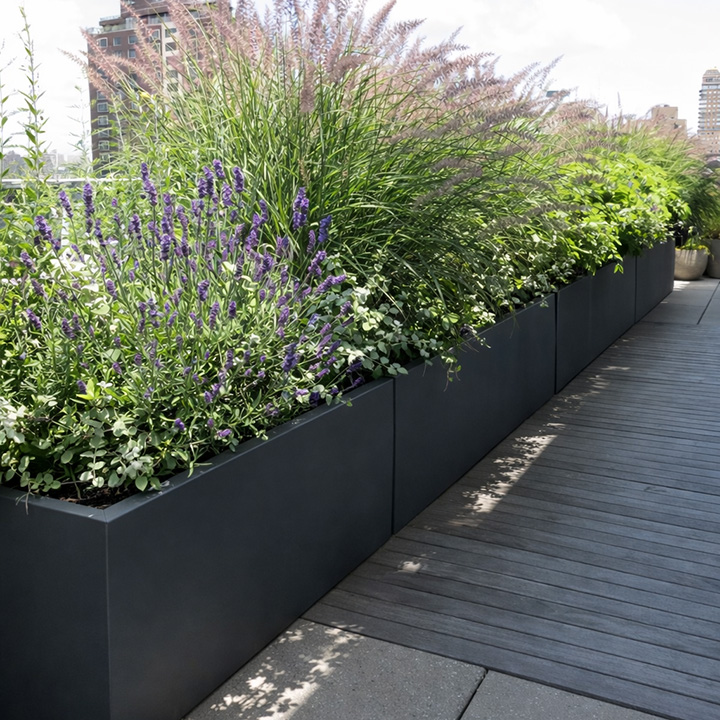
Why a coordinated planter system works better than random pots

The best balcony gardens usually feel cohesive. That often comes down to scale and repetition. When you repeat the same planter styles across the floor, railing, and upper levels, the balcony feels calmer, neater, and more luxurious. It also becomes easier to build fullness without visual mess.

A full planter system also works better practically:

  • Ground planters provide the backbone of the design and enough soil volume for shrubs, herbs, feature plants, and screening.
  • Railing planters create the strongest visual line and make the balcony feel planted from edge to edge.
  • Hanging baskets add the upper layer, soften walls and corners, and help the garden feel immersive.

This is one of the best ways to make a balcony feel full without making it feel crowded.

The best planter system for covering a whole balcony
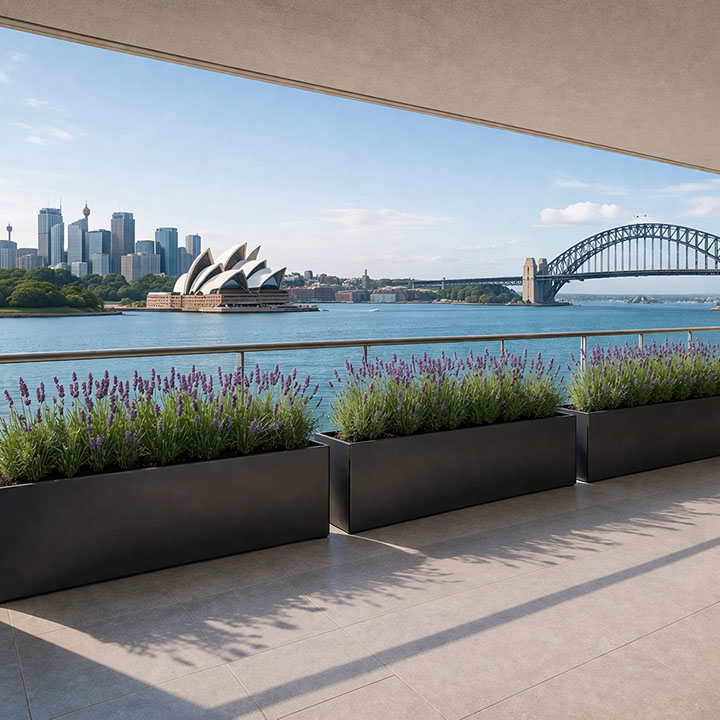
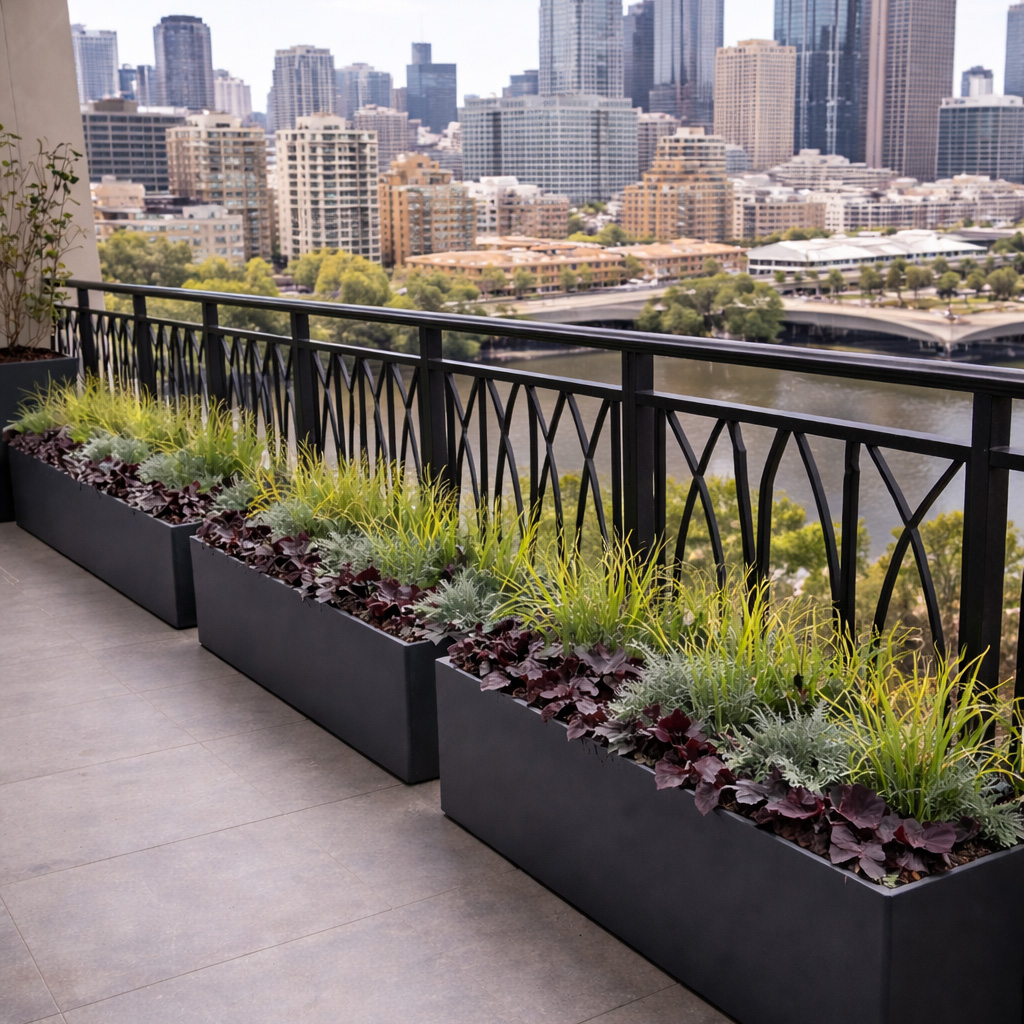
1. Ground planters: long 1200 mm charcoal metal planter boxes for structure and scale

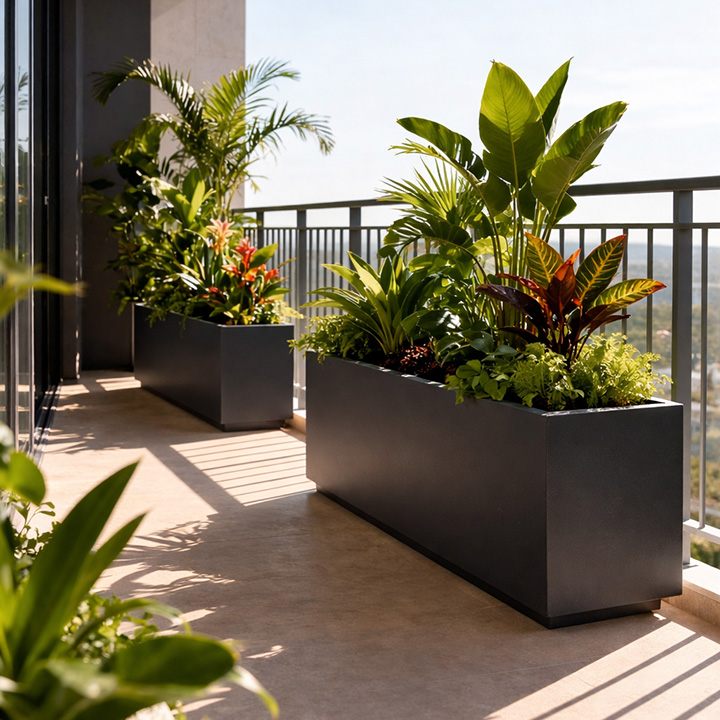
The floor planters are the foundation of the whole system. If you want the balcony to feel designed rather than pieced together, the ground layer needs to look clean and substantial. Long rectangular troughs do this far better than clusters of small pots because they define the perimeter, give the planting real presence, and make much better use of balcony floor space.

The Greenlife metal designer planter box is a particularly strong choice for this purpose. At 1200 × 300 × 300 mm, it is long and narrow enough to suit most balconies while still holding enough soil to grow meaningful plants. The charcoal finish also gives it a modern architectural look that works beautifully with apartments, glass balustrades, concrete walls, and contemporary outdoor furniture.

Why this ground planter works so well for balconies

This kind of planter is ideal for balconies because it gives you strong structure without taking over the space. It can sit along the outer edge, against a wall, behind a seating area, or in corners where the balcony needs more weight and greenery.

  • Long 1200 mm footprint: the length creates a clean line and lets you build a strong border along the edge of the balcony.
  • Narrow 300 mm width: it is deep enough for real planting but slim enough to preserve walking space.
  • 300 mm height: gives plants better root room and helps the planter feel visually substantial.
  • Approx. 108-litre capacity: enough room for shrubs, mixed plantings, herbs, grasses, or statement foliage plants.
  • Powder-coated anti-rust steel: useful for outdoor balconies where durability and weather resistance matter.
  • Charcoal modern finish: works especially well for minimalist, Mediterranean, native, and contemporary balcony styles.
  • Drainage holes in the base: important for container growing and helpful in heavy rain.
  • Straight clean panels: the simple shape looks far more refined than decorative or overly ornate containers.
  • Can be planted directly or used with drop-in pots: this gives flexibility depending on how permanent you want the planting to be.
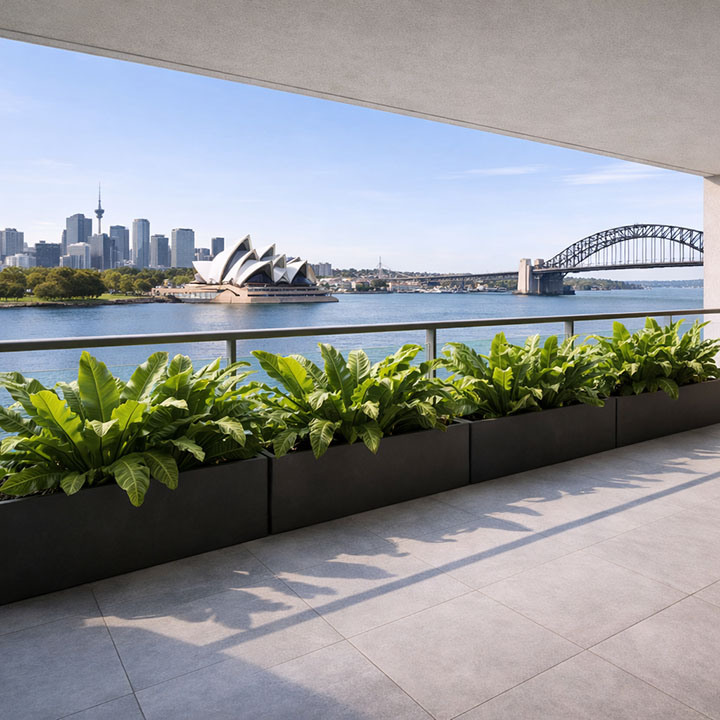
The biggest benefit: it anchors the whole balcony

One of the biggest benefits of this planter is that it gives the balcony a proper backbone. Long troughs make the space feel grounded. They turn the perimeter into a planted edge and instantly make the balcony feel more like an outdoor room.

This is also the planter type that makes the biggest difference if you want privacy, leafy screening, or a strong border of planting without filling the centre of the balcony with pots.

Best ways to use this ground planter on a balcony

  • line several along the balcony edge to create a continuous green border
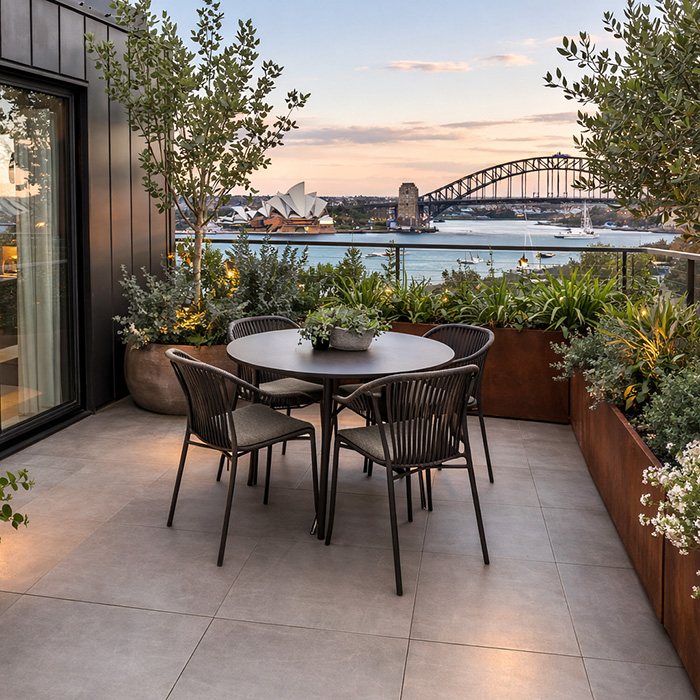
  • place one or two behind outdoor chairs or a bench to soften the seating zone
  • use them along blank walls to add structure and greenery
  • put them in corners for weight and balance
  • combine them with railing planters above for a layered planted edge

Because the planter is long and simple, it works particularly well when repeated. A balcony almost always looks better with two or three matching long troughs than with many small mismatched containers.
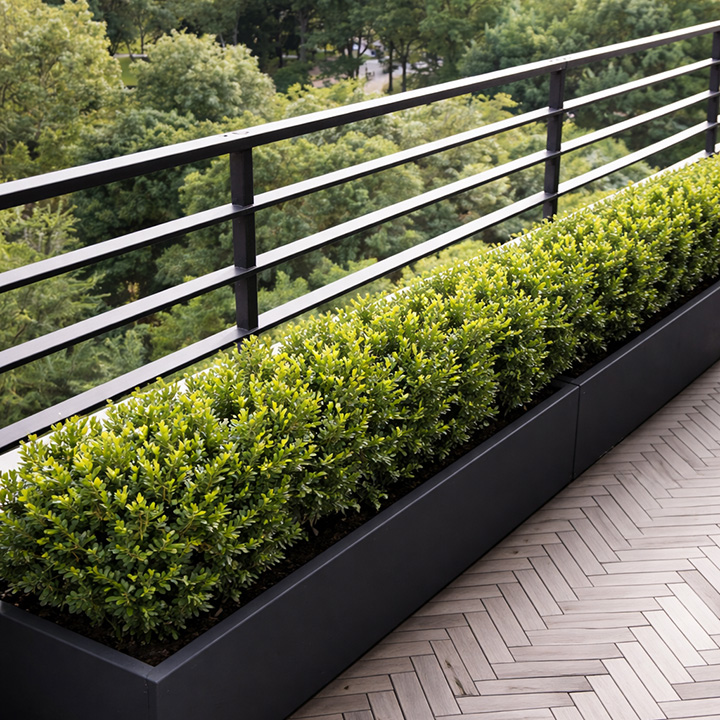
Best planting styles for this ground planter

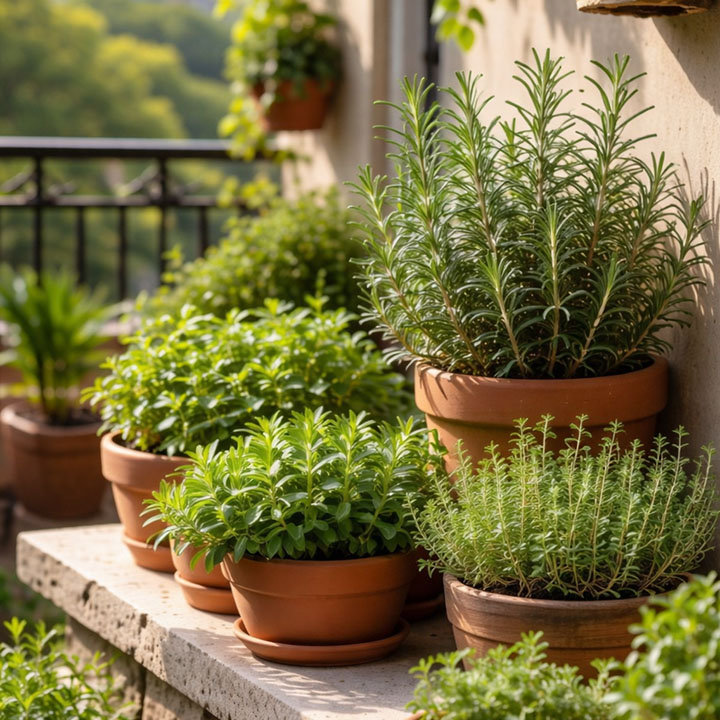
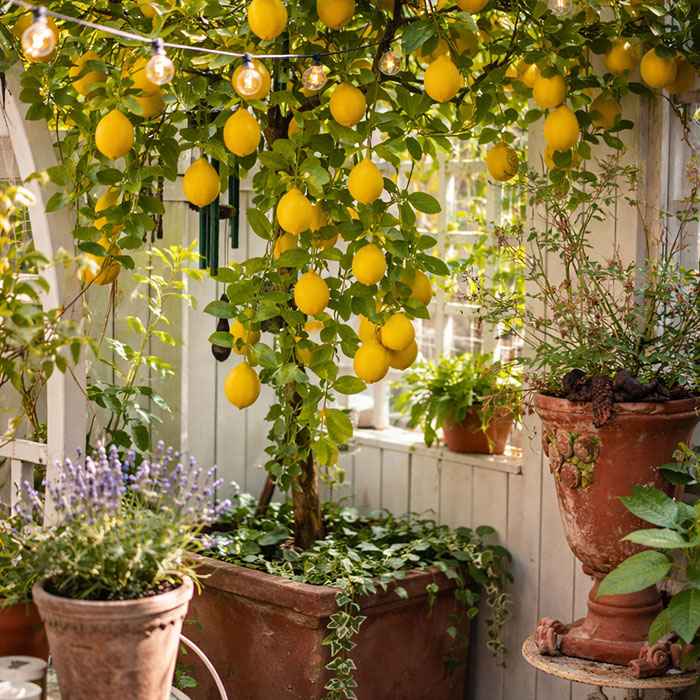
Mediterranean look: dwarf olive, rosemary, lavender, thyme, santolina, bay, and compact citrus. The charcoal finish suits this style beautifully and creates a refined, sun-drenched look.

Cottage look: dwarf roses, salvia, gaura, dianthus, catmint, alyssum, and lavender. This gives a softer, more flower-filled effect.

Tropical look: cordyline, bromeliads, philodendron Xanadu, clivia, bird’s nest fern, and lush foliage fillers. This works well on warm or sheltered balconies.

Native Australian look: westringia, lomandra, dianella, correa, pigface, scaevola, and compact grevillea. This is especially smart for exposed or coastal balconies.

Edible look: dwarf lemon, lime, bay, rosemary, parsley, sage, chillies, spring onions, and seasonal leafy greens. A long trough like this can be both attractive and highly productive.
Best plants for this ground planter by Australian region

Melbourne: westringia, rosemary, thyme, hebe, camellia sasanqua, dwarf nandina, parsley, violas, and compact grasses cope well with changeable weather and wind.

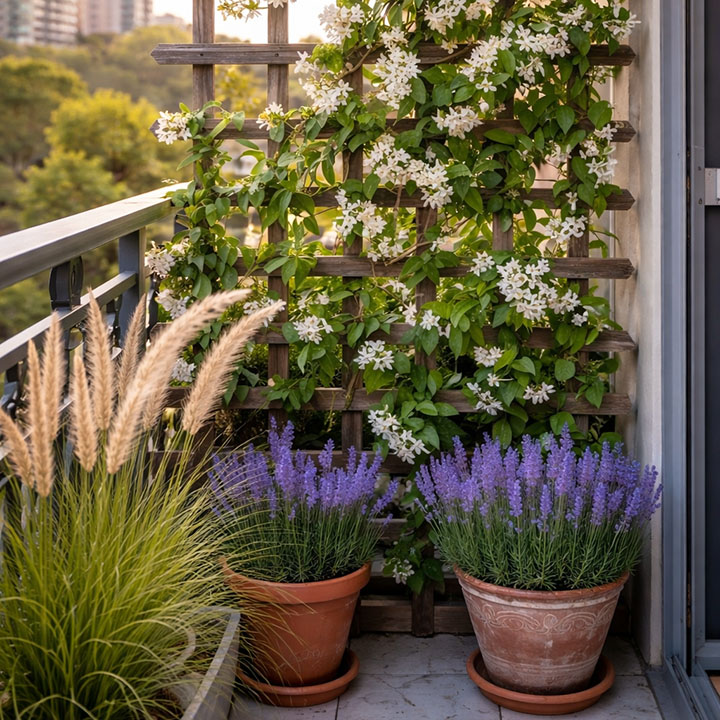
Sydney: dwarf citrus, star jasmine on support, westringia, lomandra, salvia, parsley, and clivia all suit the milder coastal climate well.

Brisbane: cordylines, philodendrons, citrus, lomandra, basil, chillies, bromeliads, and tropical foliage combinations do especially well in warm humid conditions.

Perth and Adelaide: dwarf olive, rosemary, lavender, thyme, westringia, society garlic, and compact citrus are some of the strongest picks for heat and drier summers.

Canberra and Hobart: rosemary, thyme, hebe, camellia sasanqua, hardy shrubs, parsley, and seasonal flowers are generally more reliable than tender tropicals.

Darwin: bromeliads, crotons, philodendrons, cordylines, pothos, and lush tropical foliage make more sense than Mediterranean shrubs.
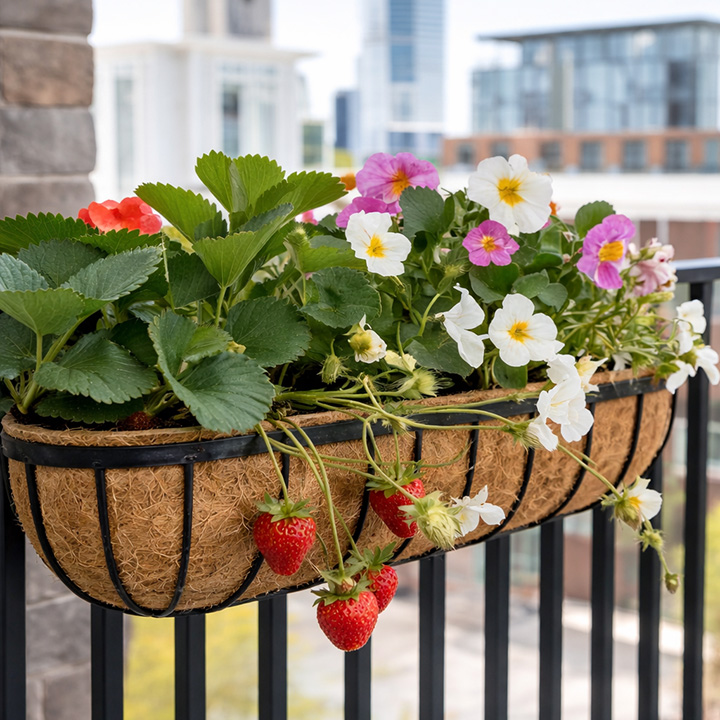
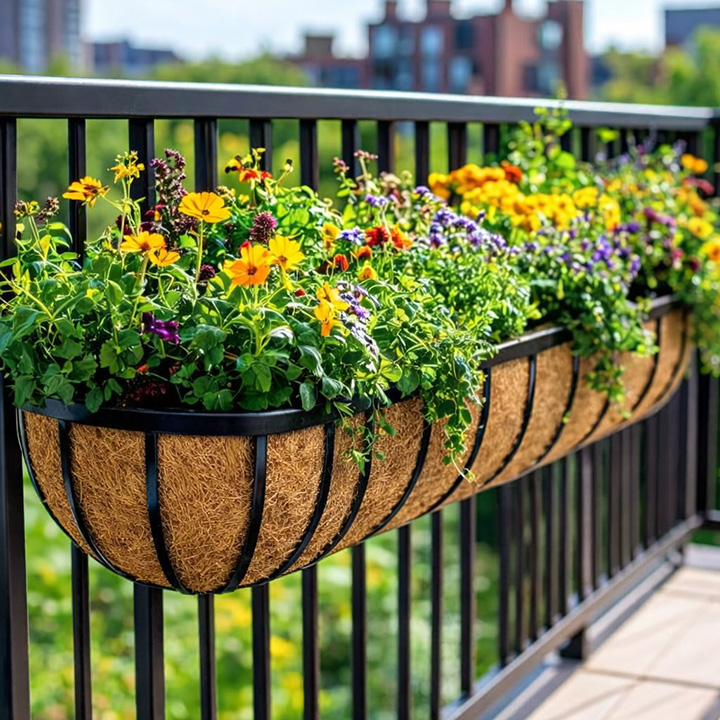
2. Railing planters: large 36-inch coco-lined railing troughs for real balcony impact

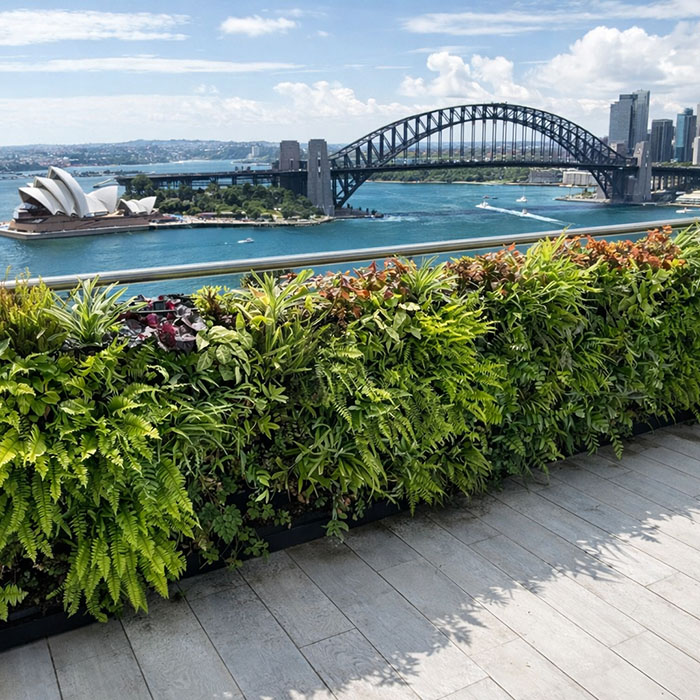
If you want the balcony to feel fully planted rather than dotted with small containers, the railing planters are one of the most important parts of the whole system. This is the layer that creates the strongest visual line across the balcony and gives that lush, finished, high-impact look from both inside and outside the home.

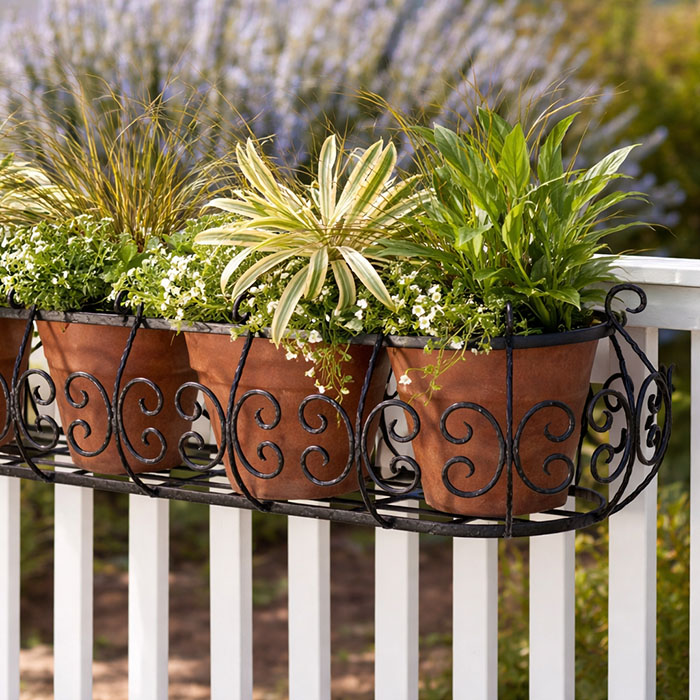
The 36-inch railing planter you have chosen is an especially good fit for this kind of design because it is large, long, and visually substantial. Smaller railing pots often look bitty and cluttered, especially when grouped together. A long planter like this reads as one clean design element and creates a much neater result when repeated across the railing.
Why this railing planter works so well for balconies

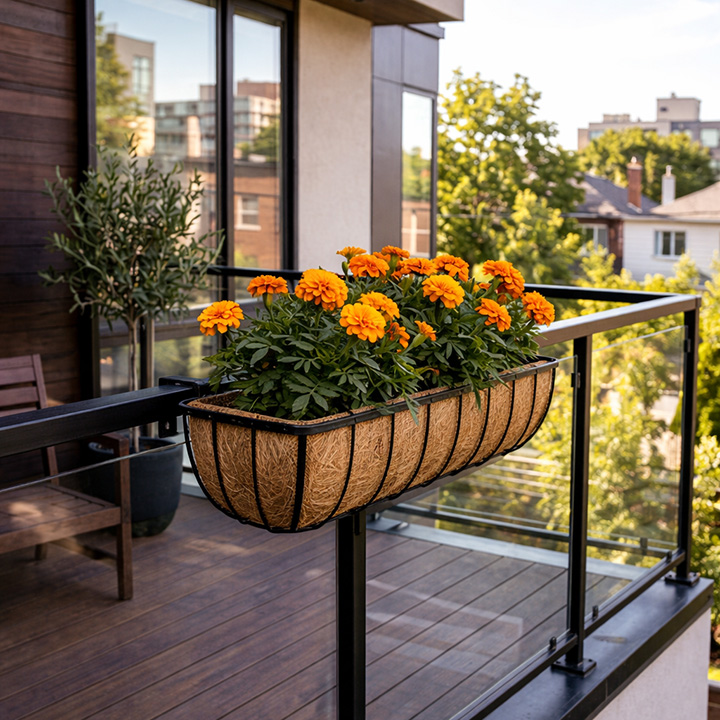
This style of railing planter is not just decorative. It is practical for balcony gardening and strong enough visually to help define the entire edge of the space. Because it is long and generously sized, it creates more of a planted band rather than a scattered collection of small pots.

  • Large 36-inch size: the planter is about 91 × 19 × 20 cm, which gives enough space for fuller planting and a much stronger visual effect than small railing baskets.
  • Good planting depth and width: it can hold several herbs, flowers, or trailing plants together, which makes it easier to create lush combinations.
  • Metal frame: the black metal structure gives the planter a neat, clean-lined look that suits modern balconies and helps it feel more architectural than plastic railing pots.
  • Coco liner: the natural coconut liner softens the look, improves drainage and airflow, and suits both cottage-style and more natural planting schemes.
  • Adjustable brackets: it is designed to hang over railings around 3 to 6 inches wide, which makes it more flexible for different balcony setups.
  • Multiple installation options: it can be used on balcony rails, fences, decks, walls, and under windows, which adds flexibility.
  • Better visual rhythm: repeating multiple long troughs across the railing creates a much cleaner and more intentional effect than using many small mixed containers.
The biggest benefit: it makes the balcony look designed, not messy

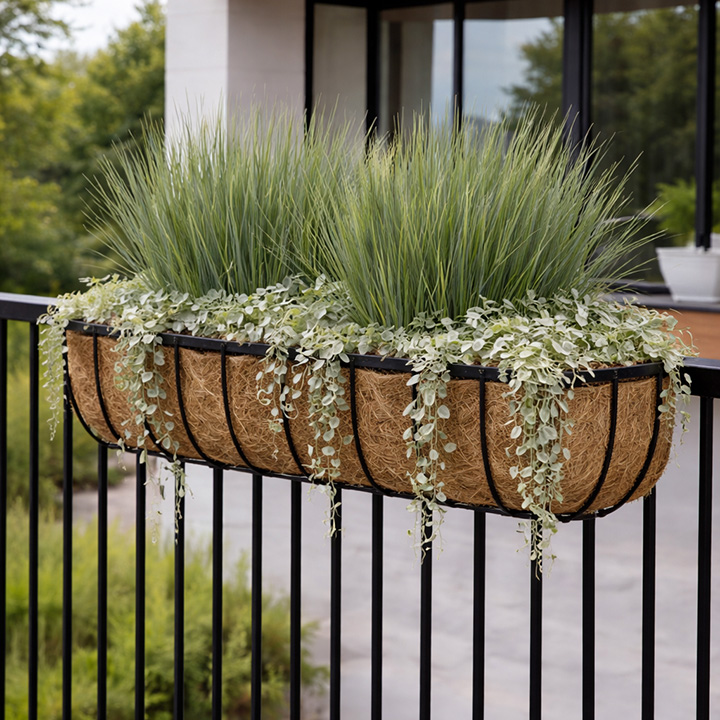
One of the biggest reasons this planter works so well is scale. On balconies, scale matters. Small railing planters can make the edge look fussy and over-decorated. A larger 36-inch trough gives you the wow effect because it reads as a real planting feature rather than an accessory.

It also makes planting much easier. Instead of trying to make lots of tiny pots look lush, you can create fuller, simpler combinations that have more presence. That is often what makes a balcony garden feel polished and higher-end.

Best ways to use this railing planter on a balcony

This planter works best when repeated across the main railing rather than used as a single standalone piece. Measure the usable railing length and aim to create a continuous planted line wherever possible. That repetition is what helps the balcony feel landscaped.

  • use several along the front railing for a full green edge
  • repeat the same planter style for a cleaner, more premium look
  • plant upright growers at the back and soft spillers at the front
  • use them to soften metal or glass balustrades
  • combine them with floor planters behind for layered planting

Because each planter is long, even two or three of them can make a big visual difference on a compact balcony. On wider balconies, using several across the full railing can transform the whole space.
Best planting styles for this railing planter

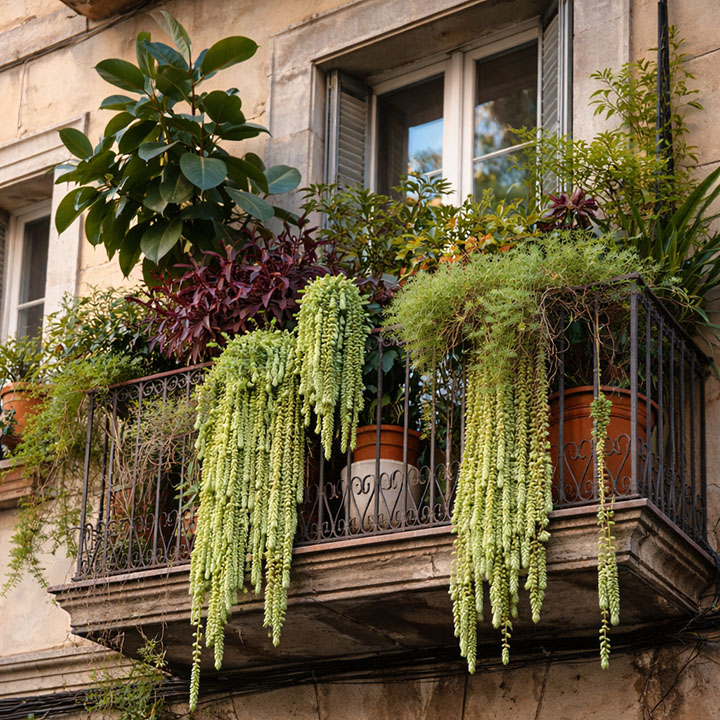
Mediterranean look: trailing rosemary, thyme, oregano, compact lavender, white alyssum, and strawberries. This works beautifully with the black metal frame and gives a clean, sunny, coastal feel.

Cottage look: bacopa, lobelia, calibrachoa, petunias, alyssum, and trailing verbena. The coco liner suits this softer overflowing style especially well.

Tropical look: coleus, pothos, spider plant, tradescantia, sweet potato vine, and compact trailing foliage. This gives a lush layered effect on warm or protected balconies.

Native look: scaevola, brachyscome, native violet, pigface, and dichondra repens. These are especially useful for exposed balconies and for a lower-fuss Australian planting scheme.

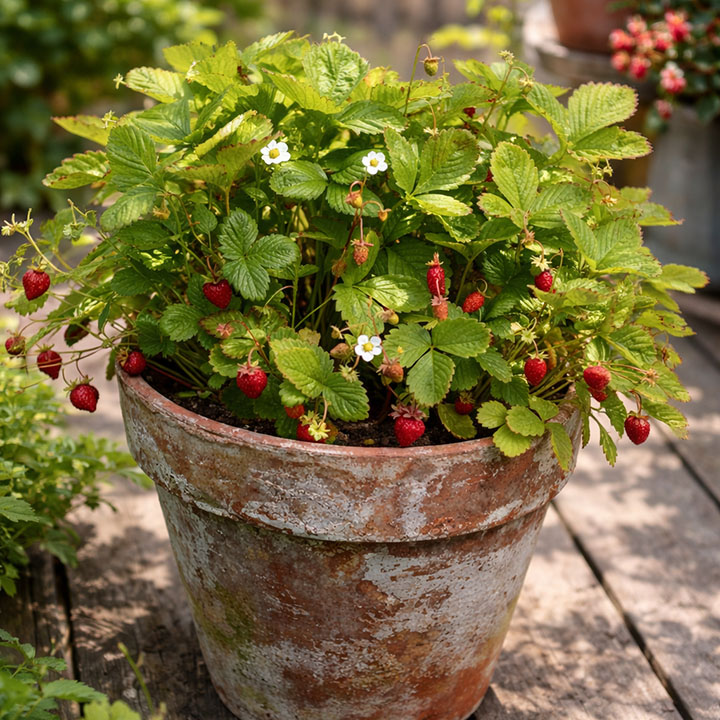
Edible look: parsley, thyme, oregano, chives, lettuces, rocket, coriander in season, and strawberries. Because the planter is long and roomy, it is very suitable for edible balcony gardening.
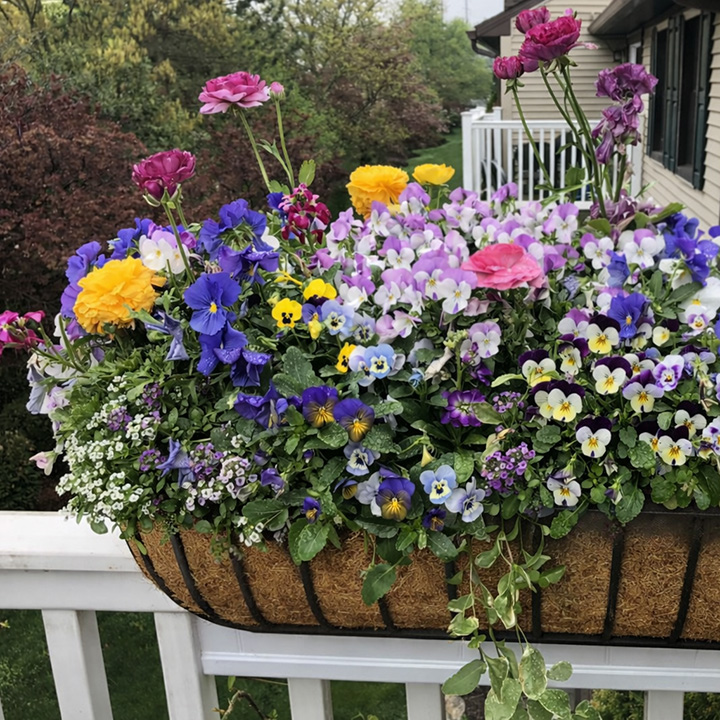
Best plants for this railing planter by Australian region

Melbourne: thyme, parsley, lobelia, bacopa, alyssum, violas, and seasonal flowering spillers work well, especially where wind is managed.

Sydney: strawberries, parsley, bacopa, brachyscome, alyssum, basil in warm weather, and selected trailing flowers all work well with good airflow.

Brisbane: sweet potato vine, basil, coleus, spider plant, parsley, strawberries, and subtropical spillers are often more reliable than delicate cool-climate flowers.

Perth and Adelaide: trailing rosemary, thyme, oregano, alyssum, strawberries, and tougher heat-tolerant trailing plants are the strongest choices for long hot periods.

Canberra and Hobart: cool-season flowers, herbs, and hardy compact spillers usually perform best, especially in sheltered spots.

Darwin: tropical foliage combinations such as pothos, spider plant, tradescantia, and coleus are usually a better fit than classic flowering mixes.
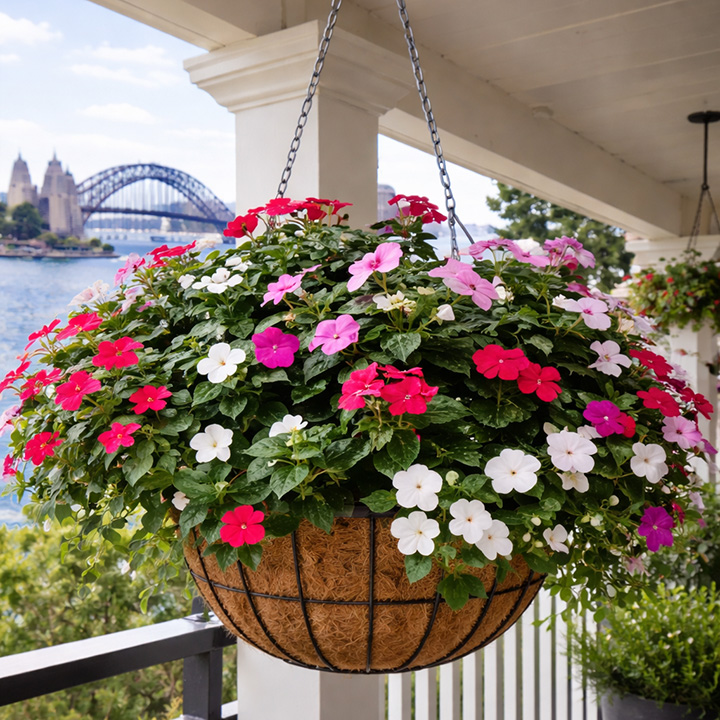
3. Hanging planters: extra-large 16-inch hanging baskets for vertical impact

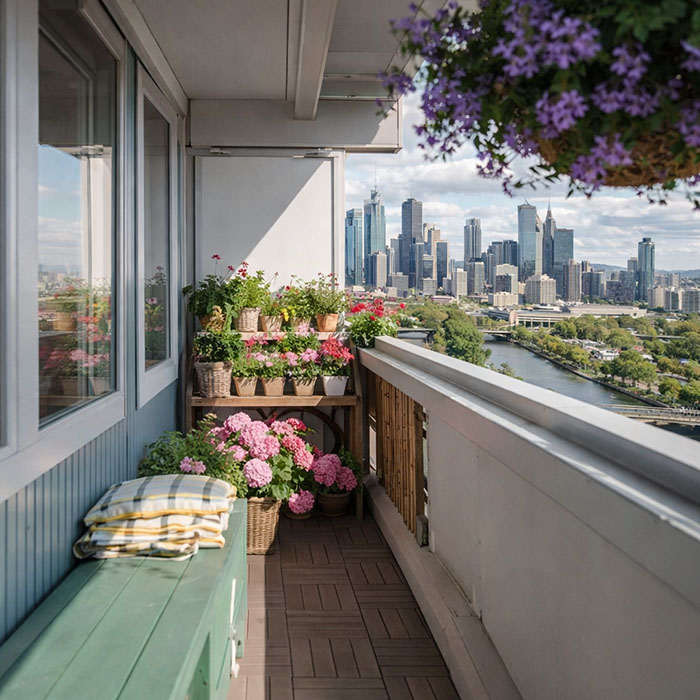
Hanging planters are what take a balcony garden from looking good to looking complete. They add the upper layer of planting, soften hard walls and railings, and help turn a balcony into a true garden rather than just a space with pots. When used well, they create the sense that greenery is wrapping around the whole balcony.

The 16-inch LaLaGreen hanging basket set is a very good choice for this kind of full-balcony system because it is large enough to make a visual statement. Small hanging pots often look fussy, dry out too quickly, and never quite create the lush look people are hoping for. These larger baskets have much more presence and are far better suited to building a layered hanging garden effect.

Another big advantage is that they come as a 4-pack. That matters for balcony design because one basket on its own can look isolated, while a repeated group of matching baskets creates rhythm, symmetry, and a much more finished result. This is exactly the kind of planter that works well when the goal is to cover the whole balcony in a coordinated way.
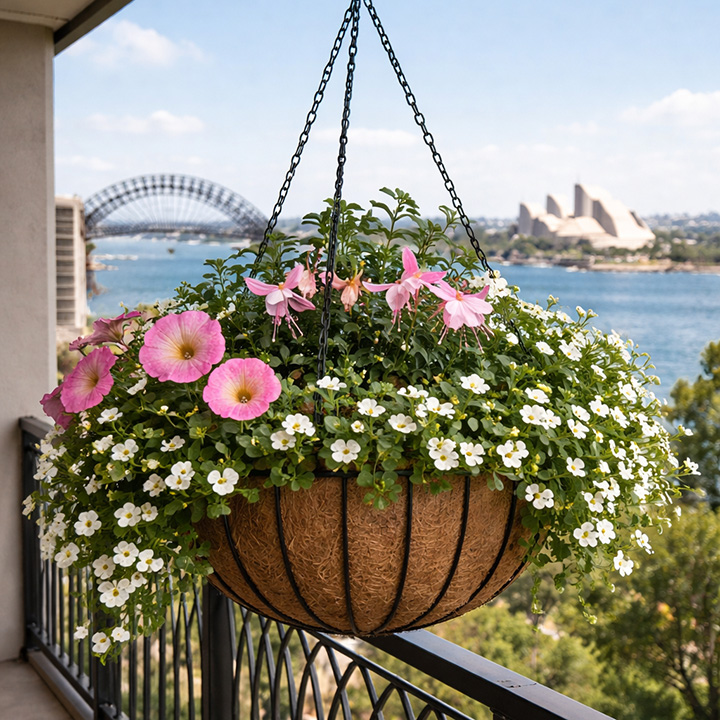
Why this hanging planter works so well for balconies

This style of hanging basket combines practical planting space with a clean decorative look. It suits both modern balconies and softer garden styles because the black metal frame gives it structure while the coco liner keeps it natural and garden-like.

  • Extra-large 16-inch size: the larger basket size gives plants more root room and creates a fuller, more dramatic hanging display than small baskets.
  • 4-pack set: matching baskets make it much easier to create a repeated, cohesive hanging garden across the balcony.
  • Black metal wire frame: the frame looks neat, modern, and visually lighter than bulky plastic hanging pots.
  • Coco liner included: the coco coir liner helps with drainage, airflow, and that soft natural finish that suits balcony gardens.
  • Ready to hang: the baskets come with hanging chain and hook, so they are easy to install without complicated setup.
  • No assembly required: this makes them especially convenient if you want to set up multiple baskets at once.
  • Lightweight and rust resistant: that is useful on balconies where planters may be exposed to weather and need to stay practical as well as attractive.
  • Indoor or outdoor use: they work on balconies, porches, decks, patios, and near windows or sheltered wall areas.
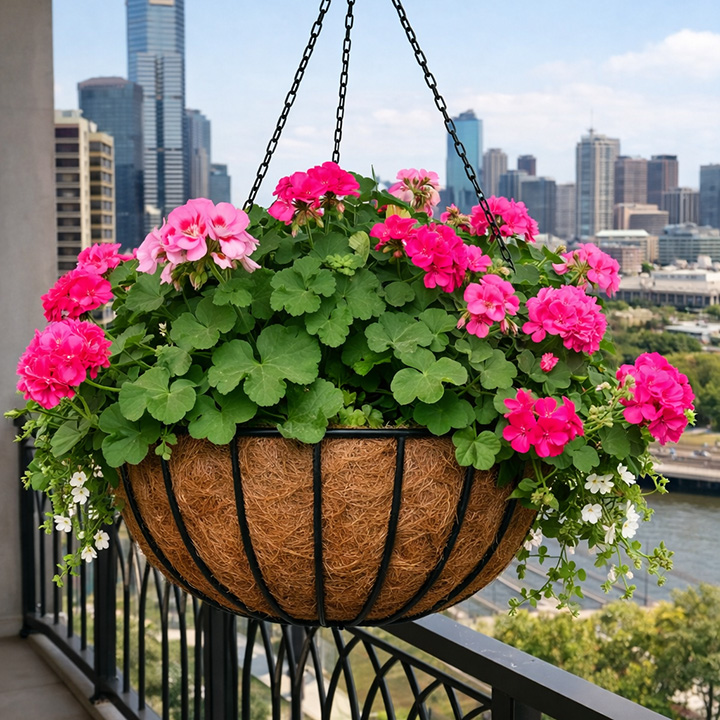
The biggest benefit: they create a real hanging garden effect

The biggest strength of this planter is that it helps build the vertical layer of the balcony. Floor planters and railing boxes give structure and edge planting, but hanging baskets are what lift the garden upward and make the space feel richer and more immersive.

Because these baskets come in a matching set, they are ideal for creating that repeated hanging garden look. Grouped across a beam, wall, balcony edge, or overhead support, they make the planting feel deliberate and abundant rather than random.

This is especially useful on small balconies where floor space is limited. Hanging planters let you add far more greenery without taking up valuable room for chairs, tables, or circulation space.

Best ways to use these hanging baskets on a balcony

  • hang them in a repeated row to create a fuller balcony garden canopy
  • use them in corners to soften empty vertical space
  • place them near walls or windows to frame the balcony
  • combine them with railing planters below for a layered garden effect
  • use several sets together if you want a denser and more immersive planted look

These baskets are especially effective when they are not treated as isolated accents. Their real strength comes from repetition. A matching group of large baskets makes the balcony feel styled and intentional.

Best planting styles for these hanging baskets

Mediterranean look: ivy geranium, trailing rosemary, thyme, oregano, white bacopa, and silver foliage such as dichondra ‘Silver Falls’. The black frame and natural liner suit this look beautifully.

Cottage look: petunias, calibrachoa, lobelia, alyssum, bacopa, and trailing verbena. This is the classic overflowing basket style and works very well with the round basket shape.

Tropical look: spider plant, pothos, tradescantia, Boston fern, fishbone fern, and trailing philodendron. This is one of the best choices for protected balconies in warmer climates.

Native look: native violet, brachyscome, scaevola, and softer native spillers that can trail over the basket edge. This is a good lower-fuss option for Australian balconies.

Edible look: strawberries, thyme, oregano, and compact trailing herbs. These baskets can also be used for practical planting, not just flowers and foliage.
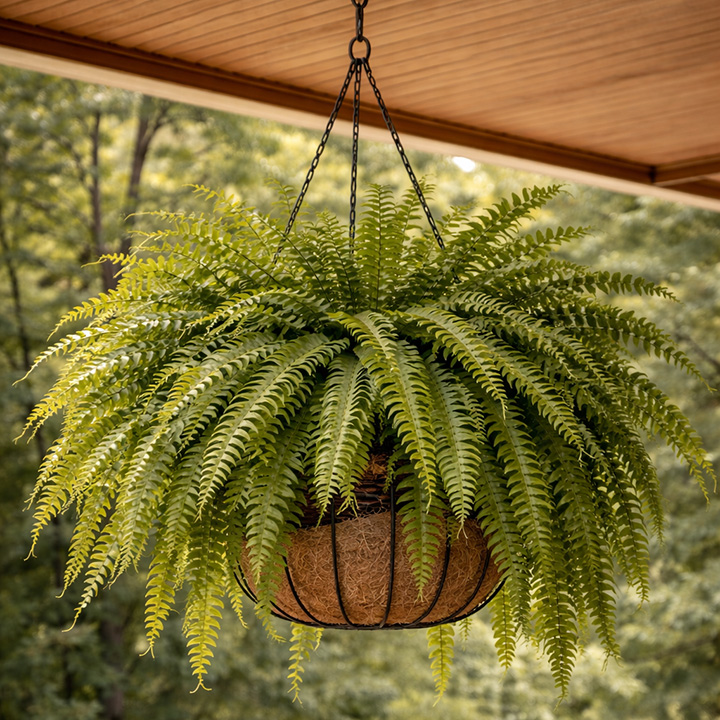
Best plants for these hanging baskets by Australian region

Melbourne: bacopa, lobelia, ivy geranium, violas in season, thyme, and strawberries are good choices. In warmer sheltered months, spider plants and ferns can also do well.

Sydney: bacopa, petunias with good airflow, pothos, spider plant, coleus, ferns, and strawberries all work depending on light and exposure.

Brisbane: tropical foliage usually performs very well. Spider plant, pothos, tradescantia, coleus, and ferns are often more reliable than delicate cool-climate flowering baskets through summer.

Perth and Adelaide: choose tougher sun-tolerant baskets such as ivy geranium, thyme, trailing rosemary, strawberries, and silver spillers. Hanging baskets in these cities can dry quickly in summer, so tougher plants are a smart choice.

Canberra and Hobart: hardy flowering baskets, herbs, and cool-season annuals are often the safest route. Tender tropical plants usually need more shelter in these climates.

Darwin: tropical foliage such as pothos, spider plant, tradescantia, and ferns are a much better fit than traditional flowering basket mixes.

Read more about the right plants for your balcony

Best Plants for a Full Sun Garden in Australia

Best Plants for a Semi-Shade Balcony in Australia

Best Plants for a Full Shade Balcony in Australia

Best balcony looks you can create with this planter system

Mediterranean balcony

This is one of the best styles for Australian balconies because it suits sun, looks elegant, and usually ages well. Use the long charcoal troughs for dwarf olive, rosemary, lavender, and compact citrus. Fill the railing troughs with thyme, oregano, alyssum, and trailing rosemary. Finish with hanging baskets of ivy geranium and silver spillers. Keep the palette restrained with green, silver, white, and soft purple.

Cottage balcony

For a softer and more colourful garden, use the ground planters for dwarf roses, salvia, gaura, and lavender. Fill the railing planters with bacopa, lobelia, alyssum, petunias, and calibrachoa. Use hanging baskets with petunias and trailing verbena. The key is repetition. A few colours repeated well will look far better than too many mixed tones.

Tropical balcony

For a lush resort feel, use the long floor planters for cordylines, bromeliads, philodendrons, clivia, and leafy feature plants. Fill railing planters with coleus, spider plant, pothos, and trailing foliage. Use hanging baskets with Boston fern, fishbone fern, pothos, or tradescantia. This style is especially good in Brisbane, Sydney in protected positions, and Darwin.

Native Australian balcony

If you want a tougher lower-fuss balcony, use the ground planters for westringia, lomandra, dianella, correa, and compact grevillea. Fill the railing boxes with brachyscome, scaevola, native violet, and pigface. Add hanging baskets with native violet or softer native spillers. This is one of the smartest styles for exposed balconies.

Modern minimal balcony

If you want a clean modern look, this planter system is ideal. The charcoal troughs, black metal railing planters, and black hanging baskets already work together visually. Keep the plant palette simple and repeat it. A structured shrub plus a trailing plant is often enough to make the space feel expensive and architectural.

Edible balcony

This system can also become a very productive balcony garden. Use the ground planters for dwarf citrus, chillies, rosemary, bay, and leafy greens. Use the railing planters for parsley, thyme, oregano, lettuces, rocket, and strawberries. Use the hanging baskets for thyme, oregano, and strawberries. This gives you a balcony that looks beautiful and produces useful food.

How to lay out the whole balcony

The best way to design this system is to think in layers rather than individual pots.

  • Layer one: place the long ground planters along the floor edge, wall lines, or corners.
  • Layer two: repeat the railing planters across the main balustrade to create a planted band.
  • Layer three: use the hanging baskets to lift the planting upward and soften the vertical space.

Try to keep the centre of the balcony open for furniture and movement. The most successful balcony gardens usually define the perimeter rather than filling the middle with pots.

Small balcony formula

On a compact balcony, a strong formula is two long ground planters, two or three repeated railing planters, and two to four hanging baskets. That is often enough to make the space feel fully landscaped.

Medium balcony formula

For a medium or wider balcony, use three or four long ground planters, three or more railing troughs across the main edge, and four or more hanging baskets for a fuller layered look.

Large balcony formula

On a larger balcony, repeat the same system rather than changing styles. More of the same long troughs, the same railing planters, and the same hanging baskets will usually look far better than adding many extra planter types.

Best planter strategy for different Australian climates

Hot dry balconies: common in Perth and Adelaide. Mediterranean and native palettes are usually the strongest because they handle bright sun and drier conditions better than thirsty annual mixes.

Humid east-coast balconies: common in Brisbane and many Sydney positions. Tropical foliage, subtropical plants, herbs, and carefully chosen flowering plants with good airflow generally perform well.

Cooler southern balconies: common in Melbourne, Hobart, and Canberra. Wind-tolerant shrubs, herbs, and seasonal flowers are often the safest choices.

Tropical north balconies: common in Darwin. Use lush foliage, excellent drainage, and plants that handle heat, humidity, and seasonal rain.

Tips for making this balcony planter system work well

  • use quality potting mix in every planter
  • add slow-release fertiliser for stronger consistent growth
  • repeat plants instead of using too many different varieties
  • mix upright structure with trailing spillers
  • check sunlight, wind exposure, and access to water before final placement
  • keep the centre of the balcony clear so the space stays usable
  • water hanging baskets and railing planters more frequently than deep ground troughs
  • stick to a limited palette for a cleaner and more premium look

Final thoughts

If your goal is to cover the whole balcony and create a strong stylish result, this is an excellent planter system. The long Greenlife ground planters provide structure and planting volume, the 36-inch railing planters create the most dramatic planted edge, and the 16-inch hanging baskets complete the look by adding height and softness.

The real strength of this setup is that all three planter types support the same design principle: fewer, larger planters repeated well. That is what makes a balcony feel full without making it look messy.

Whether you want a Mediterranean balcony, a cottage look, a lush tropical retreat, a native Australian planting scheme, or an edible garden, this coordinated planter system gives you a strong framework that can be adapted beautifully for balconies across Australia.

FAQ

What are the best balcony planters for a full balcony look?

The best balcony planters for a full and polished look are usually long ground troughs, large railing planters, and oversized hanging baskets used together as one coordinated system. This creates planting at floor level, railing level, and above, which makes the balcony feel much more complete.

Are large planters better than small pots on a balcony?

In most cases, yes. Large planters look neater, hold more soil, dry out less quickly, and create stronger design impact. Small pots can work as accents, but too many of them often make a balcony look cluttered.

What should I plant in long balcony planters in Australia?

That depends on your climate and the style you want. Mediterranean planting may include rosemary, lavender, olives, and citrus. Native planting may include westringia, lomandra, scaevola, and pigface. Cottage balconies often use roses, salvia, and alyssum, while tropical balconies suit cordylines, philodendrons, and bromeliads.

What are the best plants for railing planters?

Good choices include herbs, strawberries, alyssum, bacopa, lobelia, brachyscome, native violet, trailing rosemary, and compact seasonal flowers. The best plants are those that stay tidy while still softening the railing edge.

What can I grow in hanging baskets on a balcony?

You can grow petunias, bacopa, ivy geranium, ferns, pothos, spider plant, tradescantia, strawberries, thyme, and native violet. The right choice depends on how much sun and wind your balcony gets.

What is the best balcony style for hot Australian cities?

Mediterranean and native styles are often the best fit for hot dry cities such as Perth and Adelaide because they use tougher plants that handle strong sun and lower summer moisture better than thirstier mixed flower displays.

What is the best balcony style for humid cities like Brisbane and Sydney?

Tropical, subtropical, and selective edible planting schemes often work especially well in humid cities. Plants such as bromeliads, philodendrons, cordylines, herbs, spider plants, and ferns usually cope better than delicate cool-climate flowers.

How do I make my balcony look full without making it messy?

Use fewer planter styles, repeat them consistently, and keep the plant palette tighter. A coordinated system of matching ground planters, railing boxes, and hanging baskets almost always looks more intentional than lots of mixed pots.

How many planters do I need to cover a balcony?

For many balconies, two long ground planters, two or three repeated railing planters, and two to four hanging baskets are enough to create a full effect. Larger balconies can scale this up with the same repeated formula.

Can I use the same planter system in Melbourne, Sydney, Brisbane, Perth, and other Australian cities?

Yes. The planter system can stay the same, but the plants should change depending on the local climate, sun exposure, wind, and humidity. That is what makes the system flexible across Australia.
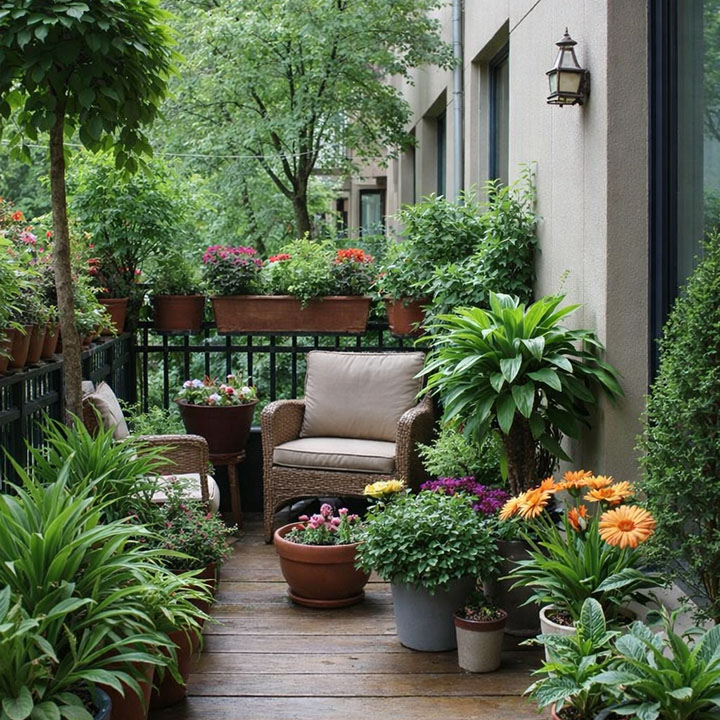
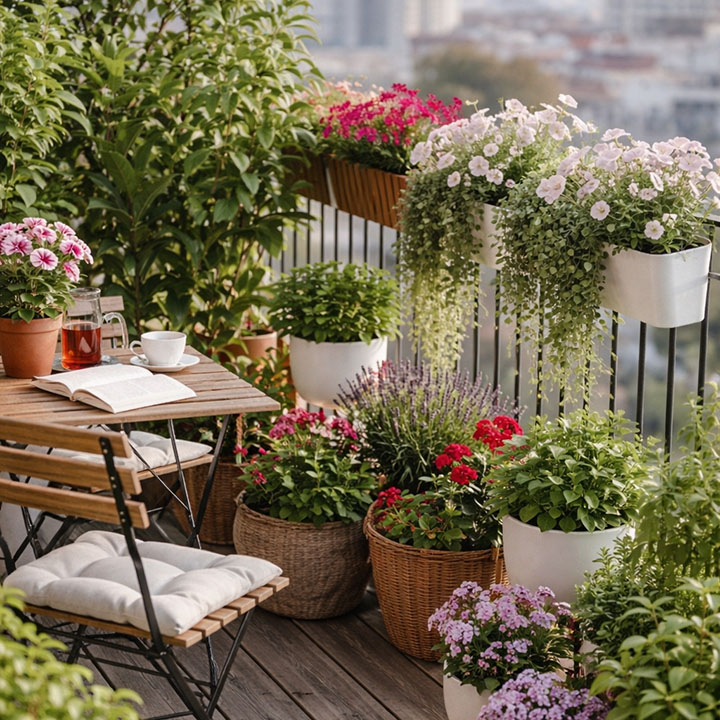
Balcony gardening can be one of the most rewarding ways to grow plants in Australia, but it can also be surprisingly unforgiving. A balcony is not the same as a backyard. Pots dry out faster, surfaces reflect heat, wind can be stronger, and sunlight patterns are often more extreme than people expect. A plant that might survive in the ground can struggle on a balcony if the setup is wrong.

The good news is that most balcony gardening problems come down to a small number of common mistakes. Once you understand how your balcony behaves and match your plants, containers, and watering habits to your local conditions, growing on a balcony becomes much easier.

This guide covers the most common balcony gardening mistakes to avoid in Australia, including errors with sunlight, watering, pot size, plant choice, wind exposure, and seasonal planting. It also explains how mistakes can vary between Australian cities such as Melbourne, Sydney, Brisbane, Perth, Adelaide, Canberra, Hobart, and Darwin.

Why balcony gardens fail more easily than people expect

Many new gardeners assume a balcony is simply a smaller version of a garden bed, but balcony conditions are often harsher. Containers have limited soil, roots heat up faster, and plants are completely dependent on you for water, nutrients, and protection. Even a healthy-looking plant can deteriorate quickly when placed in the wrong part of a balcony.

  • Pots dry out faster than ground soil.
  • Balconies can be much windier than nearby streets or courtyards.
  • Concrete, tiles, and walls reflect heat back onto plants.
  • Shade and sun patterns can change through the day.
  • Container plants run out of nutrients more quickly.

That is why the biggest balcony gardening mistakes usually involve treating balcony plants like ordinary garden plants instead of container plants in a more exposed environment.

Mistake 1: Not checking how much sun your balcony actually gets

One of the most common balcony gardening mistakes is buying plants first and checking sunlight second. Many people describe a balcony as sunny when it only receives bright light, or as shady when it actually gets several hours of strong direct sun in the afternoon.

This matters because plant labels usually refer to direct sunlight, not general brightness. A full sun plant typically needs around 6 hours or more of direct sun. Part shade plants prefer gentler conditions, and shade-tolerant plants still usually need good ambient light.

  • North-facing balconies: Often get the strongest overall light in Australia.
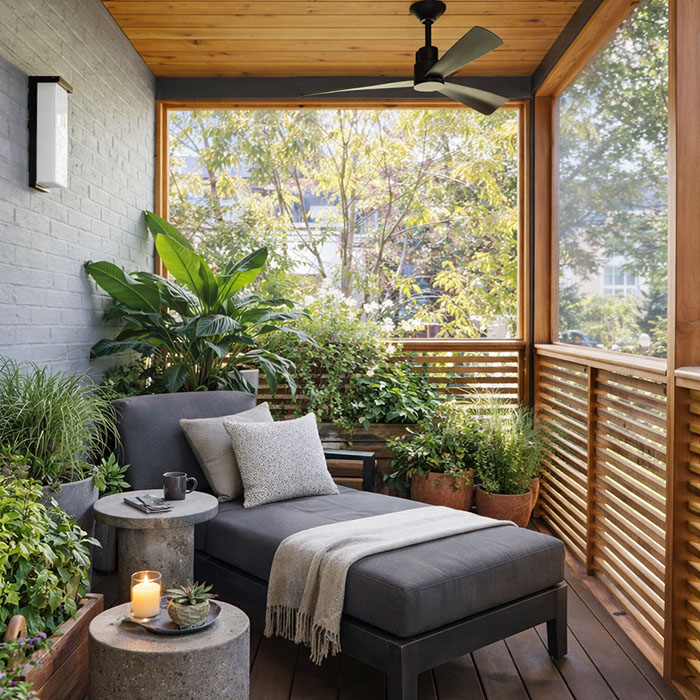
  • East-facing balconies: Usually receive gentler morning sun.
  • West-facing balconies: Can become extremely hot in summer.
  • South-facing balconies: Often get the least direct sun.

Before planting, spend a few days observing where the sun falls and for how long. This one step can prevent a lot of disappointment.

Mistake 2: Choosing plants that do not suit Australian balcony conditions

Another major mistake is choosing plants based only on appearance. A plant may look beautiful in a nursery, on social media, or in a magazine, but that does not mean it will thrive on your balcony in your city. Australian weather varies widely, and balcony exposure can make those differences even more intense.

Heat-loving herbs like basil may thrive on a warm Sydney or Brisbane balcony but struggle on a cold, windy Hobart balcony outside summer. Mediterranean plants such as rosemary, lavender, and thyme often cope well in Perth or Adelaide, but moisture-loving plants may struggle there in exposed sun. Shade-loving plants can scorch on west-facing balconies in Melbourne or Canberra during summer heatwaves.

The best balcony plants are not just attractive. They are well suited to your specific light, wind, temperature, and season.

Mistake 3: Using pots that are too small

Small pots are one of the biggest hidden causes of balcony gardening problems. They may look neat and decorative, but in Australian conditions they often dry out very quickly, overheat in summer, and restrict root growth. Tiny pots can turn routine watering into a constant struggle.

Bigger pots usually make balcony gardening easier, not harder. They hold moisture longer, buffer roots from temperature swings, and give plants more room to grow. This is especially important for sunny balconies in cities like Perth, Adelaide, Brisbane, and western parts of Sydney or Melbourne.

  • Small pots dry out quickly.
  • They need more frequent watering.
  • Plants become stressed faster during heat.
  • Roots become cramped sooner.

For most balcony gardens, medium to large containers are a better long-term choice than very small pots.

Mistake 4: Forgetting about wind

Wind is one of the most overlooked balcony gardening problems. A balcony may feel pleasant to sit on, but plants experience wind differently. Strong or constant wind can shred leaves, topple light pots, dry out soil rapidly, and make tender plants struggle even if sunlight and watering are otherwise fine.

This is especially important in apartment buildings, upper levels, and exposed corners. Wind also tends to be underestimated because it may not feel dramatic at human height while still stressing leaves and containers all day.

Hardier plants such as rosemary, thyme, oregano, geraniums, and some grasses usually cope better than delicate leafy herbs or thin-stemmed flowers. Grouping pots together, using heavier containers, and placing sensitive plants behind railings or screens can make a big difference.

Mistake 5: Watering too little

Underwatering is one of the most common reasons balcony plants fail, especially in Australian summer. Pots can dry out far more quickly than people expect, particularly in hot weather, on windy balconies, or in terracotta containers. A plant can go from healthy to wilted in a very short time.

Leafy herbs, flowers, salad greens, and fruiting plants often need regular moisture. If they repeatedly dry out, they may become stunted, flower poorly, or bolt early. Plants like basil, parsley, mint, petunias, tomatoes, and strawberries are especially likely to suffer when watering is inconsistent.

The mistake is not just forgetting to water. It is assuming balcony plants can follow the same routine all year. In reality, watering needs change with the season, weather, wind, pot material, and plant type.

Mistake 6: Watering too much

Overwatering is the opposite problem, and it is just as common. Many beginners respond to plant stress by watering more, even when the issue is actually poor drainage or roots sitting in constantly wet mix. This is especially damaging for herbs and flowers that prefer drier conditions.

Rosemary, thyme, oregano, sage, lavender, and many drought-tolerant plants do not like permanently wet soil. If they stay soggy, roots can rot and growth can quickly decline. Overwatering is often made worse by pots without good drainage holes or saucers that stay full of water.

The best approach is to check the potting mix before watering, rather than watering by habit alone.

Mistake 7: Using poor potting mix or garden soil

A balcony garden is only as good as the growing mix inside the pots. One of the easiest mistakes is using old, compacted mix or filling containers with ordinary garden soil. Garden soil is not designed for pots. It compacts too easily, drains poorly, and often leads to weak root development.

Balcony containers need quality potting mix that balances drainage, aeration, and moisture retention. This matters even more in Australia, where heat and drying winds put extra stress on the root zone. Different plants also have different needs. Mediterranean herbs like sharper drainage, while many flowers and leafy herbs prefer richer, more moisture-retentive conditions.

If the potting mix is poor, even the right plant in the right spot may still struggle.

Mistake 8: Ignoring the weight and safety of containers

Balcony gardens need to be practical as well as beautiful. A common mistake is filling a balcony with too many large pots, heavy planters, or unstable structures without thinking about weight, access, and safety. This is especially relevant in apartments and narrow balconies.

Heavy ceramic pots, raised planters, wet soil, and dense plantings all add up. Light pots can also become a problem if strong wind tips them over. A good balcony garden should feel secure, easy to move through, and manageable to maintain. It should not block doors, crowd seating, or make watering awkward.

It is usually better to start with fewer, better-placed containers than overfill the balcony too early.

Mistake 9: Overcrowding the space

Balcony gardens often look best when they feel lush, but overcrowding is a common beginner mistake. Too many pots can reduce airflow, create awkward access, increase disease risk, and make routine care harder. Plants also compete for light when packed too tightly together.

A crowded balcony can quickly become harder to water, prune, harvest, or clean. It may also stop feeling like an enjoyable outdoor space and start feeling like storage for plants. A better approach is to build layers gradually and leave enough room to move around comfortably.

Mistake 10: Planting the wrong things at the wrong time of year

Seasonal timing is critical in Australian balcony gardening. One common mistake is planting without considering whether it is the right season for that crop or flower in your city. This leads to heat stress, bolting, poor flowering, or weak establishment.

Basil, tomatoes, chillies, and marigolds are warm-season plants. Coriander, parsley, pansies, violas, spinach, and rocket often perform better in cooler weather. Trying to keep cool-season flowers through a hot Adelaide or Brisbane summer, or planting basil too early in a cold Canberra or Hobart spring, often leads to disappointment.

Balcony gardeners usually get much better results when they work with the season instead of trying to force plants through unsuitable weather.

Mistake 11: Not feeding container plants

Because pots contain limited soil, nutrients are used up more quickly than in garden beds. Many balcony plants look fine at first but slow down after a while because the potting mix no longer has enough nutrition to support strong growth, flowering, or fruiting.

This is particularly noticeable with flowers, tomatoes, chillies, strawberries, and fast-growing herbs. A lack of feeding can lead to pale leaves, fewer blooms, weaker stems, and reduced harvests. The goal is not heavy feeding, but regular support during the active growing season.

Mistake 12: Treating every plant the same

Not all balcony plants want the same conditions. A very common mistake is putting plants with different needs into the same pot or giving every container the same watering and feeding routine. This usually means some plants thrive while others struggle.

Mint likes more moisture than rosemary. Begonias prefer gentler light than marigolds. Tomatoes need more feeding than many herbs. Lavender likes excellent drainage, while parsley prefers more even moisture. When plants are grouped by similar needs, care becomes simpler and success rates improve.

Mistake 13: Ignoring reflected heat from walls and floors

Australian balconies can become much hotter than expected because hard surfaces reflect and store heat. Tiles, concrete, brick walls, glass, and metal railings can all intensify summer conditions. Plants close to walls or placed on hot surfaces may experience far more stress than the air temperature alone suggests.

This is especially important on west-facing balconies and in hotter cities like Perth, Adelaide, and Brisbane. Even in Melbourne or Sydney, summer heatwaves can make a balcony feel far harsher than nearby ground-level gardens. Heat-sensitive plants may need afternoon shade, and some pots may need lifting off hot surfaces or moved deeper into shelter.

Mistake 14: Neglecting pruning, deadheading, and regular maintenance

Balcony gardens need regular small maintenance rather than occasional big effort. Another common mistake is letting plants become leggy, crowded, woody, or full of spent flowers. This is especially noticeable in a compact space where every plant is on display.

Pinching basil keeps it leafy. Deadheading petunias, geraniums, and marigolds can encourage more blooms. Trimming herbs helps keep them compact. Removing damaged leaves improves airflow and appearance. Balcony gardens usually look best when they are lightly maintained often.

Mistake 15: Starting too big

One of the easiest mistakes to make is trying to build a dream balcony garden all at once. It is tempting to buy many plants, multiple pots, hanging planters, trellises, and decorative accessories in the beginning, but this can quickly become overwhelming.

When a balcony garden starts too big, it is harder to learn what works. Watering becomes more complex, plant losses feel more discouraging, and the space may become crowded before you understand its sun and wind patterns. Starting with a manageable number of plants gives you time to learn and expand gradually.

How balcony gardening mistakes vary by Australian city

While many mistakes are universal, some are more likely in certain cities because of weather and climate.

Melbourne

In Melbourne, common mistakes include underestimating wind, planting tender warm-season crops too early, and not preparing for quick weather changes. Heatwaves and cold snaps can both affect balcony plants, so flexibility matters.

Sydney

In Sydney, gardeners often underestimate summer heat on west-facing balconies and the watering needs of containers in warm weather. Humidity can help some plants but also makes airflow important.

Brisbane

In Brisbane, a major mistake is treating summer like a mild growing season for everything. Heat and humidity can be intense, so choosing the right plants and giving some shade protection is important.

Perth

In Perth, using small pots and choosing plants that need constant moisture are especially common mistakes. Strong sun and drying conditions make drought-aware planting and bigger containers much more important.

Adelaide

In Adelaide, the combination of hot summers and dry air means reflected heat and inconsistent watering can quickly damage balcony plants. Cool-season planting is often underused.

Canberra

In Canberra, planting warm-season crops too early and failing to protect plants from cold are frequent mistakes. Balcony gardeners there often benefit from treating some plants as seasonal rather than year-round.

Hobart

In Hobart, the mistake is often expecting heat-loving plants to thrive without enough warmth or sun. Choosing cool-climate-friendly flowers, herbs, and greens usually gives better results.

Darwin

In Darwin, poor airflow, unsuitable cool-climate plant choices, and failure to account for tropical humidity can all cause problems. Heat-tolerant and humidity-tolerant plants are essential.

How to avoid most balcony gardening mistakes

The easiest way to avoid balcony gardening mistakes is to keep things simple and observe your space before expanding.

  • Watch how much direct sun your balcony gets.
  • Notice where wind is strongest.
  • Choose plants that suit your city and season.
  • Use medium to large containers with drainage.
  • Use quality potting mix.
  • Group plants with similar care needs.
  • Start small and expand once you know what works.

A balcony garden does not need to be large to be beautiful or productive. It just needs to be suited to the conditions.

Final thoughts

Most balcony gardening mistakes are not caused by a lack of enthusiasm. They happen because balconies behave differently from ordinary gardens. Sun is more intense, wind matters more, pots dry out faster, and seasonal timing becomes more important. Once you understand those differences, it becomes much easier to choose the right plants and care for them well.

The best balcony gardens in Australia are usually built slowly. They begin with a few well-chosen containers, plants that suit the conditions, and a willingness to observe and adjust. Avoiding the common mistakes in this guide will give you a much better chance of creating a balcony that stays healthy, attractive, and enjoyable through the seasons.

Frequently asked questions

What is the most common balcony gardening mistake?

One of the most common mistakes is choosing plants without first checking how much direct sun and wind the balcony gets.

Why do balcony plants die so quickly?

Balcony plants often die quickly because pots dry out fast, roots overheat, or plants are in the wrong light or wind conditions for their needs.

Are small pots bad for balcony gardening?

Very small pots can be difficult because they dry out quickly and restrict root growth, especially in Australian summer conditions.

How do I protect balcony plants from wind?

Use heavier pots, group containers together, place delicate plants behind railings or screens, and choose sturdier plants for exposed positions.

Should I change balcony plants with the season?

Yes. Many balcony plants perform much better when grown in the right season rather than forced through unsuitable heat or cold.

Is overwatering or underwatering worse on a balcony?

Both can be a problem. Underwatering is common in hot weather, but overwatering is also damaging, especially for herbs and flowers that need excellent drainage.

Starting a balcony garden is one of the best ways to bring greenery, colour, and fresh produce into a small Australian home. Whether you live in a compact apartment in Melbourne, a sunny unit in Brisbane, a coastal balcony in Sydney, or a hot exposed space in Perth or Adelaide, a balcony garden can turn even a small outdoor area into a productive and beautiful retreat.

The key to success is not having a huge space. It is understanding your balcony conditions and choosing plants, pots, and layouts that suit your climate, sunlight, and lifestyle. In Australia, balcony gardens need to cope with everything from strong summer sun and drying winds to cool southern winters, humidity, storms, and changing seasonal patterns. Once you match your plants to your space, balcony gardening becomes much easier.

This guide explains how to start a balcony garden in Australia step by step, including what to grow, how to assess your sunlight, how to choose containers, how to water properly, and how to adapt your planting to Australian cities and weather.

Why balcony gardening works so well in Australia

Australia is well suited to balcony gardening because many parts of the country have long growing seasons and plenty of light. Even small balconies can support herbs, flowers, compact vegetables, climbing plants, and screening greenery when planned carefully. With the right setup, a balcony can become an outdoor room as well as a garden.

  • Balcony gardens make use of limited urban space.
  • Containers allow you to control soil, drainage, and plant placement.
  • You can grow herbs, flowers, edible plants, and ornamental foliage in a small area.
  • Pots can be moved to follow sun, avoid bad weather, or protect plants from heat and wind.
  • Even renters can create a productive garden without altering the property permanently.

Step 1: Understand your balcony conditions

Before buying any plants, spend a few days observing your balcony. This is one of the most important steps and often the difference between success and frustration. A balcony may look bright, but the real questions are how many hours of direct sun it gets, whether it is windy, how hot the surfaces become, and whether nearby buildings block light.

Check your sunlight

Most balcony plants are grouped into full sun, part shade, or shade preferences. Full sun usually means around 6 hours or more of direct light. Part shade usually means a few hours of direct light or bright indirect light. Shade means very little direct sun, though many shade-tolerant plants still need bright conditions.

  • North-facing balconies: Usually receive the most consistent sun in Australia.
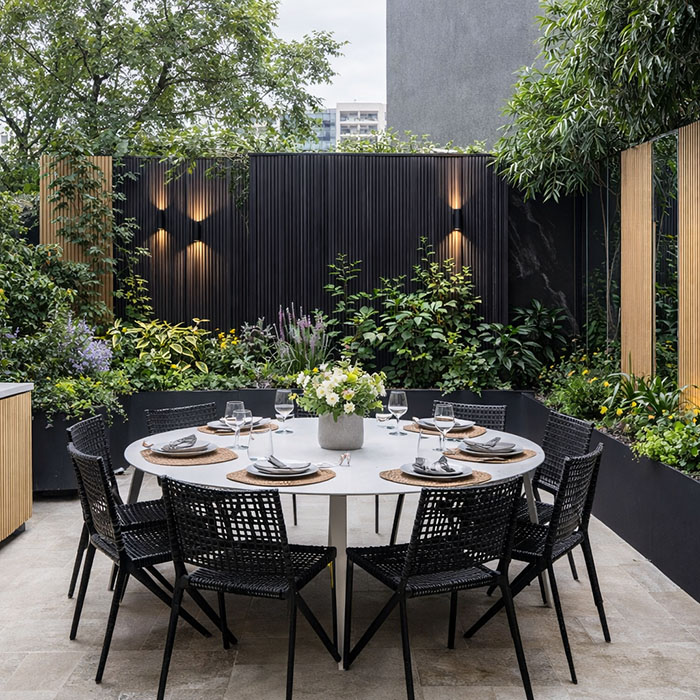
  • East-facing balconies: Get gentler morning sun and are often ideal for many herbs and flowers.
  • West-facing balconies: Can become very hot in summer and may need heat-tolerant plants.
  • South-facing balconies: Often get the least direct sun and suit shade-tolerant choices.

Check wind exposure

Balconies, especially in taller buildings, can be much windier than ground-level gardens. Wind dries potting mix quickly, damages leaves, and can topple lightweight pots. If your balcony is very exposed, sturdier plants and heavier containers will usually perform better.

Check heat and surface temperature

Balcony conditions can be harsher than you expect. Concrete, tiles, metal railings, and walls can reflect heat back onto plants. This matters in Australian summers, especially in cities like Perth, Adelaide, Brisbane, and western-facing Sydney or Melbourne balconies.

Check access to water

Make sure you know how you will water the space. If you need to carry a watering can through your apartment every day in summer, it is worth planning your layout around convenience. Balcony gardens are much easier to maintain when watering is simple.

Step 2: Decide what kind of balcony garden you want

The most successful balcony gardens usually have a clear purpose. You do not need to grow everything at once. Start with a style or goal that suits your space and your routine.

  • Herb garden: Great for beginners and small spaces.
  • Flower garden: Best for colour, fragrance, and pollinators.
  • Edible garden: Focus on herbs, leafy greens, chillies, strawberries, and compact vegetables.
  • Tropical retreat: Use lush foliage plants for a private, leafy feel.
  • Low-maintenance balcony: Choose tougher drought-tolerant plants and simple containers.

You can combine these ideas over time, but starting with one main direction makes it easier to choose plants and containers that work together.

Step 3: Start with easy plants

When starting a balcony garden, it is usually best to begin with reliable plants rather than anything fussy or high maintenance. Plants that suit containers, recover from occasional mistakes, and suit your local climate will help you build confidence quickly.

Easy herbs for Australian balconies

  • Mint
  • Parsley
  • Chives
  • Basil
  • Rosemary
  • Thyme
  • Oregano

Easy flowers for Australian balconies

  • Petunias
  • Geraniums
  • Marigolds
  • Alyssum
  • Pansies and violas
  • Begonias

Easy edibles for Australian balconies

  • Salad greens
  • Rocket
  • Spinach in cooler months
  • Cherry tomatoes in sunny spots
  • Chillies
  • Strawberries
  • Spring onions

Pick a small number of plants first. A few healthy pots usually look and perform better than too many overcrowded containers.

Step 4: Choose the right containers

Containers are the foundation of a balcony garden. The right pots help manage drainage, moisture, root growth, and stability. In Australia, where balconies can heat up quickly, container choice matters more than many beginners realise.

What to look for in balcony pots

  • Drainage holes: Essential for almost every plant.
  • Adequate size: Bigger pots hold moisture better and reduce stress in summer.
  • Weight: Heavier pots are more stable on windy balconies.
  • Shape: Long troughs, railing planters, hanging baskets, and upright pots all help maximise space.
  • Material: Terracotta breathes well but dries faster, while plastic holds moisture longer and is lighter.

If you are gardening on a hot balcony, do not go too small. Tiny pots can dry out very quickly in Australian conditions. Medium to large containers are often much easier to manage.

Step 5: Use quality potting mix

Never fill balcony pots with soil from the ground. Use a premium potting mix designed for containers. Good potting mix holds moisture, drains properly, and gives roots the air they need. This is especially important on balconies because plants are completely dependent on the soil environment inside their pots.

If you are growing a mix of plants, remember that some prefer richer, moister soil while others need sharper drainage. Herbs such as rosemary and thyme prefer not to sit in soggy conditions, while leafy herbs and many flowers like more even moisture.

Step 6: Plan your layout carefully

A good balcony garden layout makes the most of limited space without turning the balcony into a cluttered obstacle course. Think about how you will move around the space, where you sit, and how often you need to access plants for watering, harvesting, or tidying.

Simple balcony layout ideas

  • Perimeter layout: Keep most pots around the edges and leave the centre open.
  • Railing planters: Great for herbs, flowers, and trailing plants.
  • Vertical garden: Use shelves, wall planters, or narrow stands to grow upwards.
  • Corner garden: Cluster larger pots in one corner for a lush look.
  • Dining balcony: Keep plants low and tidy around a small table and chairs.

Try placing taller plants at the back or against the wall, medium plants in the middle, and trailing plants near edges or railing boxes. This helps create layers without blocking access or light.

Step 7: Water properly

Watering is one of the biggest differences between balcony gardening and growing in the ground. Containers dry out much faster, especially in wind, heat, and direct sun. At the same time, overwatering is also common, particularly with plants that prefer dry conditions.

Good balcony watering habits

  • Check the potting mix regularly rather than watering on autopilot.
  • Water deeply so moisture reaches the roots.
  • Expect to water more often during Australian summer heat.
  • Remember that terracotta dries out faster than plastic or glazed pots.
  • Group plants with similar water needs together.

Mint, basil, salad greens, and many flowers usually need more regular watering than rosemary, thyme, lavender, or succulents. The easiest mistake is treating every pot the same.

Step 8: Feed your plants

Potted plants have limited access to nutrients, so they usually need feeding during the growing season. Balcony plants that flower heavily or produce edible crops often benefit the most. A regular but light feeding routine is usually better than occasional heavy doses.

Herbs, vegetables, and flowers all have slightly different needs, but most container gardens improve when fed during active growth in spring and summer. Just avoid overfeeding, which can lead to weak, soft growth or lots of leaves with fewer flowers.

Step 9: Work with Australian seasons

One of the smartest things you can do as a balcony gardener in Australia is plant with the season instead of fighting against it. Not every plant should be grown all year. Some thrive in the cooler months, while others need warmth to perform well.

Warm-season balcony plants

  • Basil
  • Tomatoes
  • Chillies
  • Petunias
  • Marigolds
  • Lemongrass

Cool-season balcony plants

  • Parsley
  • Coriander
  • Pansies and violas
  • Spinach
  • Rocket
  • Alyssum

Changing your planting with the seasons gives much better results than trying to push unsuitable plants through difficult weather.

Balcony gardening by Australian city

Australia’s major cities have different balcony gardening conditions, so your location should influence what you grow and when you plant it.

Melbourne

Melbourne balconies often deal with changing weather, cool winters, warm summers, and wind. Flexible, hardy plants work best. Herbs like parsley, mint, chives, thyme, rosemary, and basil in summer are reliable. Flowers such as petunias, pansies, geraniums, alyssum, and begonias also suit Melbourne well. Be prepared for seasonal shifts and protect tender plants during cold snaps or hot windy days.

Sydney

Sydney’s mild winters and warm summers create a long gardening season. Many herbs, flowers, and edibles do well here, including basil, mint, parsley, rosemary, petunias, geraniums, tomatoes, and chillies. Humidity can be helpful for some plants, but balconies with hot afternoon sun still need careful watering.

Brisbane

Brisbane balconies are often warm, humid, and bright. Heat-loving plants do well, but extreme summer exposure can still stress containers. Basil, lemongrass, chillies, mint in part shade, and tropical foliage plants can all work. In the cooler months, leafy greens and other milder-climate crops often perform better than they do in peak summer.

Perth

Perth balconies often face strong sun, dry air, and heat. Mediterranean herbs such as rosemary, thyme, oregano, and sage are excellent choices. Geraniums, lavender, and marigolds also do well. Use bigger pots, good mulch, and heat-aware watering to cope with drying conditions.

Adelaide

Adelaide has hot, dry summers and cooler winters, so drought-tolerant herbs and flowers are often the easiest choices in summer. Rosemary, thyme, oregano, sage, geraniums, and marigolds are reliable. In cooler months, you can expand into leafy herbs, flowers, and salad crops more easily.

Canberra

Canberra’s colder winters mean frost and chill must be considered. Many balcony gardeners treat some plants as seasonal rather than year-round. Chives, parsley, mint, thyme, pansies, violas, and cool-season edibles work well. Basil, tomatoes, and chillies are best kept for warmer months.

Hobart

Hobart’s cooler conditions suit many herbs, flowers, and leafy edibles, particularly in sheltered sunny spots. Parsley, chives, coriander, thyme, pansies, lobelia, alyssum, and violas are strong options. Warm-season crops can still work during the warmer part of the year, but they need the sunniest positions available.

Darwin

Darwin’s tropical heat and humidity make balcony gardening very different from southern Australia. Airflow, drainage, and heat tolerance matter a lot. Basil, mint, lemongrass, and tropical foliage plants tend to suit these conditions better than cool-climate flowers or herbs that dislike constant warmth and moisture.
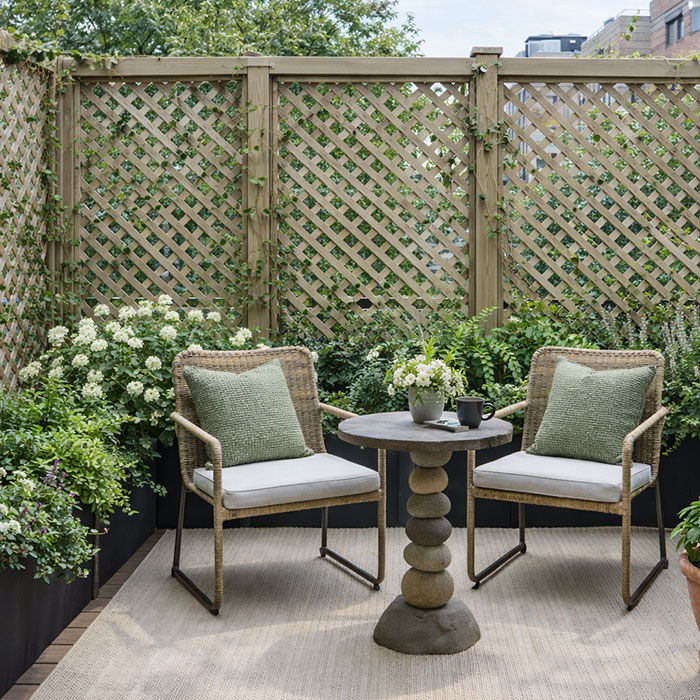
Best beginner balcony garden combinations

Easy herb starter set

  • Parsley
  • Mint
  • Chives
  • Basil

This is a practical and rewarding starting point for most Australian balconies.

Sunny flower starter set

  • Petunias
  • Marigolds
  • Geraniums

This combination adds strong colour and works well in bright balconies.

Simple edible starter set

  • Rocket
  • Cherry tomatoes
  • Strawberries
  • Spring onions

This mix suits gardeners who want a productive balcony without too much complexity.

Common balcony gardening mistakes

  • Choosing plants before checking sunlight and wind
  • Using pots that are too small
  • Overcrowding the space too early
  • Using poor-quality soil or no drainage
  • Watering everything the same way
  • Ignoring seasonal planting in your city
  • Starting with too many difficult plants at once

Final thoughts

Starting a balcony garden in Australia does not require a huge budget or a large outdoor area. What matters most is understanding your balcony, choosing plants that suit your local conditions, and starting with a manageable setup. A few well-chosen pots of herbs, flowers, or edible plants can quickly turn a plain balcony into a useful and beautiful space.

For most beginners, the best approach is simple. Observe the light, choose sturdy containers, use quality potting mix, start with easy plants, and adjust with the seasons. Once you see what thrives on your balcony, you can gradually expand into a fuller garden that suits both your city and your style.

Frequently asked questions

What is the easiest way to start a balcony garden in Australia?

The easiest way is to begin with a few reliable container plants such as herbs or easy flowers, using medium-sized pots, quality potting mix, and a balcony position that matches the plants’ sunlight needs.

What can I grow on a small balcony in Australia?

You can grow herbs, flowers, salad greens, strawberries, chillies, compact tomatoes, and ornamental foliage plants on a small balcony, depending on your light and climate.

How often should I water a balcony garden?

It depends on the plant, pot size, weather, and balcony exposure. In summer, some balconies need checking daily, especially those with full sun or strong wind.

Which plants are best for sunny Australian balconies?

Rosemary, thyme, basil, geraniums, marigolds, petunias, chillies, and cherry tomatoes are all strong choices for sunny balconies when watered appropriately.

Which plants are best for shaded balconies?

Mint, parsley, chives, begonias, impatiens, and some leafy greens can all work well on balconies with part shade or bright indirect light.

Can I grow vegetables on a balcony in Australia?

Yes. Many Australian balcony gardeners grow salad greens, herbs, chillies, strawberries, spring onions, and compact tomatoes successfully in containers.

Balcony gardens in Australia can thrive beautifully, but sunlight is the factor that most often decides whether your plants struggle or take off. On a balcony, light changes fast depending on your direction, nearby buildings, railings, walls, and the season. What works on a sunny Sydney balcony may fail on a shaded Melbourne apartment, and a west-facing balcony in Perth can behave very differently from one in Hobart.

This guide explains how to understand sunlight on your balcony, how Australian conditions affect plant choice, and how to adapt for major cities. Whether you want herbs, flowers, screening plants, or a small edible garden, getting sunlight right will save you time, money, and frustration.

Why Sunlight Matters So Much on a Balcony

In a backyard, plants usually have more stable conditions. On a balcony, sunlight is more extreme and more uneven. One corner may get blazing afternoon sun, another may stay cool and shaded all day, and reflected heat from glass, concrete, brick, or metal can make the area far hotter than the weather report suggests.

Sunlight affects how fast pots dry out, how often you need to water, how much wind stress plants can handle, whether flowers bloom well, and whether vegetables actually produce. A tomato plant with six hours of sun can crop well, while the same plant in only two hours of light may stay leggy and disappointing. Likewise, leafy greens that are happy in gentle morning light may bolt quickly in strong afternoon heat.

The 5 Main Balcony Light Levels

Before choosing plants, identify which of these light conditions your balcony has.

Full Sun

Six or more hours of direct sun per day. This is best for many vegetables, flowering annuals, citrus, chillies, rosemary, lavender, and compact tomatoes. In Australia, full sun can be excellent in cooler months but harsh in peak summer, especially on exposed balconies.

Part Sun

Four to six hours of direct sun. This suits many herbs, strawberries, dwarf beans, capsicum, and many flowering plants. Morning sun is generally gentler than afternoon sun.

Part Shade

Two to four hours of direct sun, or bright filtered light for much of the day. Good for lettuce, spinach, parsley, mint, begonias, peace lilies, and many foliage plants.

Bright Shade

No direct sun, but still bright. This often happens on balconies facing other buildings or under deep overhangs. You can still grow many foliage plants, ferns, some herbs, and some shade-tolerant flowers, but fruiting crops will usually be limited.

Deep Shade

Very little direct or reflected light. This is the hardest condition for balcony gardening. Focus on hardy indoor-style foliage plants, climbing shade lovers, and decorative containers rather than sun-loving edibles.

How to Check Your Balcony’s Sun Properly

Do not guess based only on the property listing. “Sunny balcony” often just means it is bright at one time of day. Spend a day observing your space if possible, or check at three key times: morning, midday, and mid to late afternoon. Notice where the direct sunlight actually lands and for how long.

Also check in different seasons. A balcony that gets excellent winter sun may become brutally hot in summer. Another may be shaded in winter when the sun sits lower and nearby buildings block more light.

Take note of these factors:

  • Which direction the balcony faces
  • How many hours of direct sun reach the pots, not just the balcony floor
  • Whether sunlight is gentle morning light or hot afternoon light
  • Reflected heat from walls, glass, paving, or railings
  • Wind exposure, which can dry pots fast even in part shade
  • Whether an overhang or upper balcony cuts out overhead sun

Balcony Direction in Australia: What It Usually Means

Because Australia is in the Southern Hemisphere, the direction of your balcony has a big influence on how much light it gets.

North-Facing Balcony

Usually the best option for sun-loving plants in Australia. North-facing balconies generally receive the most consistent sunlight across the year. These are ideal for herbs, flowering pots, compact vegetables, and many edible plants. In hot cities, however, summer intensity may still require shade cloth or plant placement tricks.
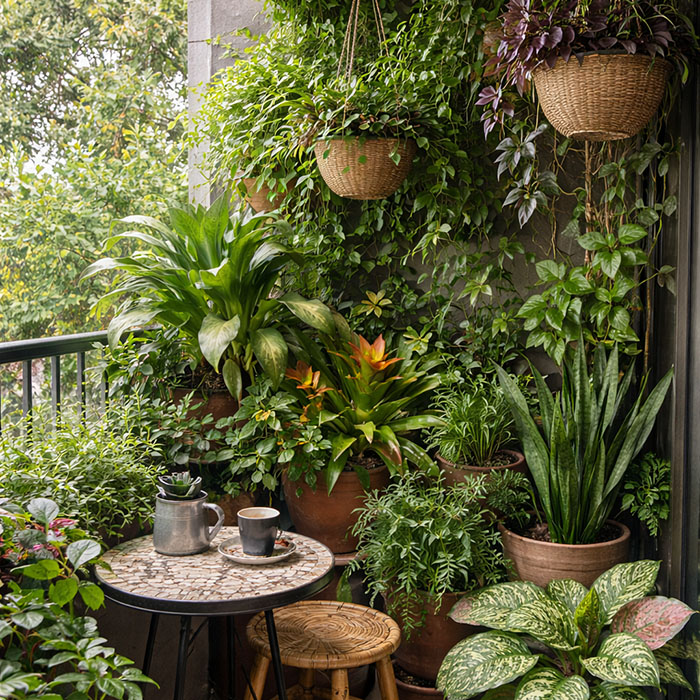
East-Facing Balcony

Gets morning sun and tends to be one of the easiest orientations to garden on. Morning light is bright but gentler, making it suitable for herbs, many flowers, leafy greens, and balconies where people also want a comfortable seating area.

West-Facing Balcony

Gets hot afternoon sun and can become very harsh in summer. These balconies can be excellent for heat-loving plants, but many pots will need more frequent watering and some plants may scorch. West-facing balconies often benefit from tall screening plants, shade cloth, grouped pots, and thicker containers.

South-Facing Balcony

Usually the shadiest option in Australia. South-facing balconies are often best for foliage plants, ferns, peace lilies, trailing greenery, and shade-tolerant containers. Edible options are more limited, but herbs like mint and parsley, plus leafy greens in brighter spots, can still do well.
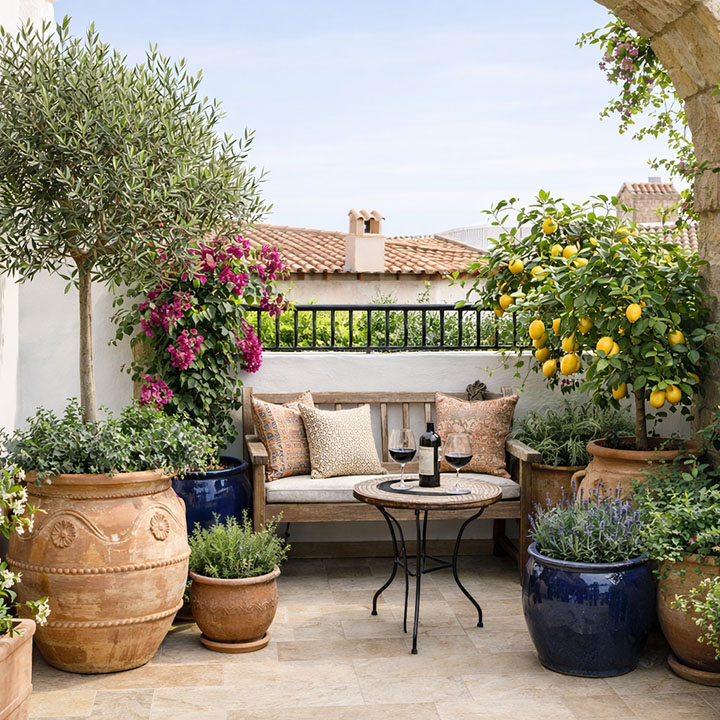
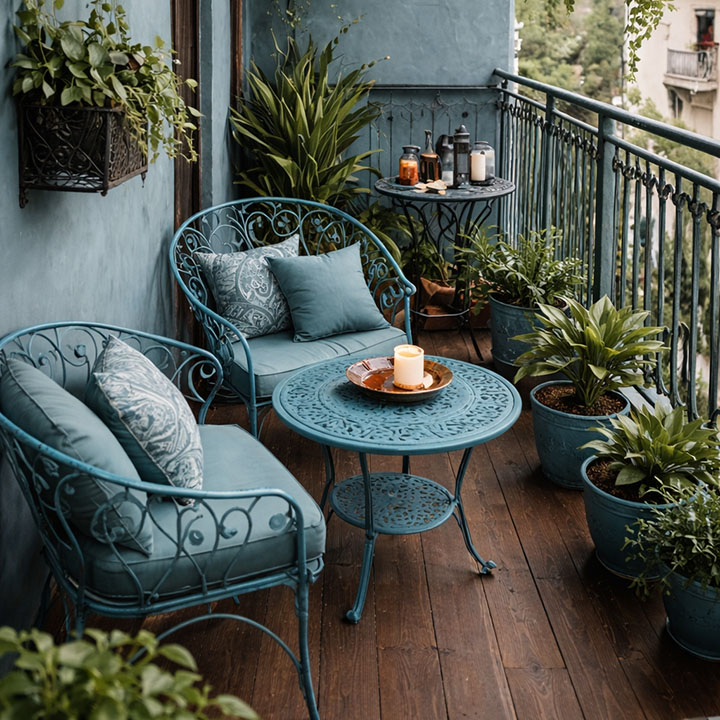
Morning Sun vs Afternoon Sun

Not all sun is equal. Four hours of morning light can be easier on plants than four hours of late afternoon summer sun. Morning sun is usually cooler and more forgiving. Afternoon sun is more intense, especially on balconies with brick walls, concrete floors, or dark railings that hold heat.

This is why some labels saying “full sun” can be misleading on Australian balconies. A plant that handles full sun in a garden bed may still struggle in a black plastic pot on a west-facing balcony in January.

Australian Balcony Gardening by City

Australia’s cities vary a lot in heat, humidity, winter cold, wind, and seasonal intensity. Here is how sunlight often behaves in different locations.

Sydney

Sydney balconies often get strong sun, high UV, and warm conditions for much of the year. Coastal areas may also deal with wind and salt exposure. North- and east-facing balconies are usually excellent for herbs, flowers, citrus in large pots, chillies, and compact vegetables. West-facing balconies can become very hot in summer, so partial afternoon protection helps. Good options include rosemary, thyme, basil, parsley, strawberries, geraniums, dwarf lemon, and native plants suited to pots.

Melbourne

Melbourne balcony gardeners often deal with variable conditions: bright sun, cool changes, wind, and noticeable seasonal shifts. Sun is still very important, but sheltered positioning matters just as much. East- or north-facing balconies are versatile. West-facing balconies can be hot on some summer days but cooler overall than in Perth or Adelaide. Herbs, leafy greens, lavender, salvias, dwarf tomatoes, and compact natives can perform well depending on exposure.

Brisbane

Brisbane’s warmth and humidity support fast growth, but intense summer heat can stress plants in full afternoon sun. Morning sun is often ideal. East-facing balconies are especially useful for edible gardens. In very exposed positions, use part shade for lettuce, coriander, and soft herbs during the hottest months. Tropical and subtropical foliage plants, chillies, basil, lemongrass, mint, and many flowering plants do well.

Perth

Perth balconies can be extremely bright, dry, and hot in summer. Watering becomes a major issue, especially with terracotta and small pots. Full-sun balconies are best planted with heat-tolerant choices such as rosemary, thyme, oregano, lavender, succulents, and tough flowering plants. Edibles can still do well, but many need larger pots, mulch, and some summer protection. West-facing balconies in Perth need special care.

Adelaide

Adelaide often combines strong sun with dry heat. Balcony plants can thrive, but they must cope with rapid moisture loss. Mediterranean herbs are a natural fit. Full-sun balconies suit rosemary, thyme, sage, oregano, lavender, pelargoniums, and chillies. Leafy greens are better in cooler seasons or with morning sun only. Shade cloth and self-watering pots can make a big difference in summer.

Canberra

Canberra has colder winters than most Australian capitals, so sunlight is valuable, especially in winter. North-facing balconies are particularly useful here. Summer sun can still be strong, but the larger issue is seasonal change. Choose sun-loving plants for spring and summer, then switch to cool-season edibles and cold-tolerant pots in the cooler months. Good light can extend your growing season considerably.

Hobart

Hobart balcony gardens often benefit from maximising available light rather than reducing it. North-facing balconies are highly desirable. Sun-loving herbs, strawberries, dwarf peas, and many cottage-style flowers can do well in brighter spots. Wind protection is often just as important as sunlight. In shaded balconies, focus on foliage and cool-climate shade lovers.

Darwin

Darwin’s balcony gardens face intense heat, humidity, and wet-season growth. Full direct sun can be too much for many plants in containers, especially on exposed balconies. Filtered light, morning sun, and ventilation are often more useful than all-day exposure. Tropical edibles, leafy greens in part shade, basil, chillies, ginger, and lush foliage plants often perform well, but drainage and airflow are essential.

Best Plants by Sunlight Type

Best Plants for Full Sun Balconies

  • Rosemary
  • Thyme
  • Oregano
  • Lavender
  • Sage
  • Chillies
  • Compact tomatoes
  • Capsicum
  • Strawberries
  • Geraniums and pelargoniums
  • Succulents
  • Many Australian native flowering plants in pots

Best Plants for Part Sun Balconies

  • Basil
  • Parsley
  • Chives
  • Dwarf beans
  • Lettuce in cooler seasons
  • Spinach
  • Begonias
  • Diascia
  • Alyssum
  • Compact citrus in brighter positions

Best Plants for Part Shade or Bright Shade

  • Mint
  • Parsley
  • Coriander in cooler weather
  • Lettuce
  • Rocket
  • Peace lily
  • Ferns
  • Pothos
  • Begonias
  • Impatiens
  • Trailing ivy in suitable climates

How to Protect Plants from Harsh Australian Sun

Many balcony gardeners lose plants not because they chose the wrong species, but because the conditions become too extreme in midsummer. Containers heat up faster than garden soil, and roots can cook surprisingly quickly on hard surfaces.

Use these strategies to manage strong sun:

  • Use larger pots, which dry out more slowly
  • Choose lighter-coloured containers where possible
  • Mulch the top of pots to reduce evaporation
  • Group pots together to create a cooler microclimate
  • Use taller plants as living shade for delicate ones
  • Add a small screen, umbrella, or shade cloth for west-facing balconies
  • Water early in the morning during hot weather
  • Avoid tiny pots for thirsty edible crops in summer

How to Make the Most of a Shady Balcony

A shady balcony is not a wasted space. It simply needs a different plant palette. Instead of forcing sun-loving vegetables to survive, lean into foliage, texture, layered planters, and species that appreciate protection from direct sun.

On a shaded balcony, try to maximise brightness by using pale walls, reflective surfaces, open-style furniture, and careful placement near the brightest edge. Keep expectations realistic for fruiting crops, but enjoy the fact that shade balconies are often easier to keep lush and comfortable for sitting areas.

Seasonal Sun Changes in Australia

One of the biggest balcony gardening mistakes is treating the space as though conditions stay the same all year. In Australia, seasonal sun angle matters. A balcony may feel perfect in spring and autumn, then become scorching in January or noticeably darker in winter.

A good balcony garden often changes by season:

  • Summer: protect roots, manage heat, grow warm-season herbs and flowering plants
  • Autumn: refresh tired pots, plant herbs and flowers for milder growth
  • Winter: maximise light, reduce watering frequency, use cool-season edibles where suitable
  • Spring: feed plants, replant edibles, and prepare for stronger sun ahead

Best Edibles for Different Australian Balcony Light Conditions

Sunny Balconies

Tomatoes, chillies, basil, thyme, rosemary, oregano, dwarf beans, strawberries, and capsicum.

Morning-Sun Balconies

Parsley, basil, lettuce, spinach, spring onions, coriander in cooler months, and strawberries.

Part-Shade Balconies

Mint, parsley, leafy greens, baby spinach, rocket, some Asian greens, and shade-tolerant herbs.

Common Sunlight Problems on Balcony Gardens

Leaves Scorching or Browning

Usually caused by harsh direct sun, reflected heat, dry roots, or sudden exposure after being grown in softer conditions.

Plants Growing Tall and Weak

Usually a sign of insufficient light. Move them to a brighter position or switch to plants that suit shade better.

No Flowers or Fruit

Often due to not enough direct sun, especially for tomatoes, chillies, citrus, and many flowering annuals.

Pots Drying Out Too Fast

Common on windy, sunny Australian balconies. Upgrade pot size, mulch, group plants, and water early.

Plants Wilting Even When the Soil Seems Damp

This can happen when roots are overheating. The problem may be sun intensity on the pot, not lack of water in the mix.

Simple Balcony Sunlight Rules for Australia

  • North-facing is usually the sunniest and most flexible
  • East-facing is often the easiest for mixed-use balconies
  • West-facing can be productive but harsh in summer
  • South-facing works best for foliage and shade lovers
  • Morning sun is gentler than afternoon sun
  • Containers heat and dry faster than garden beds
  • What works in Hobart may burn in Perth or Brisbane
  • Choose plants for your real light conditions, not your ideal ones

Final Thoughts

The best balcony garden is not the one with the most sun. It is the one where the plants match the light you actually have. In Australia, sunlight is a huge advantage, but it can also be intense, drying, and unforgiving in containers. Once you understand your balcony’s direction, sun hours, seasonal changes, and city climate, plant choices become much easier.

If your balcony gets blazing sun, choose heat-tolerant plants and protect roots. If it is shady, build a lush green retreat with foliage and shade-friendly herbs. If it only gets morning light, use that to your advantage. The key is to work with your balcony’s conditions, not against them.

A well-planned Australian balcony garden can be productive, beautiful, and usable year-round. Start with the sunlight, and the rest of the design becomes much easier.

A balcony garden can be much more than a row of pots pushed against a railing. With the right layout, even a small balcony can feel larger, greener, and more useful. A good layout helps you fit more plants into the space, makes maintenance easier, and creates a balcony that feels intentional rather than cluttered.

The best balcony garden layouts do three things well. They use space efficiently, suit the light and weather conditions, and match the way you actually want to use the balcony. Some people want a productive edible garden full of herbs and vegetables. Others want a relaxing retreat with flowers, privacy plants, and a chair. Many people want a mix of both.

This guide explains in depth how to plan a balcony garden layout, which layout styles work best, how to match a layout to your balcony size and conditions, and how to avoid common design mistakes.

Why balcony layout matters

A balcony garden layout affects far more than appearance.

A smart layout can help you:

  • fit more plants into a small space
  • make watering and maintenance easier
  • improve airflow around plants
  • protect plants from wind
  • create zones for relaxing and growing
  • make the balcony feel larger and calmer

A poor layout usually leads to:

  • overcrowding
  • blocked walkways
  • uneven sun exposure
  • awkward watering
  • plants drying out or competing for light
  • a balcony that feels messy instead of inviting

The goal is not to fill every centimetre with greenery. The goal is to create a balcony that feels balanced and usable.

Start with the shape of the balcony

Before choosing plants or planters, look at the physical layout of the balcony itself.

Most balconies fall into one of these shapes:

Long and narrow

Common in apartments. Best for rail planters, wall planters, vertical growing, and one slim seating zone.

Square or boxy

More flexible. Easier to create zones for dining, planting, and relaxing.

Corner balcony

Excellent for layered planting because you can use both walls and the railing.

Deep balcony

Can accommodate larger pots, trees, or seating, but needs structure so it does not feel empty.

Tiny Juliet-style balcony

Best for a small number of statement pots, herbs, and hanging planters.

The shape tells you where your main layout opportunities are. A narrow balcony usually needs vertical solutions. A deeper balcony can support central furniture and perimeter planting.

Understand how the light moves

The best layout is always shaped by sunlight.

Ask:

  • which side gets the most sun
  • whether the sun is morning or afternoon
  • which corners stay shaded
  • whether walls or screens block light
  • whether the railing reflects heat

This helps you decide where each type of plant should go.

Full sun areas

Use for:

  • tomatoes
  • chillies
  • rosemary
  • basil
  • lavender
  • strawberries

Part sun areas

Use for:

  • parsley
  • mint
  • lettuce
  • spinach
  • rocket
  • chives

Shade or bright indirect light

Use for:

  • ferns
  • peace lilies
  • begonias
  • foliage plants
  • some herbs like mint

A layout that ignores the sun almost always struggles.

The key balcony garden design principles

Before looking at specific layout ideas, it helps to understand the basic design principles that make balconies work well.

Layering

Use different heights:

  • low ground pots
  • mid-height planters
  • tall shrubs or trellised plants
  • hanging baskets or wall planters

Layering makes a balcony feel lush and professionally designed.

Repetition

Repeating planter styles, colours, or plant types helps a balcony feel cohesive.

Balance

A balcony should not look too heavy on one side and empty on the other.

Access

You should still be able to move, water, prune, and enjoy the space.

Scale

Use plant and pot sizes that suit the balcony. Oversized furniture on a tiny balcony makes everything feel cramped.

Balcony garden layout ideas

Below are the most effective layout styles for balconies, along with when to use them and what plants suit them.

1. The perimeter layout

This is one of the most practical balcony layouts.

Planters are placed around the edge of the balcony, leaving the centre open.

Why it works

  • keeps the walking area clear
  • makes the balcony feel larger
  • allows good airflow
  • easy to combine with seating or a small table

Best for

  • square balconies
  • dining balconies
  • medium or large spaces

Good plant choices

  • shrubs and grasses in larger corner pots
  • flowers and herbs in border planters
  • leafy greens in rectangular boxes

Design tip

Use taller plants in corners and lower plants along the edges to create depth without blocking views.

2. The railing planter layout

This layout uses the railing as the main planting zone.

Why it works

  • saves floor space
  • makes the balcony feel green from the edges
  • ideal for narrow balconies
  • good for light-loving plants

Best for

  • long narrow balconies
  • apartment balconies with limited floor area

Good plant choices

  • herbs
  • strawberries
  • petunias
  • nasturtiums
  • trailing flowers
  • compact salad greens

Design tip

Avoid making the railing too visually busy. Use repeating planter styles and similar plant forms.

3. The vertical garden layout

This layout uses walls, trellises, shelves, hanging systems, or mesh grids to grow upwards.

Why it works

  • maximises limited space
  • adds privacy
  • creates a lush green wall effect
  • good for narrow balconies

Best for

  • tiny balconies
  • balconies with blank walls
  • renters who want removable systems
  • balconies where floor space is precious

Good plant choices

  • herbs
  • trailing plants
  • compact flowers
  • climbing beans
  • peas
  • cucumbers
  • climbing ornamentals

Design tip

Anchor the layout with larger base pots below the vertical section so the whole composition feels grounded.

4. The edible balcony layout

This layout prioritises food production.

The balcony is organised around herbs, vegetables, leafy greens, trellised crops, and compact fruiting plants.

Why it works

  • practical and rewarding
  • high productivity in small spaces
  • easy to tailor to sun conditions

Best for

  • sunny balconies
  • people who cook often
  • small-space gardeners who want utility

Good plant choices

  • cherry tomatoes
  • basil
  • parsley
  • lettuce
  • spinach
  • rocket
  • spring onions
  • chillies
  • strawberries
  • dwarf beans

Design tip

Group plants by watering needs and sunlight requirements. Heavy feeders like tomatoes should be in larger containers, while herbs can be grouped nearby.

5. The lounge layout

This layout creates a relaxing retreat with plants framing a seat, bench, or small lounge chair.

Why it works

  • makes the balcony feel like an outdoor room
  • blends greenery and lifestyle
  • works well with softer planting

Best for

  • balconies used for reading or relaxing
  • part-sun or decorative balconies
  • wider or deeper balconies

Good plant choices

  • flowering plants
  • fragrant herbs
  • screening shrubs
  • foliage plants
  • trailing plants in hanging baskets

Design tip

Use plants to frame the seating rather than crowd it. The seat should feel sheltered, not boxed in.

6. The dining balcony layout

This layout uses a small table and chairs as the centrepiece, with planters around the outer edges.

Why it works

  • highly functional
  • elegant and balanced
  • keeps the centre usable
  • ideal for entertaining

Best for

  • medium to large balconies
  • apartment terraces
  • balconies with good circulation

Good plant choices

  • structural plants in corners
  • low flowering borders
  • soft grasses
  • herbs near the table
  • fragrant plants

Design tip

Use slimmer planters if space is tight. A round table usually works better than a square one on balconies.

7. The privacy screen layout

This layout is designed to block views from neighbours or create a more enclosed space.

Why it works

  • adds privacy
  • reduces wind
  • can make the balcony feel more intimate

Best for

  • overlooked balconies
  • exposed apartments
  • balconies facing nearby buildings

Good plant choices

  • tall grasses
  • bamboo in controlled containers
  • trellised climbers
  • screening shrubs
  • dense foliage plants

Design tip

Avoid creating a heavy green wall across the whole balcony unless you still have enough light and airflow.

8. The corner jungle layout

This layout builds a dense planting composition in one or two corners, rather than spreading plants evenly everywhere.

Why it works

  • easy to maintain
  • strong visual impact
  • creates a focal point
  • leaves other areas open

Best for

  • corner balconies
  • shaded balconies
  • tropical or foliage-focused designs

Good plant choices

  • bird of paradise
  • ferns
  • philodendrons
  • peace lilies
  • trailing plants
  • layered tropical foliage

Design tip

Use a tall anchor plant, medium foliage plants below it, and trailing plants to soften the edges.

9. The Mediterranean layout

This style is ideal for sunny Australian balconies and creates a warm, relaxed look.

Why it works

  • suits hot, bright balconies
  • relatively low maintenance
  • elegant and timeless

Good plant choices

  • olive tree
  • rosemary
  • thyme
  • oregano
  • lavender
  • sage
  • terracotta pots
  • gravel or simple clean materials

Design tip

Use fewer plant varieties but repeat them for a calm, cohesive look.

10. The cottage balcony layout

This is a softer, more abundant style with mixed flowers, herbs, and informal planting.

Why it works

  • charming and colourful
  • romantic and lush
  • supports pollinators

Good plant choices

  • petunias
  • geraniums
  • nasturtiums
  • herbs
  • alyssum
  • daisies
  • lavender
  • trailing flowers

Design tip

The look should still be controlled. Too many random pots can look messy instead of charming.

How to choose the right layout for your balcony size

Small balcony

Best options:

  • railing planter layout
  • vertical garden layout
  • small lounge layout
  • corner jungle layout

Use:

  • slim planters
  • hanging pots
  • one statement chair or bench
  • a maximum of one focal point

Medium balcony

Best options:

  • perimeter layout
  • edible layout
  • mixed lounge and planting layout
  • privacy screen layout

Use:

  • a combination of floor and vertical planting
  • a small table or bench
  • different plant heights

Large balcony or terrace

Best options:

  • dining balcony layout
  • multiple zones
  • large planters
  • structural plants and small trees

Use:

  • separate areas for seating and planting
  • repeated planter styles
  • larger statement pots
  • feature trees or screens

Best layout ideas by balcony condition

Sunny balcony

Good layouts:

  • edible balcony
  • Mediterranean layout
  • perimeter layout
  • dining balcony with low planting

Shady balcony

Good layouts:

  • corner jungle
  • foliage-focused lounge layout
  • tropical vertical garden
  • soft layered perimeter planting

Windy balcony

Good layouts:

  • privacy screen layout
  • grouped corner planting
  • lower, more compact arrangements
  • heavier containers near edges

Narrow balcony

Good layouts:

  • railing planters
  • vertical wall garden
  • one-sided planting with opposite seating
  • long slim perimeter layout

Balancing beauty and practicality

A lot of balcony inspiration images look beautiful but are not always practical. The best layout gives you both.

Think about:

  • how you will water everything
  • whether pots are too heavy to move
  • whether leaves will block doors
  • whether you can sweep the floor
  • whether the balcony still feels comfortable to sit in

A great balcony garden is one you can actually maintain.

How to create zones in a balcony garden

Even a small balcony can have zones.

Examples:

Relaxation zone

Bench, chair, or small lounge seat with soft planting around it.

Growing zone

Herbs, vegetables, or compact fruiting plants grouped together for easy care.

Feature zone

A statement tree, a vertical garden, or a colourful grouping of flowers.

Screening zone

Taller planters or trellises placed where privacy is needed.

Zoning helps the balcony feel designed rather than accidental.

Common balcony layout mistakes

Pushing all the pots together without a plan

This usually creates clutter.

Blocking the best light with tall plants

Put tall plants where they will not shade everything behind them.

Using too many different pot styles

This can make the balcony feel visually chaotic.

Forgetting mature plant size

Small nursery plants can become much larger than expected.

Not leaving walking space

A balcony should still feel easy to use.

Overcrowding furniture and plants

Choose one priority if space is tight.

Simple layout formulas that work

If you want practical layout formulas to copy, these are strong starting points.

Formula 1: The edible narrow balcony

  • rail planters with herbs and strawberries
  • one vertical trellis for beans or tomatoes
  • one large corner pot
  • one slim bench or stool

Formula 2: The relaxing green balcony

  • bench or lounge chair
  • medium pots around the edges
  • one hanging basket
  • one tall feature plant in the corner
  • low trailing plants to soften edges

Formula 3: The dining terrace

  • round table in the centre
  • planters around the perimeter
  • taller plants in corners
  • low flowers or herbs along edges

Formula 4: The privacy balcony

  • trellis or screen on one side
  • tall screening planters
  • lower filler plants in front
  • one chair or small table inside the sheltered area

Best plants for layout impact

Some plants are especially useful in balcony design because they help create structure.

Tall structural plants

  • olive tree
  • bay tree
  • dwarf citrus
  • bird of paradise
  • ornamental grasses
  • bamboo in controlled planters

Medium fillers

  • rosemary
  • lavender
  • geraniums
  • parsley
  • leafy greens
  • ferns

Trailing plants

  • nasturtiums
  • strawberries
  • petunias
  • ivy
  • trailing rosemary
  • lobelia

Climbers

  • beans
  • peas
  • jasmine
  • climbing flowers
  • cucumber in sunny edible layouts

Using a mix of these categories creates a layered, finished look.

Final thoughts

The best balcony garden layouts are not always the most complicated. In most cases, the strongest layouts are the ones that match the space, use height wisely, and leave enough room for you to enjoy the balcony.

Start by understanding your shape, light, and purpose. Then choose a layout style that fits how you want to use the space. A sunny edible balcony, a leafy corner retreat, a dining terrace, or a railing herb garden can all work beautifully when the layout is intentional.

If you are new to balcony gardening, keep it simple at first. One well-planned corner or one strong perimeter layout is better than trying to do everything at once.

Once the structure works, the plants become much easier.

Balcony gardening is one of the easiest ways to start growing plants at home, even if you live in an apartment, townhouse, or rental. You do not need a backyard to grow herbs, flowers, chillies, lettuce, tomatoes, or even small citrus trees. With the right setup, a balcony can become a productive, beautiful outdoor space that gives you fresh food, greenery, privacy, and a reason to spend more time outside.

A balcony garden can do more than improve the look of your apartment or townhouse. A garden on your balcony can have positive effect on your mental health. Even a small collection of plants can make a balcony feel calmer, more private, and more restorative, giving you a quiet space to step away from screens, work, and daily stress. Watering plants, checking new growth, and spending a few minutes outside each day can create a simple routine that feels grounding and rewarding. For many people, a balcony garden adds a sense of purpose, helps reduce stress, and makes apartment living feel more connected to nature.

Australia is not one single climate. What grows well on a balcony in Hobart may struggle in Darwin. A north-facing balcony in Melbourne behaves differently from a shaded balcony in Brisbane. That is why beginners do best when they start with the basics first, then match plants and containers to their local conditions.

This guide explains everything a beginner in Australia needs to know to start a balcony garden, including sunlight, wind, containers, potting mix, watering, plant choices, and how to adapt your garden to each capital city.

Why balcony gardening is perfect for beginners

Balcony gardens are easier to manage than full backyards because the space is smaller and more controlled. You can see your plants every day, water them quickly, and notice problems early.

A balcony garden can help you:

  • grow fresh herbs and vegetables
  • create a more private and relaxing outdoor space
  • make a hot concrete balcony feel cooler and greener
  • decorate a rental without permanent changes
  • start small and build gradually

For beginners, that last point matters a lot. You do not need to build a full garden in one weekend. You can start with three pots, learn what works, then expand.

Step 1: Understand your balcony before buying anything

Before choosing plants, spend a few days studying the balcony.

Look at:

  • how much direct sun it gets
  • what time of day the sun hits
  • how windy it is
  • whether the area gets hot reflected heat from walls or glass
  • how much weight and floor space you realistically want to use

Sunlight

Most edible plants need good light. Herbs and vegetables generally perform best with at least 4 to 6 hours of sun, and fruiting plants like tomatoes, capsicum, and chillies often prefer more.

A balcony usually falls into one of these categories:

Full sun
6 or more hours of direct sunlight. Great for tomatoes, rosemary, basil, lavender, chillies, strawberries.

Part sun
3 to 5 hours of direct sunlight. Good for parsley, mint, lettuce, spinach, spring onions, rocket.

Shade or bright indirect light
Less than 3 hours of direct sun. Better for foliage plants, ferns, some flowers, and a smaller range of edibles.

Wind

Wind is one of the biggest balcony gardening issues in Australia, especially on higher floors. It dries pots fast, damages stems, and stresses plants.

Heat

Balconies can become much hotter than a backyard because concrete, brick, tiles, and glass reflect heat. A west-facing balcony in summer can be brutal.

Access

Make sure you can still sit outside, open doors, and move around. Many beginners overfill a balcony and make it less usable.

Step 2: Start with the right containers

Containers are everything in balcony gardening. They determine root space, water retention, drainage, and how often you need to water.

Good beginner container choices

Plastic pots
Lightweight, affordable, easy to move, good for most balconies.

Fibreglass or resin planters
Stylish and lighter than ceramic. Great for larger statement pots.

Terracotta pots
Classic look, but they dry out faster. Better for herbs that like drier conditions, such as rosemary and thyme.

Raised balcony planters
Very practical for herbs, lettuces, and compact vegetables.

Rail planters
Useful for herbs, flowers, and trailing plants, but make sure they are secure.

Fabric grow bags
Good drainage, lightweight, useful for vegetables, though less decorative.

Container size matters

Beginners often choose pots that are too small. Small pots dry out quickly and restrict growth.

As a rough guide:

  • herbs: 20 cm pot minimum
  • lettuce and leafy greens: 20 to 30 cm deep
  • tomatoes: 30 to 40 cm deep minimum
  • dwarf citrus: large pot, often 40 cm or more
  • climbing vegetables: deep pot plus support

Bigger pots are more forgiving because they hold moisture longer.

Step 3: Use potting mix, not garden soil

Never fill balcony pots with soil dug from the ground. It compacts, drains badly, and can introduce pests and diseases.

Use a good-quality potting mix made for containers. Cheap potting mix can cause problems, especially in Australian heat. A good mix drains well but still holds enough moisture for roots to grow evenly.

For beginners, it also helps to add:

Step 4: Pick easy plants first

The easiest way to succeed is to grow plants that already suit balcony life.

Best herbs for Australian balcony beginners

Herbs are usually the best first step because they are useful, compact, and rewarding.

Start with:

  • basil
  • parsley
  • mint
  • thyme
  • oregano
  • rosemary
  • chives
  • coriander, in cooler months

Best vegetables for beginners

Choose compact, fast, or productive plants.

Good options include:

  • cherry tomatoes
  • lettuce
  • rocket
  • spinach
  • silverbeet
  • spring onions
  • chillies
  • dwarf beans
  • radishes
  • strawberries

Best flowers for a balcony

Flowers bring colour and can attract pollinators.

Good beginner flowers include:

  • marigolds
  • nasturtiums
  • petunias
  • geraniums
  • alyssum
  • violas in cooler weather

Step 5: Match the plants to the balcony style

A good balcony garden is not just a random set of pots. It should have a clear purpose.

You might want:

A cooking balcony

Focus on herbs, chillies, tomatoes, spring onions, and leafy greens.

A relaxing green balcony

Use layered foliage, hanging plants, a small tree, and soft flowers.

A productive edible balcony

Grow herbs, compact vegetables, strawberries, beans, and salad greens.

A privacy balcony

Use taller plants, trellis screens, climbers, and upright shrubs.

For most beginners, a mix works best: a few herbs, a few vegetables, and one or two decorative plants.

Step 6: Watering is the biggest beginner challenge

Australian balconies dry out fast, especially in summer. Containers can go from perfect to bone dry in a day during hot spells.

Basic watering rules

  • water deeply, not just a quick splash
  • water the soil, not just the leaves
  • check pots daily in warm weather
  • expect to water more in summer and less in winter
  • bigger pots need less frequent watering than tiny pots

Signs of under-watering

  • drooping leaves
  • dry potting mix pulling away from edges
  • crispy leaf tips
  • flowers dropping

Signs of over-watering

  • yellowing leaves
  • soggy mix
  • fungus gnats
  • root rot smell

If you travel often or do not want to water daily, self-watering pots are worth considering.

Step 7: Feed your plants regularly

Pots run out of nutrients faster than garden beds. Even the best potting mix does not feed plants forever.

A simple beginner routine is:

Leafy greens and herbs do well with steady feeding. Fruiting plants need more support once they start producing.

Step 8: Use vertical space

Balconies are small, so think upwards.

You can use:

  • trellises
  • wall planters
  • plant shelves
  • hanging baskets
  • railing planters
  • tiered stands

Vertical gardening helps you fit more plants without losing floor space. It also makes a balcony feel fuller and more designed.

Step 9: Protect plants from harsh conditions

Balcony plants deal with more extremes than garden plants.

Wind protection

Use screens, taller pots near edges, or trellis panels to reduce wind exposure.

Heat protection

Use mulch, larger pots, and afternoon shade for sensitive plants.

Cold protection

In cooler cities, move tender plants closer to walls in winter or cover them on cold nights.

Step 10: Expect trial and error

Every balcony is different. Two balconies in the same suburb can behave differently depending on height, direction, and surrounding buildings.

That is normal. Balcony gardening is partly about observation.

Start small. Watch what thrives. Then build from there.

Balcony gardening in Australia’s capital cities

This is where local conditions matter most.

Sydney

Sydney’s climate is generally mild to warm, with humid summers and relatively mild winters. Balcony gardeners in Sydney often do well with herbs, leafy greens, tomatoes, chillies, basil, parsley, strawberries, and many ornamental flowers.

Main Sydney balcony challenges

  • summer heat on west-facing balconies
  • humidity
  • occasional strong wind, especially in exposed apartments

Good beginner plants for Sydney

  • basil
  • parsley
  • mint
  • rosemary
  • cherry tomatoes
  • chillies
  • lettuce in cooler months
  • strawberries
  • geraniums

Sydney tips

Use larger pots than you think you need. Summer heat and humidity can make watering tricky, and balconies can get very hot in the afternoon.

Melbourne

Melbourne is excellent for balcony gardening, but the weather changes quickly. You can get warm days, cool nights, strong winds, and sudden seasonal swings.

Main Melbourne balcony challenges

  • unpredictable weather
  • wind
  • cool winter conditions
  • hot reflected summer heat on some balconies

Good beginner plants for Melbourne

  • rosemary
  • thyme
  • parsley
  • basil in warmer months
  • lettuce
  • rocket
  • spinach
  • silverbeet
  • strawberries
  • cherry tomatoes in spring and summer

Melbourne tips

Wind protection is important. Melbourne balconies can dry out plants faster than expected. Herbs and leafy greens usually do very well.

Brisbane

Brisbane’s warm climate is ideal for a wide range of balcony plants, but humidity and summer heat can be intense.

Main Brisbane balcony challenges

  • strong summer heat
  • humidity
  • fast-growing pests
  • heavy rain periods

Good beginner plants for Brisbane

  • basil
  • mint
  • chillies
  • lemongrass
  • parsley
  • sweet potato in containers
  • snake beans
  • tropical ornamentals
  • leafy greens in cooler months

Brisbane tips

Give sensitive plants afternoon shade in peak summer. Good airflow matters because humidity can encourage fungal problems.

Perth

Perth balcony gardeners deal with strong sun, dry heat, and hot summers. Watering and heat management are key.

Main Perth balcony challenges

  • intense summer sun
  • dry conditions
  • hot winds
  • fast drying pots

Good beginner plants for Perth

  • rosemary
  • thyme
  • oregano
  • lavender
  • chillies
  • cherry tomatoes with enough water
  • spring greens in cooler months
  • succulents and Mediterranean-style plants

Perth tips

Terracotta looks beautiful but can dry out too fast in summer. Use bigger pots, mulch well, and choose heat-tolerant plants.

Adelaide

Adelaide shares some similarities with Perth, with hot dry summers and cool winters. Mediterranean herbs often thrive.

Main Adelaide balcony challenges

  • heat
  • dry air
  • hot afternoon sun
  • container drying

Good beginner plants for Adelaide

  • rosemary
  • thyme
  • sage
  • oregano
  • basil in summer with water
  • tomatoes
  • capsicum
  • lettuce in cooler seasons
  • lavender

Adelaide tips

A balcony that gets morning sun and some afternoon protection is ideal. Use grouped pots to reduce water stress.

Canberra

Canberra has hotter summers than some people expect, but winters are much colder than the coastal capitals. Seasonal planning matters more here.

Main Canberra balcony challenges

  • frost in winter
  • strong temperature swings
  • heat in summer
  • cold nights

Good beginner plants for Canberra

  • parsley
  • chives
  • thyme
  • rosemary
  • silverbeet
  • lettuce
  • peas in cool seasons
  • tomatoes in summer
  • pansies and violas in cooler weather

Canberra tips

Treat it as a seasonal balcony garden. Grow cool-season crops in autumn and spring, then switch to heat-loving plants in summer.

Hobart

Hobart is cooler and milder than mainland capitals in summer, which can be excellent for leafy greens and herbs. Heat-loving plants need the sunniest spots.

Main Hobart balcony challenges

  • cool temperatures
  • slower winter growth
  • less heat for tropical or fruiting plants

Good beginner plants for Hobart

  • parsley
  • coriander
  • thyme
  • chives
  • lettuce
  • spinach
  • silverbeet
  • peas
  • strawberries
  • cherry tomatoes in warm, sunny positions

Hobart tips

Use north-facing spots well. Black or darker pots can help warm the root zone, but make sure they do not dry out too much in summer.

Darwin

Darwin is the most different from the southern capitals. Heat, humidity, and the wet season change what works. A balcony garden can still thrive, but plant choice is very important.

Main Darwin balcony challenges

  • tropical heat
  • humidity
  • intense rain in wet season
  • fungal pressure
  • plants bolting or struggling in constant heat

Good beginner plants for Darwin

  • basil
  • chillies
  • lemongrass
  • tropical herbs
  • Asian greens in suitable periods
  • kangkong
  • snake beans
  • sweet potato
  • ornamental tropical foliage plants

Darwin tips

Shade management is important. A partly protected balcony may outperform a fully exposed one. Good drainage and airflow are essential.

Best beginner balcony garden setups by goal

1. The easiest edible starter setup

This is the best low-risk beginner combination:

  • 1 pot of basil
  • 1 pot of parsley
  • 1 pot of mint
  • 1 planter of lettuce or rocket
  • 1 pot of cherry tomato

This gives you an immediate mix of success and usefulness.

2. The low-maintenance setup

If you want something easy:

  • rosemary
  • thyme
  • oregano
  • lavender
  • one hardy flowering plant

This suits sunnier balconies and people who do not want to fuss.

3. The pretty and productive setup

A balanced option:

  • basil
  • parsley
  • cherry tomato
  • strawberries
  • nasturtiums
  • marigolds

This looks good and gives you things to harvest.

Common mistakes beginners make

Using tiny pots

Small pots dry out too fast and limit growth.

Ignoring sun direction

Not every balcony is suitable for tomatoes or chillies.

Overcrowding

Too many plants create poor airflow and make watering harder.

Forgetting wind

A breezy balcony can damage plants quickly.

Watering on a fixed schedule

Water according to conditions, not habit alone.

Starting with difficult plants

Begin with easy herbs and greens before trying more demanding crops.

A simple beginner shopping list

For a first balcony garden, you do not need much.

Start with:

  • 4 to 6 medium pots or 2 larger planters
  • quality potting mix
  • watering can
  • liquid fertiliser
  • saucers if needed
  • basil, parsley, mint, lettuce, and a tomato seedling
  • one flowering plant for colour

That is enough to begin learning what your balcony can do.

Final thoughts

Balcony gardening in Australia is one of the best ways to start gardening because it is flexible, affordable, and rewarding. You do not need a backyard, and you do not need to get everything right at the start. You only need to understand your balcony, choose beginner-friendly plants, and build gradually.

The most important lesson is this: grow for your conditions, not for someone else’s Instagram photo. A brilliant balcony garden in Perth will not be the same as one in Hobart or Darwin. Once you work with your local climate, sunlight, and space, everything gets easier.

Start with a few herbs, one edible planter, and one decorative pot. Watch what happens. Learn from it. Then add more.

That is how most great balcony gardens begin.