
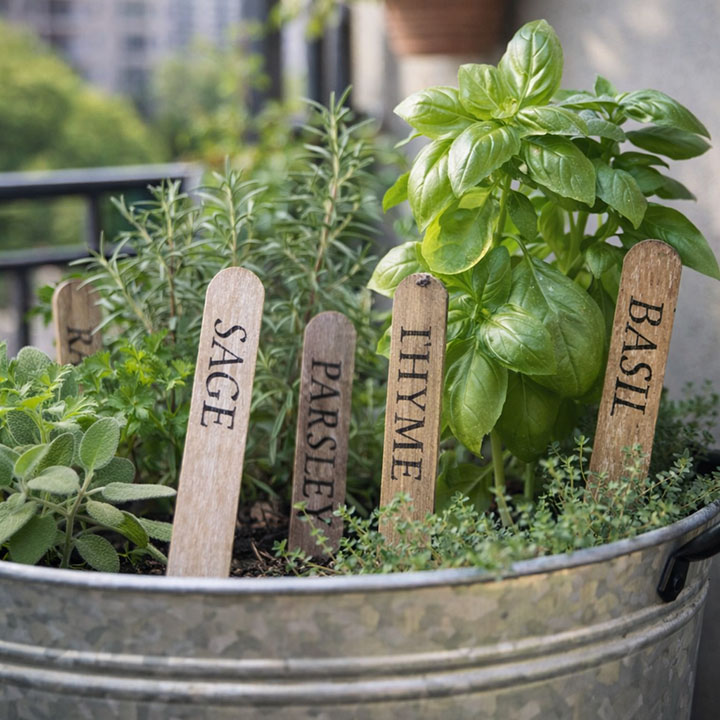
Growing herbs on a balcony is one of the easiest and most rewarding ways to start a small garden in Australia. Herbs are productive, practical, and well suited to pots, railing planters, and compact spaces. Even a small apartment balcony can produce fresh basil, mint, parsley, thyme, chives, coriander, rosemary, and oregano with the right setup.
The key is to match your herbs to your balcony conditions. Sunlight, wind, temperature, pot size, and seasonal timing matter more than the amount of space you have. In Australia, balcony gardeners also need to think about city climate differences. What thrives on a sunny balcony in Brisbane may struggle on a cold, windy balcony in Melbourne or Hobart, while herbs that love dry heat can perform beautifully in Perth or Adelaide.
This guide covers everything you need to know about growing herbs on a balcony in Australia, including the best herbs for pots, how to choose containers, watering, feeding, seasonal care, and city-specific advice for major Australian climates.
Why herbs are ideal for balcony gardens
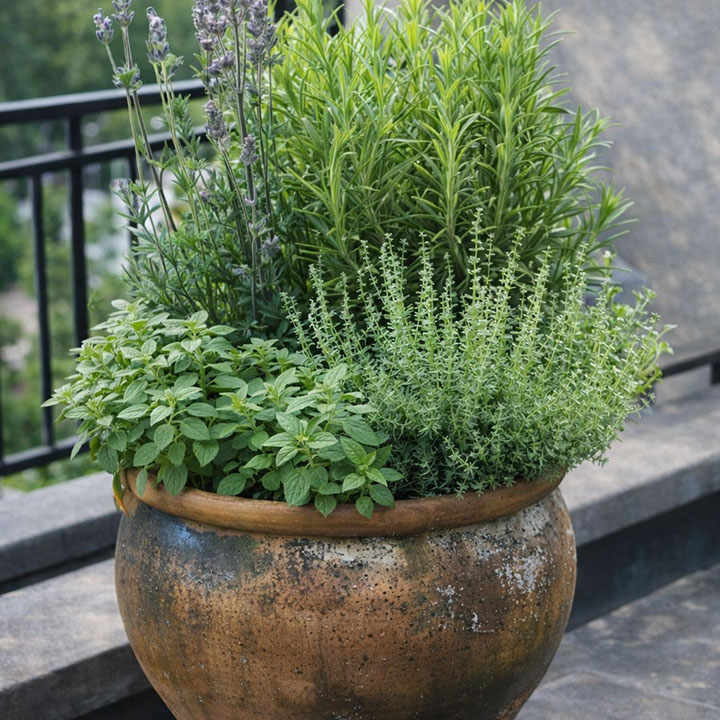
Herbs are often the best starting point for beginner balcony gardeners because they are compact, useful, and quick to harvest. Many herbs grow well in containers, and regular picking encourages them to produce more leaves. That means you can enjoy fresh flavour for cooking while also making your balcony greener and more inviting.
- They suit small pots and planters
- Many varieties grow quickly from seedlings
- Most are happy in full sun or part sun
- Regular harvesting keeps plants productive
- They save money if you cook often
- They add fragrance and texture to balcony spaces
Herbs also let you learn the basics of gardening without the commitment of large shrubs or vegetables. Once you understand watering, sun exposure, and seasonal timing with herbs, it becomes much easier to expand into edible flowers, salad greens, strawberries, or compact vegetables.
Best herbs to grow on a balcony in Australia
Not every herb performs the same way in a pot, and not every balcony has the same conditions. Some herbs thrive in strong sun and dry air, while others prefer mild temperatures and more moisture. The easiest approach is to group herbs by their growing preferences.
Best herbs for sunny balconies
If your balcony gets at least 6 hours of direct sun, these herbs usually perform well:
- Basil – fast growing, productive, and perfect for warm weather
- Rosemary – hardy, drought tolerant, and excellent in larger pots
- Thyme – compact and ideal for sunny edges of containers
- Oregano – easy to grow, trailing slightly as it matures
- Sage – likes good drainage and plenty of light
- Chives – reliable and easy for beginners
Best herbs for part-sun balconies
If your balcony gets morning sun or filtered light for 3 to 5 hours a day, these herbs are better choices:
- Parsley – very productive and forgiving
- Mint – vigorous and suitable for part shade
- Coriander – prefers cooler conditions and can struggle in heat
- Lemon balm – fresh scented and suited to gentler sun
- Vietnamese mint – useful in warm climates with regular watering
Best hardy herbs for Australian conditions
If you want low-maintenance herbs that cope well with variable weather, start with rosemary, thyme, oregano, parsley, and chives. These are among the most reliable choices for Australian balcony gardeners.
How much sun do herbs need?
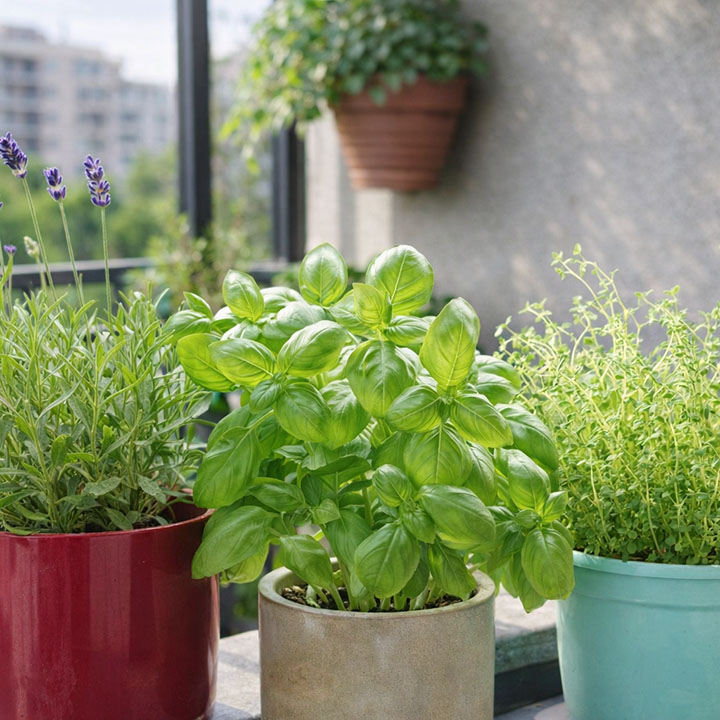
Most herbs grow best with plenty of light, but “full sun” on a balcony can mean different things depending on the city, the season, and whether your balcony is exposed to heat-reflecting walls or glass. A north-facing balcony in Melbourne may be ideal for basil, while a west-facing balcony in Perth could be too harsh in midsummer without some afternoon protection.
- 6+ hours of sun: best for basil, rosemary, thyme, oregano, and sage
- 3 to 5 hours of sun: good for parsley, mint, coriander, and chives
- Less than 3 hours: most herbs will become weak and slow growing
Spend a day observing your balcony before buying plants. Check where the sun falls in the morning, midday, and afternoon. This helps you place sun-loving herbs in the brightest positions and keep softer herbs in slightly sheltered areas.
Choosing the right pots and containers
Herbs can grow in surprisingly small spaces, but container choice still matters. Small pots dry out quickly, especially on hot, windy balconies. Bigger pots are usually easier to manage because they hold more soil and moisture.
As a general guide, aim for pots at least 20 to 25 cm wide for most single herbs. Larger herbs such as rosemary and mint are happier in roomier containers. Window boxes and rectangular troughs also work well for mixed plantings, but only combine herbs with similar watering needs.
- Use pots with drainage holes
- Choose quality potting mix, not garden soil
- Use saucers carefully if your balcony needs runoff control
- Consider self-watering pots for hot balconies
- Go larger rather than smaller when possible
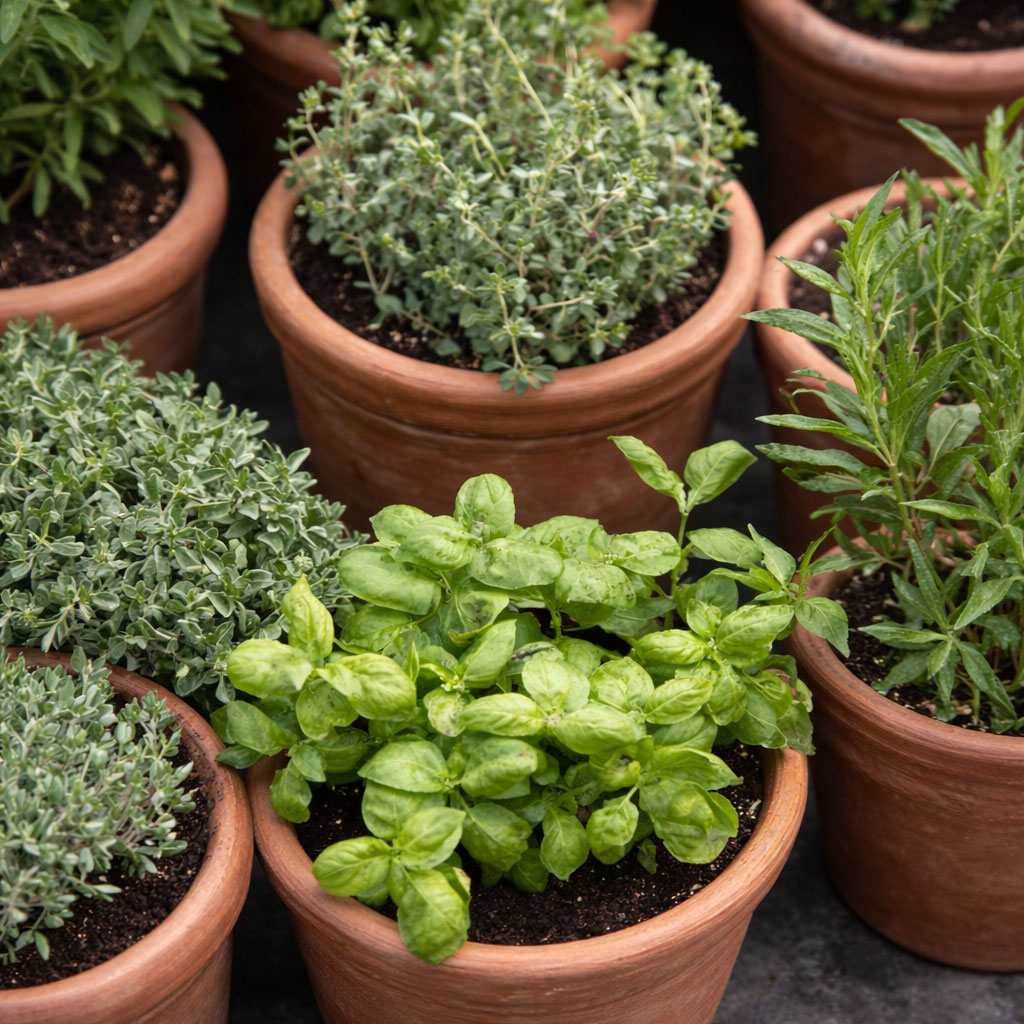
Terracotta pots look beautiful and suit Mediterranean herbs like thyme and rosemary, but they dry out faster than plastic or glazed pots. On exposed Australian balconies, plastic or lightweight composite pots can make watering easier in summer.
Best potting mix for balcony herbs
Herbs need a premium potting mix that drains well but still holds enough moisture to support steady growth. Avoid using soil from the garden, which can become compacted in containers and may introduce pests or disease.
For most herbs, use a high-quality potting mix suitable for vegetables, herbs, and containers. If you are growing drought-tolerant herbs such as rosemary, thyme, oregano, and sage, you can improve drainage further by mixing in a little coarse sand or perlite. Moisture-loving herbs such as parsley and basil prefer a mix that stays evenly damp but not waterlogged.
Should you grow herbs from seeds or seedlings?
For most balcony gardeners, seedlings are the easiest way to start. They establish faster, give earlier harvests, and reduce the risk of losing time during a short seasonal window. This is especially helpful if you are gardening in a cooler city where warm-season herbs need a strong start.
Seeds are still worthwhile for fast growers such as coriander, basil, dill, and parsley. They are cost-effective and let you sow fresh batches through the year. Many gardeners use a mix of both: seedlings for structure and quick results, and seeds for ongoing succession planting.
How to plant herbs on a balcony
Planting herbs in containers is simple, but a few small details make a big difference to success.
- Fill your pot with premium potting mix, leaving a few centimetres at the top.
- Water the seedling before planting to reduce transplant stress.
- Gently loosen the roots if they are tightly packed.
- Plant at the same depth as the nursery pot.
- Firm the mix lightly around the plant.
- Water thoroughly until excess drains out.
- Place the pot in the right sun position for that herb.
Do not overcrowd herbs in one pot. Young plants may look small at first, but many will fill out quickly. Good airflow is especially important on balconies to reduce mildew and fungal problems.
Can you grow different herbs together?
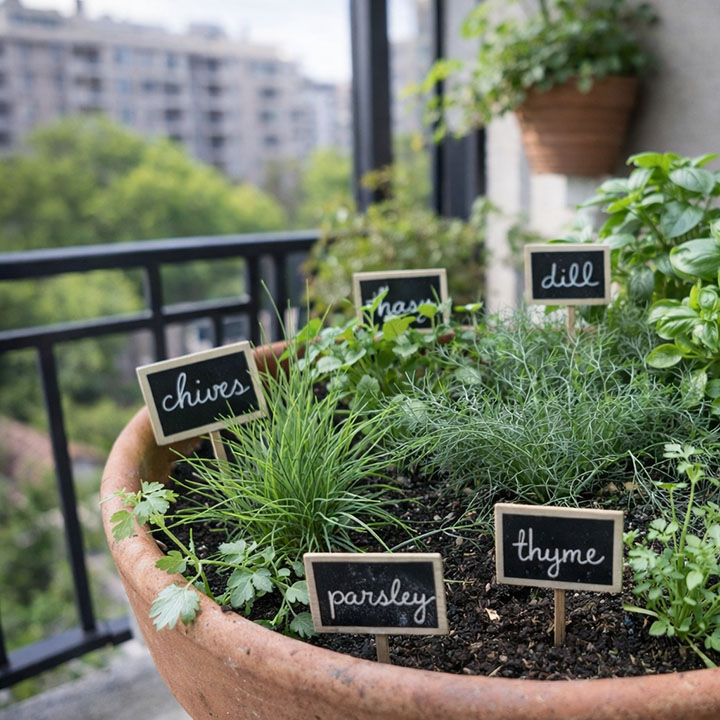
Yes, but group them by water needs rather than by appearance alone. Herbs that like similar conditions are much easier to manage in shared planters.
Good herb combinations for one planter
- Mediterranean mix: rosemary, thyme, oregano, sage
- Moisture-loving mix: parsley, chives, basil
- Cool-season mix: coriander, parsley, chives
Mint is usually best grown in its own pot because it spreads aggressively and can crowd out neighbouring herbs.
Watering herbs on a balcony
Watering is the most important day-to-day task for balcony herb gardens. Pots dry out much faster than garden beds, especially in Australian summer, on windy upper-level balconies, or in reflective urban environments surrounded by concrete and glass.
Rather than watering by a strict schedule, check the soil regularly. Push your finger into the top few centimetres of potting mix. If it feels dry, water thoroughly. If it still feels damp, wait a little longer.
- Basil, parsley, coriander, and mint prefer more regular moisture
- Rosemary, thyme, oregano, and sage prefer to dry slightly between waterings
- Morning watering is usually best in hot weather
- Windy balconies may need more frequent watering than sunny but sheltered ones
In peak summer, some small containers may need daily watering. In winter, especially in cool southern cities, watering may be needed only every few days or even less often depending on rain exposure and pot size.
Feeding and fertilising herbs
Because herbs grow in containers, they gradually use up the nutrients in potting mix. Regular feeding keeps them leafy and productive. A liquid fertiliser for herbs and vegetables applied every couple of weeks during active growth is usually enough for most balcony gardeners.
Avoid overfeeding, especially with strong nitrogen fertilisers. Too much feeding can make some herbs grow soft and leggy, reducing flavour. Herbs are usually best when grown steadily rather than pushed too hard.
How to harvest herbs properly
One of the best things about growing herbs is that harvesting actually improves many plants. Regular trimming encourages branching and fuller growth.
- Pick little and often rather than stripping the whole plant
- Cut above a leaf node so the plant branches out
- Remove flower heads from basil, coriander, and mint if you want more leaves
- Do not take more than about one-third of the plant at once
If herbs are left unharvested for too long, they can become woody, sparse, or go to seed. Frequent use in the kitchen is one of the easiest ways to keep them looking good.
Dealing with wind, heat, and balcony microclimates
Australian balconies often have unique microclimates. A balcony can be hotter, windier, or drier than a nearby backyard. High-rise balconies are especially exposed, and west-facing balconies can become extremely hot in late afternoon.
If your herbs are struggling, the issue is often not lack of care but the microclimate. Leaves that scorch, curl, or dry at the edges may indicate too much heat or wind. Slow, pale growth can point to insufficient sun.
- Move delicate herbs out of harsh afternoon sun in summer
- Use taller plants or screens to reduce wind exposure
- Cluster pots together to reduce moisture loss
- Choose heavier pots for windy balconies
- Use mulch on larger containers to slow evaporation
Seasonal herb growing in Australia
Australia’s seasons are opposite to Europe and North America, so seasonal timing matters when starting herbs. Warm-season herbs generally perform best from spring through early autumn, while cool-season herbs are often strongest in autumn, winter, and spring in milder climates.
Spring
Spring is one of the best times to start a balcony herb garden in most Australian cities. Basil, parsley, mint, oregano, thyme, chives, and rosemary all establish well as temperatures rise. It is the ideal season to refresh potting mix, repot crowded plants, and sow new herbs from seed.
Summer
Summer is productive, but balconies can dry out quickly. Basil, mint, oregano, and thyme usually thrive if watered well. Coriander often bolts in hot weather, especially in inland or exposed spots. Shade cloth or afternoon protection may be useful on very hot balconies.
Autumn
Autumn is a great season for parsley, coriander, chives, dill, and mint in much of Australia. The milder temperatures reduce stress, and many herbs regain vigour after summer heat.
Winter
Winter growth slows in cooler cities, but many herbs still perform well, especially parsley, chives, thyme, rosemary, and oregano. In warm northern cities, winter can be one of the best times for leafy herbs because the extreme heat has eased.
Growing herbs on a balcony in different Australian cities
Australia’s climate varies widely, so balcony herb gardening works a little differently from city to city. Use your local conditions as a guide rather than following a single national rule.
Sydney
Sydney’s mild climate suits a wide range of herbs year-round. Basil thrives from spring through autumn, while parsley, mint, thyme, rosemary, and chives are usually reliable for much longer. Balconies near the coast may experience salt-laden wind, so some shelter can help. Summer heat can be intense on west-facing balconies, so afternoon protection is useful for softer herbs.
Melbourne
Melbourne’s variable weather means flexibility matters. Warm-season herbs such as basil do best once nights are reliably mild, usually from spring onward. Parsley, chives, mint, thyme, and oregano are often easier across more of the year. Wind can be a major issue on Melbourne balconies, so sheltered placement and larger pots help prevent fast drying and plant stress.
Brisbane
Brisbane’s warm, humid conditions are excellent for basil, mint, chives, Vietnamese mint, and parsley. The challenge is usually summer intensity rather than cold. Coriander often performs better in cooler months. Good airflow is important in humid weather to reduce fungal problems, and regular trimming keeps herbs fresh and productive.
Perth
Perth’s dry heat and strong sun are ideal for Mediterranean herbs like rosemary, thyme, oregano, and sage. Basil can also do well with consistent watering. Containers can dry very quickly in summer, especially on exposed balconies, so larger pots, self-watering containers, and mulch are especially helpful. Afternoon shade can protect tender leafy herbs.
Adelaide
Adelaide shares some of Perth’s hot, dry challenges in summer. Rosemary, thyme, sage, oregano, and chives are reliable options. Basil grows well in the warm season if watered consistently. In cooler months, parsley and coriander are usually much easier to maintain. Heat reflection from walls and paving can intensify balcony conditions, so monitor pot moisture closely.
Canberra
Canberra’s colder winters and frosty periods mean warm-season herbs need a later start and some protection. Basil is best treated as a spring-to-autumn crop. Parsley, thyme, oregano, rosemary, and chives are better long-term choices. Move sensitive pots closer to walls in winter or into sheltered positions if cold winds become severe.
Hobart
Hobart’s cool climate favours herbs that enjoy milder temperatures. Parsley, coriander, chives, mint, thyme, and oregano can do very well, while basil needs the warmest, sunniest spot possible. Use dark pots or heat-retaining surfaces carefully to help warm the root zone in cooler months, but make sure drainage remains excellent.
Darwin
Darwin’s tropical climate changes the approach. The dry season is often the easiest time to grow many herbs, while the wet season can bring heavy rain, humidity, and disease pressure. Basil, mint, Vietnamese mint, lemongrass, and some perennial herbs can thrive, but airflow, drainage, and shelter from torrential rain are essential. Mediterranean herbs may struggle more in constant humidity.
Best herbs for beginners in Australia
If you are just starting out, focus on herbs that are forgiving and useful in everyday cooking. A simple beginner setup could include one pot each of parsley, basil, mint, and rosemary, or a sunny combination of rosemary, thyme, and oregano.
- Parsley for versatility and steady harvests
- Mint for fast growth in its own pot
- Chives for easy maintenance
- Rosemary for drought tolerance
- Thyme for compact growth
- Basil for warm-season productivity
Common problems when growing herbs on a balcony
Herbs going yellow
Yellow leaves can be caused by overwatering, poor drainage, exhausted potting mix, or lack of sunlight. Check the roots, drainage holes, and light levels before assuming the plant needs more fertiliser.
Basil or coriander flowering too quickly
This is often caused by heat stress or irregular watering. Pinch out flower heads early, keep plants well watered, and sow fresh coriander regularly in cooler months.
Mint taking over
Mint is vigorous and should usually be kept in its own container. Repot and divide it when it becomes crowded.
Woody rosemary or thyme
Older growth becomes woody naturally. Regular light trimming helps keep plants bushy, but avoid cutting deep into old bare wood unless the plant is still actively growing.
Pests on balcony herbs
Aphids, spider mites, whitefly, and caterpillars can appear even on high balconies. Check leaf undersides regularly, wash pests off with water, and keep plants healthy with proper light, airflow, and watering.
Simple balcony herb garden ideas
You do not need a large outdoor area to create an attractive and productive herb garden. A few thoughtful design choices can make a small balcony feel lush and practical.
- Use railing planters for low-growing herbs like thyme and chives
- Place a large rosemary or bay in a feature pot
- Keep mint in a separate container near the kitchen door
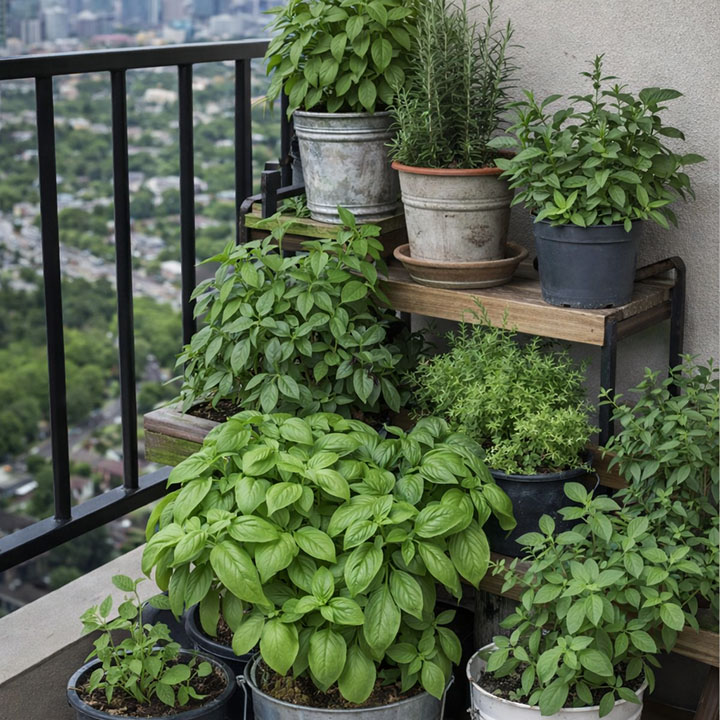
- Use a tiered plant stand to increase growing space
- Group culinary herbs together for easy harvesting
- Mix edible herbs with flowers for colour and pollinator interest
A simple herb planting plan for a small balcony
If you want a practical starter layout, try this:
- 1 large pot: rosemary
- 1 medium pot: mint
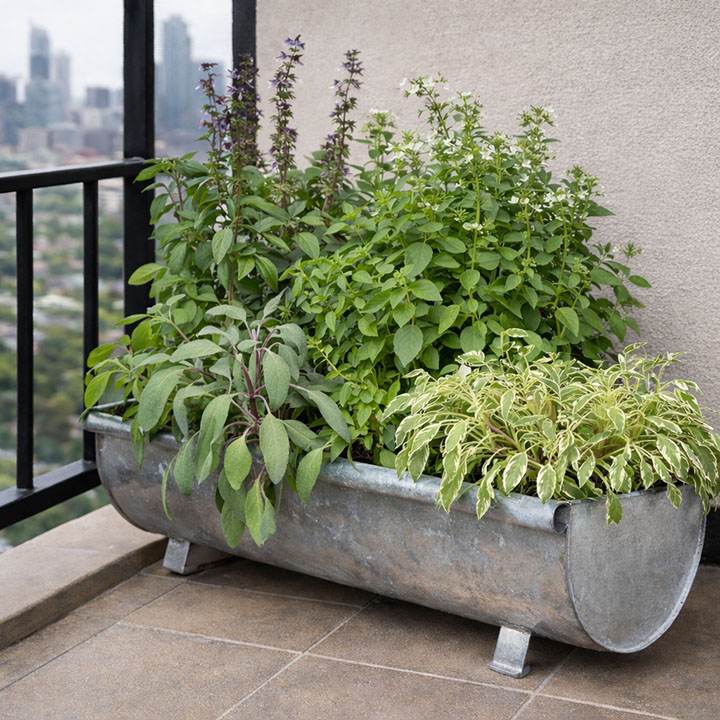
- 1 rectangular planter: parsley, chives, basil
- 1 shallow sunny pot: thyme and oregano
This gives you a useful mix of hardy and leafy herbs, covers a range of cooking styles, and works well on many Australian balconies with at least moderate sun.
Final thoughts on growing herbs on a balcony
Growing herbs on a balcony is one of the easiest ways to turn a small outdoor space into something beautiful, useful, and alive. You do not need a big backyard or perfect conditions. With the right pots, decent potting mix, suitable herbs, and a little attention to sunlight and watering, even a compact balcony can produce fresh ingredients for much of the year.
Start small, learn how your balcony behaves in different seasons, and choose herbs that suit your local Australian climate. Once you get the basics right, a balcony herb garden can become the foundation for a much bigger edible garden over time.
Frequently asked questions
What are the easiest herbs to grow on a balcony?
Parsley, mint, chives, rosemary, thyme, and basil are among the easiest herbs for most Australian balcony gardeners.
Can herbs grow well in pots on a balcony?
Yes. In fact, many herbs are very well suited to pots and planters, as long as they have good drainage, quality potting mix, and enough light.
How often should I water balcony herbs?
It depends on the herb, weather, pot size, and wind exposure. Check the soil regularly rather than following a rigid schedule. Small pots may need daily watering in hot weather.
Which herbs grow best in Australian summer?
Basil, mint, rosemary, thyme, oregano, and chives usually perform well in summer, though tender herbs may need protection from extreme heat on exposed balconies.
Can I grow herbs on a shaded balcony?
You can grow some herbs on a part-shade balcony, especially parsley, mint, chives, and lemon balm. Deep shade is much harder for herbs, and growth will usually be limited.
Should I grow mint with other herbs?
It is usually better to grow mint in its own pot because it spreads strongly and can overwhelm nearby plants.

Comments are closed.