
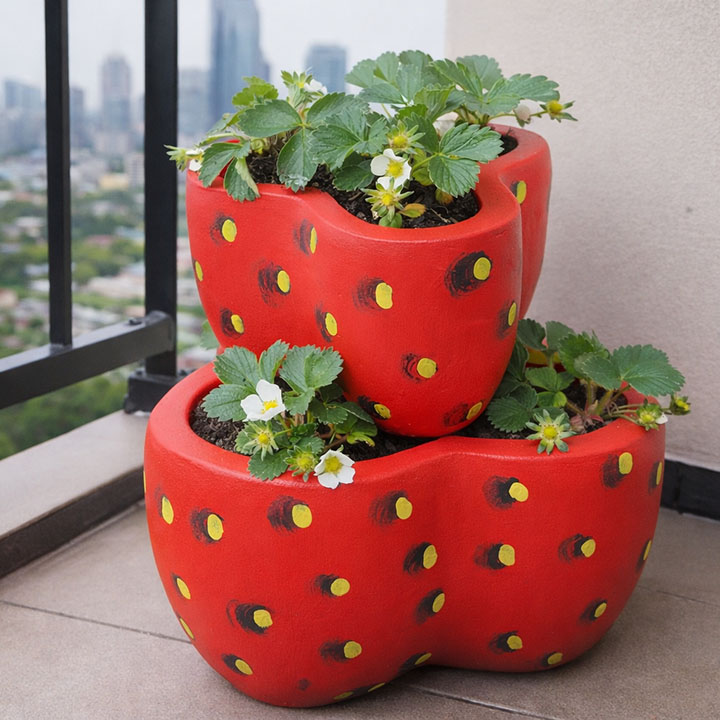
Strawberries are one of the best fruits to grow on a balcony. They are compact, attractive, productive, and well suited to pots, railing planters, hanging baskets, and vertical gardens. For Australian balcony gardeners, strawberries are especially appealing because they do not need a huge amount of space, they look good for much of the year, and freshly picked fruit tastes far better than supermarket berries.
If you have a sunny balcony in Sydney, Melbourne, Brisbane, Perth, Adelaide, Canberra, Hobart, or another Australian city, strawberries are a very realistic crop to grow at home. The key is understanding how strawberries behave in containers, how heat and sun affect fruiting, and how to adjust your care routine to your local climate.
This guide covers everything you need to know about growing strawberries on a balcony in Australia, including the best pot types, sunlight needs, watering, feeding, seasonal care, city-specific weather tips, and common mistakes to avoid.
Why Strawberries Grow Well on Balconies
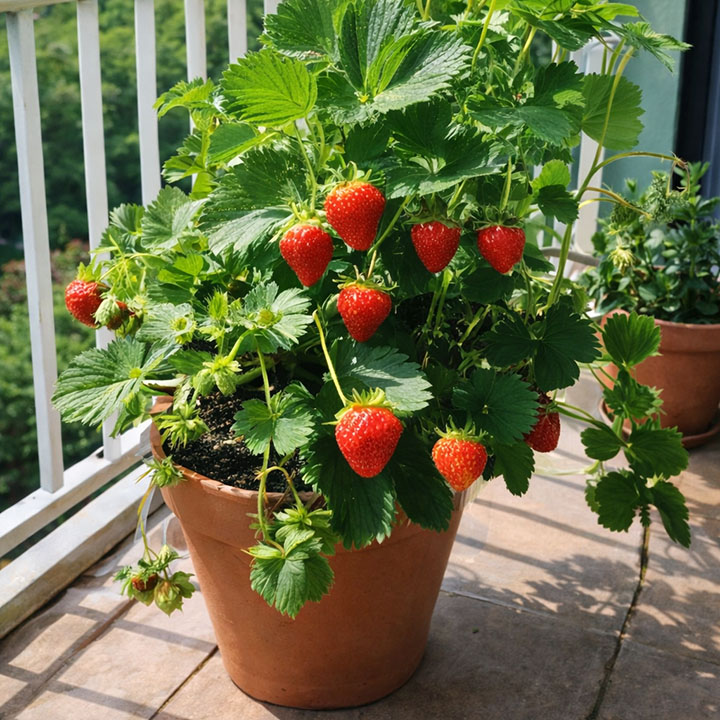
Strawberries are naturally well suited to small-space gardening. They stay low and compact, spread gently with runners, and do not need deep garden beds to perform well. Because the fruit hangs just above the soil or spills over the edge of containers, balcony setups can actually work very well. Pots and raised planters also help keep fruit cleaner and make it easier to protect plants from slugs, wet soil, and rot.
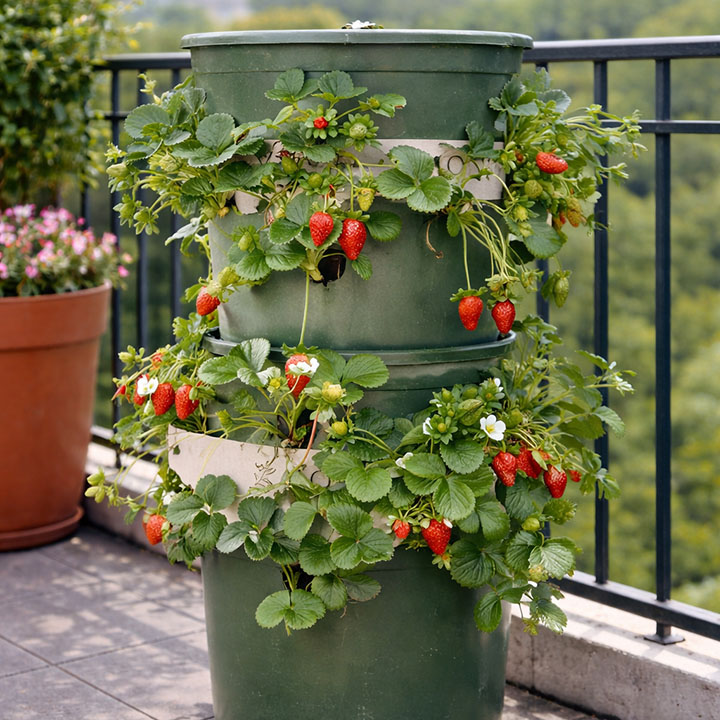
Another reason strawberries are ideal for balconies is flexibility. You can grow them in wide shallow pots, troughs, hanging baskets, strawberry towers, railing planters, and tiered shelves. This makes them one of the easiest fruiting plants to fit into a compact apartment garden.
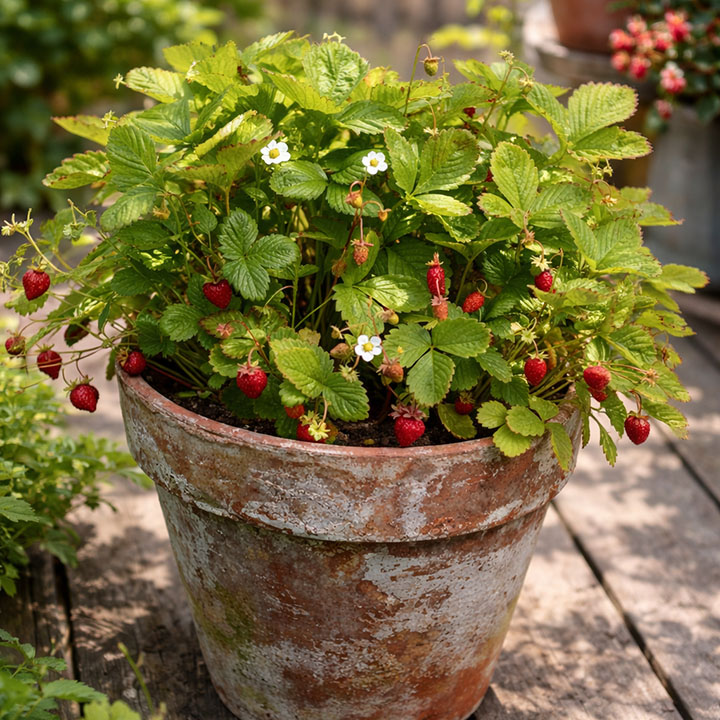
And unlike some balcony crops that are mainly practical, strawberries are ornamental too. The white or pale pink flowers, fresh green foliage, and bright red fruit make them a beautiful addition to a balcony garden.
How Much Sun Do Strawberries Need?
Strawberries grow and fruit best with at least 6 hours of direct sun a day. More sun generally means better flowering, stronger plants, and sweeter berries. On an Australian balcony, a north-facing aspect is usually ideal because it delivers the most reliable light across the day.
East-facing balconies can also work very well, especially in hotter cities where morning sun is gentler than harsh afternoon sun. West-facing balconies can produce good crops too, but summer heat can stress plants, dry pots quickly, and scorch fruit. South-facing balconies are the most difficult for strawberries unless they receive unusually strong reflected light.
If your balcony only gets around 4 to 5 hours of direct sun, strawberries may still grow, but yields are likely to be lower and fruit may be less sweet. In lower-light spaces, focus on plant health and accept a lighter harvest rather than expecting heavy production.
Best Types of Strawberries for Balcony Gardens
There are a few different kinds of strawberries, and choosing the right type matters if you want steady performance in containers. Some varieties crop heavily in one main flush, while others produce over a longer period.
For most balcony gardeners, the best option is a variety that fruits reliably in your local climate and stays productive in pots. If you are buying from an Australian nursery, choose varieties recommended for your region rather than selecting purely by name or appearance.
Good traits to look for in balcony strawberry varieties
- Compact growth
- Good productivity in containers
- Strong flavour
- Heat tolerance for warmer cities
- Reliable fruiting over a longer season
If you are new to growing strawberries, start with healthy nursery plants rather than seed. Seed is slower, less predictable, and much less practical for a simple balcony setup.
Best Pots and Planters for Strawberries
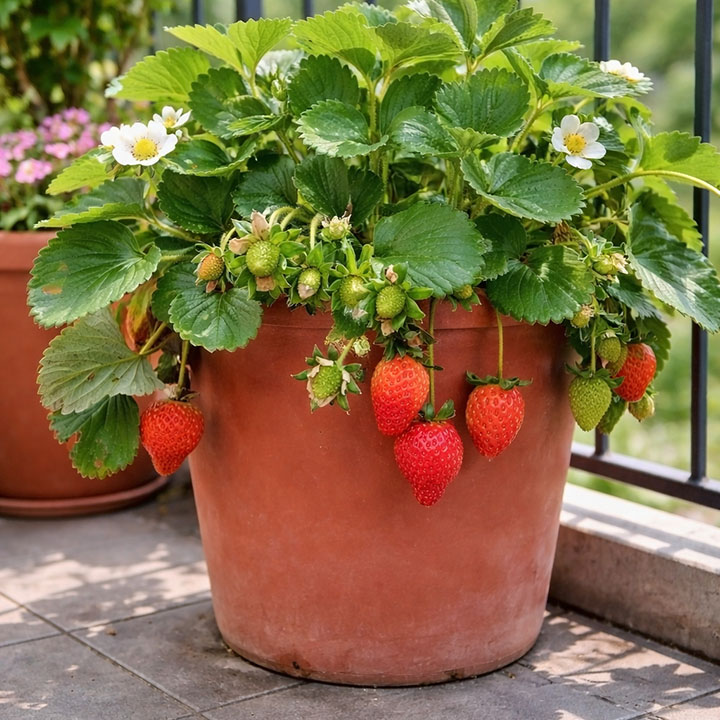
Strawberries do not need very deep containers, but they do need enough room for roots to spread and enough soil to hold moisture between waterings. Wide planters usually work better than very small pots because they dry out more slowly and let you grow a few plants together.
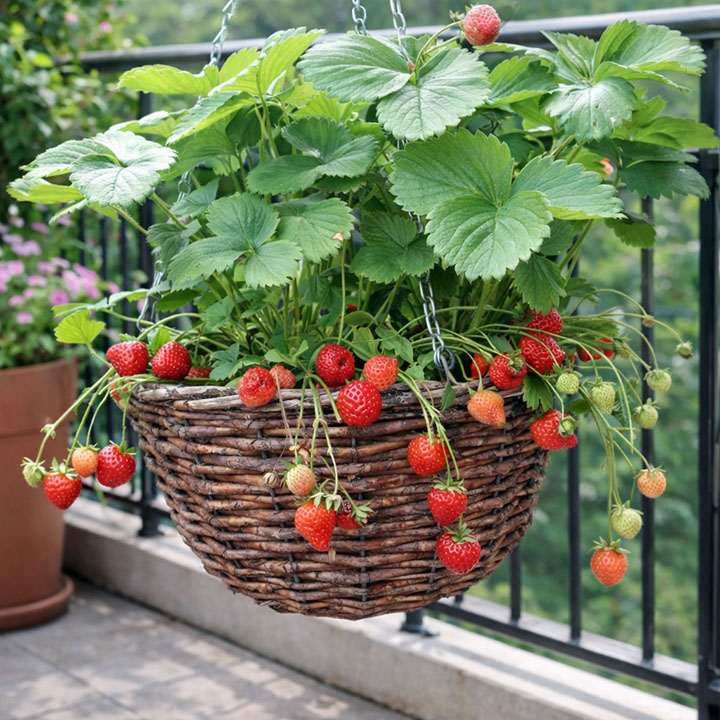
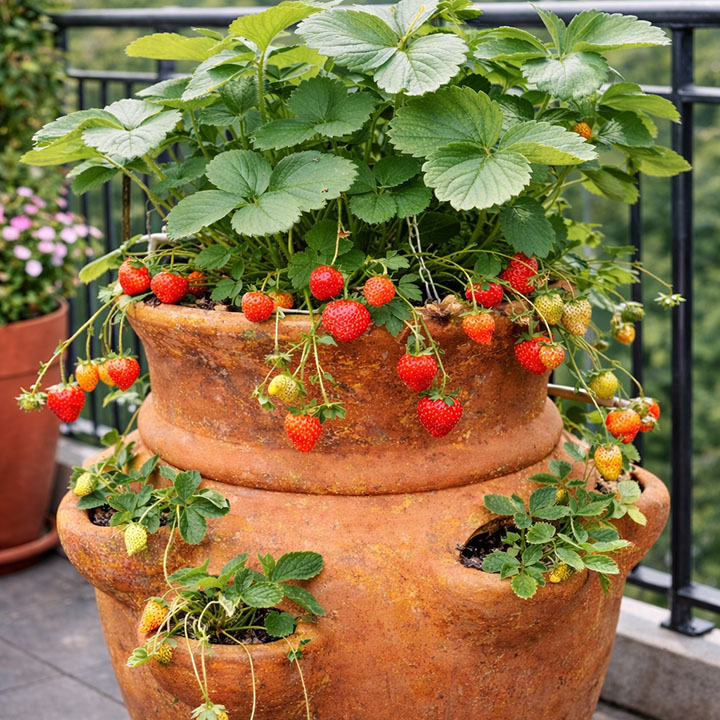
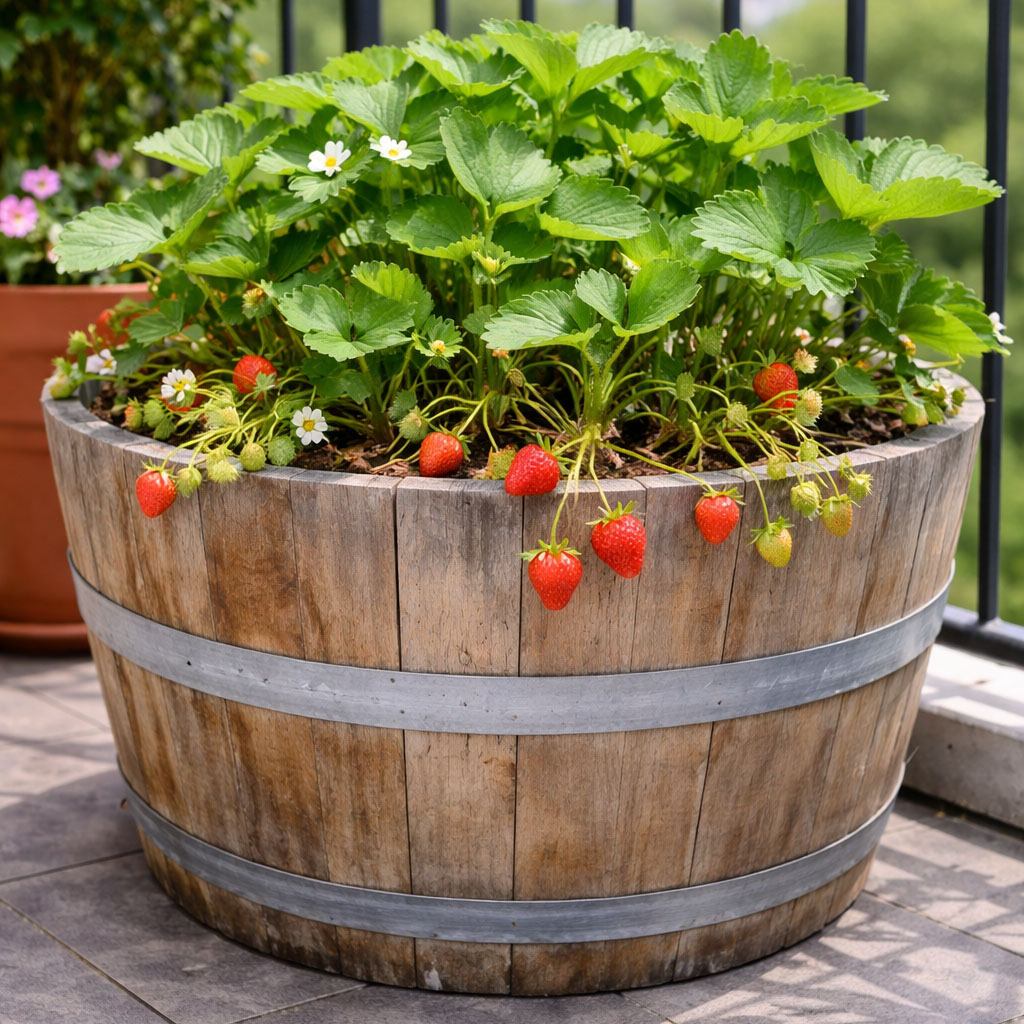
Good container options include window boxes, wide shallow pots, railing planters, hanging baskets, vertical planters, and strawberry pots with side openings. If your balcony gets hot or windy, choose larger containers over tiny decorative pots because they are more forgiving.
As a rough guide, allow enough room so plants are not crammed together. Overcrowding reduces airflow and increases the risk of disease, mould, and weak fruiting.
Best container features for balcony strawberries
- Drainage holes
- Enough width for several plants or one plant to spread
- Good soil volume so the mix does not dry out too fast
- Materials suited to your climate
Terracotta looks beautiful but dries out quickly in Australian conditions. Plastic, composite, glazed, and self-watering containers are often easier if your balcony is exposed to heat and wind.
The Best Soil for Balcony Strawberries
Strawberries like rich, free-draining soil that stays lightly moist without becoming soggy. Use a quality potting mix rather than garden soil. Potting mix is designed for containers, drains better, and is much easier to manage on a balcony.
A premium potting mix for vegetables, herbs, or fruiting plants is a good starting point. You can improve it with a little compost, but do not make it too heavy. Strawberries dislike sitting in dense wet soil, especially in cooler weather or humid climates.
Because strawberries fruit close to the soil surface, adding a light mulch around the plants can help keep fruit cleaner and reduce splashing. On balconies, mulch also helps slow evaporation.
How to Plant Strawberries in Pots
Planting strawberries correctly is important because the crown, which is the central growing point where leaves emerge, should not be buried too deeply. If planted too deep, the crown can rot. If planted too high, roots may dry out.
- Fill the container with premium potting mix.
- Space plants so they have airflow and room to spread.
- Set each plant so the roots are covered but the crown sits just above the soil line.
- Firm the mix gently around the roots.
- Water thoroughly after planting.
- Add a light mulch if desired.
After planting, place the container in a bright position and keep the soil evenly moist while the plants establish.
How Often to Water Strawberries on a Balcony
Balcony strawberries need more frequent watering than strawberries in the ground because container soil dries much faster. At the same time, they do not like sitting waterlogged. The aim is evenly moist soil, not muddy soil and not dry soil.
In mild weather, you may only need to water every couple of days. In hot weather, especially on west-facing or windy balconies, you may need to water daily. Hanging baskets and small planters dry out even faster and usually need the most attention.
The best approach is to check the potting mix regularly with your finger. If the top layer feels dry, it is usually time to water. Water deeply enough that moisture reaches the full root zone, but do not leave the pot sitting in a saucer full of water for long periods.
Inconsistent watering can lead to smaller berries, poor flowering, stressed plants, and fruit that does not develop properly.
Feeding Strawberries in Containers
Strawberries are not as hungry as tomatoes, but they still need regular feeding in pots. Container soil loses nutrients over time, especially with frequent watering. If you want good flowering and fruit production, feeding matters.
A practical routine is to mix a slow-release fertiliser into the potting mix at planting time, then use a liquid fertiliser suitable for fruiting plants during the active growing and fruiting period. Avoid very high-nitrogen feeding because it can encourage lots of leaf growth with fewer berries.
Once plants are flowering, consistent feeding is more useful than occasional heavy feeding. Small, regular support tends to produce healthier plants and better fruit.
Do Strawberries Need Pollination on a Balcony?
Yes, strawberries benefit from pollination because flowers need to be pollinated well to produce full, well-shaped berries. Outdoors on a balcony, bees and other pollinators often handle this naturally. If your balcony is enclosed, very high up, or has little insect activity, pollination may be weaker.
You can help by growing pollinator-friendly flowers nearby or by gently brushing open strawberry flowers with a soft brush from one flower to another. This is especially helpful on sheltered apartment balconies with limited insect traffic.
Should You Remove Strawberry Runners?
Strawberries often send out runners, which are long stems that create baby plants. Whether you keep them depends on your goal. If you want the main plant to focus on fruiting, it is usually best to remove most runners. If you want more plants, you can root a few runners into nearby pots or planters.
On a small balcony, too many runners quickly create crowding. Removing them keeps the setup tidier and helps maintain stronger fruit production.
Australian City and Weather Guide for Balcony Strawberries
Australia’s climate varies a lot, so strawberry care should be adjusted to your city and your balcony’s microclimate. A plant growing in coastal Sydney experiences very different conditions from one on a dry Adelaide balcony or a cool Hobart apartment terrace.
Sydney
Sydney is generally good for strawberries, especially on balconies with strong morning sun or bright all-day light. Summer heat can stress plants in exposed positions, and humidity can sometimes encourage mould or fungal issues. Good airflow is important, and a little afternoon relief can help in the hottest part of summer.
Melbourne
Melbourne strawberries can do very well on balconies, but weather swings and wind exposure can affect growth. A warm, bright, sheltered position is ideal. Plants may need more water during hot northerly periods and some protection during cold or windy snaps.
Brisbane
Brisbane’s warmth suits strawberries well during the milder months, but peak summer heat and humidity can be hard on them. Morning sun and some afternoon shade often work better than harsh late-day exposure. Keep airflow strong and watch for fungal issues in sticky weather.
Perth
Perth balconies can grow excellent strawberries, but the dry heat means pots can dry out quickly. Use larger containers, mulch the surface, and stay on top of watering. Some afternoon shade can help keep berries from scorching during intense summer periods.
Adelaide
Adelaide’s dry summer conditions can work well if moisture is managed carefully. Balcony surfaces and walls can reflect a lot of heat, so avoid very small pots that overheat easily. A position with sun but not extreme late-afternoon punishment is often best.
Canberra
Canberra has cooler winters and a shorter warm season, so balcony strawberries benefit from a protected sunny spot. Plants may slow down in colder periods, but they can still perform very well in spring and summer. Choose the warmest balcony position you have.
Hobart
Hobart strawberries can succeed on balconies, especially with good sun and protection from cold winds. A north-facing balcony is especially useful. Fruit production may be slower than in warmer cities, but quality can still be excellent when plants get enough light.
When to Plant Strawberries on a Balcony in Australia
Planting time depends on your local climate and the type of strawberry plant you are buying. In much of Australia, strawberries are commonly planted in the cooler part of the year or as conditions begin to warm, depending on the region. The key is avoiding the most stressful extremes, especially intense summer heat for newly planted runners or seedlings.
In warmer cities, establish plants before the hottest weather if possible. In cooler cities, plant once conditions are warming and growth can begin strongly. Healthy nursery plants usually establish much faster than tiny or stressed plants.
How to Protect Balcony Strawberries From Heat
Australian balconies can become much hotter than people expect. Concrete, tiles, glass, and metal railings reflect and store heat, which can push plants beyond what they would tolerate in a garden bed. In high heat, strawberry flowers can abort, leaves can scorch, and fruit can become small or soft.
To reduce heat stress, use larger containers, apply mulch, water consistently, and consider light afternoon shade during extreme heat. White or light-coloured pots may stay cooler than dark ones. Positioning plants where they still get plenty of light but avoid the harshest late-day blast can make a big difference.
How to Protect Strawberries From Wind
Wind dries out pots quickly and can damage flowers, which reduces fruiting. It can also make balconies feel much harsher than nearby gardens at ground level. If your balcony is exposed, place strawberries near a wall, corner, or screen where they still receive good light without taking the full force of the wind.
Wide troughs and heavier containers are often more stable than lightweight hanging baskets in windy positions. If you want hanging strawberries on an upper-level balcony, be prepared for faster drying and more maintenance.
Common Problems With Balcony Strawberries
Lots of leaves but few berries
This often points to not enough sun or too much nitrogen. Check light levels first, then review your feeding routine.
Small or misshapen fruit
This can be caused by weak pollination, water stress, poor nutrition, or plants under general environmental stress.
Fruit rotting or moulding
This is usually linked to poor airflow, excess moisture, overcrowding, or humid weather. Remove damaged fruit quickly and improve spacing if needed.
Leaves looking burnt or crispy
This often means heat stress, dry soil, or reflected sun from nearby surfaces. Adjust watering and provide protection during extreme conditions.
Plants declining after fruiting
Strawberries are not forever plants. Productivity drops over time, so replacing older plants or rooting fresh runners helps keep your balcony strawberry patch productive.
Pests to Watch For
Balcony strawberries can attract aphids, spider mites, caterpillars, and sometimes birds if your balcony is accessible. Check plants regularly, especially under leaves and around flowers. Early intervention is always easier than dealing with a major infestation later.
Birds are often a bigger issue once fruit begins to colour. If needed, use light netting or place plants where birds cannot easily land and peck at ripe berries.
Can You Grow Strawberries With Other Plants?
Yes, but keep it simple. Strawberries can look great near herbs and flowers, especially on mixed edible balconies. Just avoid crowding them with aggressive plants that compete heavily for water and nutrients. It is often better to grow strawberries in their own container or designated trough rather than mixing too many species into one pot.
Best Balcony Setups for Strawberries
Strawberries are versatile enough to suit many balcony styles. A few of the most practical setups include a wide trough along a railing, a hanging basket near a bright wall, a tiered arrangement on plant stands, or several shallow pots grouped in the sunniest part of the balcony.
If your goal is maximum productivity, choose larger planters with room for several plants. If your goal is a decorative edible balcony, combine strawberries with separate pots of herbs and pollinator-friendly flowers nearby.
When to Harvest Balcony Strawberries
Harvest strawberries when they are fully coloured and ripe. Unlike some fruits, strawberries do not continue improving much after picking, so it is best to wait until they are properly red and aromatic. Pick gently with a short piece of stem attached if possible.
Check plants frequently once fruit starts ripening, because strawberries can move from nearly ready to perfect very quickly in warm weather.
Are Strawberries Worth Growing on a Balcony?
Absolutely. Strawberries are one of the most rewarding balcony crops because they combine looks, flavour, and practicality in a very small footprint. Even a compact apartment balcony can hold enough plants for regular picking during the season.
They are especially good for gardeners who want to grow fruit without the scale or maintenance required by larger plants. With enough sun, reliable watering, and a suitable container, strawberries are very achievable in Australian cities.
Final Tips for Success
- Give strawberries at least 6 hours of direct sun.
- Use quality potting mix and containers with good drainage.
- Keep the crown at the right planting height.
- Water consistently, especially in hot and windy weather.
- Feed regularly during active growth and fruiting.
- Remove excess runners if you want more berries from the main plant.
- Improve airflow to reduce mould and rot.
- Adjust your setup to your city’s climate and your balcony’s microclimate.
With the right position and a little consistency, strawberries can be one of the easiest and most enjoyable fruits to grow on an Australian balcony. They fit small spaces beautifully, they look great in containers, and the flavour of freshly picked berries makes the effort worthwhile.

Comments are closed.