
A balcony garden can be much more than a row of pots pushed against a railing. With the right layout, even a small balcony can feel larger, greener, and more useful. A good layout helps you fit more plants into the space, makes maintenance easier, and creates a balcony that feels intentional rather than cluttered.
The best balcony garden layouts do three things well. They use space efficiently, suit the light and weather conditions, and match the way you actually want to use the balcony. Some people want a productive edible garden full of herbs and vegetables. Others want a relaxing retreat with flowers, privacy plants, and a chair. Many people want a mix of both.
This guide explains in depth how to plan a balcony garden layout, which layout styles work best, how to match a layout to your balcony size and conditions, and how to avoid common design mistakes.
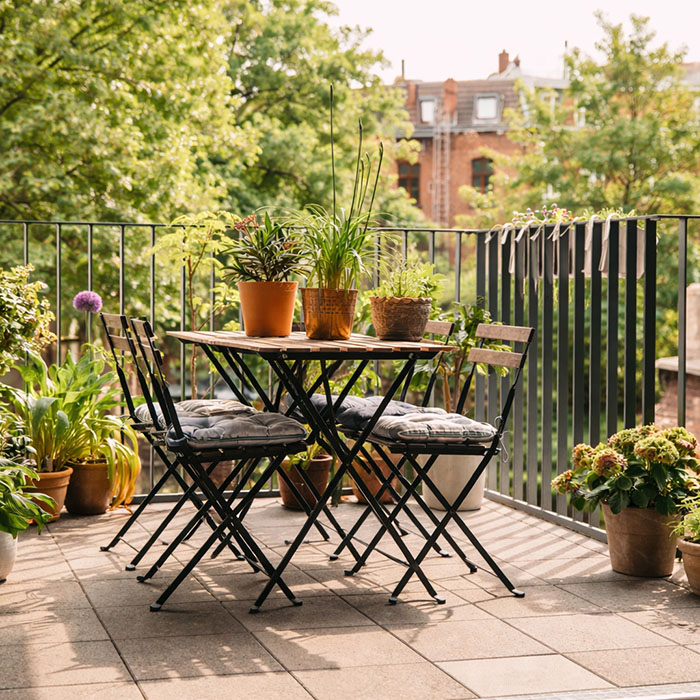
Why balcony layout matters
A balcony garden layout affects far more than appearance.
A smart layout can help you:
- fit more plants into a small space
- make watering and maintenance easier
- improve airflow around plants
- protect plants from wind
- create zones for relaxing and growing
- make the balcony feel larger and calmer
A poor layout usually leads to:
- overcrowding
- blocked walkways
- uneven sun exposure
- awkward watering
- plants drying out or competing for light
- a balcony that feels messy instead of inviting
The goal is not to fill every centimetre with greenery. The goal is to create a balcony that feels balanced and usable.
Start with the shape of the balcony
Before choosing plants or planters, look at the physical layout of the balcony itself.
Most balconies fall into one of these shapes:
Long and narrow
Common in apartments. Best for rail planters, wall planters, vertical growing, and one slim seating zone.
Square or boxy
More flexible. Easier to create zones for dining, planting, and relaxing.
Corner balcony
Excellent for layered planting because you can use both walls and the railing.
Deep balcony
Can accommodate larger pots, trees, or seating, but needs structure so it does not feel empty.
Tiny Juliet-style balcony
Best for a small number of statement pots, herbs, and hanging planters.
The shape tells you where your main layout opportunities are. A narrow balcony usually needs vertical solutions. A deeper balcony can support central furniture and perimeter planting.
Understand how the light moves
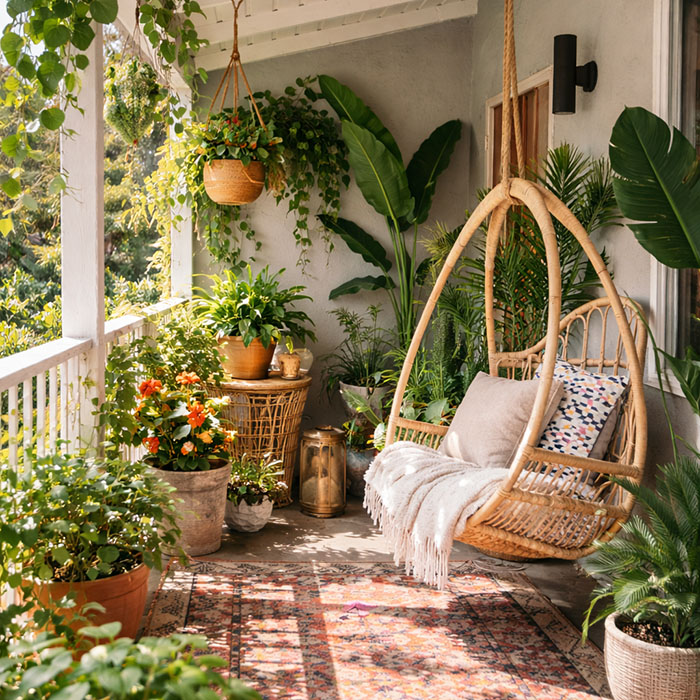
The best layout is always shaped by sunlight.
Ask:
- which side gets the most sun
- whether the sun is morning or afternoon
- which corners stay shaded
- whether walls or screens block light
- whether the railing reflects heat
This helps you decide where each type of plant should go.
Full sun areas
Use for:
- tomatoes
- chillies
- rosemary
- basil
- lavender
- strawberries
Part sun areas
Use for:
- parsley
- mint
- lettuce
- spinach
- rocket
- chives
Shade or bright indirect light
Use for:
- ferns
- peace lilies
- begonias
- foliage plants
- some herbs like mint
A layout that ignores the sun almost always struggles.
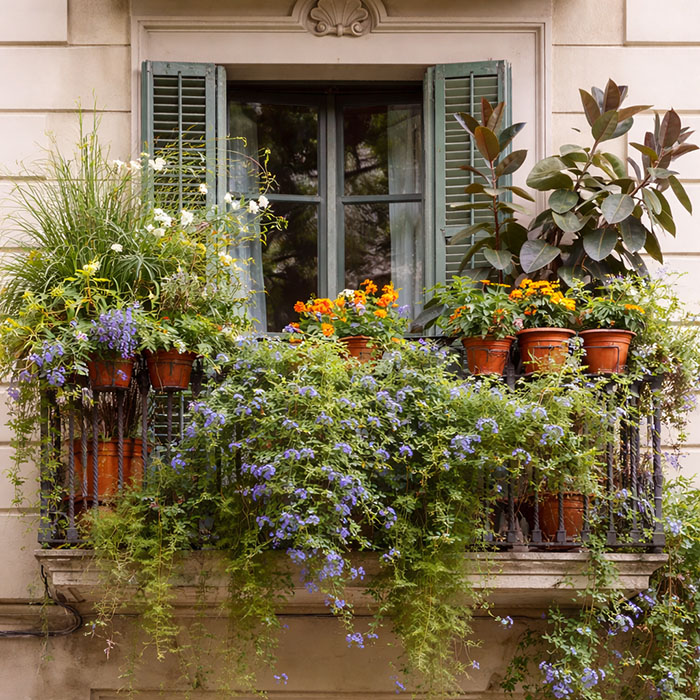
The key balcony garden design principles
Before looking at specific layout ideas, it helps to understand the basic design principles that make balconies work well.
Layering
Use different heights:
- low ground pots
- mid-height planters
- tall shrubs or trellised plants
- hanging baskets or wall planters
Layering makes a balcony feel lush and professionally designed.
Repetition
Repeating planter styles, colours, or plant types helps a balcony feel cohesive.
Balance
A balcony should not look too heavy on one side and empty on the other.
Access
You should still be able to move, water, prune, and enjoy the space.
Scale
Use plant and pot sizes that suit the balcony. Oversized furniture on a tiny balcony makes everything feel cramped.
Balcony garden layout ideas
Below are the most effective layout styles for balconies, along with when to use them and what plants suit them.
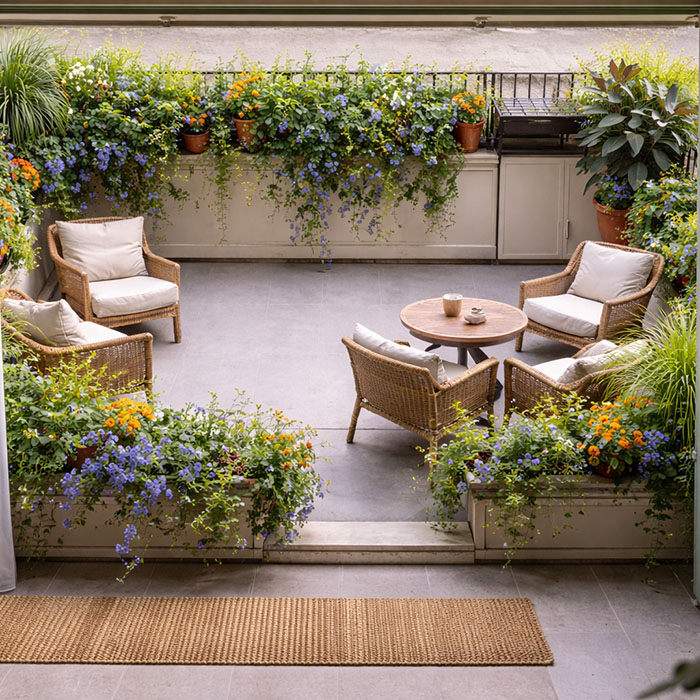
1. The perimeter layout
This is one of the most practical balcony layouts.
Planters are placed around the edge of the balcony, leaving the centre open.
Why it works
- keeps the walking area clear
- makes the balcony feel larger
- allows good airflow
- easy to combine with seating or a small table
Best for
- square balconies
- dining balconies
- medium or large spaces
Good plant choices
- shrubs and grasses in larger corner pots
- flowers and herbs in border planters
- leafy greens in rectangular boxes
Design tip
Use taller plants in corners and lower plants along the edges to create depth without blocking views.
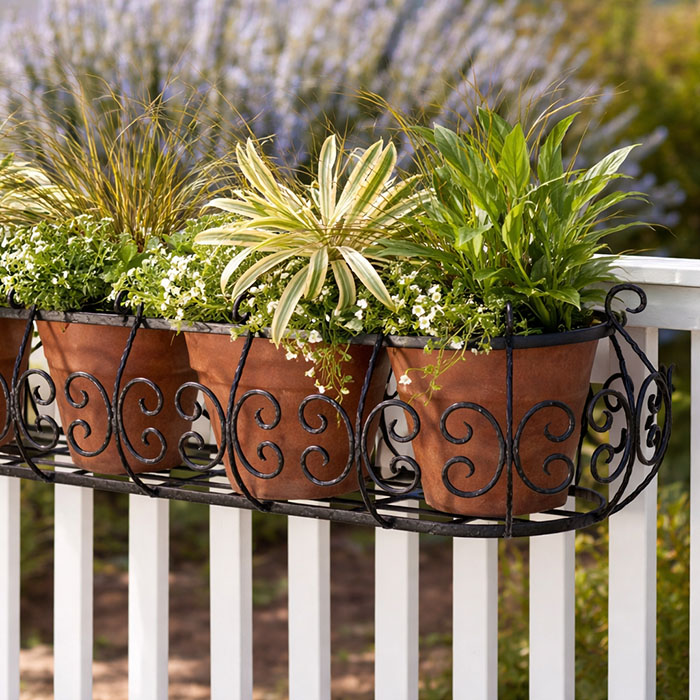
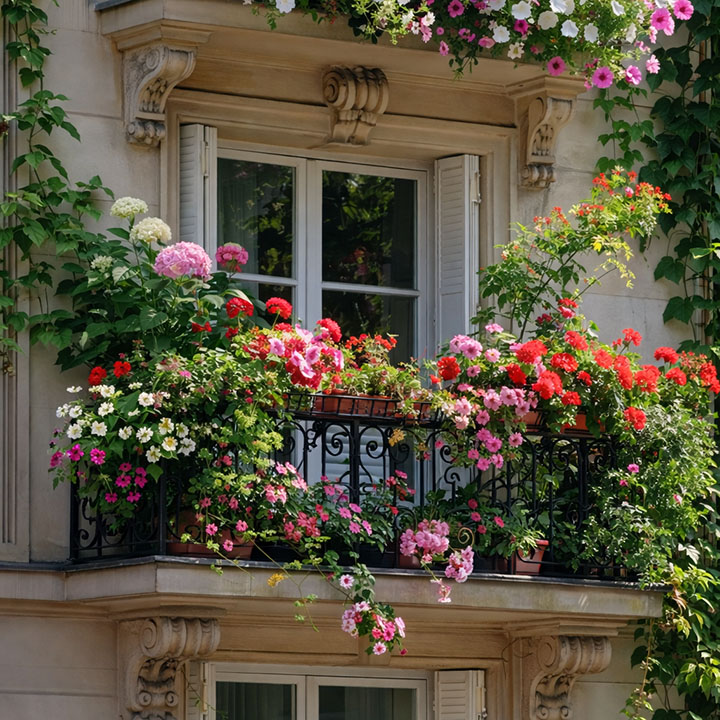
2. The railing planter layout
This layout uses the railing as the main planting zone.
Why it works
- saves floor space
- makes the balcony feel green from the edges
- ideal for narrow balconies
- good for light-loving plants
Best for
- long narrow balconies
- apartment balconies with limited floor area
Good plant choices
- herbs
- strawberries
- petunias
- nasturtiums
- trailing flowers
- compact salad greens
Design tip
Avoid making the railing too visually busy. Use repeating planter styles and similar plant forms.
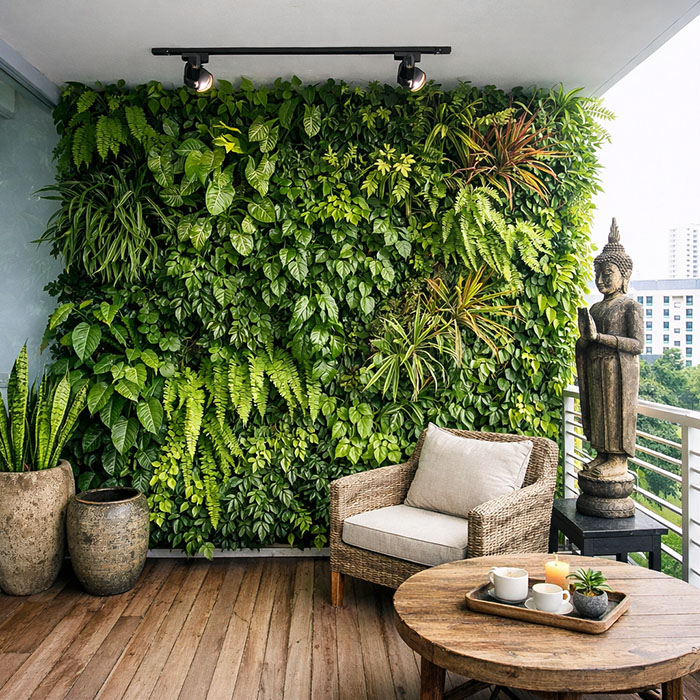
3. The vertical garden layout
This layout uses walls, trellises, shelves, hanging systems, or mesh grids to grow upwards.
Why it works
- maximises limited space
- adds privacy
- creates a lush green wall effect
- good for narrow balconies
Best for
- tiny balconies
- balconies with blank walls
- renters who want removable systems
- balconies where floor space is precious
Good plant choices
- herbs
- trailing plants
- compact flowers
- climbing beans
- peas
- cucumbers
- climbing ornamentals
Design tip
Anchor the layout with larger base pots below the vertical section so the whole composition feels grounded.
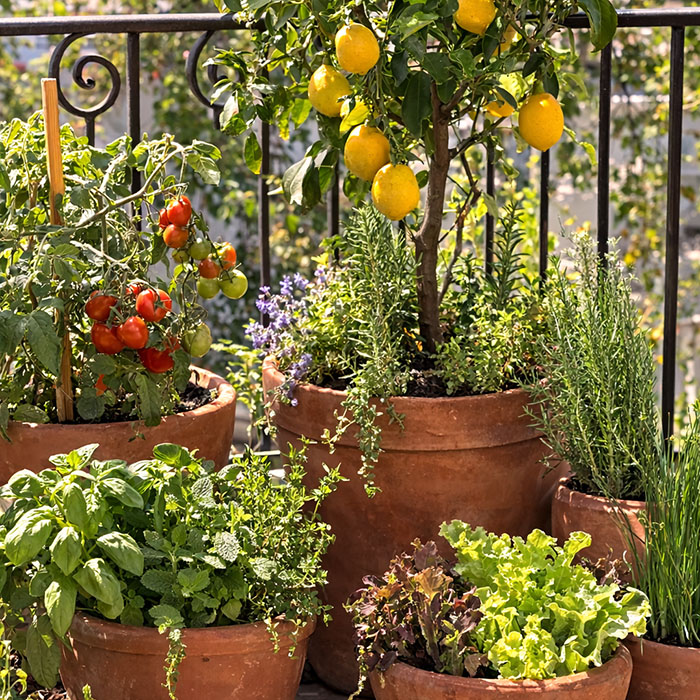
4. The edible balcony layout
This layout prioritises food production.
The balcony is organised around herbs, vegetables, leafy greens, trellised crops, and compact fruiting plants.
Why it works
- practical and rewarding
- high productivity in small spaces
- easy to tailor to sun conditions
Best for
- sunny balconies
- people who cook often
- small-space gardeners who want utility
Good plant choices
- cherry tomatoes
- basil
- parsley
- lettuce
- spinach
- rocket
- spring onions
- chillies
- strawberries
- dwarf beans
Design tip
Group plants by watering needs and sunlight requirements. Heavy feeders like tomatoes should be in larger containers, while herbs can be grouped nearby.
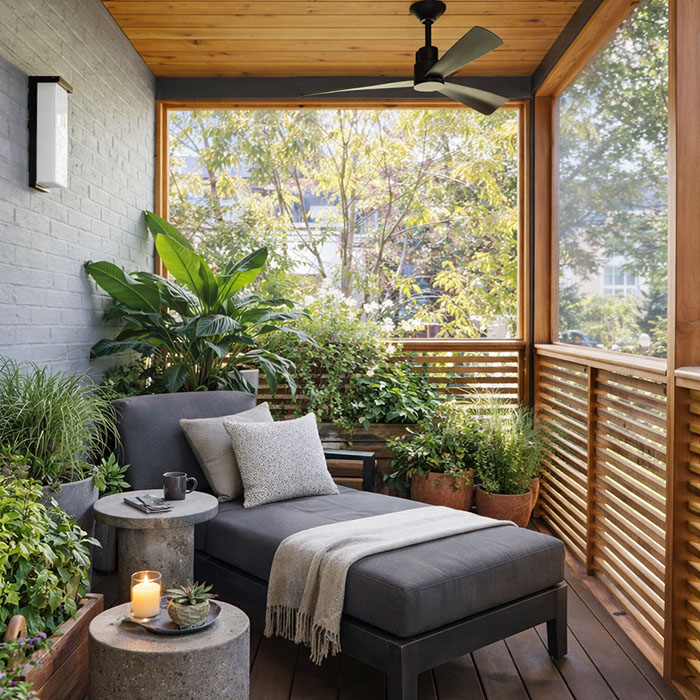
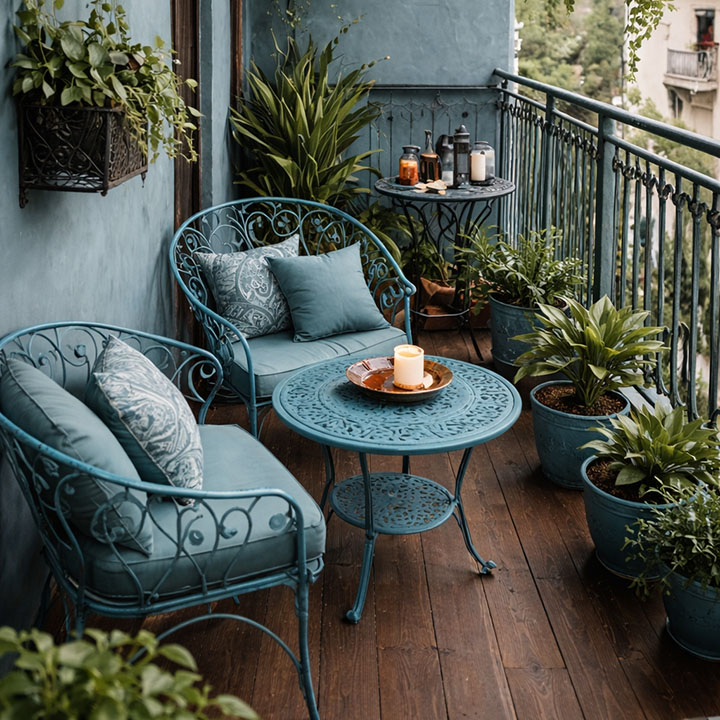
5. The lounge layout
This layout creates a relaxing retreat with plants framing a seat, bench, or small lounge chair.
Why it works
- makes the balcony feel like an outdoor room
- blends greenery and lifestyle
- works well with softer planting
Best for
- balconies used for reading or relaxing
- part-sun or decorative balconies
- wider or deeper balconies
Good plant choices
- flowering plants
- fragrant herbs
- screening shrubs
- foliage plants
- trailing plants in hanging baskets
Design tip
Use plants to frame the seating rather than crowd it. The seat should feel sheltered, not boxed in.
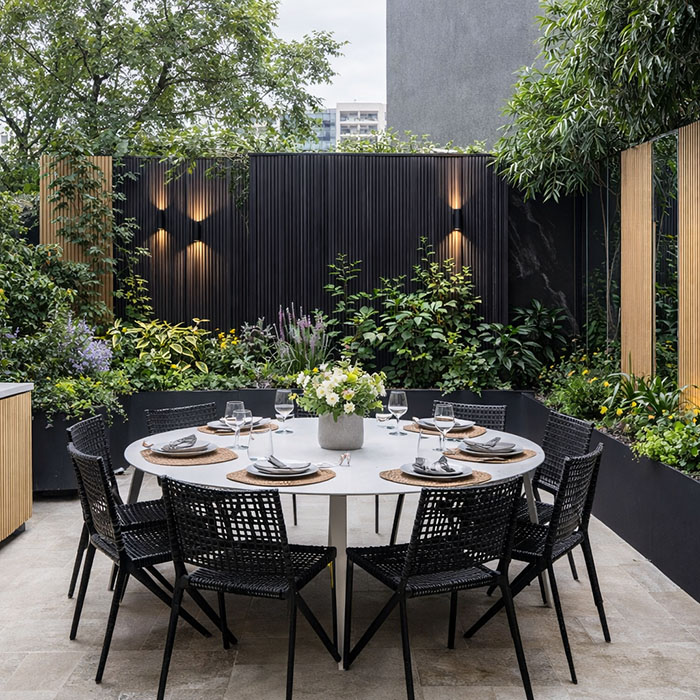
6. The dining balcony layout
This layout uses a small table and chairs as the centrepiece, with planters around the outer edges.
Why it works
- highly functional
- elegant and balanced
- keeps the centre usable
- ideal for entertaining
Best for
- medium to large balconies
- apartment terraces
- balconies with good circulation
Good plant choices
- structural plants in corners
- low flowering borders
- soft grasses
- herbs near the table
- fragrant plants
Design tip
Use slimmer planters if space is tight. A round table usually works better than a square one on balconies.
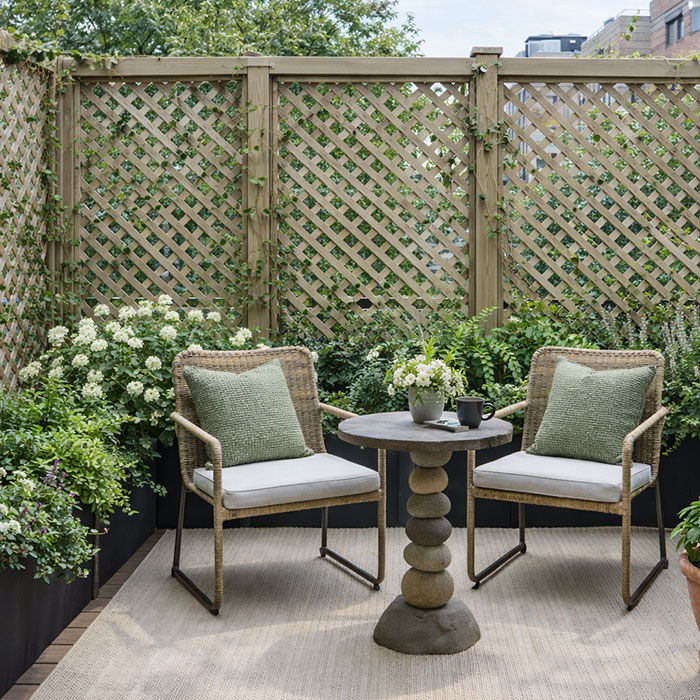
7. The privacy screen layout
This layout is designed to block views from neighbours or create a more enclosed space.
Why it works
- adds privacy
- reduces wind
- can make the balcony feel more intimate
Best for
- overlooked balconies
- exposed apartments
- balconies facing nearby buildings
Good plant choices
- tall grasses
- bamboo in controlled containers
- trellised climbers
- screening shrubs
- dense foliage plants
Design tip
Avoid creating a heavy green wall across the whole balcony unless you still have enough light and airflow.
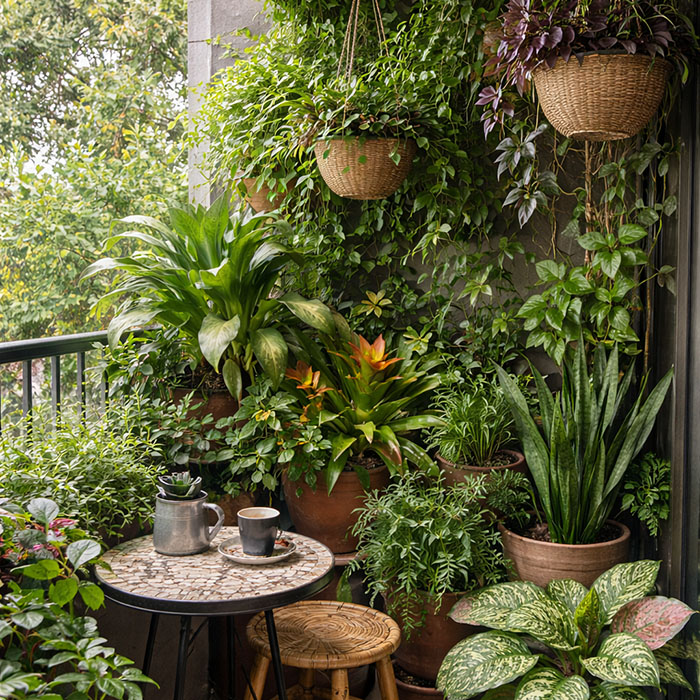
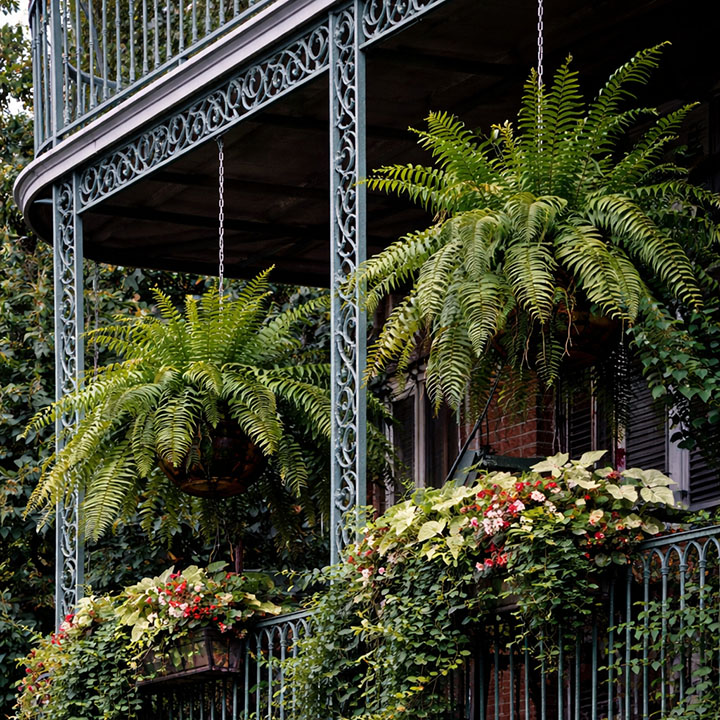
8. The corner jungle layout
This layout builds a dense planting composition in one or two corners, rather than spreading plants evenly everywhere.
Why it works
- easy to maintain
- strong visual impact
- creates a focal point
- leaves other areas open
Best for
- corner balconies
- shaded balconies
- tropical or foliage-focused designs
Good plant choices
- bird of paradise
- ferns
- philodendrons
- peace lilies
- trailing plants
- layered tropical foliage
Design tip
Use a tall anchor plant, medium foliage plants below it, and trailing plants to soften the edges.
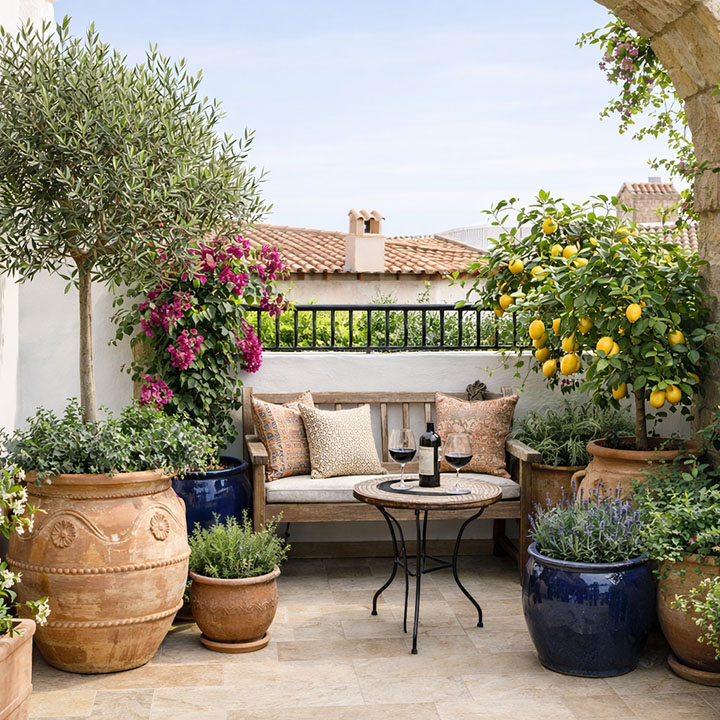
9. The Mediterranean layout
This style is ideal for sunny Australian balconies and creates a warm, relaxed look.
Why it works
- suits hot, bright balconies
- relatively low maintenance
- elegant and timeless
Good plant choices
- olive tree
- rosemary
- thyme
- oregano
- lavender
- sage
- terracotta pots
- gravel or simple clean materials
Design tip
Use fewer plant varieties but repeat them for a calm, cohesive look.
10. The cottage balcony layout
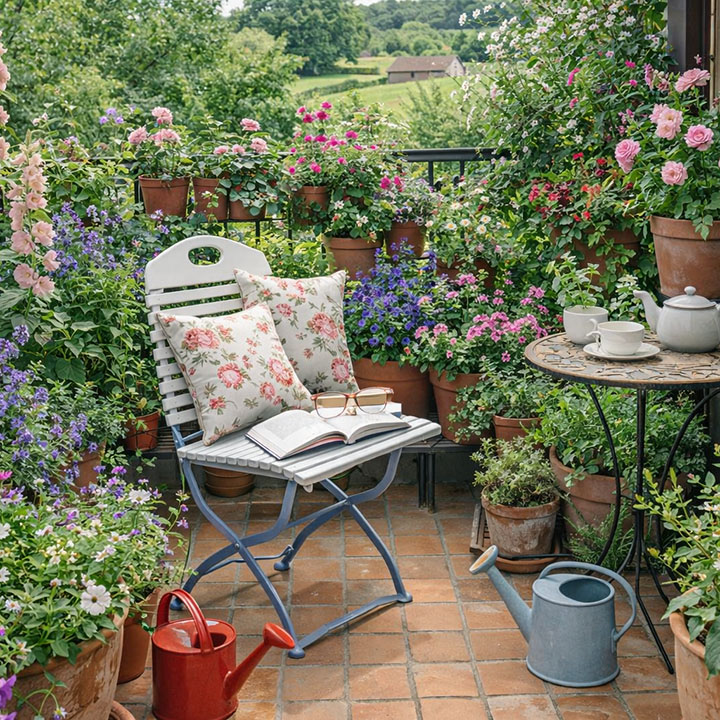
This is a softer, more abundant style with mixed flowers, herbs, and informal planting.
Why it works
- charming and colourful
- romantic and lush
- supports pollinators
Good plant choices
- petunias
- geraniums
- nasturtiums
- herbs
- alyssum
- daisies
- lavender
- trailing flowers
Design tip
The look should still be controlled. Too many random pots can look messy instead of charming.
How to choose the right layout for your balcony size
Small balcony
Best options:
- railing planter layout
- vertical garden layout
- small lounge layout
- corner jungle layout
Use:
- slim planters
- hanging pots
- one statement chair or bench
- a maximum of one focal point
Medium balcony
Best options:
- perimeter layout
- edible layout
- mixed lounge and planting layout
- privacy screen layout
Use:
- a combination of floor and vertical planting
- a small table or bench
- different plant heights
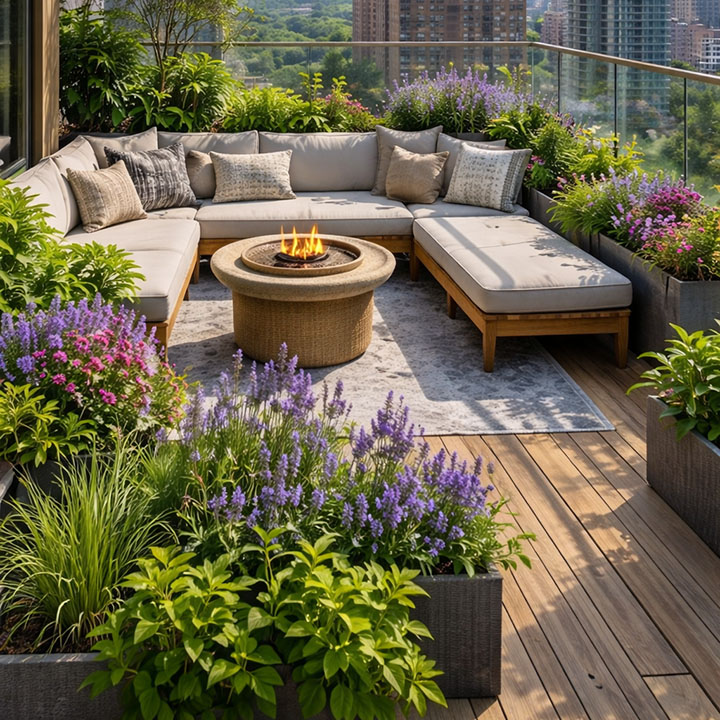
Large balcony or terrace
Best options:
- dining balcony layout
- multiple zones
- large planters
- structural plants and small trees
Use:
- separate areas for seating and planting
- repeated planter styles
- larger statement pots
- feature trees or screens
Best layout ideas by balcony condition
Sunny balcony
Good layouts:
- edible balcony
- Mediterranean layout
- perimeter layout
- dining balcony with low planting
Shady balcony
Good layouts:
- corner jungle
- foliage-focused lounge layout
- tropical vertical garden
- soft layered perimeter planting
Windy balcony
Good layouts:
- privacy screen layout
- grouped corner planting
- lower, more compact arrangements
- heavier containers near edges
Narrow balcony
Good layouts:
- railing planters
- vertical wall garden
- one-sided planting with opposite seating
- long slim perimeter layout
Balancing beauty and practicality
A lot of balcony inspiration images look beautiful but are not always practical. The best layout gives you both.
Think about:
- how you will water everything
- whether pots are too heavy to move
- whether leaves will block doors
- whether you can sweep the floor
- whether the balcony still feels comfortable to sit in
A great balcony garden is one you can actually maintain.
How to create zones in a balcony garden
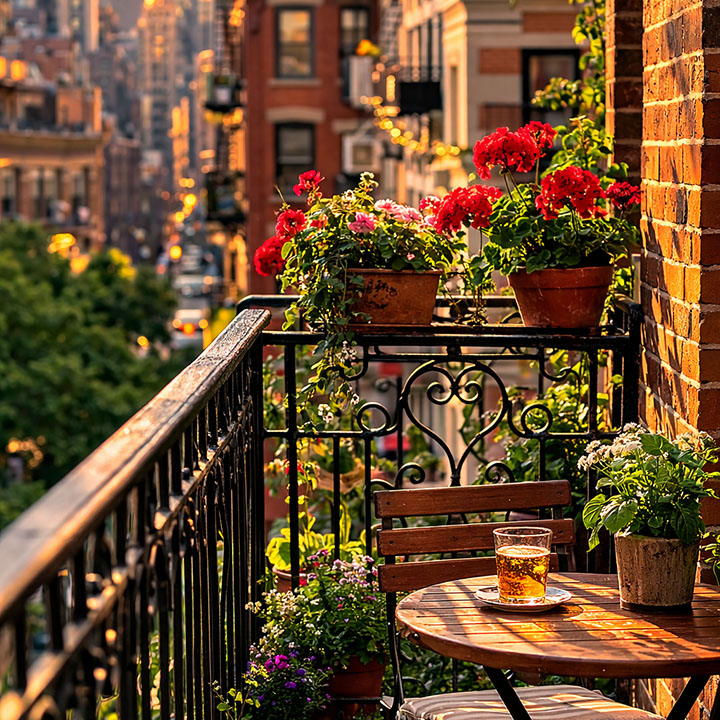
Even a small balcony can have zones.
Examples:
Relaxation zone
Bench, chair, or small lounge seat with soft planting around it.
Growing zone
Herbs, vegetables, or compact fruiting plants grouped together for easy care.
Feature zone
A statement tree, a vertical garden, or a colourful grouping of flowers.
Screening zone
Taller planters or trellises placed where privacy is needed.
Zoning helps the balcony feel designed rather than accidental.
Common balcony layout mistakes
Pushing all the pots together without a plan
This usually creates clutter.
Blocking the best light with tall plants
Put tall plants where they will not shade everything behind them.
Using too many different pot styles
This can make the balcony feel visually chaotic.
Forgetting mature plant size
Small nursery plants can become much larger than expected.
Not leaving walking space
A balcony should still feel easy to use.
Overcrowding furniture and plants
Choose one priority if space is tight.
Simple layout formulas that work
If you want practical layout formulas to copy, these are strong starting points.
Formula 1: The edible narrow balcony
- rail planters with herbs and strawberries
- one vertical trellis for beans or tomatoes
- one large corner pot
- one slim bench or stool
Formula 2: The relaxing green balcony
- bench or lounge chair
- medium pots around the edges
- one hanging basket
- one tall feature plant in the corner
- low trailing plants to soften edges
Formula 3: The dining terrace
- round table in the centre
- planters around the perimeter
- taller plants in corners
- low flowers or herbs along edges
Formula 4: The privacy balcony
- trellis or screen on one side
- tall screening planters
- lower filler plants in front
- one chair or small table inside the sheltered area
Best plants for layout impact
Some plants are especially useful in balcony design because they help create structure.
Tall structural plants
- olive tree
- bay tree
- dwarf citrus
- bird of paradise
- ornamental grasses
- bamboo in controlled planters
Medium fillers
- rosemary
- lavender
- geraniums
- parsley
- leafy greens
- ferns
Trailing plants
- nasturtiums
- strawberries
- petunias
- ivy
- trailing rosemary
- lobelia
Climbers
- beans
- peas
- jasmine
- climbing flowers
- cucumber in sunny edible layouts
Using a mix of these categories creates a layered, finished look.
Final thoughts
The best balcony garden layouts are not always the most complicated. In most cases, the strongest layouts are the ones that match the space, use height wisely, and leave enough room for you to enjoy the balcony.
Start by understanding your shape, light, and purpose. Then choose a layout style that fits how you want to use the space. A sunny edible balcony, a leafy corner retreat, a dining terrace, or a railing herb garden can all work beautifully when the layout is intentional.
If you are new to balcony gardening, keep it simple at first. One well-planned corner or one strong perimeter layout is better than trying to do everything at once.
Once the structure works, the plants become much easier.

Comments are closed.