Tag

Featured

Browsing

Balcony gardens in Australia can thrive beautifully, but sunlight is the factor that most often decides whether your plants struggle or take off. On a balcony, light changes fast depending on your direction, nearby buildings, railings, walls, and the season. What works on a sunny Sydney balcony may fail on a shaded Melbourne apartment, and a west-facing balcony in Perth can behave very differently from one in Hobart.

This guide explains how to understand sunlight on your balcony, how Australian conditions affect plant choice, and how to adapt for major cities. Whether you want herbs, flowers, screening plants, or a small edible garden, getting sunlight right will save you time, money, and frustration.
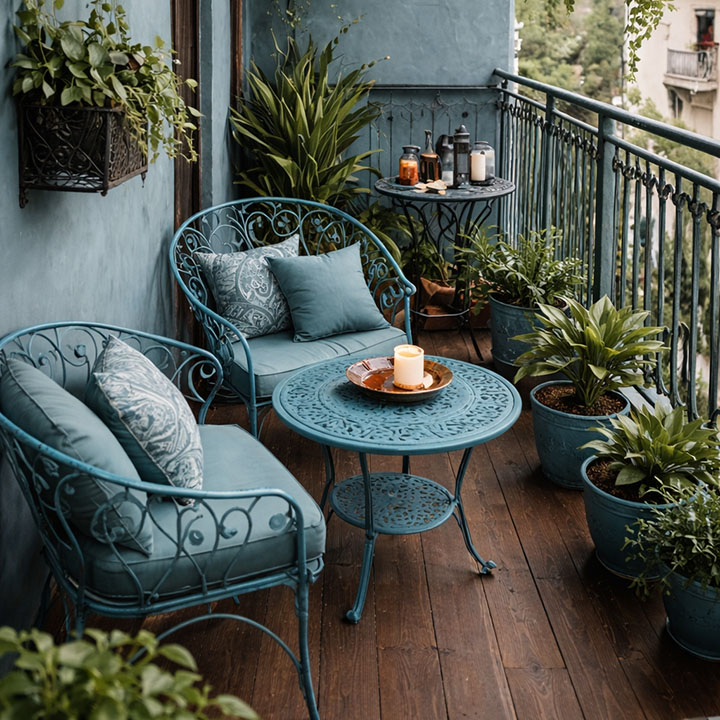
Why Sunlight Matters So Much on a Balcony

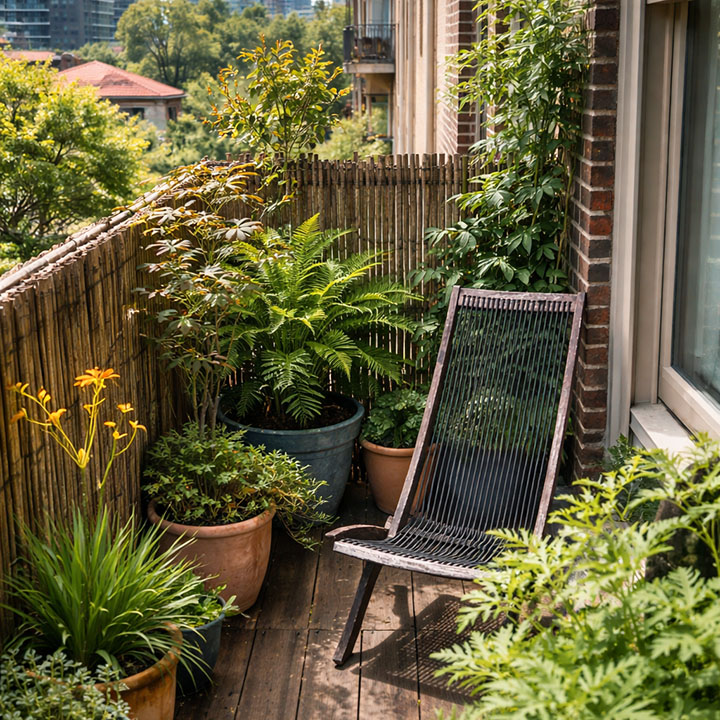
In a backyard, plants usually have more stable conditions. On a balcony, sunlight is more extreme and more uneven. One corner may get blazing afternoon sun, another may stay cool and shaded all day, and reflected heat from glass, concrete, brick, or metal can make the area far hotter than the weather report suggests.

Sunlight affects how fast pots dry out, how often you need to water, how much wind stress plants can handle, whether flowers bloom well, and whether vegetables actually produce. A tomato plant with six hours of sun can crop well, while the same plant in only two hours of light may stay leggy and disappointing. Likewise, leafy greens that are happy in gentle morning light may bolt quickly in strong afternoon heat.

The 5 Main Balcony Light Levels

Before choosing plants, identify which of these light conditions your balcony has.

Full Sun

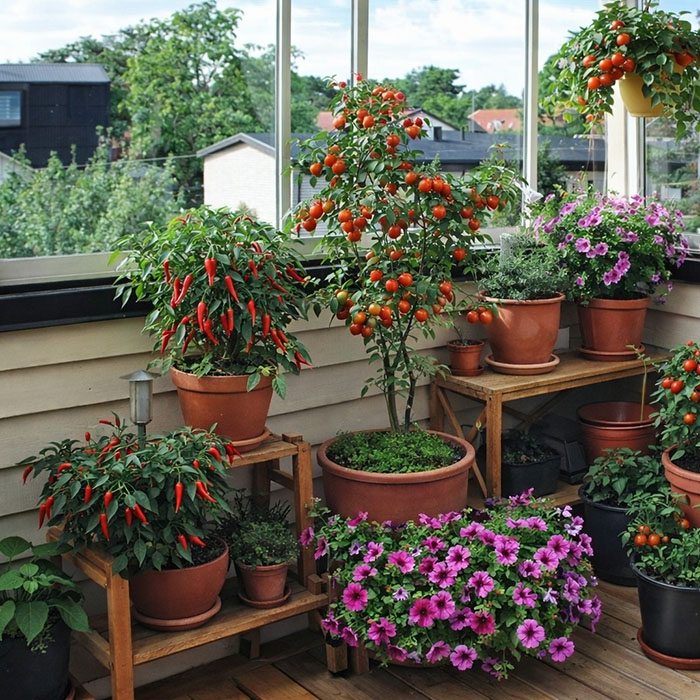
Six or more hours of direct sun per day. This is best for many vegetables, flowering annuals, citrus, chillies, rosemary, lavender, and compact tomatoes. In Australia, full sun can be excellent in cooler months but harsh in peak summer, especially on exposed balconies.

Part Sun

Four to six hours of direct sun. This suits many herbs, strawberries, dwarf beans, capsicum, and many flowering plants. Morning sun is generally gentler than afternoon sun.

Part Shade

Two to four hours of direct sun, or bright filtered light for much of the day. Good for lettuce, spinach, parsley, mint, begonias, peace lilies, and many foliage plants.

Bright Shade

No direct sun, but still bright. This often happens on balconies facing other buildings or under deep overhangs. You can still grow many foliage plants, ferns, some herbs, and some shade-tolerant flowers, but fruiting crops will usually be limited.

Deep Shade

Very little direct or reflected light. This is the hardest condition for balcony gardening. Focus on hardy indoor-style foliage plants, climbing shade lovers, and decorative containers rather than sun-loving edibles.
How to Check Your Balcony’s Sun Properly

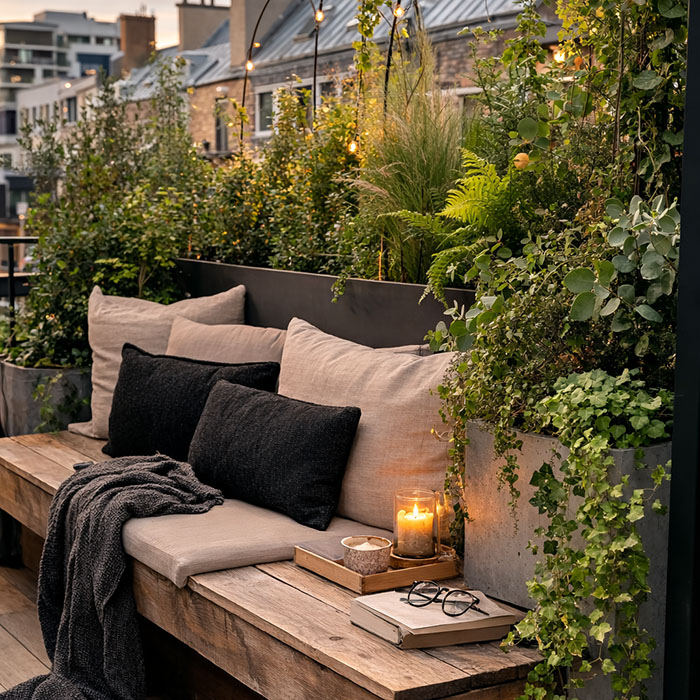
Do not guess based only on the property listing. “Sunny balcony” often just means it is bright at one time of day. Spend a day observing your space if possible, or check at three key times: morning, midday, and mid to late afternoon. Notice where the direct sunlight actually lands and for how long.

Also check in different seasons. A balcony that gets excellent winter sun may become brutally hot in summer. Another may be shaded in winter when the sun sits lower and nearby buildings block more light.

Take note of these factors:

  • Which direction the balcony faces
  • How many hours of direct sun reach the pots, not just the balcony floor
  • Whether sunlight is gentle morning light or hot afternoon light
  • Reflected heat from walls, glass, paving, or railings
  • Wind exposure, which can dry pots fast even in part shade
  • Whether an overhang or upper balcony cuts out overhead sun

Balcony Direction in Australia: What It Usually Means

Because Australia is in the Southern Hemisphere, the direction of your balcony has a big influence on how much light it gets.

North-Facing Balcony

Usually the best option for sun-loving plants in Australia. North-facing balconies generally receive the most consistent sunlight across the year. These are ideal for herbs, flowering pots, compact vegetables, and many edible plants. In hot cities, however, summer intensity may still require shade cloth or plant placement tricks.

East-Facing Balcony

Gets morning sun and tends to be one of the easiest orientations to garden on. Morning light is bright but gentler, making it suitable for herbs, many flowers, leafy greens, and balconies where people also want a comfortable seating area.

West-Facing Balcony

Gets hot afternoon sun and can become very harsh in summer. These balconies can be excellent for heat-loving plants, but many pots will need more frequent watering and some plants may scorch. West-facing balconies often benefit from tall screening plants, shade cloth, grouped pots, and thicker containers.

South-Facing Balcony

Usually the shadiest option in Australia. South-facing balconies are often best for foliage plants, ferns, peace lilies, trailing greenery, and shade-tolerant containers. Edible options are more limited, but herbs like mint and parsley, plus leafy greens in brighter spots, can still do well.
Morning Sun vs Afternoon Sun

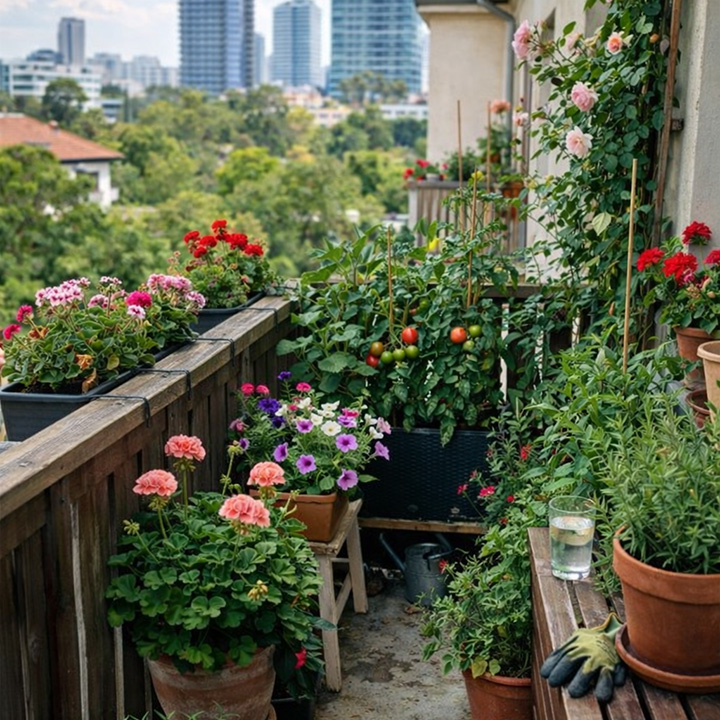
Not all sun is equal. Four hours of morning light can be easier on plants than four hours of late afternoon summer sun. Morning sun is usually cooler and more forgiving. Afternoon sun is more intense, especially on balconies with brick walls, concrete floors, or dark railings that hold heat.

This is why some labels saying “full sun” can be misleading on Australian balconies. A plant that handles full sun in a garden bed may still struggle in a black plastic pot on a west-facing balcony in January.

Australian Balcony Gardening by City

Australia’s cities vary a lot in heat, humidity, winter cold, wind, and seasonal intensity. Here is how sunlight often behaves in different locations.

Sydney

Sydney balconies often get strong sun, high UV, and warm conditions for much of the year. Coastal areas may also deal with wind and salt exposure. North- and east-facing balconies are usually excellent for herbs, flowers, citrus in large pots, chillies, and compact vegetables. West-facing balconies can become very hot in summer, so partial afternoon protection helps. Good options include rosemary, thyme, basil, parsley, strawberries, geraniums, dwarf lemon, and native plants suited to pots.

Melbourne

Melbourne balcony gardeners often deal with variable conditions: bright sun, cool changes, wind, and noticeable seasonal shifts. Sun is still very important, but sheltered positioning matters just as much. East- or north-facing balconies are versatile. West-facing balconies can be hot on some summer days but cooler overall than in Perth or Adelaide. Herbs, leafy greens, lavender, salvias, dwarf tomatoes, and compact natives can perform well depending on exposure.

Brisbane

Brisbane’s warmth and humidity support fast growth, but intense summer heat can stress plants in full afternoon sun. Morning sun is often ideal. East-facing balconies are especially useful for edible gardens. In very exposed positions, use part shade for lettuce, coriander, and soft herbs during the hottest months. Tropical and subtropical foliage plants, chillies, basil, lemongrass, mint, and many flowering plants do well.

Perth

Perth balconies can be extremely bright, dry, and hot in summer. Watering becomes a major issue, especially with terracotta and small pots. Full-sun balconies are best planted with heat-tolerant choices such as rosemary, thyme, oregano, lavender, succulents, and tough flowering plants. Edibles can still do well, but many need larger pots, mulch, and some summer protection. West-facing balconies in Perth need special care.

Adelaide

Adelaide often combines strong sun with dry heat. Balcony plants can thrive, but they must cope with rapid moisture loss. Mediterranean herbs are a natural fit. Full-sun balconies suit rosemary, thyme, sage, oregano, lavender, pelargoniums, and chillies. Leafy greens are better in cooler seasons or with morning sun only. Shade cloth and self-watering pots can make a big difference in summer.

Canberra

Canberra has colder winters than most Australian capitals, so sunlight is valuable, especially in winter. North-facing balconies are particularly useful here. Summer sun can still be strong, but the larger issue is seasonal change. Choose sun-loving plants for spring and summer, then switch to cool-season edibles and cold-tolerant pots in the cooler months. Good light can extend your growing season considerably.

Hobart

Hobart balcony gardens often benefit from maximising available light rather than reducing it. North-facing balconies are highly desirable. Sun-loving herbs, strawberries, dwarf peas, and many cottage-style flowers can do well in brighter spots. Wind protection is often just as important as sunlight. In shaded balconies, focus on foliage and cool-climate shade lovers.

Darwin

Darwin’s balcony gardens face intense heat, humidity, and wet-season growth. Full direct sun can be too much for many plants in containers, especially on exposed balconies. Filtered light, morning sun, and ventilation are often more useful than all-day exposure. Tropical edibles, leafy greens in part shade, basil, chillies, ginger, and lush foliage plants often perform well, but drainage and airflow are essential.
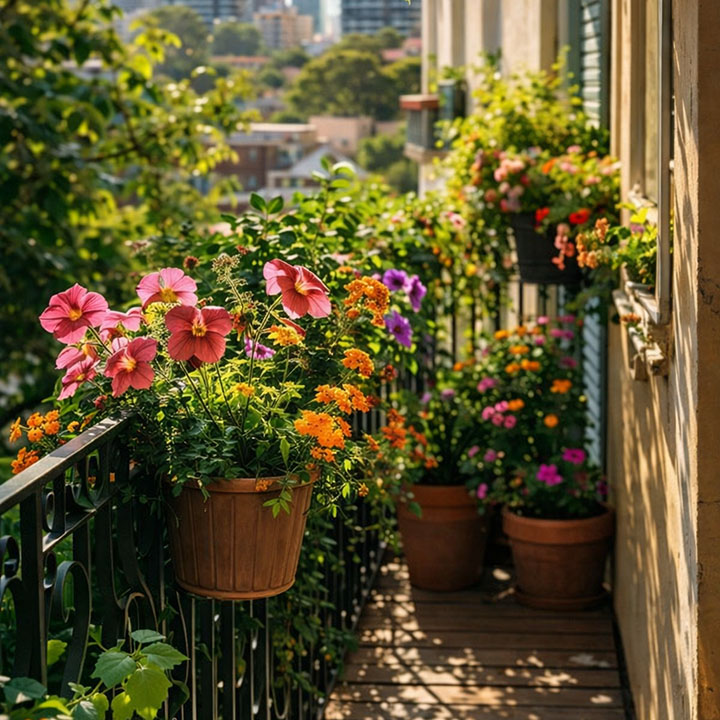
Best Plants by Sunlight Type

Best Plants for Full Sun Balconies

  • Rosemary
  • Thyme
  • Oregano
  • Lavender
  • Sage
  • Chillies
  • Compact tomatoes
  • Capsicum
  • Strawberries
  • Geraniums and pelargoniums
  • Succulents
  • Many Australian native flowering plants in pots

Best Plants for Part Sun Balconies

  • Basil
  • Parsley
  • Chives
  • Dwarf beans
  • Lettuce in cooler seasons
  • Spinach
  • Begonias
  • Diascia
  • Alyssum
  • Compact citrus in brighter positions

Best Plants for Part Shade or Bright Shade

  • Mint
  • Parsley
  • Coriander in cooler weather
  • Lettuce
  • Rocket
  • Peace lily
  • Ferns
  • Pothos
  • Begonias
  • Impatiens
  • Trailing ivy in suitable climates

How to Protect Plants from Harsh Australian Sun

Many balcony gardeners lose plants not because they chose the wrong species, but because the conditions become too extreme in midsummer. Containers heat up faster than garden soil, and roots can cook surprisingly quickly on hard surfaces.

Use these strategies to manage strong sun:

  • Use larger pots, which dry out more slowly
  • Choose lighter-coloured containers where possible
  • Mulch the top of pots to reduce evaporation
  • Group pots together to create a cooler microclimate
  • Use taller plants as living shade for delicate ones
  • Add a small screen, umbrella, or shade cloth for west-facing balconies
  • Water early in the morning during hot weather
  • Avoid tiny pots for thirsty edible crops in summer

How to Make the Most of a Shady Balcony

A shady balcony is not a wasted space. It simply needs a different plant palette. Instead of forcing sun-loving vegetables to survive, lean into foliage, texture, layered planters, and species that appreciate protection from direct sun.

On a shaded balcony, try to maximise brightness by using pale walls, reflective surfaces, open-style furniture, and careful placement near the brightest edge. Keep expectations realistic for fruiting crops, but enjoy the fact that shade balconies are often easier to keep lush and comfortable for sitting areas.

Seasonal Sun Changes in Australia

One of the biggest balcony gardening mistakes is treating the space as though conditions stay the same all year. In Australia, seasonal sun angle matters. A balcony may feel perfect in spring and autumn, then become scorching in January or noticeably darker in winter.

A good balcony garden often changes by season:

  • Summer: protect roots, manage heat, grow warm-season herbs and flowering plants
  • Autumn: refresh tired pots, plant herbs and flowers for milder growth
  • Winter: maximise light, reduce watering frequency, use cool-season edibles where suitable
  • Spring: feed plants, replant edibles, and prepare for stronger sun ahead
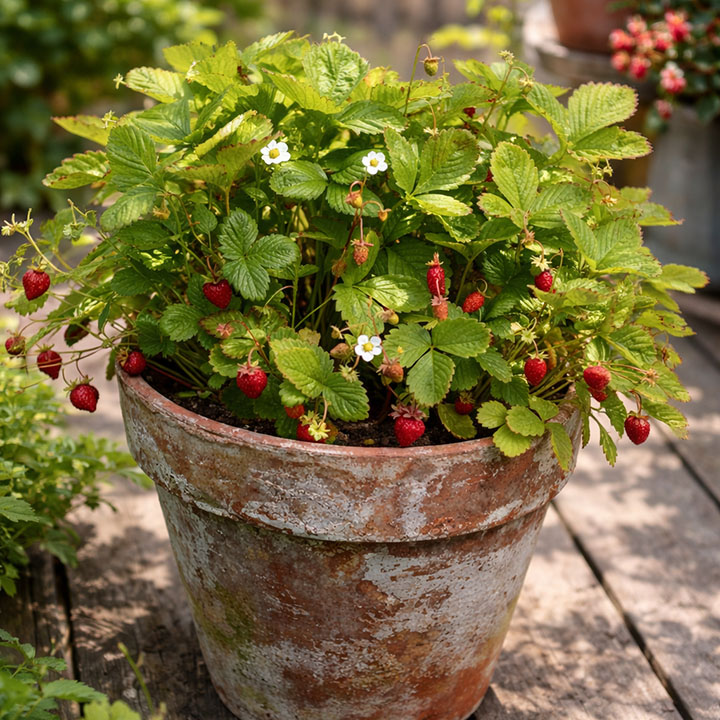
Best Edibles for Different Australian Balcony Light Conditions

Sunny Balconies

Tomatoes, chillies, basil, thyme, rosemary, oregano, dwarf beans, strawberries, and capsicum.

Morning-Sun Balconies

Parsley, basil, lettuce, spinach, spring onions, coriander in cooler months, and strawberries.

Part-Shade Balconies

Mint, parsley, leafy greens, baby spinach, rocket, some Asian greens, and shade-tolerant herbs.

Common Sunlight Problems on Balcony Gardens

Leaves Scorching or Browning

Usually caused by harsh direct sun, reflected heat, dry roots, or sudden exposure after being grown in softer conditions.

Plants Growing Tall and Weak

Usually a sign of insufficient light. Move them to a brighter position or switch to plants that suit shade better.

No Flowers or Fruit

Often due to not enough direct sun, especially for tomatoes, chillies, citrus, and many flowering annuals.

Pots Drying Out Too Fast

Common on windy, sunny Australian balconies. Upgrade pot size, mulch, group plants, and water early.

Plants Wilting Even When the Soil Seems Damp

This can happen when roots are overheating. The problem may be sun intensity on the pot, not lack of water in the mix.

Simple Balcony Sunlight Rules for Australia

  • North-facing is usually the sunniest and most flexible
  • East-facing is often the easiest for mixed-use balconies
  • West-facing can be productive but harsh in summer
  • South-facing works best for foliage and shade lovers
  • Morning sun is gentler than afternoon sun
  • Containers heat and dry faster than garden beds
  • What works in Hobart may burn in Perth or Brisbane
  • Choose plants for your real light conditions, not your ideal ones
Final Thoughts

The best balcony garden is not the one with the most sun. It is the one where the plants match the light you actually have. In Australia, sunlight is a huge advantage, but it can also be intense, drying, and unforgiving in containers. Once you understand your balcony’s direction, sun hours, seasonal changes, and city climate, plant choices become much easier.

If your balcony gets blazing sun, choose heat-tolerant plants and protect roots. If it is shady, build a lush green retreat with foliage and shade-friendly herbs. If it only gets morning light, use that to your advantage. The key is to work with your balcony’s conditions, not against them.

A well-planned Australian balcony garden can be productive, beautiful, and usable year-round. Start with the sunlight, and the rest of the design becomes much easier.
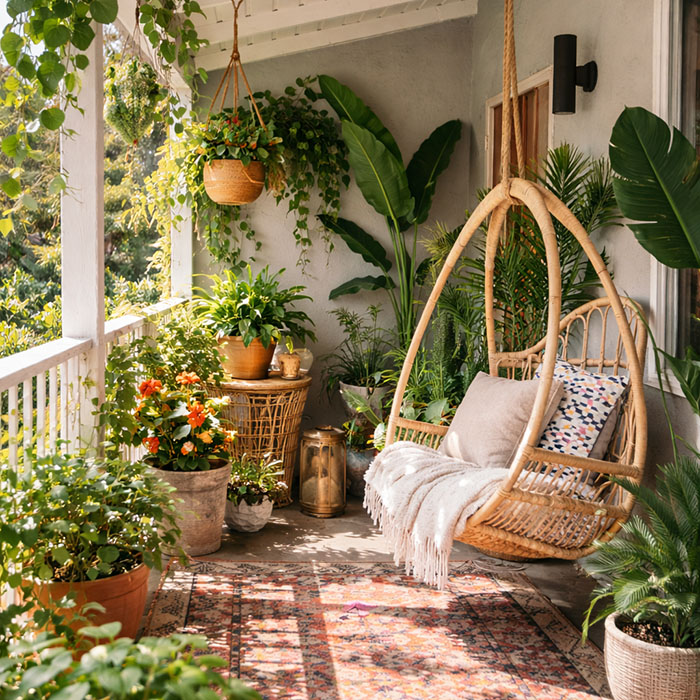
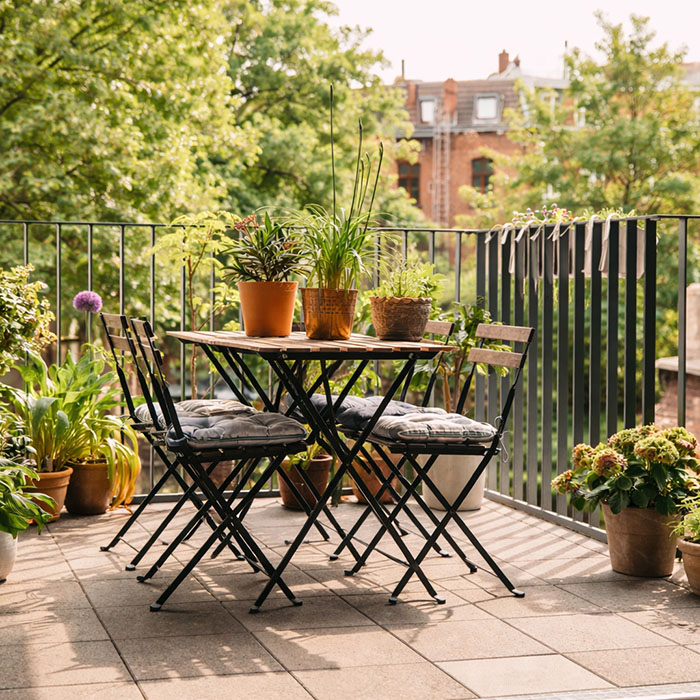
A balcony garden can be much more than a row of pots pushed against a railing. With the right layout, even a small balcony can feel larger, greener, and more useful. A good layout helps you fit more plants into the space, makes maintenance easier, and creates a balcony that feels intentional rather than cluttered.

The best balcony garden layouts do three things well. They use space efficiently, suit the light and weather conditions, and match the way you actually want to use the balcony. Some people want a productive edible garden full of herbs and vegetables. Others want a relaxing retreat with flowers, privacy plants, and a chair. Many people want a mix of both.

This guide explains in depth how to plan a balcony garden layout, which layout styles work best, how to match a layout to your balcony size and conditions, and how to avoid common design mistakes.

Why balcony layout matters

A balcony garden layout affects far more than appearance.

A smart layout can help you:

  • fit more plants into a small space
  • make watering and maintenance easier
  • improve airflow around plants
  • protect plants from wind
  • create zones for relaxing and growing
  • make the balcony feel larger and calmer

A poor layout usually leads to:

  • overcrowding
  • blocked walkways
  • uneven sun exposure
  • awkward watering
  • plants drying out or competing for light
  • a balcony that feels messy instead of inviting

The goal is not to fill every centimetre with greenery. The goal is to create a balcony that feels balanced and usable.

Start with the shape of the balcony

Before choosing plants or planters, look at the physical layout of the balcony itself.

Most balconies fall into one of these shapes:

Long and narrow

Common in apartments. Best for rail planters, wall planters, vertical growing, and one slim seating zone.

Square or boxy

More flexible. Easier to create zones for dining, planting, and relaxing.

Corner balcony

Excellent for layered planting because you can use both walls and the railing.

Deep balcony

Can accommodate larger pots, trees, or seating, but needs structure so it does not feel empty.

Tiny Juliet-style balcony

Best for a small number of statement pots, herbs, and hanging planters.

The shape tells you where your main layout opportunities are. A narrow balcony usually needs vertical solutions. A deeper balcony can support central furniture and perimeter planting.

Understand how the light moves

The best layout is always shaped by sunlight.

Ask:

  • which side gets the most sun
  • whether the sun is morning or afternoon
  • which corners stay shaded
  • whether walls or screens block light
  • whether the railing reflects heat

This helps you decide where each type of plant should go.

Full sun areas

Use for:

  • tomatoes
  • chillies
  • rosemary
  • basil
  • lavender
  • strawberries

Part sun areas

Use for:

  • parsley
  • mint
  • lettuce
  • spinach
  • rocket
  • chives

Shade or bright indirect light

Use for:

  • ferns
  • peace lilies
  • begonias
  • foliage plants
  • some herbs like mint

A layout that ignores the sun almost always struggles.

The key balcony garden design principles

Before looking at specific layout ideas, it helps to understand the basic design principles that make balconies work well.

Layering

Use different heights:

  • low ground pots
  • mid-height planters
  • tall shrubs or trellised plants
  • hanging baskets or wall planters

Layering makes a balcony feel lush and professionally designed.

Repetition

Repeating planter styles, colours, or plant types helps a balcony feel cohesive.

Balance

A balcony should not look too heavy on one side and empty on the other.

Access

You should still be able to move, water, prune, and enjoy the space.

Scale

Use plant and pot sizes that suit the balcony. Oversized furniture on a tiny balcony makes everything feel cramped.

Balcony garden layout ideas

Below are the most effective layout styles for balconies, along with when to use them and what plants suit them.

1. The perimeter layout

This is one of the most practical balcony layouts.

Planters are placed around the edge of the balcony, leaving the centre open.

Why it works

  • keeps the walking area clear
  • makes the balcony feel larger
  • allows good airflow
  • easy to combine with seating or a small table

Best for

  • square balconies
  • dining balconies
  • medium or large spaces

Good plant choices

  • shrubs and grasses in larger corner pots
  • flowers and herbs in border planters
  • leafy greens in rectangular boxes

Design tip

Use taller plants in corners and lower plants along the edges to create depth without blocking views.

2. The railing planter layout

This layout uses the railing as the main planting zone.

Why it works

  • saves floor space
  • makes the balcony feel green from the edges
  • ideal for narrow balconies
  • good for light-loving plants

Best for

  • long narrow balconies
  • apartment balconies with limited floor area

Good plant choices

  • herbs
  • strawberries
  • petunias
  • nasturtiums
  • trailing flowers
  • compact salad greens

Design tip

Avoid making the railing too visually busy. Use repeating planter styles and similar plant forms.

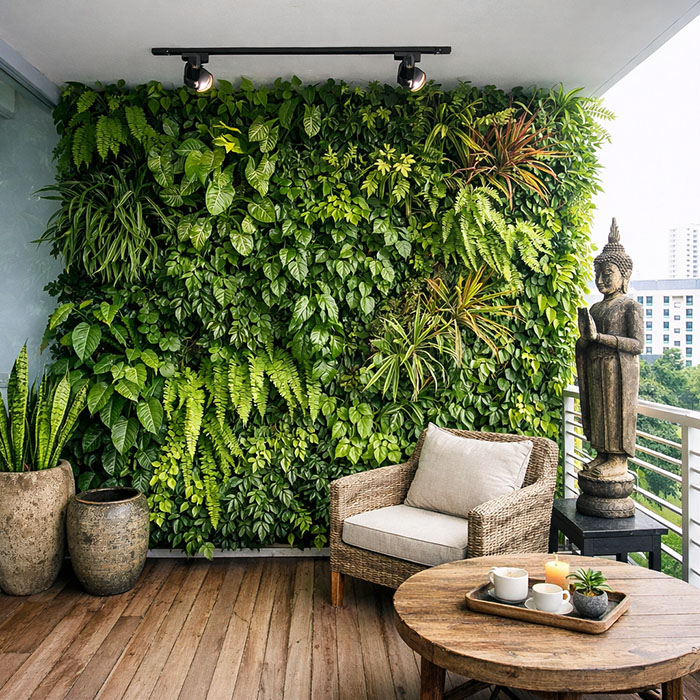
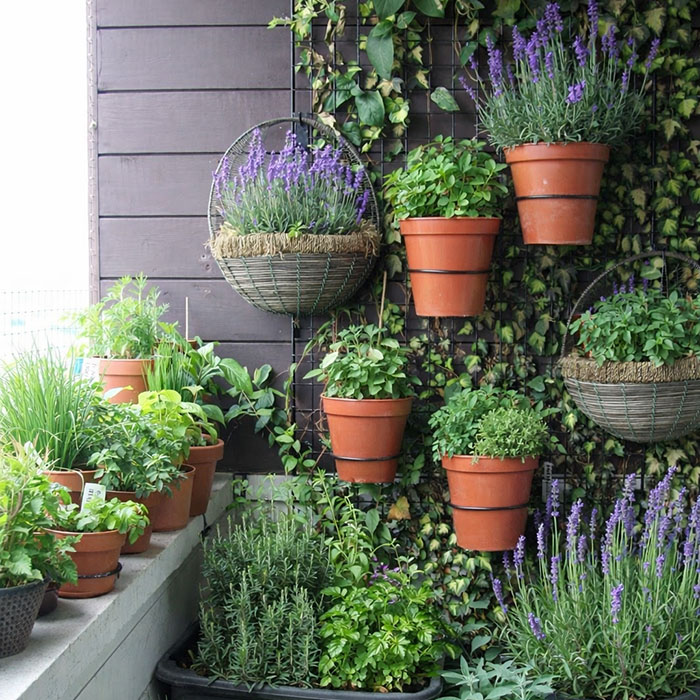
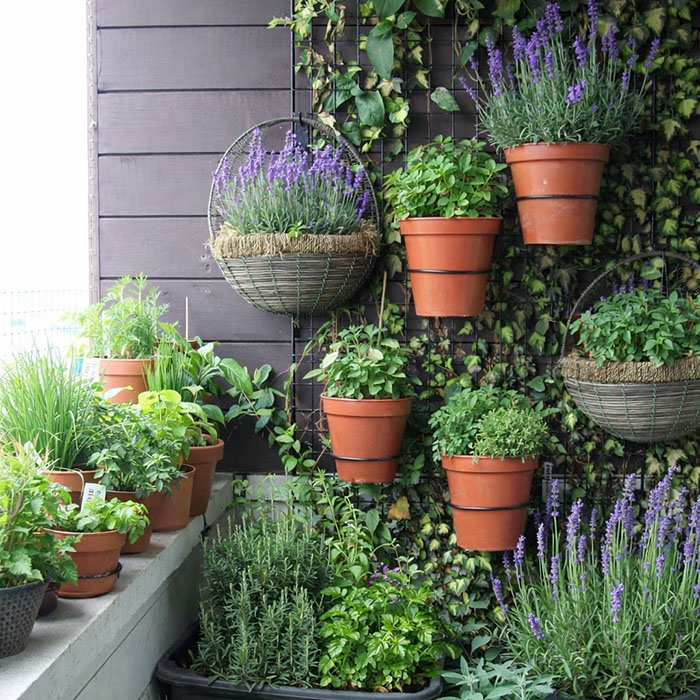
3. The vertical garden layout

This layout uses walls, trellises, shelves, hanging systems, or mesh grids to grow upwards.

Why it works

  • maximises limited space
  • adds privacy
  • creates a lush green wall effect
  • good for narrow balconies

Best for

  • tiny balconies
  • balconies with blank walls
  • renters who want removable systems
  • balconies where floor space is precious

Good plant choices

  • herbs
  • trailing plants
  • compact flowers
  • climbing beans
  • peas
  • cucumbers
  • climbing ornamentals

Design tip

Anchor the layout with larger base pots below the vertical section so the whole composition feels grounded.

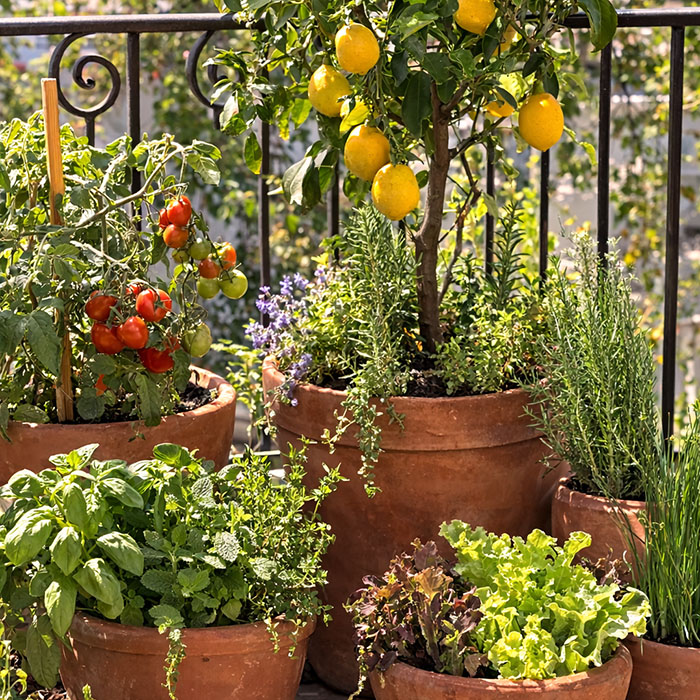
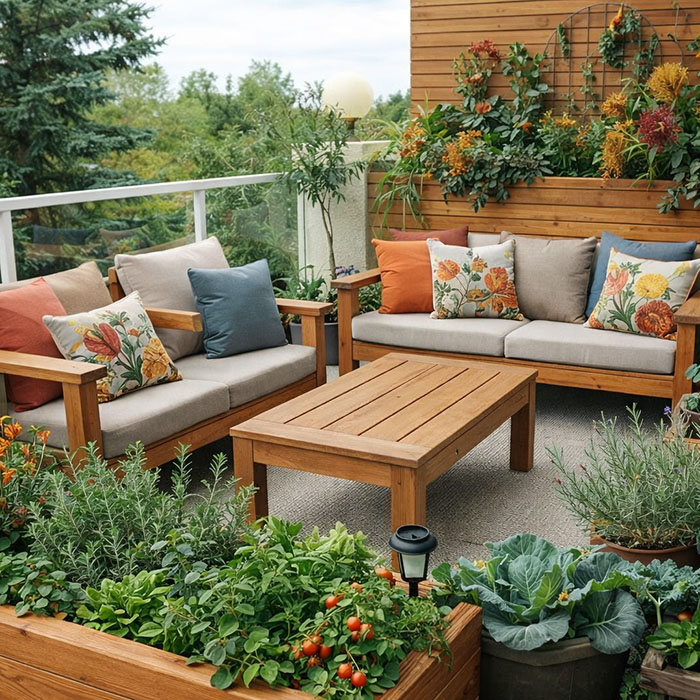
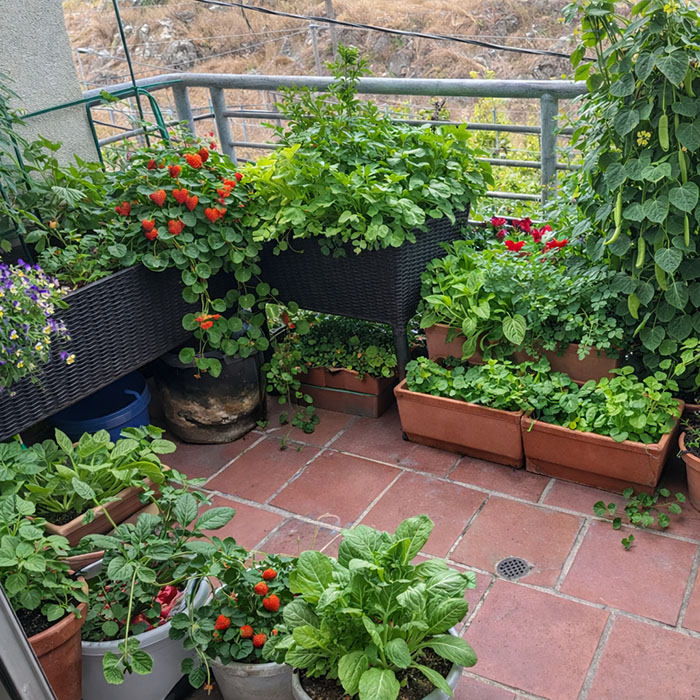
4. The edible balcony layout

This layout prioritises food production.

The balcony is organised around herbs, vegetables, leafy greens, trellised crops, and compact fruiting plants.

Why it works

  • practical and rewarding
  • high productivity in small spaces
  • easy to tailor to sun conditions

Best for

  • sunny balconies
  • people who cook often
  • small-space gardeners who want utility

Good plant choices

  • cherry tomatoes
  • basil
  • parsley
  • lettuce
  • spinach
  • rocket
  • spring onions
  • chillies
  • strawberries
  • dwarf beans

Design tip

Group plants by watering needs and sunlight requirements. Heavy feeders like tomatoes should be in larger containers, while herbs can be grouped nearby.

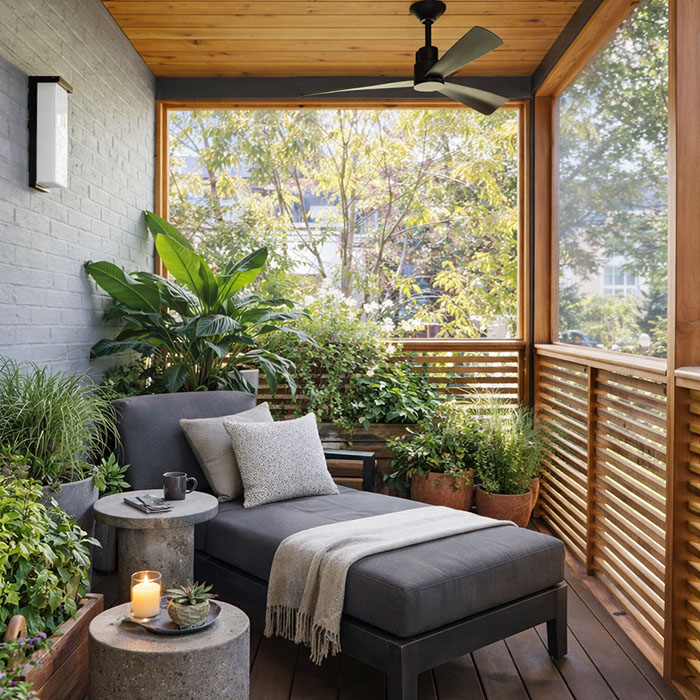
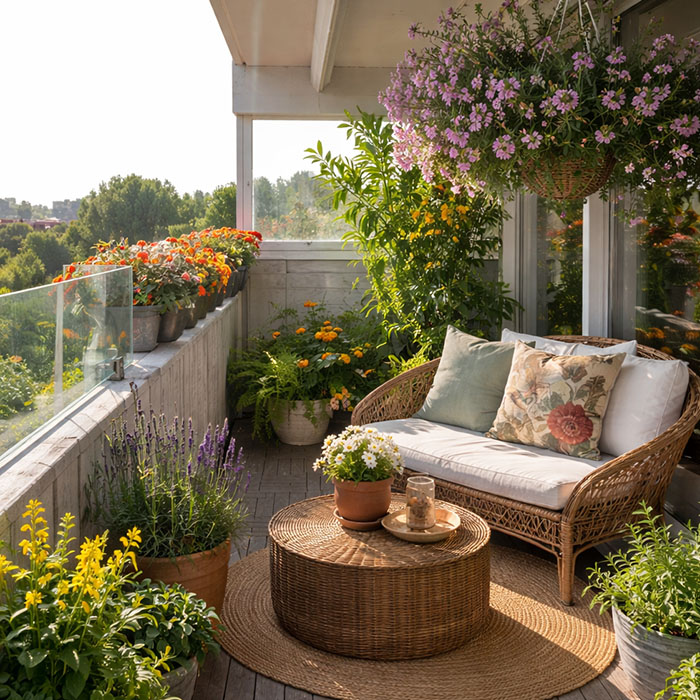
5. The lounge layout

This layout creates a relaxing retreat with plants framing a seat, bench, or small lounge chair.

Why it works

  • makes the balcony feel like an outdoor room
  • blends greenery and lifestyle
  • works well with softer planting

Best for

  • balconies used for reading or relaxing
  • part-sun or decorative balconies
  • wider or deeper balconies

Good plant choices

  • flowering plants
  • fragrant herbs
  • screening shrubs
  • foliage plants
  • trailing plants in hanging baskets

Design tip

Use plants to frame the seating rather than crowd it. The seat should feel sheltered, not boxed in.

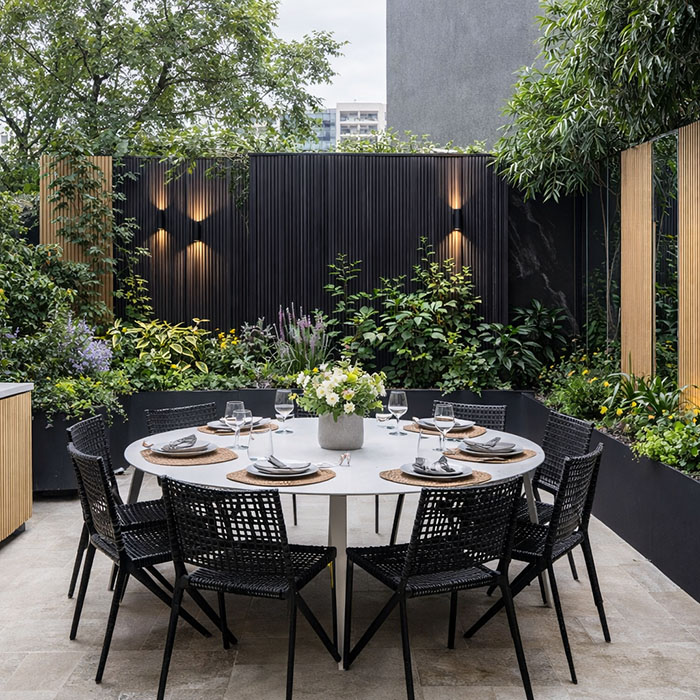
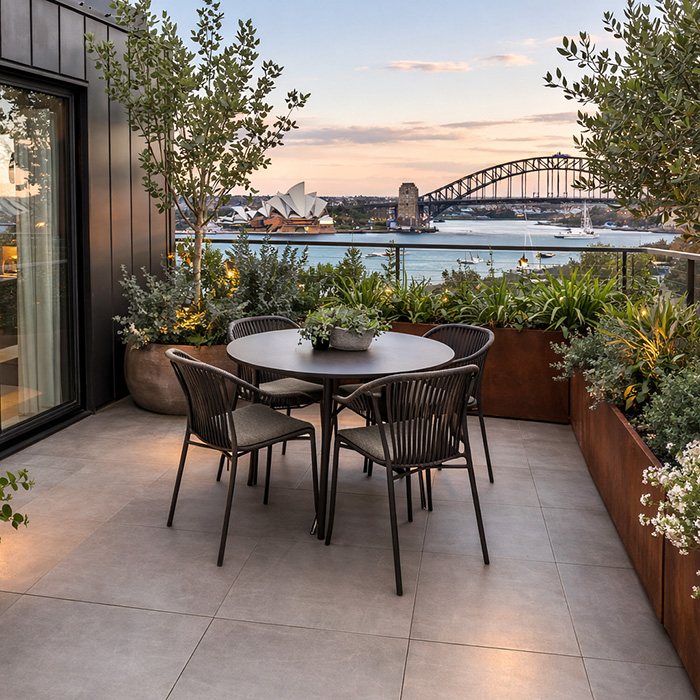
6. The dining balcony layout

This layout uses a small table and chairs as the centrepiece, with planters around the outer edges.

Why it works

  • highly functional
  • elegant and balanced
  • keeps the centre usable
  • ideal for entertaining

Best for

  • medium to large balconies
  • apartment terraces
  • balconies with good circulation

Good plant choices

  • structural plants in corners
  • low flowering borders
  • soft grasses
  • herbs near the table
  • fragrant plants

Design tip

Use slimmer planters if space is tight. A round table usually works better than a square one on balconies.

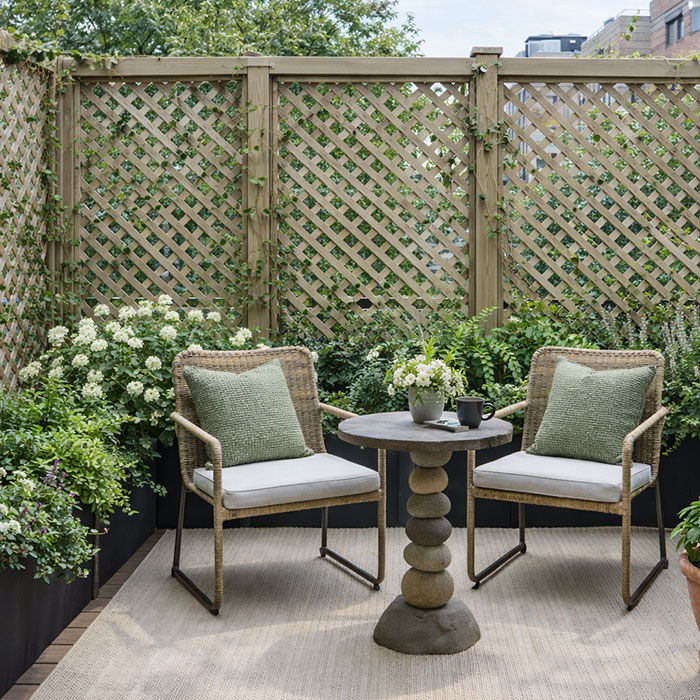
7. The privacy screen layout

This layout is designed to block views from neighbours or create a more enclosed space.

Why it works

  • adds privacy
  • reduces wind
  • can make the balcony feel more intimate

Best for

  • overlooked balconies
  • exposed apartments
  • balconies facing nearby buildings

Good plant choices

  • tall grasses
  • bamboo in controlled containers
  • trellised climbers
  • screening shrubs
  • dense foliage plants

Design tip

Avoid creating a heavy green wall across the whole balcony unless you still have enough light and airflow.

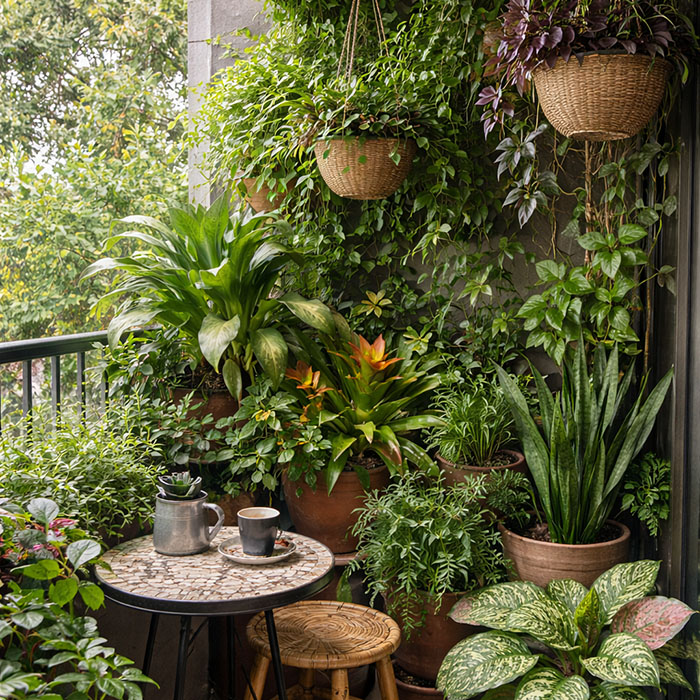
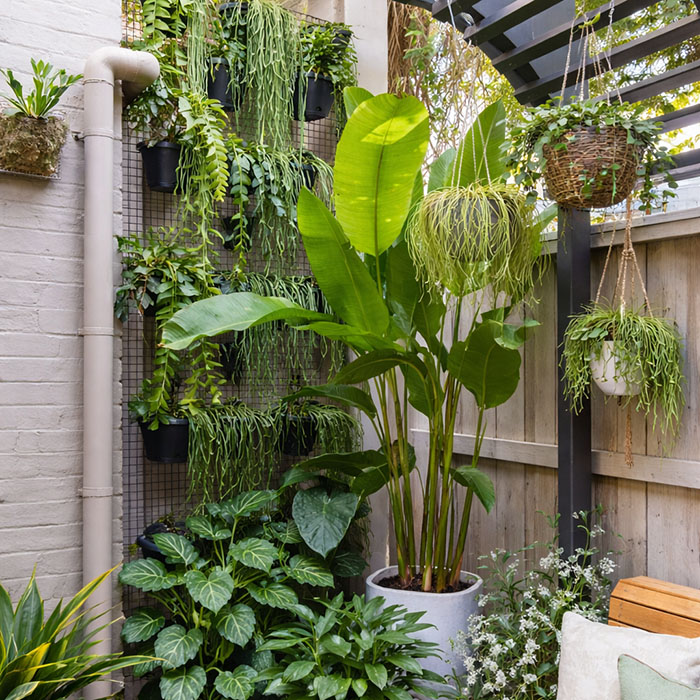
8. The corner jungle layout

This layout builds a dense planting composition in one or two corners, rather than spreading plants evenly everywhere.

Why it works

  • easy to maintain
  • strong visual impact
  • creates a focal point
  • leaves other areas open

Best for

  • corner balconies
  • shaded balconies
  • tropical or foliage-focused designs

Good plant choices

  • bird of paradise
  • ferns
  • philodendrons
  • peace lilies
  • trailing plants
  • layered tropical foliage

Design tip

Use a tall anchor plant, medium foliage plants below it, and trailing plants to soften the edges.

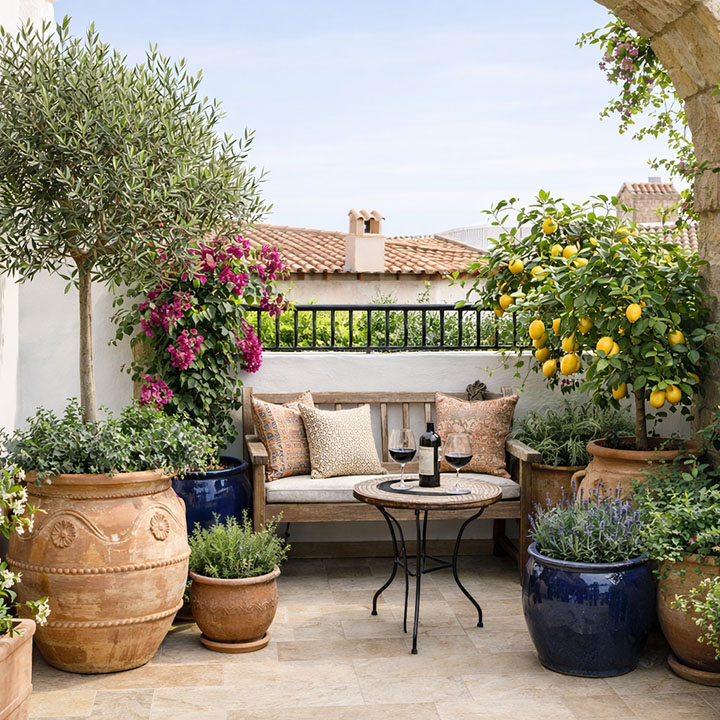
9. The Mediterranean layout

This style is ideal for sunny Australian balconies and creates a warm, relaxed look.

Why it works

  • suits hot, bright balconies
  • relatively low maintenance
  • elegant and timeless

Good plant choices

  • olive tree
  • rosemary
  • thyme
  • oregano
  • lavender
  • sage
  • terracotta pots
  • gravel or simple clean materials

Design tip

Use fewer plant varieties but repeat them for a calm, cohesive look.

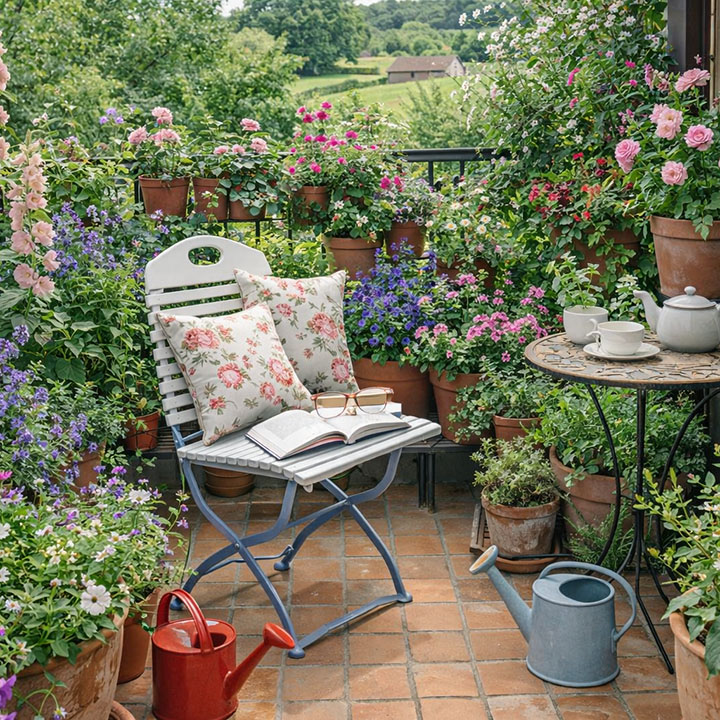
10. The cottage balcony layout

This is a softer, more abundant style with mixed flowers, herbs, and informal planting.

Why it works

  • charming and colourful
  • romantic and lush
  • supports pollinators

Good plant choices

  • petunias
  • geraniums
  • nasturtiums
  • herbs
  • alyssum
  • daisies
  • lavender
  • trailing flowers

Design tip

The look should still be controlled. Too many random pots can look messy instead of charming.

How to choose the right layout for your balcony size

Small balcony

Best options:

  • railing planter layout
  • vertical garden layout
  • small lounge layout
  • corner jungle layout

Use:

  • slim planters
  • hanging pots
  • one statement chair or bench
  • a maximum of one focal point

Medium balcony

Best options:

  • perimeter layout
  • edible layout
  • mixed lounge and planting layout
  • privacy screen layout

Use:

  • a combination of floor and vertical planting
  • a small table or bench
  • different plant heights

Large balcony or terrace

Best options:

  • dining balcony layout
  • multiple zones
  • large planters
  • structural plants and small trees

Use:

  • separate areas for seating and planting
  • repeated planter styles
  • larger statement pots
  • feature trees or screens

Best layout ideas by balcony condition

Sunny balcony

Good layouts:

  • edible balcony
  • Mediterranean layout
  • perimeter layout
  • dining balcony with low planting

Shady balcony

Good layouts:

  • corner jungle
  • foliage-focused lounge layout
  • tropical vertical garden
  • soft layered perimeter planting

Windy balcony

Good layouts:

  • privacy screen layout
  • grouped corner planting
  • lower, more compact arrangements
  • heavier containers near edges

Narrow balcony

Good layouts:

  • railing planters
  • vertical wall garden
  • one-sided planting with opposite seating
  • long slim perimeter layout

Balancing beauty and practicality

A lot of balcony inspiration images look beautiful but are not always practical. The best layout gives you both.

Think about:

  • how you will water everything
  • whether pots are too heavy to move
  • whether leaves will block doors
  • whether you can sweep the floor
  • whether the balcony still feels comfortable to sit in

A great balcony garden is one you can actually maintain.

How to create zones in a balcony garden

Even a small balcony can have zones.

Examples:

Relaxation zone

Bench, chair, or small lounge seat with soft planting around it.

Growing zone

Herbs, vegetables, or compact fruiting plants grouped together for easy care.

Feature zone

A statement tree, a vertical garden, or a colourful grouping of flowers.

Screening zone

Taller planters or trellises placed where privacy is needed.

Zoning helps the balcony feel designed rather than accidental.

Common balcony layout mistakes

Pushing all the pots together without a plan

This usually creates clutter.

Blocking the best light with tall plants

Put tall plants where they will not shade everything behind them.

Using too many different pot styles

This can make the balcony feel visually chaotic.

Forgetting mature plant size

Small nursery plants can become much larger than expected.

Not leaving walking space

A balcony should still feel easy to use.

Overcrowding furniture and plants

Choose one priority if space is tight.

Simple layout formulas that work

If you want practical layout formulas to copy, these are strong starting points.

Formula 1: The edible narrow balcony

  • rail planters with herbs and strawberries
  • one vertical trellis for beans or tomatoes
  • one large corner pot
  • one slim bench or stool

Formula 2: The relaxing green balcony

  • bench or lounge chair
  • medium pots around the edges
  • one hanging basket
  • one tall feature plant in the corner
  • low trailing plants to soften edges

Formula 3: The dining terrace

  • round table in the centre
  • planters around the perimeter
  • taller plants in corners
  • low flowers or herbs along edges

Formula 4: The privacy balcony

  • trellis or screen on one side
  • tall screening planters
  • lower filler plants in front
  • one chair or small table inside the sheltered area

Best plants for layout impact

Some plants are especially useful in balcony design because they help create structure.

Tall structural plants

  • olive tree
  • bay tree
  • dwarf citrus
  • bird of paradise
  • ornamental grasses
  • bamboo in controlled planters

Medium fillers

  • rosemary
  • lavender
  • geraniums
  • parsley
  • leafy greens
  • ferns

Trailing plants

  • nasturtiums
  • strawberries
  • petunias
  • ivy
  • trailing rosemary
  • lobelia

Climbers

  • beans
  • peas
  • jasmine
  • climbing flowers
  • cucumber in sunny edible layouts

Using a mix of these categories creates a layered, finished look.

Final thoughts

The best balcony garden layouts are not always the most complicated. In most cases, the strongest layouts are the ones that match the space, use height wisely, and leave enough room for you to enjoy the balcony.

Start by understanding your shape, light, and purpose. Then choose a layout style that fits how you want to use the space. A sunny edible balcony, a leafy corner retreat, a dining terrace, or a railing herb garden can all work beautifully when the layout is intentional.

If you are new to balcony gardening, keep it simple at first. One well-planned corner or one strong perimeter layout is better than trying to do everything at once.

Once the structure works, the plants become much easier.
Balcony gardening is one of the easiest ways to start growing plants at home, even if you live in an apartment, townhouse, or rental. You do not need a backyard to grow herbs, flowers, chillies, lettuce, tomatoes, or even small citrus trees. With the right setup, a balcony can become a productive, beautiful outdoor space that gives you fresh food, greenery, privacy, and a reason to spend more time outside.

A balcony garden can do more than improve the look of your apartment or townhouse. A garden on your balcony can have positive effect on your mental health. Even a small collection of plants can make a balcony feel calmer, more private, and more restorative, giving you a quiet space to step away from screens, work, and daily stress. Watering plants, checking new growth, and spending a few minutes outside each day can create a simple routine that feels grounding and rewarding. For many people, a balcony garden adds a sense of purpose, helps reduce stress, and makes apartment living feel more connected to nature.

Australia is not one single climate. What grows well on a balcony in Hobart may struggle in Darwin. A north-facing balcony in Melbourne behaves differently from a shaded balcony in Brisbane. That is why beginners do best when they start with the basics first, then match plants and containers to their local conditions.

This guide explains everything a beginner in Australia needs to know to start a balcony garden, including sunlight, wind, containers, potting mix, watering, plant choices, and how to adapt your garden to each capital city.

Why balcony gardening is perfect for beginners

Balcony gardens are easier to manage than full backyards because the space is smaller and more controlled. You can see your plants every day, water them quickly, and notice problems early.

A balcony garden can help you:

  • grow fresh herbs and vegetables
  • create a more private and relaxing outdoor space
  • make a hot concrete balcony feel cooler and greener
  • decorate a rental without permanent changes
  • start small and build gradually

For beginners, that last point matters a lot. You do not need to build a full garden in one weekend. You can start with three pots, learn what works, then expand.

Step 1: Understand your balcony before buying anything

Before choosing plants, spend a few days studying the balcony.

Look at:

  • how much direct sun it gets
  • what time of day the sun hits
  • how windy it is
  • whether the area gets hot reflected heat from walls or glass
  • how much weight and floor space you realistically want to use

Sunlight

Most edible plants need good light. Herbs and vegetables generally perform best with at least 4 to 6 hours of sun, and fruiting plants like tomatoes, capsicum, and chillies often prefer more.

A balcony usually falls into one of these categories:

Full sun
6 or more hours of direct sunlight. Great for tomatoes, rosemary, basil, lavender, chillies, strawberries.

Part sun
3 to 5 hours of direct sunlight. Good for parsley, mint, lettuce, spinach, spring onions, rocket.

Shade or bright indirect light
Less than 3 hours of direct sun. Better for foliage plants, ferns, some flowers, and a smaller range of edibles.

Wind

Wind is one of the biggest balcony gardening issues in Australia, especially on higher floors. It dries pots fast, damages stems, and stresses plants.

Heat

Balconies can become much hotter than a backyard because concrete, brick, tiles, and glass reflect heat. A west-facing balcony in summer can be brutal.

Access

Make sure you can still sit outside, open doors, and move around. Many beginners overfill a balcony and make it less usable.

Step 2: Start with the right containers

Containers are everything in balcony gardening. They determine root space, water retention, drainage, and how often you need to water.

Good beginner container choices

Plastic pots
Lightweight, affordable, easy to move, good for most balconies.

Fibreglass or resin planters
Stylish and lighter than ceramic. Great for larger statement pots.

Terracotta pots
Classic look, but they dry out faster. Better for herbs that like drier conditions, such as rosemary and thyme.

Raised balcony planters
Very practical for herbs, lettuces, and compact vegetables.

Rail planters
Useful for herbs, flowers, and trailing plants, but make sure they are secure.

Fabric grow bags
Good drainage, lightweight, useful for vegetables, though less decorative.

Container size matters

Beginners often choose pots that are too small. Small pots dry out quickly and restrict growth.

As a rough guide:

  • herbs: 20 cm pot minimum
  • lettuce and leafy greens: 20 to 30 cm deep
  • tomatoes: 30 to 40 cm deep minimum
  • dwarf citrus: large pot, often 40 cm or more
  • climbing vegetables: deep pot plus support

Bigger pots are more forgiving because they hold moisture longer.

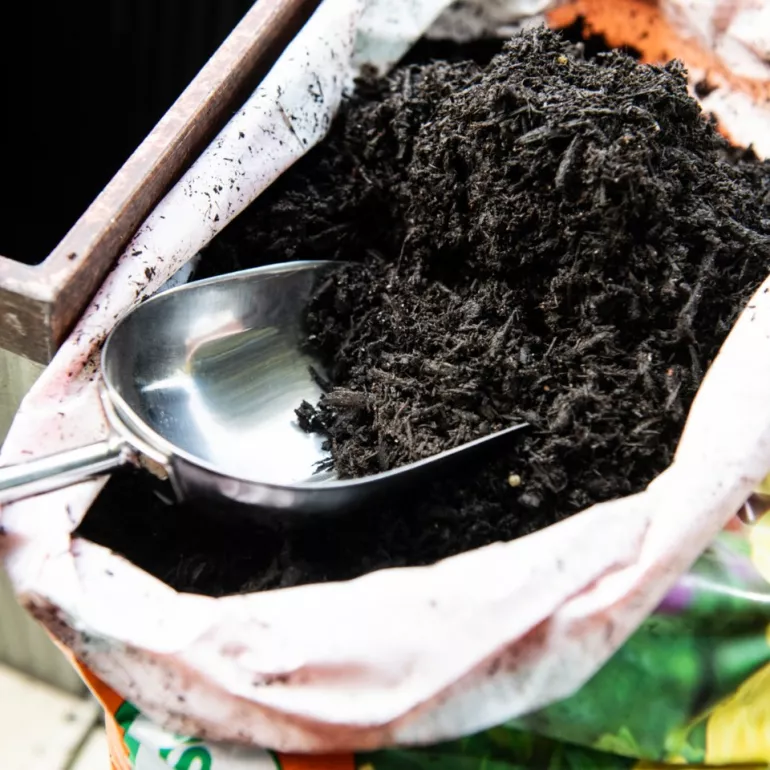
Step 3: Use potting mix, not garden soil

Never fill balcony pots with soil dug from the ground. It compacts, drains badly, and can introduce pests and diseases.

Use a good-quality potting mix made for containers. Cheap potting mix can cause problems, especially in Australian heat. A good mix drains well but still holds enough moisture for roots to grow evenly.

For beginners, it also helps to add:

Step 4: Pick easy plants first

The easiest way to succeed is to grow plants that already suit balcony life.

Best herbs for Australian balcony beginners

Herbs are usually the best first step because they are useful, compact, and rewarding.

Start with:

  • basil
  • parsley
  • mint
  • thyme
  • oregano
  • rosemary
  • chives
  • coriander, in cooler months

Best vegetables for beginners

Choose compact, fast, or productive plants.

Good options include:

  • cherry tomatoes
  • lettuce
  • rocket
  • spinach
  • silverbeet
  • spring onions
  • chillies
  • dwarf beans
  • radishes
  • strawberries

Best flowers for a balcony

Flowers bring colour and can attract pollinators.

Good beginner flowers include:

  • marigolds
  • nasturtiums
  • petunias
  • geraniums
  • alyssum
  • violas in cooler weather

Step 5: Match the plants to the balcony style

A good balcony garden is not just a random set of pots. It should have a clear purpose.

You might want:

A cooking balcony

Focus on herbs, chillies, tomatoes, spring onions, and leafy greens.

A relaxing green balcony

Use layered foliage, hanging plants, a small tree, and soft flowers.

A productive edible balcony

Grow herbs, compact vegetables, strawberries, beans, and salad greens.

A privacy balcony

Use taller plants, trellis screens, climbers, and upright shrubs.

For most beginners, a mix works best: a few herbs, a few vegetables, and one or two decorative plants.

Step 6: Watering is the biggest beginner challenge

Australian balconies dry out fast, especially in summer. Containers can go from perfect to bone dry in a day during hot spells.

Basic watering rules

  • water deeply, not just a quick splash
  • water the soil, not just the leaves
  • check pots daily in warm weather
  • expect to water more in summer and less in winter
  • bigger pots need less frequent watering than tiny pots

Signs of under-watering

  • drooping leaves
  • dry potting mix pulling away from edges
  • crispy leaf tips
  • flowers dropping

Signs of over-watering

  • yellowing leaves
  • soggy mix
  • fungus gnats
  • root rot smell

If you travel often or do not want to water daily, self-watering pots are worth considering.

Step 7: Feed your plants regularly

Pots run out of nutrients faster than garden beds. Even the best potting mix does not feed plants forever.

A simple beginner routine is:

Leafy greens and herbs do well with steady feeding. Fruiting plants need more support once they start producing.

Step 8: Use vertical space

Balconies are small, so think upwards.

You can use:

  • trellises
  • wall planters
  • plant shelves
  • hanging baskets
  • railing planters
  • tiered stands

Vertical gardening helps you fit more plants without losing floor space. It also makes a balcony feel fuller and more designed.

Step 9: Protect plants from harsh conditions

Balcony plants deal with more extremes than garden plants.

Wind protection

Use screens, taller pots near edges, or trellis panels to reduce wind exposure.

Heat protection

Use mulch, larger pots, and afternoon shade for sensitive plants.

Cold protection

In cooler cities, move tender plants closer to walls in winter or cover them on cold nights.

Step 10: Expect trial and error

Every balcony is different. Two balconies in the same suburb can behave differently depending on height, direction, and surrounding buildings.

That is normal. Balcony gardening is partly about observation.

Start small. Watch what thrives. Then build from there.

Balcony gardening in Australia’s capital cities

This is where local conditions matter most.

Sydney

Sydney’s climate is generally mild to warm, with humid summers and relatively mild winters. Balcony gardeners in Sydney often do well with herbs, leafy greens, tomatoes, chillies, basil, parsley, strawberries, and many ornamental flowers.

Main Sydney balcony challenges

  • summer heat on west-facing balconies
  • humidity
  • occasional strong wind, especially in exposed apartments

Good beginner plants for Sydney

  • basil
  • parsley
  • mint
  • rosemary
  • cherry tomatoes
  • chillies
  • lettuce in cooler months
  • strawberries
  • geraniums

Sydney tips

Use larger pots than you think you need. Summer heat and humidity can make watering tricky, and balconies can get very hot in the afternoon.

Melbourne

Melbourne is excellent for balcony gardening, but the weather changes quickly. You can get warm days, cool nights, strong winds, and sudden seasonal swings.

Main Melbourne balcony challenges

  • unpredictable weather
  • wind
  • cool winter conditions
  • hot reflected summer heat on some balconies

Good beginner plants for Melbourne

  • rosemary
  • thyme
  • parsley
  • basil in warmer months
  • lettuce
  • rocket
  • spinach
  • silverbeet
  • strawberries
  • cherry tomatoes in spring and summer

Melbourne tips

Wind protection is important. Melbourne balconies can dry out plants faster than expected. Herbs and leafy greens usually do very well.

Brisbane

Brisbane’s warm climate is ideal for a wide range of balcony plants, but humidity and summer heat can be intense.

Main Brisbane balcony challenges

  • strong summer heat
  • humidity
  • fast-growing pests
  • heavy rain periods

Good beginner plants for Brisbane

  • basil
  • mint
  • chillies
  • lemongrass
  • parsley
  • sweet potato in containers
  • snake beans
  • tropical ornamentals
  • leafy greens in cooler months

Brisbane tips

Give sensitive plants afternoon shade in peak summer. Good airflow matters because humidity can encourage fungal problems.

Perth

Perth balcony gardeners deal with strong sun, dry heat, and hot summers. Watering and heat management are key.

Main Perth balcony challenges

  • intense summer sun
  • dry conditions
  • hot winds
  • fast drying pots

Good beginner plants for Perth

  • rosemary
  • thyme
  • oregano
  • lavender
  • chillies
  • cherry tomatoes with enough water
  • spring greens in cooler months
  • succulents and Mediterranean-style plants

Perth tips

Terracotta looks beautiful but can dry out too fast in summer. Use bigger pots, mulch well, and choose heat-tolerant plants.

Adelaide

Adelaide shares some similarities with Perth, with hot dry summers and cool winters. Mediterranean herbs often thrive.

Main Adelaide balcony challenges

  • heat
  • dry air
  • hot afternoon sun
  • container drying

Good beginner plants for Adelaide

  • rosemary
  • thyme
  • sage
  • oregano
  • basil in summer with water
  • tomatoes
  • capsicum
  • lettuce in cooler seasons
  • lavender

Adelaide tips

A balcony that gets morning sun and some afternoon protection is ideal. Use grouped pots to reduce water stress.

Canberra

Canberra has hotter summers than some people expect, but winters are much colder than the coastal capitals. Seasonal planning matters more here.

Main Canberra balcony challenges

  • frost in winter
  • strong temperature swings
  • heat in summer
  • cold nights

Good beginner plants for Canberra

  • parsley
  • chives
  • thyme
  • rosemary
  • silverbeet
  • lettuce
  • peas in cool seasons
  • tomatoes in summer
  • pansies and violas in cooler weather

Canberra tips

Treat it as a seasonal balcony garden. Grow cool-season crops in autumn and spring, then switch to heat-loving plants in summer.

Hobart

Hobart is cooler and milder than mainland capitals in summer, which can be excellent for leafy greens and herbs. Heat-loving plants need the sunniest spots.

Main Hobart balcony challenges

  • cool temperatures
  • slower winter growth
  • less heat for tropical or fruiting plants

Good beginner plants for Hobart

  • parsley
  • coriander
  • thyme
  • chives
  • lettuce
  • spinach
  • silverbeet
  • peas
  • strawberries
  • cherry tomatoes in warm, sunny positions

Hobart tips

Use north-facing spots well. Black or darker pots can help warm the root zone, but make sure they do not dry out too much in summer.

Darwin

Darwin is the most different from the southern capitals. Heat, humidity, and the wet season change what works. A balcony garden can still thrive, but plant choice is very important.

Main Darwin balcony challenges

  • tropical heat
  • humidity
  • intense rain in wet season
  • fungal pressure
  • plants bolting or struggling in constant heat

Good beginner plants for Darwin

  • basil
  • chillies
  • lemongrass
  • tropical herbs
  • Asian greens in suitable periods
  • kangkong
  • snake beans
  • sweet potato
  • ornamental tropical foliage plants

Darwin tips

Shade management is important. A partly protected balcony may outperform a fully exposed one. Good drainage and airflow are essential.

Best beginner balcony garden setups by goal

1. The easiest edible starter setup

This is the best low-risk beginner combination:

  • 1 pot of basil
  • 1 pot of parsley
  • 1 pot of mint
  • 1 planter of lettuce or rocket
  • 1 pot of cherry tomato

This gives you an immediate mix of success and usefulness.

2. The low-maintenance setup

If you want something easy:

  • rosemary
  • thyme
  • oregano
  • lavender
  • one hardy flowering plant

This suits sunnier balconies and people who do not want to fuss.

3. The pretty and productive setup

A balanced option:

  • basil
  • parsley
  • cherry tomato
  • strawberries
  • nasturtiums
  • marigolds

This looks good and gives you things to harvest.

Common mistakes beginners make

Using tiny pots

Small pots dry out too fast and limit growth.

Ignoring sun direction

Not every balcony is suitable for tomatoes or chillies.

Overcrowding

Too many plants create poor airflow and make watering harder.

Forgetting wind

A breezy balcony can damage plants quickly.

Watering on a fixed schedule

Water according to conditions, not habit alone.

Starting with difficult plants

Begin with easy herbs and greens before trying more demanding crops.

A simple beginner shopping list

For a first balcony garden, you do not need much.

Start with:

  • 4 to 6 medium pots or 2 larger planters
  • quality potting mix
  • watering can
  • liquid fertiliser
  • saucers if needed
  • basil, parsley, mint, lettuce, and a tomato seedling
  • one flowering plant for colour

That is enough to begin learning what your balcony can do.

Final thoughts

Balcony gardening in Australia is one of the best ways to start gardening because it is flexible, affordable, and rewarding. You do not need a backyard, and you do not need to get everything right at the start. You only need to understand your balcony, choose beginner-friendly plants, and build gradually.

The most important lesson is this: grow for your conditions, not for someone else’s Instagram photo. A brilliant balcony garden in Perth will not be the same as one in Hobart or Darwin. Once you work with your local climate, sunlight, and space, everything gets easier.

Start with a few herbs, one edible planter, and one decorative pot. Watch what happens. Learn from it. Then add more.

That is how most great balcony gardens begin.