
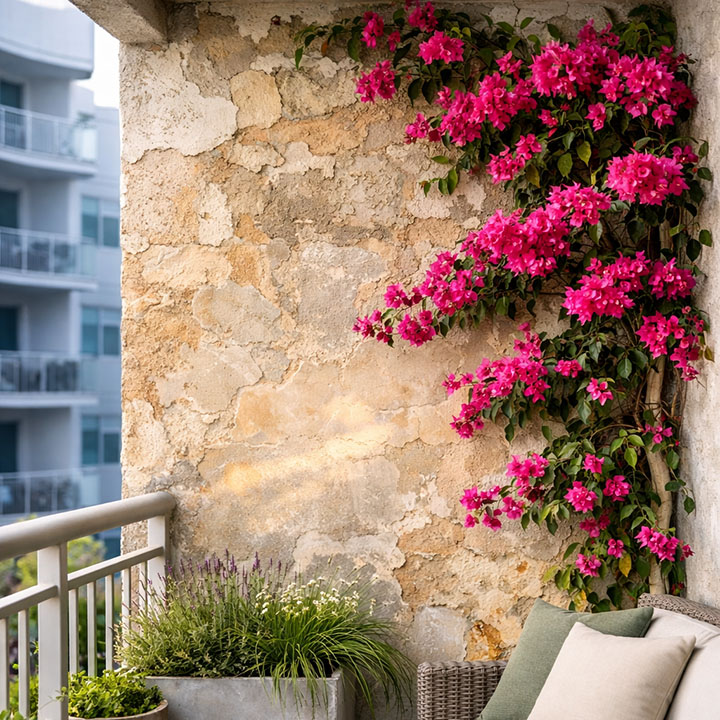
A small balcony can become a beautiful, useful garden even when space is tight. The secret is to think vertically, choose plants carefully, and make every pot earn its place. A compact balcony does not need to feel crowded to feel lush. With the right layout, a few well-chosen planters, and plants suited to your climate, even a very small Australian balcony can become a relaxing outdoor room.
Australian balcony gardens need to work with real conditions. Brisbane balconies often deal with humidity and strong summer growth. Sydney balconies can be windy or coastal. Melbourne balconies may swing between hot sun, cool changes, and winter chills. Adelaide and Perth balconies often need plants that can cope with dry heat. Hobart balconies usually need a cooler-climate approach. That is why the best small balcony ideas are not just about style. They are about matching the design to your city, weather, light, and how much time you want to spend caring for it.
This guide covers practical small balcony garden ideas for Australian homes, including layout tips, plant suggestions, styling ideas, edible options, privacy planting, and a FAQ section at the end.
Why small balconies need a different approach
A balcony is not the same as a backyard. Containers dry out faster, wind is often stronger, and light can be harsher because of reflected heat from walls, glass, and paving. There is also less room for error. A bulky chair, oversized planter, or the wrong plant can make the whole space feel cramped.
The best small balcony gardens are usually simple. They have a clear structure, a small number of good plants, and a layout that still leaves room to walk, sit, or enjoy a coffee. When planning a tiny balcony, it helps to think in layers rather than trying to fill every corner at once.
Start by understanding your balcony
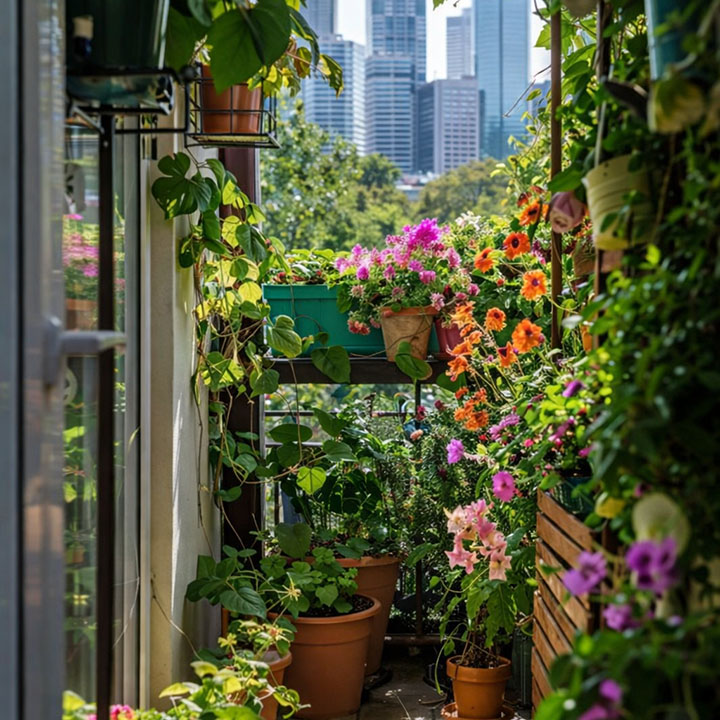
Before buying pots or plants, spend a few days noticing how your balcony behaves. How much sun does it get? Is it exposed to wind? Does rain reach the pots or is it covered? Does the wall hold heat in the afternoon? These details matter more than people expect.
- Full sun balcony: usually gets six or more hours of direct sun
- Part sun balcony: gets a few hours of direct light and bright light for the rest of the day
- Shade balcony: gets very little direct sun, but may still have bright ambient light
- Windy balcony: dries out faster and can damage soft leaves
- Covered balcony: often needs more regular watering because rainfall does not reach the pots
Once you understand these conditions, it becomes much easier to choose a layout and plants that will actually last.
Idea 1: Use fewer, larger pots
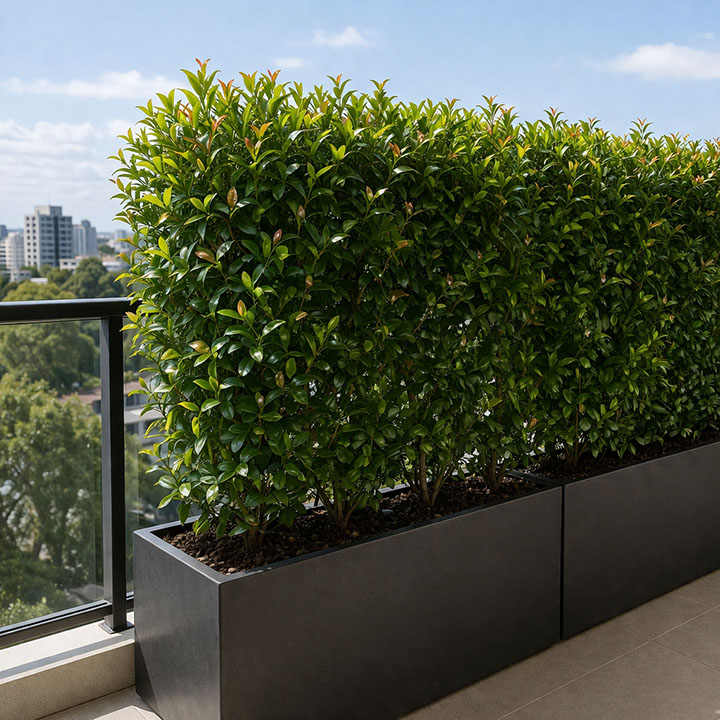
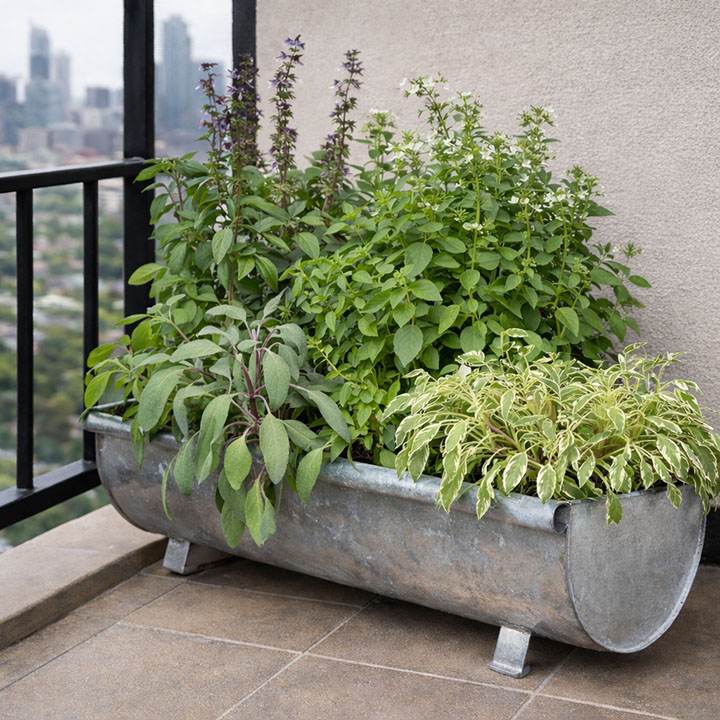
One of the best small balcony garden ideas is to stop thinking in terms of lots of tiny pots. Small pots dry out quickly, become cluttered fast, and often make the balcony feel messy. A few larger planters usually look better and are much easier to manage.
Large planters also give plant roots more room, which means healthier growth and less frequent watering. On a small balcony, two long rectangular planters or two to three substantial pots often look better than ten small containers scattered everywhere.
If you want the balcony to feel stylish and calm, choose one main planter style and repeat it. Matching planters instantly make a small space feel more deliberate.
Idea 2: Garden upwards, not just across
Vertical gardening is one of the most effective ways to make the most of a tiny balcony. Walls, railings, corners, and hanging points all offer opportunities to grow more without losing precious floor space.
This can include slim trellises, railing planters, hanging baskets, narrow shelving, wall-mounted pots, or a tall stand that holds several containers. On a very small balcony, the floor area should stay as open as possible. That makes the whole space feel larger and easier to use.
Vertical planting is especially useful for privacy. A trellis with a climber or a row of taller pots against the outer edge can soften views, reduce exposure, and make the balcony feel more enclosed and comfortable.
Idea 3: Create zones, even on a tiny balcony
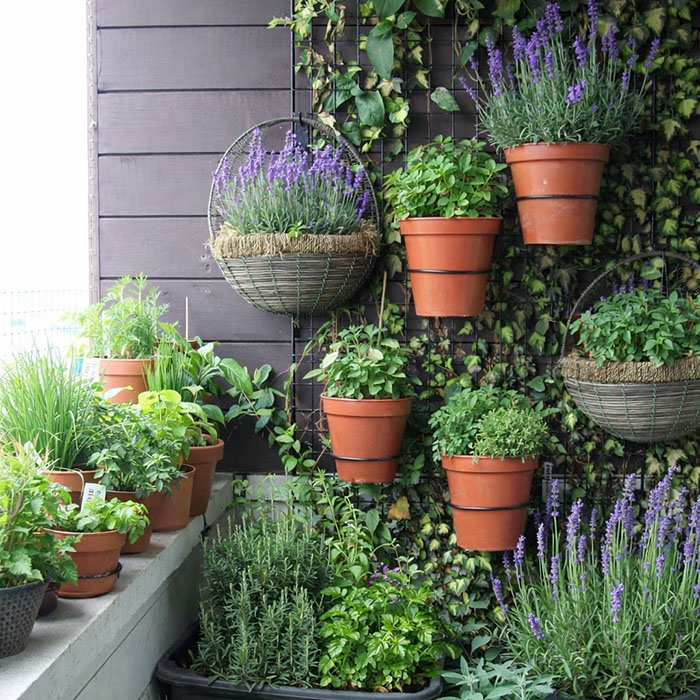
Even a very small balcony feels better when it has a clear purpose. Instead of filling it randomly with pots, divide it mentally into simple zones. This helps the space feel organised rather than crowded.
- Relaxing zone: a chair and one or two feature plants
- Edible zone: herbs, salad greens, or chillies near the door
- Privacy zone: screening plants or trellis planting along the edge
- Colour zone: flowering plants where they are easy to see from inside
You may only have space for two of these zones, and that is fine. The main point is to give the balcony structure. A small space always feels better when everything has a job.
Idea 4: Choose plants with clear roles
A beautiful small balcony usually has a mix of plant shapes rather than one type repeated endlessly. The easiest way to do this is to think in roles.
- Structural plants: taller plants that give height and shape
- Filler plants: medium plants that make pots look full
- Trailing plants: plants that spill over edges and soften hard lines
- Flowering plants: plants that add seasonal colour
- Edible plants: herbs, greens, or compact fruiting plants
For example, a balcony might use a dwarf olive or lilly pilly as the structural plant, rosemary or westringia as the filler, dichondra or native violet as the trailer, and petunias or alyssum for colour. This kind of layering looks balanced without needing dozens of different plants.
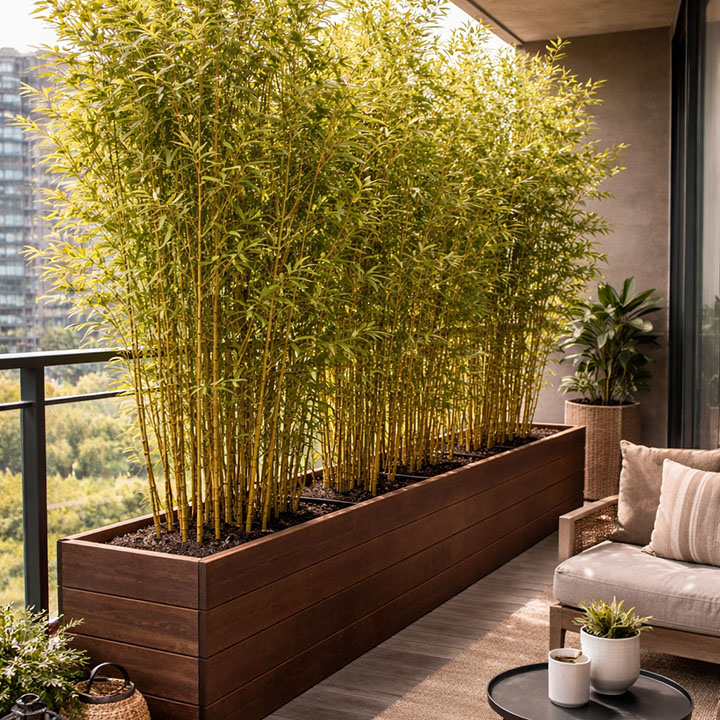
Idea 5: Add privacy with planting
Privacy is one of the biggest issues on apartment balconies. Plants can help solve that without making the space feel heavy. Instead of bulky screens, use narrow planters with upright shrubs, ornamental grasses, or climbers on a slim support.
Good privacy options for Australian balconies may include compact lilly pilly varieties, westringia, bamboo in large pots, star jasmine on a trellis, and in warmer areas, murraya. On windy balconies, softer layered planting often works better than dense hedge-style planting.
The goal is not always full privacy. Even partial screening can make a balcony feel much more comfortable and secluded.
Idea 6: Make room for herbs and edibles
One of the most rewarding small balcony garden ideas is to include edible plants. Even if most of the balcony is ornamental, a narrow herb planter or a few edible pots can make the garden feel more useful and enjoyable.
Herbs are usually the best place to start. They suit containers well, many stay compact, and they are genuinely useful in daily cooking. Basil, parsley, chives, mint in its own pot, thyme, oregano, coriander in cool seasons, and Vietnamese mint in warmer climates can all work well.
If you have more sun and room, you can also grow chillies, lettuce, rocket, spinach, spring onions, and in larger containers, dwarf citrus. On very small balconies, an edible zone near the door is often the easiest setup because it is convenient to water and harvest.
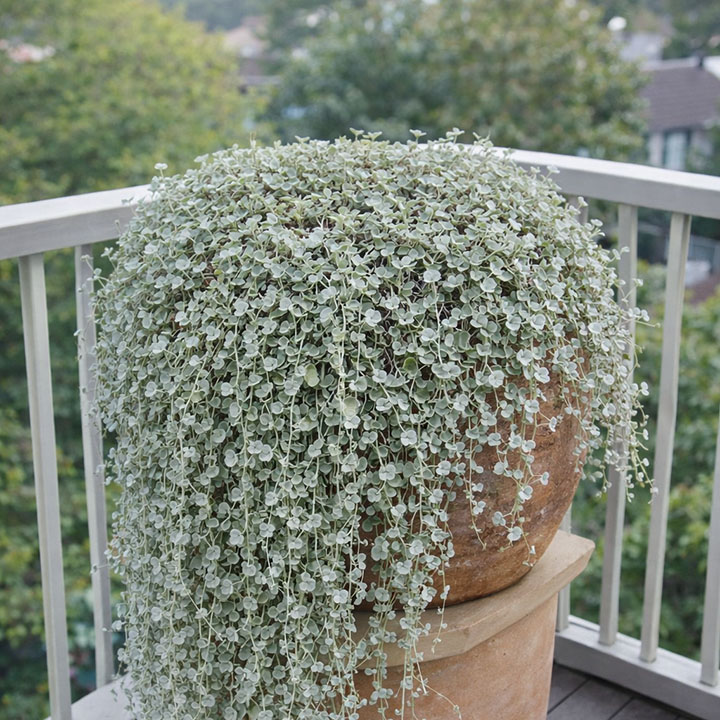
Idea 7: Use trailing plants to soften the balcony
Balconies often have hard edges. Glass, metal, concrete, and timber can feel stark without greenery softening the lines. Trailing plants are perfect for this. They spill over the edges of pots and make the space feel fuller and more relaxed.
Great options may include dichondra, bacopa, native violet, alyssum, scaevola, creeping thyme, and pigface for sunny conditions. These are especially useful in railing planters, hanging baskets, or the front edge of rectangular troughs.
Trailing plants also help make a small balcony feel more layered, which gives it that lush, designed look without needing extra floor space.
Idea 8: Keep furniture compact and useful
Furniture can easily overwhelm a tiny balcony. The best choices are slim, foldable, or visually light. A simple chair, a narrow bench, or a small café table often works far better than bulky outdoor lounge furniture.
Try to choose furniture that still leaves a clear walking path. If the balcony is narrow, keep furniture to one side or use a single statement chair with plants around it. The more open floor you can see, the larger the balcony will feel.
It is usually better to have one comfortable seat and good planting than too much furniture and no space for greenery.
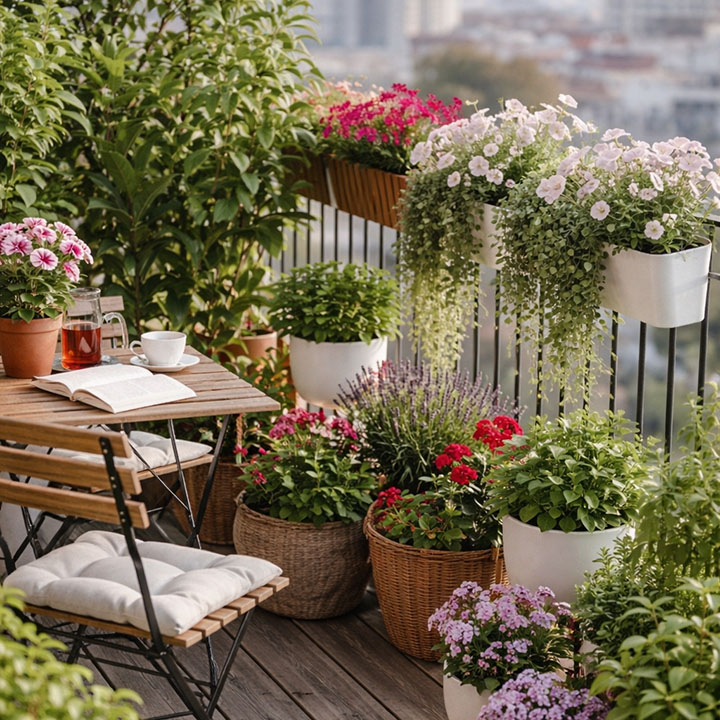
Idea 9: Match your planting to your Australian city
Australian balcony gardening is never one-size-fits-all. The best plant choices for a small balcony in Perth will not always be the same as the best choices in Melbourne or Hobart. Matching the planting style to your city will make the garden easier to maintain and far more successful.
Sydney
Sydney balconies often do well with a mix of hardy structural plants, edible herbs, and flowering spillers. Many balconies experience bright sun, exposure, and some coastal influence depending on location. Westringia, pigface, rosemary, star jasmine, lomandra, parsley, basil, and petunias can all be useful depending on the light.
Melbourne
Melbourne balconies need flexibility. Conditions can shift quickly between warm sunshine, cool changes, and winter cold. Hardy herbs, dwarf shrubs, ornamental grasses, spring and autumn colour, and strong evergreen plants usually work well. A Melbourne balcony often benefits from a mixed seasonal approach rather than relying on very heat-loving plants alone.
Brisbane
Brisbane balconies can look lush quickly, but the combination of heat and humidity means airflow is important. Tropical-style foliage, warm-season herbs, climbing plants, and flowering plants can all thrive, but dense planting should still allow room for air movement. Afternoon shade is often helpful on exposed balconies.
Perth
Perth balconies need to be designed with dry heat in mind. Larger pots, mulch, heat-tolerant plants, and a practical watering setup are essential. Rosemary, thyme, pigface, succulents, westringia, lavender, and hardy natives are often very good choices. Shade for sensitive plants can also make a big difference in summer.
Adelaide
Adelaide balconies also benefit from drought-aware planting. Mediterranean herbs, lavender, olives in large pots, compact citrus, and tough flowering plants can all suit the dry conditions if they are watered and fed well. A restrained planting palette often looks especially good in Adelaide-style heat and light.
Hobart
Hobart balconies are often better suited to temperate and cool-climate plants. Ferns, herbs, camellias in bigger pots, violas, hellebores, and compact shrubs can all work beautifully. Growth may slow more in winter, but many plants enjoy the milder summer conditions.
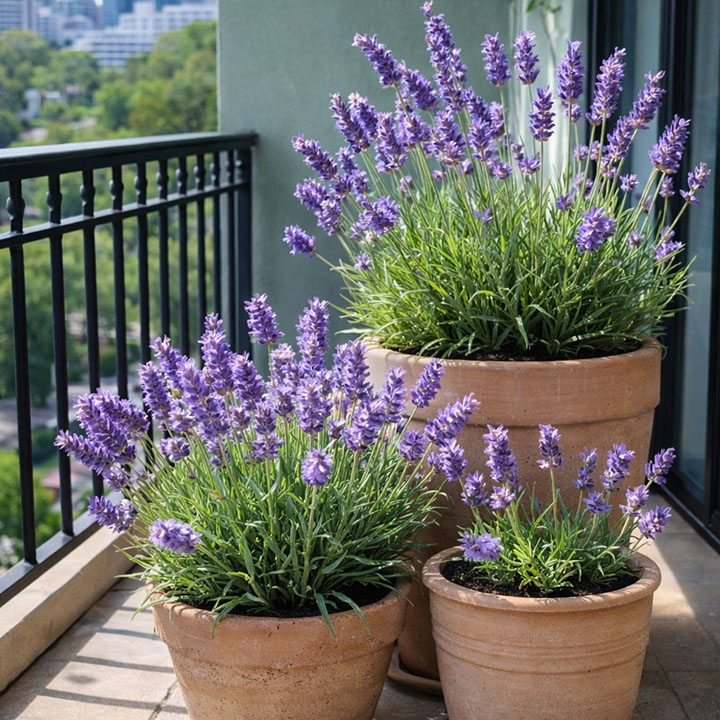
Idea 10: Use colour carefully
Colour can make a small balcony feel joyful, but too many colours at once can also make it feel chaotic. One simple way to keep things looking stylish is to choose a limited colour palette.
For example, you might use green foliage with white flowers and charcoal planters. Or terracotta pots with herbs and soft purple flowers. Or a coastal look with silvery foliage, blue accents, and trailing white flowers. Repetition creates calm, and calm is especially important in a small space.
Idea 11: Plan for watering from the start
On a small balcony, watering can make or break the garden. Pots dry out faster than garden beds, and balconies are often hotter and windier than expected. If watering feels difficult, the garden will quickly become hard to maintain.
Choose good-quality potting mix, use containers large enough to hold moisture, and group plants with similar water needs together. Self-watering pots can also be very useful on balconies, especially for herbs and summer vegetables. If the balcony is covered, remember that even rainy weather may not water the pots at all.
Mulch can also help. Even a light mulch layer can reduce drying and keep the potting mix more stable in heat.
Idea 12: Add one feature plant
One strong feature plant can make a small balcony feel far more polished. This might be a dwarf olive, a sculptural succulent, a tall fern, a compact citrus, or a well-shaped shrub in a beautiful pot. When the balcony has one clear focal point, the whole design feels more intentional.
This works especially well near the seating area or at the far end of the balcony where it draws the eye outward. A feature plant adds depth and makes the space feel more like a real room.
Idea 13: Keep the design realistic
It is easy to be inspired by photos of overflowing balconies, but the best balcony garden is one that suits your life. If you travel often, lean toward tough low-maintenance plants. If you cook often, put herbs first. If privacy matters most, build the design around screening plants. If you mainly want a relaxing place to sit, keep the planting simple and let one corner be lush rather than trying to cover every surface.
A realistic design will always be more enjoyable than an over-planted one that becomes stressful to maintain.
Easy small balcony garden combinations
Here are a few easy combinations that work well on small Australian balconies.
Sunny balcony
- Two rectangular planters with rosemary, thyme, and trailing alyssum
- One large pot with a dwarf olive or lavender
- One railing planter with basil or parsley
Part-shade balcony
- One feature pot with a fern or camellia
- Two medium pots with herbs and leafy greens
- One trailing planter with native violet or dichondra
Privacy-focused balcony
- Long planter with screening shrubs or bamboo
- Trellis with star jasmine
- Underplanting with trailing flowers or herbs
Low-maintenance balcony
- Succulents in a grouped arrangement
- One structural shrub in a large pot
- A few tough trailing plants in matching containers
Best plant types for a small balcony
- For sun: rosemary, thyme, lavender, pigface, succulents, scaevola, westringia
- For part sun: parsley, oregano, star jasmine, native violet, alyssum, compact citrus
- For shade: ferns, peace lilies, mint, begonias, camellias in larger pots
- For privacy: lilly pilly, bamboo, jasmine, compact shrubs
- For trailing effect: dichondra, bacopa, alyssum, creeping thyme, native violet
- For edibles: basil, chillies, lettuce, rocket, chives, parsley, dwarf citrus
Final thoughts
A small balcony garden does not need a huge budget or a lot of room to feel special. In many cases, the most successful balconies are the simplest ones. A few larger planters, the right plants for your climate, a clear layout, and a comfortable place to sit can completely change how the space feels.
Whether you live in Sydney, Melbourne, Brisbane, Perth, Adelaide, Hobart, or another Australian city, the best balcony garden ideas are the ones that match your light, weather, and lifestyle. Keep it practical, keep it beautiful, and let the balcony become a small outdoor space you genuinely use and enjoy.
FAQ
What are the best plants for a small balcony in Australia?
The best plants depend on your light, wind, and city, but strong options often include rosemary, thyme, parsley, native violet, pigface, westringia, ferns, jasmine, chillies, and compact flowering plants. Choose plants that suit your actual conditions rather than just the look you want. How can I make a small balcony look lush?
Use fewer larger pots, layer plant heights, include one or two trailing plants, repeat planter styles, and add at least one structural feature plant. A balcony usually looks lusher when it is organised rather than overfilled. Can I grow vegetables on a small balcony?
Yes. Herbs, lettuce, rocket, spinach, chillies, and dwarf citrus are all possible on many Australian balconies. The easiest edible setup is usually a small herb and leafy green section rather than trying to grow large vegetables. What is the best layout for a narrow balcony?
A narrow balcony usually works best with planters along one edge, vertical planting against a wall, and a compact chair or bench that does not block movement. Keeping the centre as open as possible helps the balcony feel larger. Are hanging baskets a good idea for a small balcony?
Yes, but use them sparingly. One or two hanging baskets can add greenery without taking up floor space, but too many can make the balcony feel crowded and can be harder to water in hot weather. How do I protect balcony plants from hot Australian summers?
Use larger pots, good potting mix, mulch, morning watering when needed, and temporary shade during extreme heat. Grouping pots together can also help reduce drying. Choose plants that are naturally suited to sunny, exposed conditions if your balcony gets harsh afternoon sun.

Comments are closed.