
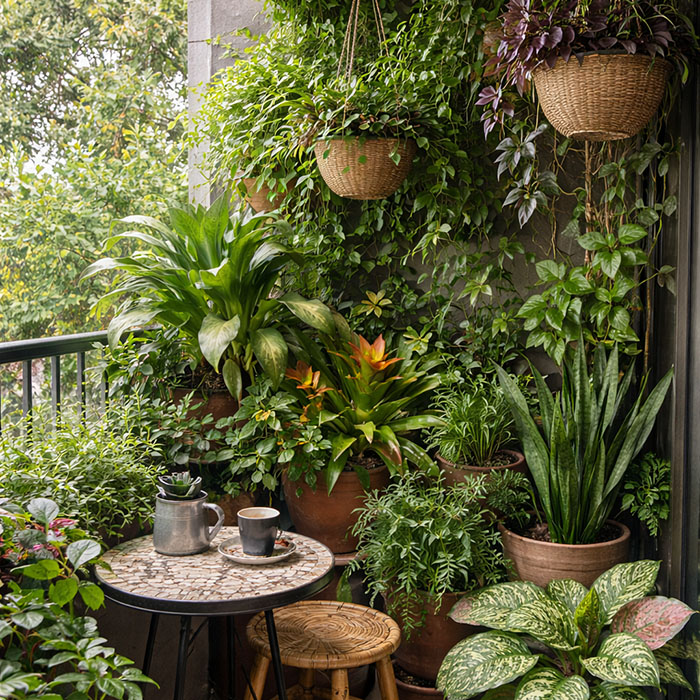
A vertical balcony garden is one of the smartest ways to turn a small outdoor space into something lush, useful, and beautiful. When floor space is limited, going upward makes far more sense than trying to cram in lots of pots at ground level. Walls, railings, shelves, trellises, hanging baskets, and slim plant stands can all help you grow more plants while keeping the balcony open and usable.
Vertical gardening is especially useful on Australian balconies. Apartment balconies are often narrow, exposed to wind, and subject to strong sun, reflected heat, or seasonal weather swings depending on the city. A balcony in Brisbane may need plants that cope with warmth and humidity. A balcony in Melbourne may need a more flexible seasonal mix. Sydney balconies can be windy or coastal, Perth and Adelaide balconies often need plants that handle dry summer heat, and Hobart balconies usually suit a cooler-climate approach. A good vertical balcony garden is not just about fitting more plants in. It is about designing for your light, weather, and lifestyle.
This guide covers practical vertical balcony garden ideas for Australian homes, including layouts, planting styles, privacy solutions, edible growing, city-specific advice, and a FAQ section at the end.
Why vertical gardening works so well on balconies
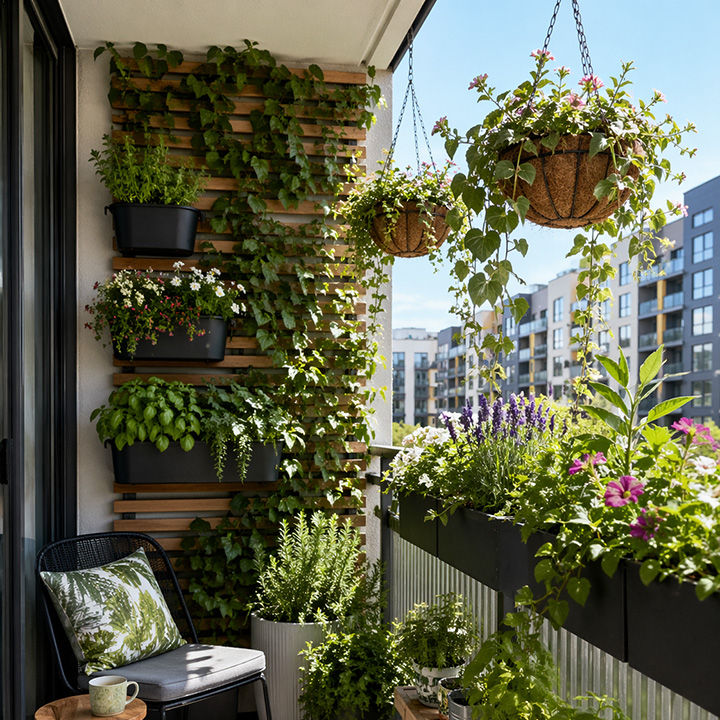
Most balconies do not have much floor space, but they often have unused vertical space. Walls, corners, posts, and railings offer room for planting without making the balcony feel crowded. This is what makes vertical gardening so effective. Instead of spreading outward, you build height and layers.
Vertical gardening can also improve the feel of a balcony in other ways. It can soften blank walls, create privacy, help filter views, make a balcony feel greener from indoors, and create the impression of a larger garden without actually taking up much more space.
On a practical level, vertical planting can also make herbs easier to reach, put flowers more clearly at eye level, and create a more styled, designed look. A balcony with a trellis, layered pots, and trailing plants often feels much more intentional than one with random containers scattered on the floor.
Start by assessing the balcony properly
Before building a vertical balcony garden, it is important to understand how the balcony behaves. A sunny west-facing balcony needs a very different setup from a shaded south-facing one. Strong wind, coastal exposure, or a covered ceiling can all affect what works.
- Full sun balcony: best for herbs, succulents, many flowering plants, and hardy heat-tolerant shrubs
- Part sun balcony: suits a wide mix of edibles, climbers, and ornamental plants
- Shade or bright shade balcony: better for ferns, foliage plants, and soft climbers
- Windy balcony: needs sturdy supports, heavier pots, and plants with tougher foliage
- Covered balcony: may limit rainfall and reduce natural watering, so irrigation matters more
Vertical gardens are more exposed than ground-level planting, so watering, wind protection, and support strength all matter. The more exposed the balcony, the more important it is to keep the structure secure and the plant palette realistic.
Idea 1: Use a trellis to create a living wall effect
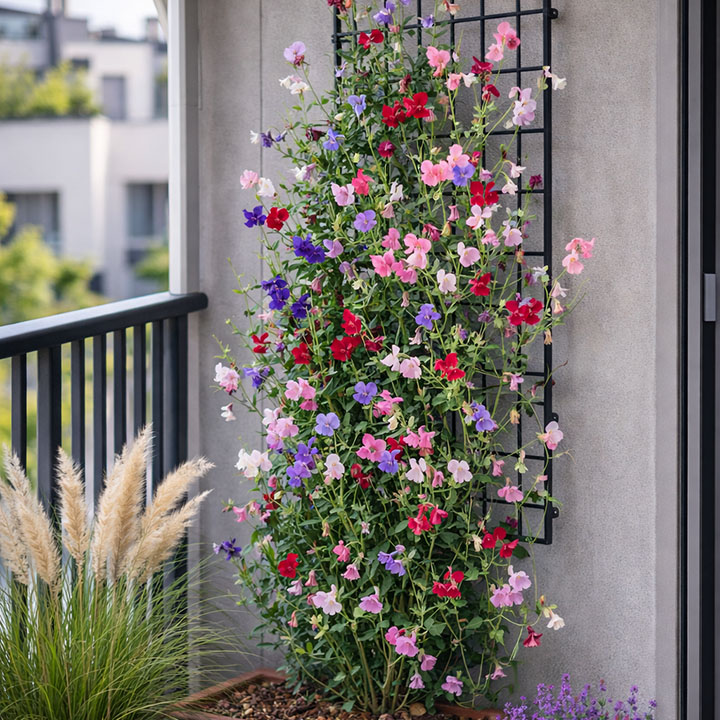
One of the easiest and most attractive vertical balcony garden ideas is a trellis. A slim trellis against a wall or attached to a planter instantly adds height and makes the balcony feel greener without taking up much room. It also gives climbers and trained plants a proper framework.
Trellises are especially useful for privacy. If your balcony faces neighbours, a trellis with the right climber can create a filtered green screen that feels lighter and more attractive than a solid panel. It also works well for softening concrete or blank balcony walls.
Good climbers for Australian balconies may include star jasmine, hardenbergia, some compact clematis varieties in cooler climates, mandevilla in warmer areas, and climbing annuals where suitable. Choose the plant according to your climate and sun exposure. A plant that thrives in Brisbane may not behave the same way in Hobart or Melbourne.
Idea 2: Attach planters to railings
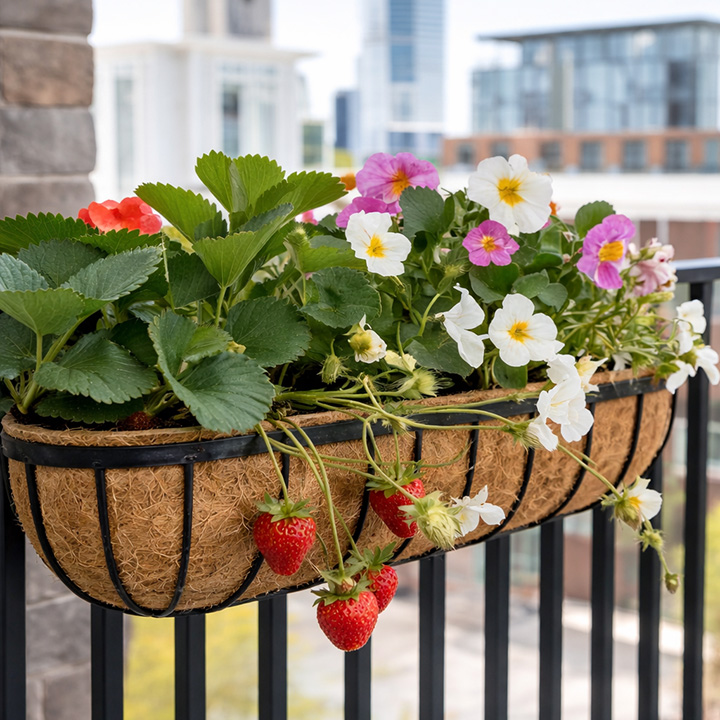
Railing planters are one of the best space-saving tools for a vertical balcony garden. They lift planting off the floor and make use of the outer edge of the balcony, which is often underused. They are especially good for herbs, compact flowers, trailing plants, and small edible crops.
Because railing planters sit at eye level or just below, they also make the balcony feel greener from both inside and outside. A row of railing planters with spillers can completely change the character of a plain balcony.
In Australia, railing planters need extra thought in hot or windy conditions. Small containers dry out quickly, especially in Perth, Adelaide, western Sydney, or exposed high-rise balconies. Choose quality potting mix, avoid very tiny planters, and use plants that suit quick-draining conditions unless you are prepared to water often.
Idea 3: Layer pots on shelves or narrow stands
Shelves and tiered plant stands are a simple way to create vertical interest without fixing anything permanently to the building. They let you stack pots in layers, which makes a balcony feel fuller while still keeping the floor mostly clear.
This works especially well for herbs, smaller foliage plants, succulents, and flowering pots. Lower shelves can hold sturdier pots, while upper shelves are useful for light containers or trailing plants that can spill downward.
A narrow ladder shelf against a wall can be enough to turn a plain balcony corner into a garden feature. It is also a good option for renters because it does not require drilling into walls or railings. Just make sure the shelf is stable and suited to outdoor use.
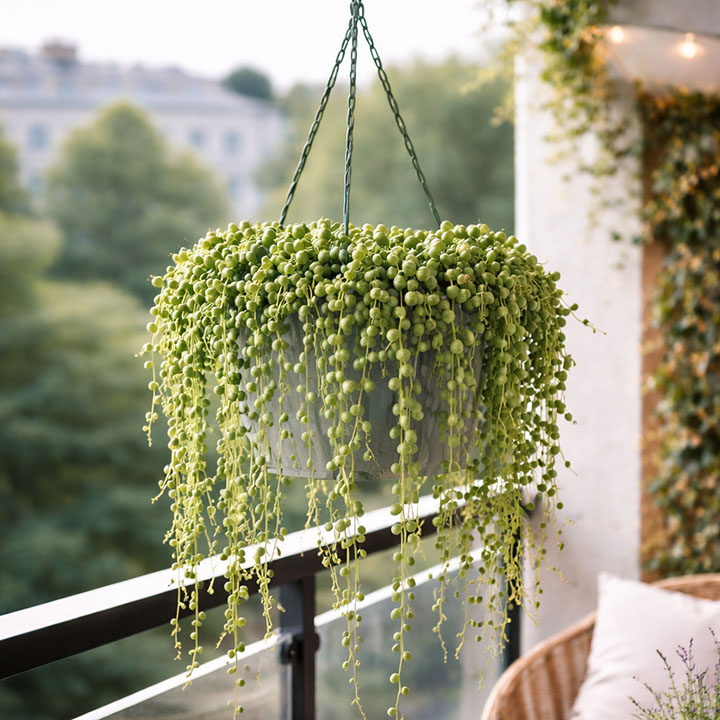
Idea 4: Use hanging baskets for softness and height
Hanging baskets are another classic vertical balcony garden idea. They are ideal for adding greenery at head height or above, which helps draw the eye upward and make the whole balcony feel more layered.
They work best when used sparingly. Too many baskets can make a small balcony feel cluttered and harder to move through. One or two well-placed baskets are usually enough to add softness and visual interest.
Good basket plants can include bacopa, lobelia, scaevola, alyssum, ivy geranium, dichondra, and native violet depending on the conditions. In hot Australian weather, baskets dry out much faster than regular pots, so they are best used with plants that suit your watering routine.
Idea 5: Build a vertical herb garden near the door
A vertical herb garden is one of the most useful balcony ideas because it combines beauty and practicality. Herbs are often compact, frequently used, and suited to containers. Growing them vertically keeps them easy to access while saving floor space for seating or larger feature pots.
You can grow herbs in stacked planters, wall pockets, railing boxes, or on a tiered stand. Position them near the balcony door if possible so they are easy to reach from the kitchen. This makes the balcony feel like a working part of the home rather than just a decorative space.
Great herbs for Australian balconies often include basil, parsley, thyme, chives, oregano, mint in its own pot, Vietnamese mint, coriander in cooler months, and rosemary in sunnier conditions. Match the herb choices to your sun and city. Basil loves warmth, while parsley and mint are often easier in part sun.
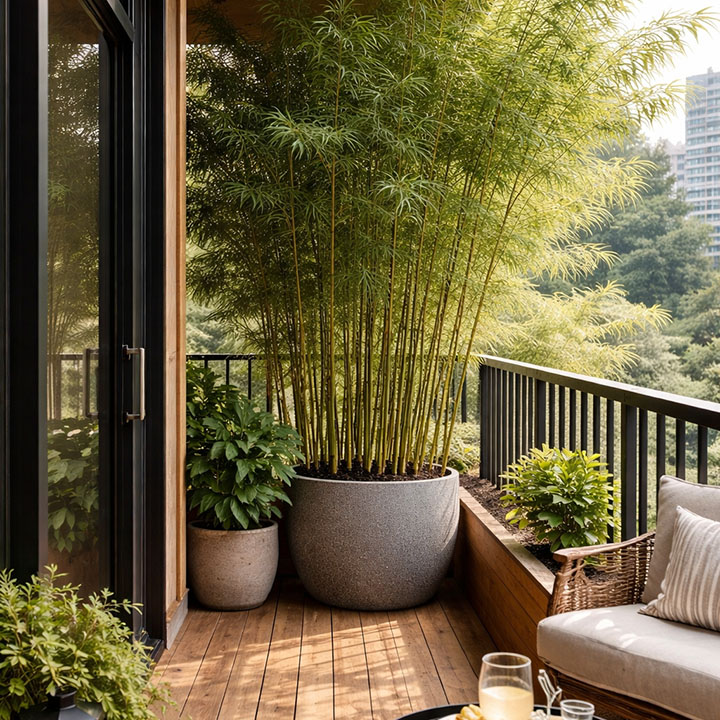
Idea 6: Create a privacy screen with vertical planting
Many balconies need privacy as much as they need greenery. Vertical planting can do both at once. A planter with a trellis, or a row of taller pots along the edge, can help screen nearby apartments or neighbouring balconies without adding heavy built structures.
This is especially useful in apartments where direct views from nearby buildings make the balcony feel exposed. Climbers, upright shrubs, and layered foliage can all help create privacy while keeping the look lighter and more natural than a solid screen.
Star jasmine, hardenbergia, compact bamboo in suitable pots, lilly pilly in large containers, and vertical arrangements of narrow shrubs can all play a role depending on the climate. The best privacy planting is usually a mix of height and softness rather than one dense wall of foliage.
Idea 7: Soften walls with mounted pockets or panels
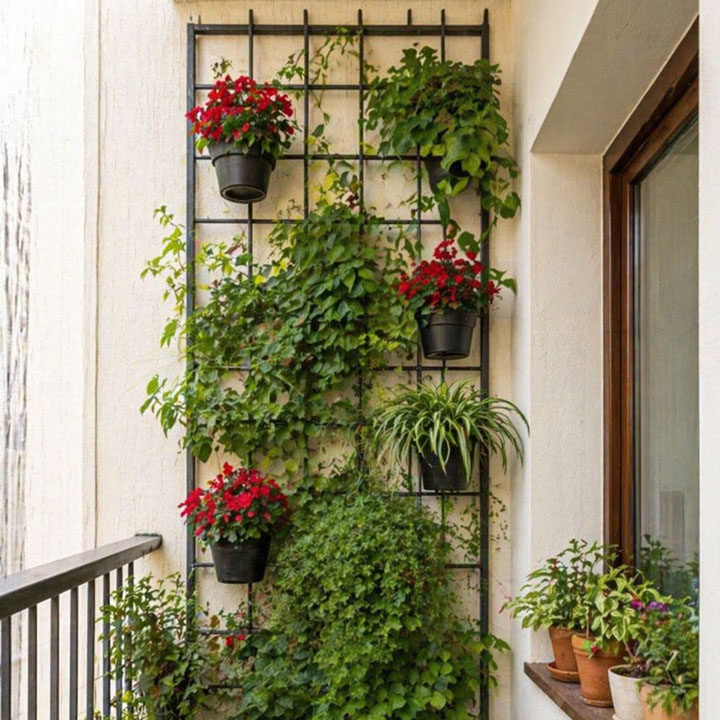
Wall-mounted planting pockets or modular vertical panels can create a true living wall effect on a balcony. These systems are best for small plants, herbs, foliage species, and shallow-rooted flowers. They can be very effective on blank walls where you want greenery without using floor space.
However, they need careful planning. Small planting pockets dry out quickly, and exposed walls can become very hot in Australian conditions. If you use this style, keep the plant selection tough and the irrigation simple. In many cases, a small section of mounted pockets works better than trying to cover an entire wall.
This style is best for gardeners who enjoy maintaining their setup regularly. It looks stunning when done well, but it is more demanding than a few larger pots and a trellis.
Idea 8: Mix vertical planting with one or two floor planters
The best vertical balcony gardens do not rely on vertical elements alone. They usually combine height with a small number of anchoring floor pots. This creates a more balanced design and stops the garden from feeling too thin or top-heavy.
For example, you might have a trellis with a climber, a few railing planters, and one large floor pot with a feature shrub or small tree. The feature pot gives weight and structure, while the vertical elements add greenery and softness above.
This mixed approach usually looks more designed and is also easier to manage through changing seasons.
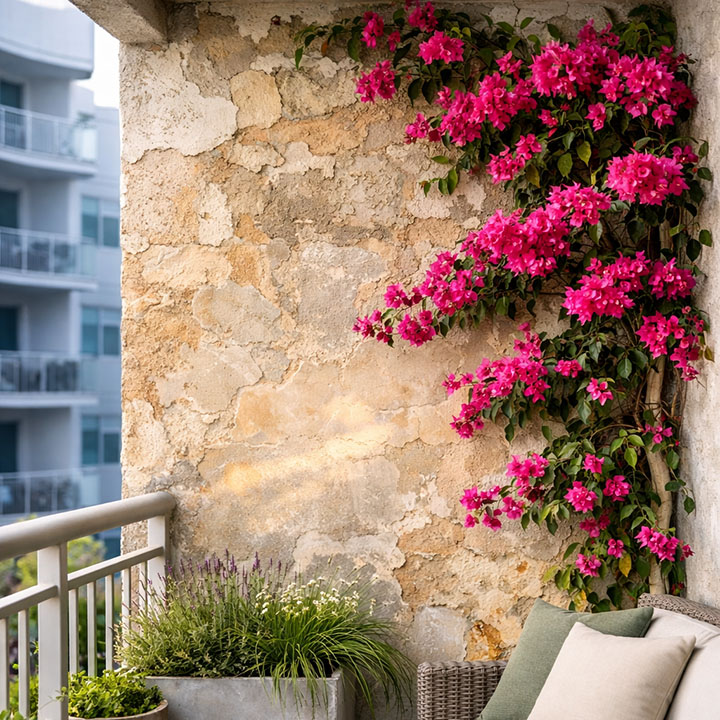
Idea 9: Use trailing plants to connect the layers
One of the keys to making a vertical garden look lush is using trailing plants. They connect the upper and lower levels of the planting and make the whole arrangement feel softer and more natural. Without spillers, vertical gardens can sometimes look too rigid.
Trailing plants are especially useful in railing boxes, shelf edges, hanging baskets, and the fronts of vertical planters. They help blur hard lines and make even a simple setup feel richer.
Useful trailing plants for Australian balconies can include dichondra, bacopa, alyssum, native violet, scaevola, ivy geranium, creeping thyme, and pigface in hot sunny locations.
Idea 10: Keep the structure neat and repeated
Vertical balcony gardens look best when there is some consistency in the structure. Repeating planter colours, using one type of shelf or trellis, and keeping the palette restrained helps the whole space feel calm and intentional.
This matters even more on a small balcony because clutter shows quickly. If every pot is different and every plant form is fighting for attention, the garden can feel messy rather than relaxing. A limited palette of materials and plant shapes often looks far more stylish.
For example, charcoal troughs with green foliage and white flowers can feel crisp and modern. Terracotta pots with herbs and soft flowering spillers can feel warm and Mediterranean. White pots with lush foliage can feel bright and tropical.
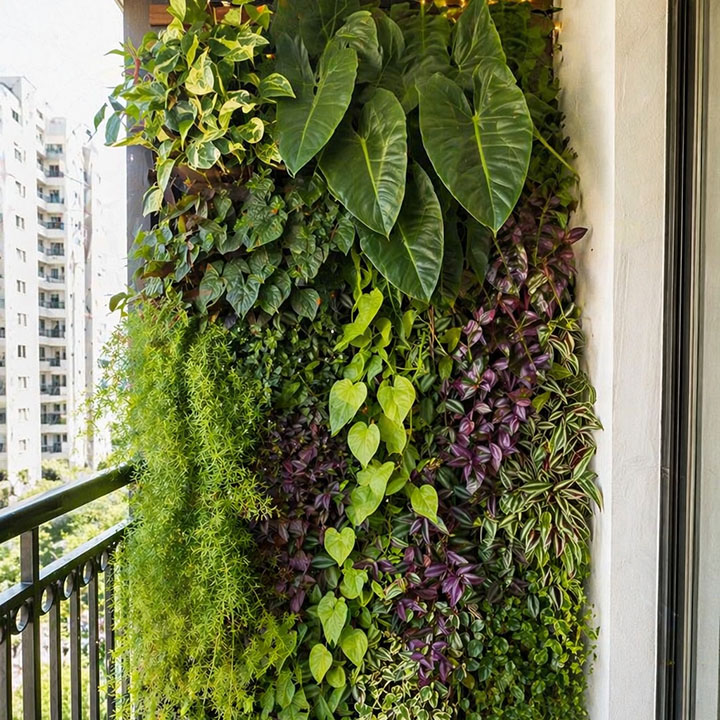
Idea 11: Match the vertical garden to your Australian city
Climate matters when designing a vertical balcony garden. Once plants are lifted up onto walls, railings, and baskets, they are often more exposed to drying winds and heat than ground-level garden beds. That is why city-specific thinking is so important in Australia.
Sydney
Sydney vertical balcony gardens often do well with a mix of hardy climbers, railing planters, and sun-tolerant herbs. Many Sydney balconies have strong light and can be windy, especially in higher buildings or coastal locations. Westringia, rosemary, star jasmine, pigface, parsley, and trailing flowers can all be useful depending on aspect and exposure.
Melbourne
Melbourne balconies benefit from flexible vertical gardens that can handle shifting seasons and sudden weather changes. Trellises with hardy climbers, movable shelf displays, evergreen structure, and seasonal colour often work well. A Melbourne setup may need to look good through cool weather as well as summer growth.
Brisbane
Brisbane suits lush vertical planting, but airflow is important because of the humidity. Climbers, hanging baskets, warm-season herbs, and tropical-looking foliage can all work well. Avoid overpacking the balcony so tightly that air cannot move around the plants. On exposed balconies, strong summer sun may still require some protection.
Perth
Perth vertical gardens should be designed for dry heat and summer stress. Choose larger containers where possible, keep the planting pockets limited, and focus on drought-tolerant herbs, succulents, rosemary, lavender, pigface, and tough flowering plants. Heat-reflecting walls can be particularly harsh here, so irrigation planning matters.
Adelaide
Adelaide also benefits from a heat-aware approach. Mediterranean herbs, compact shrubs, climbers suited to sun, and simple repeated planters often work well. Vertical gardens that rely on very small pockets can struggle in hot spells, so using larger containers and a restrained layout is usually the better long-term option.
Hobart
Hobart balconies often suit foliage-rich vertical planting, cool-climate climbers, herbs, ferns, and seasonal flowers. The gentler summer conditions can make some vertical plantings easier to manage, though winter temperatures mean growth may slow more noticeably than in mainland cities.
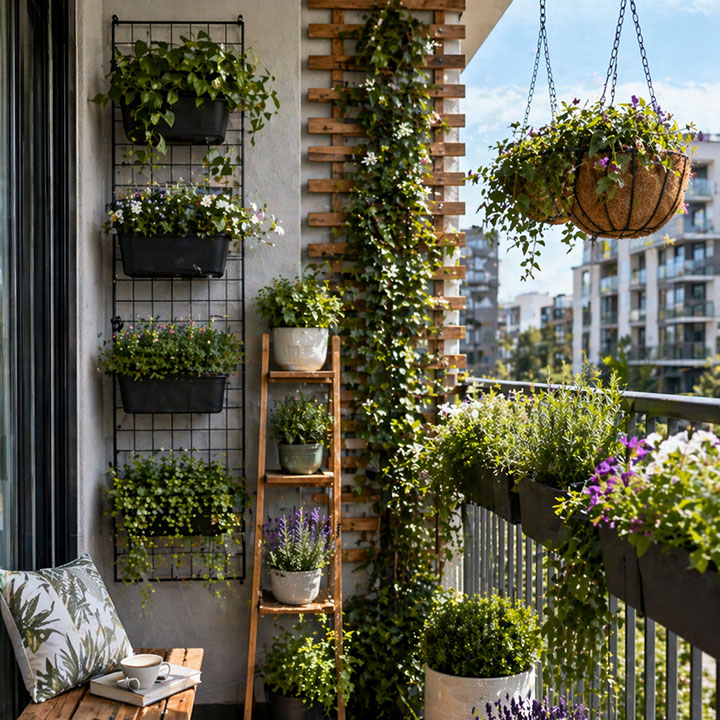
Idea 12: Plan for watering before you plant
Watering is one of the biggest challenges in vertical gardening. The higher and smaller the container, the faster it usually dries out. This is especially true for wall pockets, hanging baskets, and narrow railing boxes.
Make watering easy from the start. Group plants with similar water needs together. Use premium potting mix designed for containers. Add mulch where appropriate. Choose larger containers when possible rather than lots of tiny ones. If you are using a complex vertical system, think about how you will actually water the top levels without making it a chore.
A vertical garden that is hard to water will quickly become frustrating, especially in hot Australian summers. Simple systems are often the most successful.
Idea 13: Use vertical gardening to frame a seating area
Vertical planting can make even a very small balcony feel like an outdoor room. One of the nicest ways to use it is to frame a seating area with greenery. A trellis behind a chair, railing planters along the edge, or a wall of herbs beside a small bench can make the balcony feel more enclosed and inviting.
This works especially well when the plants are placed where they can also be seen from indoors. The balcony then becomes part of the interior view, which makes the home feel greener overall.
You do not need much furniture for this. One chair, one small table, and a thoughtfully arranged vertical garden can be enough to transform the whole space.
Idea 14: Keep it realistic for your maintenance style
Vertical balcony gardens can look stunning, but they should still suit your routine. If you travel often, use fewer hanging baskets and more hardy herbs or succulents. If you love to cook, build the design around herbs and edible planters. If privacy matters most, focus first on trellis planting and screening. If you mainly want a decorative green wall, keep the plant palette simple so it is easy to refresh and maintain.
The most successful vertical balcony garden is not the one with the most plants. It is the one you can keep healthy and enjoy over time.
Easy vertical balcony garden combinations
Sunny vertical balcony
- One trellis with star jasmine or a suitable sun-loving climber
- Two railing planters with thyme, oregano, and trailing alyssum
- One shelf with small herbs and flowering spillers
- One large floor pot with rosemary or lavender
Part-shade vertical balcony
- One narrow ladder shelf with ferns and shade-tolerant foliage
- One hanging basket with native violet or bacopa
- One herb shelf with parsley, mint, and chives
- One feature pot with a camellia or structural foliage plant
Privacy-focused vertical balcony
- Long planter with trellis and climber
- Railing planters with spillers to soften the edge
- Tall corner pot for extra height
- Optional shelf for small filler plants
Low-maintenance vertical balcony
- One strong trellis or wall frame
- A few larger containers instead of many small pockets
- Tough herbs, succulents, and drought-tolerant spillers
- One feature shrub in a large pot
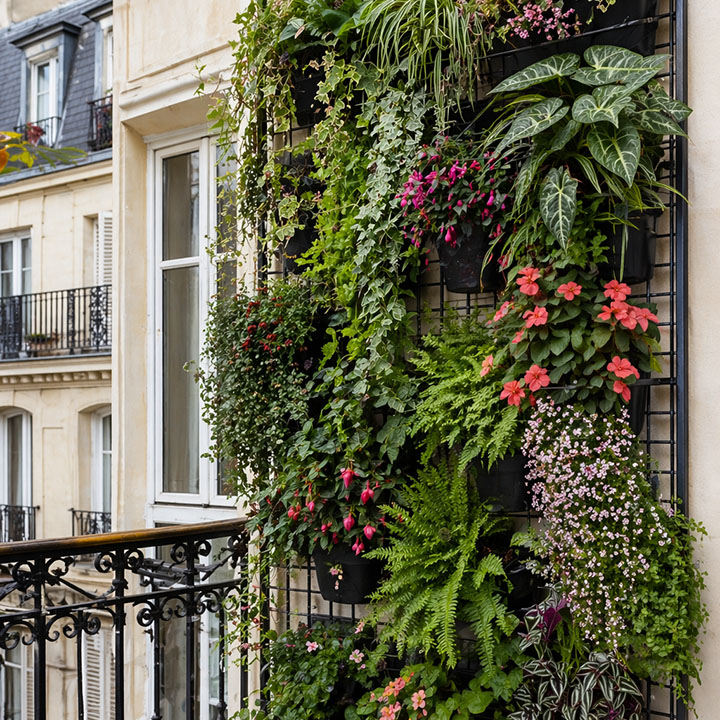
Best plant types for a vertical balcony garden
- For climbers: star jasmine, hardenbergia, mandevilla in warm areas, suitable clematis in cooler climates
- For herbs: basil, parsley, thyme, oregano, mint in its own pot, chives, Vietnamese mint
- For trailing effect: dichondra, bacopa, alyssum, native violet, scaevola, creeping thyme
- For sunny balconies: rosemary, lavender, succulents, pigface, westringia
- For shade or bright shade: ferns, peace lilies, begonias, mint, foliage plants
- For privacy: jasmine on trellis, bamboo in suitable pots, compact shrubs, layered vertical planting
Final thoughts
Vertical balcony garden ideas are some of the most effective solutions for small Australian outdoor spaces. By using height well, you can grow more, improve privacy, soften walls, and create a balcony that feels much greener without losing the room to sit or move.
The key is to match the design to the actual balcony. Think about light, wind, watering, and how much care you want to give it. A trellis, a few railing planters, a narrow shelf, and one strong feature pot are often all you need to create a beautiful vertical balcony garden that feels practical as well as stylish.
Whether you are gardening in Sydney, Melbourne, Brisbane, Perth, Adelaide, Hobart, or another Australian city, the best vertical balcony setup is one that works with your weather, your home, and your daily life.
FAQ
What is a vertical balcony garden?
A vertical balcony garden is a garden that uses upright space rather than just floor space. It can include trellises, railing planters, hanging baskets, shelves, wall planters, climbing plants, and stacked containers. What are the best plants for a vertical balcony garden in Australia?
The best plants depend on your balcony conditions, but popular options include star jasmine, hardenbergia, rosemary, thyme, basil, parsley, native violet, bacopa, dichondra, pigface, ferns, and compact shrubs for screening. How do I make a vertical garden on a small balcony?
Start with one or two simple vertical elements such as a trellis and railing planters, or a narrow shelf and a hanging basket. Then add plants suited to your light and climate. It is usually better to begin with a simple layout than to overcomplicate the space. Are vertical balcony gardens hard to maintain?
They can be more demanding than standard pots because smaller and raised containers dry out faster. The easiest way to keep them manageable is to use larger containers where possible, choose hardy plants, and make watering convenient. Can I grow herbs in a vertical balcony garden?
Yes. Herbs are one of the best choices for vertical balcony gardens because they are compact, useful, and suited to containers. Basil, thyme, oregano, parsley, chives, and mint are all good options depending on your light and climate. How do I protect a vertical balcony garden from hot Australian weather?
Use quality potting mix, larger containers where possible, mulch, regular watering, and some shade protection during extreme heat. Avoid overusing tiny wall pockets or baskets on very hot exposed balconies unless you are able to water them frequently.

Comments are closed.