
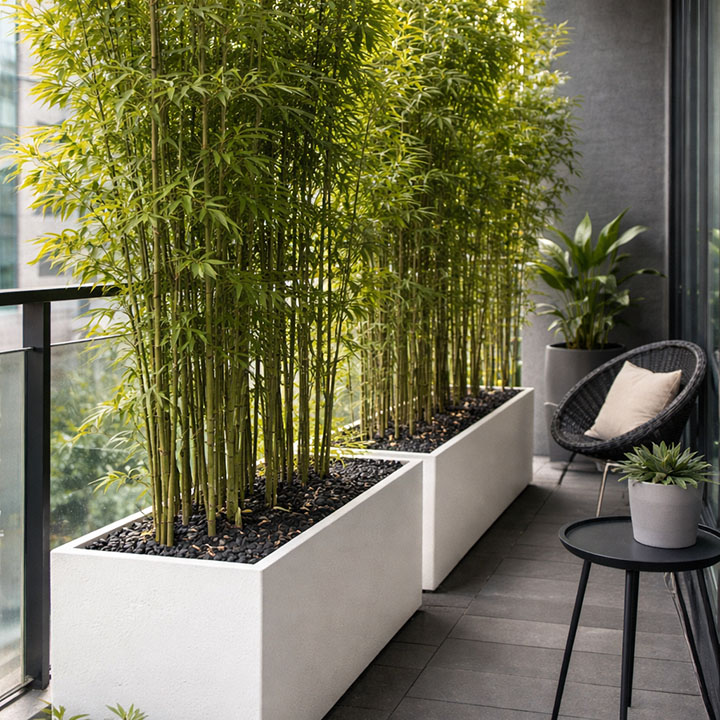
A balcony should feel like a private outdoor room, not a space where you feel watched from neighbouring apartments, nearby windows, or the street below. Privacy planting is one of the best ways to soften a balcony, block unwanted views, reduce glare, and make the whole space feel calmer and greener. On a balcony, plants often work better than hard screens because they add beauty as well as coverage.
In Australia, the best balcony privacy plants depend heavily on your city, light, wind, and heat. The Bureau of Meteorology divides Australia into broad climate zones including tropical, subtropical, and temperate regions, which is one reason privacy planting that works in Brisbane may need a different approach in Melbourne or Hobart. Southern cities are generally more temperate, while warmer and more humid conditions are common further north.
This guide covers practical balcony privacy plant ideas for Australian homes, including the best screening styles, good privacy plants for pots, ideas for different balcony shapes, city-specific advice, and a FAQ section at the end.
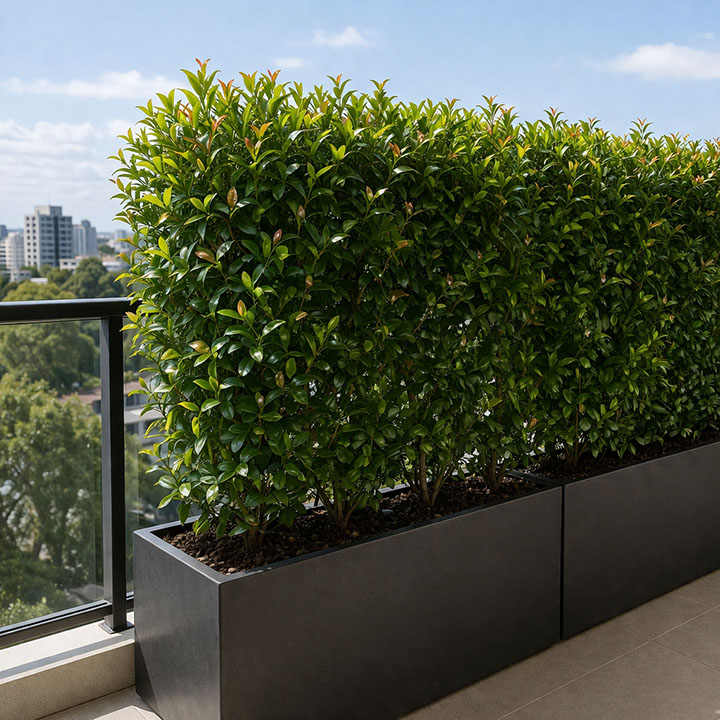
Why use plants for balcony privacy?
Privacy plants do more than block sightlines. They can make a balcony feel cooler, soften hard edges, reduce the harshness of glass and concrete, and create a more relaxed atmosphere. A planted screen usually feels lighter and more attractive than a solid barrier, especially on a small balcony where heavy screening can make the space feel boxed in.
Plants also give you flexibility. You can use tall shrubs for direct screening, climbers for vertical coverage, grasses for movement, and trailing plants to soften the base of the arrangement. This layered approach often gives better-looking privacy than a single dense row of plants.
Start by understanding what kind of privacy you need
Before choosing plants, work out where the privacy problem actually comes from. Many balconies do not need a full green wall. They only need targeted screening in one direction.
- Side privacy: screening from neighbouring balconies beside you
- Front privacy: screening from buildings directly opposite
- Downward privacy: reducing views from the street below while still keeping light
- Partial privacy: soft filtering rather than complete blocking
Once you know the direction of the view you want to block, it becomes much easier to choose the right plant type and layout.
What makes a good balcony privacy plant?
The best balcony privacy plants usually have a few things in common. They grow well in containers, can cope with pruning, have enough density to filter views, and suit your climate and exposure. On balconies, wind tolerance and container performance matter just as much as appearance.
Good privacy plants for balconies are often:
- upright or bushy rather than too open
- happy in pots or trough planters
- tough enough for wind and reflected heat
- easy to trim and shape
- evergreen or mostly evergreen for year-round cover
That does not always mean the densest plant is the best one. On a small balcony, very heavy planting can make the space feel crowded. A softer, filtered screen often looks better and still provides plenty of privacy.
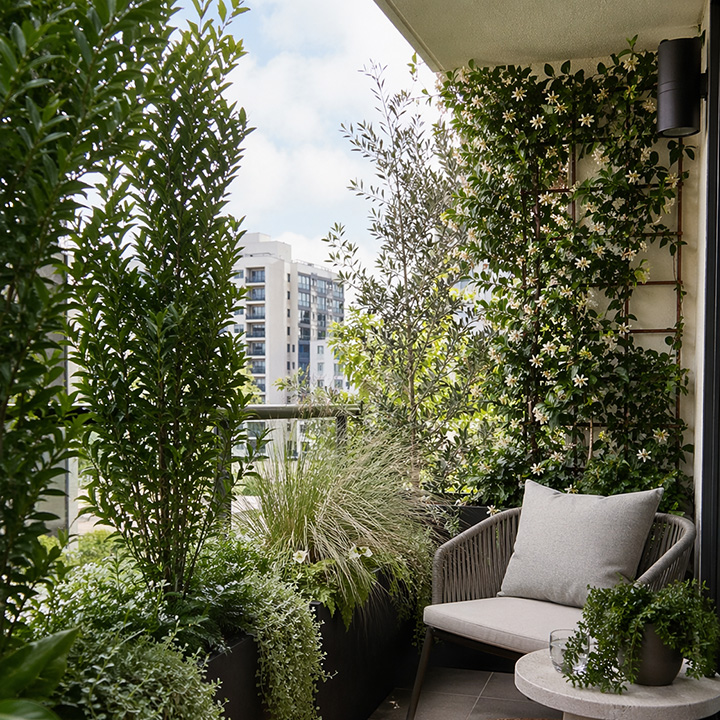
Idea 1: Use tall narrow shrubs in rectangular planters
One of the simplest balcony privacy plant ideas is to use long trough planters with upright shrubs. This works particularly well along the outer edge of the balcony or on the side where overlooking is worst. Rectangular planters make better use of space than lots of round pots, especially on narrow balconies.
Good shrub-style privacy choices may include compact lilly pilly varieties, westringia, dwarf bamboo varieties suitable for pots, and other narrow evergreens that can be trimmed neatly. These plants create structure and year-round greenery without taking over the entire balcony.
Idea 2: Grow climbers on a trellis for lighter privacy
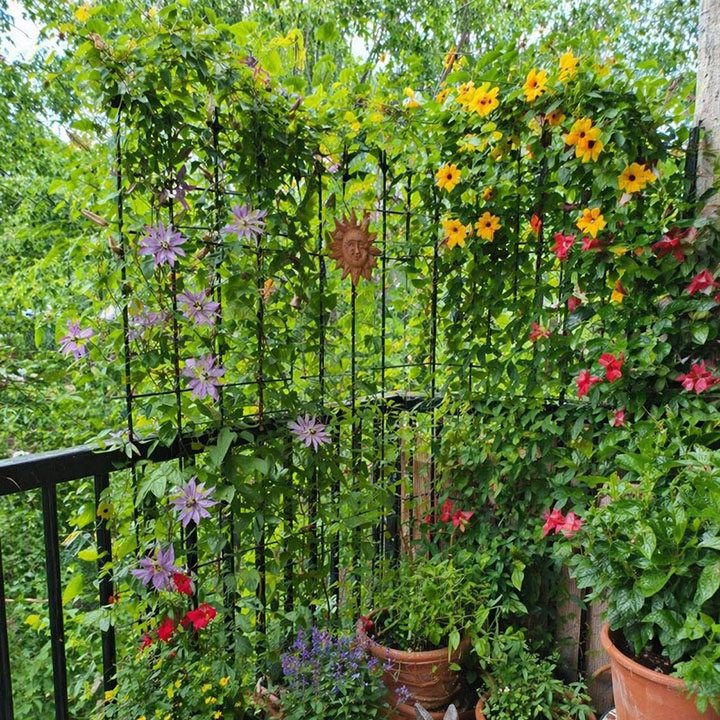
If you want privacy without filling the balcony floor with large pots, a trellis with a climber is one of the best solutions. A slim trellis fixed to a planter or wall can create a green screen with much less footprint than a hedge-style planting.
This is especially useful for side privacy or screening an ugly wall. It also works well on balconies where you still want airflow and dappled light. A climber on a trellis often feels softer and more elegant than a dense shrub block.
Good climber options can include star jasmine, hardenbergia, and in suitable climates other manageable climbers that perform well in containers. Star jasmine is especially popular because it is evergreen, attractive, and useful for privacy without looking too heavy.
Idea 3: Layer different plant heights for better screening
A single row of plants can work, but layered privacy planting usually looks much better. Instead of relying on one plant type, combine a taller screen plant, a medium filler, and a trailing or edge-softening plant. This gives the balcony a more finished look while improving coverage.
For example, you might use:
- a taller shrub or climber for the main privacy screen
- a medium plant such as rosemary, westringia, or ornamental grass
- a trailing plant such as dichondra, bacopa, or native violet to soften the planter edge
This kind of arrangement feels more like a designed garden and less like a row of pots placed for purely practical reasons.
Idea 4: Use ornamental grasses for softer screening
If you do not want a dense hedge look, ornamental grasses can be excellent privacy plants for balconies. They move beautifully in the wind, create a lighter screen, and suit contemporary balcony styling. Grasses are especially good when you want to filter views rather than block everything completely.
They also help when balconies feel harsh or overbuilt. Soft grassy foliage can break up hard lines from railings, glass, and walls. Depending on your climate and balcony conditions, compact lomandra and other tidy strappy plants can work well for this effect.
Idea 5: Create privacy with edible planting
Privacy planting does not always have to be purely ornamental. On some balconies, edible plants can form part of the screen. Dwarf citrus in larger pots, rosemary, bay, taller herbs, and even climbing beans or peas in the right season can all add softness and filtered cover.
This approach works best when privacy is only needed in part of the balcony. You may use structural privacy plants on the most exposed side, then fill gaps with edible and decorative pots. That way the balcony still feels useful as well as private.
Idea 6: Use hanging and railing planters to raise the screen
Sometimes the privacy problem is not at floor level. It is at railing height or slightly above. In that case, railing planters and hanging baskets can help lift the planting and block views more effectively. This is especially useful on balconies where people in surrounding buildings look directly across rather than down.
Railing planters work well with trailing plants, herbs, flowering spillers, and compact leafy plants. Hanging baskets can help fill upper gaps, but use them carefully so the balcony does not feel crowded. One or two baskets are usually enough.
Idea 7: Use one feature screen plant instead of many small pots
Many small pots rarely create useful privacy. They usually look scattered and do not reach enough height. One of the best balcony privacy ideas is to use fewer, larger containers with plants that have real presence. A well-grown screen plant in a substantial planter usually gives more privacy and looks much better than lots of tiny pots.
If your balcony is very small, a pair of larger planters with carefully chosen plants may be all you need. Bigger planters also hold moisture better and give roots more room, which is important on exposed balconies.
Idea 8: Build privacy around seating
The best balcony privacy planting often focuses on the area where you actually sit. If you have a chair, café table, or bench, place privacy planting so it shields that space first. You do not always need to screen the entire balcony equally.
This makes the balcony feel more like an outdoor room. A chair with taller plants beside and behind it can feel surprisingly private, even on an apartment balcony in a dense urban setting.
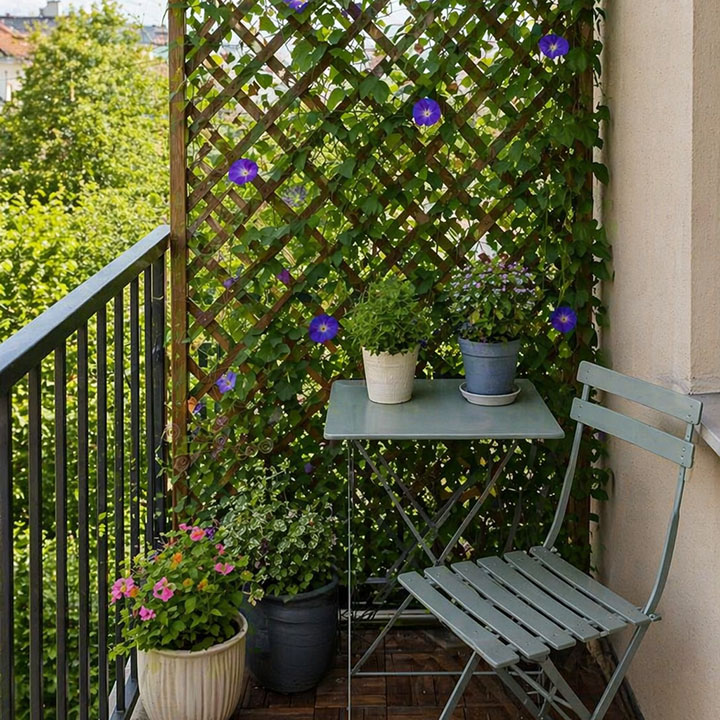
Best privacy plant styles for different Australian cities
City climate has a major effect on which privacy plants will perform well. The Bureau of Meteorology’s climate information shows warmer conditions in northern and subtropical parts of Australia, while southern cities sit in cooler temperate patterns. City climate averages also show clear differences between places like Brisbane, Sydney, Melbourne, Perth, Adelaide, and Hobart, which is why balcony privacy planting should be matched to local weather rather than copied blindly from another city.
Sydney
Sydney balconies often benefit from evergreen privacy plants that can handle bright light, some wind, and in some areas coastal conditions. Lily pillies, star jasmine, westringia, and hardy trailing plants can all work well depending on sun exposure. Sydney’s climate averages show warm summers and mild winters, which supports a wide range of balcony screening plants.
Melbourne
Melbourne privacy planting is often best when it is flexible and layered. Weather can shift quickly, so sturdy evergreens, herbs, grasses, and climbers that handle cool periods as well as summer heat tend to perform well. A Melbourne balcony often benefits from a mix of structure and seasonal softness rather than a single tropical-style privacy wall.
Brisbane
Brisbane balconies suit privacy plants that enjoy warmth and can handle humidity. Tropical-looking foliage, climbing screens, and lush shrubs can work beautifully, but airflow still matters. The warmer subtropical pattern means privacy planting can look full and fast-growing, though exposed balconies may still need protection from strong afternoon sun.
Perth
Perth balconies usually need tougher, more drought-aware privacy plants. Larger pots, mulch, and hardy species are especially important because the climate averages reflect hot summers and a dry-summer pattern. Westringia, rosemary, tougher grasses, and carefully chosen climbers are often safer choices than thirsty soft foliage.
Adelaide
Adelaide suits a similar approach to Perth, with privacy plants that can cope with bright sun and drier summer conditions. Mediterranean herbs, olives in larger pots, strong evergreen shrubs, and heat-tolerant climbers can all be useful depending on the balcony’s light and exposure.
Hobart
Hobart balconies often suit temperate privacy planting. Ferns, camellias in bigger pots, tidy evergreen shrubs, and cool-climate climbers can all work well depending on light levels. Because southern climates are cooler, dense summer-only growth matters less than year-round structure and good placement.
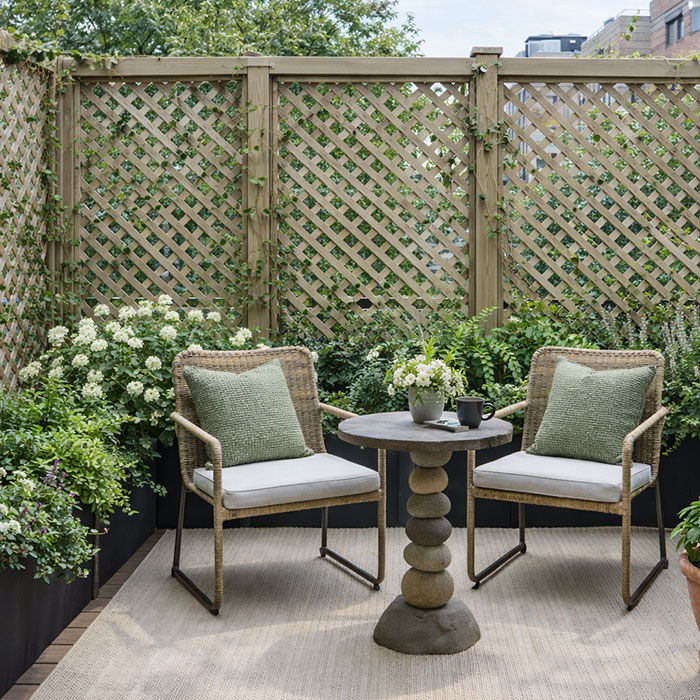
Good balcony privacy plants for pots
- Lilly pilly: great for evergreen screening and shaping in larger planters
- Star jasmine: excellent on trellises for vertical privacy
- Westringia: hardy, neat, and good for sunny balconies
- Lomandra: useful for soft, strappy screening
- Bamboo in suitable varieties: good for fast, narrow screening in large containers
- Rosemary: useful for semi-screening, scent, and edible planting
- Dwarf citrus: helpful where you want privacy plus edible value
- Trailing plants: dichondra, bacopa, native violet, and similar spillers to soften the screen
How to make privacy planting look stylish
The most attractive privacy planting does not look like it was added as an afterthought. Use matching planters where possible, repeat a restrained palette of materials, and avoid mixing too many unrelated plant styles in one small space. A balcony looks more polished when the privacy screen feels like part of the design rather than a line of emergency pots.
Good styling tricks include:
- use two or three large matching troughs instead of many small pots
- repeat one main screen plant rather than using five different shrubs
- underplant with soft spillers
- add one climber or grass for movement
- keep seating simple so the planting remains the feature
Tips for keeping balcony privacy plants healthy
Privacy plants only work if they stay full and healthy. On balconies, that means giving them enough root room, water, and feeding. Screening plants in tiny pots usually become stressed and thin. Use the biggest containers your space and structure allow, and choose quality potting mix made for containers.
Also remember that balcony weather is harsher than garden-bed weather. Wind, reflected heat, and uneven watering can all affect plant density. In hotter cities and exposed sites, larger pots and mulch become even more important because dry conditions can hit containers hard. Australia’s climate maps and averages show just how varied temperature conditions are across the country, from warmer northern regions to cooler southern ones.
Simple balcony privacy planting combinations
Sunny balcony privacy setup
- two rectangular planters with westringia or rosemary
- one trellis with star jasmine
- trailing dichondra or bacopa at the edges
Soft filtered privacy setup
- lomandra or ornamental grasses in a long trough
- one medium shrub for structure
- low trailing flowers to soften the base
Small balcony privacy setup
- one tall feature planter beside the chair
- one slim trellis with climber
- one railing planter to lift the screening higher
Edible privacy setup
- dwarf citrus or bay in a large pot
- rosemary and parsley in matching containers
- seasonal climbing edible on a trellis where suitable
Final thoughts
Balcony privacy plant ideas work best when they are practical as well as beautiful. The right planting can make a balcony feel calmer, greener, and far more usable without needing heavy screens or major construction. In many cases, all you need is one well-placed trellis, a few substantial planters, and plants suited to your local climate.
Whether you garden in Sydney, Melbourne, Brisbane, Perth, Adelaide, Hobart, or elsewhere in Australia, the best privacy planting is the kind that matches your light, wind, space, and maintenance style. Think in layers, use fewer better pots, and let the plants create a softer kind of privacy that still feels open and inviting.
FAQ
What are the best balcony privacy plants in Australia?
Some of the best options include lilly pilly, star jasmine, westringia, lomandra, suitable bamboo varieties, rosemary, and other evergreen plants that handle containers well. The best choice depends on your city, light, and wind exposure. What is the fastest plant for balcony privacy?
Fast growth depends on climate and care, but bamboo in suitable clumping varieties and some climbers on trellises can create privacy relatively quickly. On balconies, though, long-term performance in pots matters just as much as speed. Can I create privacy on a small balcony?
Yes. A small balcony can feel much more private with one trellis climber, one or two substantial planters, and raised planting such as railing boxes. You do not need a full hedge to improve privacy. Are climbers good for balcony privacy?
Yes. Climbers are one of the best privacy solutions for balconies because they give vertical coverage without taking up much floor space. Star jasmine is a popular example because it is evergreen and attractive. How do I make my balcony private without blocking all the light?
Use a softer filtered screen such as climbers on trellis, ornamental grasses, or layered planting rather than a dense solid barrier. This helps reduce overlooking while still allowing light and airflow. Do privacy plants grow well in pots?
Yes, many do, but they need containers large enough to support healthy roots. Screening plants in pots usually perform best in long troughs or substantial planters with quality potting mix and regular feeding and watering.

Comments are closed.