
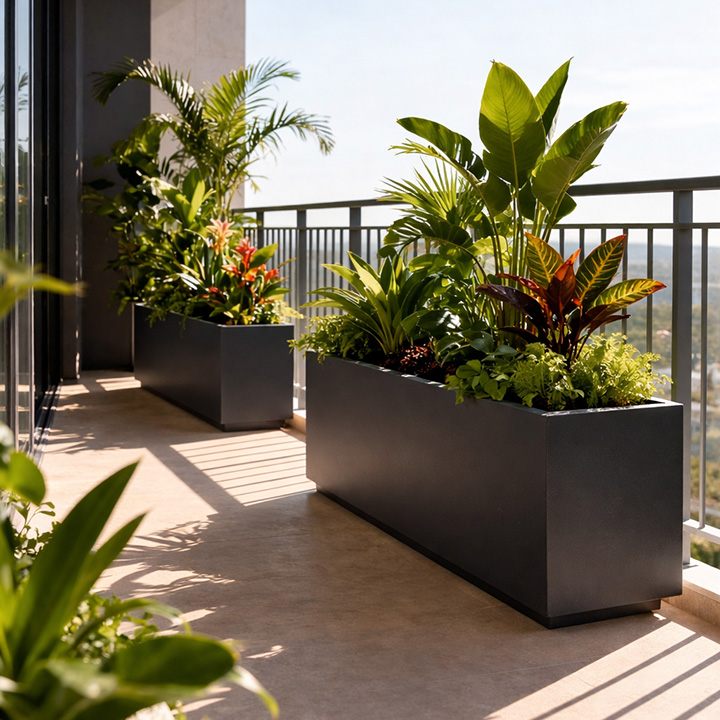
If you want a balcony garden to feel full, polished, and beautifully designed, the best approach is usually not lots of small pots. Small containers can look scattered, dry out quickly, and make even a good balcony feel cluttered. A better solution is to build the space around a coordinated planter system that covers the balcony in a clean and intentional way.
For Australian balconies, one of the strongest systems is to combine long ground planters, oversized railing planters, and large hanging baskets. Together, they create planting at floor level, railing level, and above eye level. That layered approach makes the balcony feel like a real garden rather than just a few containers pushed to the side.
In this guide, we are focusing on a three-part balcony planter system built around larger statement pieces rather than a mix of small pots:
- Ground planters: long charcoal metal troughs for structure and edge planting
- Railing planters: 36-inch / 91 cm coco-lined railing troughs for a bold planted band across the balcony
- Hanging planters: 16-inch / 40cm extra-large coco-lined hanging baskets for vertical layering
This combination works especially well in Australia because you can keep the same planter system but adapt the plant palette for Melbourne, Sydney, Brisbane, Perth, Adelaide, Canberra, Hobart, Darwin, and other local climates.
Why a coordinated planter system works better than random pots
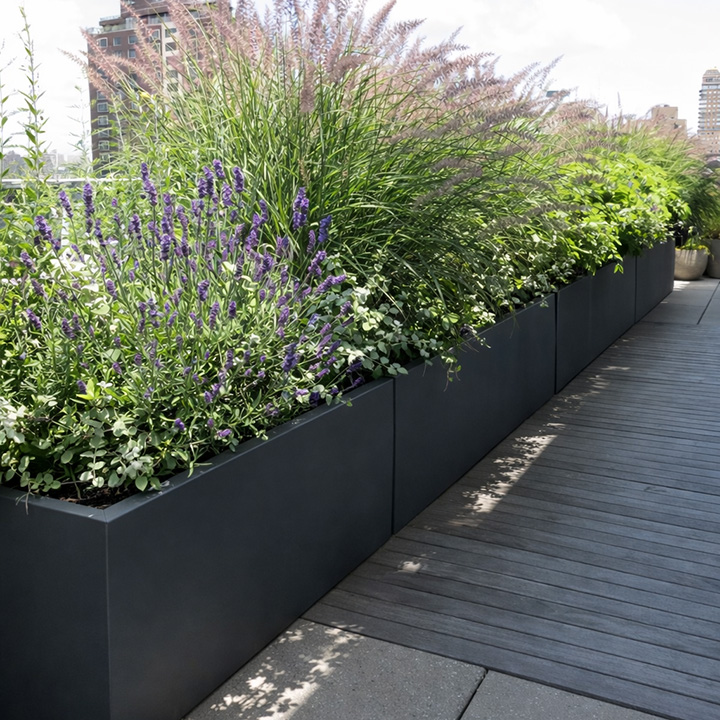
The best balcony gardens usually feel cohesive. That often comes down to scale and repetition. When you repeat the same planter styles across the floor, railing, and upper levels, the balcony feels calmer, neater, and more luxurious. It also becomes easier to build fullness without visual mess.
A full planter system also works better practically:
- Ground planters provide the backbone of the design and enough soil volume for shrubs, herbs, feature plants, and screening.
- Railing planters create the strongest visual line and make the balcony feel planted from edge to edge.
- Hanging baskets add the upper layer, soften walls and corners, and help the garden feel immersive.
This is one of the best ways to make a balcony feel full without making it feel crowded.
The best planter system for covering a whole balcony
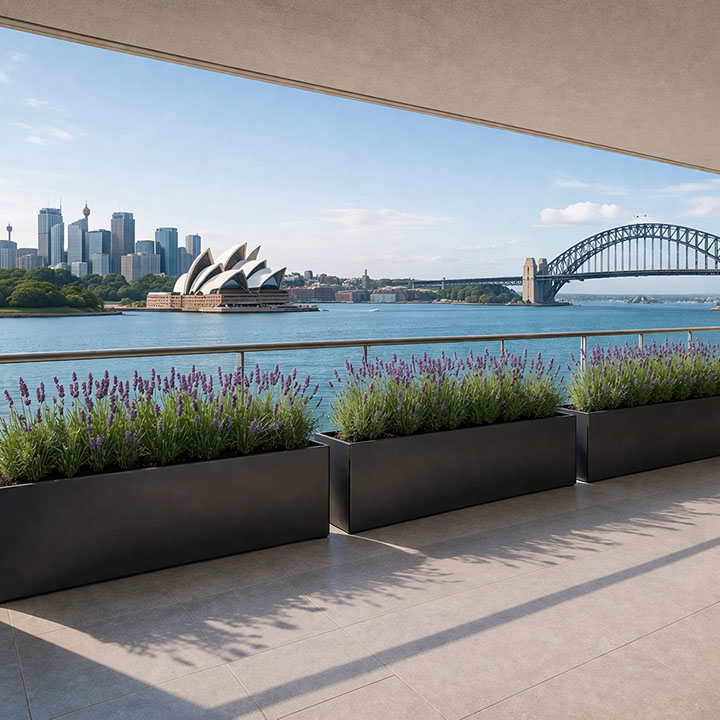
1. Ground planters: long 1200 mm charcoal metal planter boxes for structure and scale
The floor planters are the foundation of the whole system. If you want the balcony to feel designed rather than pieced together, the ground layer needs to look clean and substantial. Long rectangular troughs do this far better than clusters of small pots because they define the perimeter, give the planting real presence, and make much better use of balcony floor space.
The Greenlife metal designer planter box is a particularly strong choice for this purpose. At 1200 × 300 × 300 mm, it is long and narrow enough to suit most balconies while still holding enough soil to grow meaningful plants. The charcoal finish also gives it a modern architectural look that works beautifully with apartments, glass balustrades, concrete walls, and contemporary outdoor furniture.
Why this ground planter works so well for balconies
This kind of planter is ideal for balconies because it gives you strong structure without taking over the space. It can sit along the outer edge, against a wall, behind a seating area, or in corners where the balcony needs more weight and greenery.
- Long 1200 mm footprint: the length creates a clean line and lets you build a strong border along the edge of the balcony.
- Narrow 300 mm width: it is deep enough for real planting but slim enough to preserve walking space.
- 300 mm height: gives plants better root room and helps the planter feel visually substantial.
- Approx. 108-litre capacity: enough room for shrubs, mixed plantings, herbs, grasses, or statement foliage plants.
- Powder-coated anti-rust steel: useful for outdoor balconies where durability and weather resistance matter.
- Charcoal modern finish: works especially well for minimalist, Mediterranean, native, and contemporary balcony styles.
- Drainage holes in the base: important for container growing and helpful in heavy rain.
- Straight clean panels: the simple shape looks far more refined than decorative or overly ornate containers.
- Can be planted directly or used with drop-in pots: this gives flexibility depending on how permanent you want the planting to be.
The biggest benefit: it anchors the whole balcony
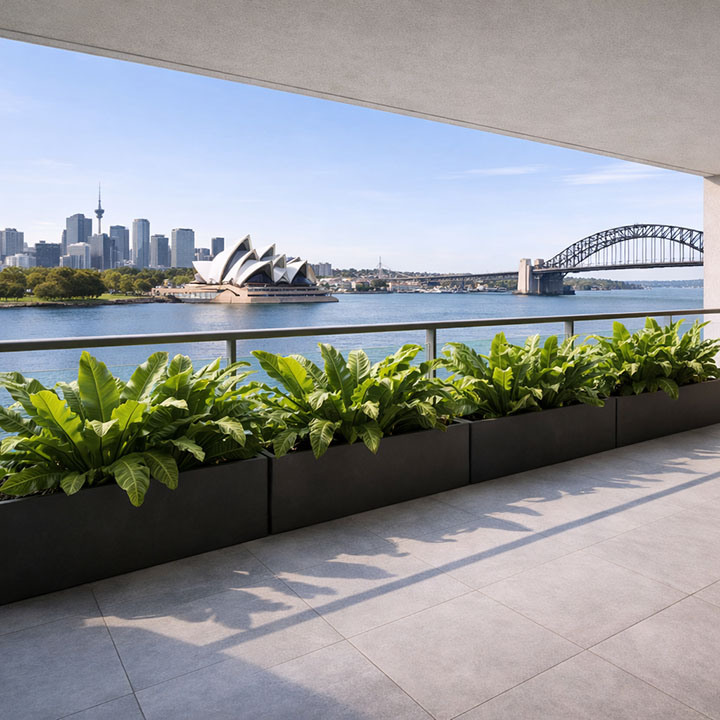
One of the biggest benefits of this planter is that it gives the balcony a proper backbone. Long troughs make the space feel grounded. They turn the perimeter into a planted edge and instantly make the balcony feel more like an outdoor room.
This is also the planter type that makes the biggest difference if you want privacy, leafy screening, or a strong border of planting without filling the centre of the balcony with pots.
Best ways to use this ground planter on a balcony
- line several along the balcony edge to create a continuous green border
- place one or two behind outdoor chairs or a bench to soften the seating zone
- use them along blank walls to add structure and greenery
- put them in corners for weight and balance
- combine them with railing planters above for a layered planted edge
Because the planter is long and simple, it works particularly well when repeated. A balcony almost always looks better with two or three matching long troughs than with many small mismatched containers.
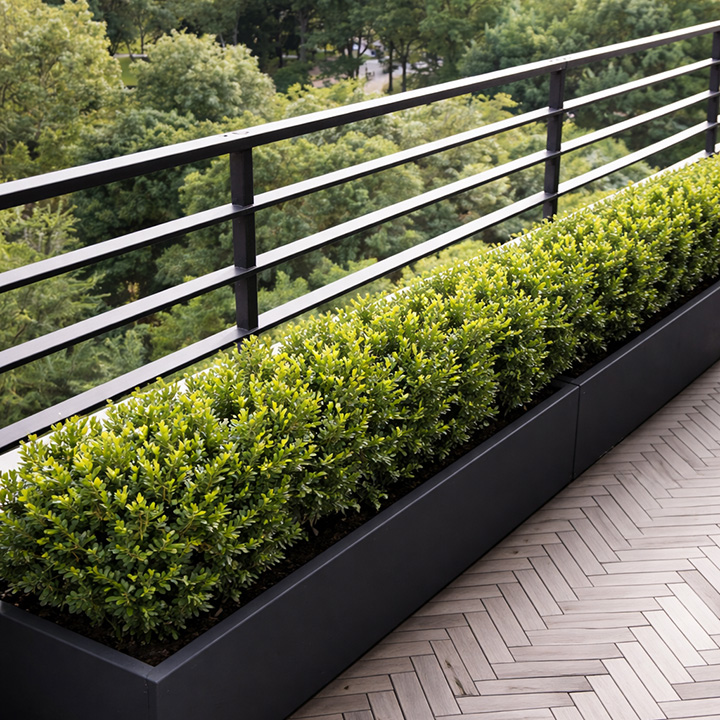
Best planting styles for this ground planter
Mediterranean look: dwarf olive, rosemary, lavender, thyme, santolina, bay, and compact citrus. The charcoal finish suits this style beautifully and creates a refined, sun-drenched look.
Cottage look: dwarf roses, salvia, gaura, dianthus, catmint, alyssum, and lavender. This gives a softer, more flower-filled effect.
Tropical look: cordyline, bromeliads, philodendron Xanadu, clivia, bird’s nest fern, and lush foliage fillers. This works well on warm or sheltered balconies.
Native Australian look: westringia, lomandra, dianella, correa, pigface, scaevola, and compact grevillea. This is especially smart for exposed or coastal balconies.
Edible look: dwarf lemon, lime, bay, rosemary, parsley, sage, chillies, spring onions, and seasonal leafy greens. A long trough like this can be both attractive and highly productive.
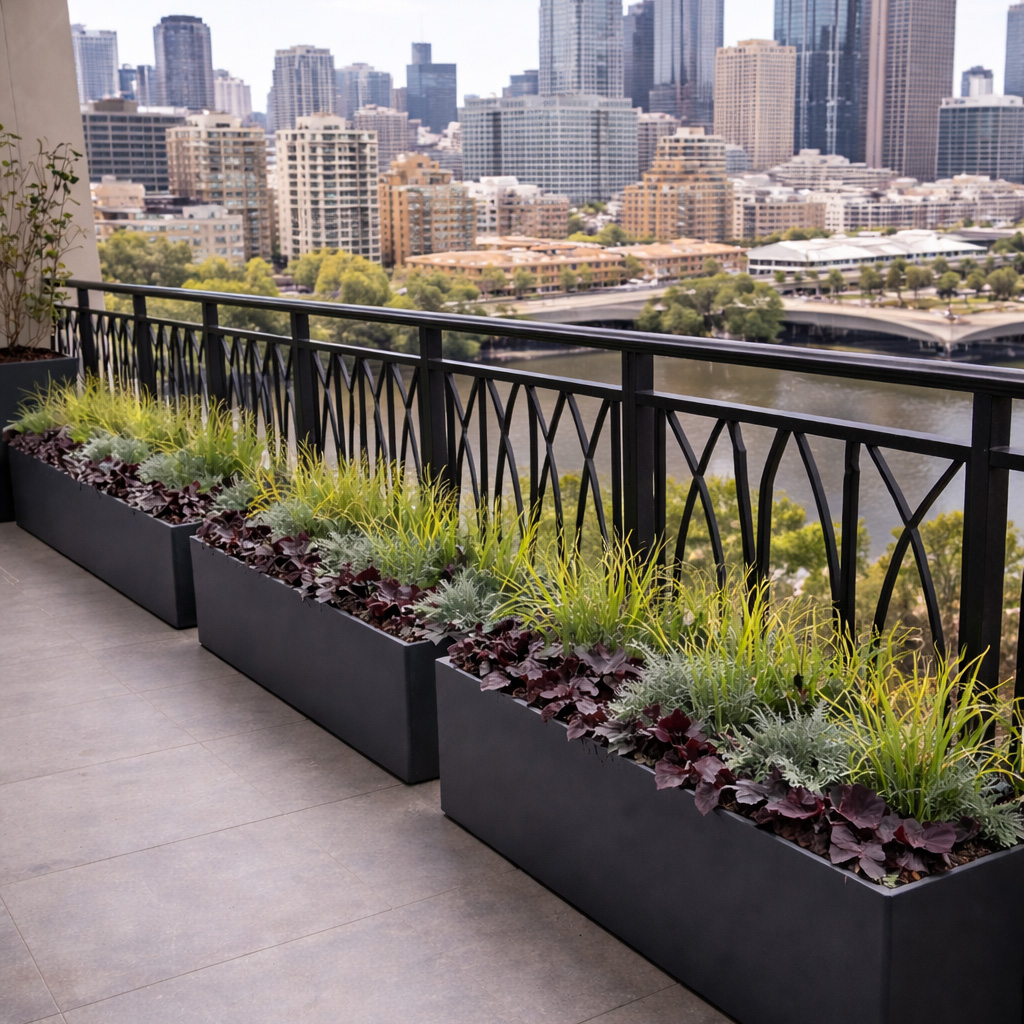
Best plants for this ground planter by Australian region
Melbourne: westringia, rosemary, thyme, hebe, camellia sasanqua, dwarf nandina, parsley, violas, and compact grasses cope well with changeable weather and wind.
Sydney: dwarf citrus, star jasmine on support, westringia, lomandra, salvia, parsley, and clivia all suit the milder coastal climate well.
Brisbane: cordylines, philodendrons, citrus, lomandra, basil, chillies, bromeliads, and tropical foliage combinations do especially well in warm humid conditions.
Perth and Adelaide: dwarf olive, rosemary, lavender, thyme, westringia, society garlic, and compact citrus are some of the strongest picks for heat and drier summers.
Canberra and Hobart: rosemary, thyme, hebe, camellia sasanqua, hardy shrubs, parsley, and seasonal flowers are generally more reliable than tender tropicals.
Darwin: bromeliads, crotons, philodendrons, cordylines, pothos, and lush tropical foliage make more sense than Mediterranean shrubs.
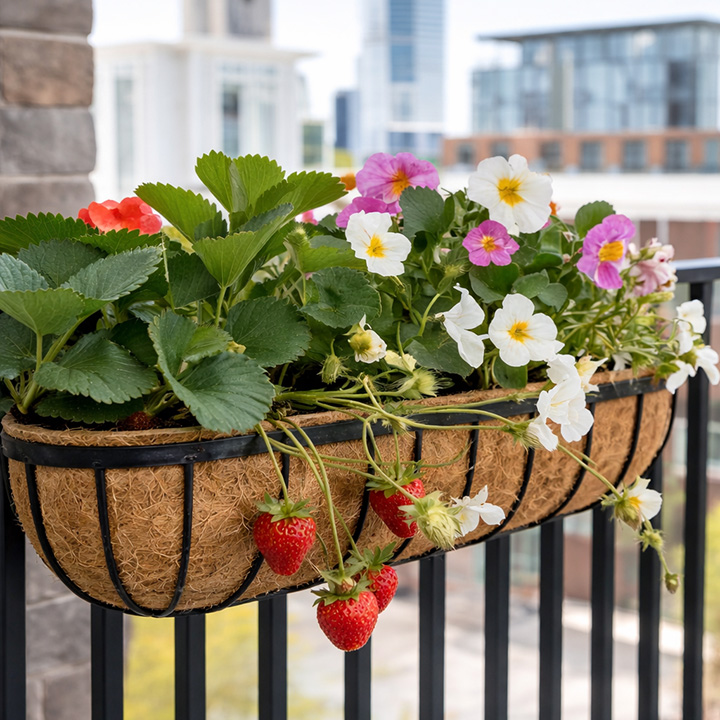
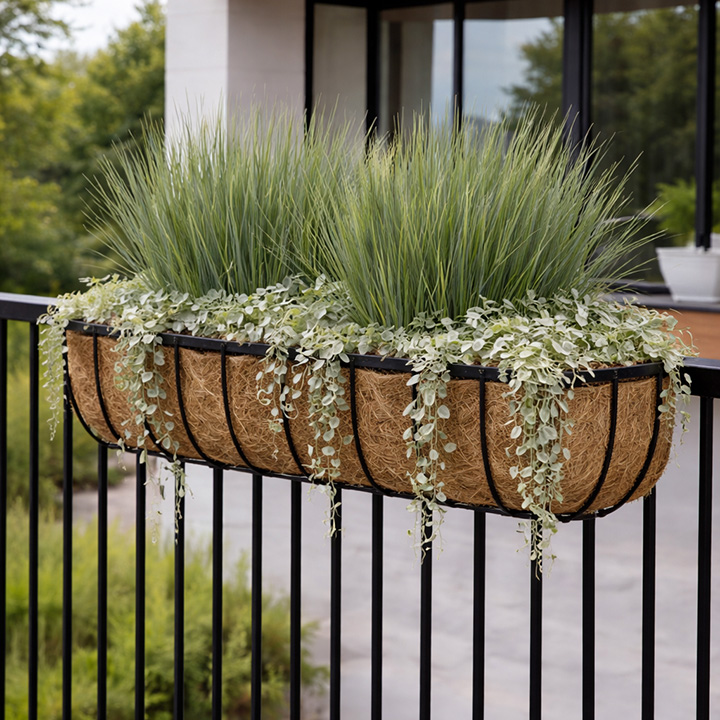
2. Railing planters: large 36-inch coco-lined railing troughs for real balcony impact
If you want the balcony to feel fully planted rather than dotted with small containers, the railing planters are one of the most important parts of the whole system. This is the layer that creates the strongest visual line across the balcony and gives that lush, finished, high-impact look from both inside and outside the home.
The 36-inch railing planter you have chosen is an especially good fit for this kind of design because it is large, long, and visually substantial. Smaller railing pots often look bitty and cluttered, especially when grouped together. A long planter like this reads as one clean design element and creates a much neater result when repeated across the railing.
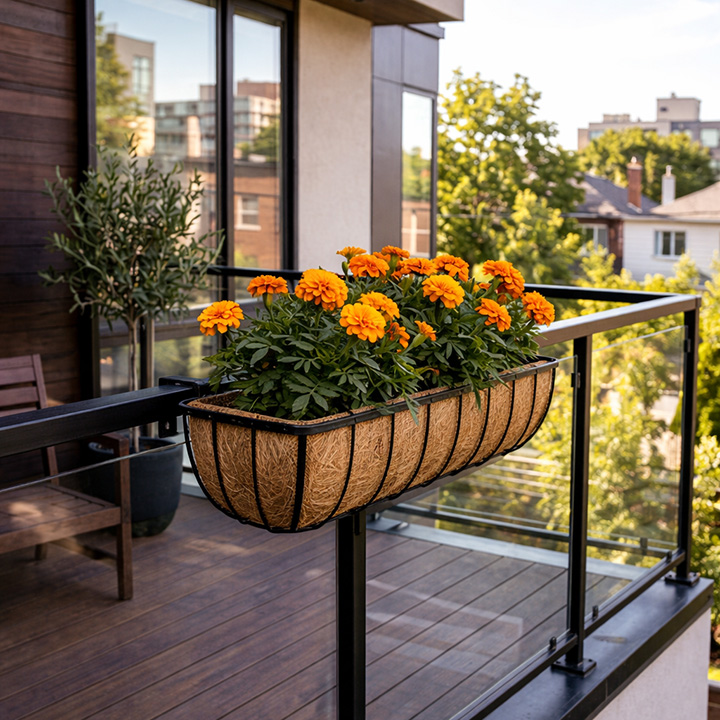
Why this railing planter works so well for balconies
This style of railing planter is not just decorative. It is practical for balcony gardening and strong enough visually to help define the entire edge of the space. Because it is long and generously sized, it creates more of a planted band rather than a scattered collection of small pots.
- Large 36-inch size: the planter is about 91 × 19 × 20 cm, which gives enough space for fuller planting and a much stronger visual effect than small railing baskets.
- Good planting depth and width: it can hold several herbs, flowers, or trailing plants together, which makes it easier to create lush combinations.
- Metal frame: the black metal structure gives the planter a neat, clean-lined look that suits modern balconies and helps it feel more architectural than plastic railing pots.
- Coco liner: the natural coconut liner softens the look, improves drainage and airflow, and suits both cottage-style and more natural planting schemes.
- Adjustable brackets: it is designed to hang over railings around 3 to 6 inches wide, which makes it more flexible for different balcony setups.
- Multiple installation options: it can be used on balcony rails, fences, decks, walls, and under windows, which adds flexibility.
- Better visual rhythm: repeating multiple long troughs across the railing creates a much cleaner and more intentional effect than using many small mixed containers.
The biggest benefit: it makes the balcony look designed, not messy
One of the biggest reasons this planter works so well is scale. On balconies, scale matters. Small railing planters can make the edge look fussy and over-decorated. A larger 36-inch trough gives you the wow effect because it reads as a real planting feature rather than an accessory.
It also makes planting much easier. Instead of trying to make lots of tiny pots look lush, you can create fuller, simpler combinations that have more presence. That is often what makes a balcony garden feel polished and higher-end.
Best ways to use this railing planter on a balcony
This planter works best when repeated across the main railing rather than used as a single standalone piece. Measure the usable railing length and aim to create a continuous planted line wherever possible. That repetition is what helps the balcony feel landscaped.
- use several along the front railing for a full green edge
- repeat the same planter style for a cleaner, more premium look
- plant upright growers at the back and soft spillers at the front
- use them to soften metal or glass balustrades
- combine them with floor planters behind for layered planting
Because each planter is long, even two or three of them can make a big visual difference on a compact balcony. On wider balconies, using several across the full railing can transform the whole space.
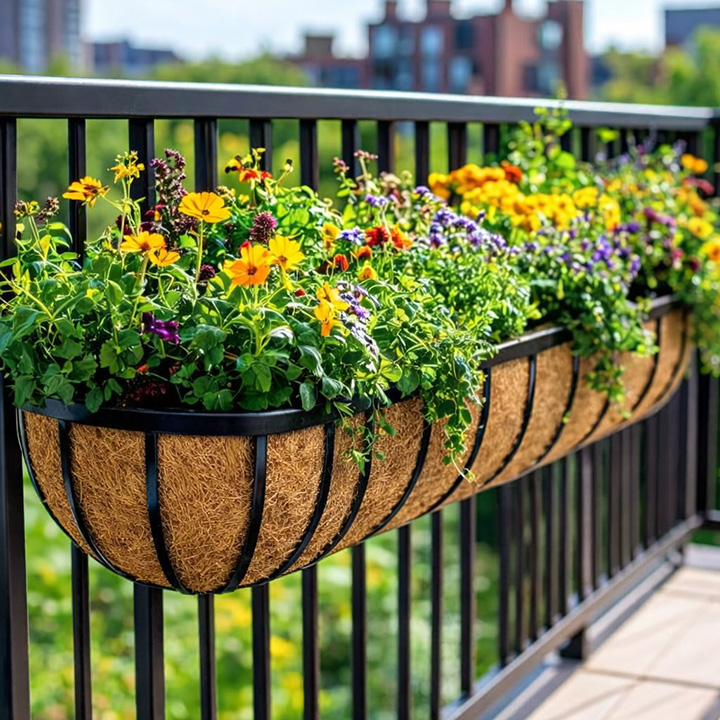
Best planting styles for this railing planter
Mediterranean look: trailing rosemary, thyme, oregano, compact lavender, white alyssum, and strawberries. This works beautifully with the black metal frame and gives a clean, sunny, coastal feel.
Cottage look: bacopa, lobelia, calibrachoa, petunias, alyssum, and trailing verbena. The coco liner suits this softer overflowing style especially well.
Tropical look: coleus, pothos, spider plant, tradescantia, sweet potato vine, and compact trailing foliage. This gives a lush layered effect on warm or protected balconies.
Native look: scaevola, brachyscome, native violet, pigface, and dichondra repens. These are especially useful for exposed balconies and for a lower-fuss Australian planting scheme.
Edible look: parsley, thyme, oregano, chives, lettuces, rocket, coriander in season, and strawberries. Because the planter is long and roomy, it is very suitable for edible balcony gardening.
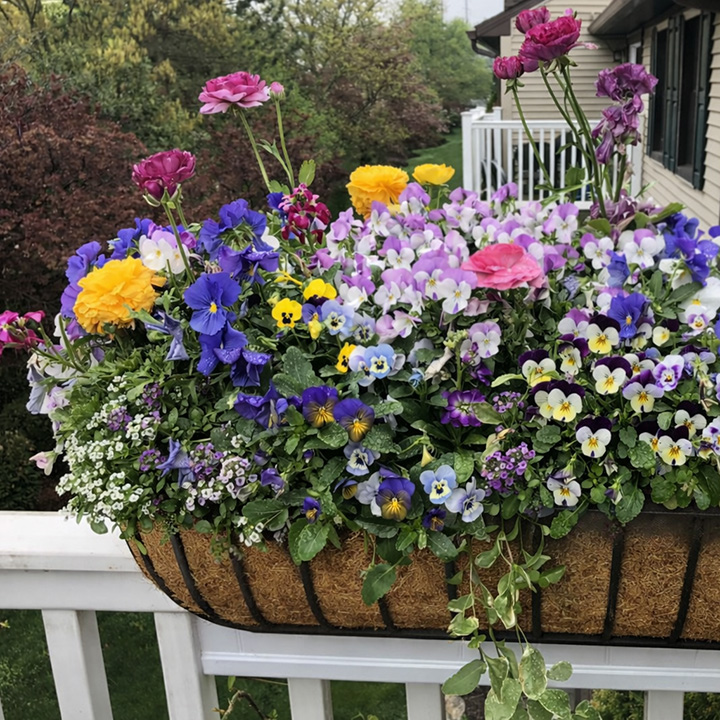
Best plants for this railing planter by Australian region
Melbourne: thyme, parsley, lobelia, bacopa, alyssum, violas, and seasonal flowering spillers work well, especially where wind is managed.
Sydney: strawberries, parsley, bacopa, brachyscome, alyssum, basil in warm weather, and selected trailing flowers all work well with good airflow.
Brisbane: sweet potato vine, basil, coleus, spider plant, parsley, strawberries, and subtropical spillers are often more reliable than delicate cool-climate flowers.
Perth and Adelaide: trailing rosemary, thyme, oregano, alyssum, strawberries, and tougher heat-tolerant trailing plants are the strongest choices for long hot periods.
Canberra and Hobart: cool-season flowers, herbs, and hardy compact spillers usually perform best, especially in sheltered spots.
Darwin: tropical foliage combinations such as pothos, spider plant, tradescantia, and coleus are usually a better fit than classic flowering mixes.
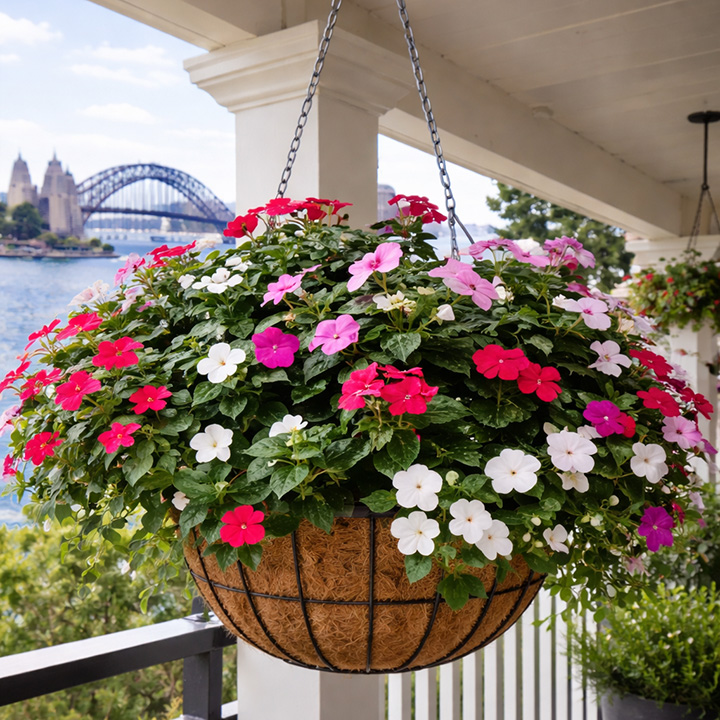
3. Hanging planters: extra-large 16-inch hanging baskets for vertical impact
Hanging planters are what take a balcony garden from looking good to looking complete. They add the upper layer of planting, soften hard walls and railings, and help turn a balcony into a true garden rather than just a space with pots. When used well, they create the sense that greenery is wrapping around the whole balcony.
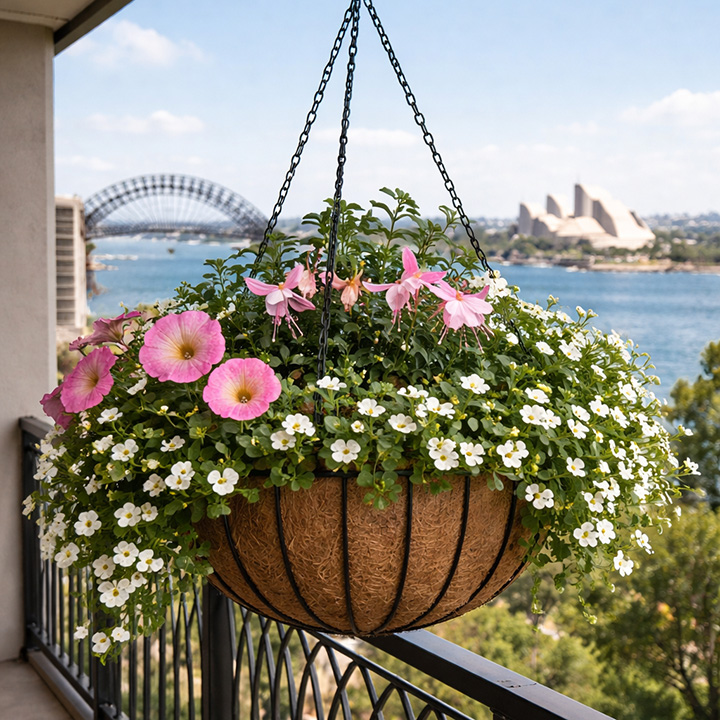
The 16-inch LaLaGreen hanging basket set is a very good choice for this kind of full-balcony system because it is large enough to make a visual statement. Small hanging pots often look fussy, dry out too quickly, and never quite create the lush look people are hoping for. These larger baskets have much more presence and are far better suited to building a layered hanging garden effect.
Another big advantage is that they come as a 4-pack. That matters for balcony design because one basket on its own can look isolated, while a repeated group of matching baskets creates rhythm, symmetry, and a much more finished result. This is exactly the kind of planter that works well when the goal is to cover the whole balcony in a coordinated way.
Why this hanging planter works so well for balconies
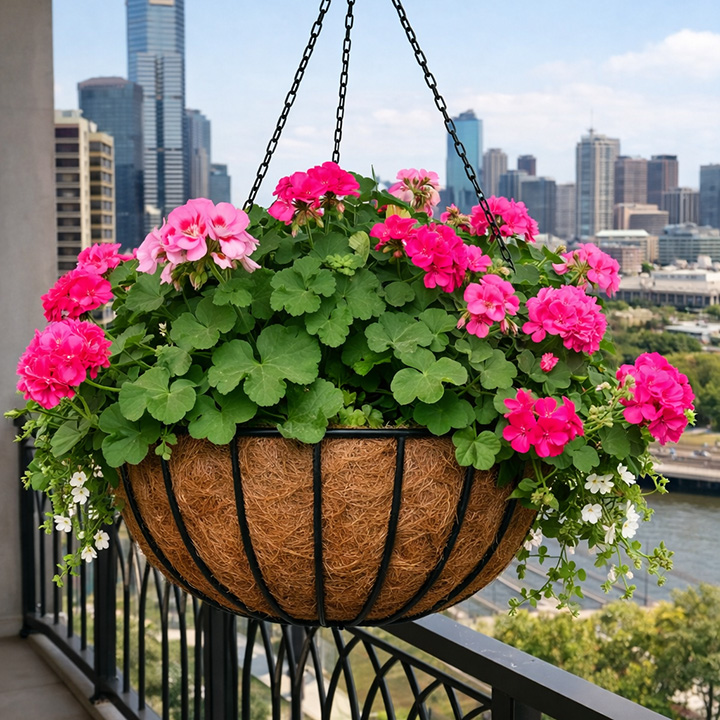
This style of hanging basket combines practical planting space with a clean decorative look. It suits both modern balconies and softer garden styles because the black metal frame gives it structure while the coco liner keeps it natural and garden-like.
- Extra-large 16-inch size: the larger basket size gives plants more root room and creates a fuller, more dramatic hanging display than small baskets.
- 4-pack set: matching baskets make it much easier to create a repeated, cohesive hanging garden across the balcony.
- Black metal wire frame: the frame looks neat, modern, and visually lighter than bulky plastic hanging pots.
- Coco liner included: the coco coir liner helps with drainage, airflow, and that soft natural finish that suits balcony gardens.
- Ready to hang: the baskets come with hanging chain and hook, so they are easy to install without complicated setup.
- No assembly required: this makes them especially convenient if you want to set up multiple baskets at once.
- Lightweight and rust resistant: that is useful on balconies where planters may be exposed to weather and need to stay practical as well as attractive.
- Indoor or outdoor use: they work on balconies, porches, decks, patios, and near windows or sheltered wall areas.
The biggest benefit: they create a real hanging garden effect
The biggest strength of this planter is that it helps build the vertical layer of the balcony. Floor planters and railing boxes give structure and edge planting, but hanging baskets are what lift the garden upward and make the space feel richer and more immersive.
Because these baskets come in a matching set, they are ideal for creating that repeated hanging garden look. Grouped across a beam, wall, balcony edge, or overhead support, they make the planting feel deliberate and abundant rather than random.
This is especially useful on small balconies where floor space is limited. Hanging planters let you add far more greenery without taking up valuable room for chairs, tables, or circulation space.
Best ways to use these hanging baskets on a balcony
- hang them in a repeated row to create a fuller balcony garden canopy
- use them in corners to soften empty vertical space
- place them near walls or windows to frame the balcony
- combine them with railing planters below for a layered garden effect
- use several sets together if you want a denser and more immersive planted look
These baskets are especially effective when they are not treated as isolated accents. Their real strength comes from repetition. A matching group of large baskets makes the balcony feel styled and intentional.
Best planting styles for these hanging baskets
Mediterranean look: ivy geranium, trailing rosemary, thyme, oregano, white bacopa, and silver foliage such as dichondra ‘Silver Falls’. The black frame and natural liner suit this look beautifully.
Cottage look: petunias, calibrachoa, lobelia, alyssum, bacopa, and trailing verbena. This is the classic overflowing basket style and works very well with the round basket shape.
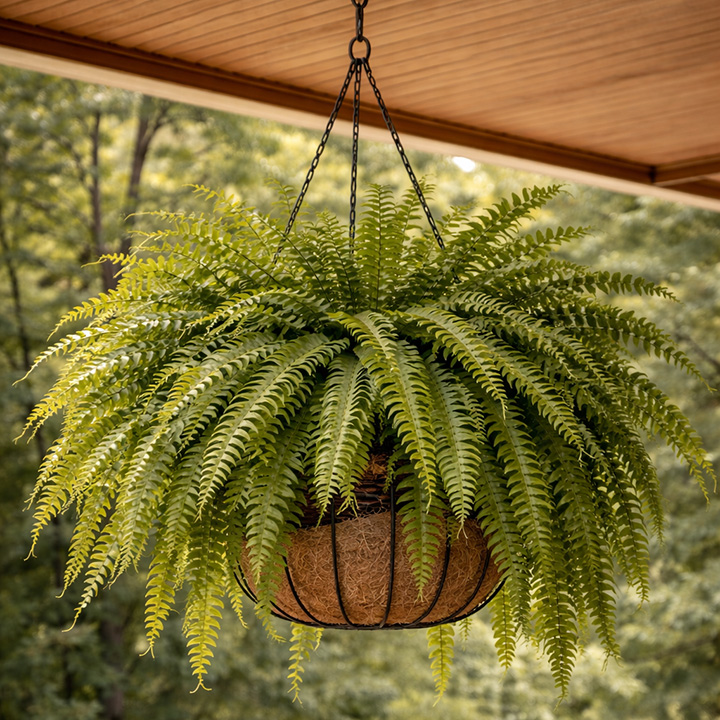
Tropical look: spider plant, pothos, tradescantia, Boston fern, fishbone fern, and trailing philodendron. This is one of the best choices for protected balconies in warmer climates.
Native look: native violet, brachyscome, scaevola, and softer native spillers that can trail over the basket edge. This is a good lower-fuss option for Australian balconies.
Edible look: strawberries, thyme, oregano, and compact trailing herbs. These baskets can also be used for practical planting, not just flowers and foliage.
Best plants for these hanging baskets by Australian region
Melbourne: bacopa, lobelia, ivy geranium, violas in season, thyme, and strawberries are good choices. In warmer sheltered months, spider plants and ferns can also do well.
Sydney: bacopa, petunias with good airflow, pothos, spider plant, coleus, ferns, and strawberries all work depending on light and exposure.
Brisbane: tropical foliage usually performs very well. Spider plant, pothos, tradescantia, coleus, and ferns are often more reliable than delicate cool-climate flowering baskets through summer.
Perth and Adelaide: choose tougher sun-tolerant baskets such as ivy geranium, thyme, trailing rosemary, strawberries, and silver spillers. Hanging baskets in these cities can dry quickly in summer, so tougher plants are a smart choice.
Canberra and Hobart: hardy flowering baskets, herbs, and cool-season annuals are often the safest route. Tender tropical plants usually need more shelter in these climates.
Darwin: tropical foliage such as pothos, spider plant, tradescantia, and ferns are a much better fit than traditional flowering basket mixes.
Read more about the right plants for your balcony
Best Plants for a Full Sun Garden in Australia
Best Plants for a Semi-Shade Balcony in Australia
Best Plants for a Full Shade Balcony in Australia
Best balcony looks you can create with this planter system
Mediterranean balcony
This is one of the best styles for Australian balconies because it suits sun, looks elegant, and usually ages well. Use the long charcoal troughs for dwarf olive, rosemary, lavender, and compact citrus. Fill the railing troughs with thyme, oregano, alyssum, and trailing rosemary. Finish with hanging baskets of ivy geranium and silver spillers. Keep the palette restrained with green, silver, white, and soft purple.
Cottage balcony
For a softer and more colourful garden, use the ground planters for dwarf roses, salvia, gaura, and lavender. Fill the railing planters with bacopa, lobelia, alyssum, petunias, and calibrachoa. Use hanging baskets with petunias and trailing verbena. The key is repetition. A few colours repeated well will look far better than too many mixed tones.
Tropical balcony
For a lush resort feel, use the long floor planters for cordylines, bromeliads, philodendrons, clivia, and leafy feature plants. Fill railing planters with coleus, spider plant, pothos, and trailing foliage. Use hanging baskets with Boston fern, fishbone fern, pothos, or tradescantia. This style is especially good in Brisbane, Sydney in protected positions, and Darwin.
Native Australian balcony
If you want a tougher lower-fuss balcony, use the ground planters for westringia, lomandra, dianella, correa, and compact grevillea. Fill the railing boxes with brachyscome, scaevola, native violet, and pigface. Add hanging baskets with native violet or softer native spillers. This is one of the smartest styles for exposed balconies.
Modern minimal balcony
If you want a clean modern look, this planter system is ideal. The charcoal troughs, black metal railing planters, and black hanging baskets already work together visually. Keep the plant palette simple and repeat it. A structured shrub plus a trailing plant is often enough to make the space feel expensive and architectural.
Edible balcony
This system can also become a very productive balcony garden. Use the ground planters for dwarf citrus, chillies, rosemary, bay, and leafy greens. Use the railing planters for parsley, thyme, oregano, lettuces, rocket, and strawberries. Use the hanging baskets for thyme, oregano, and strawberries. This gives you a balcony that looks beautiful and produces useful food.
How to lay out the whole balcony
The best way to design this system is to think in layers rather than individual pots.
- Layer one: place the long ground planters along the floor edge, wall lines, or corners.
- Layer two: repeat the railing planters across the main balustrade to create a planted band.
- Layer three: use the hanging baskets to lift the planting upward and soften the vertical space.
Try to keep the centre of the balcony open for furniture and movement. The most successful balcony gardens usually define the perimeter rather than filling the middle with pots.
Small balcony formula
On a compact balcony, a strong formula is two long ground planters, two or three repeated railing planters, and two to four hanging baskets. That is often enough to make the space feel fully landscaped.
Medium balcony formula
For a medium or wider balcony, use three or four long ground planters, three or more railing troughs across the main edge, and four or more hanging baskets for a fuller layered look.
Large balcony formula
On a larger balcony, repeat the same system rather than changing styles. More of the same long troughs, the same railing planters, and the same hanging baskets will usually look far better than adding many extra planter types.
Best planter strategy for different Australian climates
Hot dry balconies: common in Perth and Adelaide. Mediterranean and native palettes are usually the strongest because they handle bright sun and drier conditions better than thirsty annual mixes.
Humid east-coast balconies: common in Brisbane and many Sydney positions. Tropical foliage, subtropical plants, herbs, and carefully chosen flowering plants with good airflow generally perform well.
Cooler southern balconies: common in Melbourne, Hobart, and Canberra. Wind-tolerant shrubs, herbs, and seasonal flowers are often the safest choices.
Tropical north balconies: common in Darwin. Use lush foliage, excellent drainage, and plants that handle heat, humidity, and seasonal rain.
Tips for making this balcony planter system work well
- use quality potting mix in every planter
- add slow-release fertiliser for stronger consistent growth
- repeat plants instead of using too many different varieties
- mix upright structure with trailing spillers
- check sunlight, wind exposure, and access to water before final placement
- keep the centre of the balcony clear so the space stays usable
- water hanging baskets and railing planters more frequently than deep ground troughs
- stick to a limited palette for a cleaner and more premium look
Final thoughts
If your goal is to cover the whole balcony and create a strong stylish result, this is an excellent planter system. The long Greenlife ground planters provide structure and planting volume, the 36-inch railing planters create the most dramatic planted edge, and the 16-inch hanging baskets complete the look by adding height and softness.
The real strength of this setup is that all three planter types support the same design principle: fewer, larger planters repeated well. That is what makes a balcony feel full without making it look messy.
Whether you want a Mediterranean balcony, a cottage look, a lush tropical retreat, a native Australian planting scheme, or an edible garden, this coordinated planter system gives you a strong framework that can be adapted beautifully for balconies across Australia.
FAQ
What are the best balcony planters for a full balcony look?
The best balcony planters for a full and polished look are usually long ground troughs, large railing planters, and oversized hanging baskets used together as one coordinated system. This creates planting at floor level, railing level, and above, which makes the balcony feel much more complete.
Are large planters better than small pots on a balcony?
In most cases, yes. Large planters look neater, hold more soil, dry out less quickly, and create stronger design impact. Small pots can work as accents, but too many of them often make a balcony look cluttered.
What should I plant in long balcony planters in Australia?
That depends on your climate and the style you want. Mediterranean planting may include rosemary, lavender, olives, and citrus. Native planting may include westringia, lomandra, scaevola, and pigface. Cottage balconies often use roses, salvia, and alyssum, while tropical balconies suit cordylines, philodendrons, and bromeliads.
What are the best plants for railing planters?
Good choices include herbs, strawberries, alyssum, bacopa, lobelia, brachyscome, native violet, trailing rosemary, and compact seasonal flowers. The best plants are those that stay tidy while still softening the railing edge.
What can I grow in hanging baskets on a balcony?
You can grow petunias, bacopa, ivy geranium, ferns, pothos, spider plant, tradescantia, strawberries, thyme, and native violet. The right choice depends on how much sun and wind your balcony gets.
What is the best balcony style for hot Australian cities?
Mediterranean and native styles are often the best fit for hot dry cities such as Perth and Adelaide because they use tougher plants that handle strong sun and lower summer moisture better than thirstier mixed flower displays.
What is the best balcony style for humid cities like Brisbane and Sydney?
Tropical, subtropical, and selective edible planting schemes often work especially well in humid cities. Plants such as bromeliads, philodendrons, cordylines, herbs, spider plants, and ferns usually cope better than delicate cool-climate flowers.
How do I make my balcony look full without making it messy?
Use fewer planter styles, repeat them consistently, and keep the plant palette tighter. A coordinated system of matching ground planters, railing boxes, and hanging baskets almost always looks more intentional than lots of mixed pots.
How many planters do I need to cover a balcony?
For many balconies, two long ground planters, two or three repeated railing planters, and two to four hanging baskets are enough to create a full effect. Larger balconies can scale this up with the same repeated formula.
Can I use the same planter system in Melbourne, Sydney, Brisbane, Perth, and other Australian cities?
Yes. The planter system can stay the same, but the plants should change depending on the local climate, sun exposure, wind, and humidity. That is what makes the system flexible across Australia.

Comments are closed.