
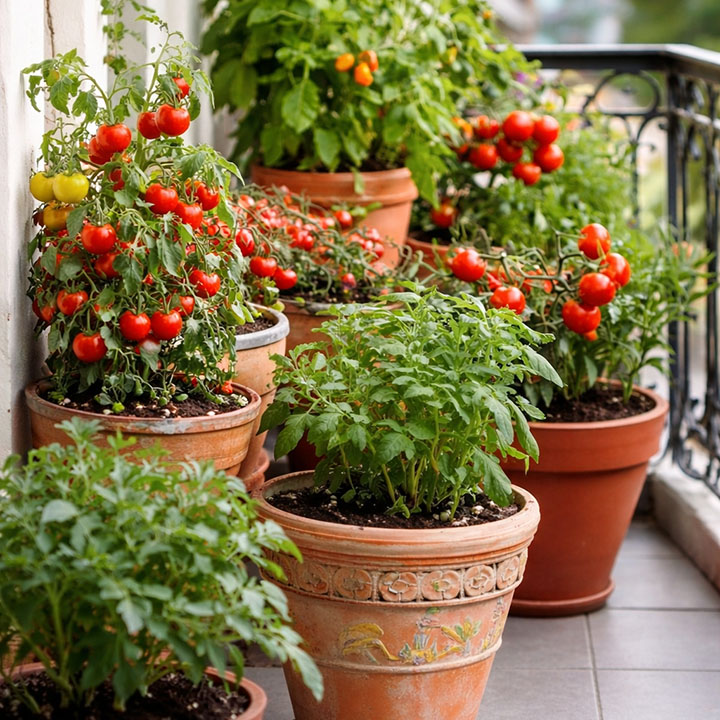
Tomatoes are one of the best edible plants you can grow on a balcony. They are productive, rewarding, and surprisingly well suited to container gardening when given enough sun, water, and support. For Australian balcony gardeners, tomatoes are often the first crop worth trying because they grow quickly, look great in pots, and produce fruit over a long period in the warmer months.
Whether you live in a small Melbourne apartment, a sunny Brisbane unit, a windy Sydney high-rise, or a dry Perth balcony, you can grow tomatoes successfully with the right setup. The key is matching your variety, pot size, and watering routine to your local weather and balcony conditions.
This guide explains everything you need to know about growing tomatoes on a balcony in Australia, including the best varieties for pots, how much sun they need, the right container size, feeding, watering, city-specific weather tips, and common mistakes to avoid.
Why Tomatoes Grow Well on Balconies
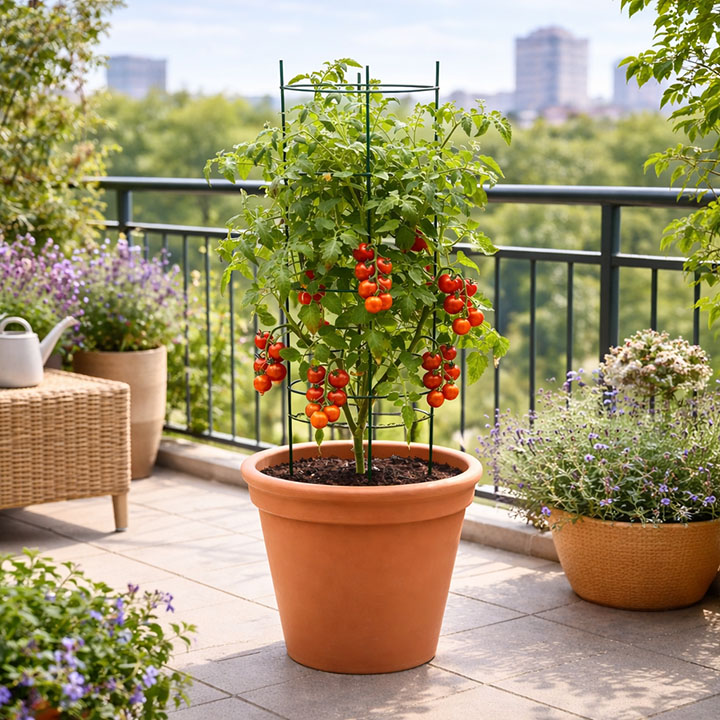
Tomatoes are naturally a strong choice for balcony gardening because they perform very well in containers. Unlike sprawling crops that need lots of garden space, tomatoes can be trained vertically with stakes, cages, or trellises. That makes them ideal for compact outdoor areas.
Balconies also give you more control over soil quality, drainage, and positioning. If one area gets better light, you can move a pot. If a heatwave hits, you can add temporary shade. If a windy front arrives, you can shift the plant closer to a wall for protection. This flexibility can actually make balcony-grown tomatoes easier to manage than tomatoes in the ground.
And then there is the payoff. Fresh homegrown tomatoes taste better than most supermarket tomatoes, especially cherry and smaller varieties picked ripe from the vine. Even one healthy plant can provide a steady harvest through the growing season.
How Much Sun Do Balcony Tomatoes Need?
Tomatoes need plenty of direct sun to grow well. In general, aim for at least 6 to 8 hours of direct sunlight each day. More sun usually means stronger growth, more flowers, and sweeter fruit.
In Australia, a north-facing balcony is usually the best option because it gets the most reliable sun. East-facing balconies can still work well, especially for cherry tomatoes, though production may be lighter. West-facing balconies can also grow tomatoes successfully, but they may become very hot in summer, especially in cities with strong afternoon heat. South-facing balconies are usually the most difficult unless they receive unusual reflected light.
If your balcony only gets 4 or 5 hours of direct sun, try compact cherry tomatoes rather than large slicing types. They tend to cope better with slightly less light and are usually the most productive option for small-space gardeners.
Best Tomato Varieties for a Balcony
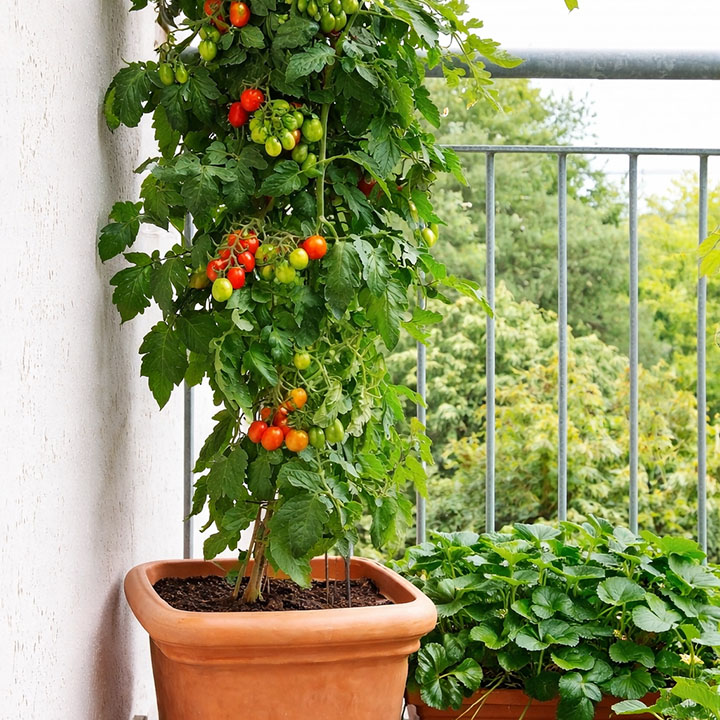
Not every tomato is ideal for container growing. Some varieties become very large, require heavy support, and take over small spaces quickly. For most balconies, compact, dwarf, cherry, or determinate tomatoes are the easiest and most reliable choice.
Best Types of Tomatoes for Pots
- Cherry tomatoes are the easiest choice for beginners. They are productive, fast to ripen, and well suited to pots.
- Grape tomatoes are compact and great for snacking.
- Roma or plum tomatoes are useful for cooking and sauces, though they often need a bit more feeding.
- Dwarf or patio tomatoes are bred specifically for containers and small spaces.
- Determinate tomatoes stay more compact and fruit over a shorter, more manageable period.
If you are new to balcony gardening, start with a cherry tomato or a patio variety. These tend to give the best results with the least stress.
Determinate vs Indeterminate Tomatoes
When buying seedlings or seeds, it helps to understand the difference between determinate and indeterminate tomatoes.
Determinate tomatoes grow to a set size, stay more compact, and produce most of their crop over a shorter period. They are usually easier to manage on a balcony.
Indeterminate tomatoes keep growing, climbing, and fruiting over a longer season. They can be extremely productive, but they need bigger pots, stronger supports, and more regular pruning.
For a small or medium-sized balcony, determinate, patio, or compact cherry tomatoes are usually the best fit. Indeterminate varieties can still work, but only if you have the room and want a larger, more demanding plant.
Best Pot Size for Tomatoes on a Balcony
Pot size matters a lot with tomatoes. One of the most common mistakes is planting them in containers that are too small. Small pots dry out too quickly, heat up faster, and limit the root system, which leads to weaker plants and lower yields.
As a starting guide:
- Use a pot at least 30cm wide and deep for compact dwarf tomatoes.
- Use a pot around 40cm to 50cm wide for cherry, roma, and most standard varieties.
- Use an even larger container for vigorous indeterminate tomatoes.
One tomato plant per pot is usually best. It can be tempting to squeeze more in, but overcrowding reduces airflow, increases disease risk, and makes watering harder to manage.
Terracotta pots look beautiful, but they dry out faster in summer. Plastic, glazed, fibreglass, and self-watering pots are often easier for Australian balconies, especially in hot cities.
The Best Soil for Balcony Tomatoes
Tomatoes need rich, well-draining soil. Always use a premium potting mix for containers rather than garden soil. Garden soil becomes compacted in pots, drains poorly, and can cause root problems.
A good vegetable-friendly potting mix is the easiest option. You can improve it by mixing in a little compost for added fertility. If your balcony gets very hot, adding materials that improve water retention can also help, but the mix still needs to drain well.
Before planting, blend in a slow-release fertiliser suitable for vegetables or fruiting plants. Tomatoes are heavy feeders, and giving them nutrients from the beginning will help them establish faster.
How to Plant Tomatoes in Containers
Planting tomatoes properly gives them a much stronger start. Choose healthy seedlings with thick stems and deep green leaves. Avoid weak or overly leggy plants.
- Fill the pot with premium potting mix, leaving a few centimetres at the top.
- Install a stake, cage, or support before planting so you do not disturb the roots later.
- Remove the seedling gently from its nursery pot.
- Plant it deeply, burying part of the stem if possible. Tomatoes can form extra roots along buried stems.
- Water thoroughly after planting.
- Add mulch to the top of the pot to help retain moisture and reduce temperature swings.
Once planted, place the pot in the sunniest suitable position on your balcony and keep it protected from severe wind while it settles in.
How Often to Water Balcony Tomatoes
Watering is the most important part of growing tomatoes in pots. Container-grown tomatoes dry out much faster than garden-grown ones, especially on balconies where heat and wind can be intense. The ideal is evenly moist soil, not constantly wet soil and not soil that swings from bone dry to drenched.
In mild weather, you might water every second day. In warm summer weather, you may need to water daily. During extreme heat or on hot, windy balconies, tomatoes may need water morning and evening.
The best way to check is to feel the soil. If the top few centimetres are dry, it is probably time to water. Water deeply until it runs from the drainage holes. Quick shallow watering is not enough because it does not reach the full root zone.
Inconsistent watering often leads to problems such as split fruit, blossom end rot, and flower drop, so stability matters more than guesswork.
Feeding Tomatoes in Pots
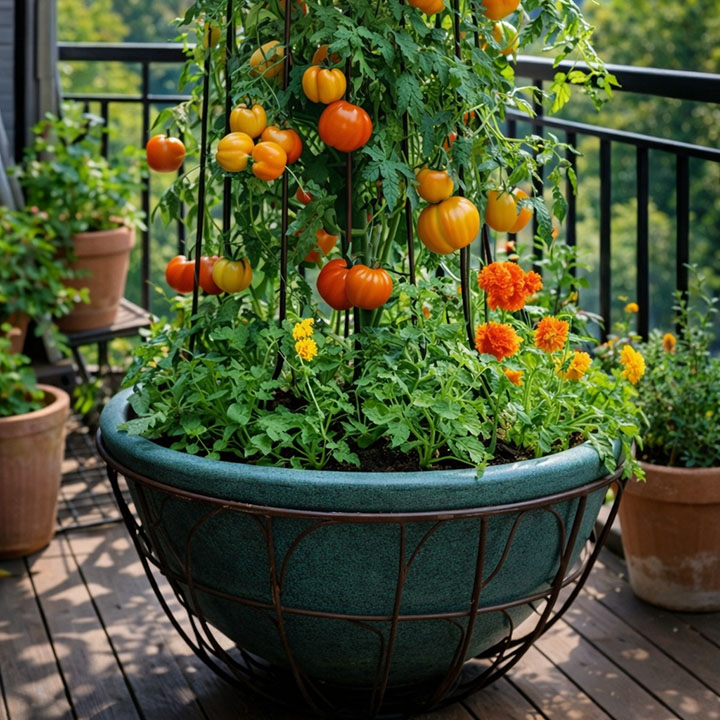
Tomatoes are hungry plants. Because pots hold a limited amount of soil, nutrients are used up faster than they would be in the ground. To keep plants healthy and productive, regular feeding is essential.
A simple feeding routine is to start with slow-release fertiliser when planting, then switch to a liquid tomato or vegetable fertiliser every 1 to 2 weeks once flowering begins. This keeps the plant growing strongly and helps support fruit production.
Be careful with very high-nitrogen fertilisers. These can encourage lots of leafy growth but fewer tomatoes. Once flowers appear, a fertiliser designed for fruiting plants is usually the best option.
Do Balcony Tomatoes Need Support?
Yes. Most tomatoes need some form of support, even the smaller ones. Balcony conditions can be surprisingly windy, and stems carrying fruit can bend or snap without help.
You can support tomatoes with:
- Single tomato stakes
- Tomato cages
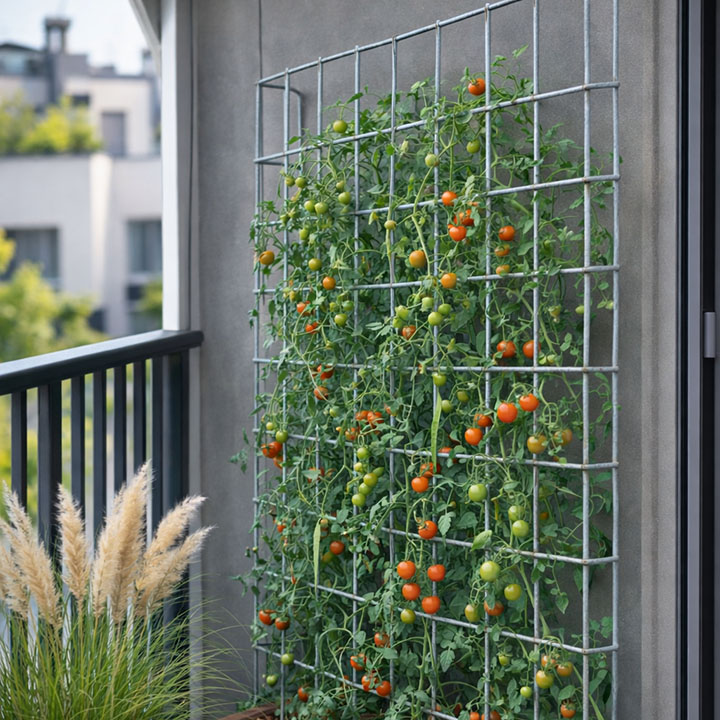
- Slim balcony trellises
- Soft plant ties
Install support early. It is much easier to guide a young plant than to fix a large, tangled one later. Compact or determinate tomatoes may only need a cage or short stake, while indeterminate tomatoes need more regular tying and training.
Do You Need to Prune Balcony Tomatoes?
Pruning depends on the variety. Indeterminate tomatoes usually benefit from removing some side shoots or suckers so the plant stays manageable and focuses more energy on fruit. Determinate and dwarf tomatoes usually need much less pruning.
In general, it helps to remove damaged leaves, yellow lower leaves, and crowded growth near the base of the plant. This improves airflow and makes it easier to spot pests and disease early.
Australian City and Weather Guide for Balcony Tomatoes
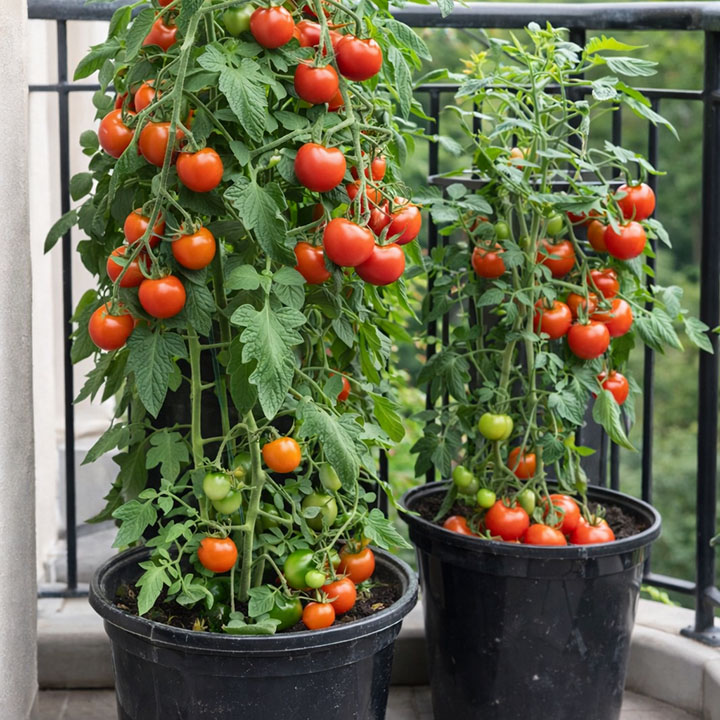
Australia’s climate varies widely, so tomato care should always be adjusted to your local city and balcony microclimate. A balcony in Brisbane behaves differently from one in Hobart or Canberra.
Sydney
Sydney is generally very good for tomatoes. Warm weather supports strong growth, but balconies can become hot and reflective in summer. If your balcony faces west, your plants may need more frequent watering and some relief during heatwaves. Humidity can also encourage fungal issues, so good airflow matters.
Melbourne
Melbourne can produce excellent tomatoes, but weather changes quickly and wind is often the bigger issue. A sheltered, sunny balcony works best. Plants may need stronger staking than expected, and exposed positions can dry out fast even when temperatures are not extreme.
Brisbane
Brisbane’s warmth helps tomatoes grow fast, but summer humidity can be challenging. Balcony gardeners often get the best results by focusing on the milder part of the warm season rather than the most humid peak. Watch for fungal disease, avoid crowding plants, and water the soil rather than the leaves.
Perth
Perth’s strong sun is great for tomatoes, but the dry heat means watering becomes critical. Use larger pots, add mulch, and consider self-watering containers if your balcony gets harsh afternoon sun. During very hot weather, a little afternoon protection can help prevent blossom drop and stress.
Adelaide
Adelaide tomatoes often thrive, but balcony heat can build up quickly around concrete, paving, glass, and masonry. Choose a large container, water deeply, and mulch the surface well. Light-coloured pots can also help reduce root-zone heat.
Canberra
Canberra has a shorter warm season, so timing is important. Wait until conditions are properly warm before planting. A north-facing balcony is especially useful here, and early-fruiting varieties are often the safest option. Cool nights can slow growth, especially early in the season.
Hobart
Hobart gardeners can still grow tomatoes successfully on a balcony, but warmth and sunlight are essential. Choose the sunniest, most sheltered spot you have and stick to cherry or fast-ripening varieties. Reflected warmth from walls can help create a better microclimate.
When to Plant Tomatoes on a Balcony in Australia
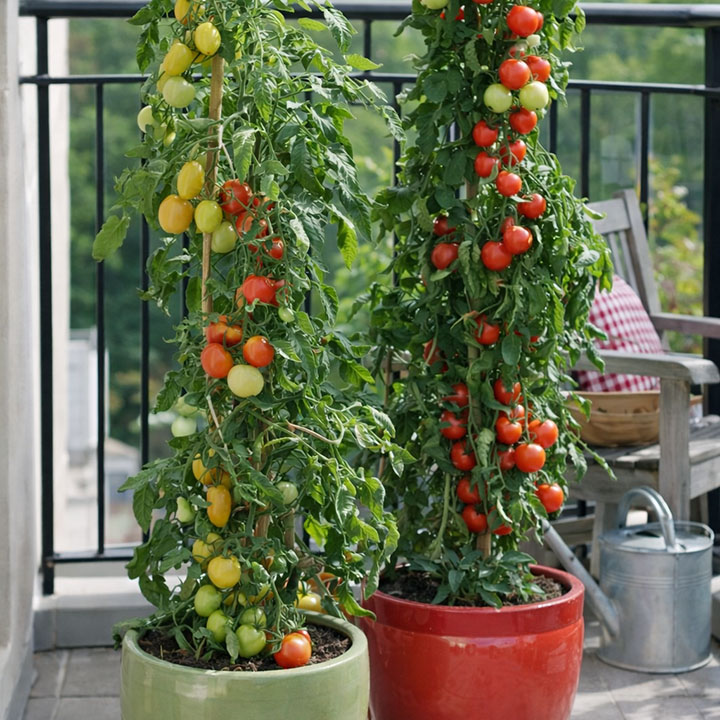
Tomatoes are warm-season plants, so they should be planted when temperatures are consistently mild to warm. Plant too early and they often stall, struggle, or become vulnerable to cold nights.
In warmer parts of Australia, the planting window starts earlier. In cooler cities, it starts later. Instead of relying on a single national calendar, pay attention to local conditions. If nights are still cool and the potting mix feels cold in the morning, it is usually better to wait a little longer.
How to Manage Wind on a Balcony
Wind is one of the most overlooked challenges in balcony gardening. It dries pots faster, stresses plants, damages flowers, and can reduce fruit set. Upper-level balconies are especially exposed.
If your balcony is windy, place your tomato near a wall, screen, or corner where it still receives good sun. Choose heavier pots that are less likely to tip and secure the stems with soft ties as they grow. Compact varieties are usually a smarter choice than large sprawling ones in exposed spaces.
Common Problems With Balcony Tomatoes
Flowers But No Fruit
This is often caused by heat stress, poor pollination, or general plant stress. On sheltered balconies, gently tapping or shaking flowering stems can help pollination.
Blossom End Rot
This appears as a dark, sunken patch on the bottom of the fruit. It is usually linked to inconsistent watering. Keeping soil moisture stable is the main fix.
Yellow Leaves
Yellowing can be caused by watering issues, poor drainage, nutrient deficiency, overcrowding, or natural aging of older leaves. Check the roots, watering pattern, and feeding routine first.
Split Tomatoes
Fruit splitting usually happens when a dry plant is suddenly given a lot of water. Consistent watering reduces the risk.
Weak or Leggy Growth
This almost always points to insufficient sun. Move the pot to the brightest possible position if you can.
Pests and Diseases to Watch For
Balcony tomatoes are not immune to pests. Keep an eye out for aphids, whitefly, caterpillars, and spider mites, especially during warm weather. Check the undersides of leaves regularly and respond early before problems spread.
Fungal issues are more common in humid or overcrowded conditions. Good airflow, watering at the soil level, removing damaged leaves, and avoiding dense planting all help reduce the risk.
Can You Grow Tomatoes With Other Plants?
It is usually best to give each tomato its own pot, but that does not mean your balcony setup needs to be boring. Herbs like basil grow well nearby and enjoy similar warm conditions. Instead of crowding the tomato pot, place companion herbs in separate containers around it. This keeps the balcony productive while making watering and root management much easier.
Best Balcony Setup for Growing Tomatoes
A strong balcony tomato setup is simple. Start with one healthy plant in one large pot filled with quality potting mix. Add mulch, install support early, place it in strong sun, and water consistently. Feed regularly once flowering starts, and protect the plant from severe wind or heat stress when needed.
This basic system works better than trying to grow too many plants in too little space. A single well-grown tomato will usually outperform several crowded, neglected ones.
When to Harvest Balcony Tomatoes
Tomatoes are best harvested when fully coloured and slightly soft but still firm. Pick regularly to encourage more fruiting. Cherry tomatoes are usually sweetest when ripened properly on the vine, while larger varieties can be picked a little earlier if splitting, birds, or extreme heat are becoming a problem.
Frequent harvesting also keeps the plant productive and reduces the chance of overripe fruit attracting pests.
Is It Worth Growing Tomatoes on a Balcony?
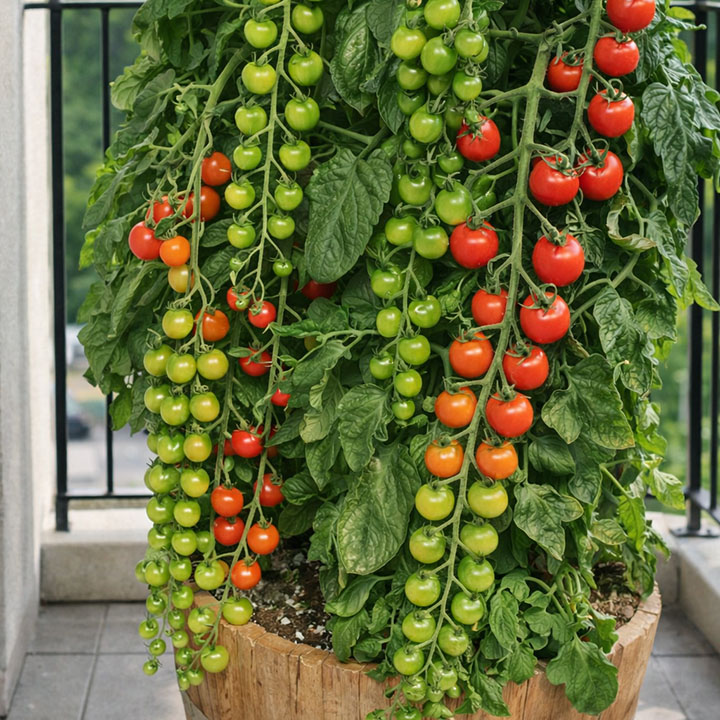
Absolutely. Tomatoes are one of the most satisfying balcony crops because they combine beauty, productivity, and flavour. Even a single pot can produce a useful harvest, and homegrown tomatoes almost always taste better than store-bought ones.
If you have a sunny balcony and want to grow something practical, tomatoes are one of the best places to start. They do ask for regular attention, especially with watering, but the reward is worth it.
Final Tips for Success
- Start with cherry or compact tomatoes if you are a beginner.
- Use the largest pot your space allows.
- Give tomatoes at least 6 to 8 hours of direct sun.
- Water consistently and deeply.
- Feed regularly once flowering begins.
- Stake or cage the plant early.
- Watch for wind stress as well as heat stress.
- Adjust your routine to your city and balcony microclimate.
With the right variety, enough sunlight, and a steady watering routine, growing tomatoes on a balcony in Australia is very achievable. A small balcony can easily become a productive edible garden, and tomatoes are one of the best crops to prove it.

Comments are closed.