
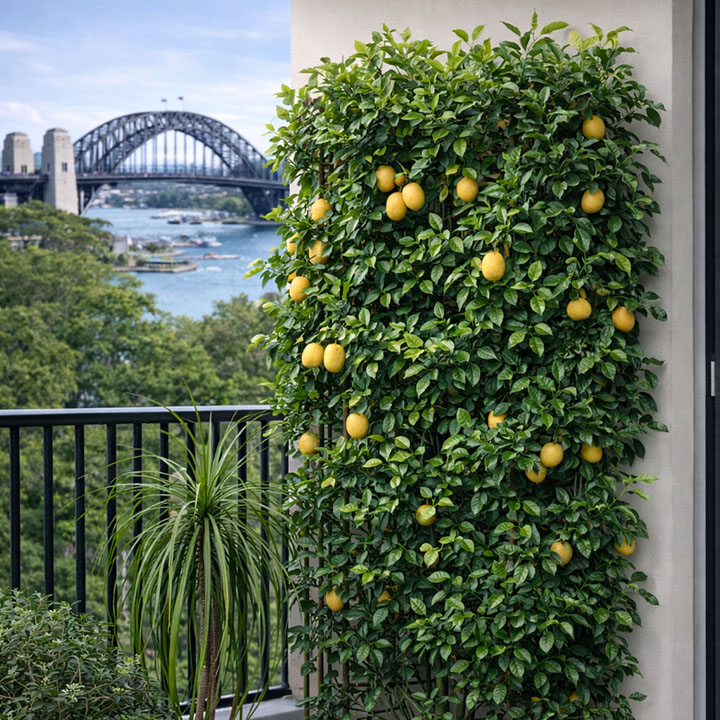
A trellis balcony garden is one of the smartest ways to grow more plants in a small space. Instead of spreading pots across the floor, you grow upward. This makes a balcony feel greener, softer, and more private without taking away valuable walking room. In Australia, where balconies often deal with strong sun, drying winds, sudden rain, and heat reflected from walls and railings, a trellis can also help create shade, shelter, and structure.
Whether you live in an apartment in Sydney, a windy high-rise in Melbourne, a subtropical balcony in Brisbane, or a hot west-facing space in Perth, a trellis garden can turn a plain outdoor area into a productive and beautiful green retreat. You can use it for flowering climbers, herbs, vegetables, privacy screening, or simply to make the space feel more lush and inviting.
What Is a Trellis Balcony Garden?
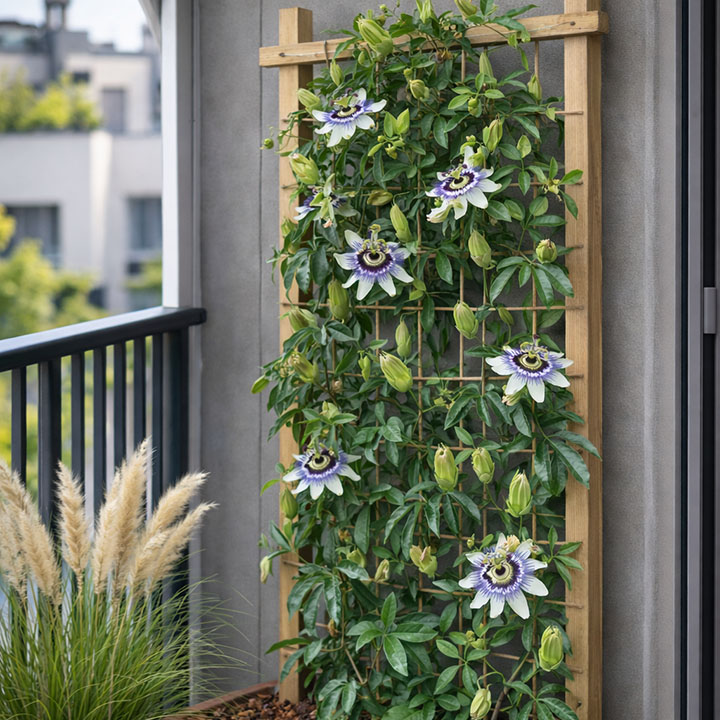
A trellis balcony garden uses a vertical support structure so plants can climb, trail, or be trained upward. On a balcony, this could be a freestanding trellis in a pot, a panel fixed safely to a wall, a narrow ladder-style frame, a wire grid, or a privacy screen designed to support plants.
The goal is simple: use vertical space to grow more with less room. This works especially well on balconies because floor area is limited, but light and air are often available higher up.
Why Trellis Gardens Work So Well on Balconies
- They save space: ideal for small apartment balconies where every centimetre matters.
- They add privacy: leafy climbers can soften railings and block neighbouring views.
- They cool the space: vertical greenery can reduce harsh heat and reflected glare.
- They improve style: trellises add height, shape, and a more finished look.
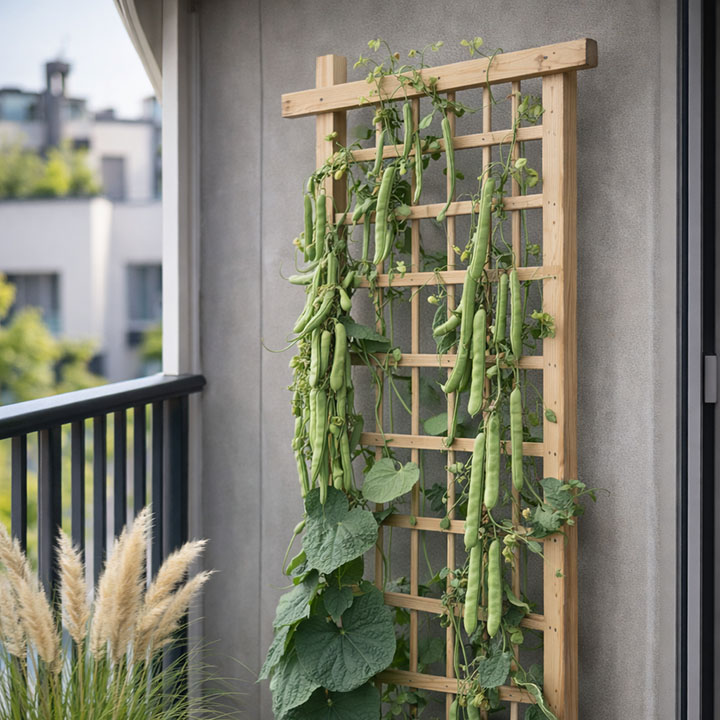
- They support edible growing: peas, beans, cucumbers, tomatoes, and some passionfruit varieties can all be trained vertically.
- They make plant care easier: lifting foliage off the ground improves airflow and can reduce mess.
Best Types of Trellis for a Balcony
Not every trellis suits every balcony. The best option depends on your available space, exposure, body corporate rules, and the weight your balcony can safely handle.
1. Freestanding Pot Trellis
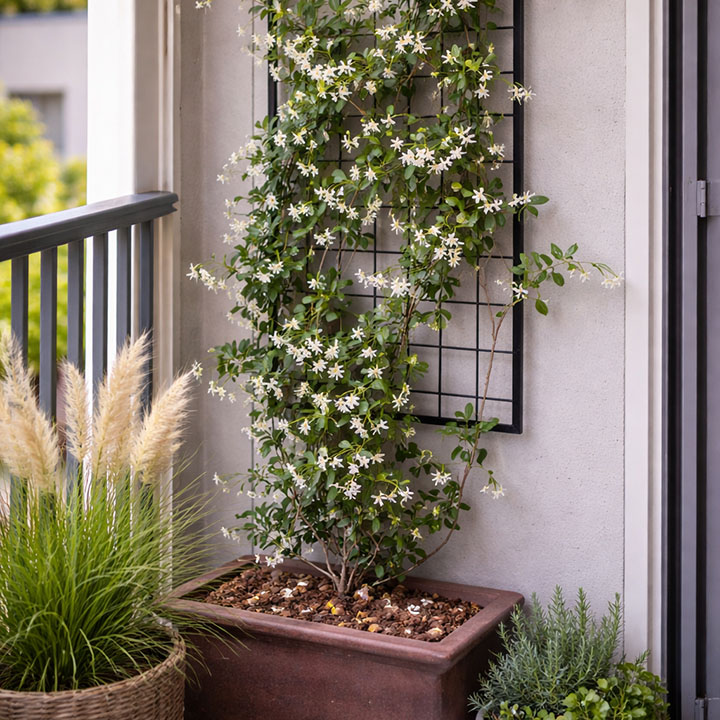
This is often the easiest choice for renters. The trellis sits directly inside a pot or planter, so there is no drilling or permanent fixing. It works well for jasmine, mandevilla, sweet peas, climbing beans, and compact edible vines.
2. Wall-Mounted Trellis
If your balcony allows it, a wall-mounted trellis creates a clean vertical garden with a small footprint. It is best for lightweight climbers and decorative screening. Make sure any installation is approved and suitable for outdoor conditions.
3. Wire or Mesh Panel
Wire grids, stainless steel cables, or mesh panels give a modern look and can support many lightweight climbing plants. They are especially useful for contemporary apartment balconies where you want a neat, minimal design.
4. Expandable Trellis
Expandable wooden or plastic trellises are flexible and easy to fit into awkward spaces. They are good for decorative climbers and annual vines but usually less suitable for heavy crops.
5. Privacy Screen Trellis
This combines screening and plant support in one. It is ideal if your balcony overlooks nearby apartments and you want a greener, more secluded feel. Choose a sturdy design that can handle wind.
How to Choose the Right Trellis for Australian Conditions
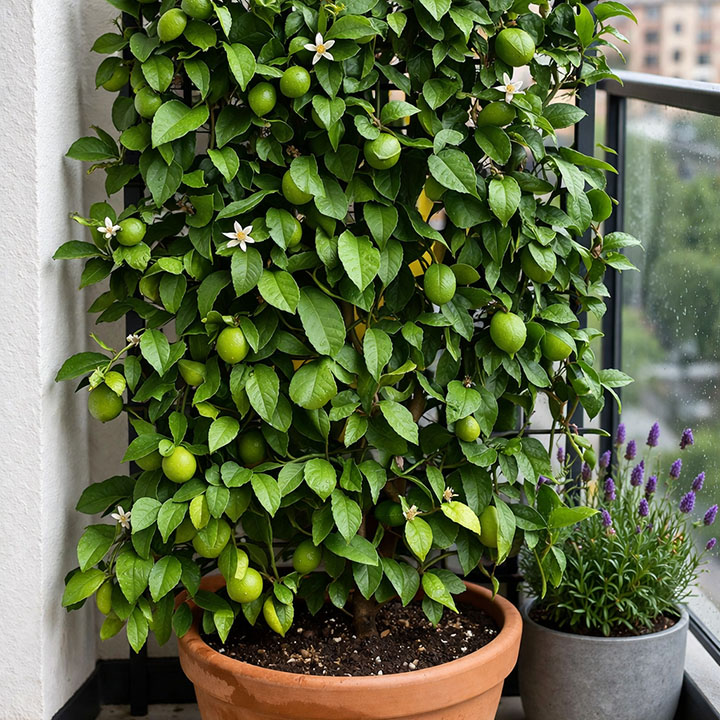
Australian balconies can be surprisingly tough environments. Many receive intense UV exposure, hot reflected heat from concrete, strong drying winds, and sudden weather changes. Choose a trellis that matches both your plant and your climate.
- For full sun balconies: use durable powder-coated metal, hardwood, or weather-resistant composite materials.
- For coastal areas: avoid materials that rust easily. Marine-grade or powder-coated finishes are better near salt air.
- For windy high-rises: choose compact, sturdy trellises and avoid large leafy climbers that may act like sails.
- For renters: use freestanding or pot-mounted systems that do not require permanent changes.
- For edible plants: make sure the structure is strong enough for the crop once watered, mature, and fruiting.
Best Plants for a Trellis Balcony Garden in Australia
The best plants depend on your sunlight, wind exposure, and local climate. It is always better to match plants to your balcony than to force unsuitable plants to survive.
Flowering Climbers
- Star jasmine: fragrant, evergreen, and popular for privacy.
- Mandevilla: great for warm balconies with bright light.
- Hardenbergia: a lovely Australian native climber for many temperate areas.
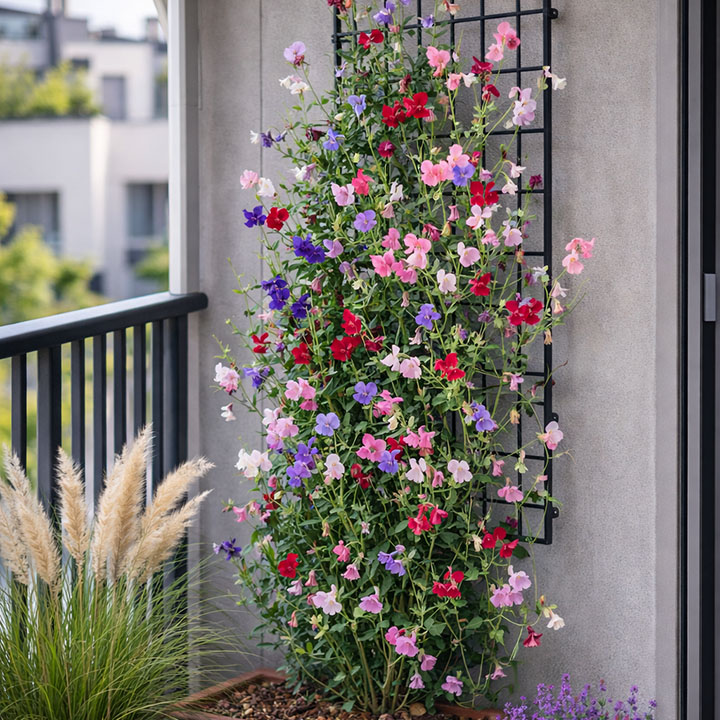
- Sweet peas: perfect for cooler seasons and colourful spring displays.
- Clematis: works well in some climates with the right pot and root protection.
Edible Climbers
- Snow peas and sugar snap peas: excellent for cool seasons.
- Climbing beans: productive in warm weather.
- Cucumbers: ideal for sunny balconies with regular watering.
- Cherry tomatoes: some varieties can be trained with support.
- Mini passionfruit: possible on larger, sunny balconies with a strong trellis and large pot.
Foliage and Screening Plants
- Climbing fig: best used with care, as it can cling strongly to surfaces.
- Pandorea: attractive and useful for screening in suitable climates.
- Native twining plants: great for a softer, Australian look.
For very small balconies, choose lighter, more controlled growers. Avoid aggressive vines that quickly outgrow containers or become difficult to manage.
Balcony Direction and Light Matter
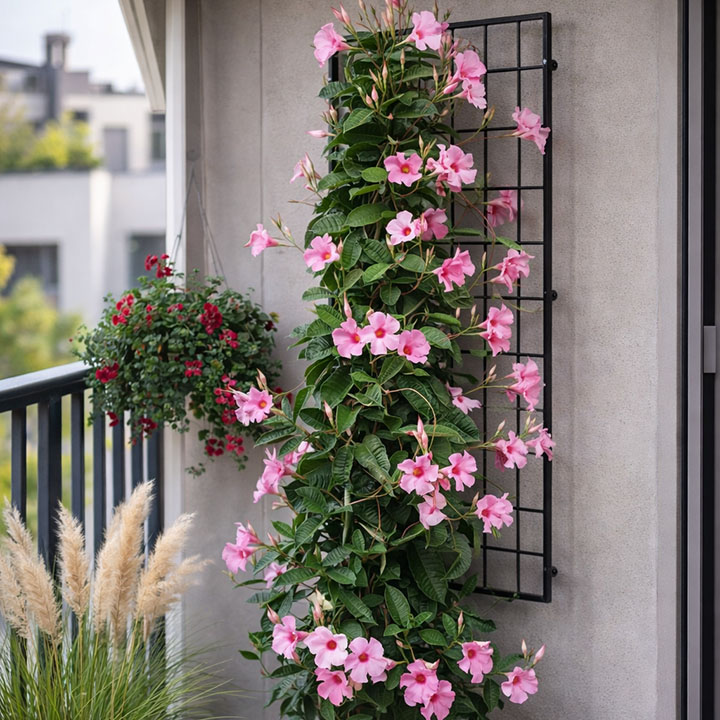
Before installing a trellis, watch how sunlight moves across your balcony. This determines which plants will thrive.
- North-facing balconies: usually receive the most sun in Australia and suit many flowering and edible climbers.
- East-facing balconies: get gentle morning light and are good for many herbs, flowers, and less heat-tolerant climbers.
- West-facing balconies: can be brutally hot in summer and need heat-tolerant plants plus careful watering.
- South-facing balconies: often have lower light and are better for shade-tolerant or part-shade climbers.
How Australian Cities Affect Your Trellis Garden
Australia’s major cities each create different balcony growing conditions. Even the same plant may perform very differently depending on location.
Sydney
Sydney balconies often deal with bright light, humidity, and coastal exposure. Plants may grow quickly, but salt air and strong sun can be hard on delicate leaves. Jasmine, mandevilla, climbing beans, and many herbs do well with regular water and wind protection.
Melbourne
Melbourne is famous for variable weather. Balcony gardeners may experience sun, cool changes, strong wind, and sudden temperature swings. Choose sturdy supports, secure pots well, and use flexible plant choices that handle change. Sweet peas, star jasmine, climbing roses in larger spaces, and seasonal edibles can all work well.
Brisbane
Brisbane’s warmth and humidity support fast growth, especially for tropical and subtropical climbers. However, summer rain and heat can also increase disease pressure if airflow is poor. Mandevilla, passionfruit, cucumbers, and beans often perform well on bright balconies.
Perth
Perth balconies often face strong sun, dry heat, and hot afternoon exposure. Watering becomes critical, and light-coloured pots can help reduce root heat. Choose heat-tolerant climbers and use mulch to keep the potting mix cooler for longer.
Adelaide
Adelaide can be hot and dry in summer, so moisture retention matters. Good drainage is still essential, but plants on trellises may need more frequent watering during heatwaves. Edible climbers should be placed where they receive strong light without baking against a hot wall.
Canberra
Canberra’s colder winters mean seasonal planning is important. Frost-sensitive climbers may struggle on exposed balconies, but cool-season crops like peas can shine. Portable pots are useful so plants can be moved into protection when needed.
Hobart
Hobart gardeners often need to make the most of sun and warmth. A north-facing trellis can help create a sheltered microclimate. Focus on hardy climbers and cool-climate seasonal edibles.
Darwin
Darwin’s tropical wet and dry seasons create different challenges. Fast growth is possible, but humidity, storms, and intense rainfall mean airflow and strong structures are essential. Choose vigorous warm-climate plants and check supports regularly.
How to Set Up a Trellis Balcony Garden
1. Check Safety First
Before adding anything to a balcony, confirm weight limits, drainage, and building rules. Wet soil, large pots, and tall supports can become very heavy. Never attach a structure in a way that could damage common property or create a wind hazard.
2. Choose the Right Container
Climbers need more root space than many people expect. Use a pot or planter large enough to support both the plant and the trellis. A deeper container usually gives better moisture stability and root health than a shallow one.
3. Use Quality Potting Mix
Do not use garden soil on a balcony. A premium potting mix designed for containers is lighter, drains better, and supports healthier roots. For hungry climbers, blend in compost or a controlled-release fertiliser suited to the plant type.
4. Secure the Trellis Properly
The trellis must be stable before the plant grows. Install it firmly into the container or structure. It should not wobble in wind or lean under the weight of foliage and fruit.
5. Plant and Train Early
Guide stems onto the trellis while they are still young and flexible. Use soft ties if needed, and avoid tying too tightly. Early training creates a neater, healthier plant and better coverage.
Watering and Feeding a Trellis Garden
Plants growing vertically often dry out faster than expected, especially in windy Australian conditions. The potting mix may look moist on top while being dry deeper down, or vice versa. Check regularly rather than watering on a fixed schedule alone.
- Water deeply so roots grow down, not just near the surface.
- Mulch the top of the pot to reduce evaporation.
- Use self-watering planters or drip irrigation if your balcony gets very hot.
- Feed flowering and fruiting climbers regularly during active growth.
- Reduce feeding during winter or slower growth periods.
How to Handle Wind on a Balcony
Wind is one of the biggest challenges in balcony gardening. It dries leaves, damages stems, knocks over pots, and can stress climbing plants badly. A trellis can help, but it can also increase wind load if not chosen carefully.
- Use heavier pots with a low centre of gravity.
- Avoid oversized leafy climbers on very exposed balconies.
- Choose sturdy supports rather than flimsy decorative trellises.
- Group pots together to create a more sheltered microclimate.
- Use wind-tolerant plants in exposed positions.
Seasonal Care for Trellis Balcony Gardens
Spring
This is the main season for planting and training new climbers in most southern parts of Australia. Refresh potting mix, fertilise, and check that your trellis is still secure after winter weather.
Summer
Expect faster growth, more watering, and greater heat stress. Watch west-facing balconies closely. Shade cloth, mulch, and morning watering can help during hot periods.
Autumn
This is a great time to tidy growth, replace tired annuals, and plant cool-season climbers such as peas in many regions. It is also a good time to assess what worked over summer.
Winter
Growth slows in cooler cities, though mild-climate balconies may still be productive. Water less often where evaporation drops, but do not let pots dry out completely. Protect sensitive plants from frost and icy wind where relevant.
Common Trellis Balcony Garden Mistakes
- Using a trellis that is too weak for the mature plant.
- Choosing fast-growing vines for a very small balcony.
- Ignoring wind exposure.
- Using pots that are too small.
- Letting climbers become tangled before training them.
- Underwatering in summer heat.
- Overcrowding the balcony and reducing airflow.
- Installing structures without checking building or rental rules.
Design Ideas for a Beautiful Trellis Balcony Garden
A trellis garden can be practical and attractive at the same time. You might create a flowering privacy wall, a Mediterranean edible corner, or a soft native screening feature. Repeating planter colours, using a limited plant palette, and mixing upright climbers with trailing plants can make the whole space feel intentional and calm.
For a modern Australian apartment look, pair black or timber trellises with terracotta or neutral pots. For a softer cottage style, use flowering climbers with herbs and seasonal colour underneath. For an edible balcony, combine climbing beans, cucumbers, peas, and basil or parsley in nearby pots.
Final Thoughts
A trellis balcony garden is one of the best ways to get more greenery, beauty, privacy, and productivity from a small outdoor space. In Australia, success comes from matching the trellis, pot size, and plant choice to your city, your balcony direction, and your exposure to sun and wind. Start simple, choose reliable plants, secure everything well, and build from there. Even a very small balcony can become a lush vertical garden with the right setup.
Frequently Asked Questions
What is the best trellis for a small balcony?
A freestanding pot trellis is usually the best option for a small balcony because it does not require drilling and uses very little floor space. It is especially good for renters.
Can I grow vegetables on a balcony trellis?
Yes. Many vegetables grow well on a trellis, including climbing beans, peas, cucumbers, and some tomatoes. Choose a sunny spot, a strong support, and a large enough pot.
Which climbing plants are best for Australian balconies?
Popular choices include star jasmine, mandevilla, hardenbergia, climbing beans, peas, and cucumbers. The best option depends on your city, sunlight, and wind exposure.
Is a trellis safe on a windy balcony?
It can be, but only if it is chosen carefully and secured properly. Windy balconies need sturdy, compact supports and plants that can handle exposure. Avoid flimsy trellises and top-heavy setups.
Do trellis plants need big pots?
Usually, yes. Climbing plants often need more root room than expected, especially if they flower or fruit heavily. Bigger pots also dry out more slowly and provide better stability.
Can I use a trellis for privacy on an apartment balcony?
Yes. A trellis with suitable climbers can create a natural privacy screen while still looking attractive. Just make sure it complies with your building rules and is safe for your balcony conditions.
How often should I water a trellis balcony garden?
It depends on the season, pot size, plant type, and exposure. In hot Australian summers, some balcony pots may need watering daily. In cooler weather, much less often may be needed. Always check the potting mix before watering.
What grows well on a south-facing balcony trellis?
A south-facing balcony is usually better for part-shade or lower-light plants. Choose species that do not demand intense all-day sun, and focus on foliage, seasonal climbers, or shade-tolerant varieties suited to your local climate.

Comments are closed.