
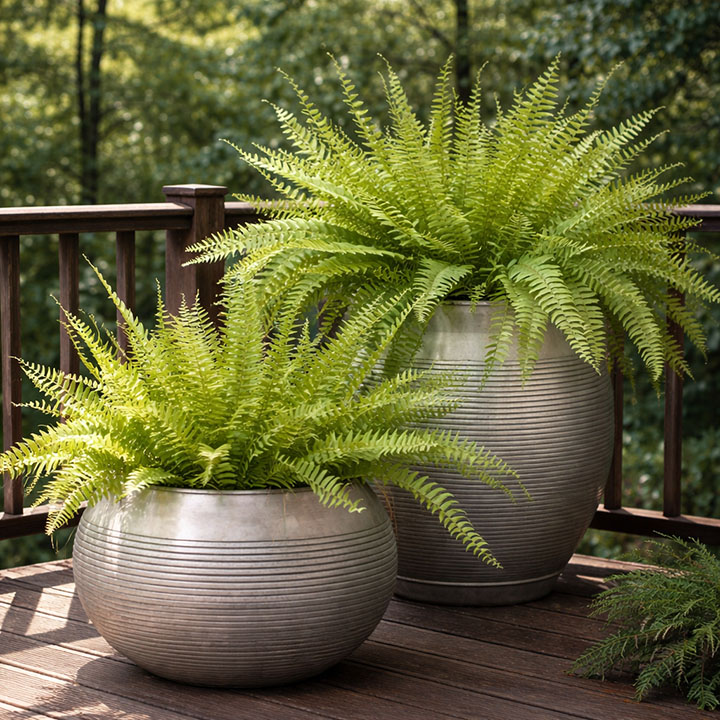
Growing ferns on a balcony is one of the easiest ways to create a cooler, softer and more lush outdoor space. Ferns bring texture, movement and rich green colour, and many varieties are perfectly suited to pots, hanging baskets and sheltered corners. In Australia, the key to success is understanding your balcony’s light, wind and humidity, then choosing fern varieties that suit your local climate and the conditions of your space.
Unlike many flowering balcony plants, most ferns prefer protection from harsh direct sun and drying winds. That makes them ideal for shaded balconies, semi-covered outdoor areas and apartments where the light is bright but indirect. With the right potting mix, steady moisture and a little humidity support, ferns can thrive beautifully in Australian cities from Melbourne and Sydney to Brisbane, Perth and beyond.
Why ferns are perfect for balconies
Ferns are especially useful on balconies because they add instant greenery without needing strong full sun. Their foliage softens hard surfaces like railings, tiles and walls, and they work well in pots, troughs, hanging baskets and vertical displays. Many also suit small spaces because they create a lush look without taking up too much room.
- They are excellent for shaded or partly shaded balconies.
- They add a calm, cooling feel to urban spaces.
- Many varieties grow well in containers.
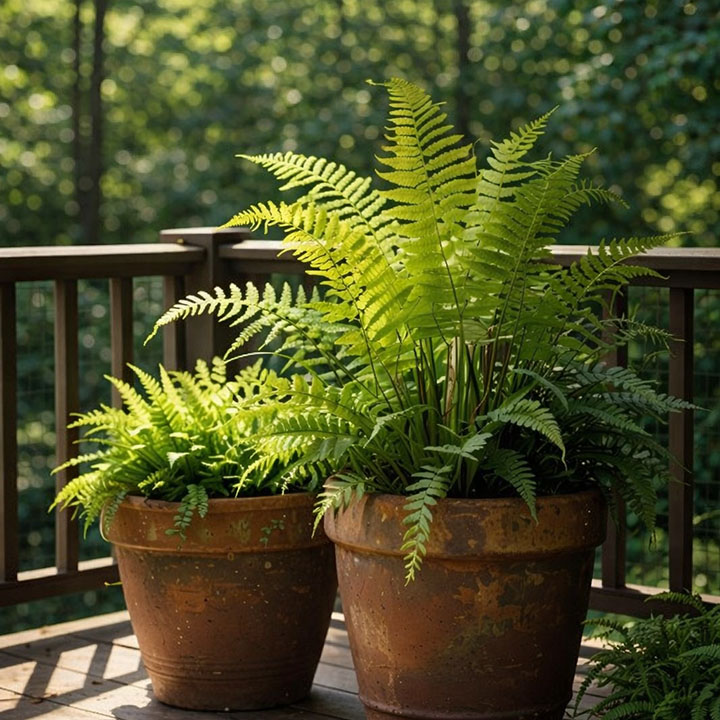
- They pair beautifully with timber, terracotta, stone and modern apartment finishes.
- They are ideal for creating a tropical or rainforest-style balcony garden.
Best fern varieties for balconies in Australia
Not all ferns behave the same way, so choosing the right type is important. Some love high humidity and gentle warmth, while others are tougher and cope better with cooler or drier conditions. On a balcony, the best choices are usually those that suit pots and can handle a little variation in moisture and airflow.
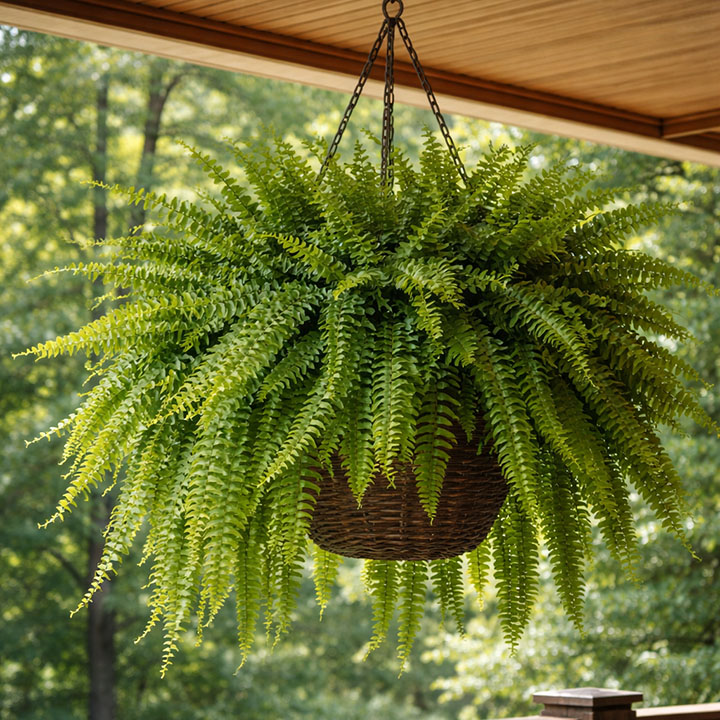
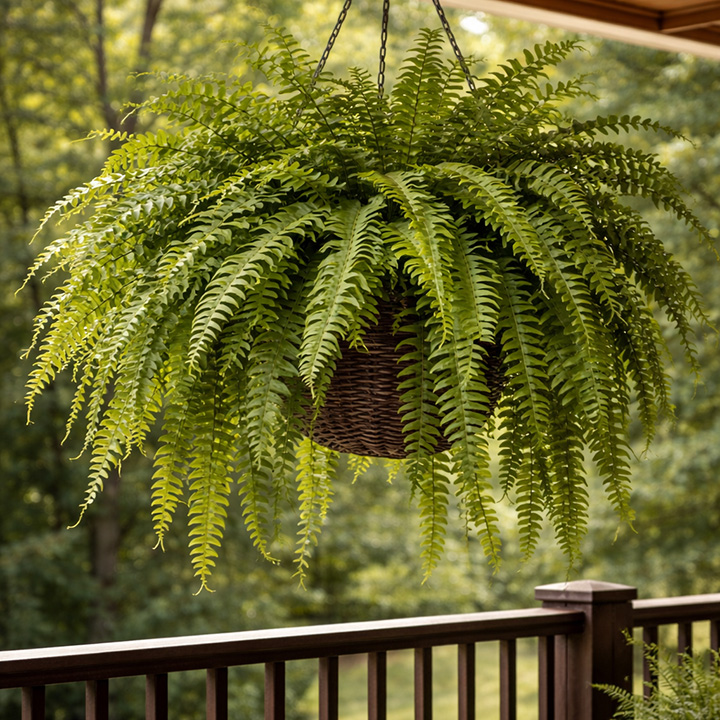
- Boston fern is a classic choice for hanging baskets and shaded balconies.
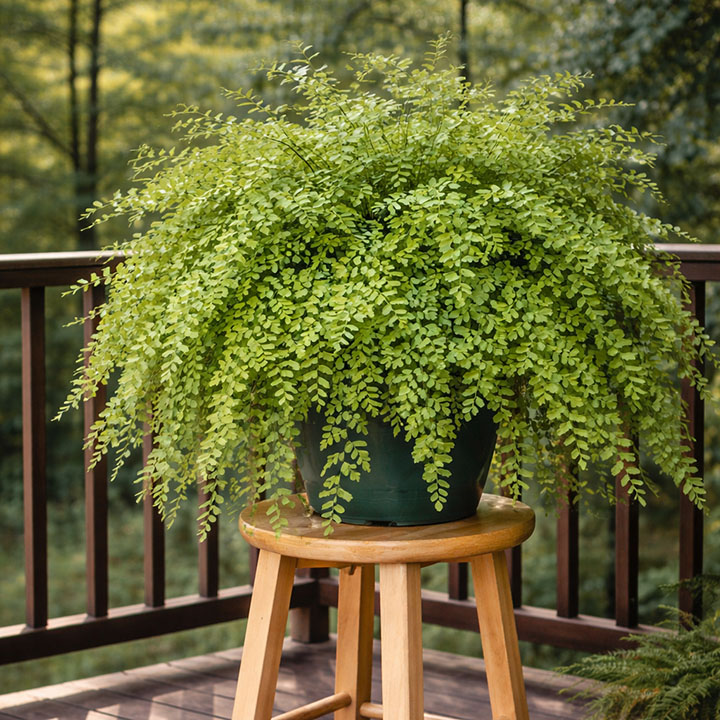
- Maidenhair fern is beautiful but usually needs more moisture and protection from drying wind.
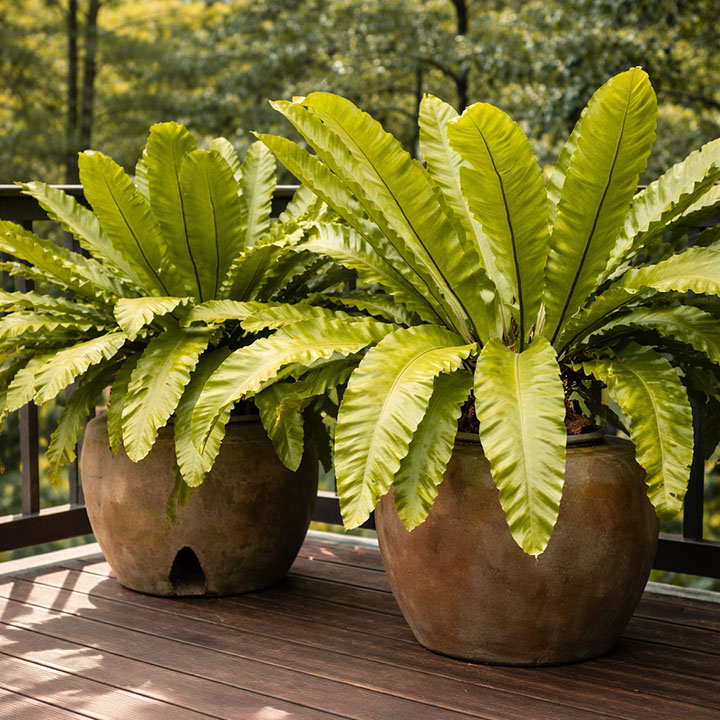
- Bird’s nest fern suits tropical and subtropical balconies and adds bold architectural foliage.
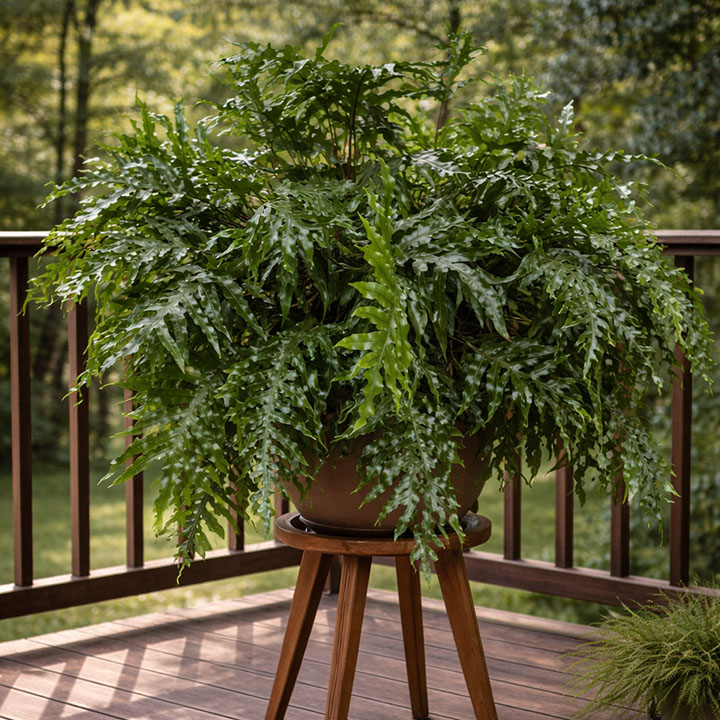
- Kangaroo paw fern is a good option for pots and can tolerate slightly drier periods once established.
- Fishbone fern works well in baskets and cascading containers.
- Asplenium types are often very useful in pots where the position is cool and shaded.
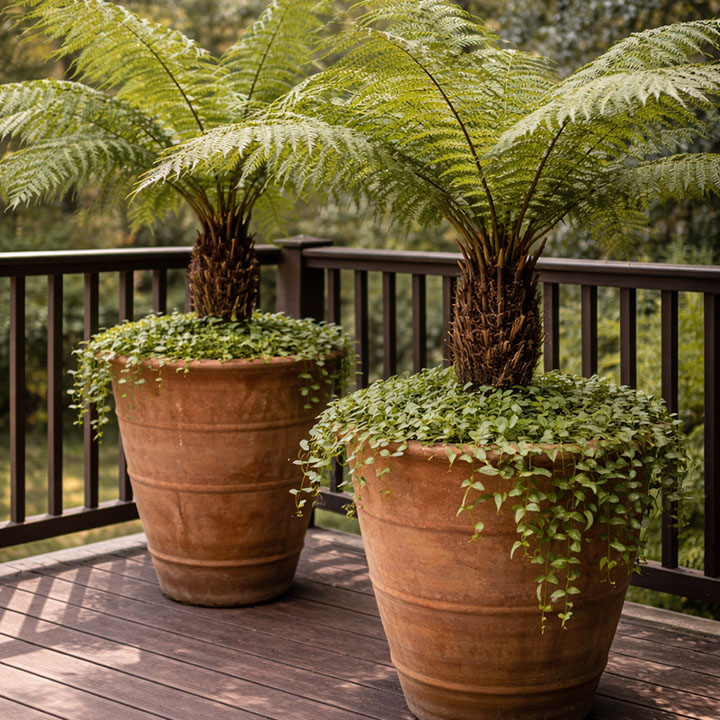
- Tree fern juveniles can work in larger containers in cool, sheltered spaces, though they eventually need more room.
If your balcony is exposed and dry, tougher ferns such as kangaroo paw fern are often a safer choice than delicate maidenhair ferns. If you live in a humid coastal city, you may have more flexibility with the softer and thirstier types.
How much light do balcony ferns need?
Most ferns prefer bright shade, dappled light or gentle morning sun rather than long hours of harsh direct sun. On a balcony, the best position is often near a bright wall, under cover, beside a screen or in a spot that gets filtered light. Hot western sun can scorch fronds quickly, especially in summer.
If your balcony gets strong direct afternoon sun, ferns will usually need shade cloth, overhead protection, taller companion plants or a more sheltered position. On very dark balconies, growth may slow and fronds may lose density, so aim for a balance of brightness without intensity.
Wind is often the biggest challenge
Many balcony gardeners assume light is the main issue, but wind is often the real problem for ferns. Strong wind tears fronds, dries out potting mix quickly and strips the humidity that ferns naturally enjoy. Even a healthy fern can struggle if it is placed in a windy corner near an exposed railing.
Use the most sheltered part of your balcony for ferns. Grouping pots together, placing them near walls, using privacy screens or situating them under a covered section can all make a big difference. Ferns generally look and perform best when protected from constant drying air.
Choosing the right pots and containers
Ferns grow well in containers, but the pot should support even moisture and good drainage. Small pots dry out too quickly, while oversized pots with poor drainage can stay wet for too long. Aim for a practical middle ground based on the size of the fern.
- Choose pots with reliable drainage holes.
- Use hanging baskets for trailing or arching ferns such as Boston fern or fishbone fern.
- Use wider pots for spreading ferns that like a little root room.
- Choose heavier containers for windy balconies.
- Avoid letting pots sit in stagnant water for long periods.
Plastic and glazed pots tend to hold moisture longer than terracotta, which can be helpful in hot Australian conditions. On the other hand, in cooler and wetter climates, excellent drainage becomes even more important.
Best potting mix for ferns
Ferns like a potting mix that is rich in organic matter, holds moisture reasonably well and still drains freely. A premium potting mix blended with composted material is usually a good starting point. The aim is to create a moist but airy root zone rather than a dense, soggy container.
Avoid heavy garden soil in pots, because it compacts too easily and does not perform well in containers. A good fern mix should stay lightly damp without becoming waterlogged.
How to plant ferns on a balcony
- Choose a pot with drainage holes and the right size for your fern.
- Fill it with premium potting mix rich in organic matter.
- Gently remove the fern from its nursery pot.
- Plant it at the same depth it was growing before.
- Backfill around the root ball and press gently.
- Water thoroughly until excess drains out.
- Place the fern in a sheltered, bright-shade position.
After planting, keep the fern out of severe wind and hot direct sun while it settles in. Newly planted ferns usually establish best when conditions are mild rather than extreme.
Watering ferns on a balcony
Most ferns like consistent moisture, but they do not usually enjoy sitting in waterlogged mix. On a balcony, watering frequency depends on your pot size, weather, humidity, wind and the specific fern variety. The goal is a root zone that stays lightly and evenly moist.
- In summer: check pots frequently, especially during hot or windy weather.
- In spring and autumn: water when the top layer begins to dry.
- In winter: reduce frequency, especially in cool southern cities.
- In covered balconies: remember that rain may not reach the pots at all.
Many ferns prefer not to dry out fully. If the potting mix swings from very dry to very wet, fronds can become brown or patchy. A steady routine works much better than occasional heavy soaking followed by neglect.
Humidity matters more than many people realise
Ferns generally enjoy humid conditions, and this is where balconies can be tricky. A covered balcony may feel shaded, but if it is exposed to dry wind or reflected heat, humidity can still be low. Grouping plants together, placing saucers of pebbles and water nearby, and using a more sheltered corner can all help create a gentler microclimate.
You do not need to turn your balcony into a greenhouse, but even a modest increase in humidity can improve frond health, especially for softer species like maidenhair fern.
Feeding and fertilising
Ferns do not usually need heavy feeding, but they do benefit from light, regular nutrition during active growth. Use a gentle liquid fertiliser or a slow-release fertiliser suited to foliage plants. Too much fertiliser can damage roots or produce weak, overly soft growth, so it is better to feed lightly than heavily.
In most parts of Australia, feeding is most useful in spring and summer when growth is strongest. Reduce feeding in the coolest months if the plant is slowing down naturally.
Pruning and general maintenance
Ferns are low-maintenance once established. Most of the work is simple tidying. Remove browned, damaged or old fronds at the base to keep the plant fresh and attractive. Regular grooming also improves airflow through the plant and makes the whole container look healthier.
If the fern becomes crowded in its pot, divide or repot it into fresh mix. This is especially useful for fast-growing basket or pot specimens that have filled their container completely.
Growing ferns on a balcony in Australian cities
Australia’s cities have very different climates, so balcony fern care should be adapted to your location. Ferns respond strongly to heat, humidity, rainfall, wind and winter cold.
Melbourne
Melbourne’s changeable weather can actually suit many balcony ferns if they are protected from drying winds. Summer heat spikes mean you may need to water more often on hot days, while winter usually calls for slower watering. Sheltered bright shade is ideal, especially on exposed apartment balconies.
Sydney
Sydney’s relatively humid coastal conditions suit many fern types well, especially on shaded balconies. The biggest risks are hot western sun and strong coastal wind. Ferns usually do best in bright shade with reliable moisture and airflow that is gentle rather than harsh.
Brisbane
Brisbane is excellent for many ferns because warmth and humidity support lush growth. The main challenge is preventing pots from drying out too quickly in heat or becoming stressed in intense sun. Semi-shaded balconies with morning light often suit ferns very well here.
Perth
Perth’s dry summer climate can be tough on moisture-loving ferns. Pot size, shade and humidity become much more important. Choose tougher fern varieties, avoid harsh afternoon sun, and be prepared to water more regularly through hot, dry periods.
Adelaide
Adelaide’s hot, dry summers mean ferns need a protected microclimate to perform well. Covered balconies, shaded corners and grouped containers are especially useful. Smaller pots can dry out very quickly, so larger containers are often a better choice.
Hobart
Hobart’s cooler climate can suit many ferns, particularly those that dislike intense heat. Growth may slow through winter, and some frost-sensitive ferns need protection in colder spots. Good drainage remains important because cooler conditions can keep potting mix wet for longer.
Canberra
Canberra’s hot summers and cold winters mean ferns may need more active seasonal care. In summer they need shade and moisture, while in winter frost-sensitive varieties may need to be moved to a more protected position. Tougher fern species usually perform better than delicate tropical ones.
Darwin and the tropical north
Darwin’s warmth and humidity can be excellent for tropical ferns, but intense wet-season conditions and strong heat still require good pot drainage and smart positioning. Ferns often do best in bright filtered light rather than exposed sun. Air movement is useful, but strong drying wind is still a problem.
Seasonal fern care on Australian balconies
Spring
Spring is a strong growth period for many ferns. This is a good time to repot, divide, refresh potting mix and begin light feeding. Increase watering as temperatures rise.
Summer
Summer is the season when most balcony ferns are tested. Focus on shade, steady moisture and wind protection. Watch for brown tips, faded fronds and fast-drying pots, especially during heatwaves.
Autumn
Autumn often brings relief from summer stress and is a great time to tidy, repot and expand your fern collection. In many cities, ferns regain lushness as conditions soften.
Winter
Winter care depends heavily on location. In mild coastal cities, many ferns continue growing slowly. In cooler areas, reduce watering, avoid cold waterlogging and protect frost-sensitive varieties from icy wind and freezing conditions.
Styling ideas for balcony ferns
Ferns are extremely useful for styling balconies because they create depth and softness. A single large bird’s nest fern in a statement pot can anchor a corner. Boston ferns look beautiful in hanging baskets, while smaller ferns can be layered in troughs or arranged along a shaded wall. Mixing different frond shapes creates a more natural, collected look.
Ferns also pair well with other shade-loving plants such as peace lilies, begonias, calatheas and ivy, but avoid overcrowding. Good airflow and room for growth still matter even in a lush planting scheme.
Common mistakes when growing ferns on a balcony
- Placing them in hot direct afternoon sun.
- Ignoring drying wind on exposed balconies.
- Letting pots dry out completely for long periods.
- Keeping soil permanently soggy with poor drainage.
- Using pots that are too small for the fern.
- Choosing delicate fern varieties for harsh, dry locations.
Final thoughts
Growing ferns on a balcony is one of the best ways to turn a shaded or sheltered outdoor area into a calm, green retreat. They are especially useful in Australian apartments where direct sun is limited or where a softer foliage-based planting style is preferred. Once you understand your balcony’s microclimate and choose the right fern for your city and conditions, they are rewarding, elegant and surprisingly versatile plants to grow in containers.
FAQ
Can ferns grow well on a balcony?
Yes. Ferns are often excellent balcony plants, especially on shaded or semi-shaded balconies. They grow particularly well when protected from direct sun and strong drying wind.
Do balcony ferns need full sun?
No. Most ferns prefer bright shade, filtered light or gentle morning sun. Harsh direct sun, especially in the afternoon, can scorch many fern varieties.
How often should I water ferns in pots?
Most ferns like evenly moist potting mix, so check them regularly. In summer or windy weather, they may need water more often. In winter, watering is usually less frequent, especially in cooler southern cities.
What is the best fern for a balcony in Australia?
That depends on your conditions. Boston fern, bird’s nest fern, kangaroo paw fern and several Asplenium types are all popular choices. Tougher types are usually better for dry or exposed balconies.
Can ferns handle wind on a balcony?
Most ferns dislike strong wind because it tears fronds and dries them out quickly. They usually perform much better in sheltered positions near walls, screens or grouped plantings.
Do ferns need humidity?
Most ferns prefer more humidity than many balcony spaces naturally provide. Grouping plants together and using sheltered positions can help create a better microclimate.
Can I grow ferns in hanging baskets?
Yes. Boston fern and fishbone fern are especially popular in hanging baskets, as long as they are watered consistently and protected from harsh sun and drying wind.
Are ferns suitable for balconies in Melbourne, Sydney and Brisbane?
Yes, but the care changes by city. Melbourne ferns need wind protection, Sydney and Brisbane ferns usually enjoy the humidity, and drier cities such as Perth and Adelaide require more attention to shade and watering.

Comments are closed.