
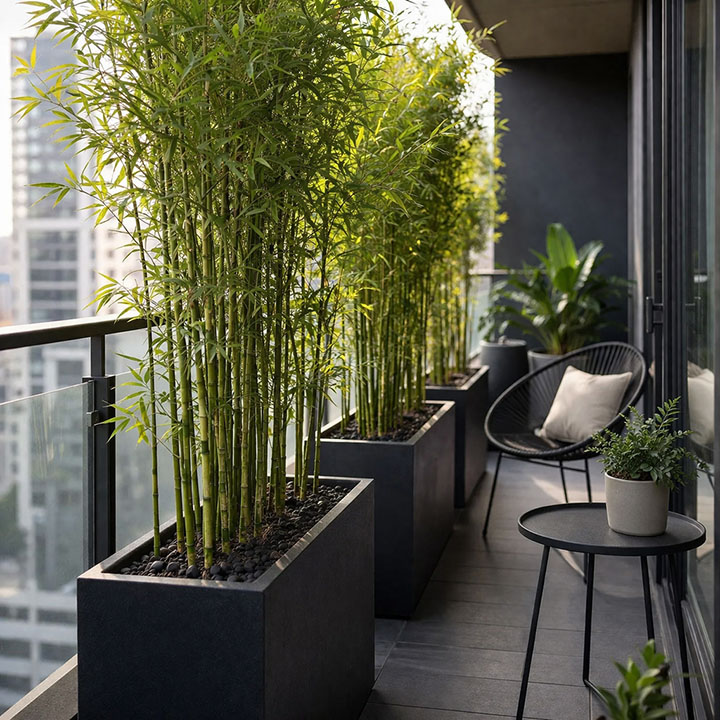
Bamboo can work beautifully on a balcony. It creates privacy, softens harsh walls and railings, adds movement in the breeze, and gives even a small outdoor space a lush, calm feeling. In Australia, bamboo is especially useful for apartment gardeners who want a fast-growing green screen without needing a large garden bed.
That said, bamboo on a balcony needs the right setup. The wrong variety, a pot that is too small, or poor watering habits can quickly lead to stress, mess, or an overgrown plant. The key is choosing a suitable clumping bamboo, growing it in a large container, and adjusting care to your city’s climate.
This guide covers the best types of bamboo for balconies in Australia, how to plant and maintain them in pots, and what to do in different climates from Melbourne and Sydney to Brisbane, Perth, Adelaide, Hobart, Canberra, and Darwin.
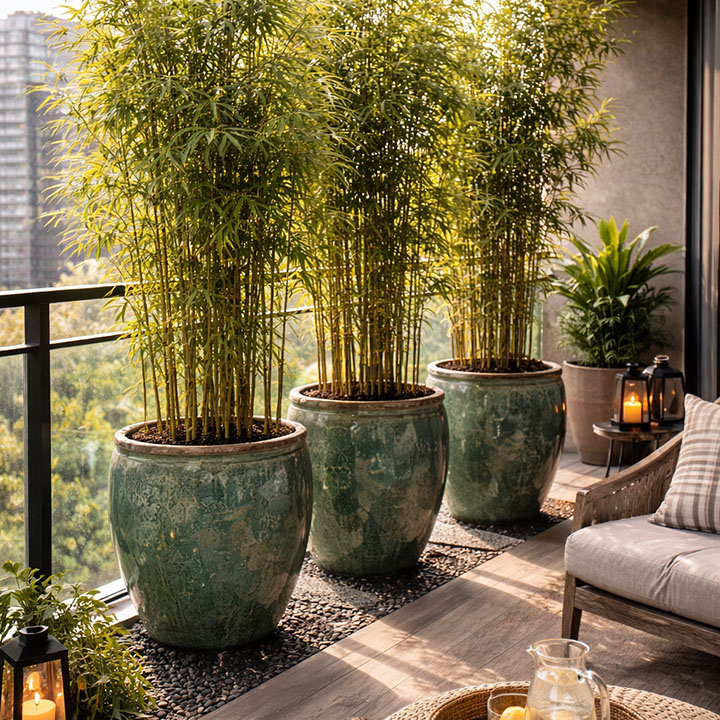
Why bamboo works well on a balcony
- Creates a natural privacy screen
- Adds height without taking up much floor space
- Can soften concrete, glass, and metal balconies
- Works in modern, tropical, coastal, and minimalist designs
- Many clumping types handle container growing well
- Evergreen foliage keeps the balcony looking full year-round
Bamboo is one of the best plants for people who want a greener balcony quickly. Unlike many shrubs, it gives a strong vertical effect in a relatively narrow planter, which makes it useful for screening neighbouring buildings, creating a wind buffer, or framing an outdoor seating area.
Best bamboo types for balconies
For balconies, always look for clumping bamboo, not running bamboo. Running bamboo spreads aggressively and is not suitable for container balcony gardening in most situations. Clumping bamboo is far easier to control, tidier in pots, and much better suited to apartment living.
Good bamboo choices for pots and balconies
- Bambusa textilis gracilis – one of the best screening bamboos for Australian balconies; upright, neat, and elegant
- Bambusa multiplex – dense and useful for screening; available in a range of sizes
- Bambusa malingensis – attractive lush foliage for a tropical feel if you have the space
- Fargesia species – more cold-tolerant and useful in cooler areas, though often less common in Australia
- Dwarf bamboo varieties – better for smaller balconies where full-height screening is not required
For most Australian apartment balconies, Bambusa textilis gracilis is often the standout option. It grows upright rather than flopping wide, tolerates pruning, and gives a clean architectural look that suits modern homes.
What to avoid
- Running bamboo varieties
- Very large species that quickly outgrow pots
- Cheap, tiny nursery pots left unchanged for too long
- Placing heavy containers on balconies without checking load limits
- Balconies with intense reflected heat and no watering plan
Before buying, think beyond the current plant size. Bamboo can grow quickly in warm weather. A plant that looks manageable at purchase may become too tall, too thirsty, or too heavy for the space if you choose the wrong variety.
How much sun does balcony bamboo need?
Most balcony bamboo grows best in part sun to full sun, depending on the variety and your local climate. In cooler southern cities, more sun is often helpful. In hotter parts of Australia, some afternoon protection can reduce stress, leaf scorch, and rapid drying.
As a general rule:
- Cool climates – aim for as much light as possible
- Temperate climates – morning sun and bright light work well
- Hot climates – sun is fine, but harsh western exposure may need extra watering or light shade
Best pot size for bamboo on a balcony
Bamboo needs a large, stable container. Small pots dry out too quickly and can cause the plant to become root bound. On balconies, larger pots also help stop tall bamboo from becoming unstable in wind.
A good starting point is:
- Small dwarf bamboo – at least 35–45cm wide
- Screening bamboo – at least 50–70cm wide and deep
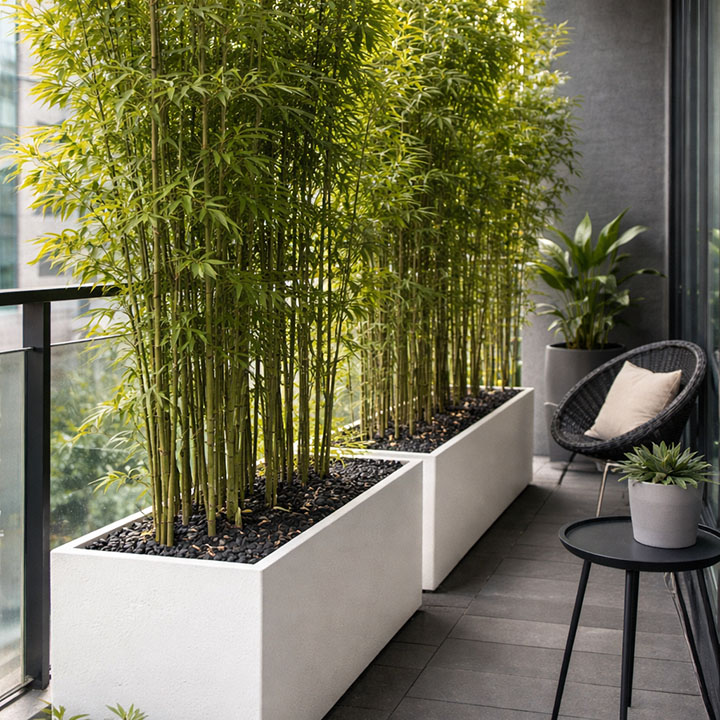
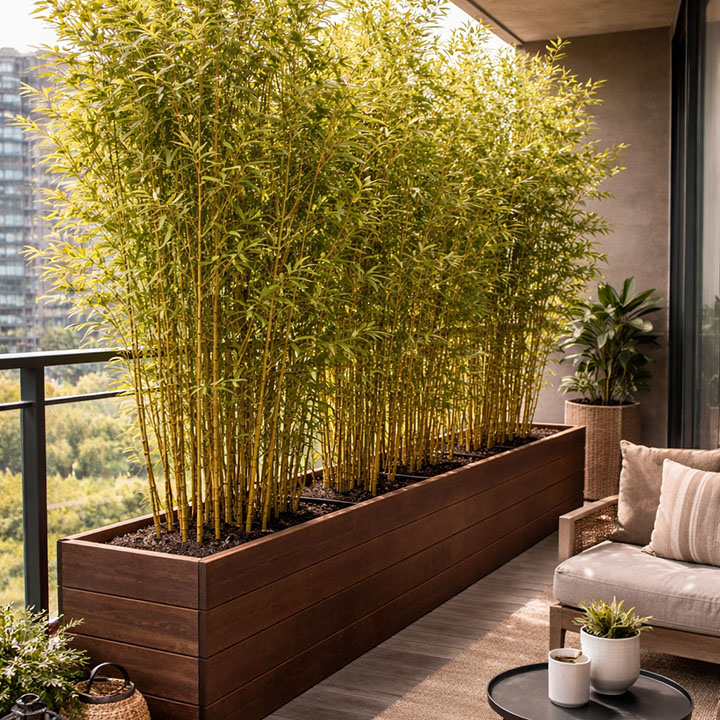
- Long trough planters – excellent for screening if deep enough and structurally suitable
Choose containers made from lightweight but durable materials such as fibreglass, resin, or quality plastic if weight is a concern. Terracotta and concrete look beautiful but can become extremely heavy once filled with potting mix and watered.
Important balcony safety note
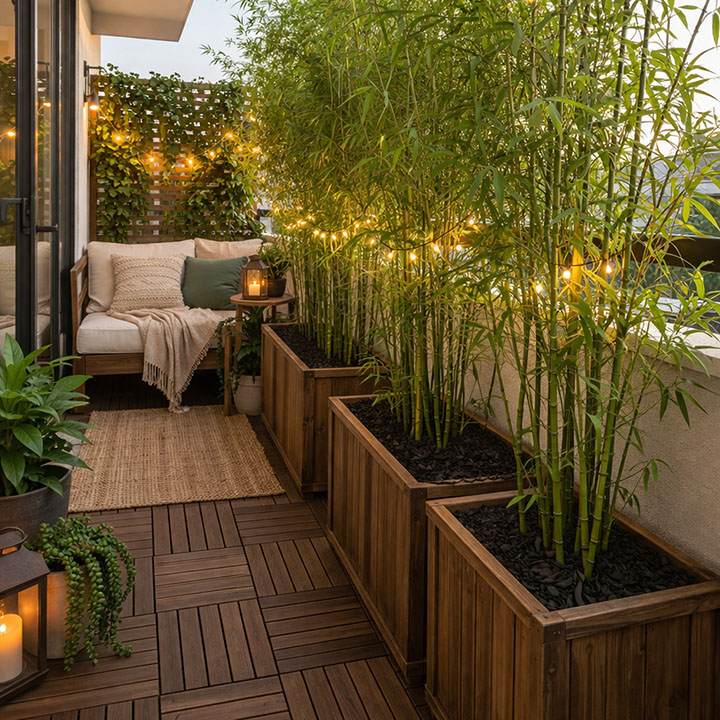
Bamboo in large pots can become heavy. Before setting up several screening planters, make sure your balcony can safely handle the combined weight of pots, wet soil, saucers, and mature plants. This matters even more in apartments with older balconies or where you plan to create a full privacy screen.
Best potting mix for bamboo
Bamboo likes rich, free-draining soil that holds some moisture without staying soggy. Use a premium potting mix designed for containers, then improve it slightly for structure and moisture balance.
A good mix for balcony bamboo is:
- High-quality premium potting mix
- A little compost or well-aged organic matter
- Some coconut coir or water-holding material for hot balconies
- Optional bark or perlite for improved drainage and aeration
Do not use heavy garden soil from the ground. It compacts too much in containers and can lead to drainage problems.
How to plant bamboo in a pot
- Choose a large pot with good drainage holes.
- Partly fill it with premium potting mix.
- Remove the bamboo from its nursery pot and gently loosen the outer roots if tightly packed.
- Position the plant so the top of the root ball sits just below the rim.
- Backfill around the root ball and firm gently.
- Water deeply until excess runs from the bottom.
- Add mulch to reduce moisture loss, keeping it slightly away from the stems.
If you are planting multiple bamboos in a trough planter, give each one enough space to develop. Crowding them too closely may look good at first but often leads to competition, poor airflow, and quicker drying.
Watering bamboo on a balcony
This is the most important part of growing bamboo in pots. Bamboo likes consistent moisture, especially while establishing and during warm weather. Balcony conditions can make pots dry out much faster than in-ground garden beds because of wind, heat, and reflected sunlight from walls and glass.
As a guide:
- Water more often in summer and during hot winds
- Water less in winter, but do not let the pot become bone dry
- Check the moisture level by feeling the top few centimetres of mix
- Deep watering is better than frequent tiny splashes
- Self-watering planters or drip irrigation can be very helpful for busy gardeners
If bamboo leaves curl inward, the plant is often telling you it is thirsty or stressed by heat and dry wind. If leaves yellow broadly and the mix stays wet for long periods, you may be overwatering or dealing with drainage issues.
Feeding bamboo in pots
Bamboo is a hungry plant compared with many balcony favourites. In containers, nutrients wash out over time, so feeding helps maintain healthy colour and steady growth.
A simple feeding routine:
- Apply a controlled-release fertiliser in spring
- Top up with liquid feed during active growing periods if needed
- Add a light layer of compost in warm seasons if your potting setup allows it
Do not overfeed in the coldest part of winter, especially in southern cities where growth slows down.
Pruning and maintenance
One reason bamboo is so balcony-friendly is that it responds well to tidying. You can remove old canes, trim lower foliage, and lightly shape the plant to suit the space.
- Remove dead, weak, or damaged canes at the base
- Trim back height if the variety allows it and the look suits your space
- Thin crowded growth to improve airflow
- Clean up fallen leaves regularly in small balconies
If privacy is the goal, avoid over-pruning. A denser plant usually gives a better screen than one clipped too hard.
Managing wind on apartment balconies
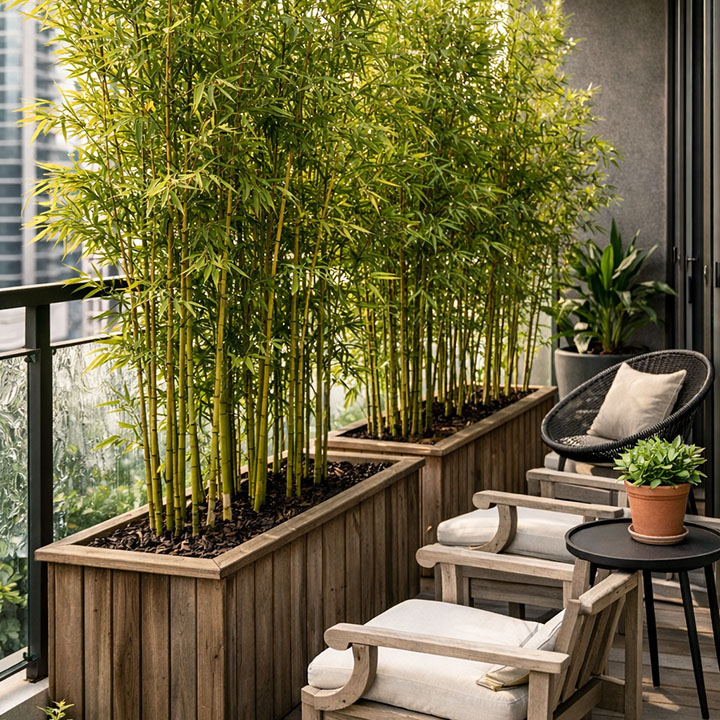
Wind is one of the biggest hidden challenges for balcony bamboo. High-rise and exposed balconies can create strong air movement that dries the pot quickly, tears foliage, and causes tall containers to shift.
- Use heavier or broader-based pots for stability
- Group planters to create a more sheltered microclimate
- Avoid very tall, narrow pots in windy locations
- Water more often during windy periods
- Choose upright, tidy species rather than sprawling ones
In some balconies, bamboo itself becomes part of the wind solution by filtering gusts and making the space feel calmer.
Growing bamboo in different Australian cities
Australia’s climate varies widely, so bamboo care on a balcony should always be adjusted to your local conditions.
Melbourne
Melbourne’s changeable weather means balcony bamboo must handle cool spells, wind, and bursts of summer heat. Bamboo usually performs well here in a bright position with regular watering in warm weather. Protect potted plants from strong drying winds, especially on upper-level balconies. Winter watering can be reduced, but the mix should not fully dry out.
Sydney
Sydney’s mild, humid conditions are generally excellent for bamboo. Many clumping varieties thrive here, particularly when grown in large containers. Coastal balconies may experience salt-laden wind, so wash dust and residue from foliage occasionally and stay on top of watering during hot, bright periods.
Brisbane
Brisbane’s warmth and humidity suit bamboo very well. Growth can be strong, so choose a variety carefully and expect quicker pot filling. Summer rain helps, but balconies can still dry out fast under roof cover or afternoon sun. Feed regularly and monitor for rapid root crowding.
Perth
Perth’s hot, dry summers mean watering is the main challenge. Bamboo can grow well, but only if the pot is large enough and moisture is kept steady. Mulch heavily, consider a self-watering system, and protect plants from intense reflected heat from walls, paving, or glass balustrades.
Adelaide
Adelaide gardeners should take a similar approach to Perth, with extra focus on summer heat and dry conditions. Morning sun with some afternoon relief often works well on exposed balconies. In winter, growth slows and watering needs drop.
Canberra
Canberra’s colder winters mean cold-tolerant choices and good positioning matter more. Place bamboo where it gets solid light and some shelter from icy winds. Water less in winter, but do not ignore the pots completely. Cold, dry air can still dehydrate plants in containers.
Hobart
In Hobart, the cooler climate means growth is usually slower, but bamboo can still do very well in a bright, protected balcony position. Too much shade may lead to thinner growth. Shelter from strong wind is especially helpful.
Darwin
Darwin’s tropical climate can support lush bamboo growth, but wet season conditions and rapid growth mean drainage and pruning are important. During the dry season, potted bamboo may still need frequent watering, especially on sunny balconies. Strong tropical growth also means you may need to repot more often.
Best balcony positions for bamboo
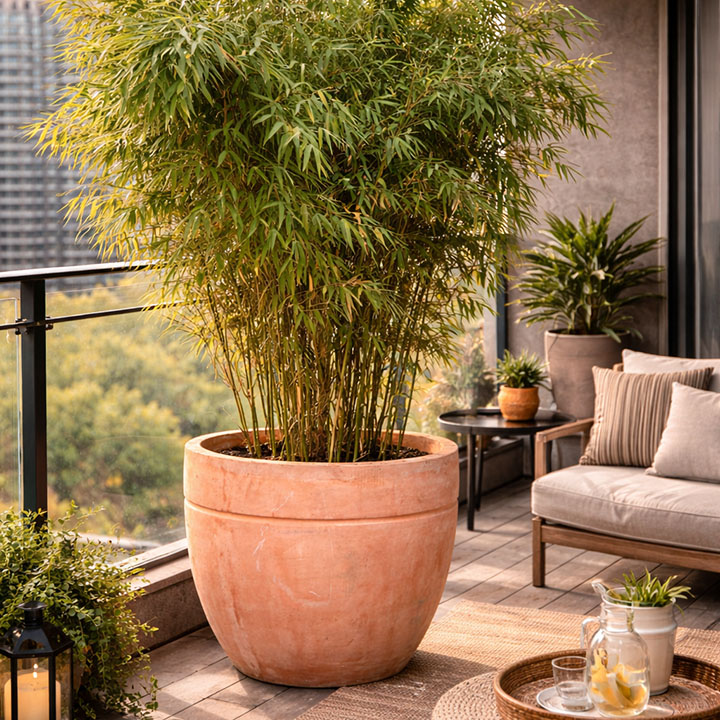
Bamboo is especially useful in these balcony situations:
- Along the edge of a balcony for privacy screening
- Beside an outdoor dining setting to create a green backdrop
- Against a wall to soften a blank vertical surface
- In trough planters to divide zones on a large balcony
- At the western edge of a balcony to soften sun and glare
Just avoid blocking all airflow in already hot spaces. A balance between privacy and ventilation usually gives the best result.
When to repot bamboo
Bamboo in containers will eventually need more space. Signs it is time to repot include roots circling heavily, water running straight through too quickly, slowed growth, or the plant drying out much faster than before.
Repotting is usually best done in mild weather when the plant can recover without extreme heat or cold. If the plant is already in the largest practical container, you can root prune and refresh the potting mix instead.
Common problems with bamboo on balconies
Brown leaf tips
Usually caused by dry air, inconsistent watering, wind, salt exposure, or heat stress. Increase watering consistency and protect from harsh conditions.
Curling leaves
Often a sign of thirst or heat stress. Check soil moisture immediately.
Yellowing leaves
Can be natural aging of older foliage, but widespread yellowing may point to drainage problems, overwatering, or nutrient issues.
Weak or sparse growth
May be caused by too little light, lack of feeding, a pot that is too small, or root congestion.
Plant becoming too tall
Usually a variety choice issue. Select a more compact type from the start, or prune to maintain scale.
Can bamboo be used as a privacy screen on a balcony?
Yes, and this is one of the main reasons people grow it. A row of clumping bamboo in trough planters can create a lush, living screen that feels softer and more attractive than artificial panels. It can also reduce the feeling of being overlooked without making the space feel closed in.
For privacy screening, focus on:
- Upright clumping varieties
- Long, deep trough planters
- Regular feeding and watering
- Pruning to keep the screen neat and dense
Is bamboo a good choice for small balconies?
It can be, but only if you match the plant to the space. On very small balconies, a giant screening bamboo may overwhelm the area. In that case, look for a narrower or dwarf variety, or use one statement pot rather than a full row. Bamboo should enhance the balcony, not dominate every square centimetre of it.
Final thoughts
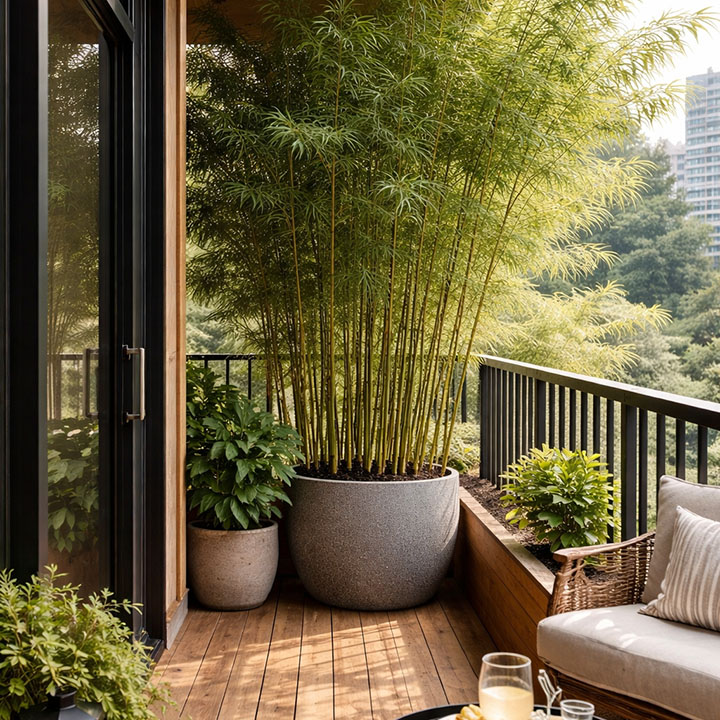
Growing bamboo on a balcony is one of the best ways to create privacy, greenery, and structure in an Australian apartment garden. The biggest keys to success are choosing a clumping type, using a large pot, keeping watering consistent, and adjusting care to your city’s weather. In warm cities, watch moisture closely. In cooler and windier cities, prioritise sun and shelter.
Done well, bamboo can turn a plain balcony into a calm, leafy outdoor room that feels more private and far more inviting.
Frequently Asked Questions
What is the best bamboo for a balcony in Australia?
Clumping bamboo is the best choice, especially neat upright forms such as Bambusa textilis gracilis. It is widely used for screening and suits pot growing better than running bamboo.
Can bamboo grow well in pots?
Yes. Bamboo can grow very well in pots if the container is large enough, the potting mix is high quality, and the plant receives consistent water and regular feeding.
Does balcony bamboo need full sun?
Many bamboos grow well in part sun to full sun. In cooler cities, more sun is usually beneficial. In hotter areas, harsh afternoon exposure may require extra watering or some protection.
How often should I water bamboo in a balcony pot?
Watering depends on the season, pot size, wind exposure, and city climate. In summer, especially in hot or windy conditions, bamboo may need frequent deep watering. In winter, it needs less, but the pot should not dry out completely.
Can bamboo be used for privacy on an apartment balcony?
Yes. Bamboo is one of the best balcony plants for privacy because it grows upright, dense, and evergreen. Trough planters with clumping bamboo can form an attractive living screen.
Is bamboo too heavy for a balcony?
Large bamboo pots can be heavy, especially after watering. Always consider the total load of containers, soil, and plants before creating a full screen on a balcony.
Should I grow running bamboo on a balcony?
No. Running bamboo is generally not a good choice for balconies. It is harder to control and less suitable for tidy container growing. Clumping bamboo is the safer and more practical option.
Why are the leaves on my balcony bamboo turning brown?
Brown tips or edges are often caused by inconsistent watering, dry wind, strong heat, or salt exposure on coastal balconies. Improving watering and shelter usually helps.
Can I keep bamboo short on a balcony?
Yes, to a degree. Choose a naturally smaller or more upright variety first, then prune lightly to maintain shape and size. Starting with the right plant is much easier than trying to control an oversized one later.
Is bamboo a good plant for windy balconies?
It can be, but windy balconies need large stable pots, more frequent watering, and the right variety. Upright clumping bamboo usually performs better than broader, looser forms in exposed sites.

Comments are closed.